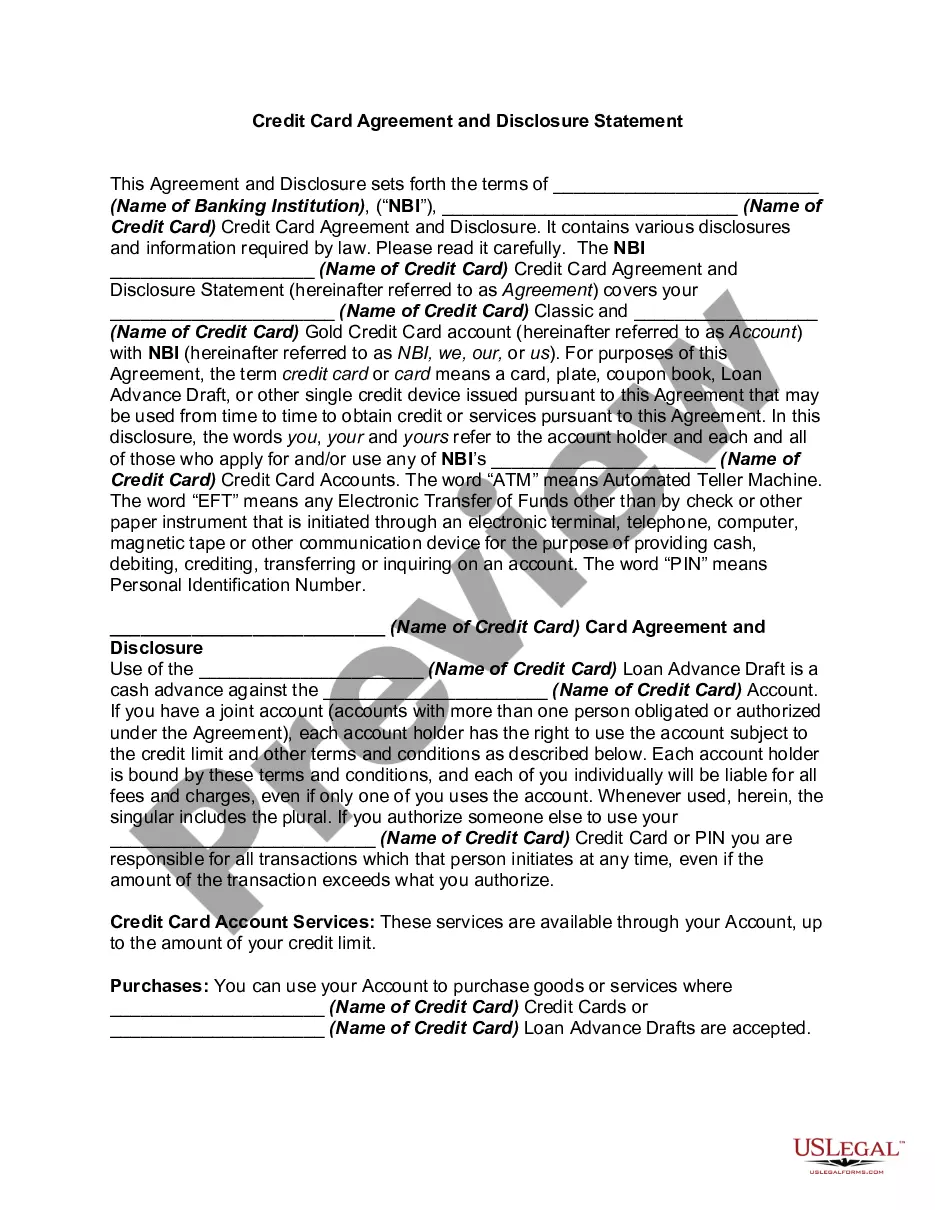
Credit Card Agreement and Disclosure Statement
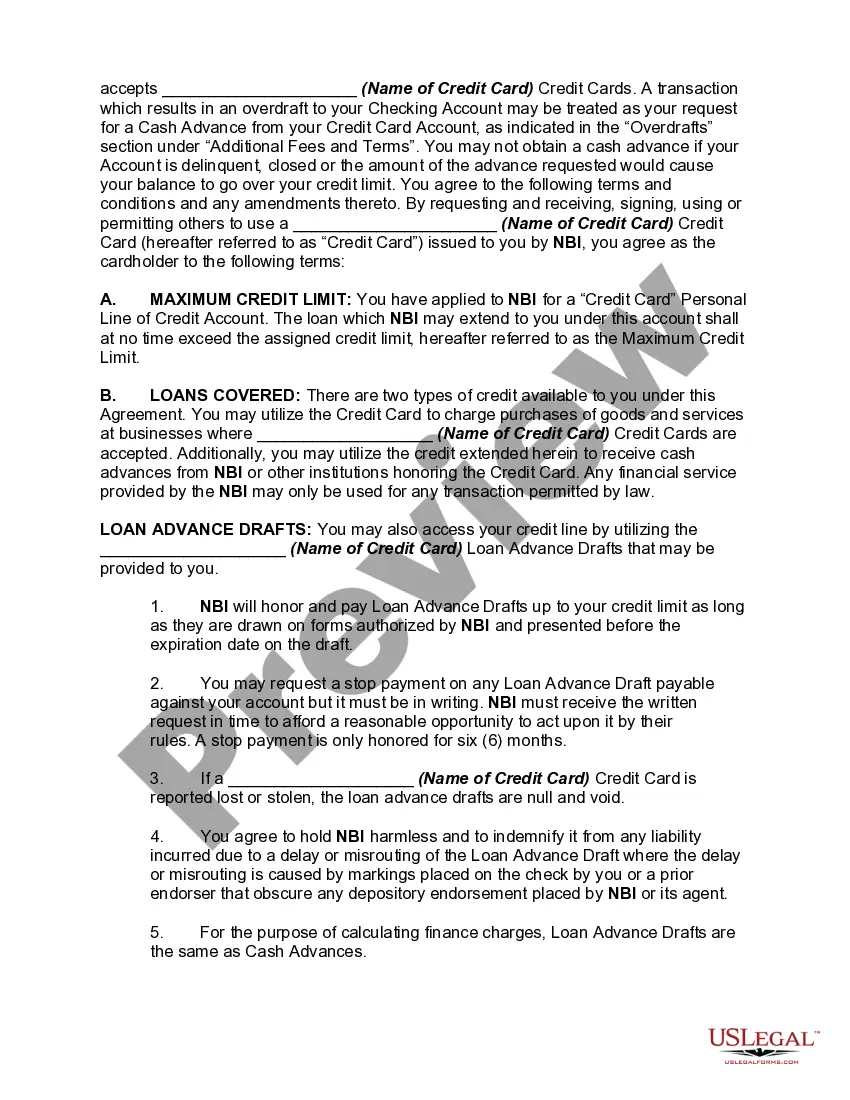
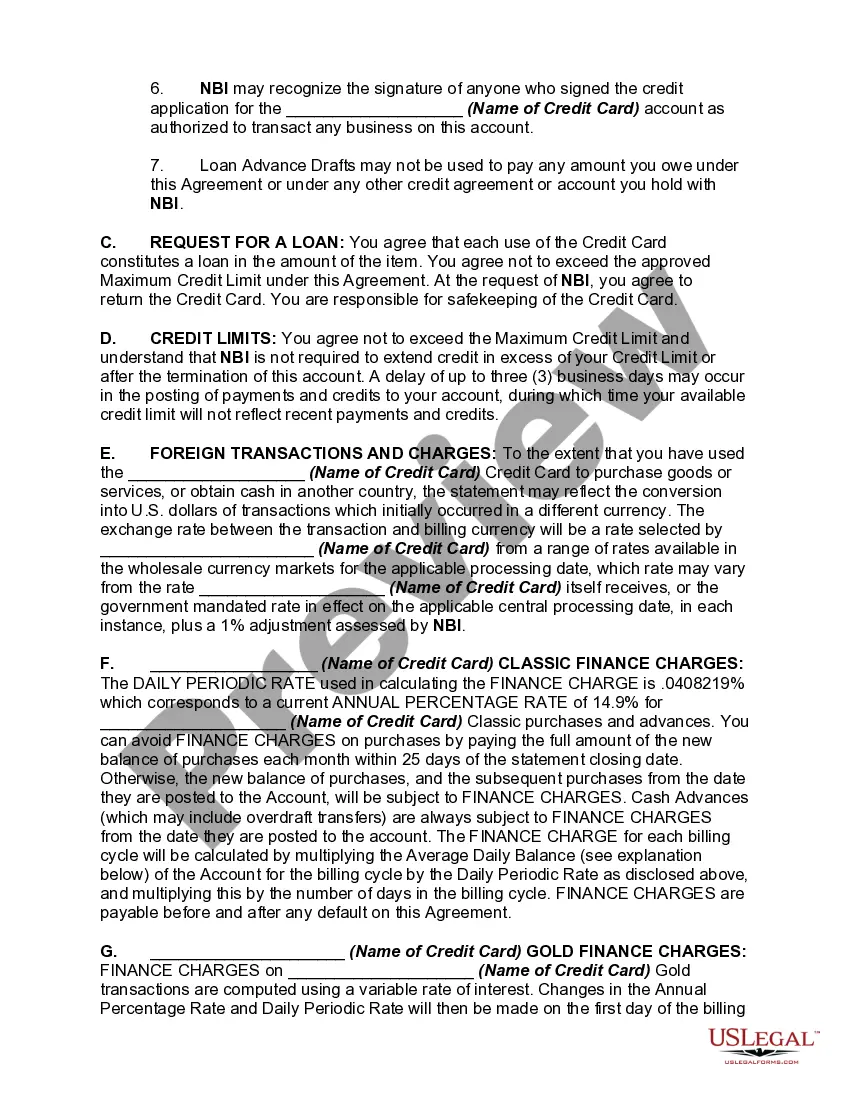
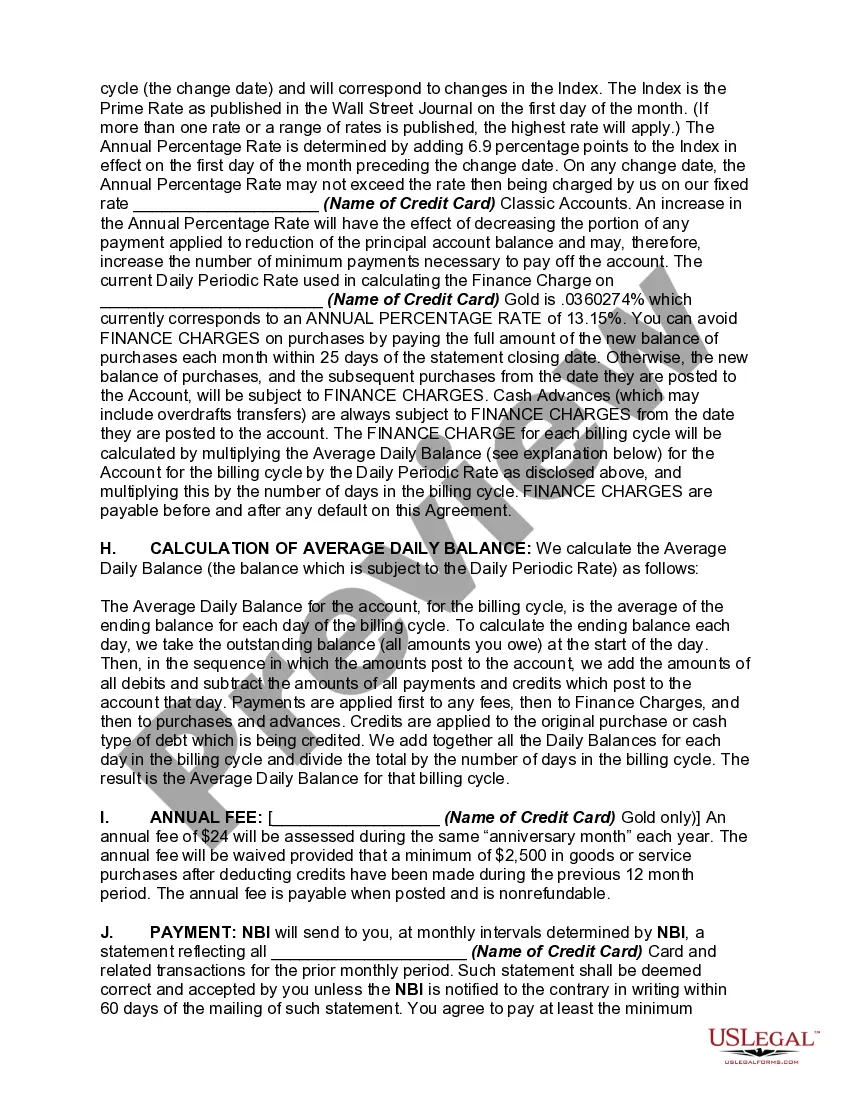
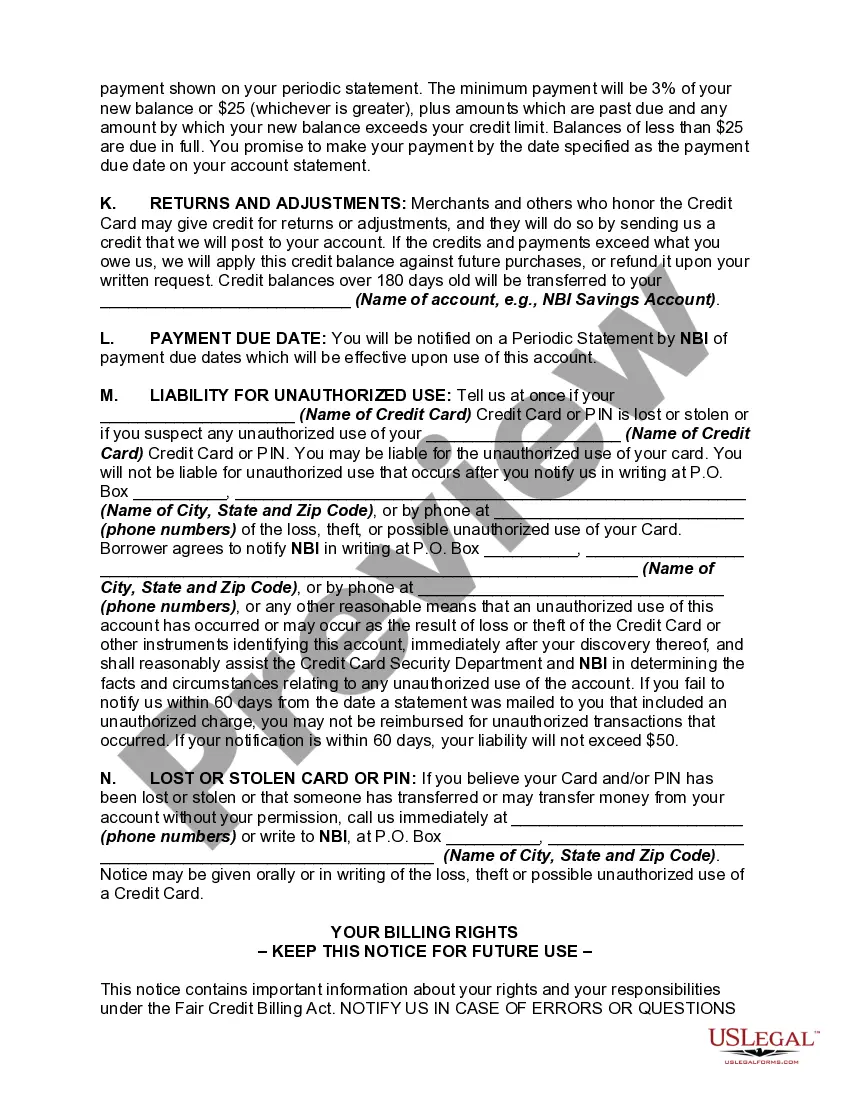
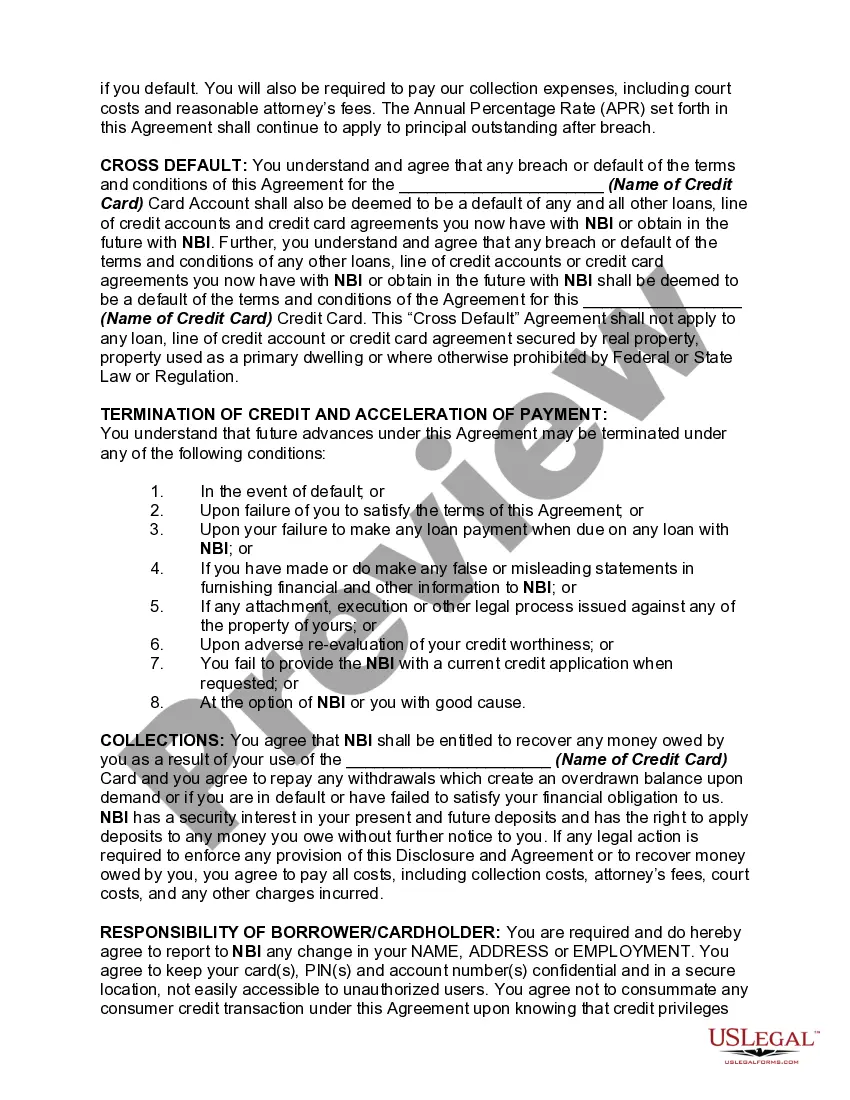
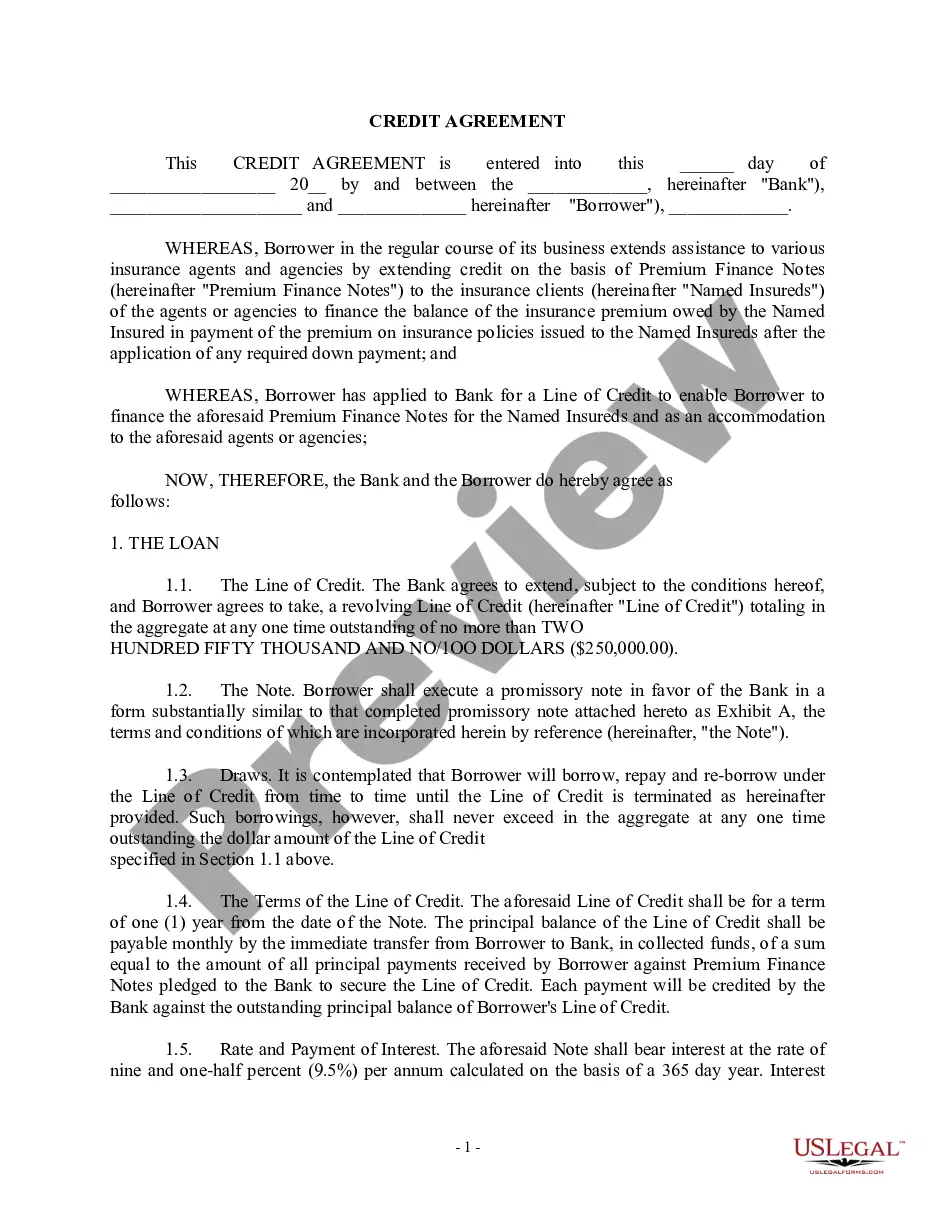
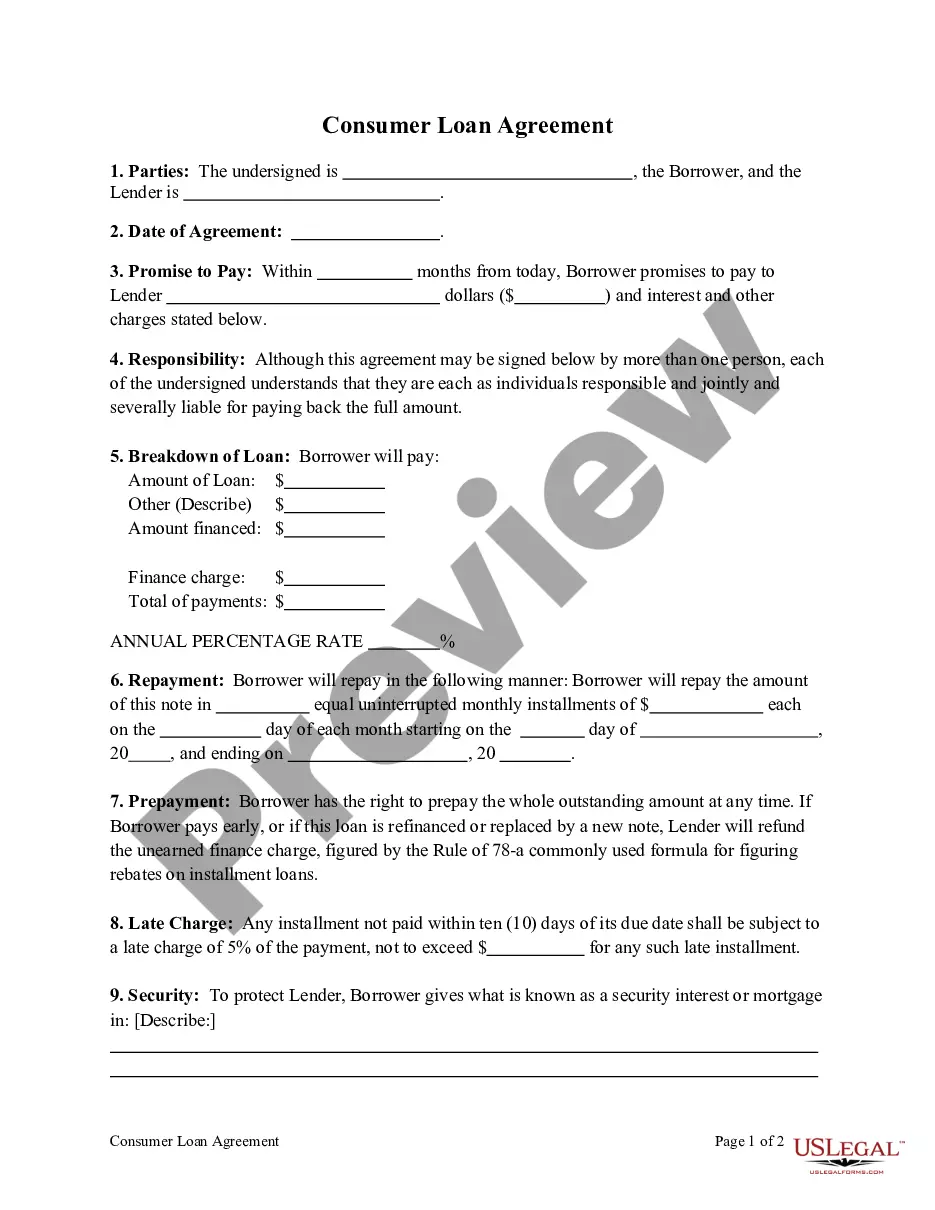
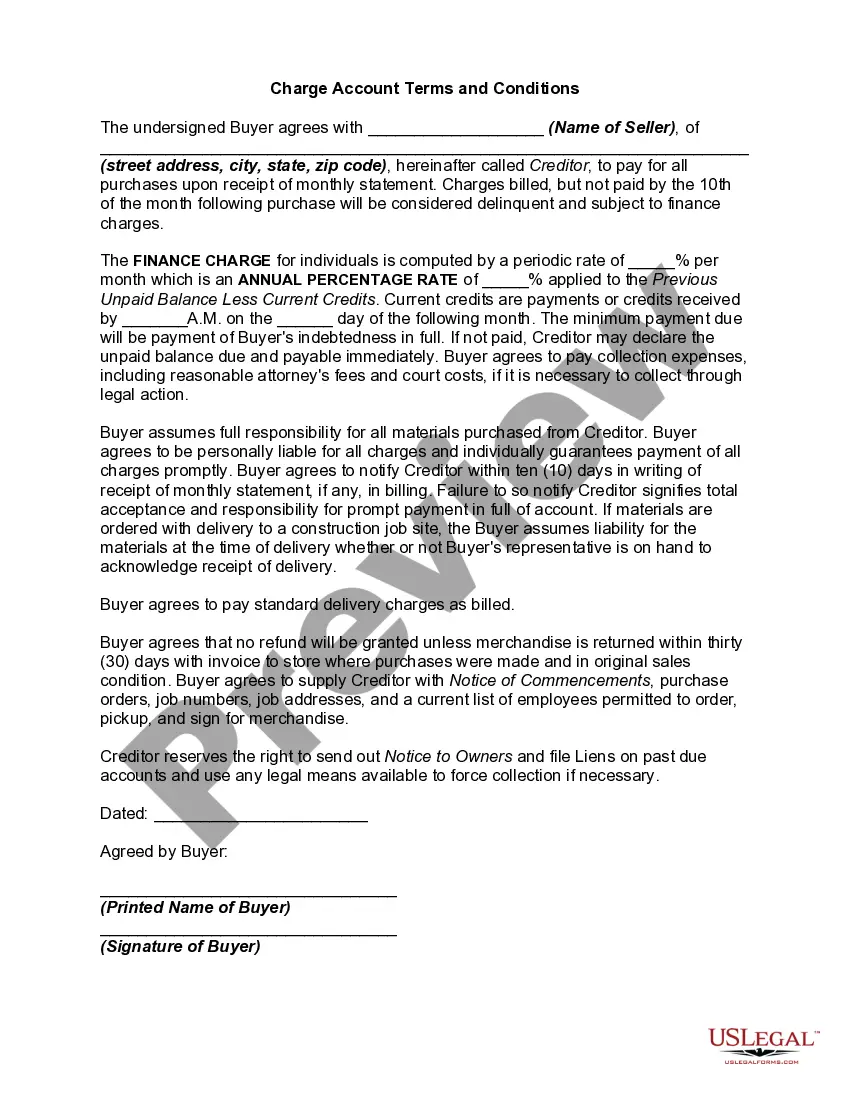
The Credit Card Agreement and Disclosure Statement is a legal document that outlines the terms under which a credit card is issued. This form is essential for ensuring transparency between the credit card issuer and the cardholder. It provides important details about fees, interest rates, and borrower responsibilities specific to the credit card, differentiating it from other financial agreements, like loans or personal credit accounts.
- Description of the credit card and conditions for use.
- Detailed finance charge information and how it is calculated.
- Conditions for cash advances and limits on transactions.
- Borrower's liabilities and reporting requirements for lost or stolen cards.
- Information about payment due dates and consequences for late payments.
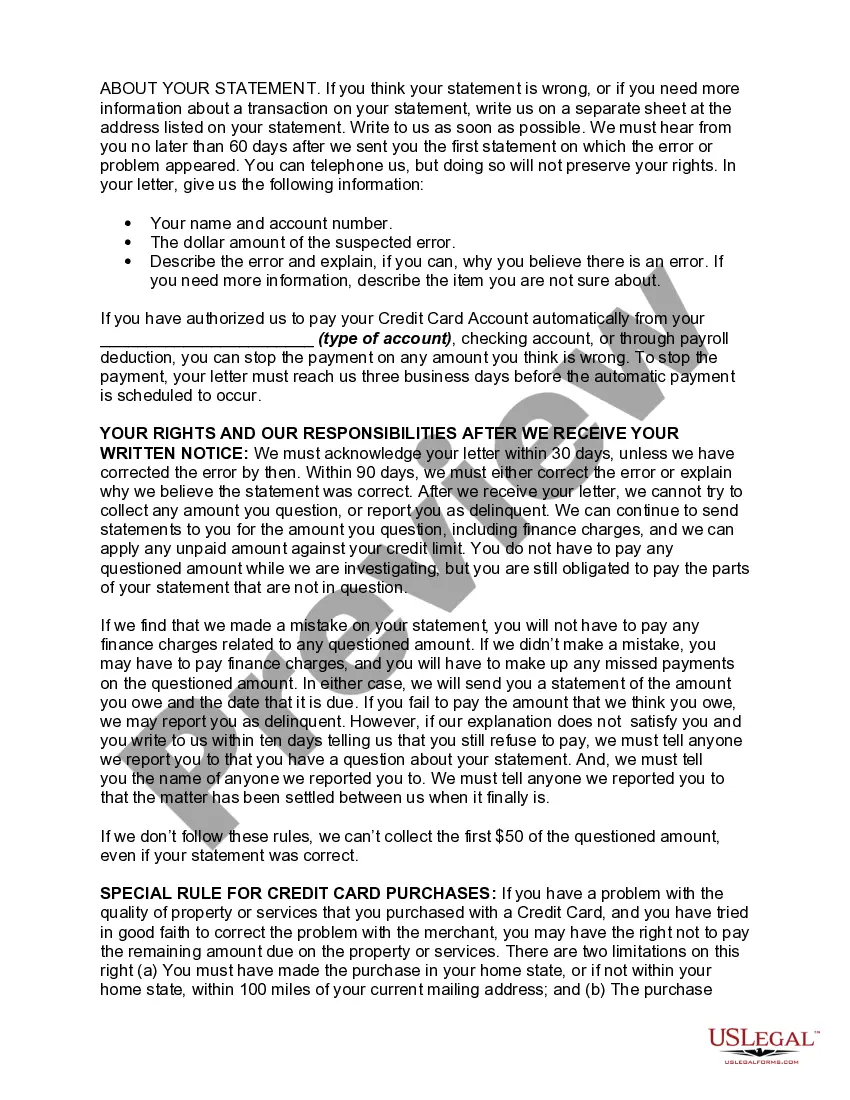
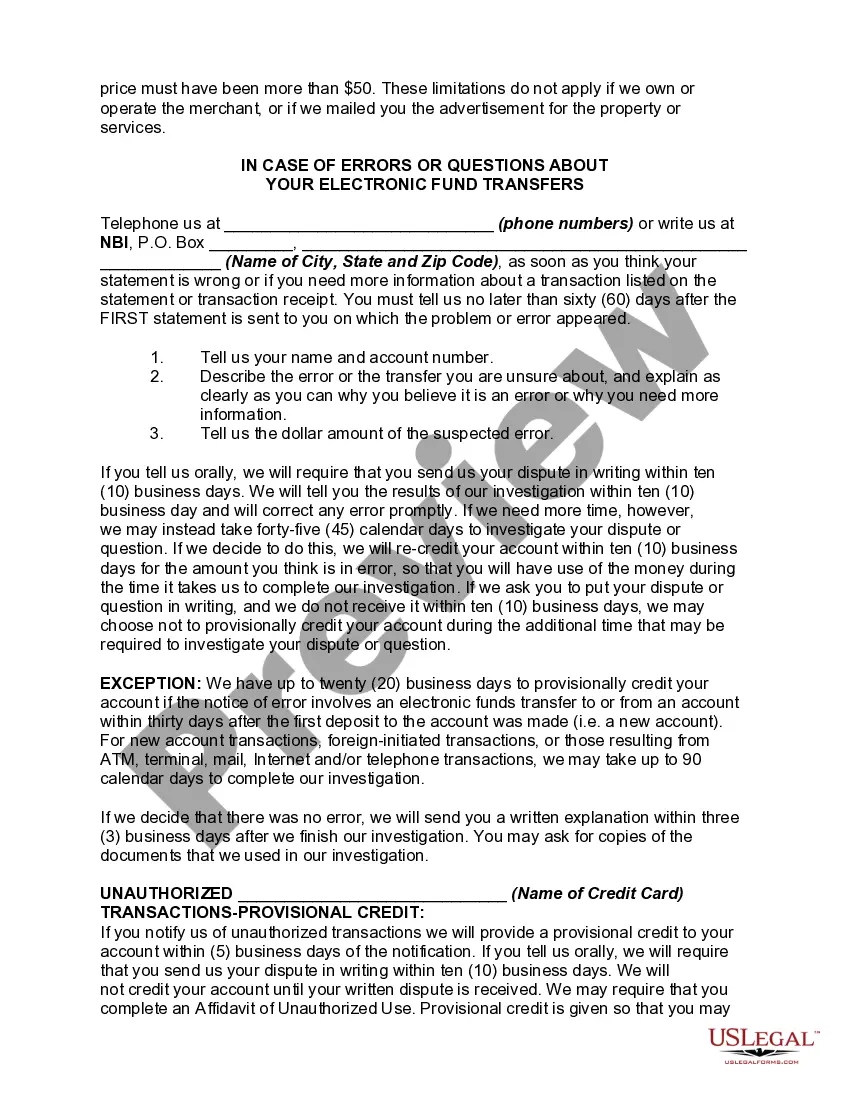
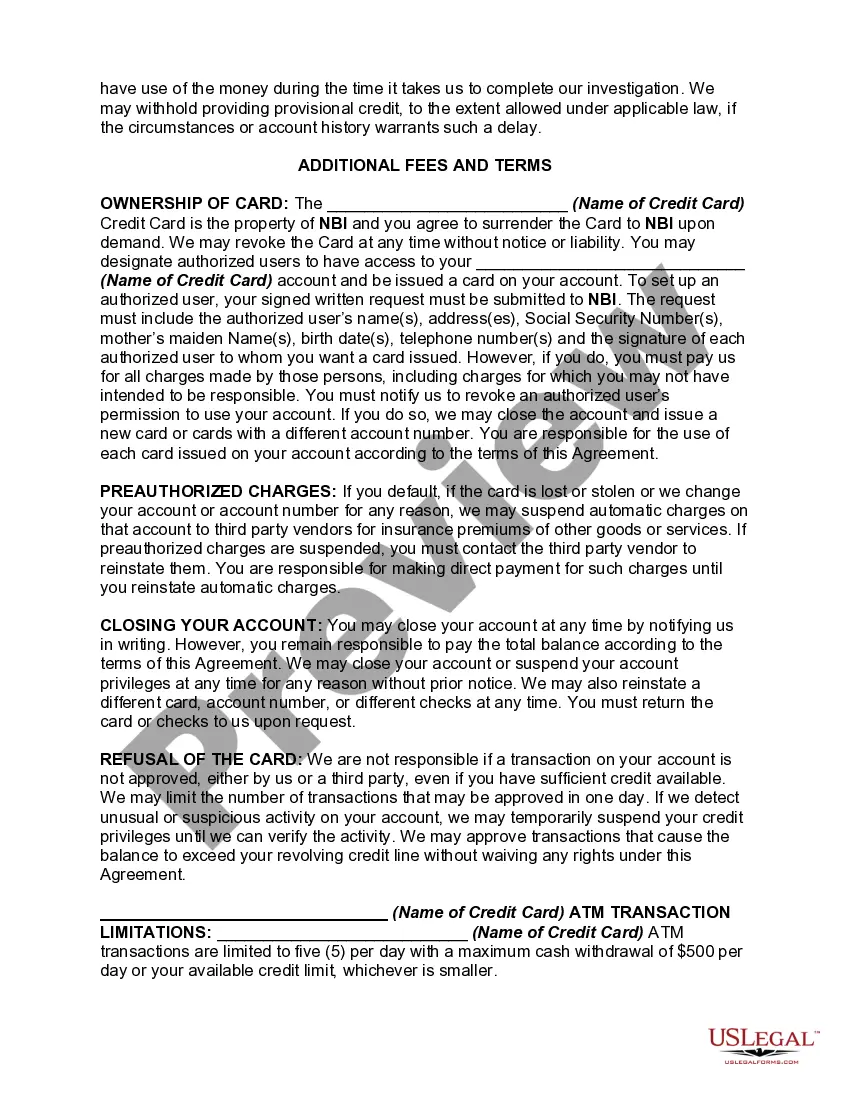
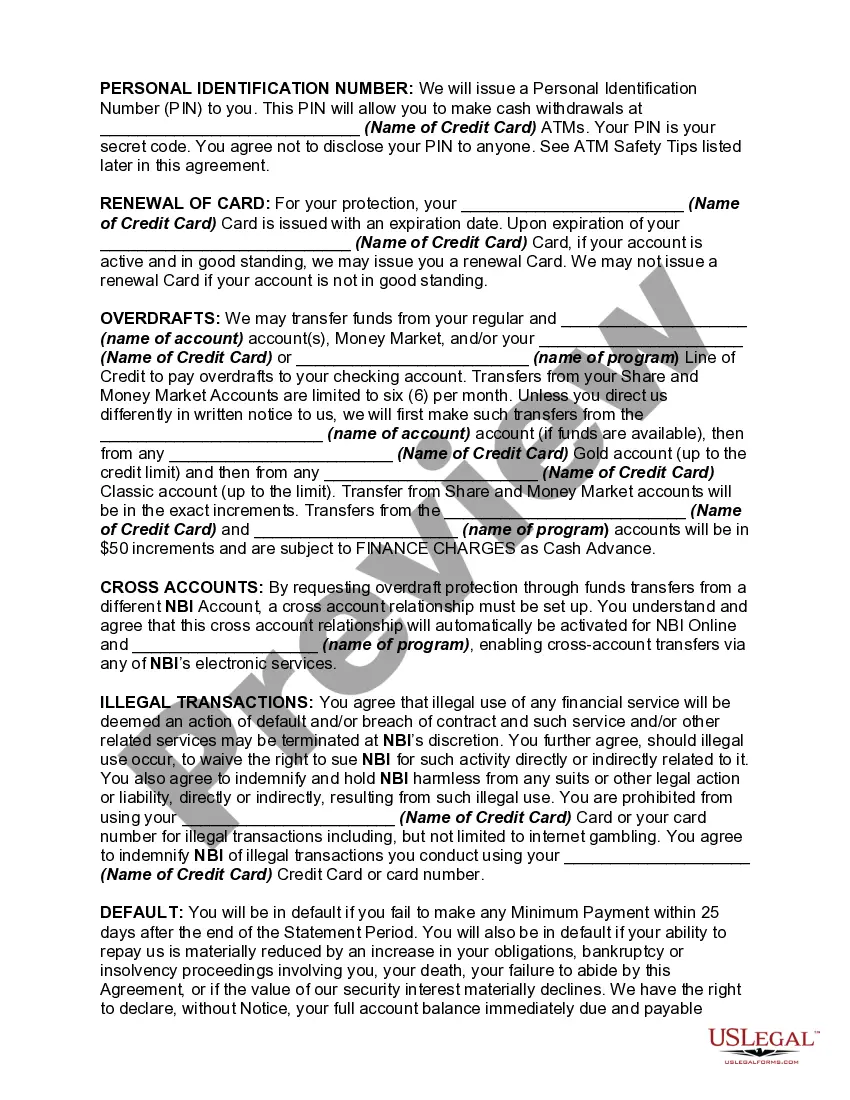

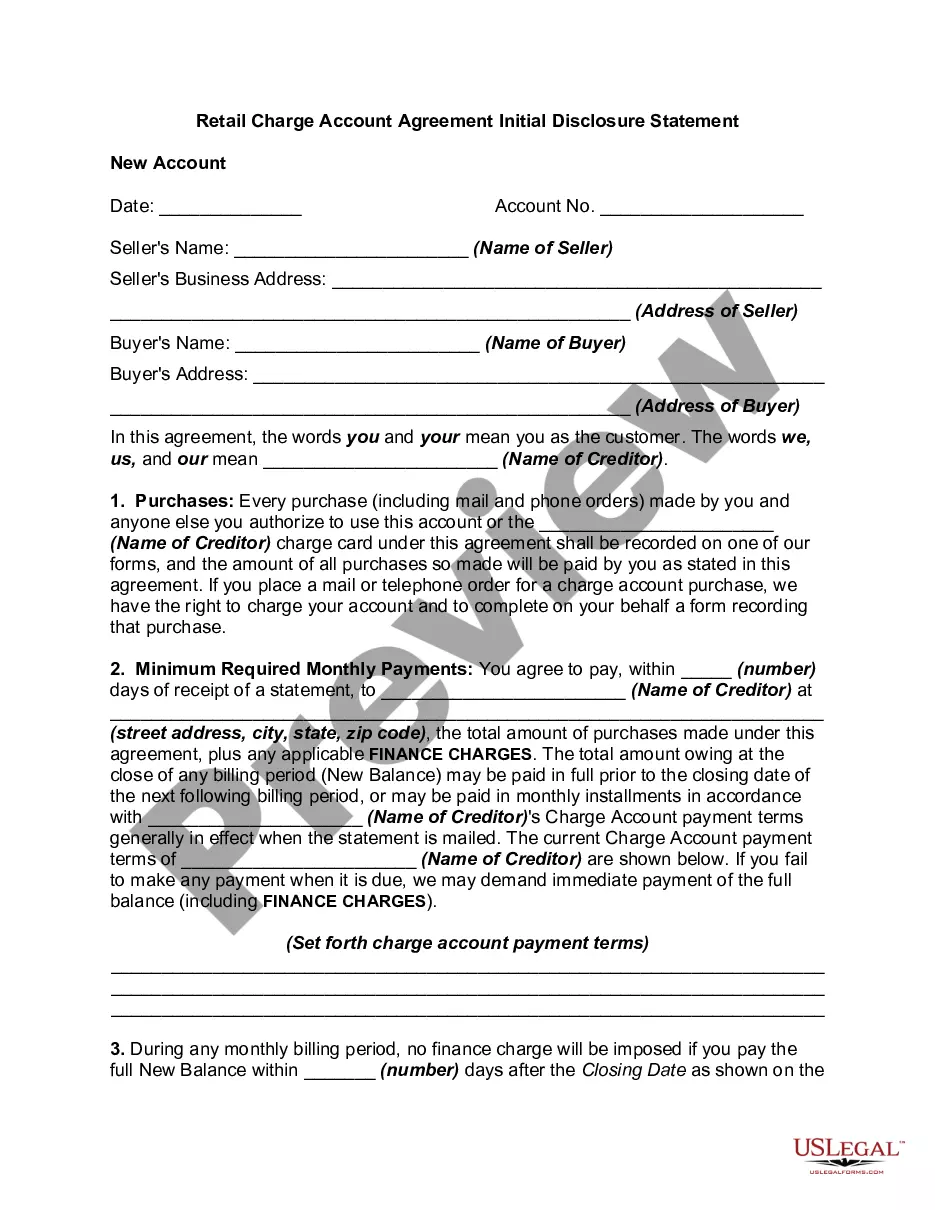
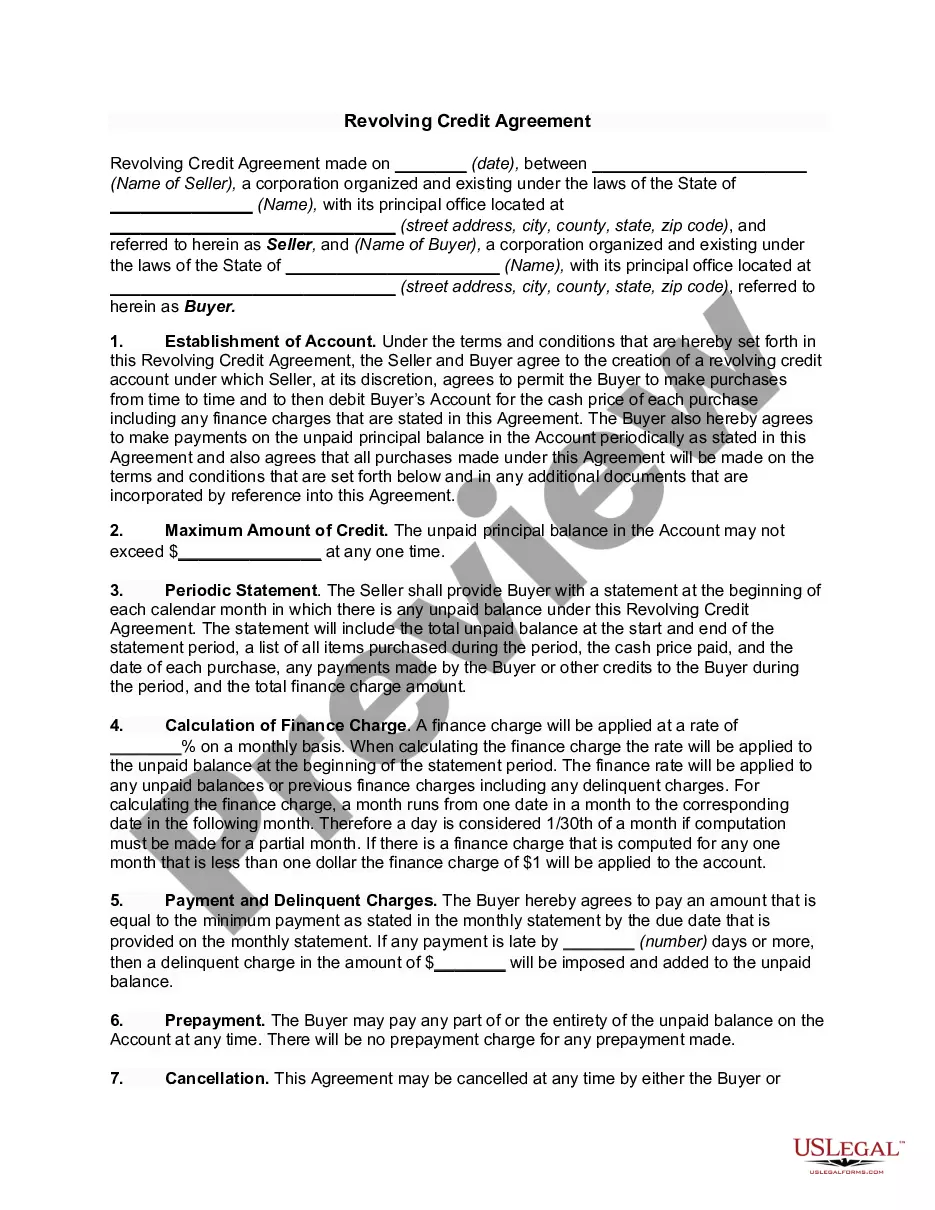
This form is needed when a prospective borrower applies for a credit card with a financial institution. It should be used whenever a new credit card account is opened to clarify the terms and conditions that govern its use.
Intended Audience:
- Individuals applying for a new credit card.
- Existing credit cardholders who need to understand the terms of their account.
- Financial institutions that wish to disclose terms for their credit card offerings.
Steps to Complete the Credit Card Agreement:
- Identify the name of the banking institution issuing the credit card.
- Fill in the specific name of the credit card being applied for.
- Review and understand the terms presented, especially regarding finance charges and repayment obligations.
- Provide any requested personal information and signature to affirm acceptance of the terms.
- Make sure to keep a copy of the completed agreement for your records.
This form does not typically require notarization unless specified by local law.
Get your form ready online
Our built-in tools help you complete, sign, share, and store your documents in one place.
Make edits, fill in missing information, and update formatting in US Legal Forms—just like you would in MS Word.
Download a copy, print it, send it by email, or mail it via USPS—whatever works best for your next step.
Sign and collect signatures with our SignNow integration. Send to multiple recipients, set reminders, and more. Go Premium to unlock E-Sign.
If this form requires notarization, complete it online through a secure video call—no need to meet a notary in person or wait for an appointment.
We protect your documents and personal data by following strict security and privacy standards.

Make edits, fill in missing information, and update formatting in US Legal Forms—just like you would in MS Word.

Download a copy, print it, send it by email, or mail it via USPS—whatever works best for your next step.

Sign and collect signatures with our SignNow integration. Send to multiple recipients, set reminders, and more. Go Premium to unlock E-Sign.

If this form requires notarization, complete it online through a secure video call—no need to meet a notary in person or wait for an appointment.

We protect your documents and personal data by following strict security and privacy standards.
- Failing to read the agreement thoroughly before signing.
- Not providing accurate personal information on the application.
- Overlooking deadlines for payments and understanding finance charges.
- Convenient online access ensures that the latest terms are available at any time.
- The ability to download and save forms provides ease of reference and documentation.
- Completing this form online allows for quicker processing and approval timelines.
- The agreement is legally binding once signed by both parties.
- It protects both the issuer and the cardholder by clearly outlining responsibilities.
- Failure to comply with the terms outlined may result in penalties or legal action.
- The Credit Card Agreement and Disclosure Statement is crucial for understanding your credit card terms.
- Awareness of finance charges and payment terms can prevent financial pitfalls.
- Always keep a copy of the signed agreement for personal records.
Looking for another form?
Form popularity
FAQ
The CARD Act requires financial institutions and businesses to disclose vital information when issuing new credit cards. A card issuer must disclose interest rates, grace periods and annual fees. The issuer is also required to remind you of an upcoming annual fee prior to a card's renewal.
The CSD discloses the credit score, the lender used in connection with the consumers' loan application and home loan, and the key factors affecting the credit score.It contains contact information for each credit reporting agency used, including the agency name, telephone number and website.
The first 6 digits of your credit card number represent the industry of your credit card and the card issuer. The last digit of your card number is used to verify your card info. The credit card account number begins at the seventh digit and ends on the second-to-last digit.
Credit card disclosure must contain a list of fees associated with your credit card. Some common credit card fees include annual fees, cash advance fees, foreign transaction fees (also called a "currency conversion" fee), late payment fees, over-the-limit fees, and returned payment fees.
Due Date for Payment. The first and the most important thing in your credit card statement is the payment due date. Minimum Amount Due. Total Outstanding. Credit Limits. Reward Point Balance. Account Summary. Transaction Details.
A summary and detailed list of payments, credits, purchases, balance transfers, cash advances, fees, interest, and other transactions. A breakdown of the types of balances on your account and the interest rate and interest charges for each. Your credit limit and available credit.
Account Summary. The first thing you'll probably lay your eyes on is the account summaryit's at the top of your statement. Payment Information. Late and Minimum Payment Warnings. Account Changes. Transactions. Interest Charged and Fees Applied. Year-to-Date Totals. Interest Charge Calculation.
1Account Summary. The first thing you'll probably lay your eyes on is the account summaryit's at the top of your statement.2Payment Information.3Late and Minimum Payment Warnings.4Account Changes.5Transactions.6Interest Charged and Fees Applied.7Year-to-Date Totals.8Interest Charge Calculation.