To Employee for Handling of Difficulty
Overview of this form
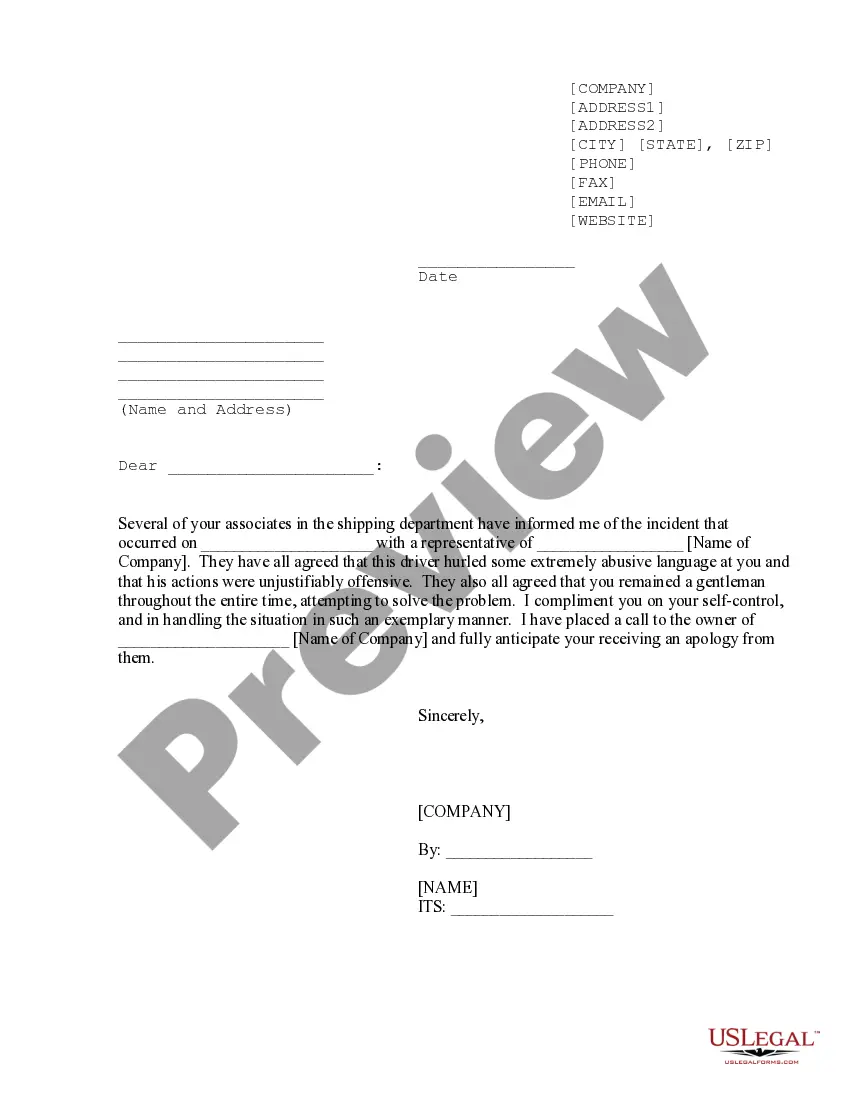
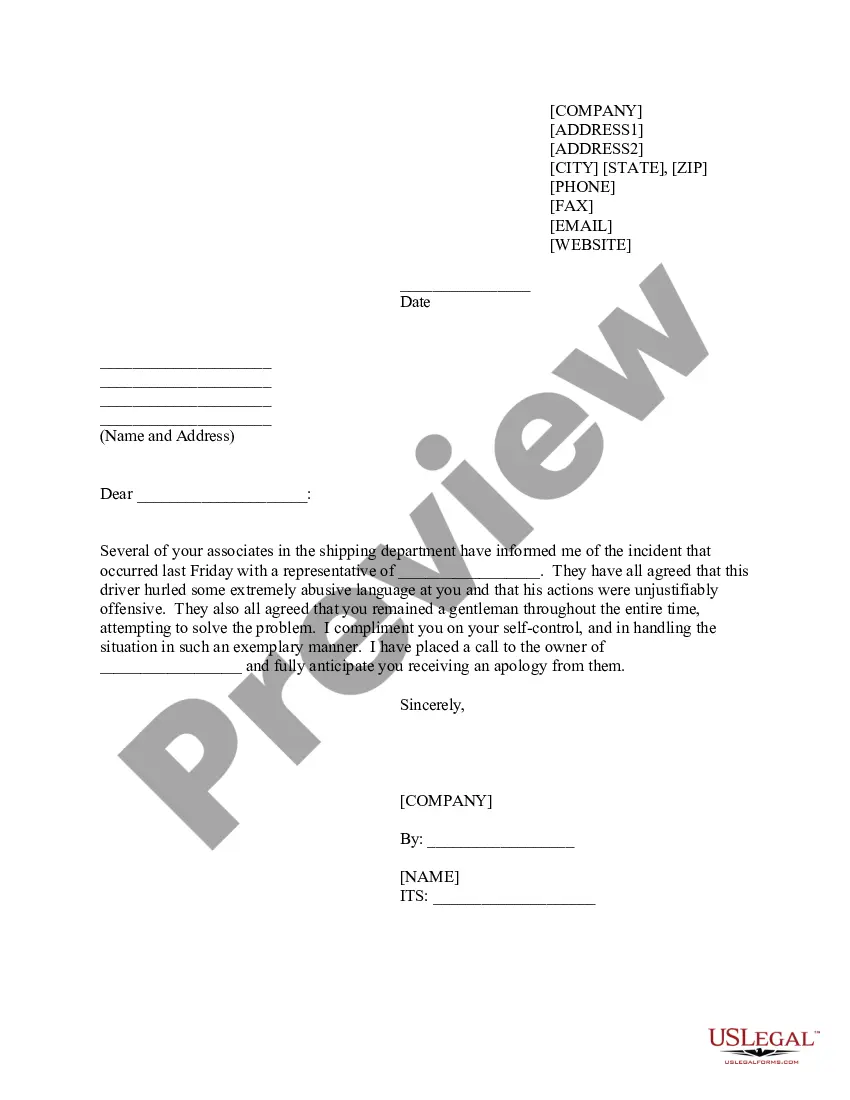
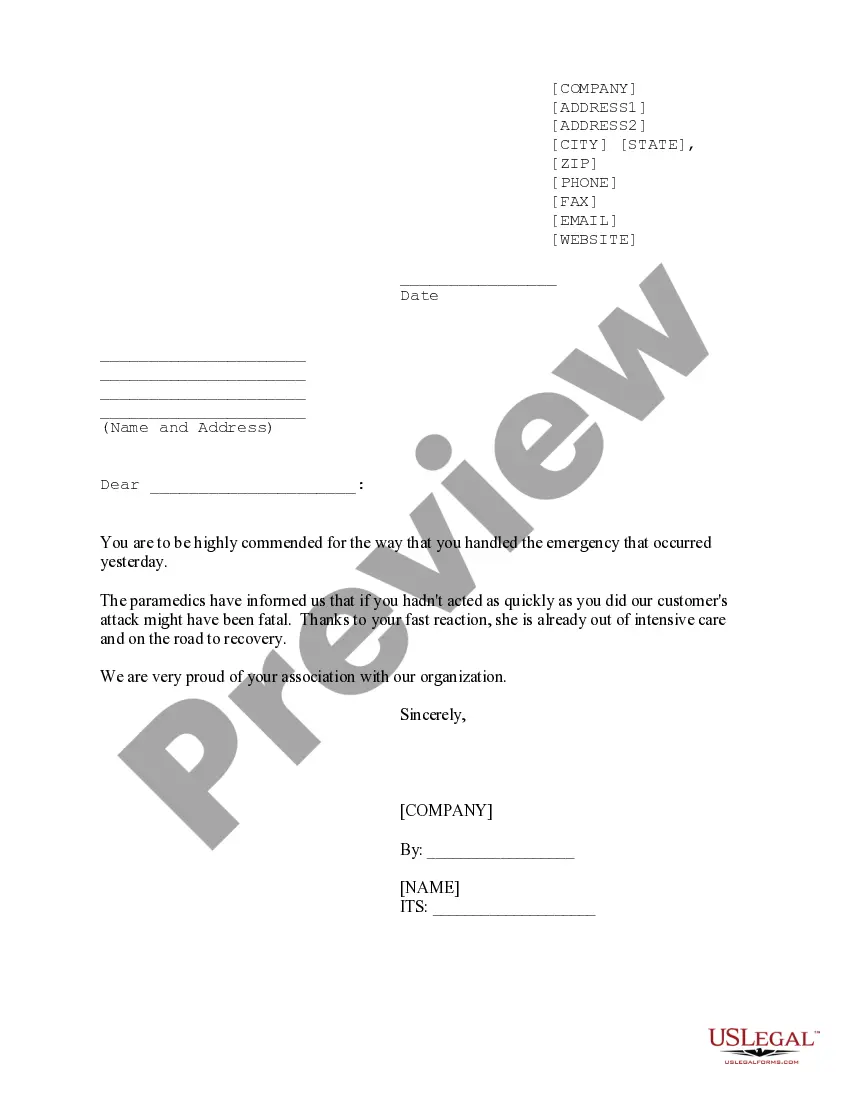
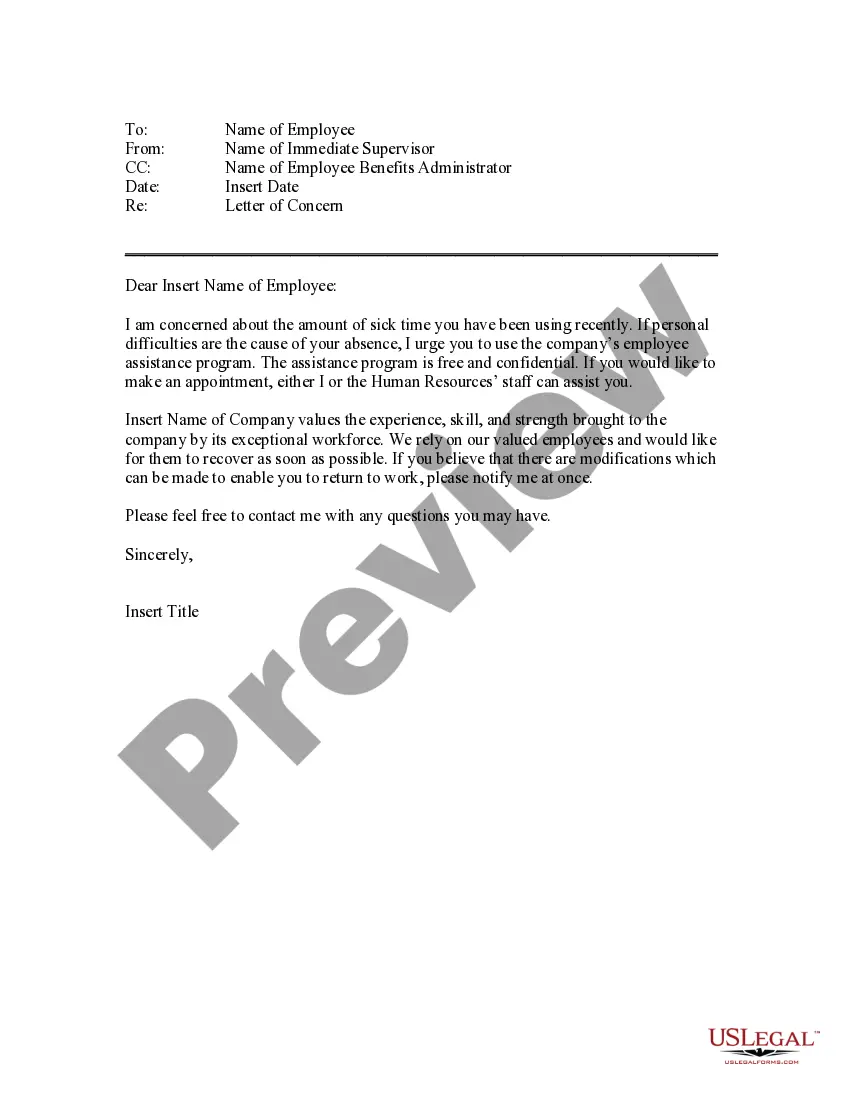
This form, titled "To Employee for Handling of Difficulty," serves as a formal acknowledgment from an employer to an employee regarding a specific incident involving a problematic interaction with a third-party representative. Its primary purpose is to commend the employee's composure in a difficult situation and to assure them of the company's support in addressing the issue. Unlike similar forms, this document focuses specifically on incidents involving external parties and highlights the company's recognition of the employee's professional conduct.
Key parts of this document
- Sender's address and contact information
- Date of the incident
- Recipient's name and address
- Description of the incident and acknowledgment of the employee's behavior
- Assurance of follow-up with the involved third party
- Signature block for company representative
Common use cases
This form is typically used when an employee has encountered difficulties with a customer or vendor, especially if the interaction involved unacceptable behavior. It is particularly relevant when the incident was witnessed by colleagues and the company wishes to formally acknowledge the employee's professionalism while promising to address the matter with the third party involved.
Who should use this form
- Employers who want to document an employee's exemplary behavior in a difficult situation
- Human resources departments addressing employee grievances related to external interactions
- Managers seeking to support their team members after handling challenging circumstances
How to prepare this document
- Input the sender's address and contact details at the top of the form.
- Enter the date when the incident occurred.
- Fill in the recipient's name and address accurately.
- Provide a clear description of the incident, highlighting the employeeâs handling of the situation.
- Include your name and title along with the company name in the signature block to formally endorse the acknowledgment.
Does this document require notarization?
This form does not typically require notarization unless specified by local law. It serves as an internal communication tool aimed at documenting and addressing the incident without the need for legal witnessing.
Get your form ready online
Our built-in tools help you complete, sign, share, and store your documents in one place.
Make edits, fill in missing information, and update formatting in US Legal Forms—just like you would in MS Word.
Download a copy, print it, send it by email, or mail it via USPS—whatever works best for your next step.
Sign and collect signatures with our SignNow integration. Send to multiple recipients, set reminders, and more. Go Premium to unlock E-Sign.
If this form requires notarization, complete it online through a secure video call—no need to meet a notary in person or wait for an appointment.
We protect your documents and personal data by following strict security and privacy standards.

Make edits, fill in missing information, and update formatting in US Legal Forms—just like you would in MS Word.

Download a copy, print it, send it by email, or mail it via USPS—whatever works best for your next step.

Sign and collect signatures with our SignNow integration. Send to multiple recipients, set reminders, and more. Go Premium to unlock E-Sign.

If this form requires notarization, complete it online through a secure video call—no need to meet a notary in person or wait for an appointment.

We protect your documents and personal data by following strict security and privacy standards.
Common mistakes to avoid
- Failing to include the incident date, which is crucial for documentation.
- Not providing specific details about the incident, leading to misunderstandings.
- Leaving the signature block incomplete, which undermines the form's validity.
Advantages of online completion
- Convenience of completing the form from anywhere, at any time.
- Editable format that allows for easy customization based on specific incidents.
- Access to professionally drafted templates that ensure legal compliance.
Looking for another form?
Form popularity
FAQ
Telling your boss about your personal problem can often make you feel better?after all, it helps to get it out in the open. But unless the circumstances are right, that effect can be short-lived. It's essential to consider the effects both short-term and long-term before you confide in them.
Here are 10 tips for managing emotional employees: De-escalate the situation.Don't take it personally.Plan ahead.Start with a positive.T.H.I.N.K.Focus on performance.Acknowledge and listen.Pay attention.
What To Do When Employees Bring Personal Struggles Into The Workplace Make sure that work isn't the source of the problem.Speak directly to the employee.Don't pry too deeply, but be willing to listen.Be sympathetic but fair.Refer the employee to appropriate resources.
Dos and Don'ts for Managing an Employee Through a Personal Crisis Do Listen and Be Compassionate. Don't Be Too Friendly. Don't Assume the Problem Is at Home. Do Offer Reasonable Assistance. Do Communicate with the Rest of Your Team. Do Create a Company Support System. Do Check in with the Employee. Plan for the Worst.
Follow these steps to deal with difficult employees: Get more information. Provide feedback. Record negative behavior. Provide consistent action. Follow company policy. Schedule a follow-up meeting. Remain professional. Keep a positive perspective.
Start by bringing it to their attention in a non-confrontational way. Assume good intentions if at all possible. Remember that not all difficult employees intend to be difficult. Then, give them specific examples of their negative behavior to help them understand the problem.
How to tell an employee they need to improve Schedule a meeting. When you decide you need to speak to an employee about their performance, you can schedule an informal, one-on-one meeting.Ask how they're doing.Explain missed expectations.Set clear goals and metrics.Offer to support them.Schedule a follow-up meeting.