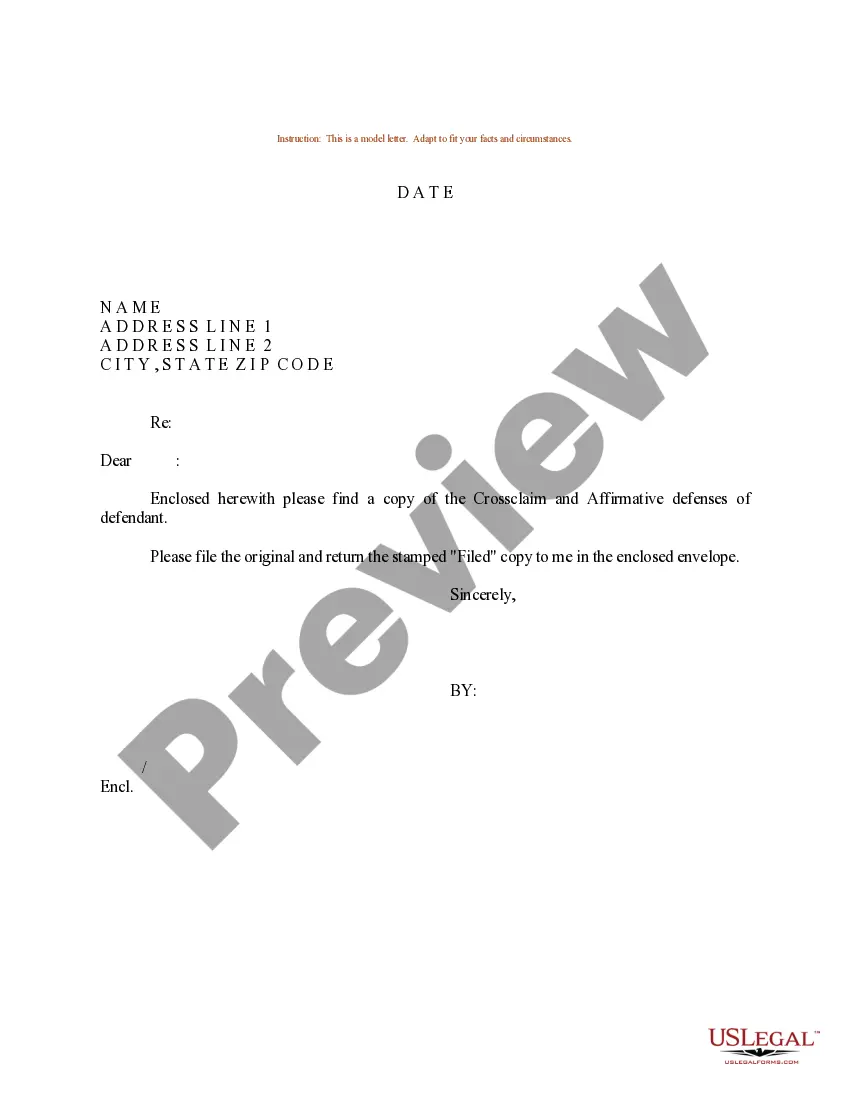
Sample Letter to Clerk regarding filing of Crossclaim and Affirmative Defenses
What this document covers
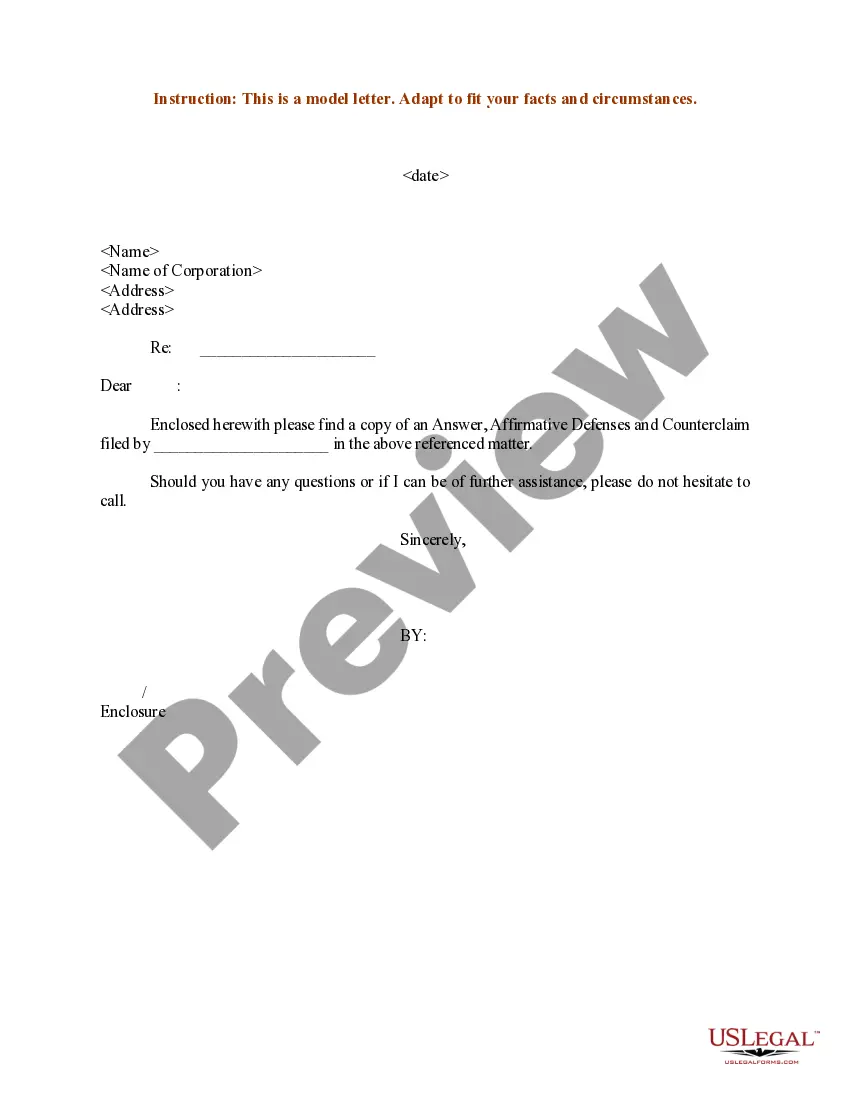
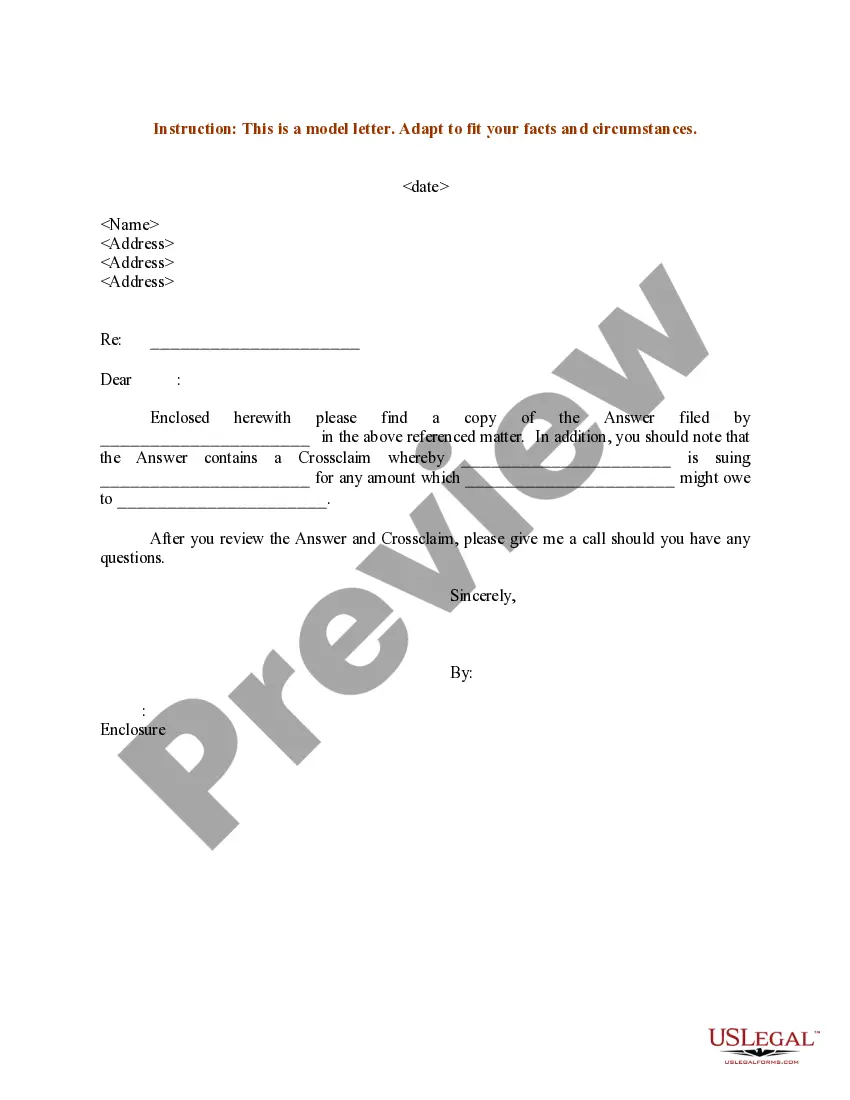
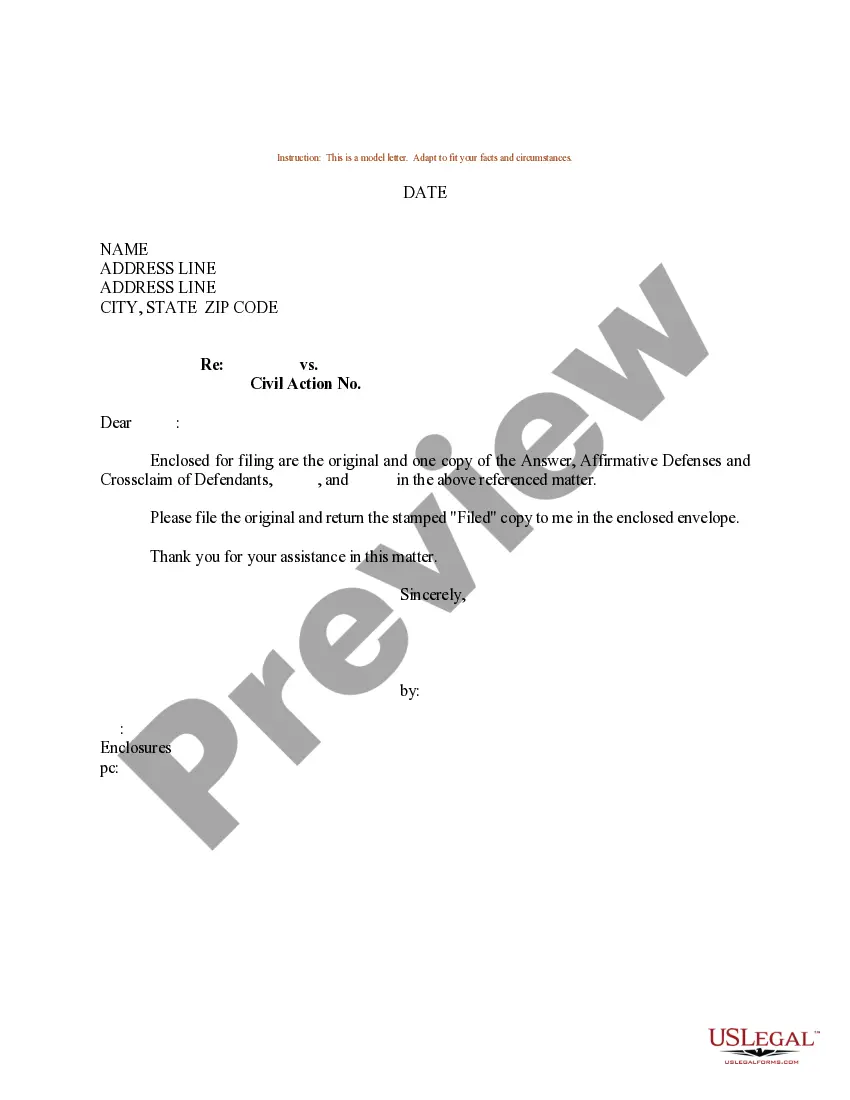
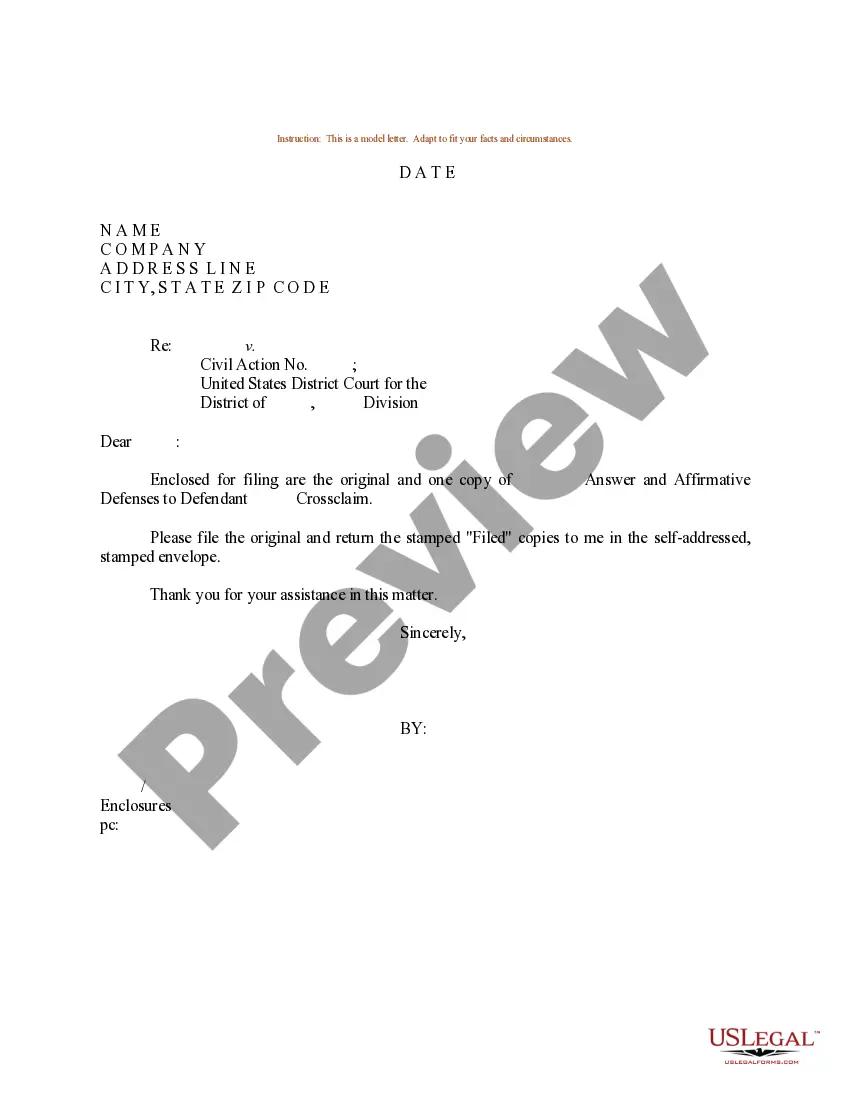
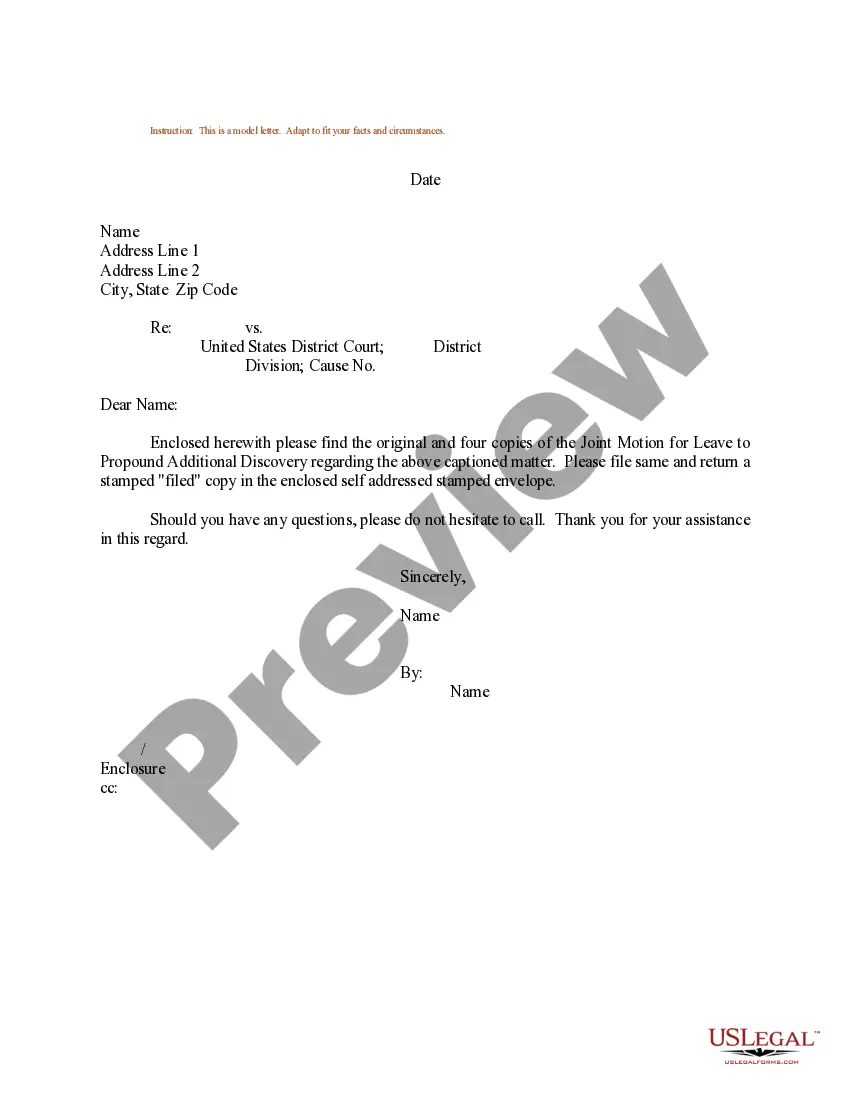
This Sample Letter to Clerk regarding filing of Crossclaim and Affirmative Defenses is a formal document designed to notify the court clerk of a crossclaim and affirmative defenses in a legal proceeding. This letter serves as a guide for individuals needing to file such a document and ensures they follow appropriate legal formats and protocols. It is distinct from other legal forms, such as general claim forms, as it specifically addresses the particulars of a crossclaim and defenses within the context of a legal action.
Key components of this form
- Date of submission
- Sender's name and address
- Recipient's details (court clerk)
- Subject line indicating the purpose of the letter
- Body content specifying the crossclaim and affirmative defenses
- Signature of the sender
Common use cases
This form should be used when a party in a legal case wishes to file a crossclaim against another party while also presenting affirmative defenses. It is suitable in situations where legal action involves multiple parties and where it is necessary to formally notify the court of these claims and defenses to ensure they are properly considered during the proceedings.
Intended users of this form
- Individuals involved in a legal dispute who need to file a crossclaim.
- Attorneys preparing documentation for clients in a legal case.
- Anyone who is responding to a claim and wishes to assert their own rights or defenses.
Steps to complete this form
- Identify the correct date for the submission.
- Fill in your name and address in the designated fields.
- Provide the clerk's name and address as well as the court's information.
- Clearly state the subject of the letter, indicating it relates to a crossclaim and affirmative defenses.
- In the body, explicitly outline the details of the crossclaim and any affirmative defenses being raised.
- Sign the letter to validate your filing before submission to the clerk.
Notarization requirements for this form
This form does not typically require notarization to be legally valid. However, some jurisdictions or document types may still require it. US Legal Forms provides secure online notarization powered by Notarize, available 24/7 for added convenience.
Get your form ready online
Our built-in tools help you complete, sign, share, and store your documents in one place.
Make edits, fill in missing information, and update formatting in US Legal Forms—just like you would in MS Word.
Download a copy, print it, send it by email, or mail it via USPS—whatever works best for your next step.
Sign and collect signatures with our SignNow integration. Send to multiple recipients, set reminders, and more. Go Premium to unlock E-Sign.
If this form requires notarization, complete it online through a secure video call—no need to meet a notary in person or wait for an appointment.
We protect your documents and personal data by following strict security and privacy standards.
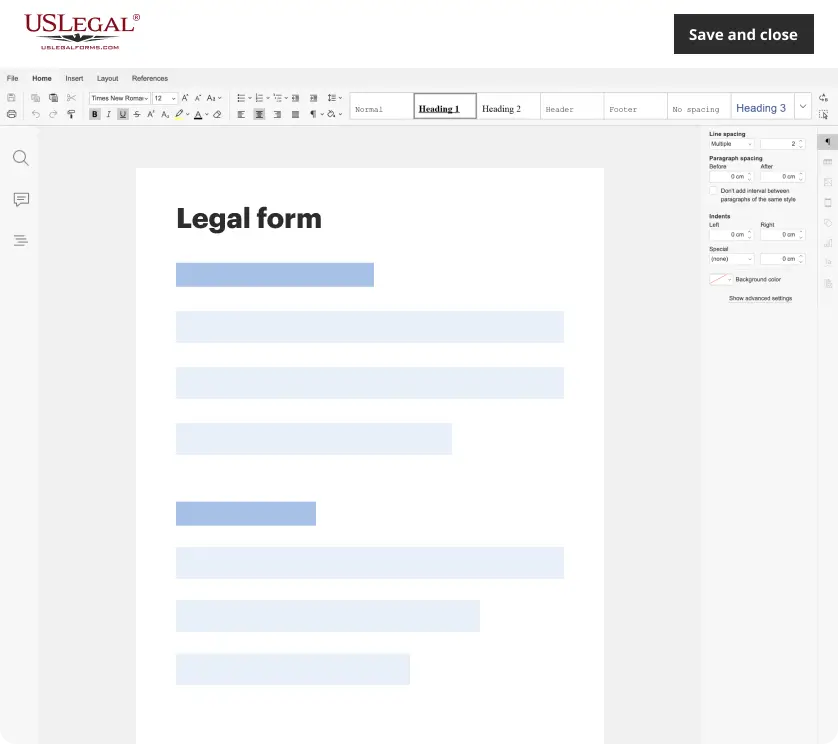
Make edits, fill in missing information, and update formatting in US Legal Forms—just like you would in MS Word.
Download a copy, print it, send it by email, or mail it via USPS—whatever works best for your next step.
Sign and collect signatures with our SignNow integration. Send to multiple recipients, set reminders, and more. Go Premium to unlock E-Sign.

If this form requires notarization, complete it online through a secure video call—no need to meet a notary in person or wait for an appointment.
We protect your documents and personal data by following strict security and privacy standards.
Typical mistakes to avoid
- Leaving out important details, such as case numbers or court information.
- Failing to sign the letter before submitting it.
- Not following specific state formatting requirements.
- Submitting the letter to the wrong court clerk or office.
Why complete this form online
- Convenient access to the form from any location.
- Easy to customize and edit your details directly in a word processor.
- Quick delivery and submission to the appropriate court clerk.
- Reliability in following the legal formatting required.
What to keep in mind
- This form is essential for filing a crossclaim and asserting affirmative defenses in court.
- Completing the form accurately and in compliance with local rules is crucial for it to be accepted.
- Using the form online ensures convenience and adherence to format standards.
Looking for another form?

Form popularity
FAQ
The plaintiff must give you responses to your request for admissions within 30 days. You do not need to do anything if you do not get a response. The plaintiff has 30 days to deny or object to the statements.
Provide the name of the court at the top of the Answer. You can find the information on the summons. List the name of the plaintiff on the left side. Write the case number on the right side of the Answer. Address the Judge and discuss your side of the case. Ask the judge to dismiss the case.
An affirmative defense operates to prevent conviction even when the prosecutor has proof beyond a reasonable doubt as to every element of the crime. Some jurisdictions place the burden on the defendant to prove the defense, while others require that the prosecution disprove the defense beyond a reasonable doubt.
When any type of legal action is being taken against you - whether it be that you are being formally sued (i.e. served with a complaint, or counter-complaint or cross-complaint) or if you are the recipient of a notice of adverse action in public employment or you received an accusation seeking to revoke your license -
Rule 1.140 - Defenses (a) When Presented. (1) Unless a different time is prescribed in a statute of Florida, a defendant shall serve an answer within 20 days after service of original process and the initial pleading on the defendant, or not later than the date fixed in a notice by publication.
Pull the header information from the plaintiff's petition. Title your Answer Answer to Plaintiff's Petition/Complaint. Center this title and make it bold. Introduce yourself. Admit, deny, or claim that you lack sufficient knowledge to admit or deny each of the plaintiff's numbered allegations.
13 (When pleadings deemed denied and put in issue). Under the codes the pleadings are generally limited. A reply is sometimes required to an affirmative defense in the answer.In other jurisdictions no reply is necessary to an affirmative defense in the answer, but a reply may be ordered by the court.
There is no obligation to respond to alleged affirmative defenses....they can be contested at trial or summary judgment.
A response to affirmative defenses is not required. Therefore, they likely do not plan on filing a response since it have been 5 months. The rules of civil procedure permit a response in 30 days without permission from the court.