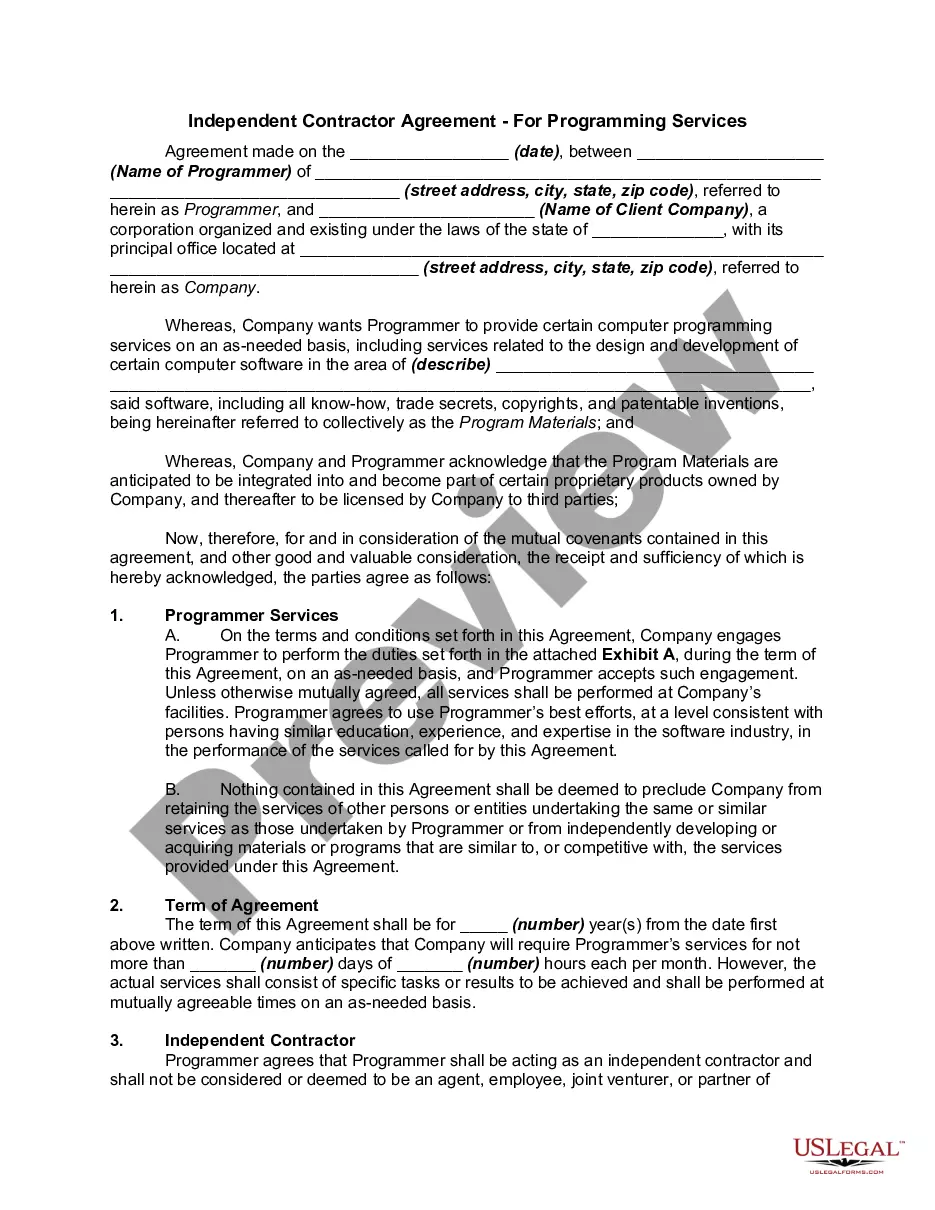
Independent Contractor Agreement - For Programming Services
About this form
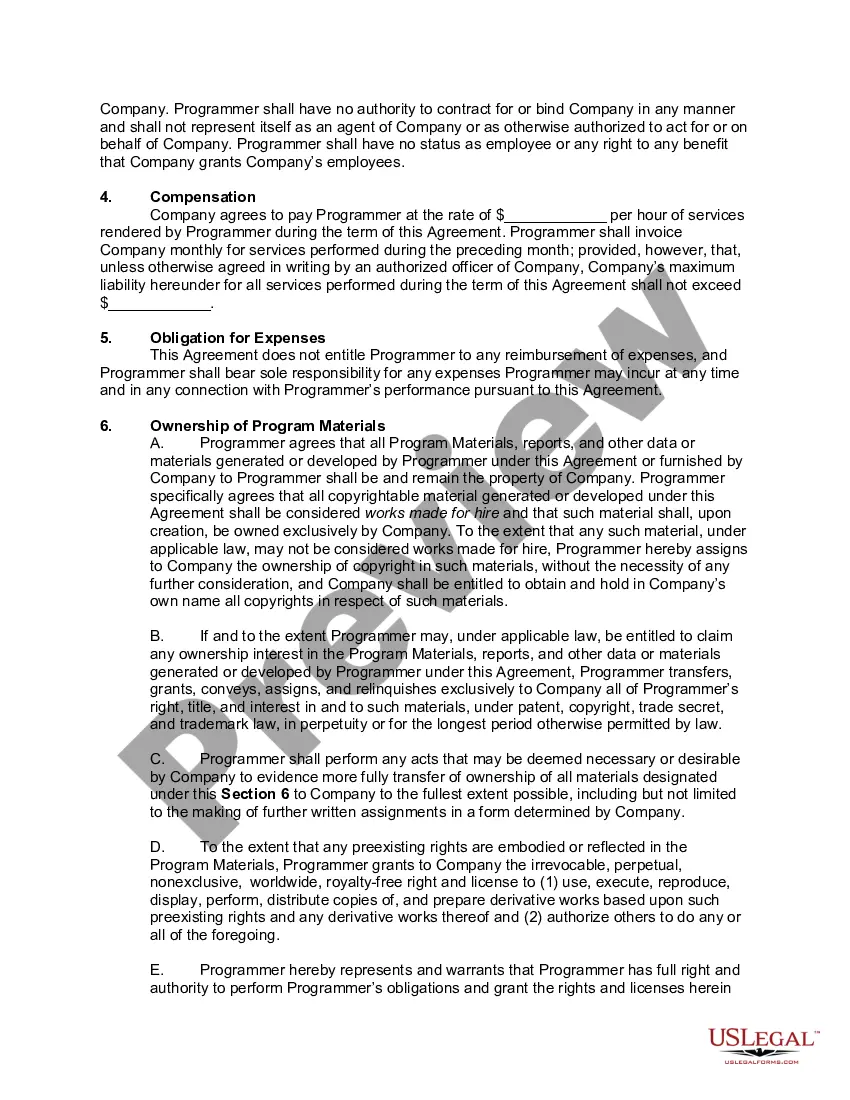
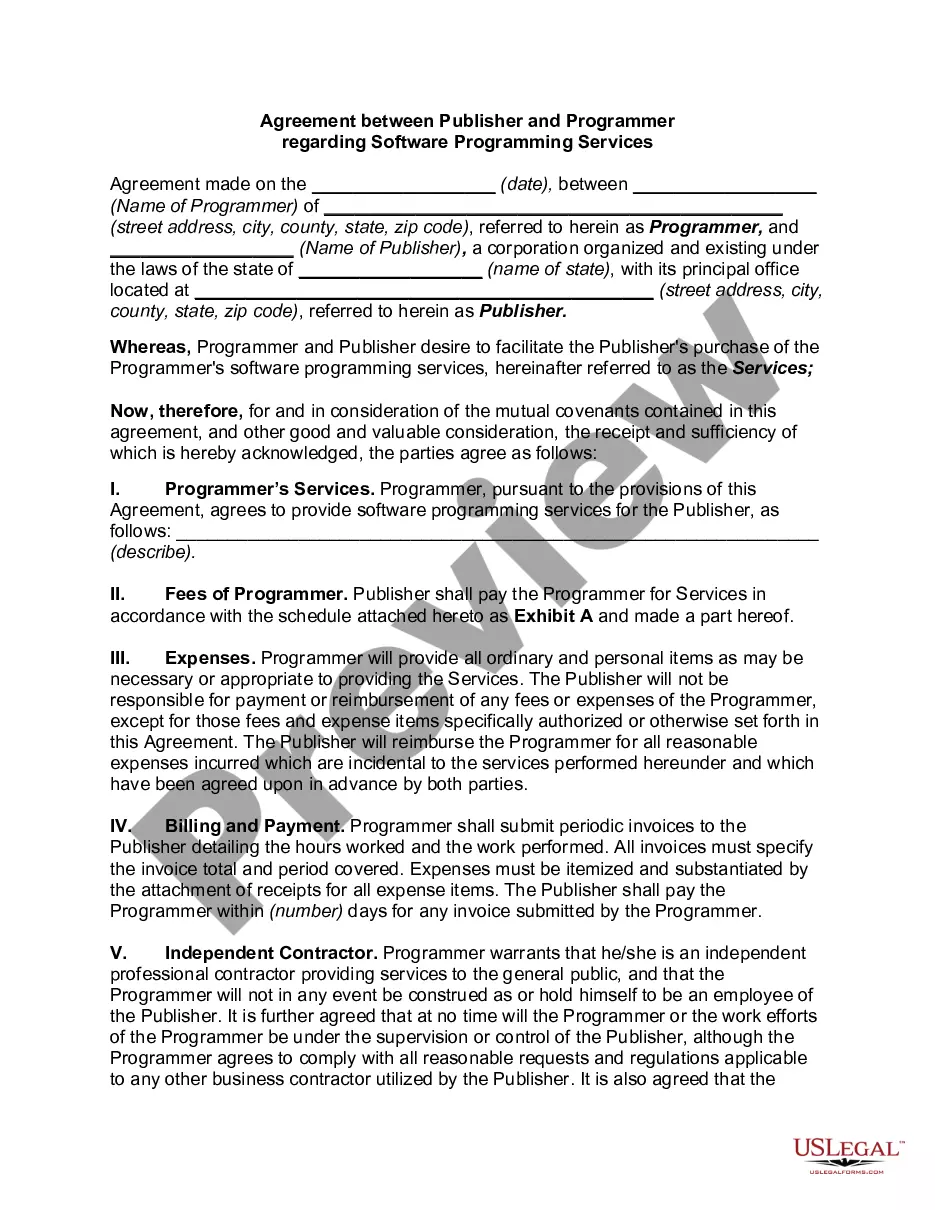
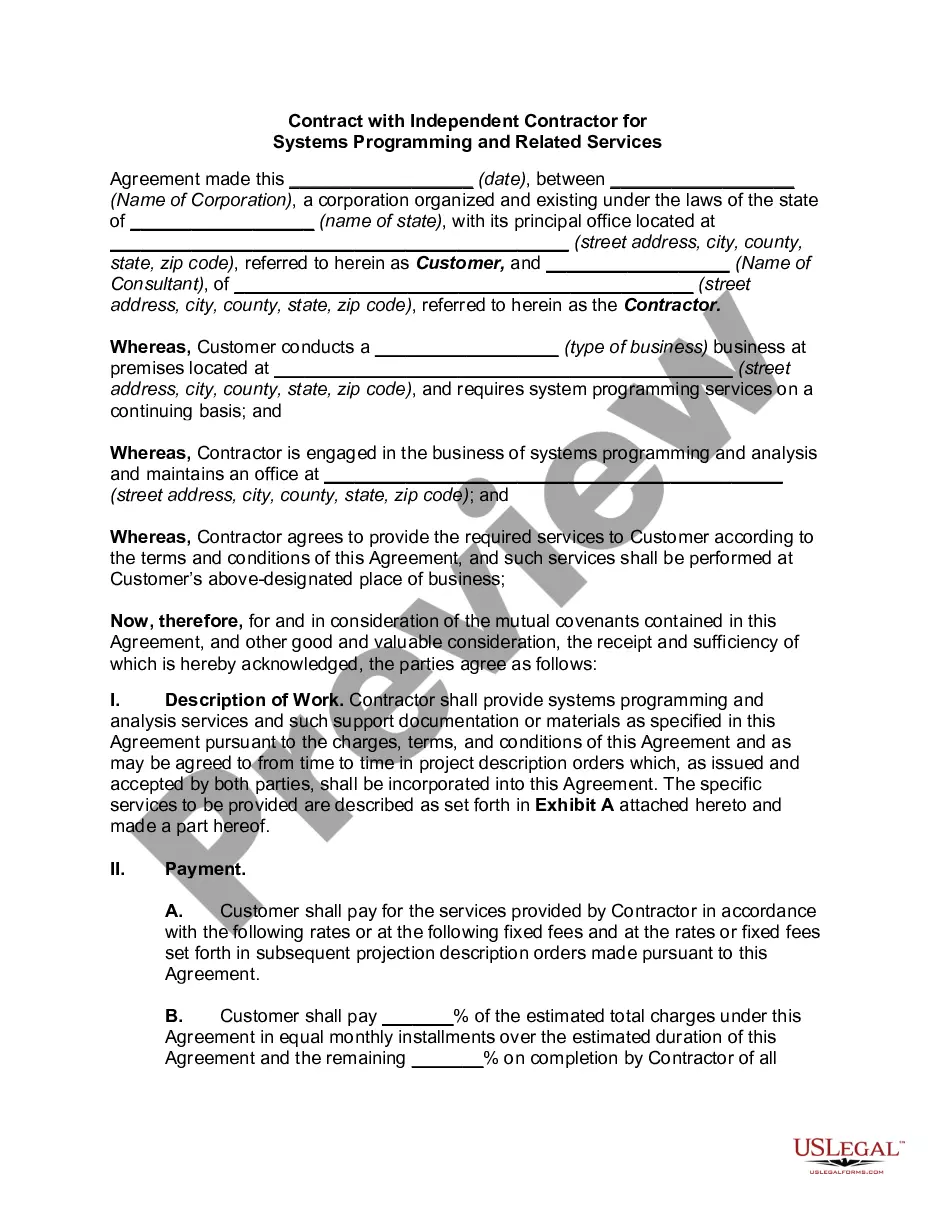
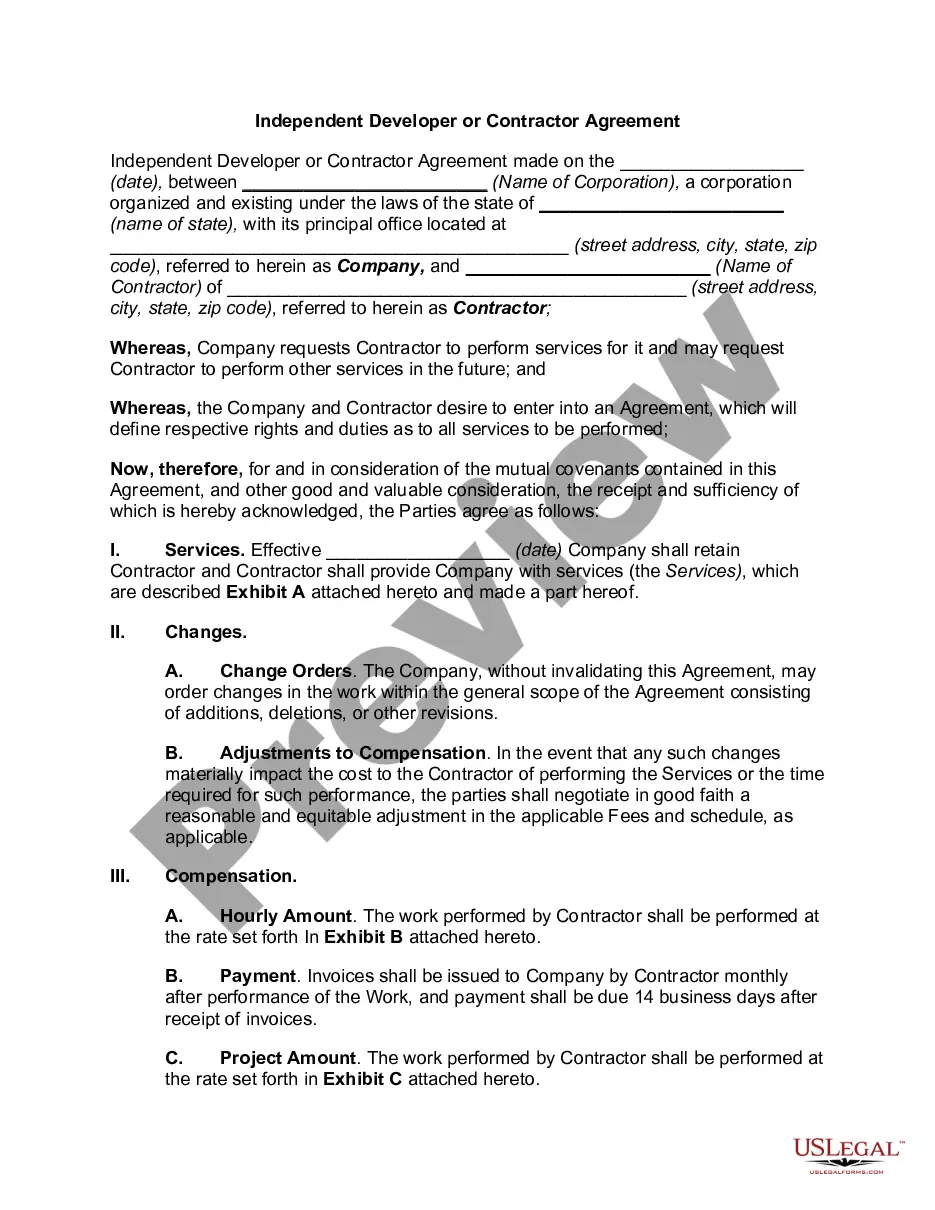
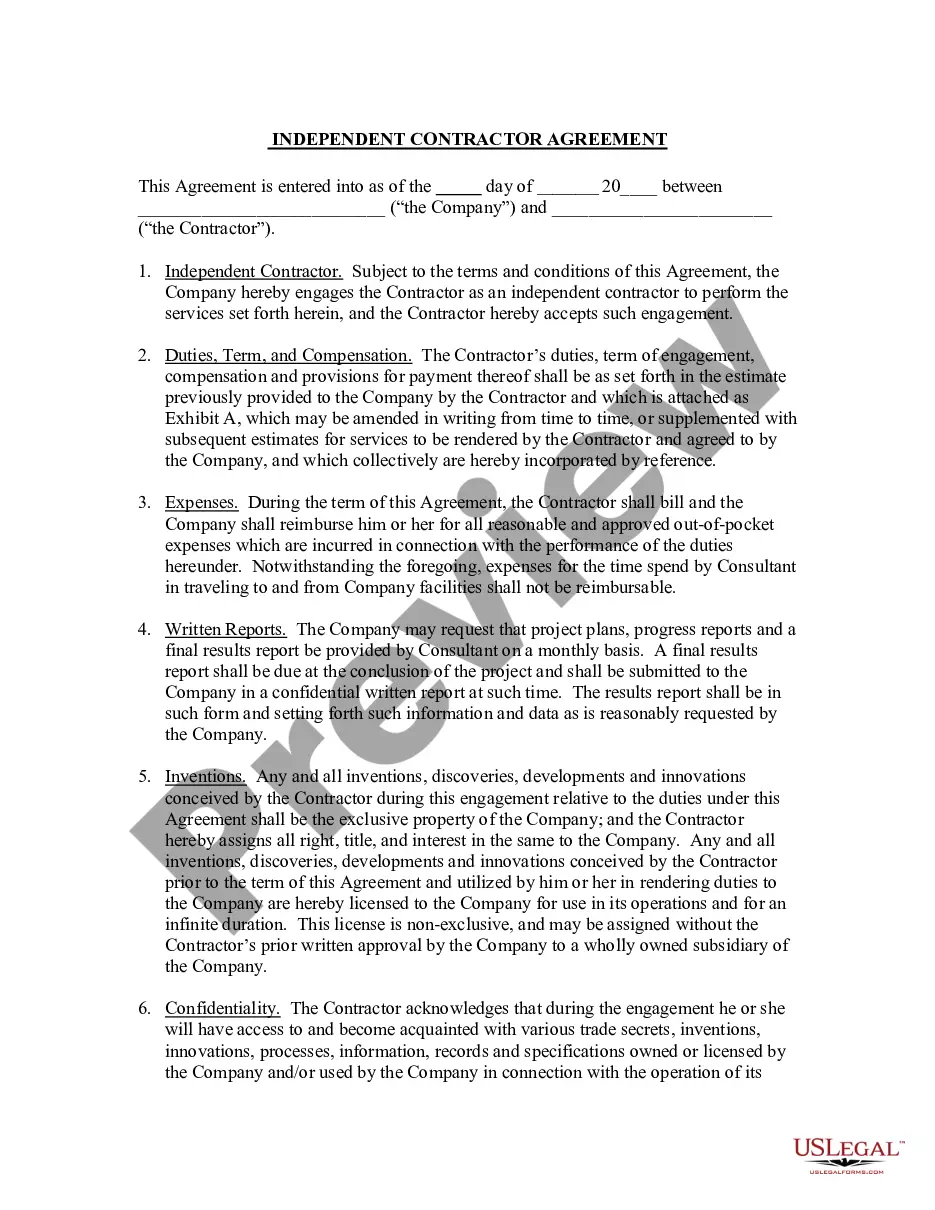
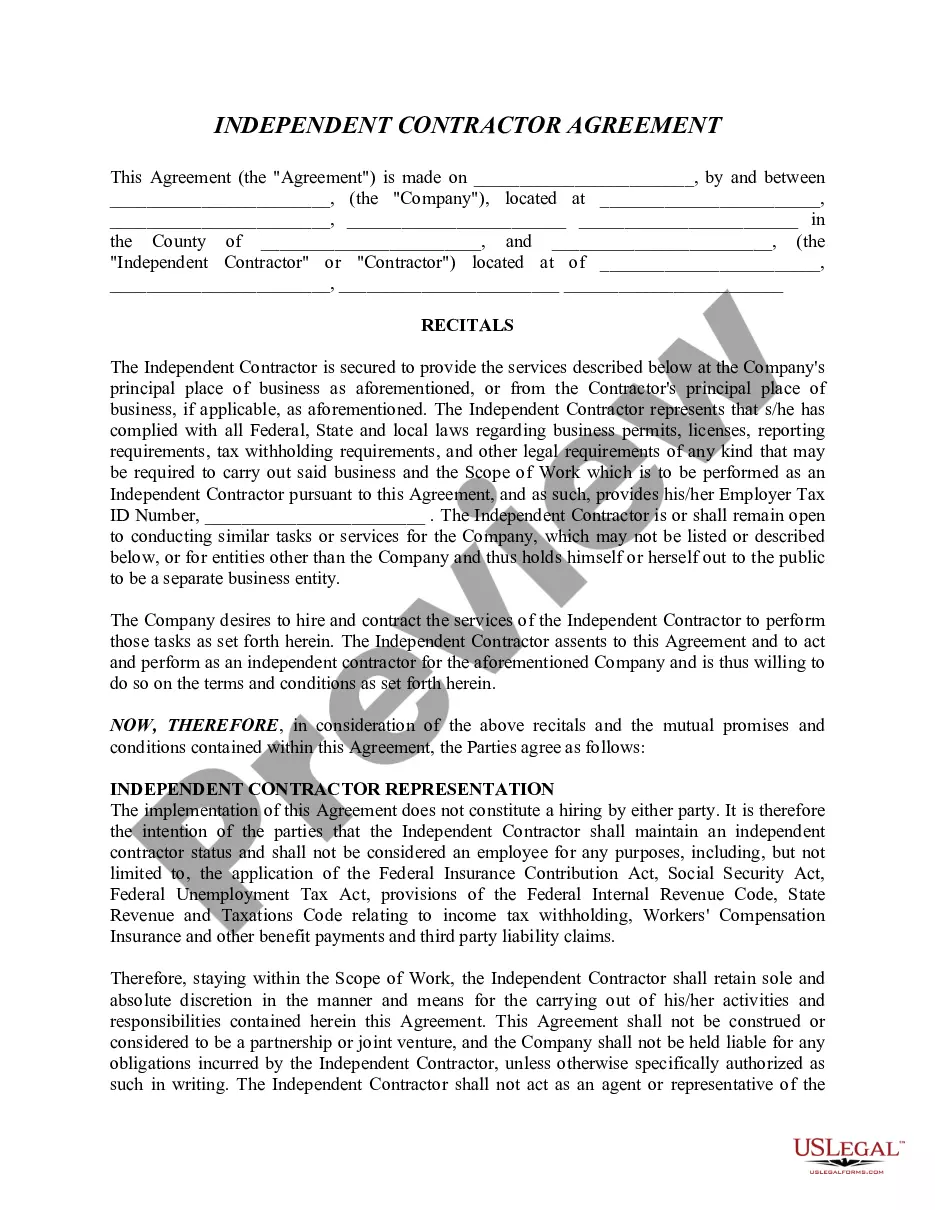
The Independent Contractor Agreement for Programming Services is a legal document between a programmer and a company that outlines the terms of their relationship. This agreement specifies that the programmer is an independent contractor rather than an employee, meaning they have control over how to perform their services and are responsible for their own taxes and expenses. The form is essential for defining responsibilities, compensation, and ownership of any intellectual property created during the engagement. It is distinct from employment contracts, which establish an employer-employee relationship with different responsibilities and rights.
Key parts of this document
- Date of the agreement and identification of parties involved.
- Description of services to be provided by the programmer.
- Independent contractor clause clarifying the relationship between parties.
- Compensation details for services rendered.
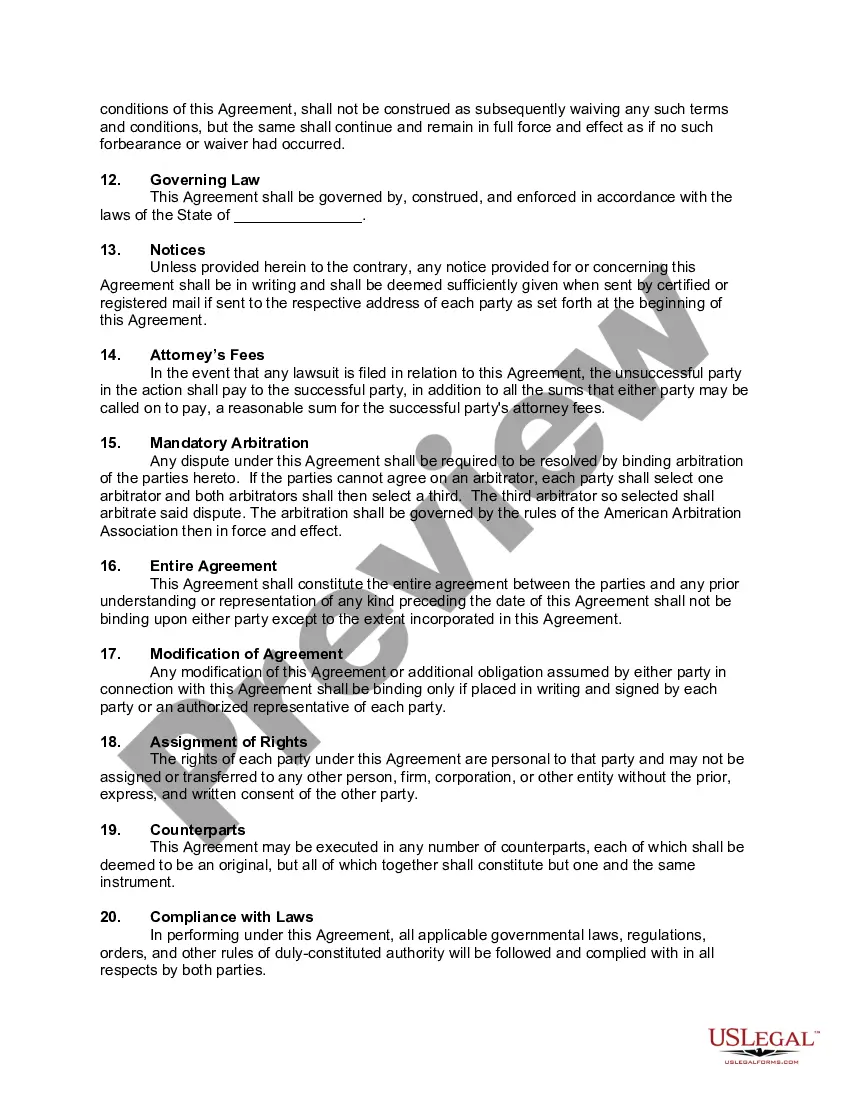
- Ownership and rights concerning the intellectual property created.
- Termination provisions and procedures.


When this form is needed
This form should be used when a company hires a programmer to provide services on a contractual basis. It is suitable for situations where the programmer needs to retain control over their work, such as software development or other technical projects. The agreement helps clarify the nature of the relationship, compensation, and rights over any products created during the engagement, which is vital in preventing misunderstandings later.
Intended users of this form
- Companies or businesses seeking to hire freelance programmers or developers.
- Independent programmers looking to define their engagement terms with clients.
- Legal professionals drafting contracts for clients working with independent contractors in the tech industry.
How to prepare this document
- Identify the date of the agreement and enter the names and addresses of both the programmer and the company.
- Clearly describe the programming services to be provided, including any specific details about the software or project.
- Specify the compensation rate and payment terms as agreed upon.
- Outline the project timeline, including the expected duration and how services will be provided.
- Ensure all parties sign the agreement to make it legally binding.
Is notarization required?
Notarization is generally not required for this form. However, certain states or situations might demand it. You can complete notarization online through US Legal Forms, powered by Notarize, using a verified video call available anytime.
Get your form ready online
Our built-in tools help you complete, sign, share, and store your documents in one place.
Make edits, fill in missing information, and update formatting in US Legal Forms—just like you would in MS Word.
Download a copy, print it, send it by email, or mail it via USPS—whatever works best for your next step.
Sign and collect signatures with our SignNow integration. Send to multiple recipients, set reminders, and more. Go Premium to unlock E-Sign.
If this form requires notarization, complete it online through a secure video call—no need to meet a notary in person or wait for an appointment.
We protect your documents and personal data by following strict security and privacy standards.

Make edits, fill in missing information, and update formatting in US Legal Forms—just like you would in MS Word.

Download a copy, print it, send it by email, or mail it via USPS—whatever works best for your next step.

Sign and collect signatures with our SignNow integration. Send to multiple recipients, set reminders, and more. Go Premium to unlock E-Sign.

If this form requires notarization, complete it online through a secure video call—no need to meet a notary in person or wait for an appointment.

We protect your documents and personal data by following strict security and privacy standards.
Common mistakes
- Failing to clearly define the scope of services, leading to misunderstandings.
- Neglecting to specify payment terms, which may cause disputes regarding compensation.
- Not including a termination clause, leaving parties unsure of how to dissolve the agreement if needed.
- Assuming the agreement is unnecessary without understanding the legal implications of the contractor relationship.
Benefits of using this form online
- Convenience of accessing and downloading the form anytime and from anywhere.
- Editability allows users to customize the form to suit specific needs and details.
- Reliability of templates drafted by licensed attorneys, ensuring compliance with legal standards.
Legal use & context:
- This agreement is legally binding, provided it is signed by both parties.
- Independent contractor agreements help to limit liability for the hiring company.
- Properly delineating responsibilities can prevent misunderstandings and disputes.
Summary of main points
- The Independent Contractor Agreement is crucial for formalizing the relationship between a contractor and a company.
- Clarity in terms and conditions helps protect the interests of both parties.
- Using a standardized form can streamline the hiring process for both the programmer and the company.
Looking for another form?
Form popularity
FAQ
Terms. This is the first section of any agreement or contract and states the names and locations of the parties involved. Responsibilities & Deliverables. Payment-Related Details. Confidentiality Clause. Contract Termination. Choice of Law.
For most types of projects you hire an independent contractor (IC) to do, the law does not require you to put anything in writing. You can meet with the IC, agree on the terms of your arrangement, and have an oral contract or agreement that is legally binding. Just because you can doesn't mean you should, however.
Timeframe or key milestones of the project; hours of work; deliverables of the project; and. way the business will pay the contractor for their services.
Terms. This is the first section of any agreement or contract and states the names and locations of the parties involved. Responsibilities & Deliverables. Payment-Related Details. Confidentiality Clause. Contract Termination. Choice of Law.
Identify the customer and service provider. Describe the services being provided. Outline a payment schedule. Establish terms about confidentiality, non-solicitation, and non-competition. Address ownership of materials. Personalize your Service Agreement.
Get it in writing. Keep it simple. Deal with the right person. Identify each party correctly. Spell out all of the details. Specify payment obligations. Agree on circumstances that terminate the contract. Agree on a way to resolve disputes.
Identifying/Contact Information. Title and Description of the Project. Projected Timeline and Completion Date. Cost Estimate and Payment Schedule. Stop Work Clause and Stop Payment Clause. Act of God Clause. Change Order Agreement. Warranty.
The IRS requires contractors to fill out a Form W-9, request for Taxpayer Identification Number and Certification, which you should keep on file for at least four years after the hiring. This form is used to request the correct name and Taxpayer Identification Number, or TIN, of the worker or their entity.