Leasing equipment can help your business stay up-to-date with the latest technology. Other benefits of leasing include making lower monthly payments than you would have with a loan, getting a fixed financing rate instead of a floating rate, benefiting from tax advantages, and conserving working capital by avoiding cash-devouring down payments. Leasing also has its downside, however: You may pay a higher price over the long term. You are also committed to retaining a piece of equipment for a certain time period, which can be problematic if your business is in flux.
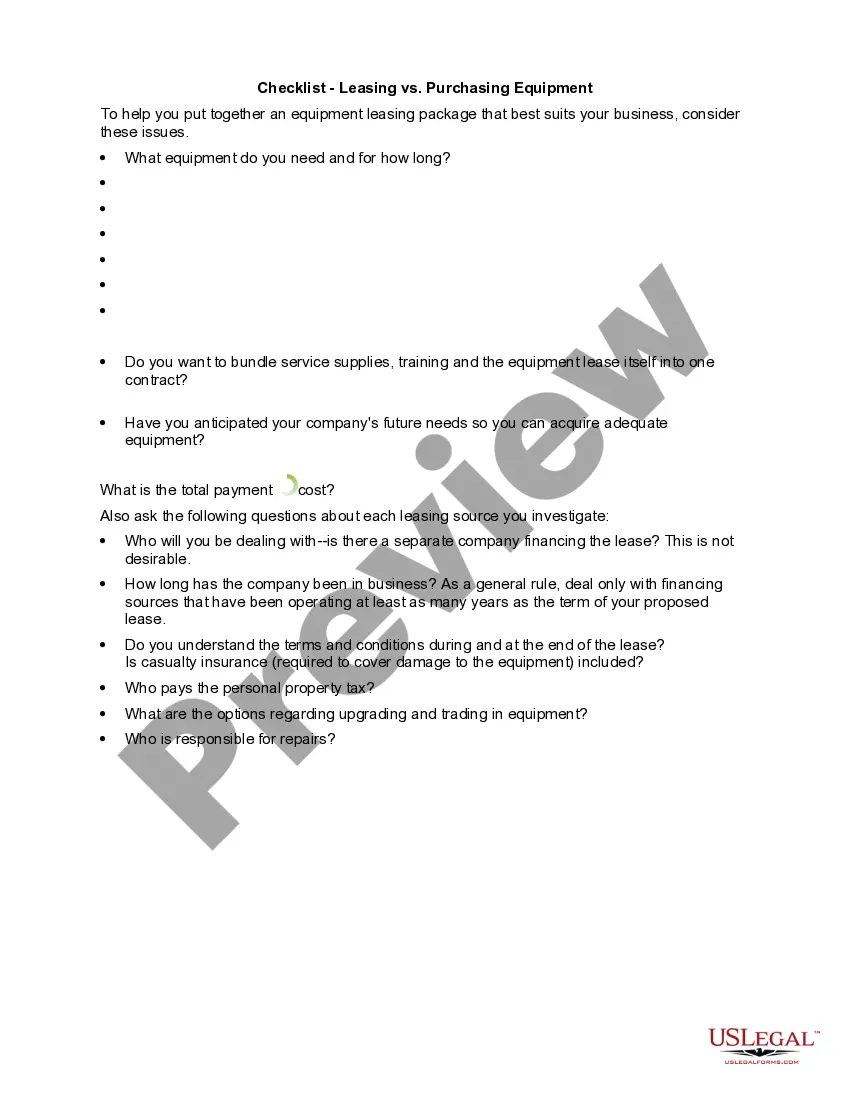
Every lease decision is unique so it's important to study the lease agreement carefully. When deciding to obtain equipment, you need to determine whether it is better to lease or purchase the equipment. You might use this checklist to compare the costs for each option.
Checklist - Leasing vs. Purchasing Equipment
Category:
State:
Multi-State
Control #:
US-03082BG
Format:
Word;
Rich Text
Instant download
Description
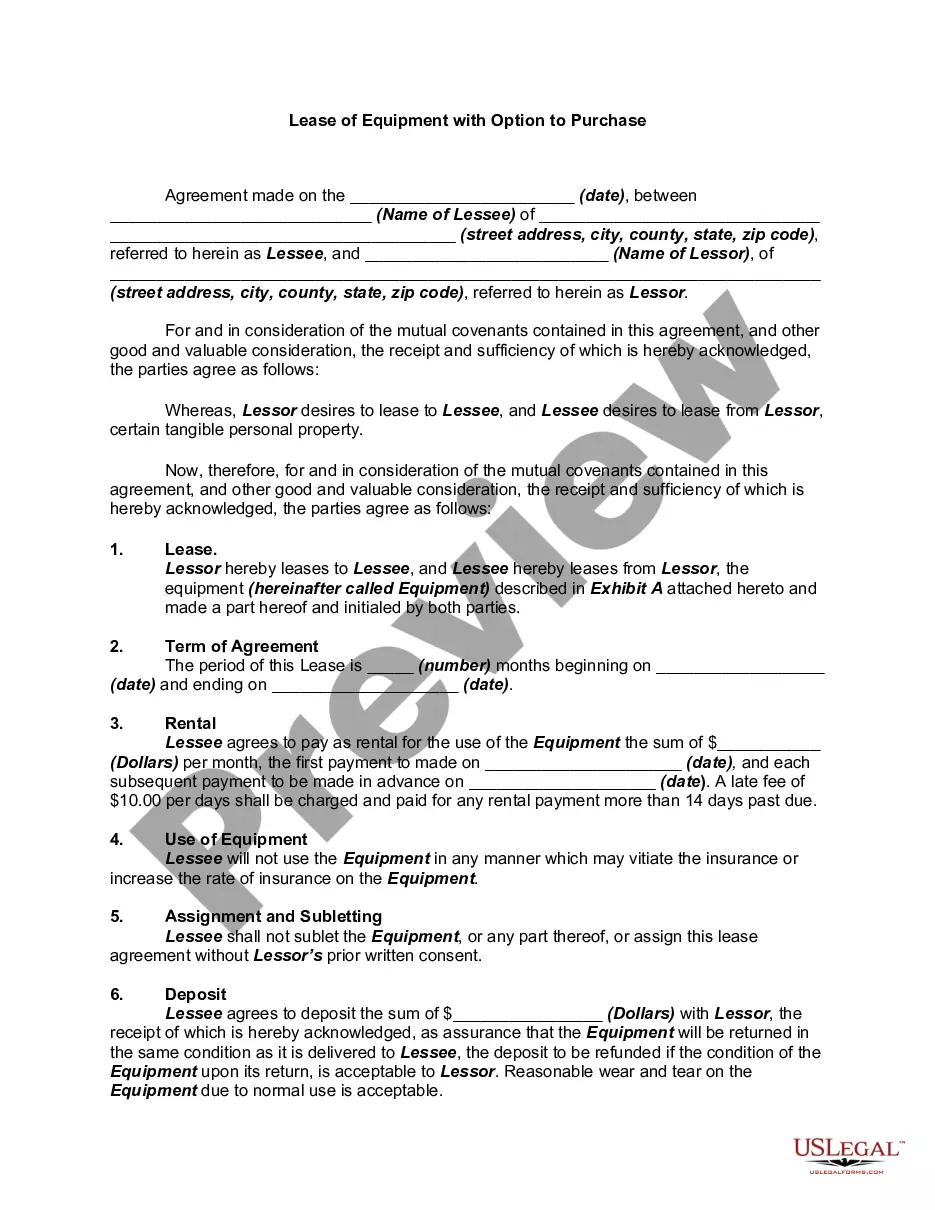
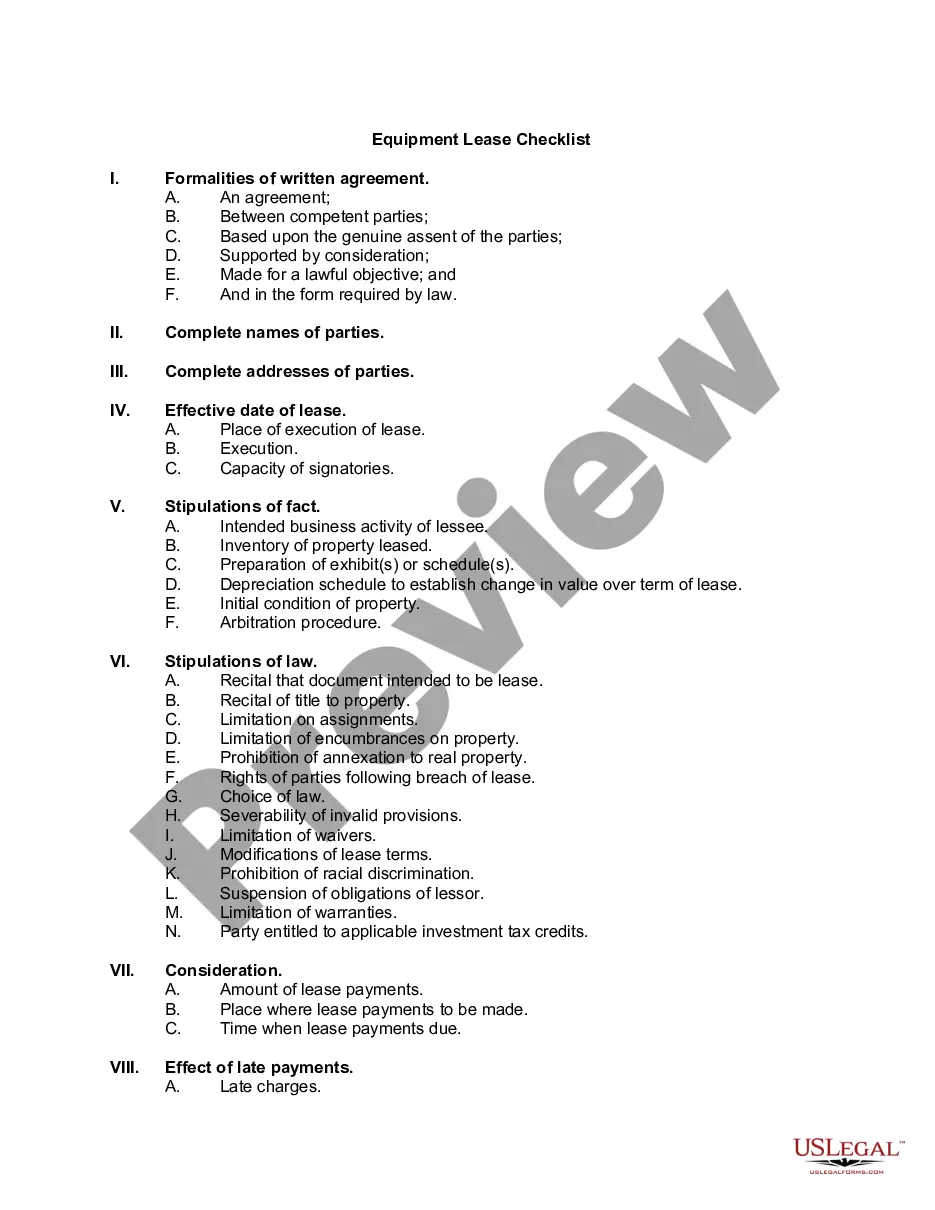
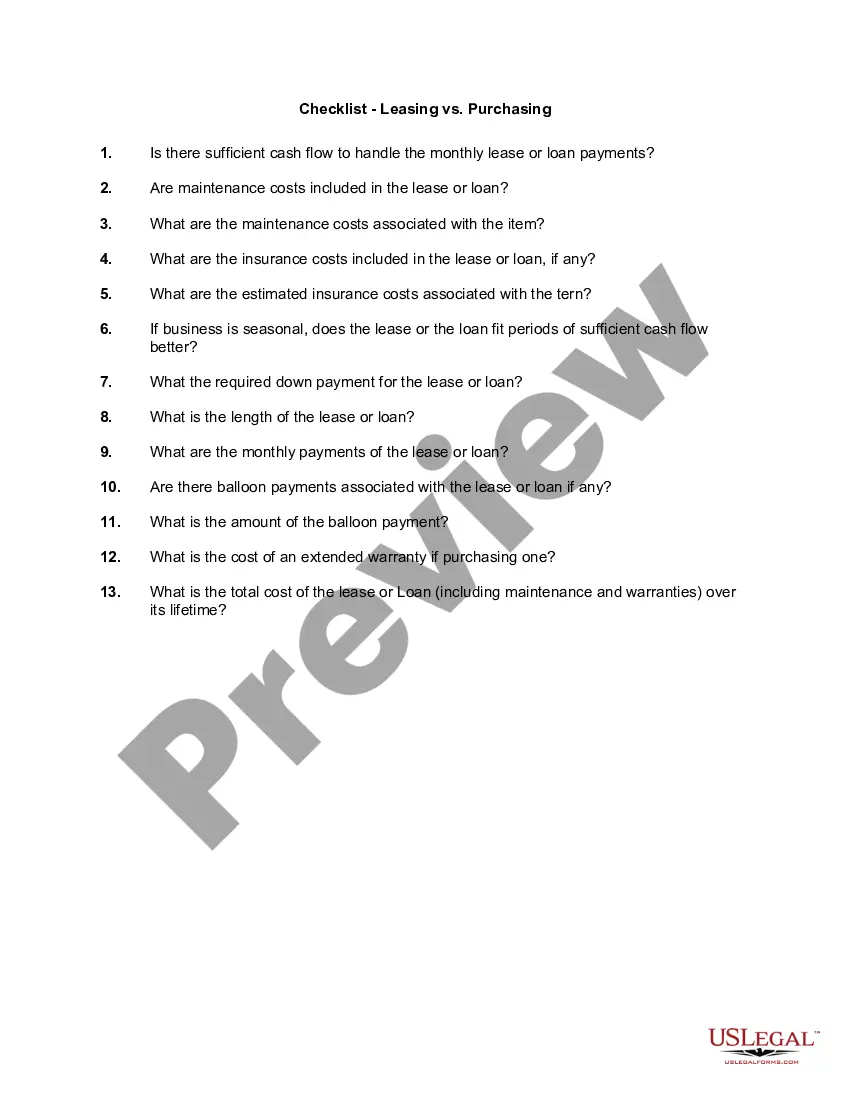
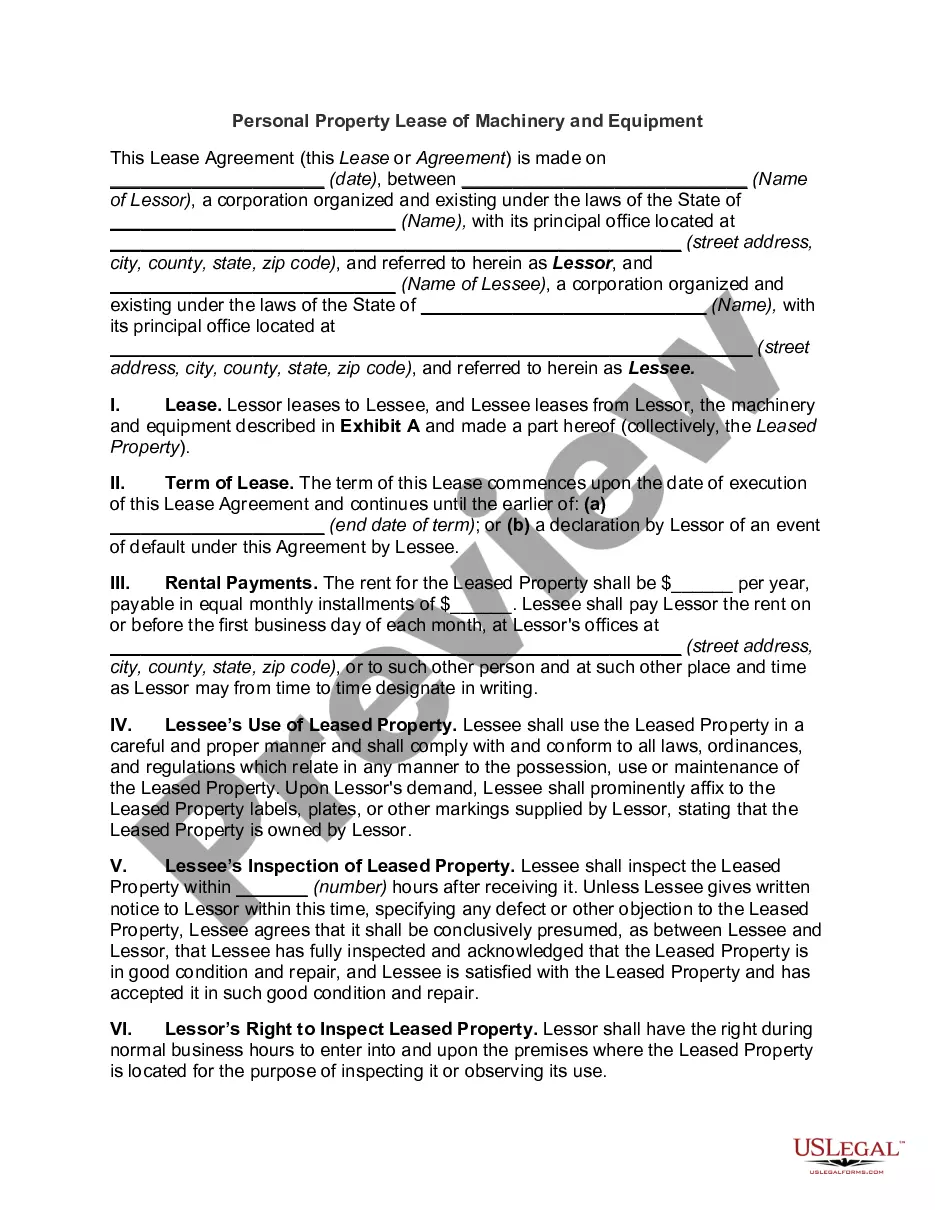
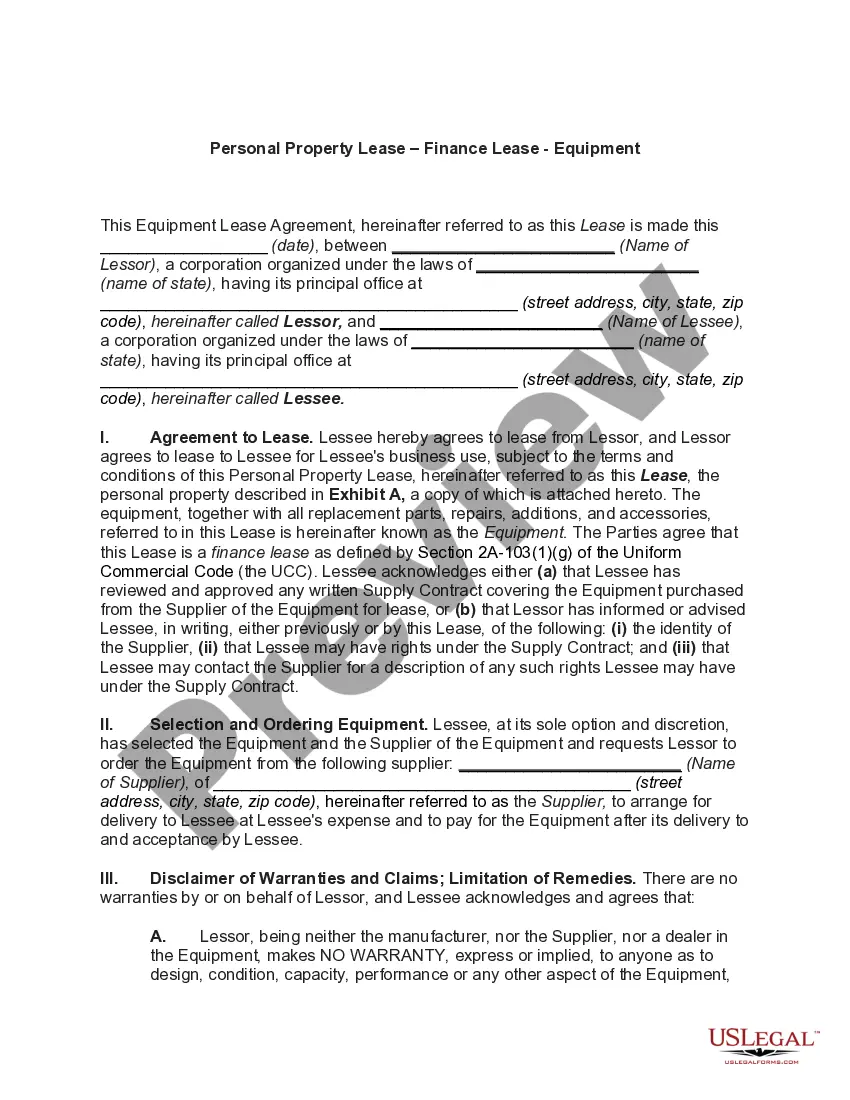
How to fill out Checklist - Leasing Vs. Purchasing Equipment?
Make use of the most comprehensive legal catalogue of forms. US Legal Forms is the best platform for getting updated Checklist - Leasing vs. Purchasing Equipment templates. Our service offers 1000s of legal forms drafted by certified lawyers and sorted by state.
To get a sample from US Legal Forms, users only need to sign up for an account first. If you’re already registered on our service, log in and select the document you are looking for and buy it. Right after purchasing templates, users can find them in the My Forms section.
To get a US Legal Forms subscription on-line, follow the guidelines below:
- Find out if the Form name you have found is state-specific and suits your requirements.
- When the form features a Preview function, use it to review the sample.
- If the template doesn’t suit you, make use of the search bar to find a better one.
- PressClick Buy Now if the template meets your requirements.
- Select a pricing plan.
- Create your account.
- Pay with the help of PayPal or with the debit/credit card.
- Select a document format and download the template.
- When it’s downloaded, print it and fill it out.
Save your time and effort with the platform to find, download, and fill out the Form name. Join a huge number of satisfied clients who’re already using US Legal Forms!
Form popularity
FAQ
The major drawback of leasing is that you don't acquire any equity in the vehicle. It's a bit like renting an apartment. You make monthly payments but have no ownership claim to the property once the lease expires. In this case, it means you can't sell the car or trade it in to reduce the cost of your next vehicle.
Assets being leased are not recorded on the company's balance sheet; they are expensed on the income statement. So, they affect both operating and net income.
If equipment lasts only one or two years or you constantly need to upgrade it, you may want to lease. But if it lasts 10 or 12 years and needs very little maintenance, buying could be better. If you have solid cash flow, buying equipment may be best because it typically comes with a lower overall cost of ownership.
A lessee must capitalize a leased asset if the lease contract entered into satisfies at least one of the four criteria published by the Financial Accounting Standards Board (FASB). An asset should be capitalized if:The lease runs for 75% or more of the asset's useful life.
The equipment account is debited by the present value of the minimum lease payments and the lease liability account is the difference between the value of the equipment and cash paid at the beginning of the year. Depreciation expense must be recorded for the equipment that is leased.
+ Total up front costs (down payment + other fees) + Lost interest. + Outstanding loan balance at time lease expires. - Market value of vehicle at time lease expires. = Net cost of buying.
The equipment account is debited by the present value of the minimum lease payments and the lease liability account is the difference between the value of the equipment and cash paid at the beginning of the year. Depreciation expense must be recorded for the equipment that is leased.
Leasing capital equipment: Lowers upfront costs, compared to buying equipment outright. Reduces the chance that your company gets stuck with obsolete equipment, if your contract specifies upgrades. Transfers the cost of equipment maintenance to the leasing company, again according to the terms of your contract.
Unlike an outright purchase or equipment secured through a standard loan, equipment under an operating lease cannot be listed as capital. It's accounted for as a rental expense. This provides two specific financial advantages: Equipment is not recorded as an asset or liability.