Non-Exclusive Marketing Agreement
Understanding this form
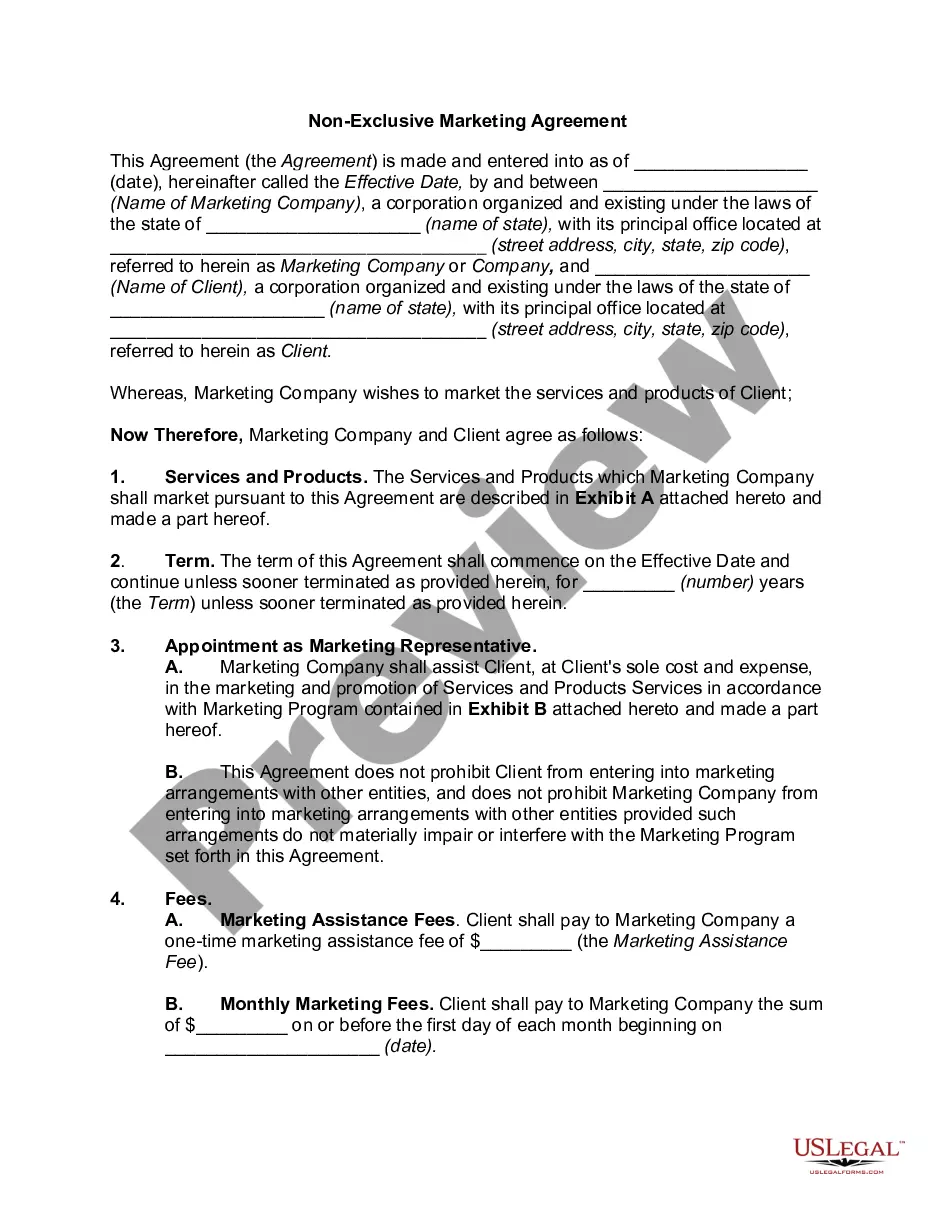
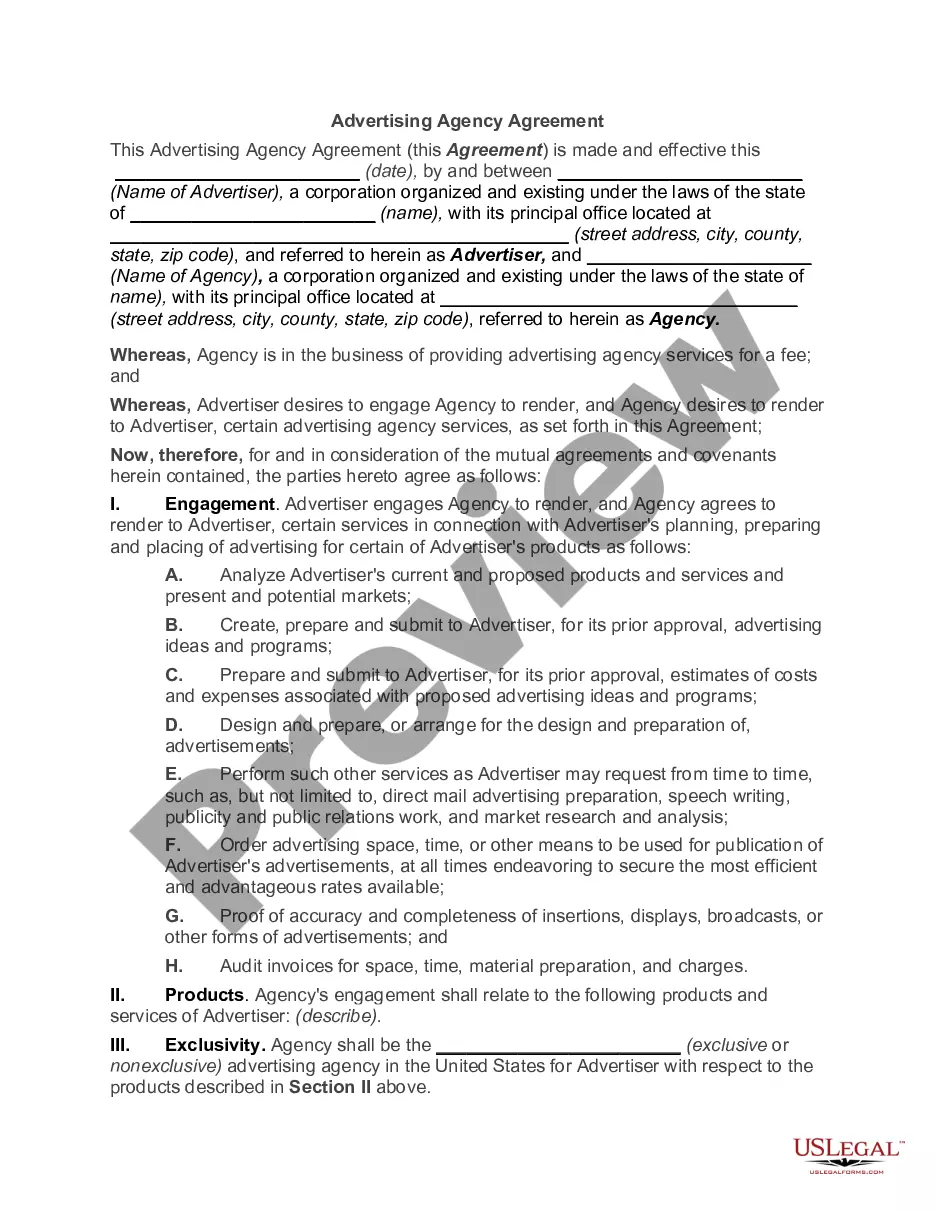
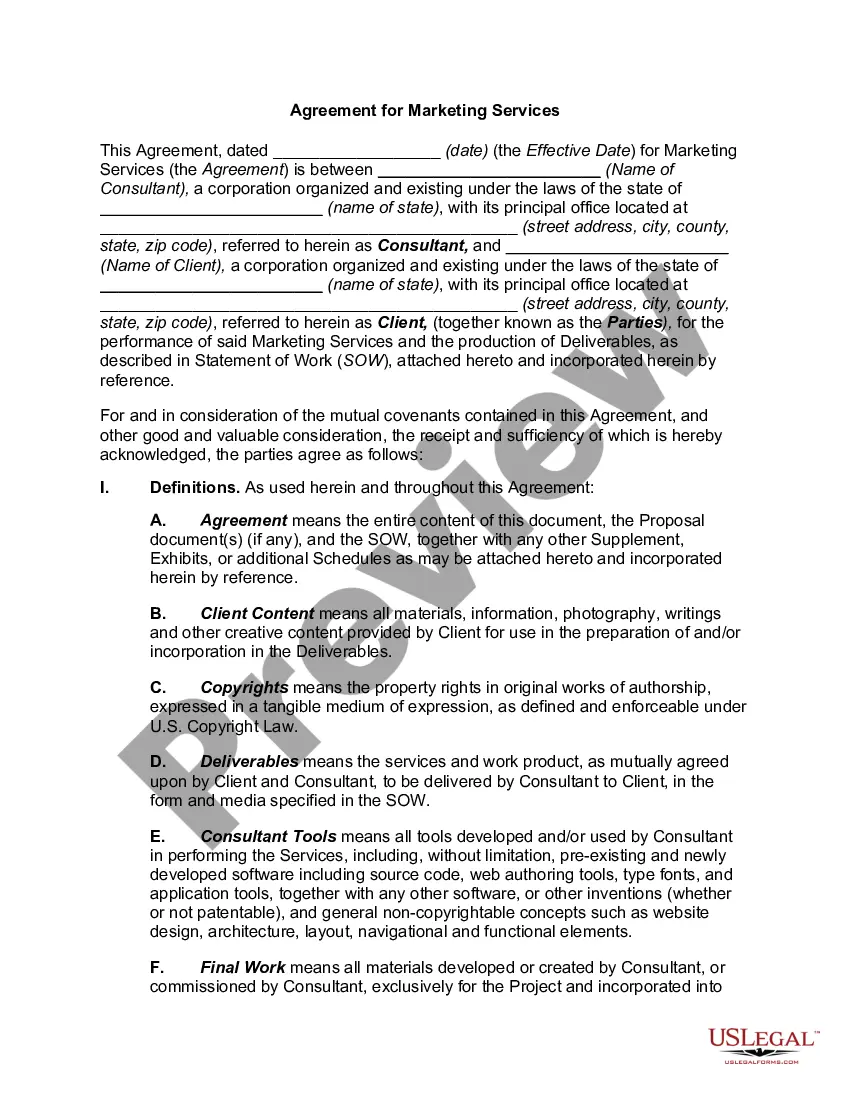
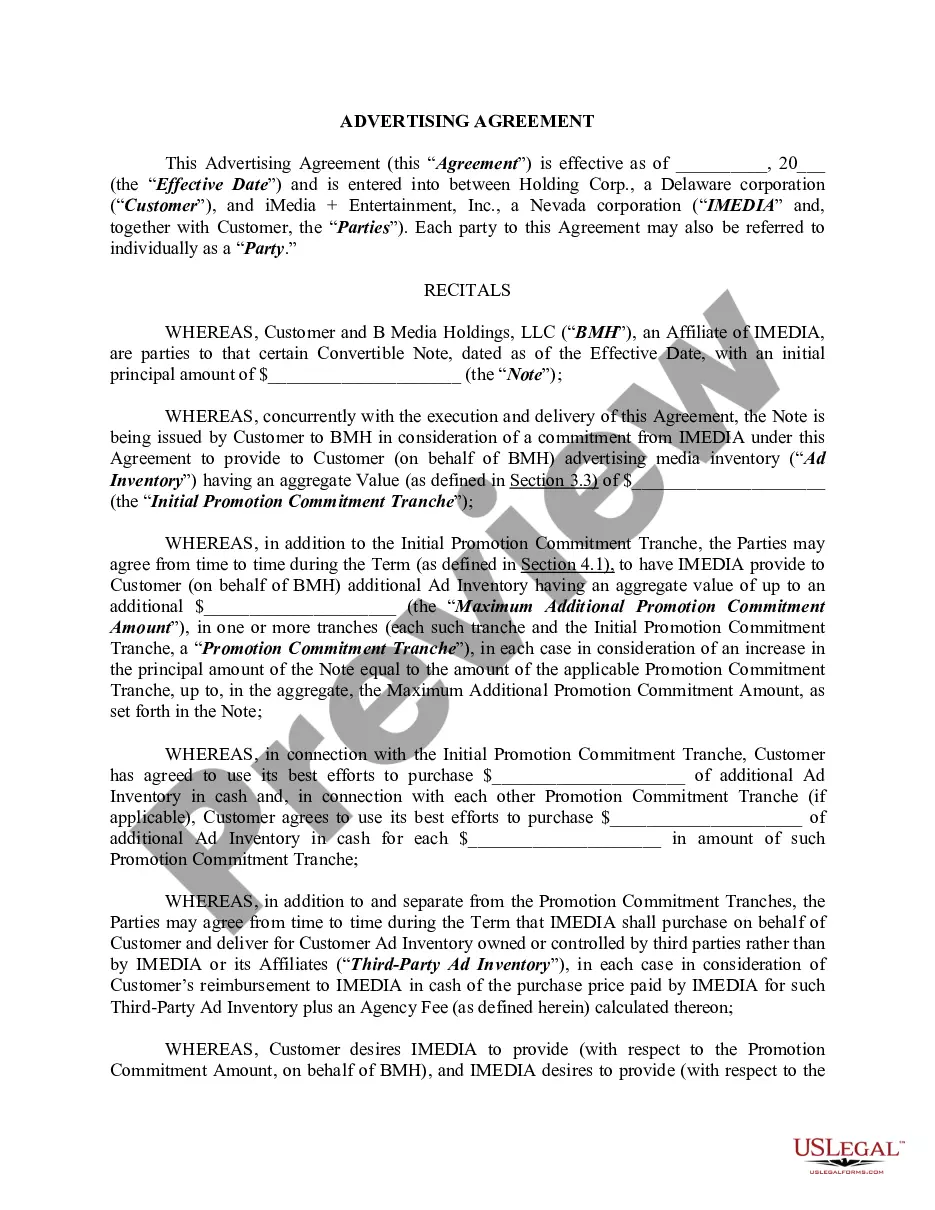
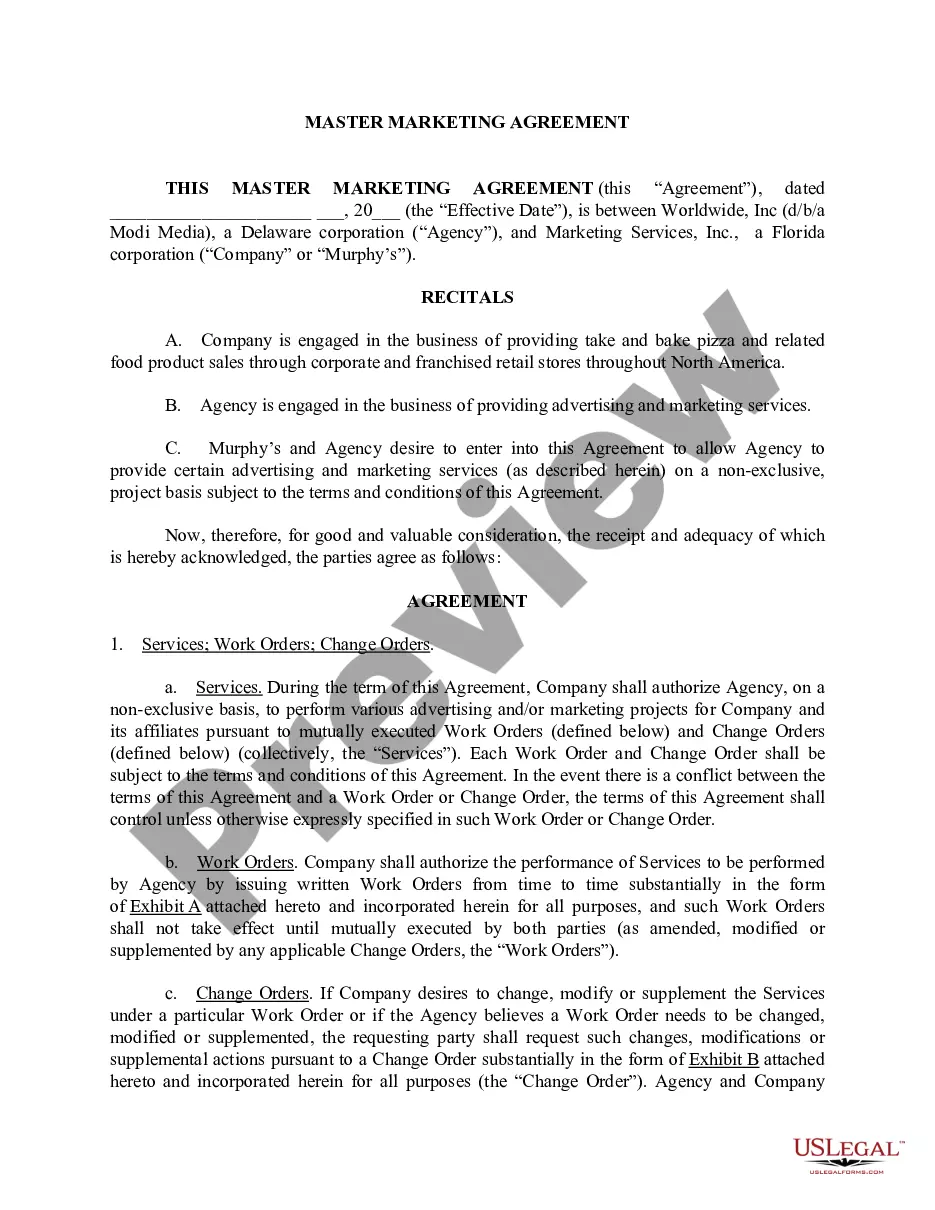
The Non-Exclusive Marketing Agreement is a legal document outlining the relationship between a marketing company and a client for the promotion of goods or services. Unlike exclusive agreements, this form allows both parties to engage with other marketing entities simultaneously, providing flexibility in marketing arrangements. It details the responsibilities, fees, and terms, ensuring a clear understanding of the collaboration between the two parties.
Key components of this form
- Effective date: Specifies when the agreement comes into force.
- Identities of the parties: Names and addresses of the marketing company and the client.
- Services and products: Describes what the marketing company will promote, detailed in an attached exhibit.
- Term: Duration of the agreement and conditions for termination.
- Fees: Outlines the payment structure, including marketing assistance fees and monthly fees.
- Termination clause: Conditions under which either party can end the agreement.
- Confidentiality: Guidelines on the use of trademarks and proprietary information.
- Governing law: State laws that will apply to the agreement.


When to use this document
This agreement is ideal when a business seeks to engage a marketing company to promote its products or services while retaining the freedom to work with other marketing firms. Use this form when both parties wish to establish clear responsibilities and payment structures without limiting their marketing channels.
Who needs this form
- Businesses looking to market their products or services without exclusive commitments.
- Marketing companies that wish to formalize agreements with clients.
- Corporations or individuals who want a structured approach to marketing collaborations.
Completing this form step by step
- Identify the parties involved by entering the names and addresses of the marketing company and client.
- Specify the effective date when the agreement will start.
- Detail the services and products that the marketing company will promote in the appropriate section.
- Outline the fee structure, including any one-time marketing assistance fees and recurring monthly fees.
- Review the agreement for completeness and clarity, ensuring all parties understand their obligations.
- Sign the document and ensure all parties receive a copy for their records.
Notarization guidance
In most cases, this form does not require notarization. However, some jurisdictions or signing circumstances might. US Legal Forms offers online notarization powered by Notarize, accessible 24/7 for a quick, remote process.
Get your form ready online
Our built-in tools help you complete, sign, share, and store your documents in one place.
Make edits, fill in missing information, and update formatting in US Legal Forms—just like you would in MS Word.
Download a copy, print it, send it by email, or mail it via USPS—whatever works best for your next step.
Sign and collect signatures with our SignNow integration. Send to multiple recipients, set reminders, and more. Go Premium to unlock E-Sign.
If this form requires notarization, complete it online through a secure video call—no need to meet a notary in person or wait for an appointment.
We protect your documents and personal data by following strict security and privacy standards.

Make edits, fill in missing information, and update formatting in US Legal Forms—just like you would in MS Word.

Download a copy, print it, send it by email, or mail it via USPS—whatever works best for your next step.

Sign and collect signatures with our SignNow integration. Send to multiple recipients, set reminders, and more. Go Premium to unlock E-Sign.

If this form requires notarization, complete it online through a secure video call—no need to meet a notary in person or wait for an appointment.

We protect your documents and personal data by following strict security and privacy standards.
Common mistakes to avoid
- Failing to specify the services and products to be marketed can lead to misunderstandings.
- Not detailing the fee structure may result in disputes over payments.
- Omitting the effective date or term of the agreement can cause legal confusion.
- Overlooking the termination clause may complicate future exits from the agreement.
Why complete this form online
- Convenience: Download and complete the form from anywhere at any time.
- Editability: Easily customize the agreement to fit your specific business needs.
- Reliability: Access professionally drafted documents that comply with legal standards.
Main things to remember
- A Non-Exclusive Marketing Agreement offers flexibility for clients to engage multiple marketing firms.
- Clear definitions of responsibilities and fees help in maintaining professional relationships.
- Proper completion of the form ensures legal enforceability and clarity among all parties involved.
Looking for another form?
Form popularity
FAQ
A non-exclusive license grants the licensee the right to use the intellectual property, but the government remains free to grant any number of other licensees the same rights to make, use, or sell the technology.
Exclusive Supply Agreements are defined under Section 3(4)(c) of the Competition Act, 2002 ("Act") as agreements restricting the purchaser from purchasing/dealing with goods other than those of the seller.Exclusive supply agreements are also known as 'single branding' agreements or 'quantity forcing' arrangements.
A Non-Exclusive Licence grants to the licensee the right to use the intellectual property, but means that the licensor remains free to exploit the same intellectual property and to allow any number of other licensees to also exploit the same intellectual property.
Not limited to only one person or organization, or to one group of people or organizations: a non-exclusive agreement/deal/licence They have entered into a non-exclusive distribution agreement. The licence grants them the non-exclusive right to use the technology in their products. Compare.
Related Content. Also known as lock-out, shut-out or no-shop agreements. Agreements which are used to try to ensure that the other party to a prospective deal negotiates solely with the client for a period of time. They aim to give the client some protection from another party outbidding him.
An exclusive license grants the licensee singular permission to exploit the intellectual property in question.Non-exclusive licenses allow more latitude in the number of licenses granted while allowing the licensor to retain the rights to further develop and exploit its own intellectual property.
The enclosed document is a non-exclusive sales representative agreement. This means that the company is entitled to hire additional representatives to sell the same products perhaps even in the same geographical area.
The difference between exclusive and non-exclusive agreement refers to how vendors and partners work with each other. Exclusive agreements exclude competitors for a set period of time, while non-exclusive agreements allow for competitors, often as motivating tools.