Second Mortgage with Mortgagor's Recertification of Representations, Warranties and Covenants in First Mortgage
What is this form?
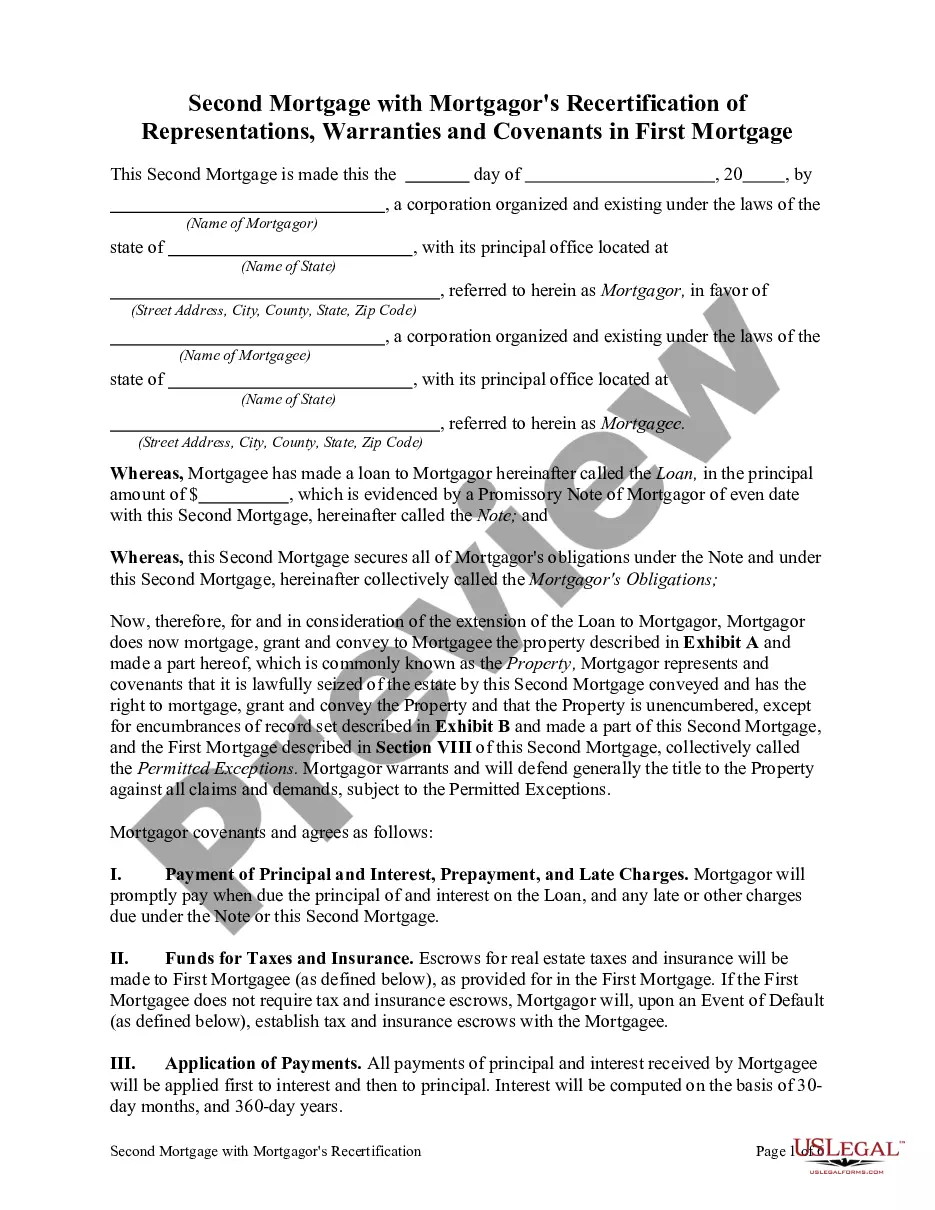
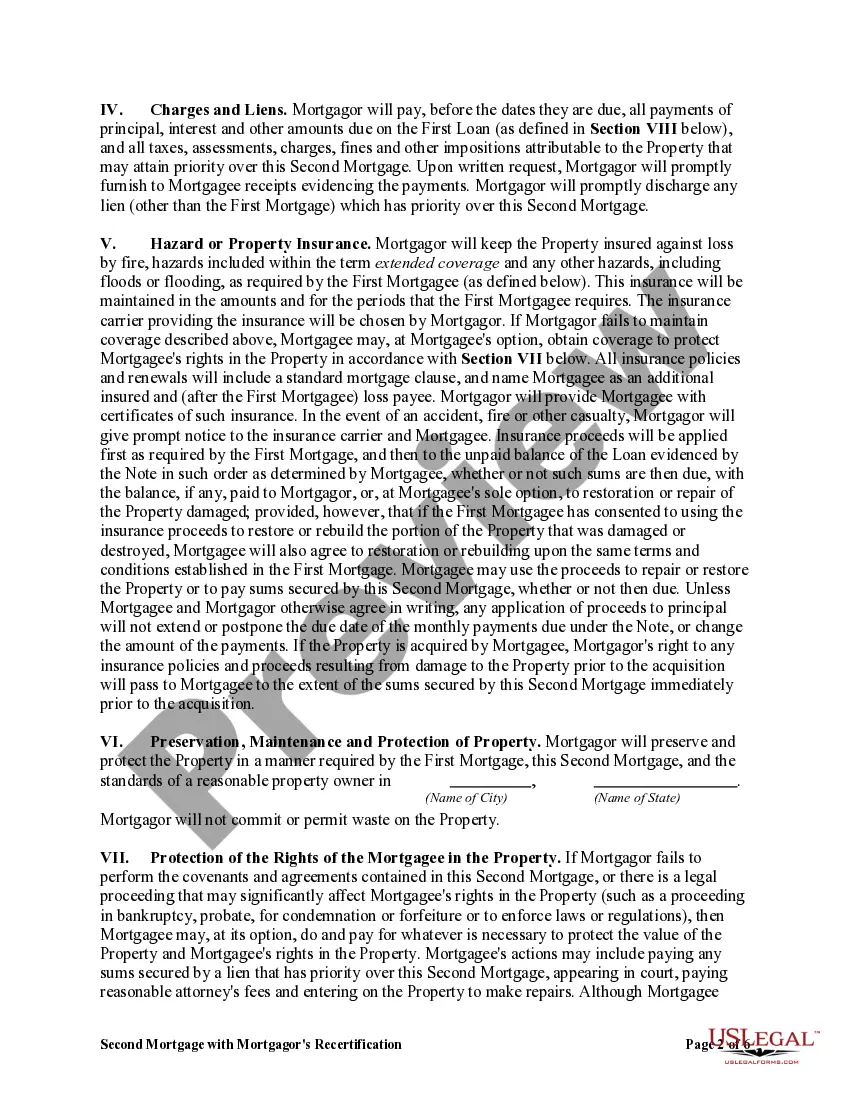
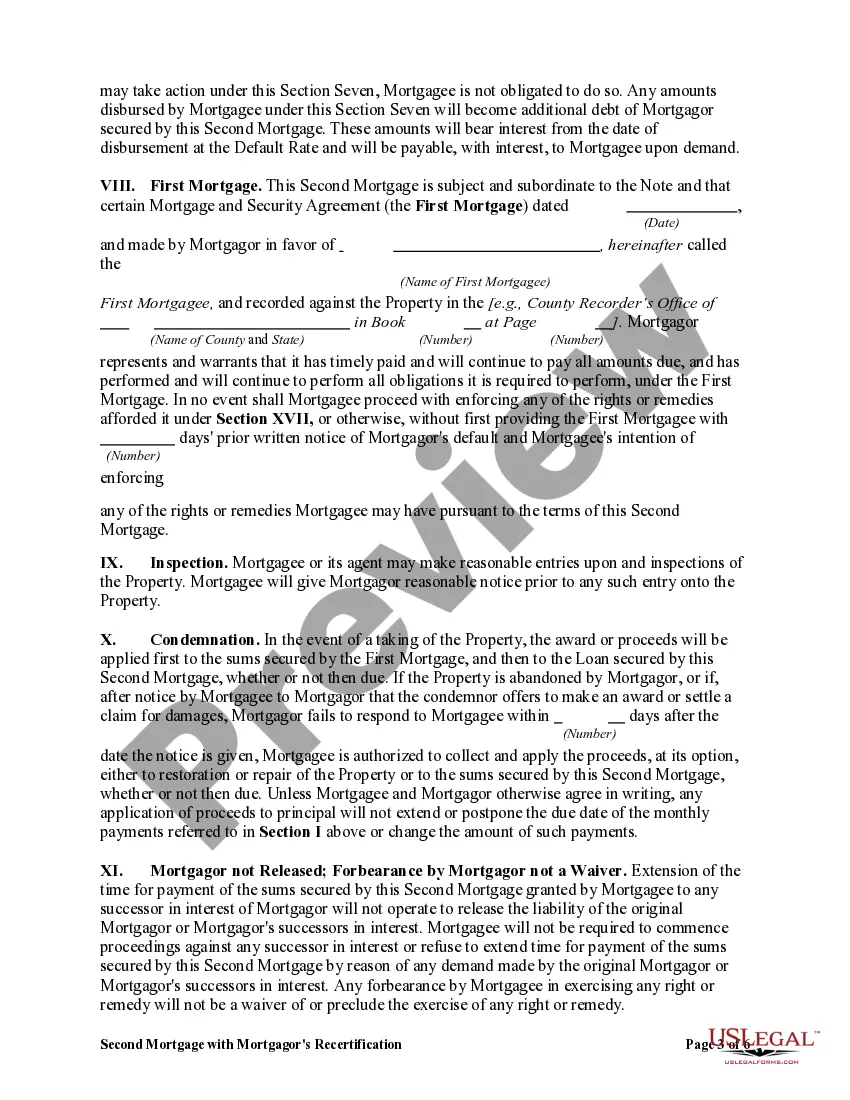
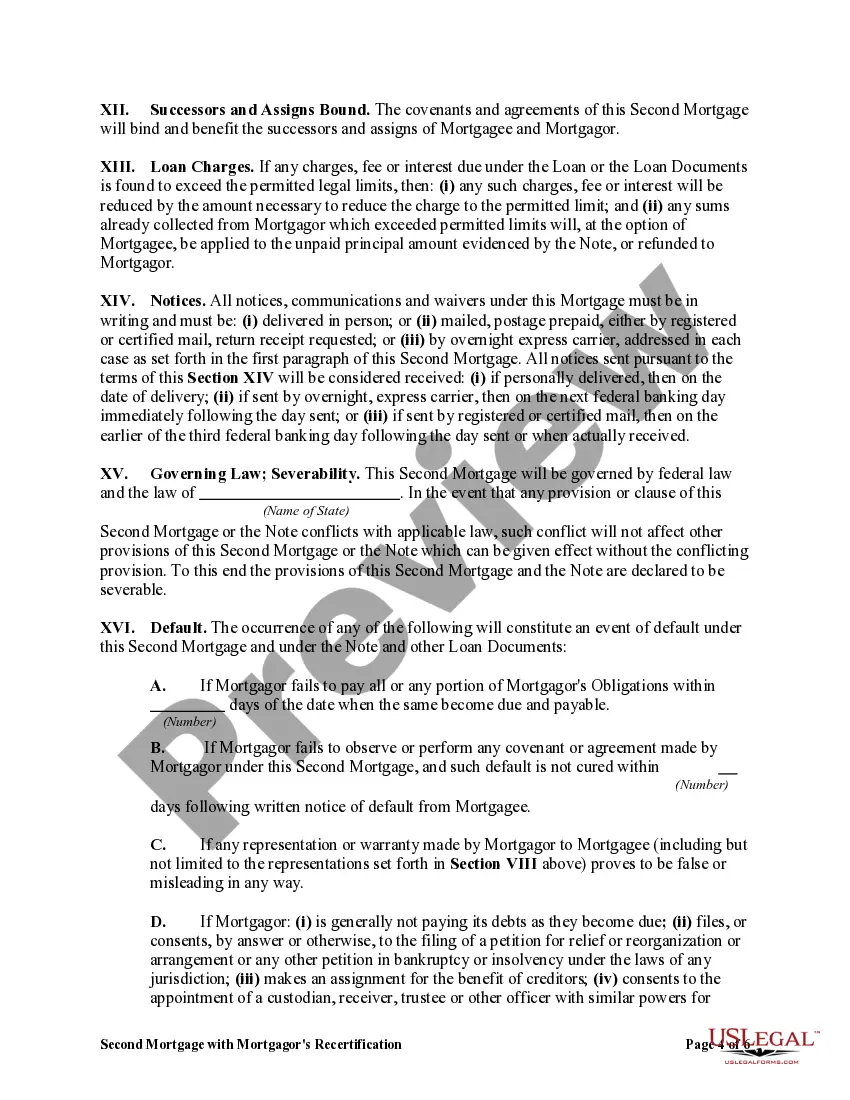
The Second Mortgage with Mortgagor's Recertification of Representations, Warranties and Covenants in First Mortgage is a legal document that establishes a lien on a property, making it secondary to a primary mortgage. This form allows a borrower (the Mortgagor) to secure additional financing against their property, which can provide them with extra funds. It's important to understand that second mortgages generally carry higher interest rates due to the increased risk for lenders, as they are paid after the first mortgage in case of default.
Key parts of this document
- Identification of parties involved, including the Mortgagor and Mortgagee.
- Details about the property being mortgaged, including legal descriptions and permitted encumbrances.
- Obligations of the Mortgagor regarding payment of principal, interest, taxes, and insurance.
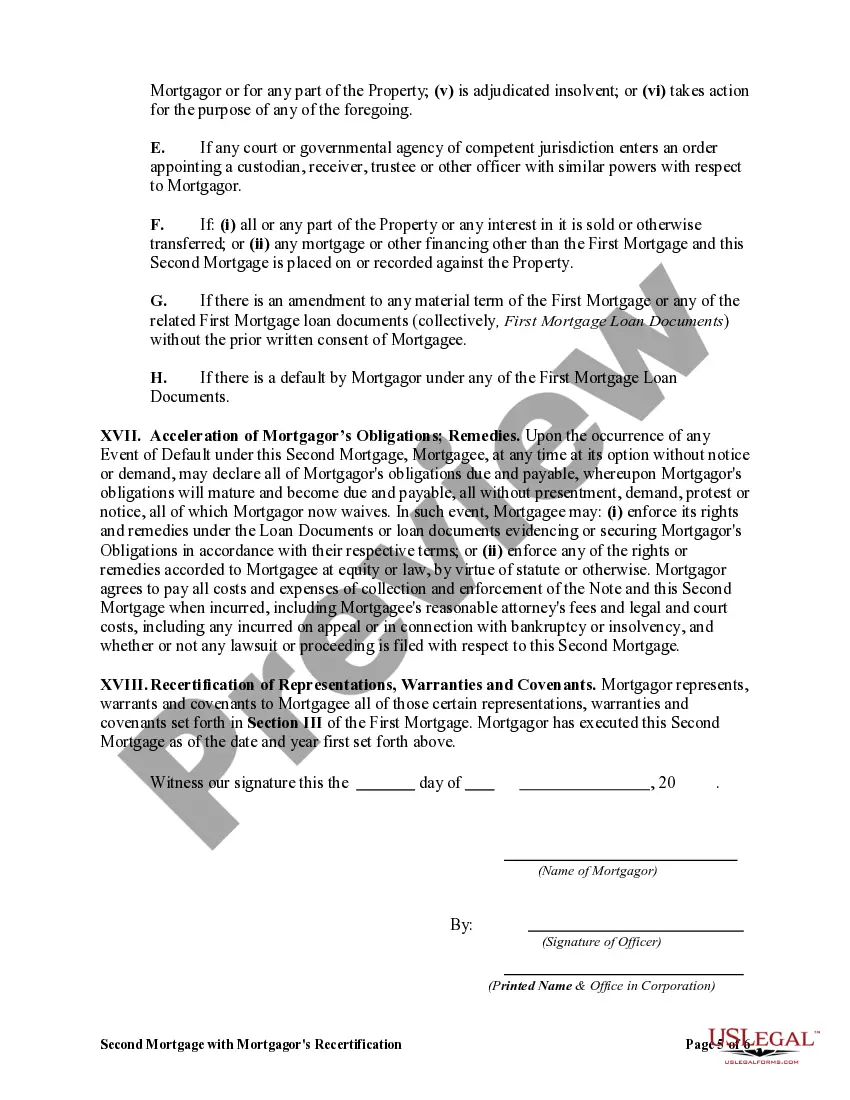
- Conditions of default and remedies available to the Mortgagee.
- Recertification of representations and warranties made in the first mortgage.
Common use cases
This form should be used when a property owner seeks to borrow additional funds by placing a second mortgage on their property. It is often utilized in situations where a homeowner needs cash for home improvements, debt consolidation, or other financial needs while they still have an existing first mortgage. This second mortgage can help finance various personal or business ventures.
Who this form is for
- Homeowners seeking additional financing against their property.
- Borrowers who already have a first mortgage and want to secure a second loan.
- Individuals familiar with mortgage agreements and property financing.
- Lenders who require a legal document to secure their second loan against the property.
How to prepare this document
- Identify and enter the names and addresses of both the Mortgagor and Mortgagee.
- Provide a legal description of the property being mortgaged.
- Specify the details of the loan, including principal amount, interest rate, and payment terms.
- Include representations and warranties regarding the property and the Mortgagor's ability to mortgage it.
- Sign and date the document in the presence of a notary public, if required.
Notarization requirements for this form
This document requires notarization to meet legal standards. US Legal Forms provides secure online notarization powered by Notarize, allowing you to complete the process through a verified video call, available 24/7.
Get your form ready online
Our built-in tools help you complete, sign, share, and store your documents in one place.
Make edits, fill in missing information, and update formatting in US Legal Forms—just like you would in MS Word.
Download a copy, print it, send it by email, or mail it via USPS—whatever works best for your next step.
Sign and collect signatures with our SignNow integration. Send to multiple recipients, set reminders, and more. Go Premium to unlock E-Sign.
If this form requires notarization, complete it online through a secure video call—no need to meet a notary in person or wait for an appointment.
We protect your documents and personal data by following strict security and privacy standards.

Make edits, fill in missing information, and update formatting in US Legal Forms—just like you would in MS Word.

Download a copy, print it, send it by email, or mail it via USPS—whatever works best for your next step.

Sign and collect signatures with our SignNow integration. Send to multiple recipients, set reminders, and more. Go Premium to unlock E-Sign.

If this form requires notarization, complete it online through a secure video call—no need to meet a notary in person or wait for an appointment.

We protect your documents and personal data by following strict security and privacy standards.
Common mistakes to avoid
- Failing to accurately describe the property can lead to legal disputes.
- Not including all necessary signatures or dates, which can void the agreement.
- Neglecting to disclose existing liens that could affect the validity of the second mortgage.
Benefits of completing this form online
- Convenience of accessing and completing the form from anywhere at any time.
- Editability for personalized input to suit specific needs and circumstances.
- Legally reliable templates drafted by licensed attorneys ensure compliance with applicable laws.
Looking for another form?
Form popularity
FAQ
Contact the lender to discuss the debt. Begin the settlement process by expressing an interest in paying the debt. Make an offer. Remind the lender you know your rights. Put any agreement in writing.
Yes, a second mortgage holder can foreclose, even if you are current on your first mortgage. Just like any type of loan, if you are behind on your payments, the lender has the legal right to take whatever property was offered as collateral on the loan.
There is not Statute of Limitation on 2nd mortgages, it is contract note promise to pay. They the 2nd will probably not foreclose because they would have to pay off the 1st mortgage to do so.
When you take out a second mortgage, a lien is taken out against the portion of your home that you've paid off.Second mortgage lenders also offer interest rates that are much lower than credit cards. This makes them an appealing choice for paying off credit card debt.
This is certainly possible, but once you pay off your primary, your secondary loan will take first position.Basically, the second mortgage holder allows the new lender to pay off the primary mortgage and jump ahead into first position, leaving the second lender in a subordinate position.
If you are currently making monthly payments on both a first and a second mortgage, you might want to pay off the second loan as quickly as you can.Even though you can use the mortgage interest you pay as a tax deduction, you will save far more money by paying off the loan.
A common strategy for dealing with post chapter 7 bankruptcy 2ndmortgages is to approach the 2ndmortgage with a settlement offer in exchange for the 2ndmortgage lender removing the lien.
When you take a home loan, the property is already under lien with your home loan provider. Since, the same property cannot be mortgaged twice, you cannot take a loan against property on a property on which there is an active home loan.
There's no guaranteed right to settling your debt, so if you want to negotiate a bank payoff, you'll need to find ways to make your offer appealing to your creditor.Creditors typically are more willing to negotiate when they know they will be paid right away.