Assignment of Cause of Action Pending Litigation
About this form
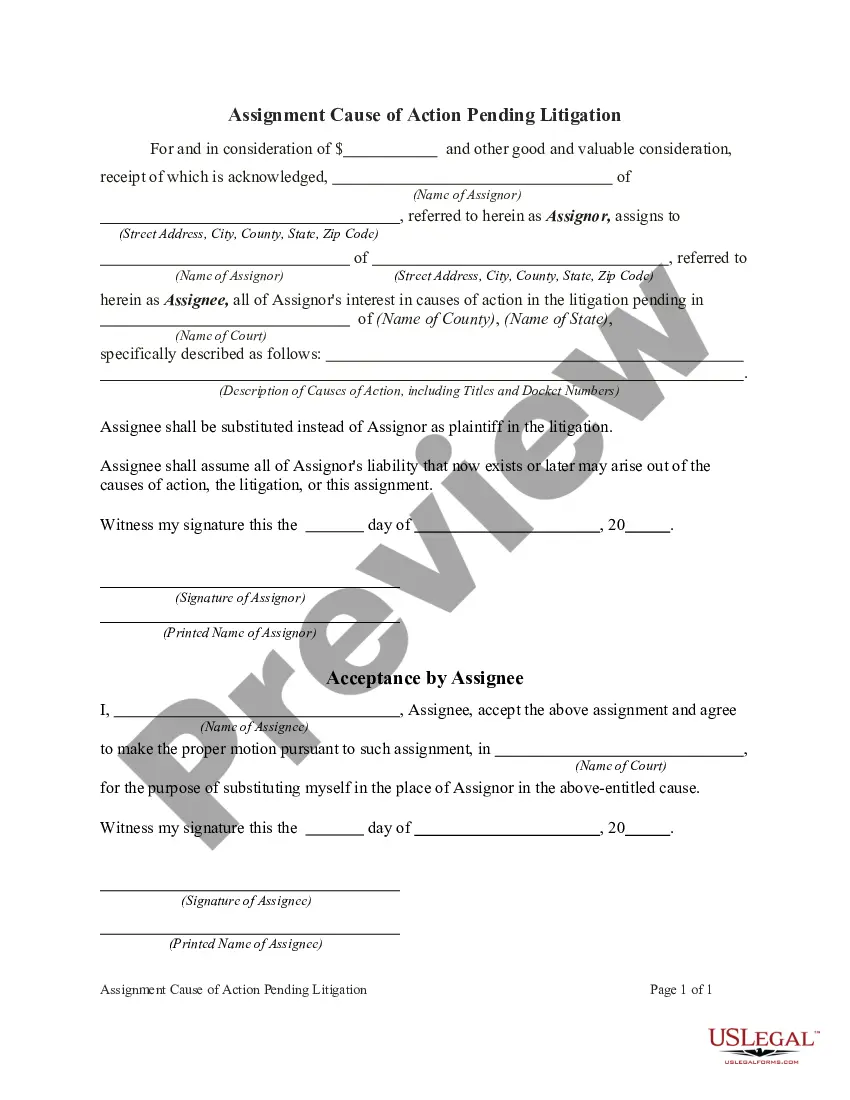
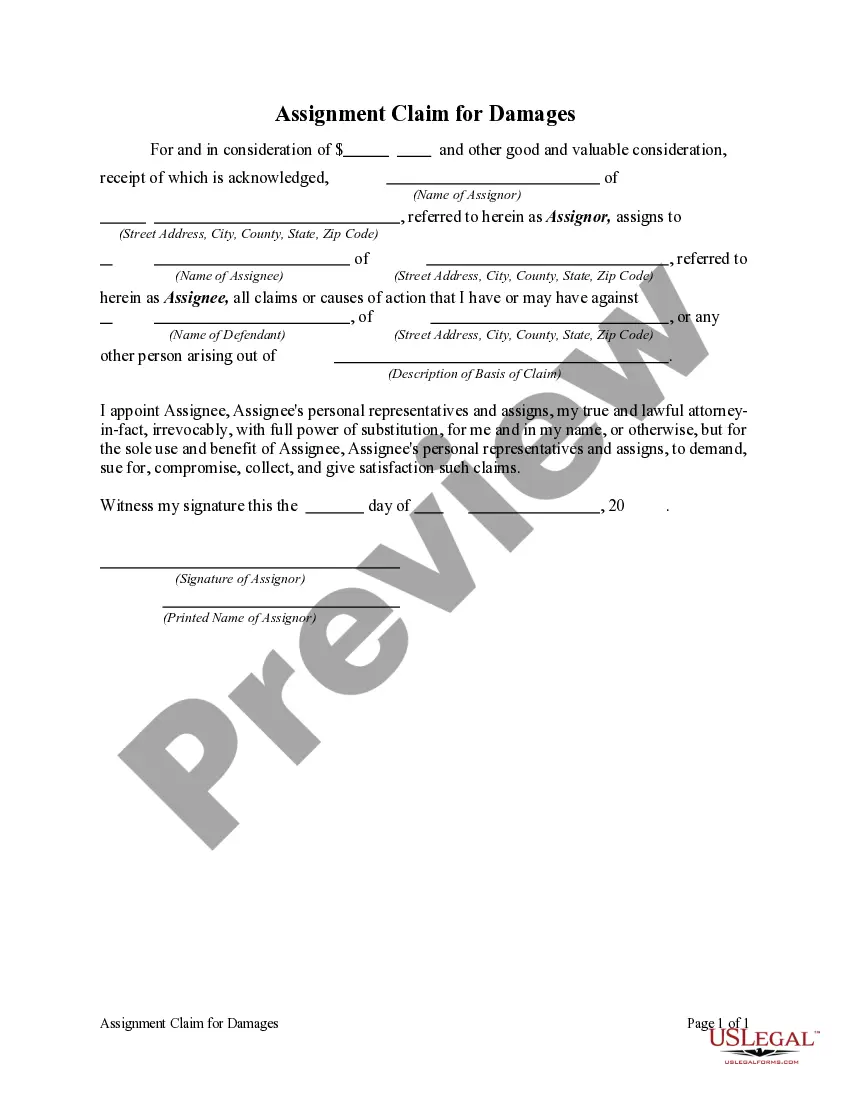
The Assignment of Cause of Action Pending Litigation is a legal document that facilitates the transfer of a legal claim or cause of action from one party (the Assignor) to another (the Assignee). This form is essential in litigation scenarios where it becomes necessary to substitute one party for another in an ongoing case. Unlike other legal forms, this form is specifically designed for situations where a cause of action is actively pending in court.
Key parts of this document
- Identification of the Assignor and Assignee: This section specifies the parties involved in the assignment.
- Acceptance of Assignment: The Assignee must acknowledge and accept the terms of the assignment.
- Liabilities: Details regarding the Assignee assuming all liabilities related to the cause of action.
- Signature Areas: Allocated spaces for both parties to sign and date the form, indicating their agreement.
When to use this document
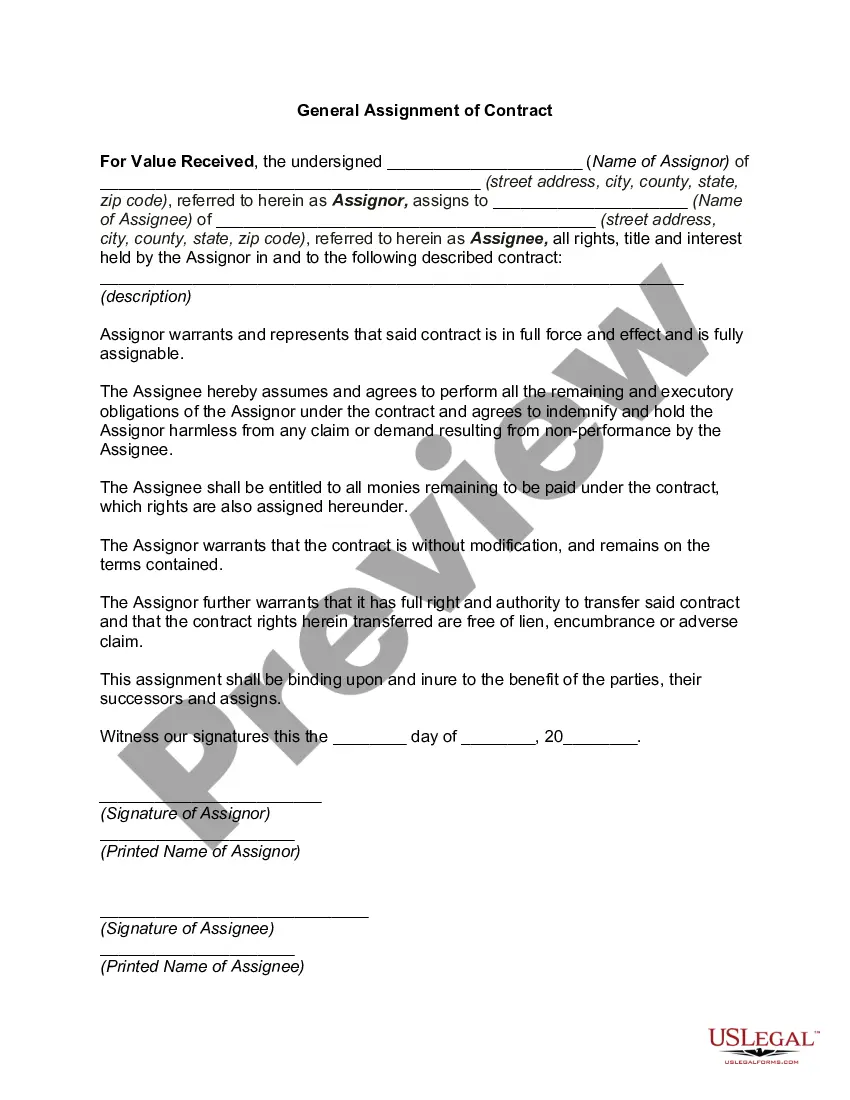
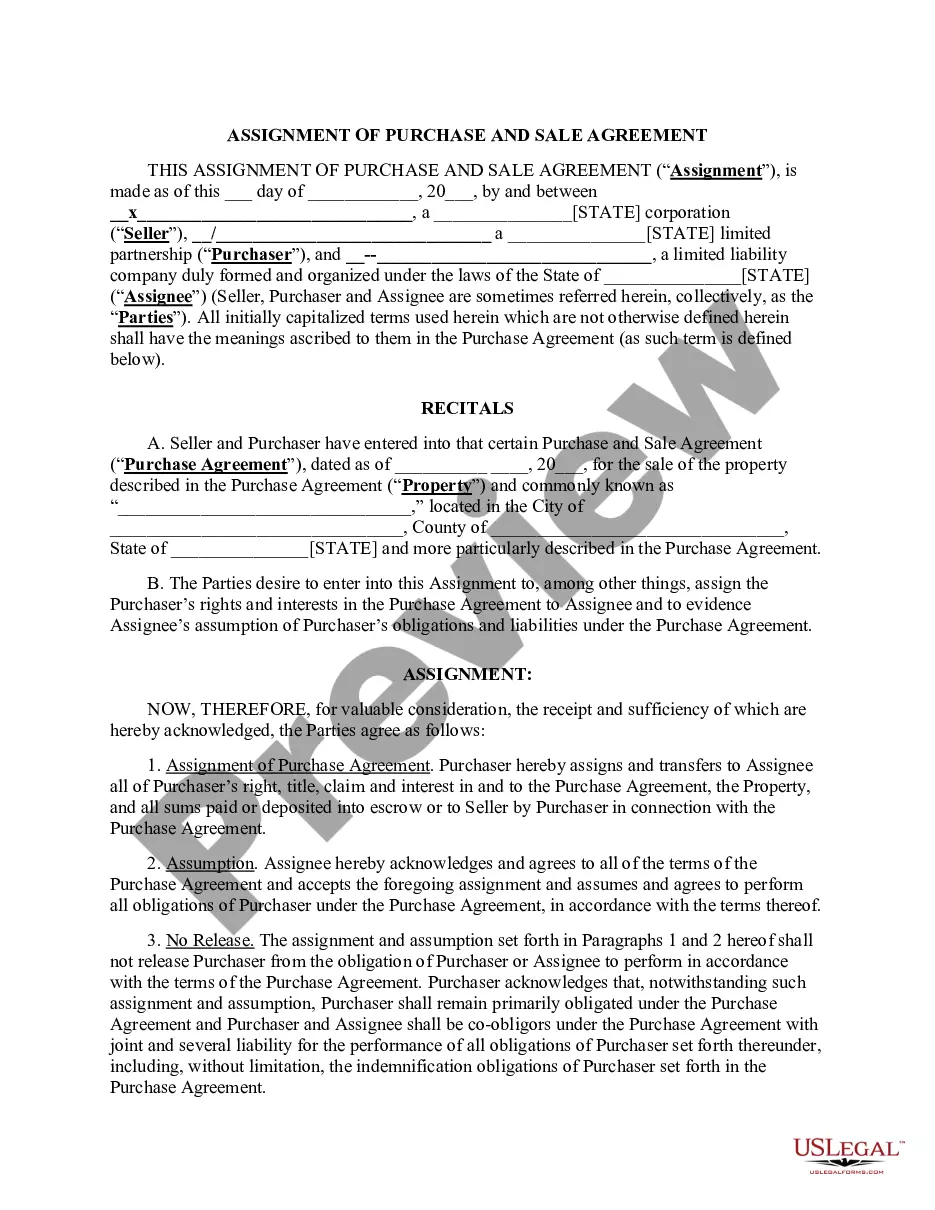
This form should be used when one party involved in a pending litigation wishes to assign their legal rights to another party. Common scenarios include situations where the Assignor is unable to continue the lawsuit due to personal reasons or is transferring rights for financial considerations. It is also relevant in cases involving businesses that may sell off liabilities or claims during mergers, acquisitions, or other structural changes.
Who this form is for
The following individuals or entities should consider using this form:
- Parties currently involved in litigation who wish to assign their rights to another party.
- Businesses transferring ownership or claims within corporate restructuring.
- Individuals seeking to delegate their legal claims to a different plaintiff for any reason.
How to prepare this document
- Identify the parties involved: Clearly state the names of the Assignor and Assignee at the start of the form.
- Include the details of the cause of action: Provide a brief description of the pending litigation.
- Specify liabilities: Acknowledge that the Assignee assumes all liabilities associated with the claim.
- Obtain signatures: Have both parties sign and date the document to formalize the assignment.
Is notarization required?
In most cases, this form does not require notarization. However, some jurisdictions or signing circumstances might. US Legal Forms offers online notarization powered by Notarize, accessible 24/7 for a quick, remote process.
Typical mistakes to avoid
- Failing to properly identify all parties involved in the assignment.
- Not clearly stating the cause of action, leading to confusion or disputes later.
- Omitting signatures or dates, which can invalidate the form.
Why use this form online
- Convenience: Downloadable forms can be accessed anytime without the need for an in-person appointment.
- Editability: Forms can be customized to fit specific needs and circumstances.
- Legal compliance: All forms are drafted by licensed attorneys to ensure they meet legal standards.


Form popularity
FAQ
Step 1: Consult With Representatives. If you are considering going to court, talk to your potential representatives before filing a lawsuit. Step 2: File Complaint / Pleading. Step 3: Discovery. Step 4: Trial. Step 5: Verdict. Step 6: Appeal.
The plaintiff files a complaint to initiate a lawsuit. The defendant files an answer to the complaint. The judge will issue a scheduling order laying out a timeline for important dates and deadlines, including when the trial will take place. The parties engage in discovery. Motions and other pleadings may be filed.
An equitable assignment is an assignment which does not fulfil the statutory criteria for a legal assignment in some way. There is no requirement for written notice to be given or received.
The assignor normally remains liable unless there is an agreement to the contrary by the other party to the contract.No specific language is required to create an assignment so long as the assignor makes clear his/her intent to assign identified contractual rights to the assignee.
An assignment of a bare cause of action involves the outright sale of a cause of action which is then pursued by the assignee (who has no interest or connection to the action other than that created by the assignment) to the exclusion of the assignor.
A legal chose is one which could be sued for only in common law court e.g. a contractual debt, whereas an equitable chose is the one which could be sued for only in the Courts of Chancery, e.g. an interest in a project.. Under the existing framework of law on assignment there exist two types of assignment: legal and.
Step 1: Consult With Representatives. If you are considering going to court, talk to your potential representatives before filing a lawsuit. Step 2: File Complaint / Pleading. Step 3: Discovery. Step 4: Trial. Step 5: Verdict. Step 6: Appeal.
Civil lawsuits generally proceed through distinct steps: pleadings, discovery, trial, and possibly an appeal. However, parties can halt this process by voluntarily settling at any time. Most cases settle before reaching trial. Arbitration is sometimes another alternative to a trial.
Assignment is a legal term whereby an individual, the assignor, transfers rights, property, or other benefits to another known as the assignee. This concept is used in both contract and property law. The term can refer to either the act of transfer or the rights/property/benefits being transferred.