Agreement to Terminate Cohabitation
What this document covers
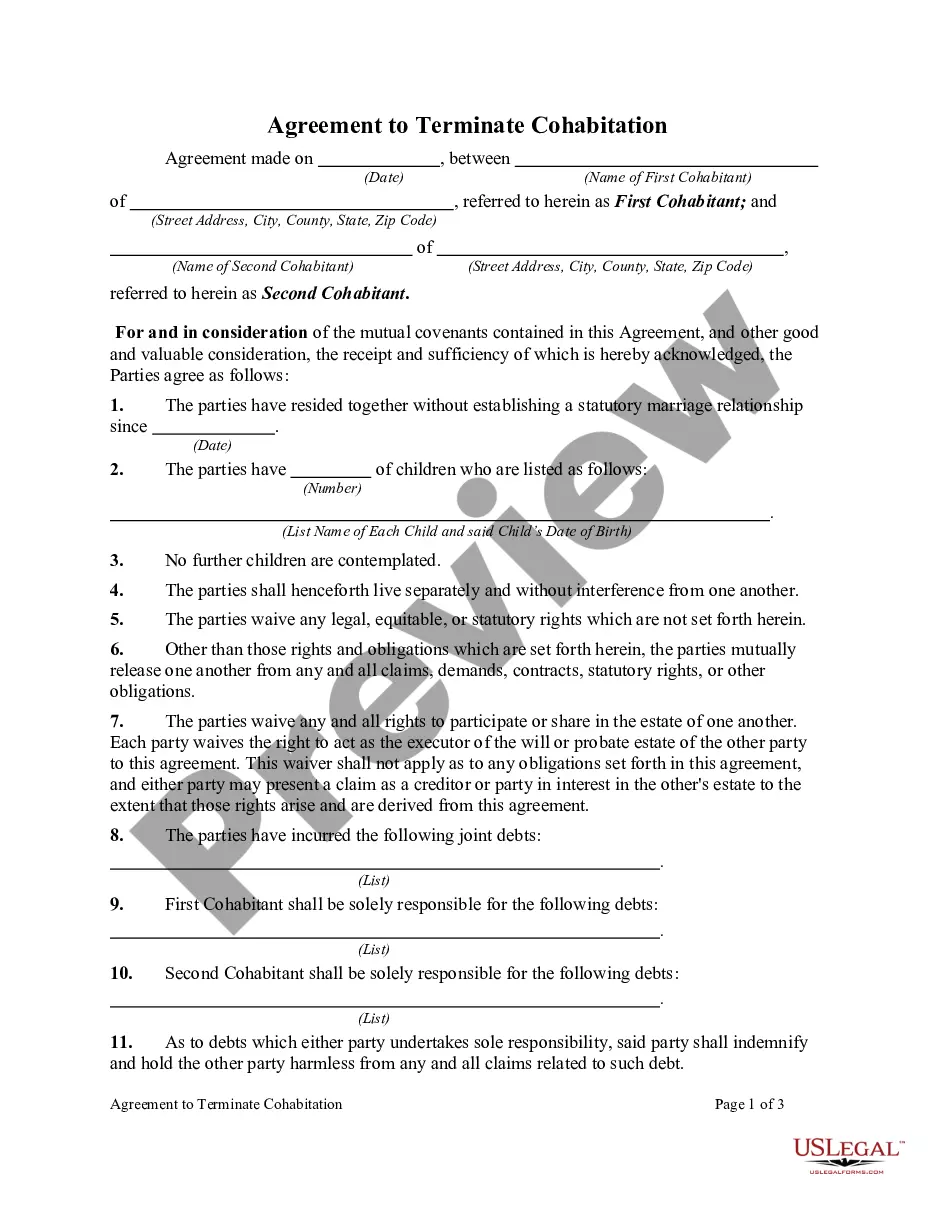
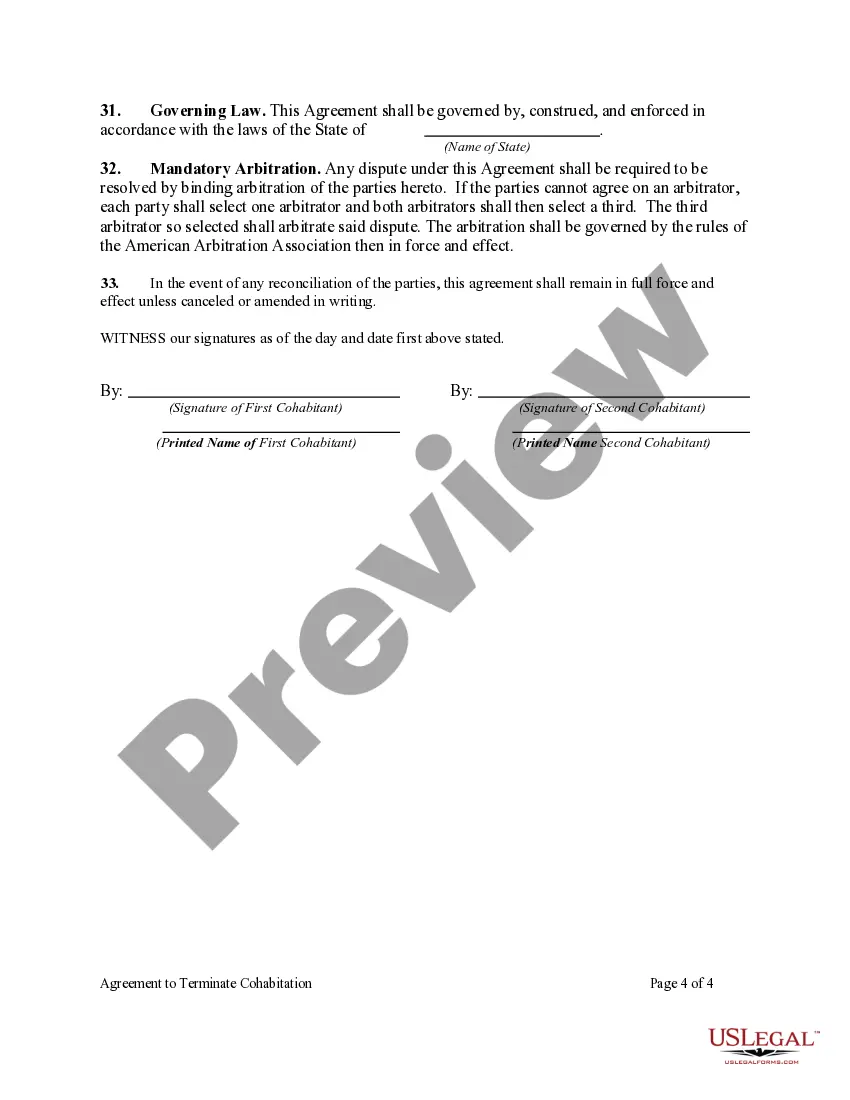
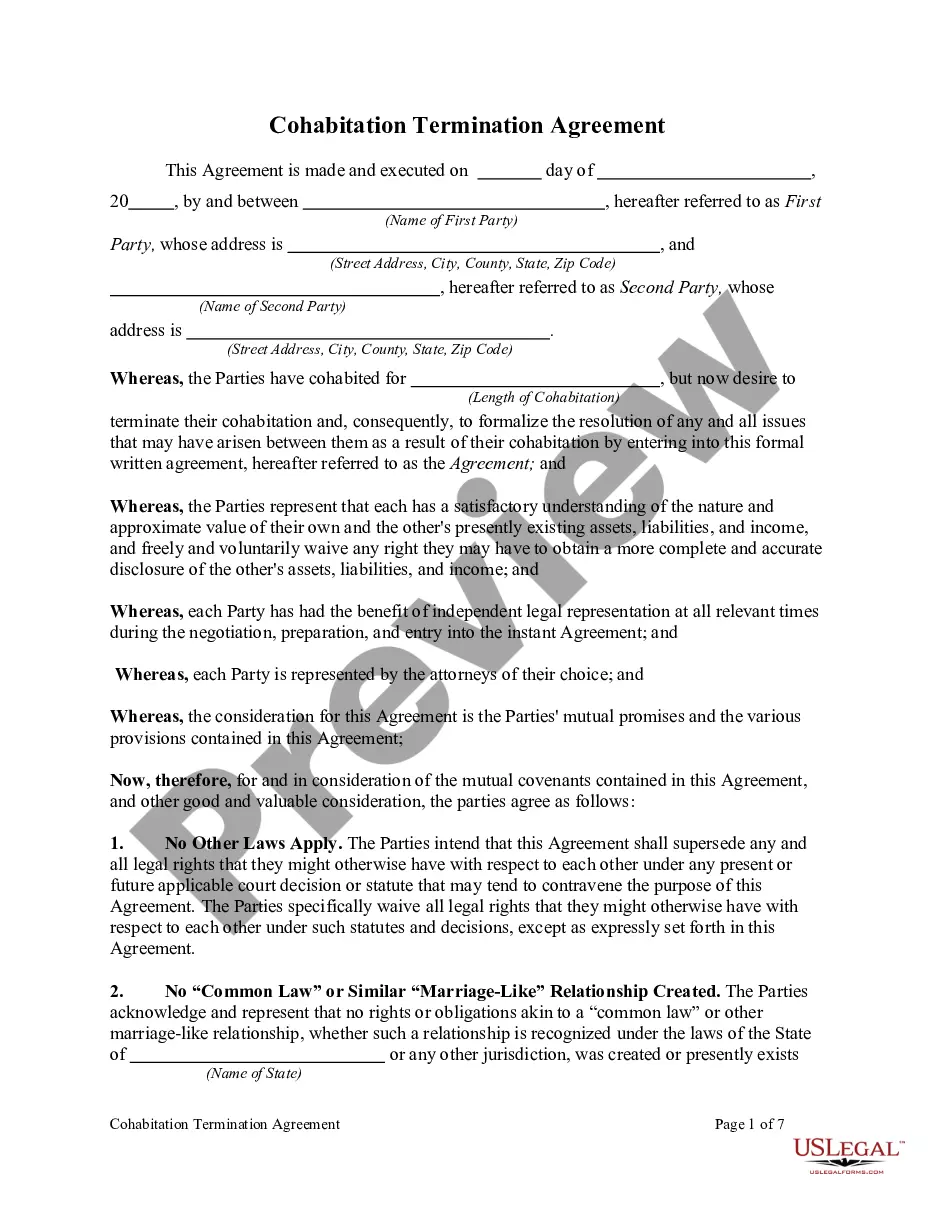
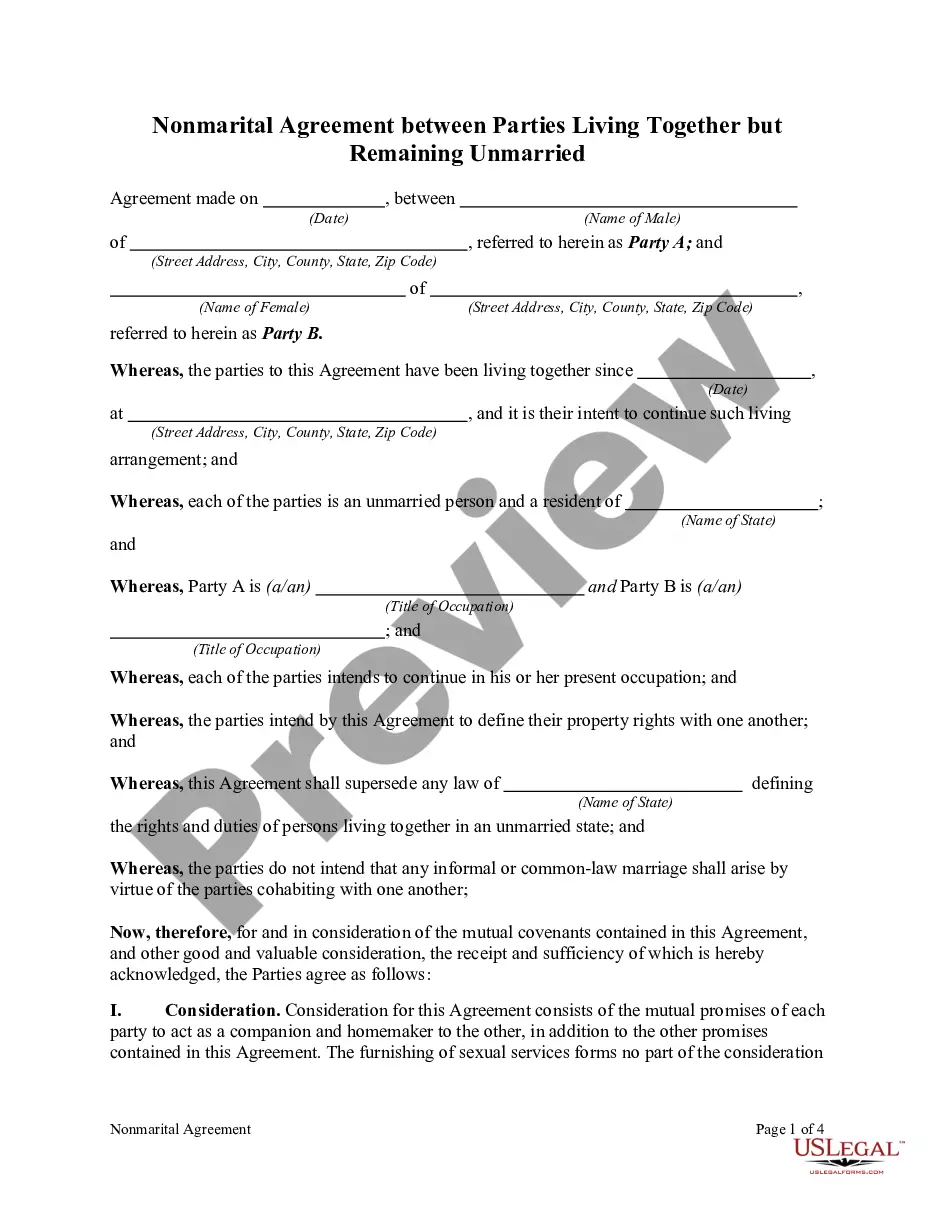
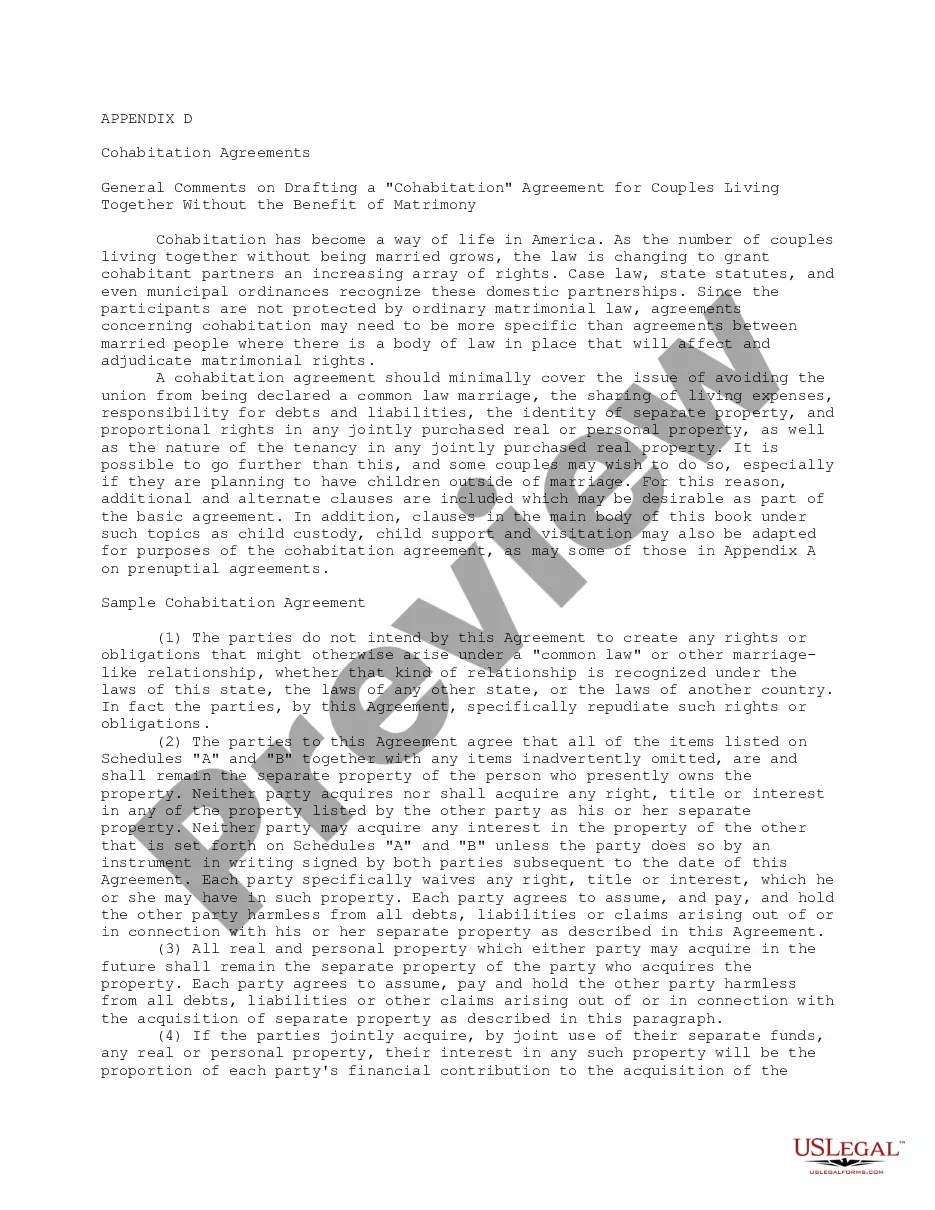
The Agreement to Terminate Cohabitation is a legal document that formalizes the end of a cohabitation arrangement between two parties. This agreement outlines the mutual release of rights and obligations, ensuring that both individuals can separate their financial interests and property claims. It differs from a cohabitation agreement, which is created at the beginning of a cohabitation relationship, as it addresses the termination of that relationship instead.
Key parts of this document
- Waiver of legal rights and claims between the parties.
- Mutual release from all claims and obligations not specified in the agreement.
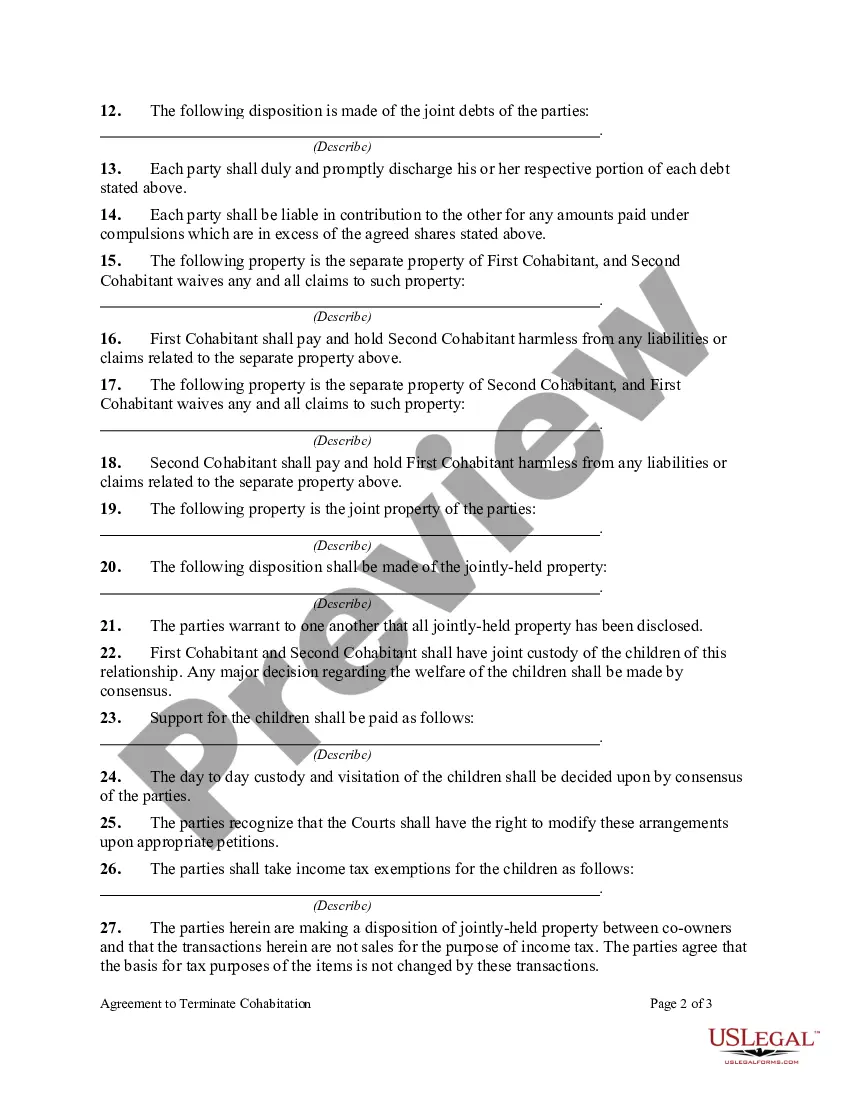
- Specification of separate property claims of each cohabitant.
- Details on joint debts and responsibilities for repayment.
- Provisions regarding the rights to each other's estate.
When to use this form
This agreement is essential when two individuals decide to terminate their cohabitation arrangement. It is particularly useful in situations where they wish to clarify their rights to property, manage joint debts, and avoid potential legal disputes in the future. This form helps to ensure both parties can exit the relationship on clear and mutually agreed terms.
Who should use this form
- Couples who have been living together and want to formally end their cohabitation.
- Individuals who seek clarity regarding property and debt responsibilities upon separation.
- Those who want to avoid future disputes regarding claims on each other's estate.
Instructions for completing this form
- Identify and enter the names of both parties involved in the cohabitation.
- Clearly outline any joint debts and the responsibilities for repayment.
- Specify the separate property ownership of each party.
- Include any waivers of rights to each other's estate.
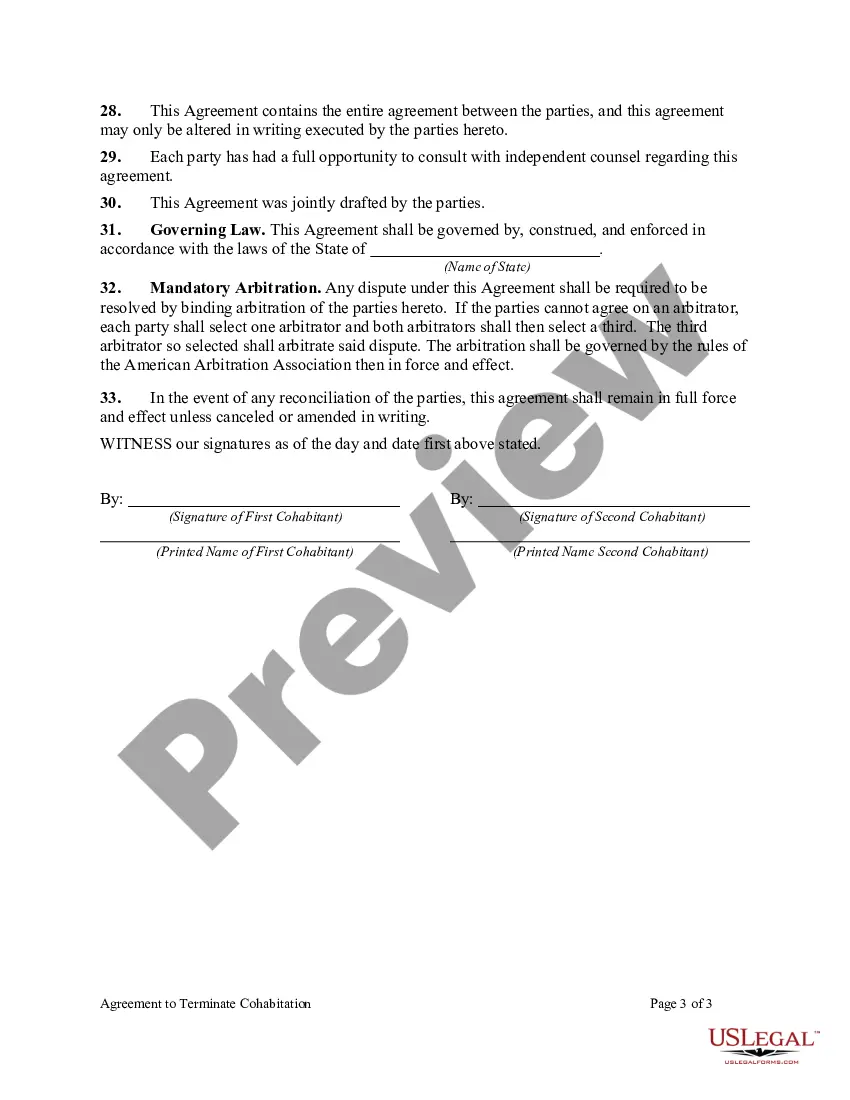
- Both parties should sign and date the form to validate the agreement.
Notarization requirements for this form
In most cases, this form does not require notarization. However, some jurisdictions or signing circumstances might. US Legal Forms offers online notarization powered by Notarize, accessible 24/7 for a quick, remote process.
Get your form ready online
Our built-in tools help you complete, sign, share, and store your documents in one place.
Make edits, fill in missing information, and update formatting in US Legal Forms—just like you would in MS Word.
Download a copy, print it, send it by email, or mail it via USPS—whatever works best for your next step.
Sign and collect signatures with our SignNow integration. Send to multiple recipients, set reminders, and more. Go Premium to unlock E-Sign.
If this form requires notarization, complete it online through a secure video call—no need to meet a notary in person or wait for an appointment.
We protect your documents and personal data by following strict security and privacy standards.

Make edits, fill in missing information, and update formatting in US Legal Forms—just like you would in MS Word.

Download a copy, print it, send it by email, or mail it via USPS—whatever works best for your next step.

Sign and collect signatures with our SignNow integration. Send to multiple recipients, set reminders, and more. Go Premium to unlock E-Sign.

If this form requires notarization, complete it online through a secure video call—no need to meet a notary in person or wait for an appointment.

We protect your documents and personal data by following strict security and privacy standards.
Mistakes to watch out for
- Failing to fully disclose all joint debts.
- Not specifying how future claims to property will be handled.
- Omitting signatures from both parties, which can invalidate the agreement.
Benefits of completing this form online
- Convenient access to legal forms anytime and from anywhere.
- Editable templates allow customization to fit specific needs.
- Reliability with lawyer-drafted documents ensuring legal compliance.
Legal use & context
- This form is legally binding once completed and signed by both parties.
- It is important that both parties understand their rights before signing to ensure enforceability.
- Consulting with a legal professional is recommended to address individual circumstances.
Summary of main points
- The Agreement to Terminate Cohabitation helps clarify rights and responsibilities upon ending a cohabitation arrangement.
- Both parties should provide clear and complete information to avoid future legal issues.
- This form can protect against potential disputes concerning property and finances after separation.
Looking for another form?
Form popularity
FAQ
Cohabitation agreements are legally binding contracts, provided that they are drafted and executed properly, and are signed as a deed. It is therefore essential to obtain legal advice before preparing an agreement.
Example of Cohabitation Two single people meet at a university and live together to save on expenses and have a sexual relationship.
Cohabitation agreements are similar contracts for unmarried spouses. These contracts allow you to make legal decisions about your rights in a relationship and decide how you want to arrange your finances if your relationship ends.
A cohabitation agreement tends to cost around £750 to A£2,000 plus VAT. But it is a good investment if you compare this to the potential costs if there is a dispute if a couple separate. We ask three law firms for their advice about what needs to be included in a cohabitation agreement.
In both types of agreements, the disclosure requirements are onerous but necessary. Full disclosure includes things such as income tax returns, pay stubs, banks account and credit card statements, RRSP/investment statements and a statutory declaration of all income, assets and debts, among others.
If a cohabiting couple splits up, they do not have the same legal rights to property as a married couple. In general, unmarried couples can't claim ownership of each other's property in the event of a breakup. This applies to big investments (such as a house) and smaller items (such as furniture).
Cohabitation agreements are legally binding contracts, provided that they are drafted and executed properly, and are signed as a deed. It is therefore essential to obtain legal advice before preparing an agreement.
Cohabitation is an arrangement where two people are not married but live together. They are often involved in a romantic or sexually intimate relationship on a long-term or permanent basis.More broadly, the term cohabitation can mean any number of people living together.
Cohabiting couples will have equal property rights if they are both included in a joint tenancy agreement. This means that both parties have an equal right to stay in the property if the relationship breaks down.