Sales Letter, Bank Trust Department
What is this form?
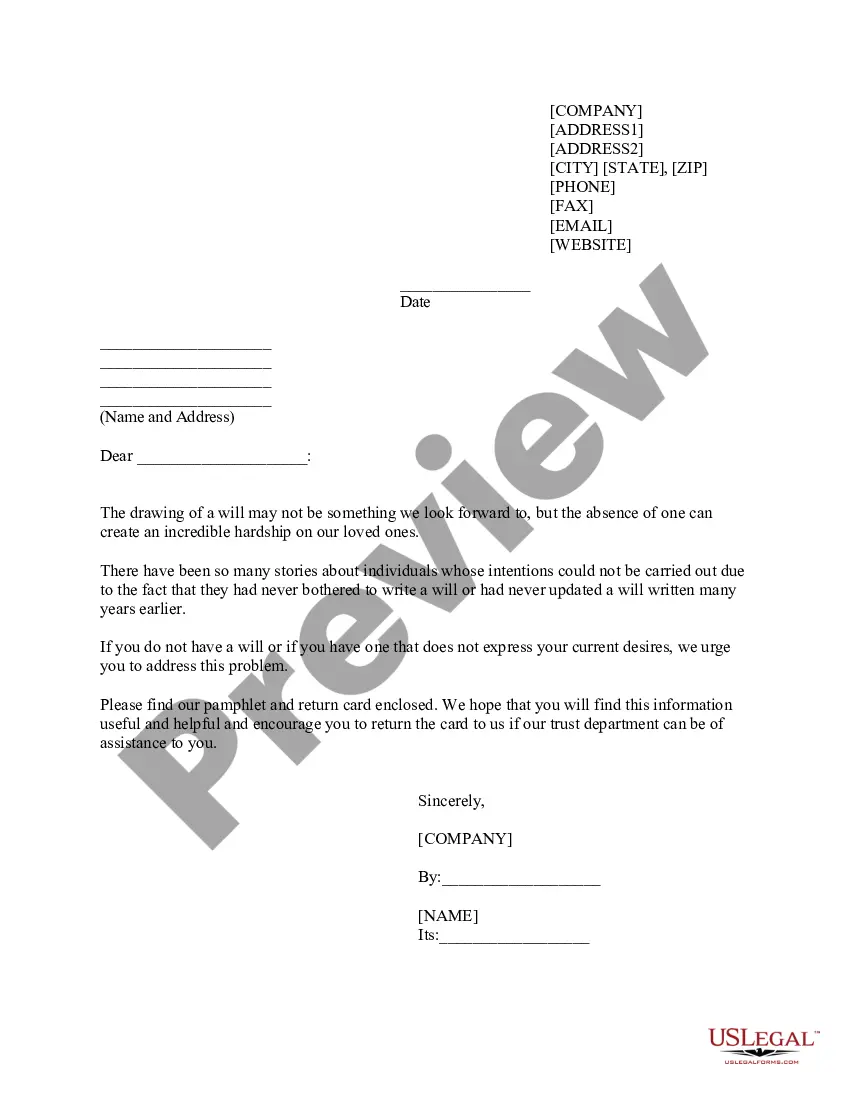
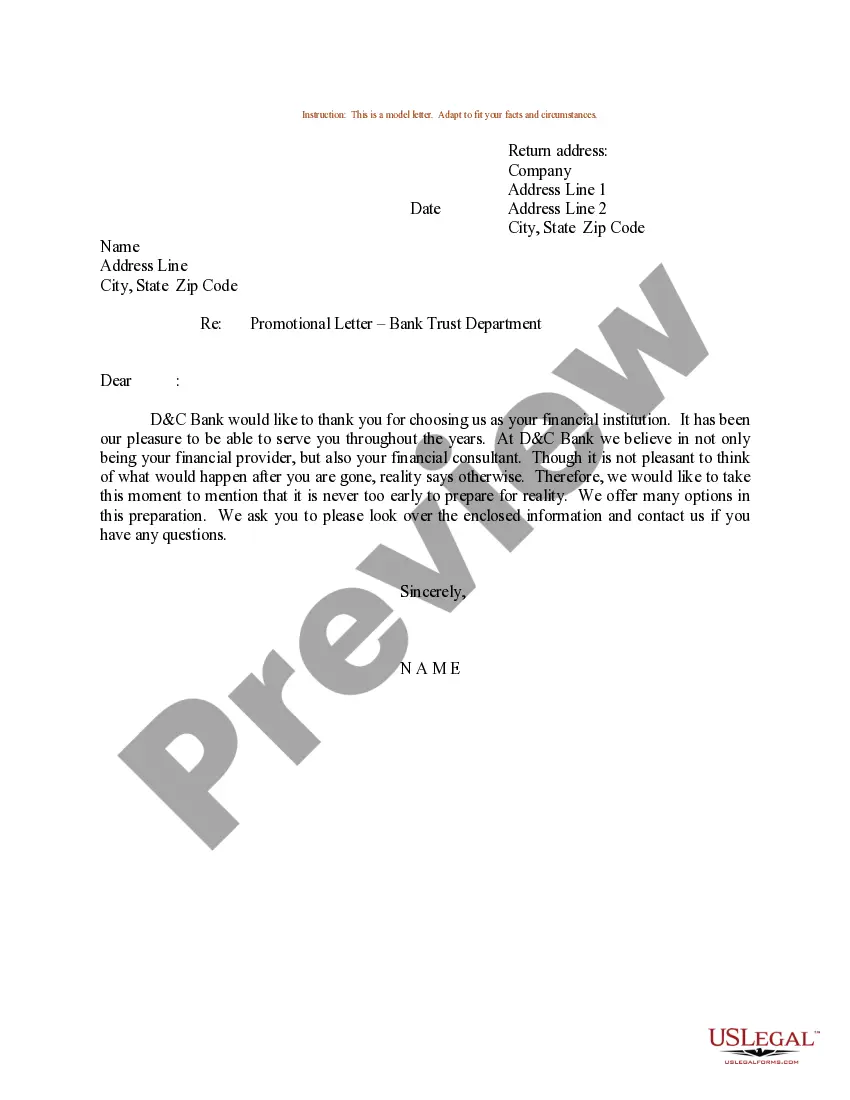
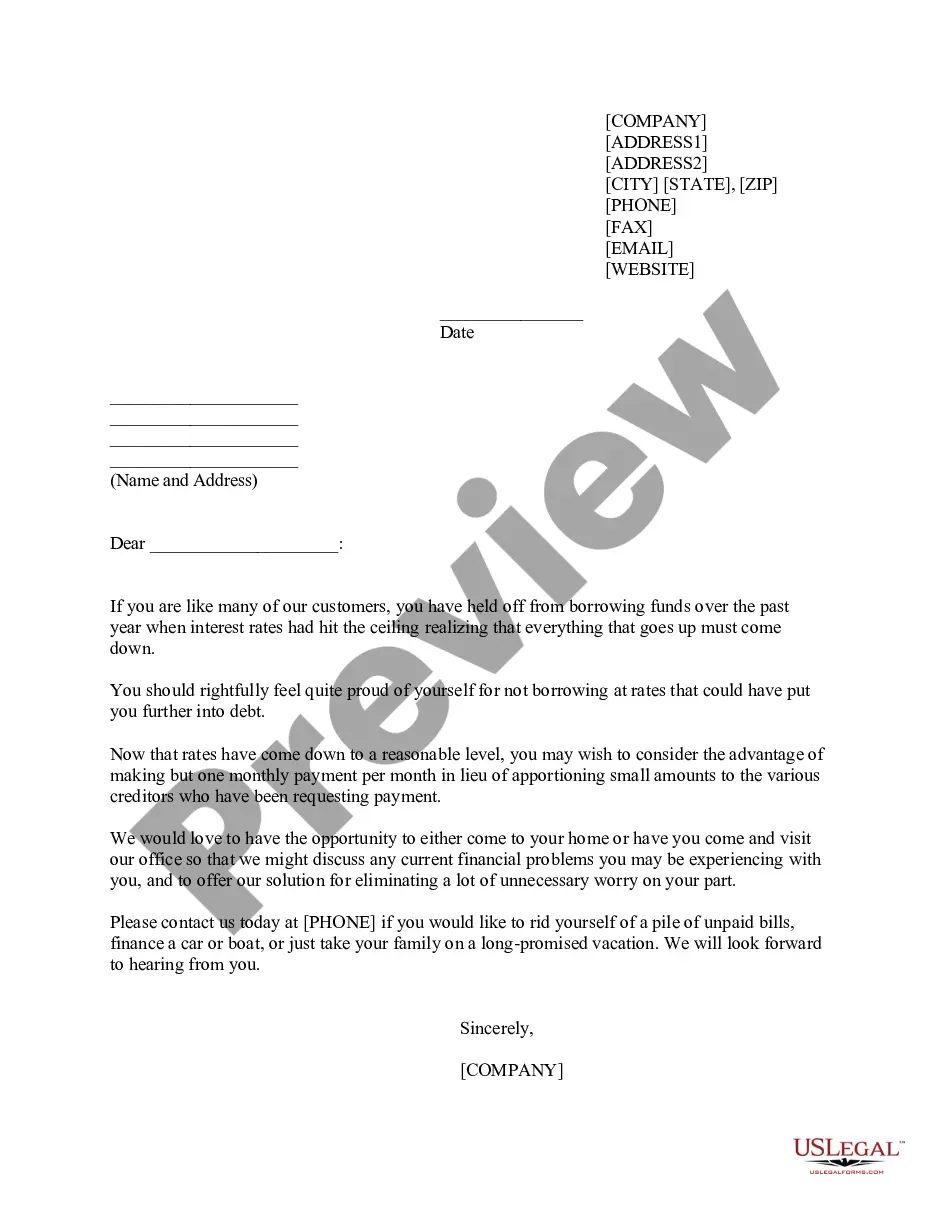
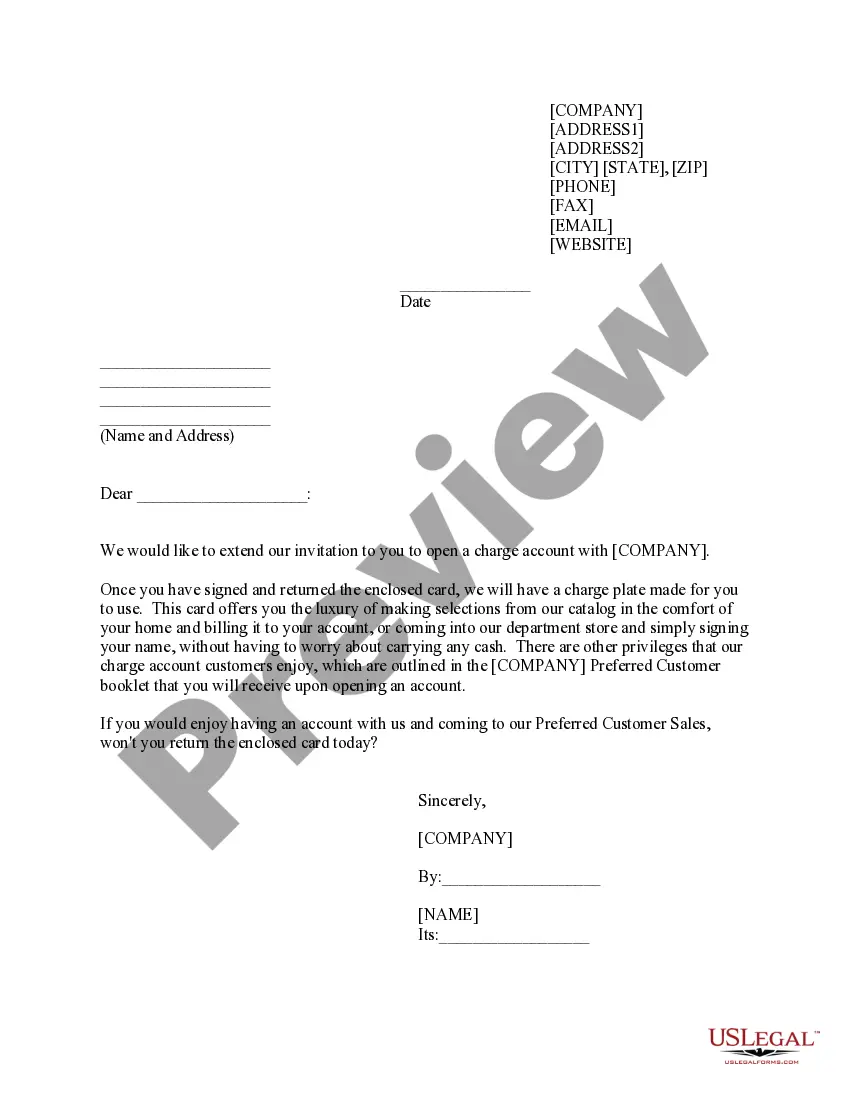
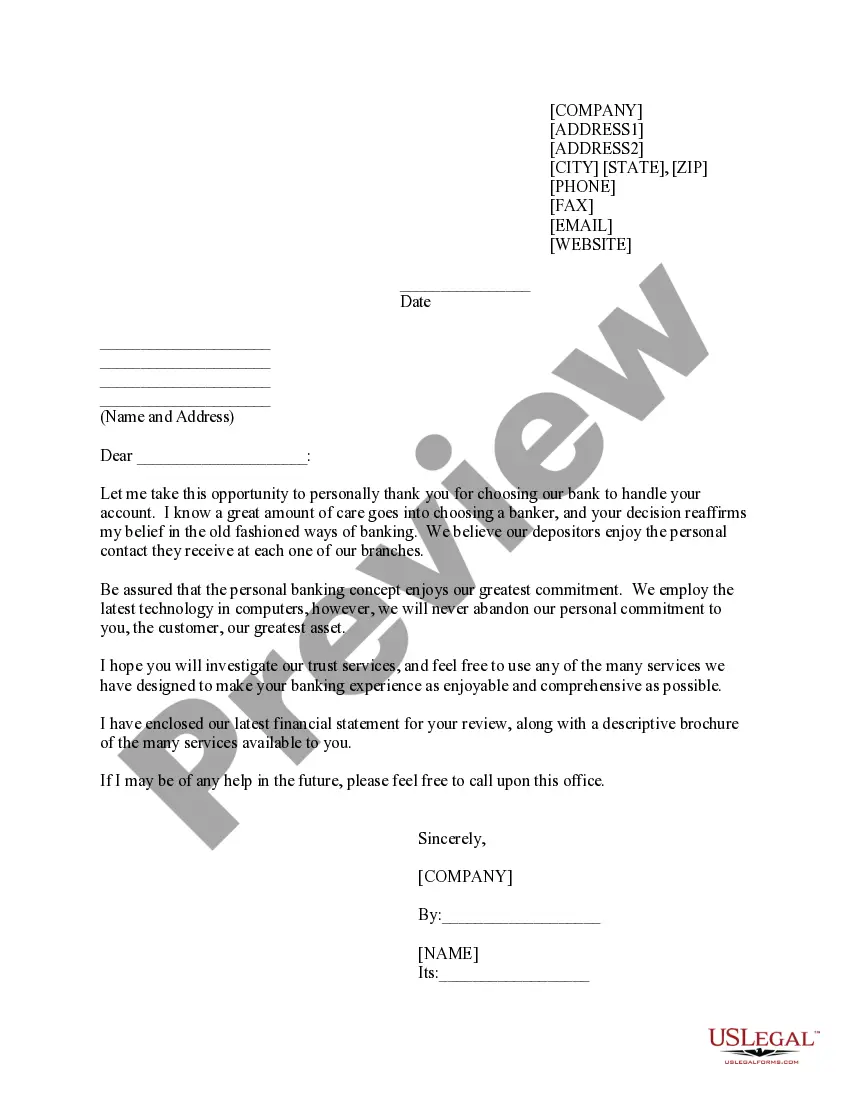
The Sales Letter for a Bank Trust Department is a formal correspondence intended to communicate the importance of establishing or updating a will. This letter serves as an outreach tool to inform clients about the critical need for estate planning. Unlike standard sales letters, this specific form emphasizes the role of trusts and wills in securing one's assets for heirs, addressing common concerns regarding the absence or neglect of these essential legal documents.
Key parts of this document
- Sender's contact information, including address, phone, and email.
- Date of the letter.
- Addressee's name and address.
- Greeting line addressing the recipient.
- Body content discussing the significance of having a will.
- Encouragement to review the enclosed materials and return the response card.
- Closing signature with the sender's name and title.
When to use this document
This form is useful in various scenarios, such as when a bank trust department needs to proactively encourage clients to consider their estate planning options. It can be used during outreach campaigns to inform clients about the importance of creating or updating wills and to promote the services of the trust department.
Who needs this form
This form is intended for:
- Bank trust departments reaching out to current or prospective clients.
- Financial advisors looking to address estate planning issues with their clients.
- Organizations that provide estate planning services and need to inform clients of their options.
Steps to complete this form
- Fill in your contact information in the designated area.
- Enter the current date.
- Provide the recipient's name and address.
- Write a personalized greeting for the recipient.
- Complete the body of the letter by emphasizing the importance of a will and the enclosed information.
- Sign the letter and include your name and title at the bottom.
Is notarization required?
This form does not typically require notarization unless specified by local law. Users should verify their state's specific regulations pertaining to estate planning and trust documentation to ensure compliance.
Get your form ready online
Our built-in tools help you complete, sign, share, and store your documents in one place.
Make edits, fill in missing information, and update formatting in US Legal Forms—just like you would in MS Word.
Download a copy, print it, send it by email, or mail it via USPS—whatever works best for your next step.
Sign and collect signatures with our SignNow integration. Send to multiple recipients, set reminders, and more. Go Premium to unlock E-Sign.
If this form requires notarization, complete it online through a secure video call—no need to meet a notary in person or wait for an appointment.
We protect your documents and personal data by following strict security and privacy standards.

Make edits, fill in missing information, and update formatting in US Legal Forms—just like you would in MS Word.

Download a copy, print it, send it by email, or mail it via USPS—whatever works best for your next step.

Sign and collect signatures with our SignNow integration. Send to multiple recipients, set reminders, and more. Go Premium to unlock E-Sign.

If this form requires notarization, complete it online through a secure video call—no need to meet a notary in person or wait for an appointment.

We protect your documents and personal data by following strict security and privacy standards.
Typical mistakes to avoid
- Failing to personalize the greeting for the recipient.
- Leaving out important contact information.
- Neglecting to include the date before sending the letter.
- Using overly technical language instead of clear, simple terms.
- Forgetting to sign the letter, which may make it appear impersonal.
Why complete this form online
- Convenient access to a legally drafted template that ensures compliance with regulations.
- Editability allows for easy personalization to meet the sender's communication style.
- Instant download enables the immediate use and distribution of the letter.
- Access to professional legal insights which enhances the credibility of the communication.
Looking for another form?
Form popularity
FAQ
Elements and Format of Sales Letter Introduction: It is the introductory paragraph. Introduction in the sales letter provides the details of the product or the service. It also provides the reader with the cost, quality, saving and other related information. Body: Here the writer builds his credibility.
The "four A's" of sales letters are attention, appeal, application, and action. First, get the reader's attention. Next, highlight your product's appeal. Then, show the reader the product's application.
The purpose of a sales letter is to persuade a specific reader to purchase a service or product. This is a persuasive letter, and must both enhance the author's credibility while also advertising the product or service.
Sales letter must be arouse interest, sound convincing, create a desire and encourage the reader to take action. Write in a positive, convincing style but don't be aggressive. Present advantages and benefits to the reader. Encourage a response from to the reader- a phone call, a visit, a reply on an attached form etc.
How to write a sales letter Begin with a headline hook. You want to begin by writing an intriguing headline and hook the recipient into reading the rest of the letter.Use bullet points to highlight crucial information.Offer proof.Include a call to action.Provide a limited-time offer.
How to write a sales letter Write a catchy headline that grabs your customer's attention.Hook the reader by identifying what they need and why.Include bullet points with key information.Use testimonials or statistics.Give readers a call to action.Offer something to the customer that is limited in time or quantity.
What is a sales letter? A sales letter is a form of direct marketing that's designed to attract potential customers to your product or service. It tells new prospects who you are and how your company can benefit them.