Receipt for Payment of Loss for Subrogation
What is this form?
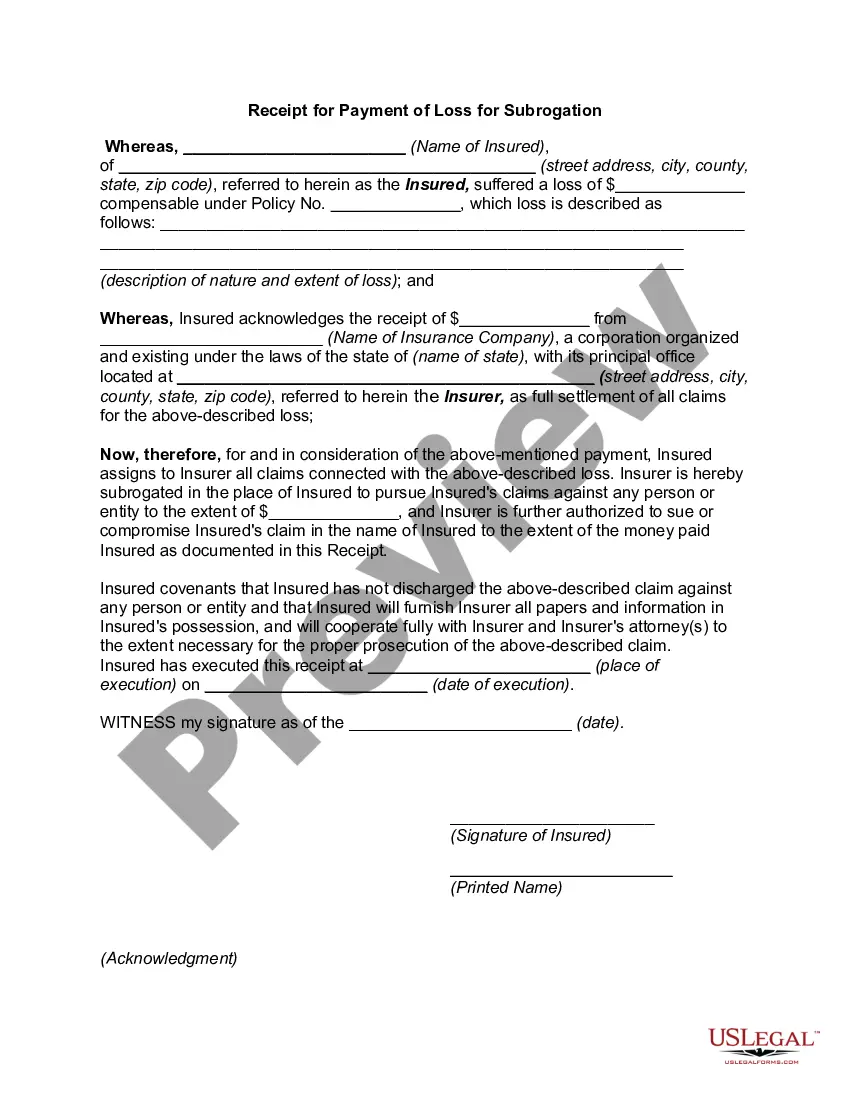
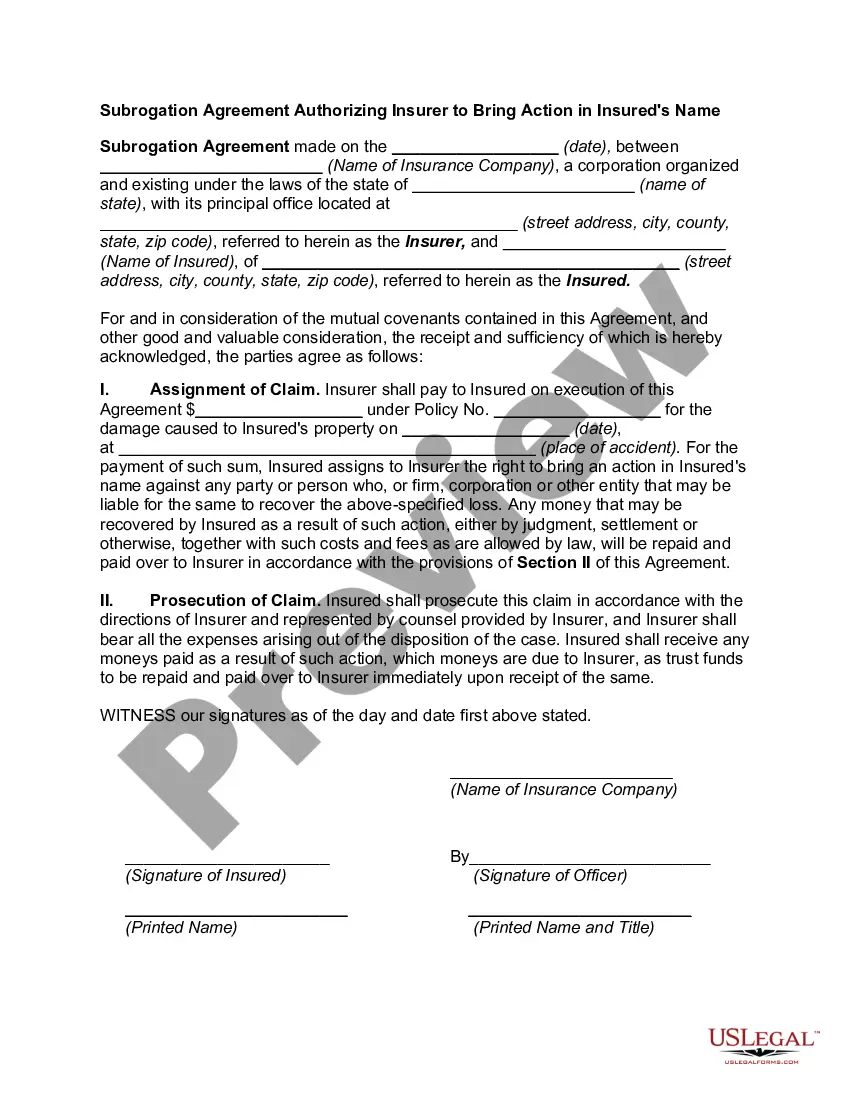
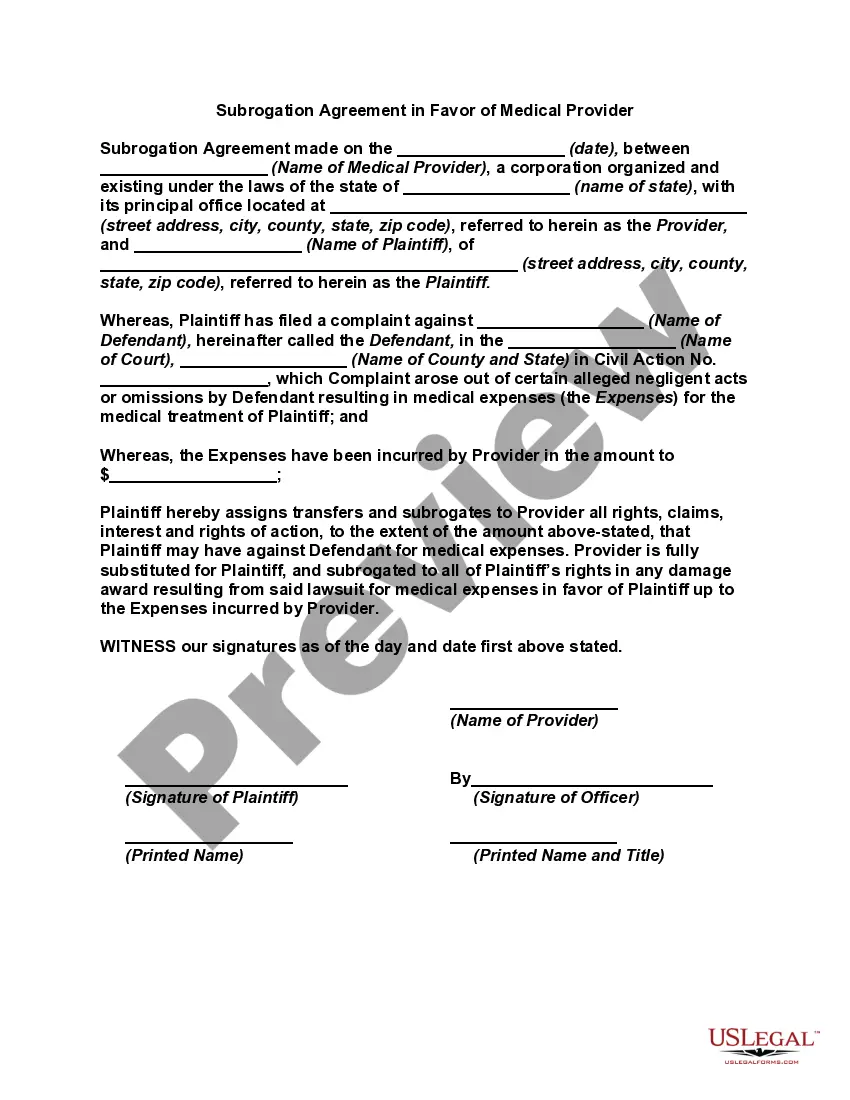
The Receipt for Payment of Loss for Subrogation is a legal document used primarily in insurance matters. This form allows an insured party to acknowledge receipt of payment for a covered loss and assign the right to pursue claims against third parties to their insurer. By using this receipt, the insurer becomes entitled to recover any amounts paid for the loss from any parties responsible for the damage. This form is essential in subrogation cases and differs from simple payment receipts as it includes provisions for the assignment of claims to the insurer.
Key components of this form
- Name and address of the insured.
- Description of the loss and policy number.
- Amount received from the insurer as settlement.
- Assignment of claims to the insurer.
- Insured's acknowledgment of cooperation with the insurer.
- Signatures of the insured and any necessary witnesses.
When to use this form
This form should be used when an insured individual has received payment for a covered loss from their insurance company and wishes to formally assign their rights to pursue claims against any negligent third party. It is particularly relevant in situations where the insurance company may seek reimbursement for the payment they made due to the insured's loss, typically resulting from another party's actions.
Who can use this document
This form is intended for:
- Individuals who have filed an insurance claim and received payment for a loss.
- Insurance companies seeking to recover costs from responsible third parties.
- Legal representatives of insured parties involved in subrogation actions.
How to prepare this document
- Enter the name and address of the insured in the designated fields.
- Provide a clear description of the loss and the insurance policy number associated with the claim.
- Specify the total amount received from the insurer as full settlement.
- Complete the section that assigns claims to the insurer and specifies the extent of subrogation rights.
- Ensure the form is signed and dated by the insured at the appropriate location.
Notarization requirements for this form
This form does not typically require notarization to be legally valid. However, some jurisdictions or document types may still require it. US Legal Forms provides secure online notarization powered by Notarize, available 24/7 for added convenience.
Get your form ready online
Our built-in tools help you complete, sign, share, and store your documents in one place.
Make edits, fill in missing information, and update formatting in US Legal Forms—just like you would in MS Word.
Download a copy, print it, send it by email, or mail it via USPS—whatever works best for your next step.
Sign and collect signatures with our SignNow integration. Send to multiple recipients, set reminders, and more. Go Premium to unlock E-Sign.
If this form requires notarization, complete it online through a secure video call—no need to meet a notary in person or wait for an appointment.
We protect your documents and personal data by following strict security and privacy standards.

Make edits, fill in missing information, and update formatting in US Legal Forms—just like you would in MS Word.

Download a copy, print it, send it by email, or mail it via USPS—whatever works best for your next step.

Sign and collect signatures with our SignNow integration. Send to multiple recipients, set reminders, and more. Go Premium to unlock E-Sign.

If this form requires notarization, complete it online through a secure video call—no need to meet a notary in person or wait for an appointment.

We protect your documents and personal data by following strict security and privacy standards.
Common mistakes to avoid
- Failing to provide a complete description of the loss.
- Not including the correct policy number.
- Omitting signatures or dates that invalidate the document.
- Not assigning the claims properly, which may complicate recovery rights.
Advantages of online completion
- Convenience of downloading and filling out the form at any time.
- Editability allows for quick adjustments to reflect accurate information.
- Access to attorney-drafted content ensures legal compliance and clarity.
Key takeaways
- The Receipt for Payment of Loss for Subrogation is crucial for assigning claims to an insurer.
- Completing the form accurately prevents disputes and facilitates recovery efforts.
- Understanding your rights and obligations under this form can impact subrogation outcomes.
Looking for another form?
Form popularity
FAQ
A subrogation receipt is signed by the insured upon payment of a claim, and assigns the insurer to the right to recovery for the loss.
Subrogation adjusters send letters to those who appear to be responsible for reimbursing the insurance company.If the recipient ignores the letter, the insurer may continue to mail requests for reimbursement or may choose to file a lawsuit against the responsible party.
It's important to point out here that you are not legally obligated to respond to a subrogation letter sent by another person's insurance provider. You're not violating any laws by opening that letter, reading it, and then chucking it in the trash.
What happens if you don't pay a subrogation claim? If you choose to not pay a subrogation, the insurer will continue to mail requests for reimbursement. Again, they may file a lawsuit against you. One way to avoid an effort to subrogate from the victim's insurance company is if there is a subrogation waiver.
A subrogation letter is written by a third party, who in addition to the plaintiff in a case, aims to pursue the defendant for compensation. For example, if someone was injured in a car accident and received care at a hospital, the hospital might end up sending them a subrogation letter.
Letter creation date. The name of the insured and the name of the at-fault party. The sum paid to the insured. Summary of the damages. Request for the policy number of the recipient. Request to contact the insurance company and contact details.
One example of subrogation is when an insured driver's car is totaled through the fault of another driver. The insurance carrier reimburses the covered driver under the terms of the policy and then pursues legal action against the driver at fault.