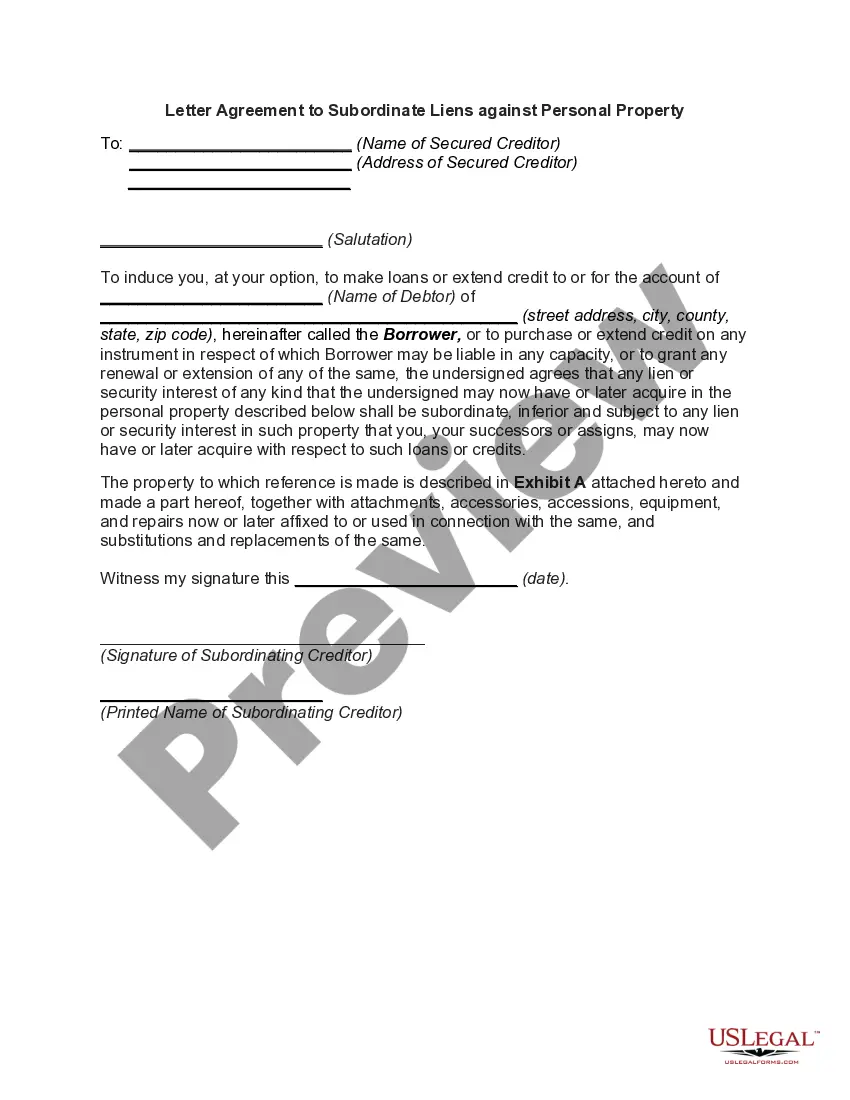
Letter Agreement to Subordinate Liens against Personal Property
What this document covers
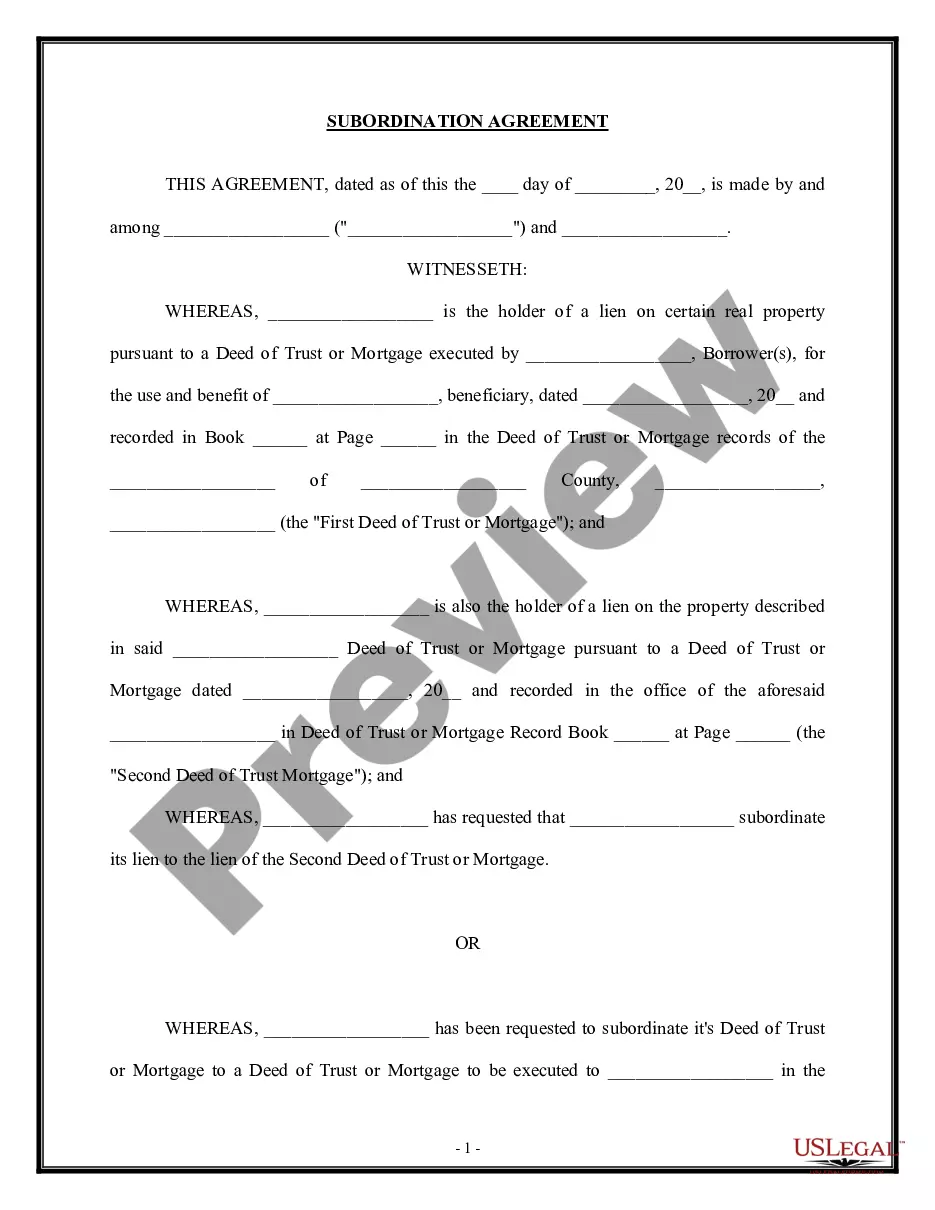
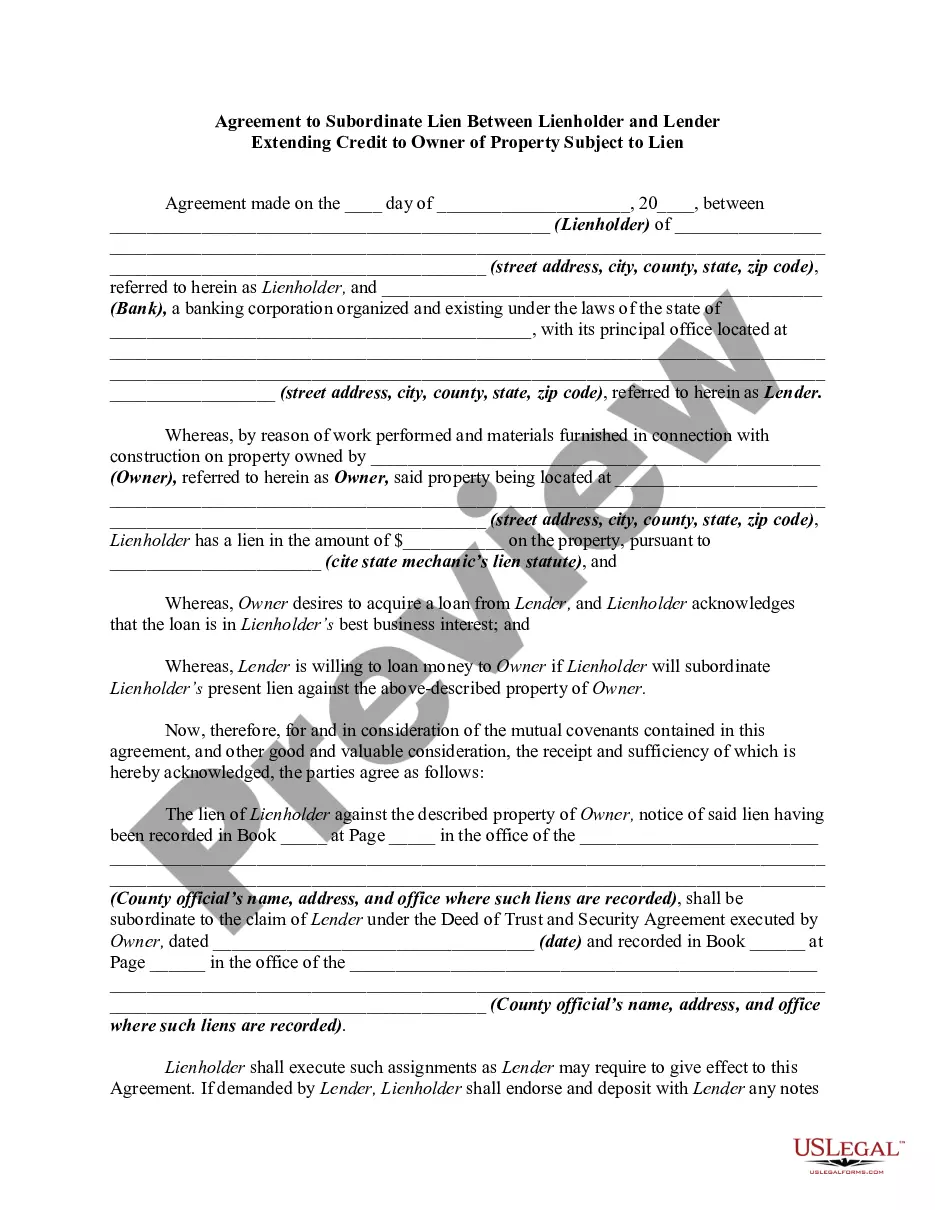
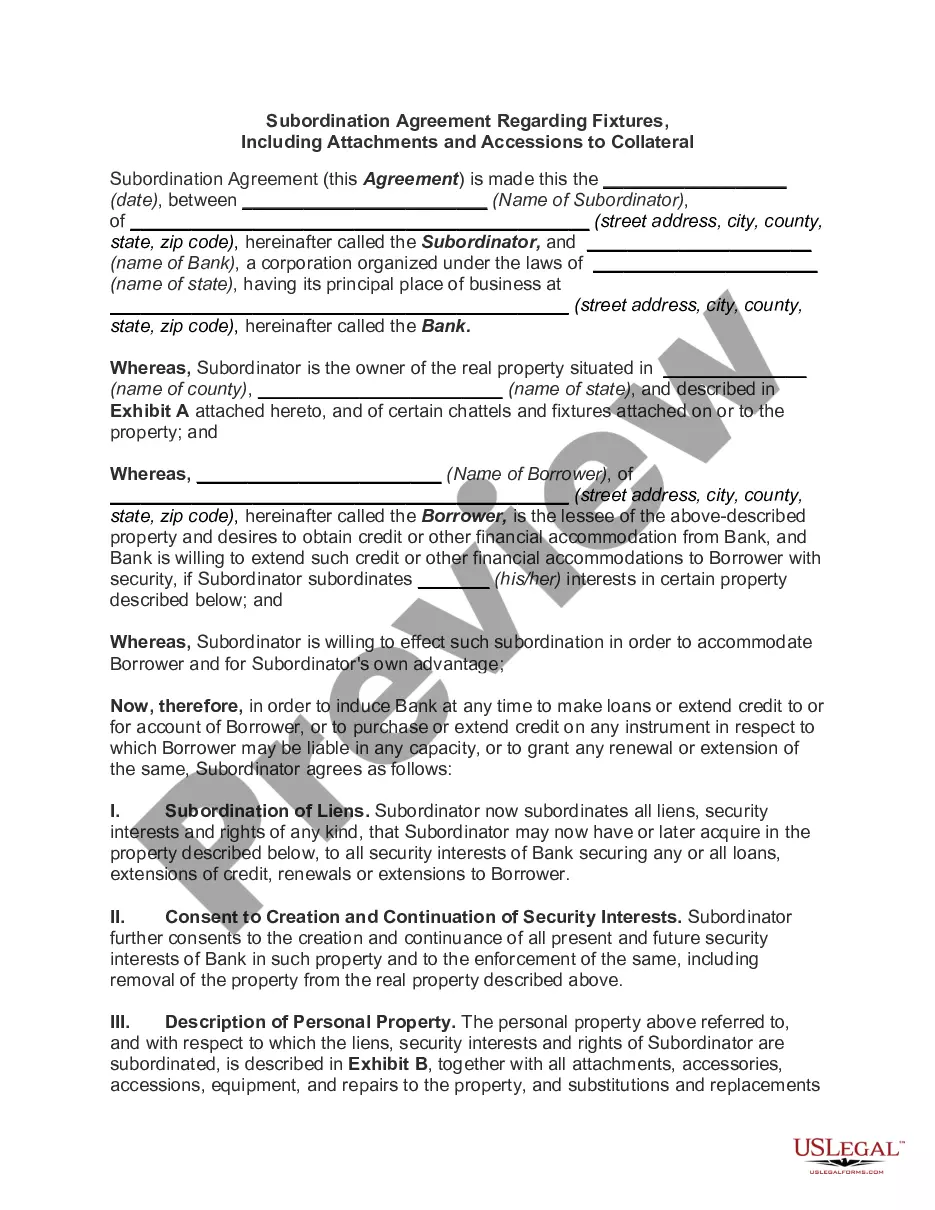
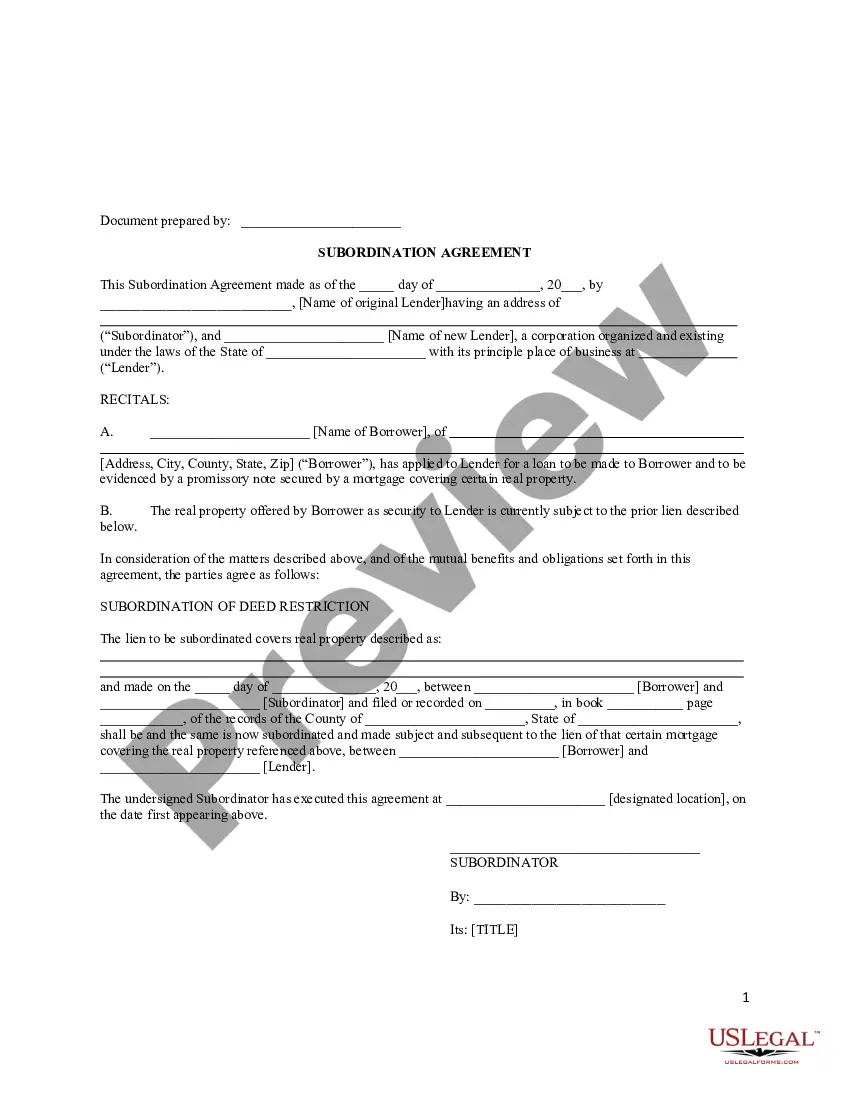
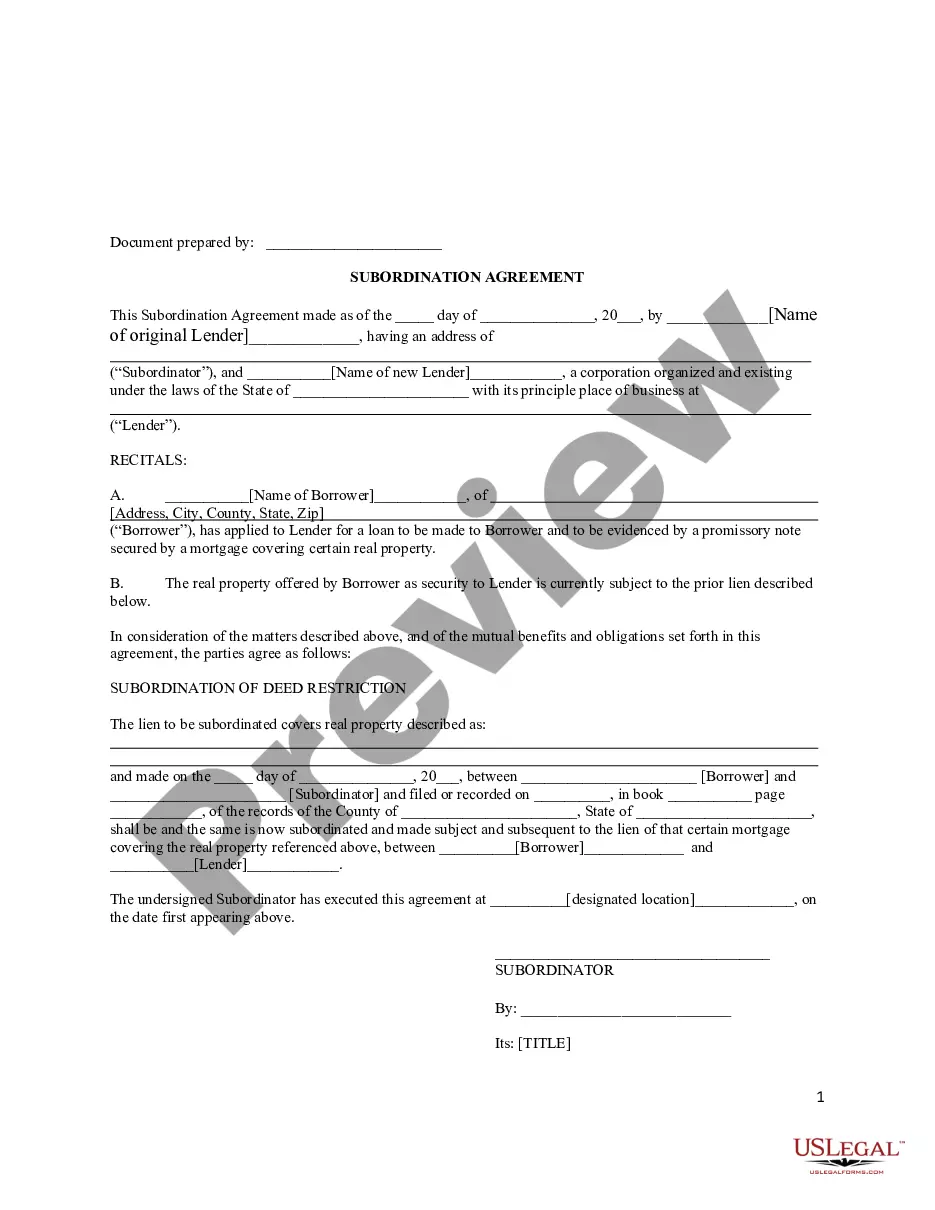
The Letter Agreement to Subordinate Liens against Personal Property is a legal document that allows a borrower to subordinate their liens on personal property to a lender's liens. This agreement is essential for securing loans or credit, as it clarifies that any lien the borrower holds will be inferior to any lien that the lender may have or acquire. Unlike other types of lien agreements, this document specifically addresses the subordination of existing security interests, providing clear terms that benefit both the borrower and lender in financing arrangements.
What’s included in this form
- Name and address of the secured creditor.
- Salutation to the secured creditor.
- Name and address of the borrower.
- Details on the personal property subject to the lien.
- Agreement to subordinate any existing liens to the creditor's interests.
- Signature line for the subordinating creditor.
When to use this document
This form is used in situations where a borrower seeks to secure a loan or credit from a lender but has existing liens on personal property. By executing this agreement, the borrower ensures that their current liens will not take priority over the lender's security interests, which may be essential for the lender's willingness to extend credit. This form may be particularly relevant during refinancing, new loan agreements, or when negotiating terms for credit extension.
Who should use this form
- Borrowers who have existing liens on personal property and need to secure a loan.
- Lenders seeking to ensure their security interests are prioritized over existing liens.
- Business entities required to subordinate liabilities for financing purposes.
- Individuals or organizations looking to clarify lien priorities in their financial dealings.
Steps to complete this form
- Identify the secured creditor by entering their name and address.
- Specify the borrower's details, including their name and complete address.
- Clearly describe the personal property that the lien pertains to in the designated section.
- Complete the date when the document is being signed.
- Sign the document where indicated, and print your name below the signature.
Notarization guidance
Notarization is generally not required for this form. However, certain states or situations might demand it. You can complete notarization online through US Legal Forms, powered by Notarize, using a verified video call available anytime.
Get your form ready online
Our built-in tools help you complete, sign, share, and store your documents in one place.
Make edits, fill in missing information, and update formatting in US Legal Forms—just like you would in MS Word.
Download a copy, print it, send it by email, or mail it via USPS—whatever works best for your next step.
Sign and collect signatures with our SignNow integration. Send to multiple recipients, set reminders, and more. Go Premium to unlock E-Sign.
If this form requires notarization, complete it online through a secure video call—no need to meet a notary in person or wait for an appointment.
We protect your documents and personal data by following strict security and privacy standards.

Make edits, fill in missing information, and update formatting in US Legal Forms—just like you would in MS Word.

Download a copy, print it, send it by email, or mail it via USPS—whatever works best for your next step.

Sign and collect signatures with our SignNow integration. Send to multiple recipients, set reminders, and more. Go Premium to unlock E-Sign.

If this form requires notarization, complete it online through a secure video call—no need to meet a notary in person or wait for an appointment.

We protect your documents and personal data by following strict security and privacy standards.
Avoid these common issues
- Failing to include all relevant property details.
- Not signing the document or missing printed names.
- Omitting the date of signing.
- Using incorrect names or addresses for the creditor or borrower.
Why use this form online
- Convenient access to the form anytime, anywhere.
- Editability allows for quick adjustments tailored to specific situations.
- Reliable templates drafted by licensed attorneys ensure legal validity.
Looking for another form?
Form popularity
FAQ
A subordination agreement is a legal document that establishes one debt as ranking behind another in priority for collecting repayment from a debtor.
When a Borrower wishes to refinance the property, they must request a subordination request to the Lender. The Lender will subordinate their loan only when there is no cash out as part of the refinance.
Subordination agreements are prepared by your lender. The process occurs internally if you only have one lender. When your mortgage and home equity line or loan have different lenders, both financial institutions work together to draft the necessary paperwork.
Despite its technical-sounding name, the subordination agreement has one simple purpose. It assigns your new mortgage to first lien position, making it possible to refinance with a home equity loan or line of credit.
: placement in a lower class, rank, or position : the act or process of subordinating someone or something or the state of being subordinated As a prescriptive text, moreover, the Bible has been interpreted as justifying the subordination of women to men.
What is a Subordinate Mortgage? Subordinate mortgages are loans that have a lower priority status than any other recorded liens (or debts) against a property. When you get the loan you need to purchase your home, this loan is typically recorded as the first repayment priority on your deed after closing.
The signed agreement must be acknowledged by a notary and recorded in the official records of the county to be enforceable.
Subordination clauses in mortgages refer to the portion of your agreement with the mortgage company that says their lien takes precedence over any other liens you may have on your property.The primary lien on a house is usually a mortgage. However, it's also possible to have other liens.
Unless there is a subordination agreement, it is virtually impossible to refinance your first mortgage. The document agreeing to the subordination must be signed by the lender and the borrower and requires notarization.