Release and Indemnification of Personal Representative by Heirs and Devisees
About this form
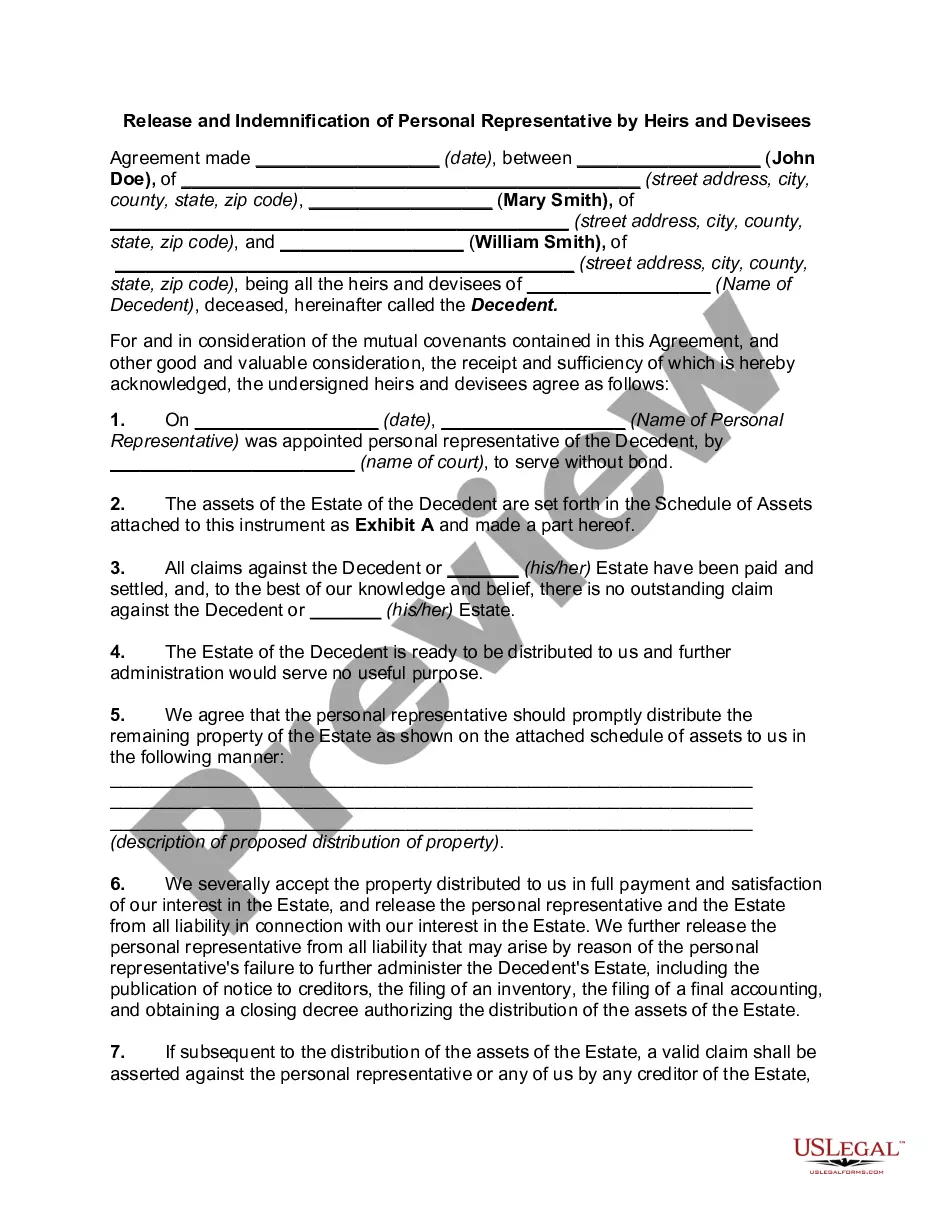
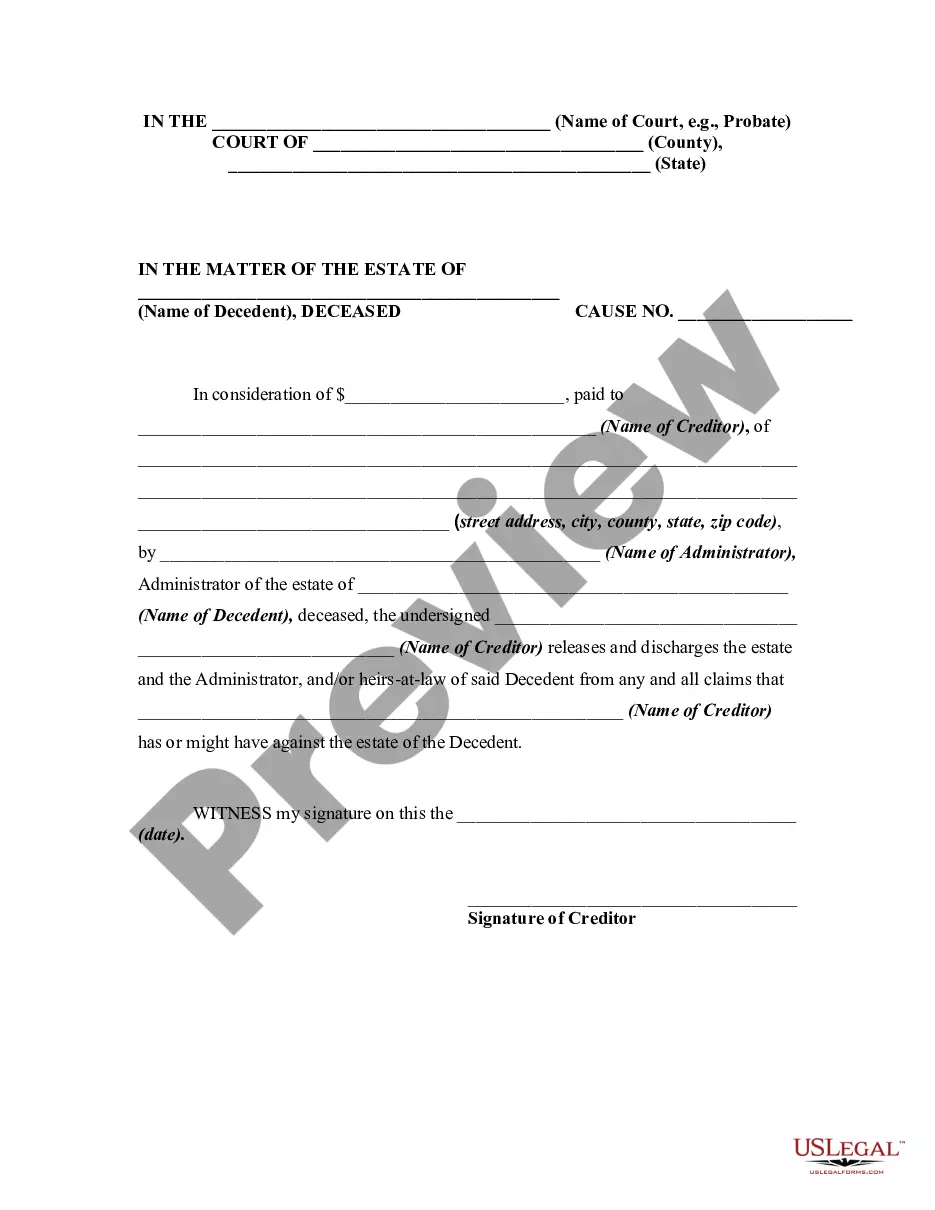
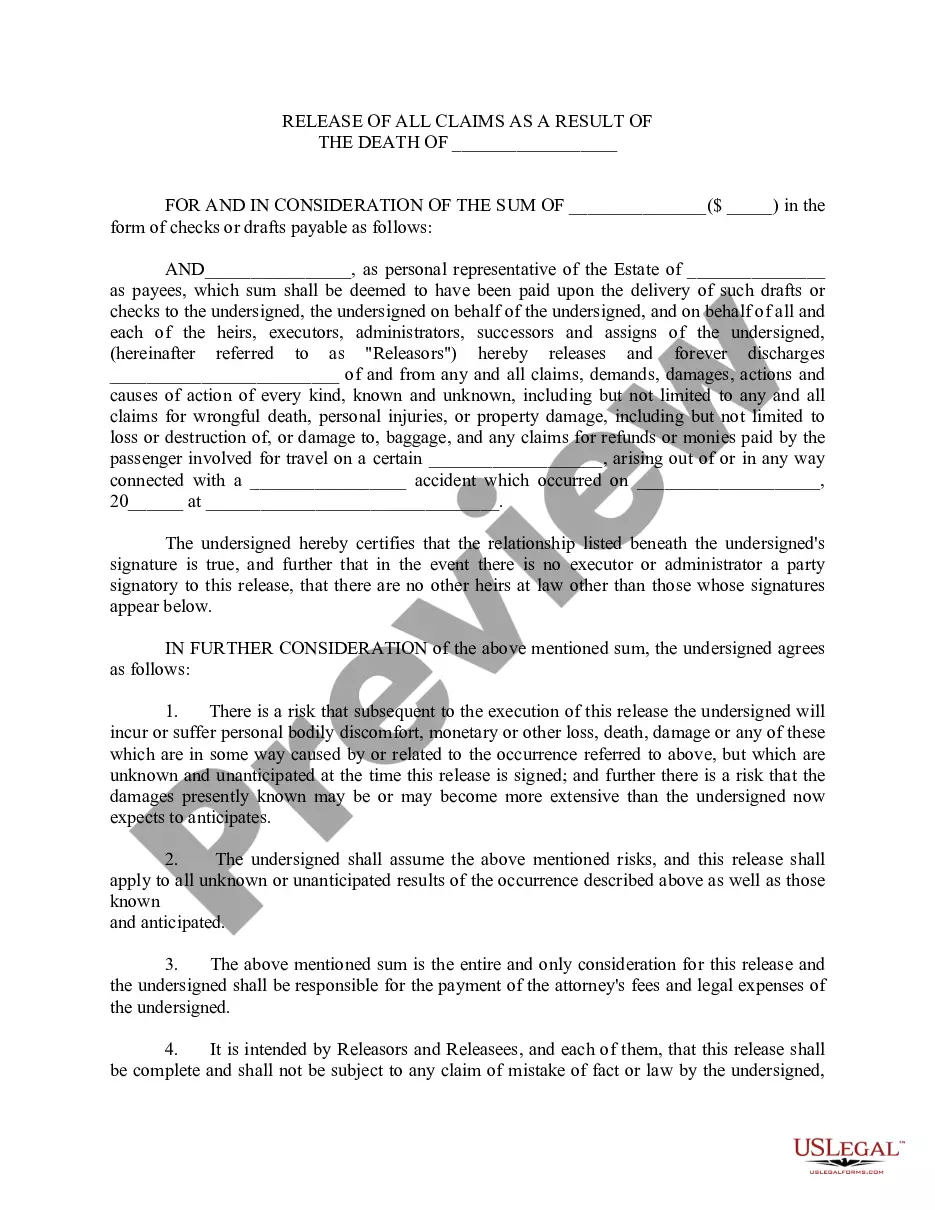
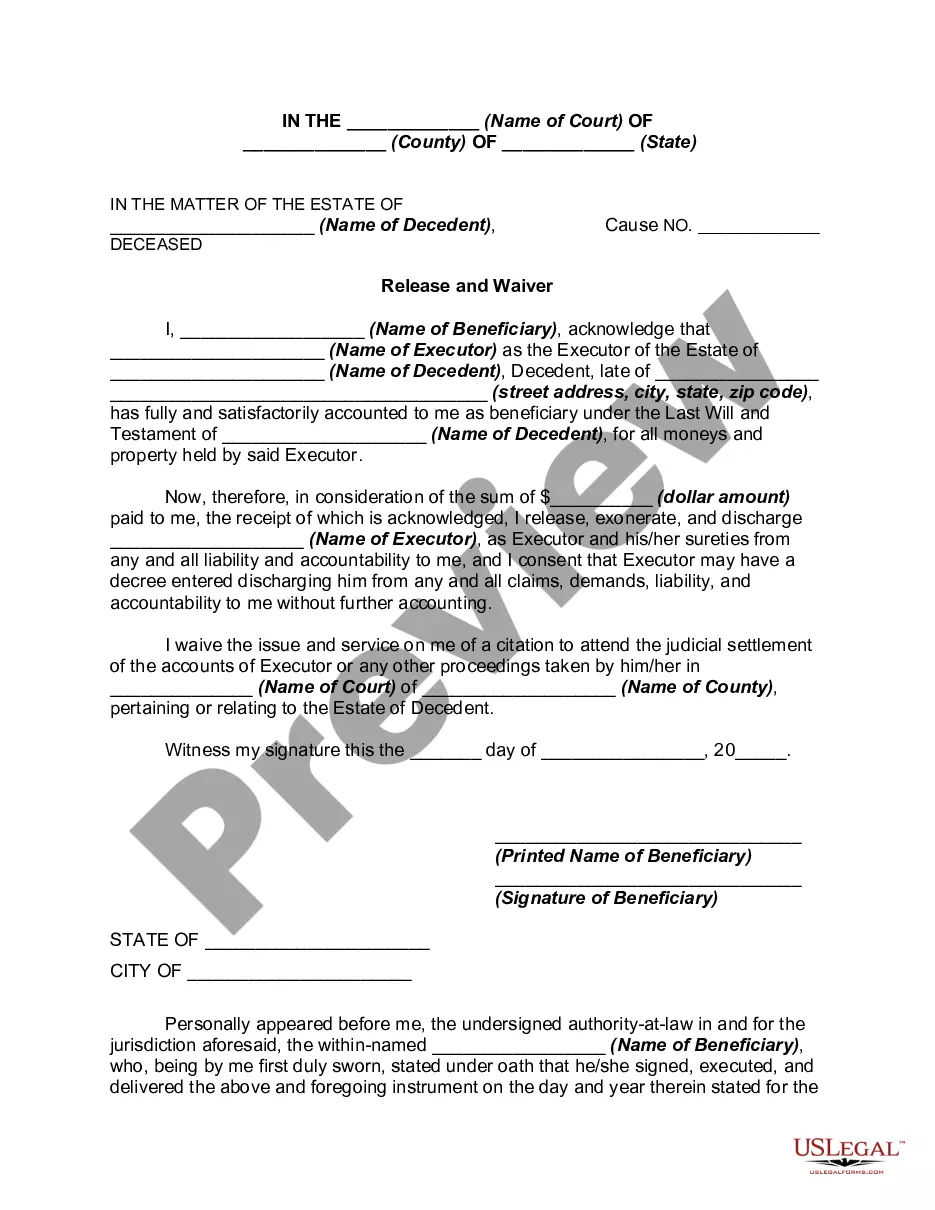
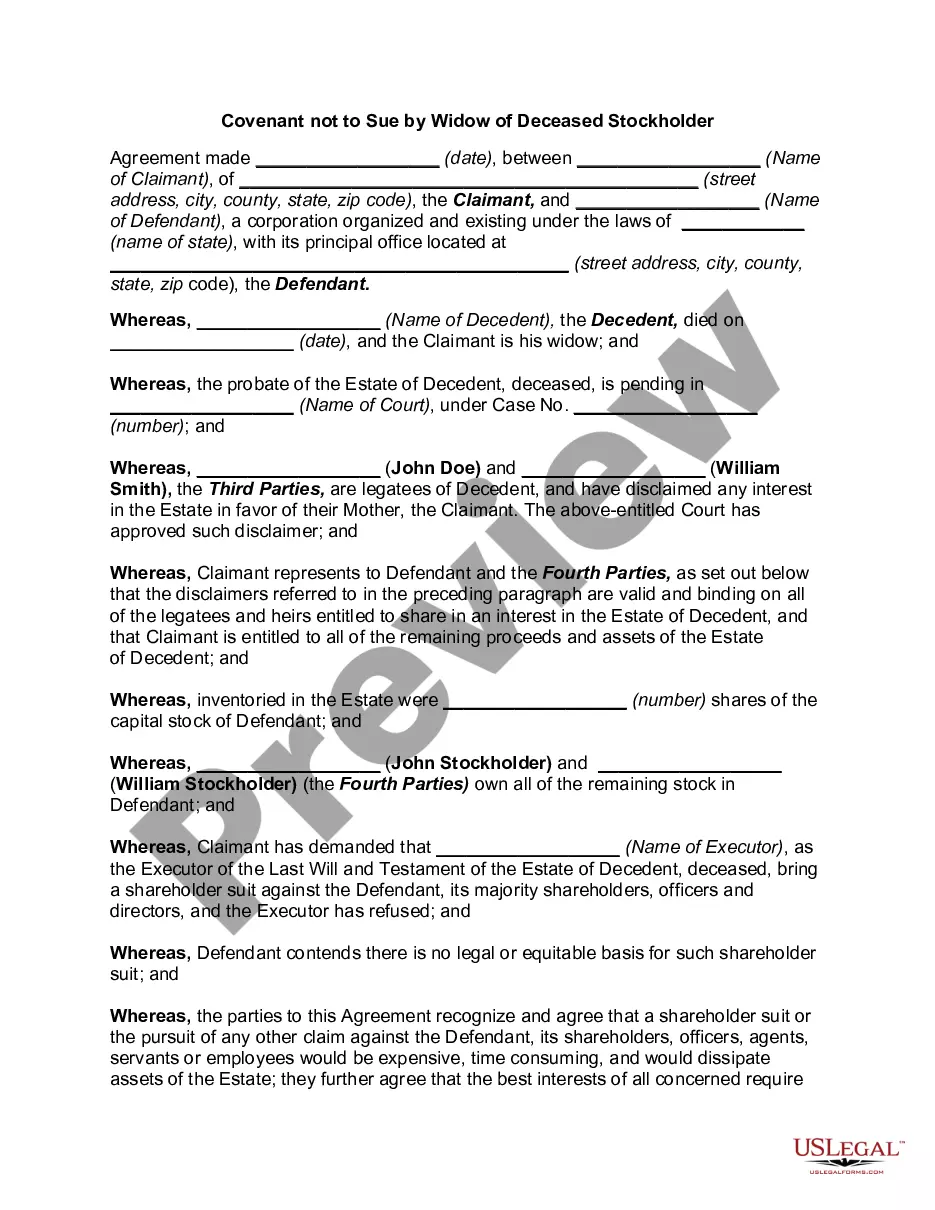
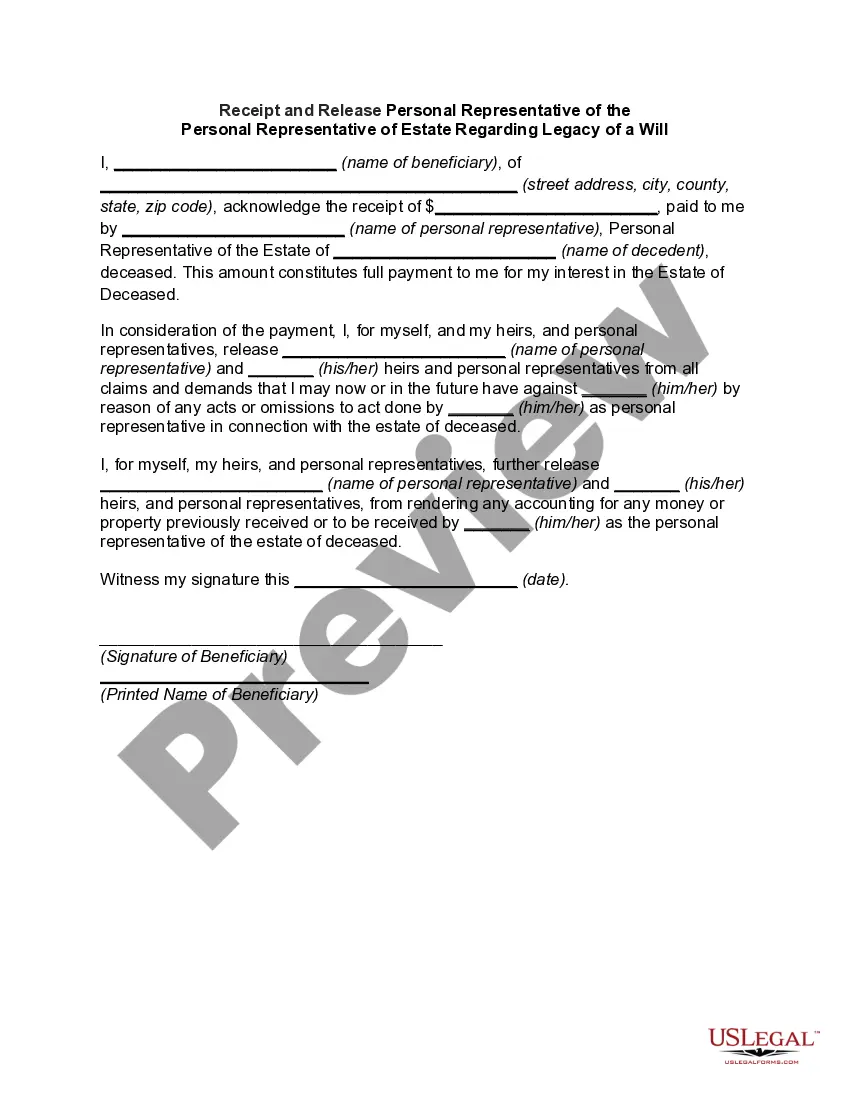
The Release and Indemnification of Personal Representative by Heirs and Devisees is a legal document used to protect a personal representative from future claims by the estateâs heirs and devisees. This form ensures that all claims against the deceasedâs estate have been settled before the distribution of the estate's assets. It is different from other estate forms as it specifically addresses the release of liability for the personal representative when heirs accept their shares of the estate.
Key parts of this document
- Date of agreement and details about the personal representative.
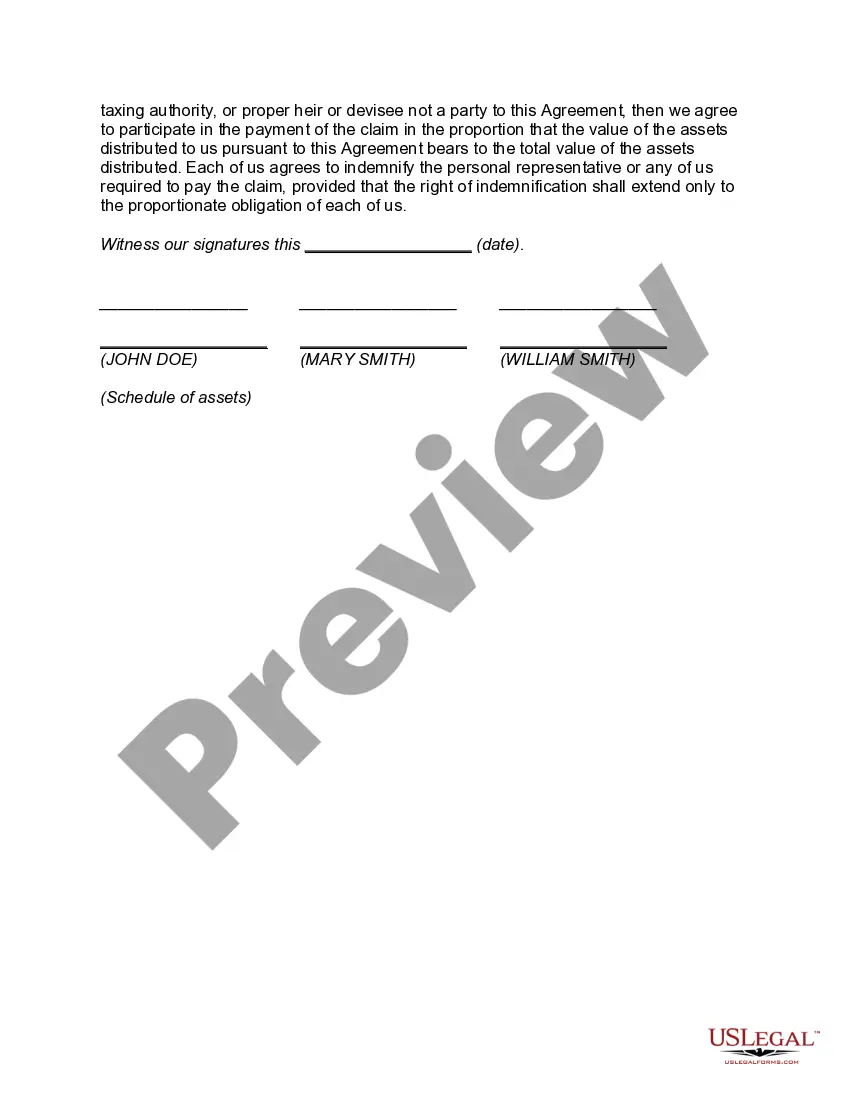
- Schedule of Assets, listing the estate's property.
- A confirmation that all claims have been settled before distribution.
- Agreement on how the estate assets will be divided among the heirs.
- Release of liability for the personal representative concerning further claims.
- Indemnification clause to protect against future claims from creditors or other heirs.
When to use this form
This form should be used when the personal representative is ready to distribute the assets of a decedentâs estate. It is particularly important to use this form when all debts and claims against the estate have been settled and the heirs wish to acknowledge their acceptance of their inheritance while protecting the personal representative from future liabilities.
Who should use this form
- Heirs and devisees of a deceased individual who are receiving property from the estate.
- Personal representatives who need to formalize the distribution of estate assets.
- Individuals involved in settling estates who want to ensure legal protection against claims.
Steps to complete this form
- Identify all parties involved, including the personal representative and heirs.
- Insert the date of the agreement and all relevant addresses.
- Enumerate the assets of the deceased's estate in the attached Schedule of Assets.
- Specify how the remaining estate assets will be distributed among the heirs.
- Ensure all parties sign to accept the distribution and release the personal representative from future claims.
Notarization guidance
This form does not typically require notarization unless specified by local law. However, having a notary public witness the signatures may enhance its legal standing and protect against future disputes.
Get your form ready online
Our built-in tools help you complete, sign, share, and store your documents in one place.
Make edits, fill in missing information, and update formatting in US Legal Forms—just like you would in MS Word.
Download a copy, print it, send it by email, or mail it via USPS—whatever works best for your next step.
Sign and collect signatures with our SignNow integration. Send to multiple recipients, set reminders, and more. Go Premium to unlock E-Sign.
If this form requires notarization, complete it online through a secure video call—no need to meet a notary in person or wait for an appointment.
We protect your documents and personal data by following strict security and privacy standards.

Make edits, fill in missing information, and update formatting in US Legal Forms—just like you would in MS Word.

Download a copy, print it, send it by email, or mail it via USPS—whatever works best for your next step.

Sign and collect signatures with our SignNow integration. Send to multiple recipients, set reminders, and more. Go Premium to unlock E-Sign.

If this form requires notarization, complete it online through a secure video call—no need to meet a notary in person or wait for an appointment.

We protect your documents and personal data by following strict security and privacy standards.
Common mistakes to avoid
- Failing to list all heirs and devisees involved in the estate.
- Not confirming that all estate debts and claims have been settled.
- Inaccuracy in the description of the assets being distributed.
- Omitting signatures or the date of agreement.
Why complete this form online
- Immediate access to a professionally drafted legal form, ensuring adherence to legal standards.
- Ability to download and fill out the form at your convenience.
- Editable format allows customization specific to your situation.
- Reduces the need for travel to acquire legal documents or consultation.
Main things to remember
- The form provides essential protection for personal representatives against future claims.
- All heirs and devisees must acknowledge their acceptance of the estate distribution.
- It is important to accurately complete all fields to avoid potential legal challenges.
Looking for another form?
Form popularity
FAQ
A personal representative is appointed by a judge to oversee the administration of a probate estate.When a personal representative is nominated to the position in a will, he's commonly called the executor of the estate.
You can do this by simply signing your name and putting your title of executor of the estate afterward. One example of an acceptable signature would be Signed by Jane Doe, Executor of the Estate of John Doe, Deceased. Of course, many institutions may not simply take your word that you are the executor of the estate.
This form identifies a person who has legal authority to act on a member's behalf in making decisions. related to the member's health care.
A personal representative or legal personal representative is the executor or administrator for the estate of a deceased person.In this case, a personal representative has power of attorney, a legal document that allows the representative to act for the other person when making legal or financial decisions.