Sample Letter from Teacher Wishing all Students a Great Summer
About this form
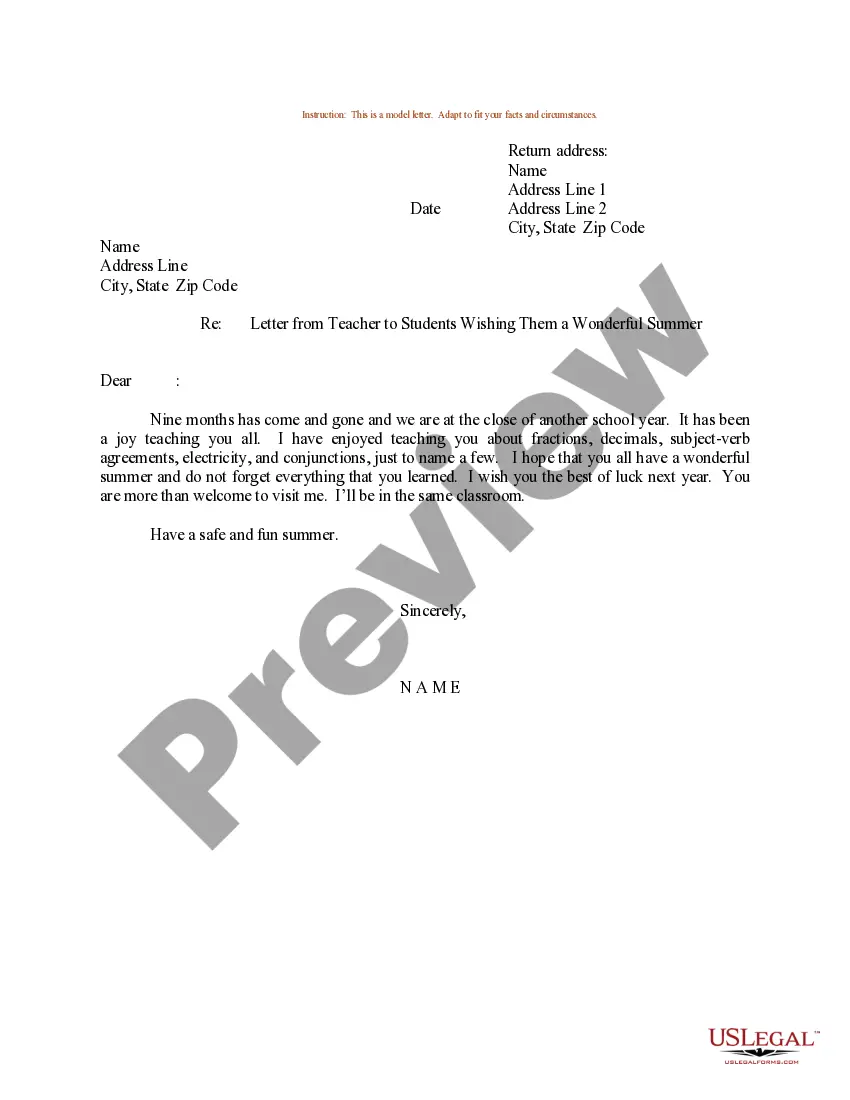
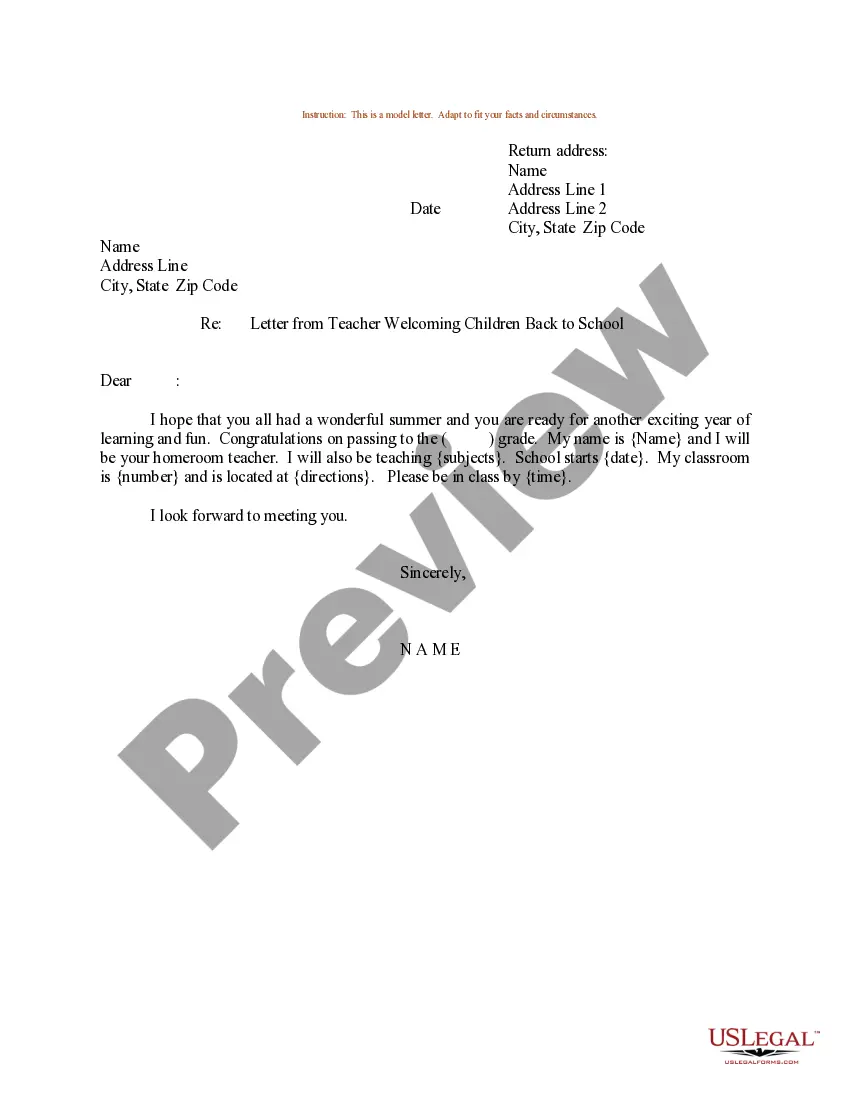
This Sample Letter from Teacher Wishing all Students a Great Summer is a template designed for educators to express their good wishes to students as the school year concludes. Unlike other generic letters, this template is specifically tailored to create a supportive and positive connection between teachers and students during the summer break.
Form components explained
- Return address: Contains the teacherâs name and contact information.
- Date: The date the letter is written.
- Recipient address: Space for students' names and addresses.
- Subject line: Clearly states the purpose of the letter.
- Message: A brief, warm message wishing students a safe and fun summer.
- Signature: Space for the teacher's name to personalize the letter.
When to use this form
This letter should be used at the end of the school year, when teachers want to communicate with their students. It is suitable for elementary, middle, and high school educators who aim to foster a positive relationship with students as they depart for summer vacation.
Who this form is for
- Teachers seeking to establish goodwill with students.
- Educators who want to encourage students during the summer break.
- School administrators looking for a template to use for staff communications.
Completing this form step by step
- Fill in the return address with your name and contact details.
- Enter the date on which the letter is being sent.
- Input the recipient's name and address where applicable.
- Write a warm message wishing students well for the summer.
- Sign the letter with your name to personalize it.
Notarization requirements for this form
Notarization is generally not required for this form. However, certain states or situations might demand it. You can complete notarization online through US Legal Forms, powered by Notarize, using a verified video call available anytime.
Get your form ready online
Our built-in tools help you complete, sign, share, and store your documents in one place.
Make edits, fill in missing information, and update formatting in US Legal Forms—just like you would in MS Word.
Download a copy, print it, send it by email, or mail it via USPS—whatever works best for your next step.
Sign and collect signatures with our SignNow integration. Send to multiple recipients, set reminders, and more. Go Premium to unlock E-Sign.
If this form requires notarization, complete it online through a secure video call—no need to meet a notary in person or wait for an appointment.
We protect your documents and personal data by following strict security and privacy standards.
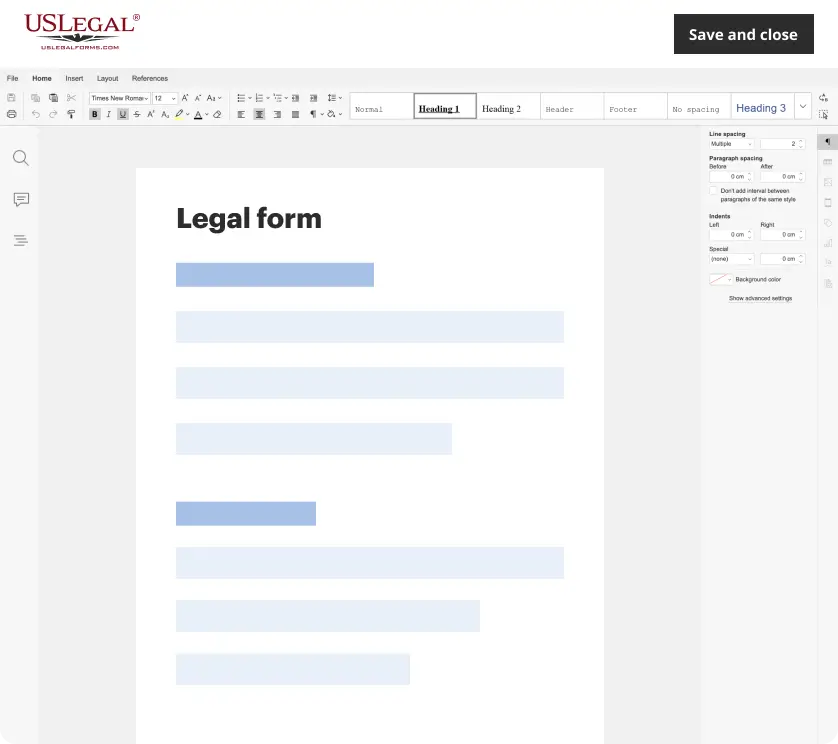
Make edits, fill in missing information, and update formatting in US Legal Forms—just like you would in MS Word.
Download a copy, print it, send it by email, or mail it via USPS—whatever works best for your next step.
Sign and collect signatures with our SignNow integration. Send to multiple recipients, set reminders, and more. Go Premium to unlock E-Sign.
If this form requires notarization, complete it online through a secure video call—no need to meet a notary in person or wait for an appointment.
We protect your documents and personal data by following strict security and privacy standards.
Mistakes to watch out for
- Leaving out the recipient's name or address.
- Using overly complex language that may not resonate with younger students.
- Failing to sign the letter, which can make it feel impersonal.
Why use this form online
- Convenient download in Word format allows for easy customization.
- Editable content enables teachers to personalize the message for each student.
- Provides a reliable framework that encourages student engagement and morale.
Main things to remember
- This letter is a friendly way for teachers to connect with students at the end of the school year.
- It is suitable for a variety of educational settings.
- Personalization is key to making this letter more impactful.
Looking for another form?




Form popularity
FAQ
In the body of the letter, try to emphasize the qualities of the student that you feel speak most directly to the qualifications and skills that an employer or a college are seeking. Close your letter by mentioning that you recommend the student and offer to provide additional information, if necessary.
Letters of reference should include your name and contact information, an explanation of the context in which you know the student, and an evaluation of their specific skills and potential for success in their new endeavor (be it continuing education or a new job).
Always start with the date. State who you are recommending and what you are recommending them for. Describe how long you know the person and in what capacity. State their best qualities. Give details about the person's character, morals, and values.
Give details for how you know the applicant. The closer you've worked with her, the stronger your reference letter. Paint the picture of why you recommend the candidate. Measurable achievements make a letter of reference sparkle. Offer to talk more with the addressee.
Ask the student for academic information. Address your letter accordingly. Introduce yourself and your qualifications. Include details about your academic relationship with the student. Highlight the student's qualifications with examples. Conclude your letter.
In the body of the letter, try to emphasize the qualities of the student that you feel speak most directly to the qualifications and skills that an employer or a college are seeking. Close your letter by mentioning that you recommend the student and offer to provide additional information, if necessary.
A recommendation letter should include information on who you are, your connection with the person you are recommending, why they are qualified, and the specific skills they have. Specifics. Whenever possible, it's helpful to provide specific anecdotes and examples that illustrate your support.
How to write a formal letter. If the student knows the intended recipient's name, start with Dear Mr. / Mrs Surname and end with Yours Sincerely. If they don't know the recipient's name, start with Dear Sir / Madam and end with Yours Faithfully.