Irrevocable Funded Life Insurance Trust where Beneficiaries Have Crummey Right of Withdrawal with First to Die Policy with Survivorship Rider
What this document covers
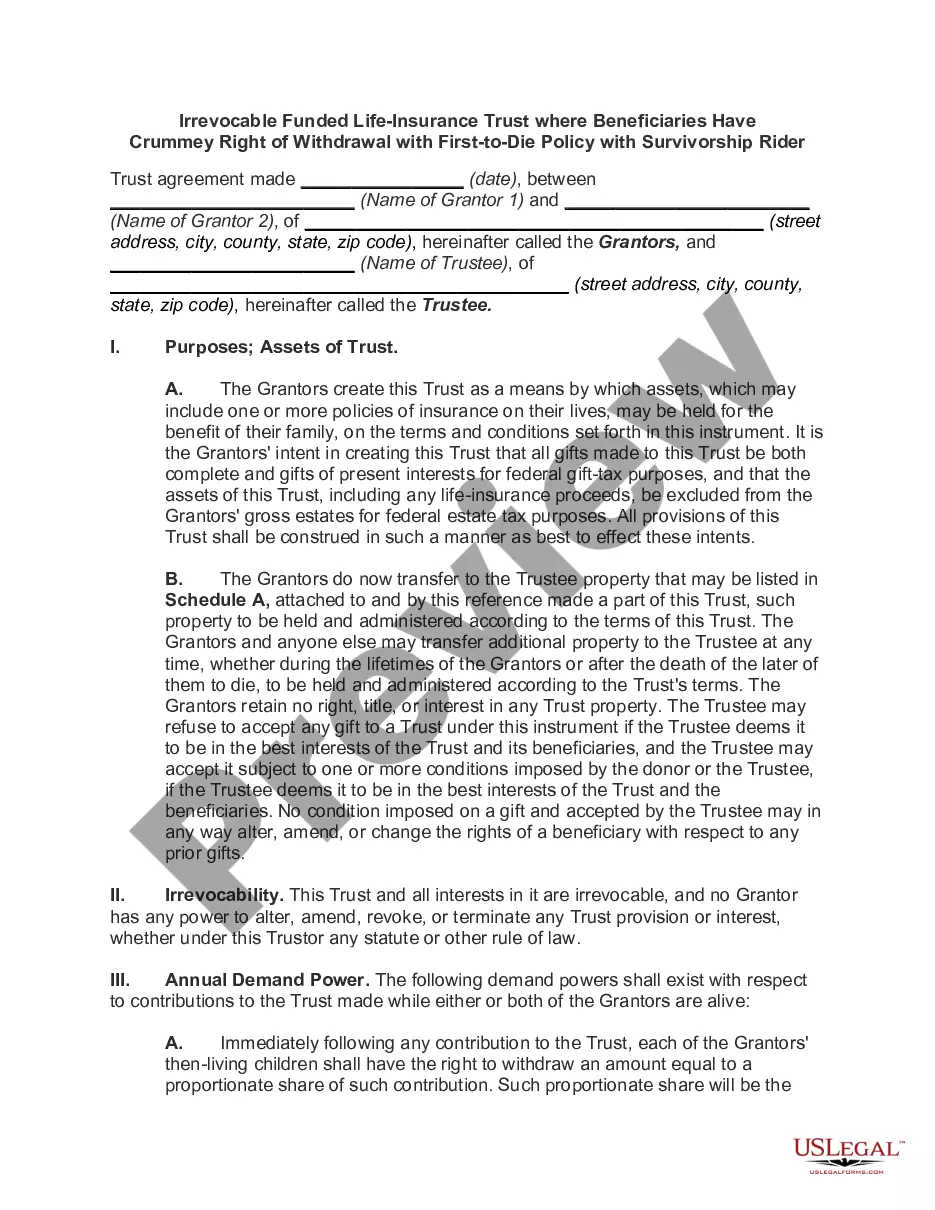
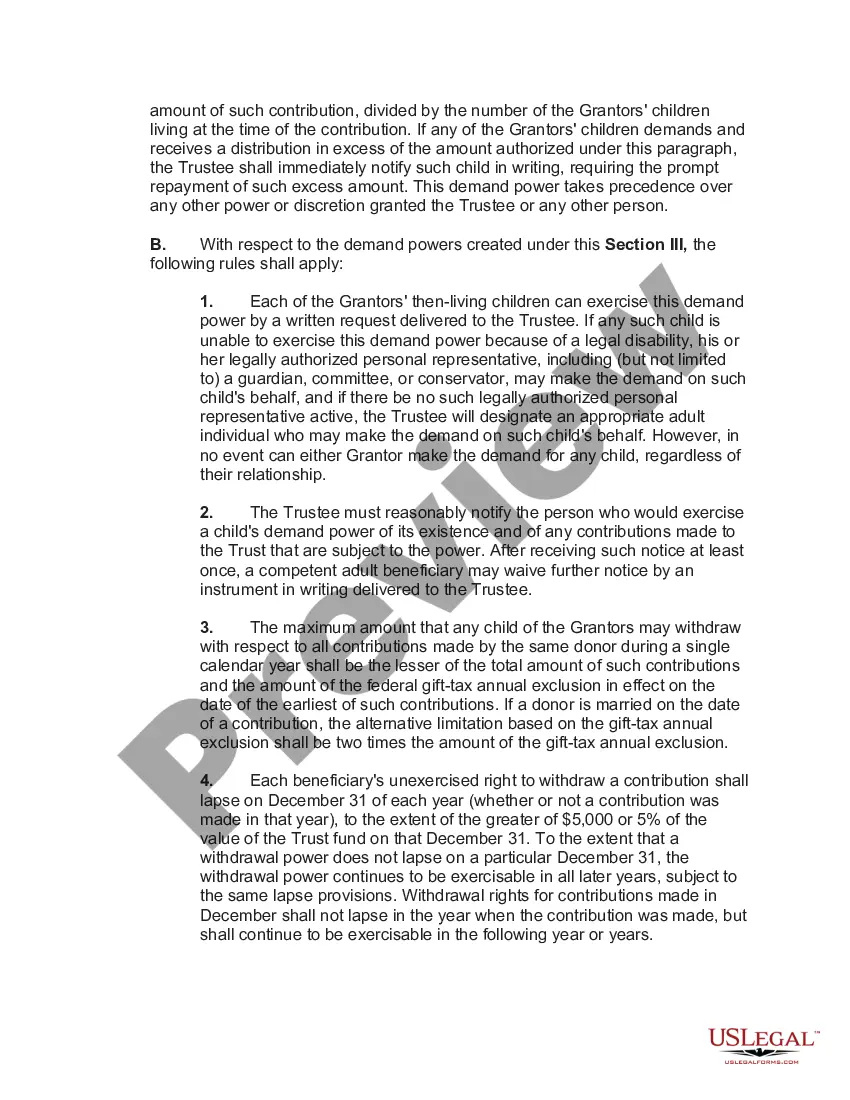
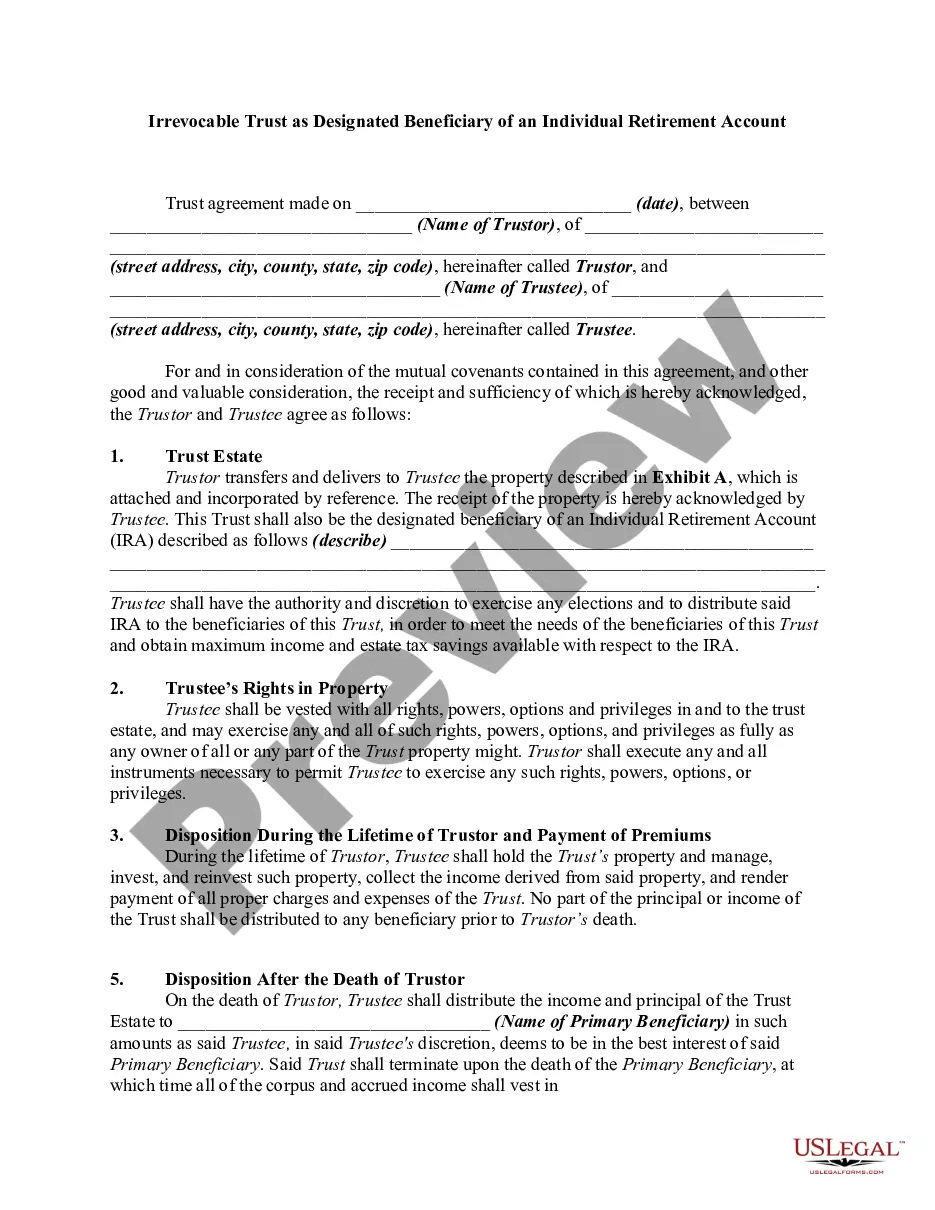
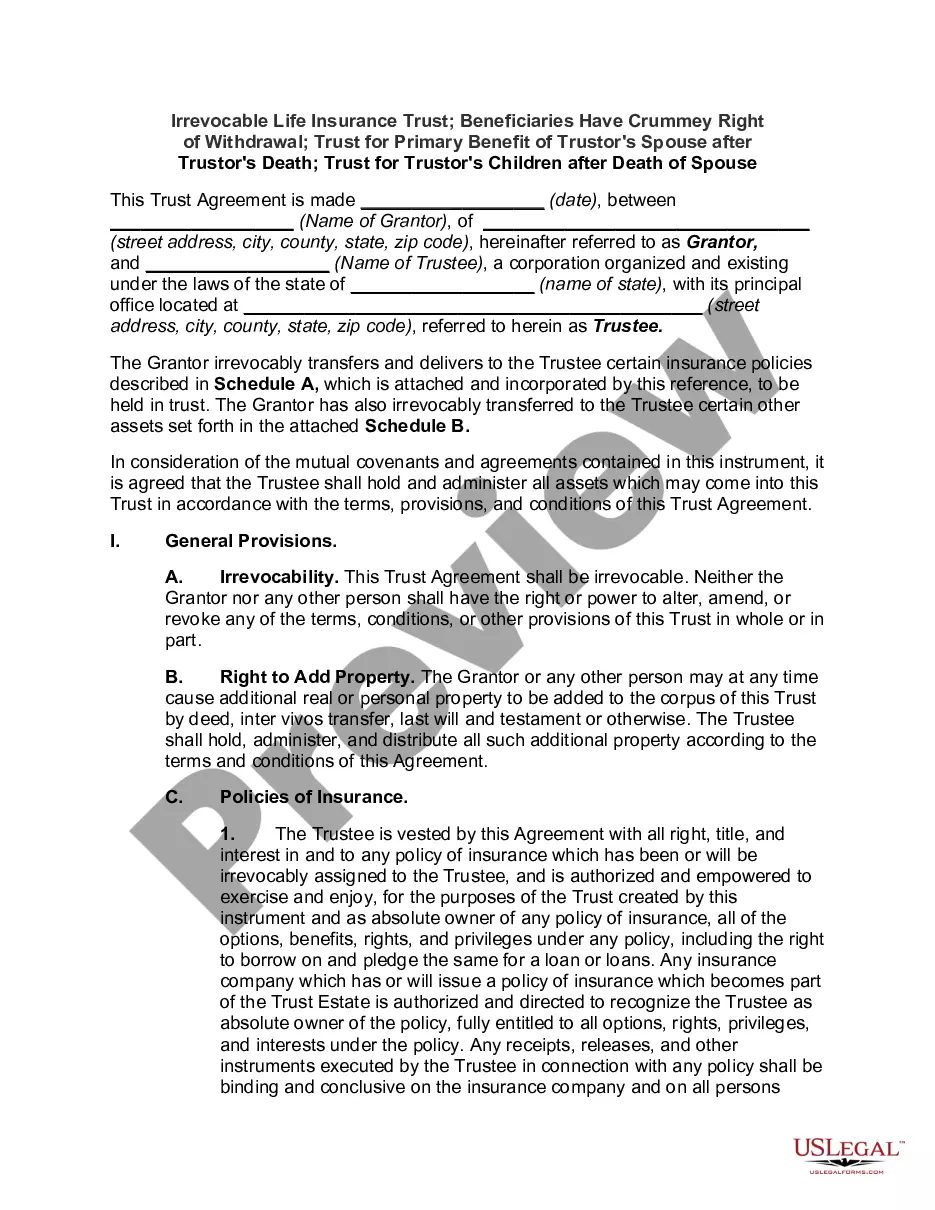
This form is an Irrevocable Funded Life Insurance Trust where Beneficiaries Have Crummey Right of Withdrawal with First to Die Policy with Survivorship Rider. It allows the grantors to set up a trust that cannot be altered or revoked without the beneficiaries' consent, ensuring that assets, including life insurance policies, are protected from estate taxes. This form specifically includes provisions for beneficiaries to withdraw a proportionate share of trust contributions, focusing on effective estate planning and tax benefits.
Main sections of this form
- Trust Agreement: Establishes the relationship between the grantors and trustee, outlining their respective roles.
- Purposes of Trust: Details the intention behind creating the trust, primarily focusing on asset protection and tax benefits.
- Irrevocability Clause: Specifies that the trust cannot be modified or terminated without the beneficiaries' approval.
- Annual Demand Power: Outlines the withdrawal rights for the grantors' children for contributions made to the trust.
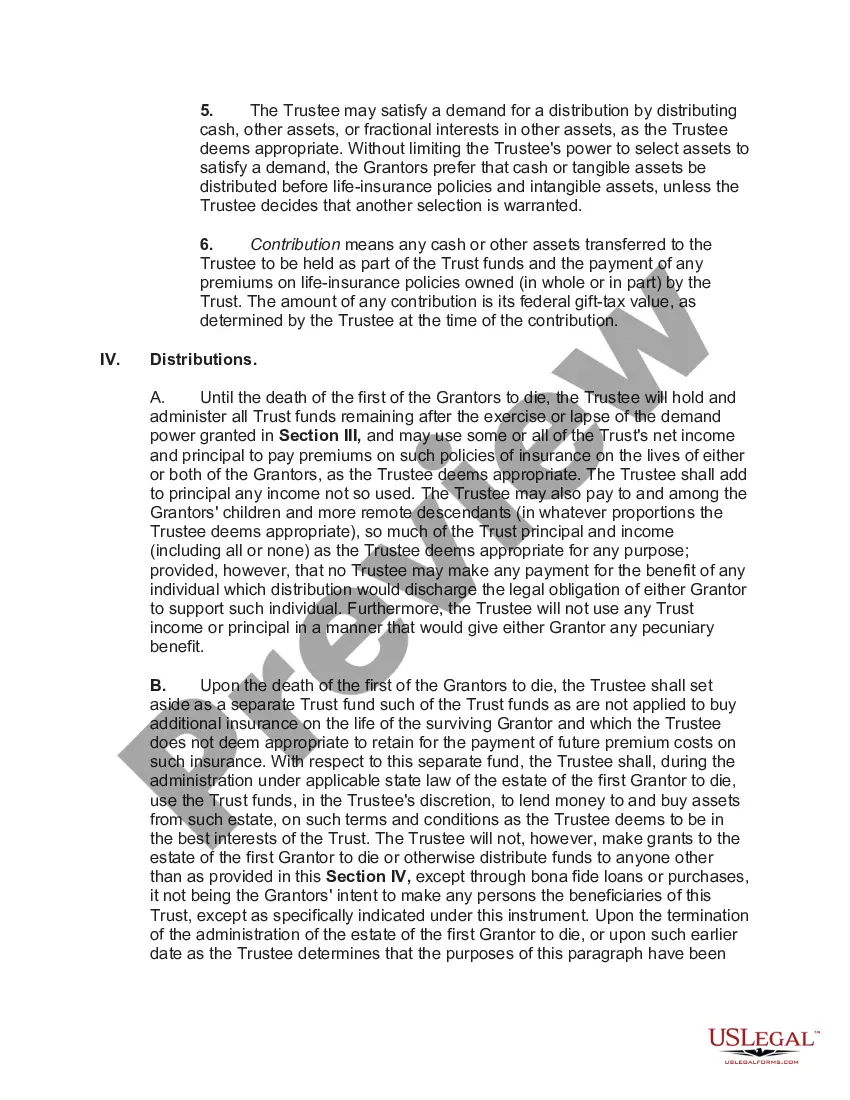
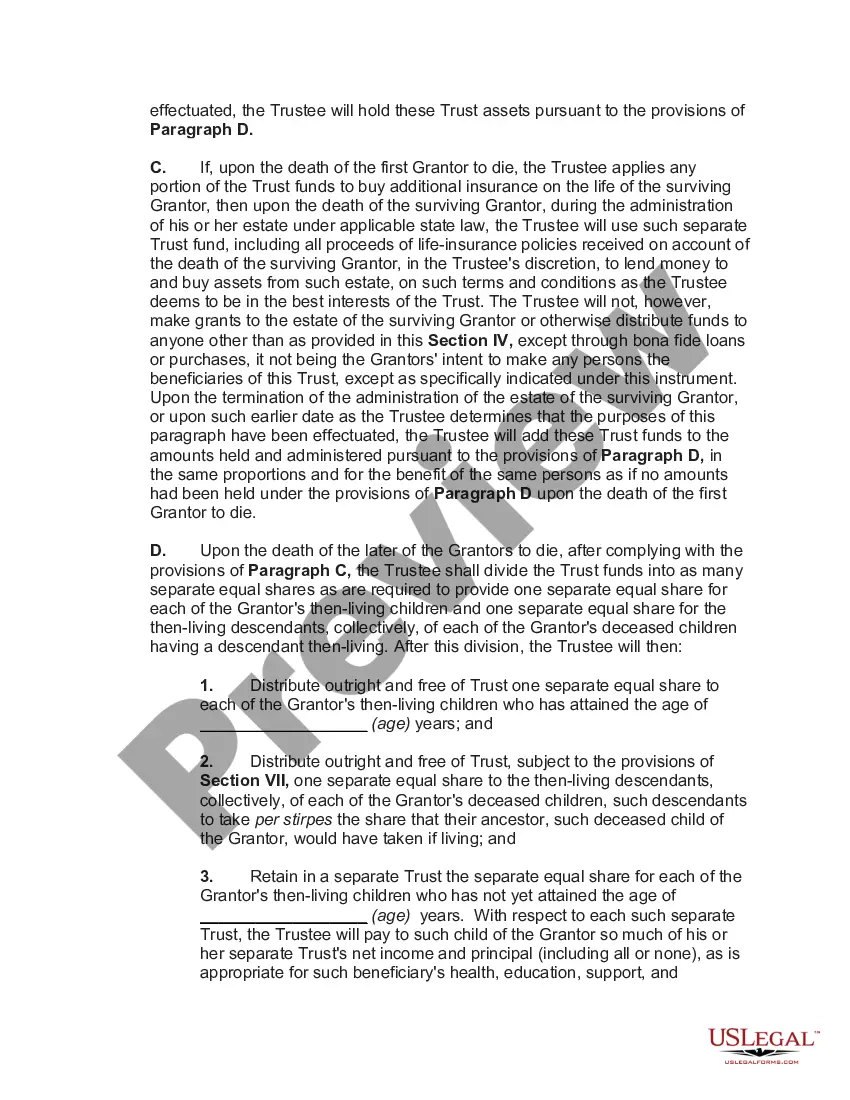
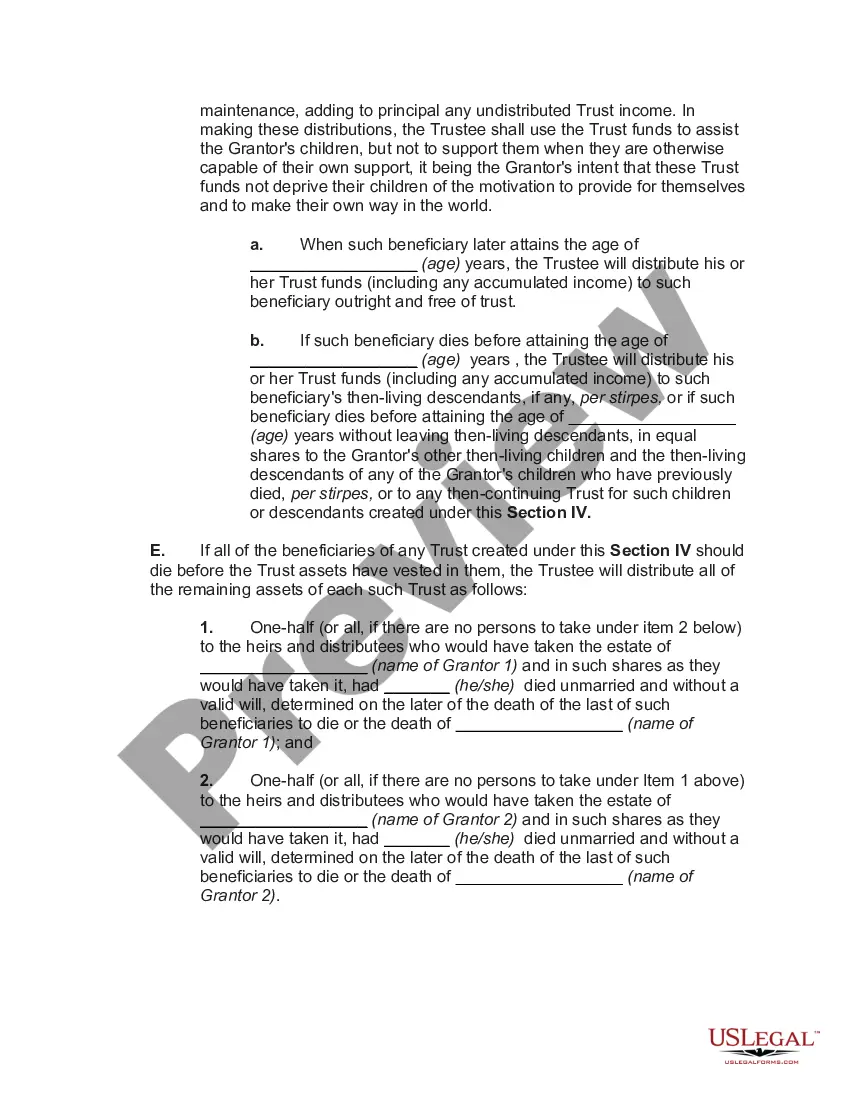
- Distribution Rules: Explains how trust assets will be distributed upon the death of the grantors.
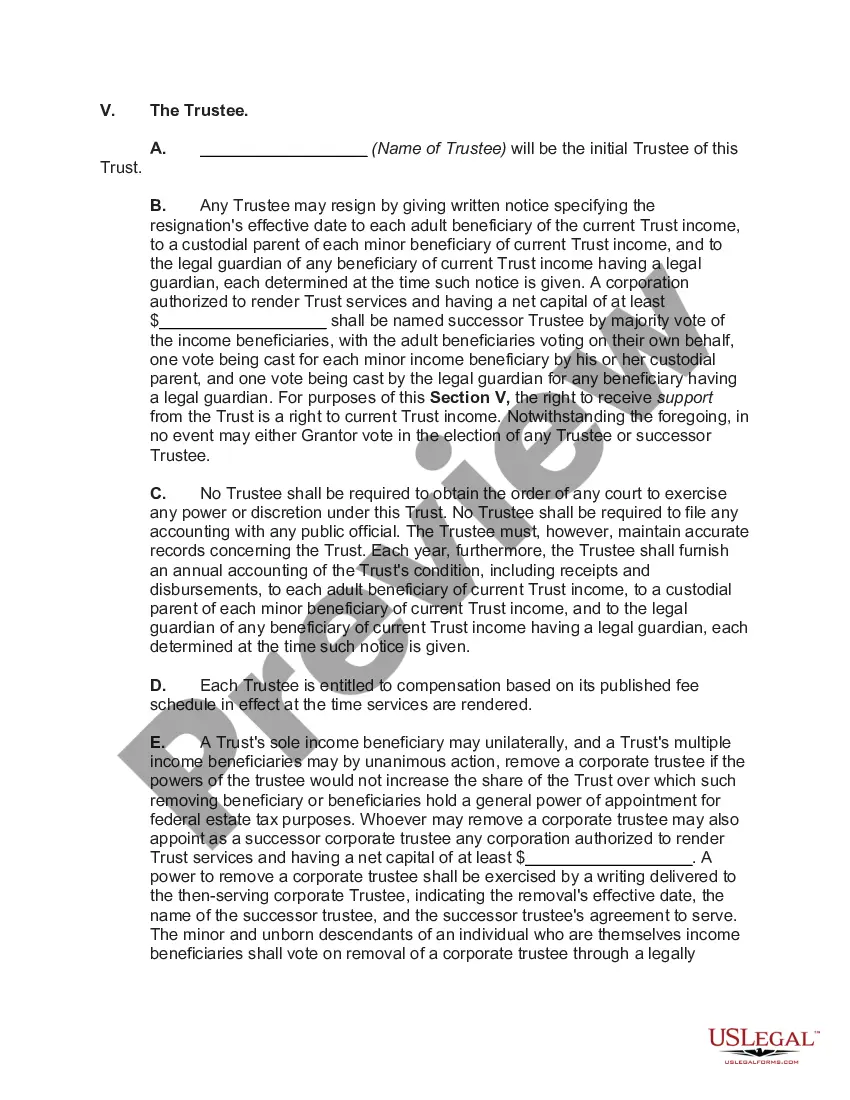
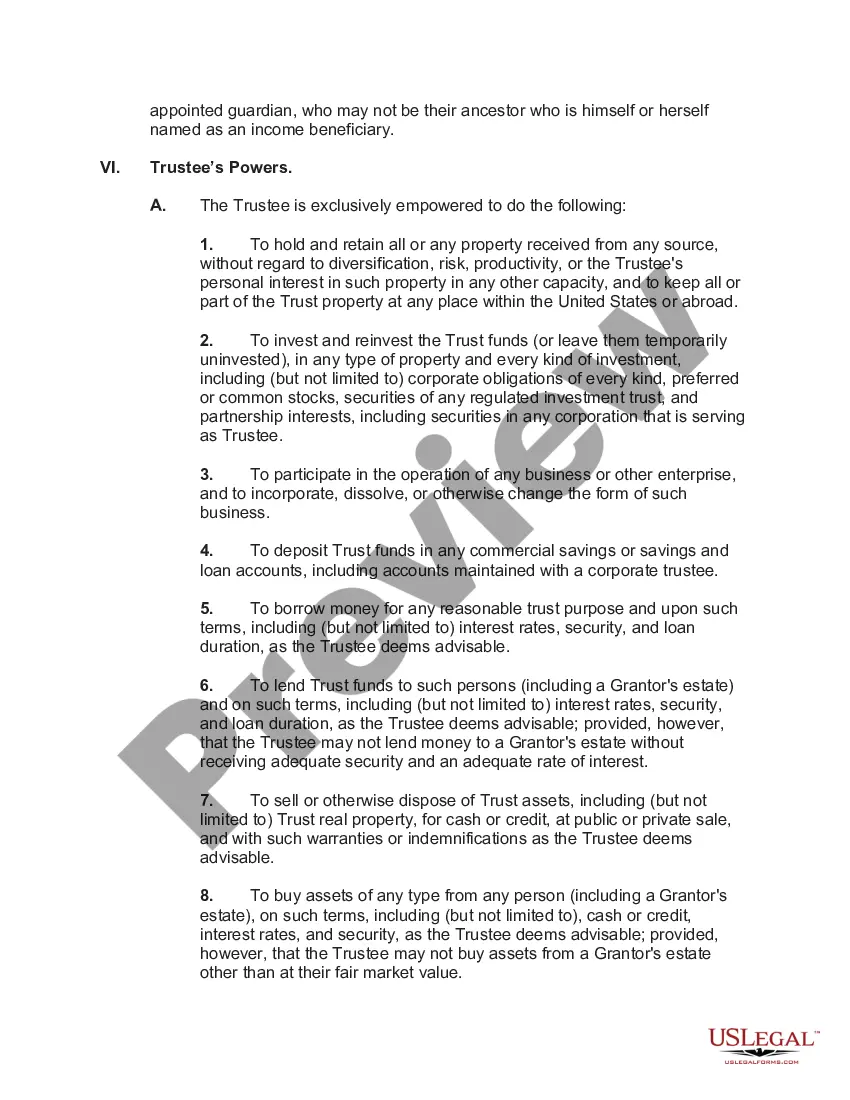
- Trustee Powers: Defines the authorities granted to the trustee regarding trust management and decision-making.

Situations where this form applies
Use this form when you want to create an irrevocable trust to hold life insurance policies and ensure tax benefits while allowing specific withdrawal rights for beneficiaries. It is ideal for parents looking to secure their children's financial future and minimize estate tax implications after their passing.
Intended users of this form
This form is suitable for:
- Parents seeking to provide financial security for their children through an irrevocable trust.
- Individuals aiming to protect assets from estate taxes by establishing a funded life insurance trust.
- Anyone looking to create a structured estate plan that allows beneficiaries to have limited withdrawal rights.
Instructions for completing this form
To complete this form, follow these steps:
- Identify the parties involved, including the grantors and trustee.
- Specify the assets to be transferred into the trust, including life insurance policies.
- Enter relevant dates and any specific conditions required for the trust, like ages for withdrawals.
- Complete the sections regarding distribution rules and trustee powers to clarify how the trust will be managed.
- Ensure all parties sign the document in accordance with state laws.
Notarization requirements for this form
This form does not typically require notarization unless specified by local law. Always check state regulations to ensure compliance with any notarization requirements related to irrevocable trusts.
Get your form ready online
Our built-in tools help you complete, sign, share, and store your documents in one place.
Make edits, fill in missing information, and update formatting in US Legal Forms—just like you would in MS Word.
Download a copy, print it, send it by email, or mail it via USPS—whatever works best for your next step.
Sign and collect signatures with our SignNow integration. Send to multiple recipients, set reminders, and more. Go Premium to unlock E-Sign.
If this form requires notarization, complete it online through a secure video call—no need to meet a notary in person or wait for an appointment.
We protect your documents and personal data by following strict security and privacy standards.

Make edits, fill in missing information, and update formatting in US Legal Forms—just like you would in MS Word.

Download a copy, print it, send it by email, or mail it via USPS—whatever works best for your next step.

Sign and collect signatures with our SignNow integration. Send to multiple recipients, set reminders, and more. Go Premium to unlock E-Sign.

If this form requires notarization, complete it online through a secure video call—no need to meet a notary in person or wait for an appointment.

We protect your documents and personal data by following strict security and privacy standards.
Avoid these common issues
- Failing to specify the correct proportionate share that beneficiaries can withdraw.
- Not including all necessary trust assets in Schedule A.
- Overlooking to provide required signatures or notarization, which may be necessary in some jurisdictions.
- Ignoring state-specific regulations that could affect the trust's validity.
Benefits of completing this form online
- Convenience of downloading and customizing the form according to your needs.
- Reliability due to the legal framework established by licensed attorneys.
- Time-saving compared to hiring legal counsel for a similar service.
What to keep in mind
- This form creates an irrevocable trust to protect life insurance assets and minimize estate taxes.
- Beneficiaries have specific rights to withdraw a portion of contributions, which should be clearly defined.
- Correctly completing this form is crucial to ensure that your estate planning goals are met effectively.
Looking for another form?

Form popularity
FAQ
Despite the Tax Court's rulings, the IRS continues to review and challenge ILIT contributions and their qualifications as annual exclusion gifts during audits. Thus, clients generally should still be advised to give actual written notice to Crummey powerholders upon each gift to a trust.
What Is a Crummey Trust? A Crummey trust is part of an estate planning technique that can be employed to take advantage of the gift tax exclusion when transferring money or assets to another person while retaining the option to place limitations on when the recipient can access the money.
A special type of irrevocable life insurance trust, called a Crummey trust (aka irrevocable gift trust), allows a wealthy grantor to fund the trust in such a way that payments are treated as gifts of present interest to the trust's beneficiaries, thereby qualifying for the annual gift exclusion, then using the payments
A Crummey trust is part of an estate planning technique that can be employed to take advantage of the gift tax exclusion when transferring money or assets to another person while retaining the option to place limitations on when the recipient can access the money.
The Crummey Letter is a letter that is sent to the beneficiaries of an irrevocable trust informing them of that a gift has been made to the trust, and that they have the immediate and unrestricted right to withdraw those assets.
The Crummey Letter is a letter that is sent to the beneficiaries of an irrevocable trust informing them of that a gift has been made to the trust, and that they have the immediate and unrestricted right to withdraw those assets.
Named after the court case that gave rise to the rule, a Crummey Notice is simply a letter letting a beneficiary know that assets have been added to a trust and informing the beneficiary of his/her right to withdraw those assets if applicable.
The Crummey notices may be made via electronic mail, i.e., email, to each of the current beneficiaries. If your trustee elects to do this, he or she should request the beneficiary acknowledge receipt in a return e-mail. The e-mail can also be electronically filed and/or printed and stored for record keeping.
Crummey notices are a crucial part of the administration of a trust because they are necessary in order to classify the gift as a completed gift for tax purposes. Unless a gift is considered completed, it will not qualify for the annual gift tax exclusion.