Amendment of Trust Agreement by Withdrawal of Property from Inter Vivos Trust
Overview of this form
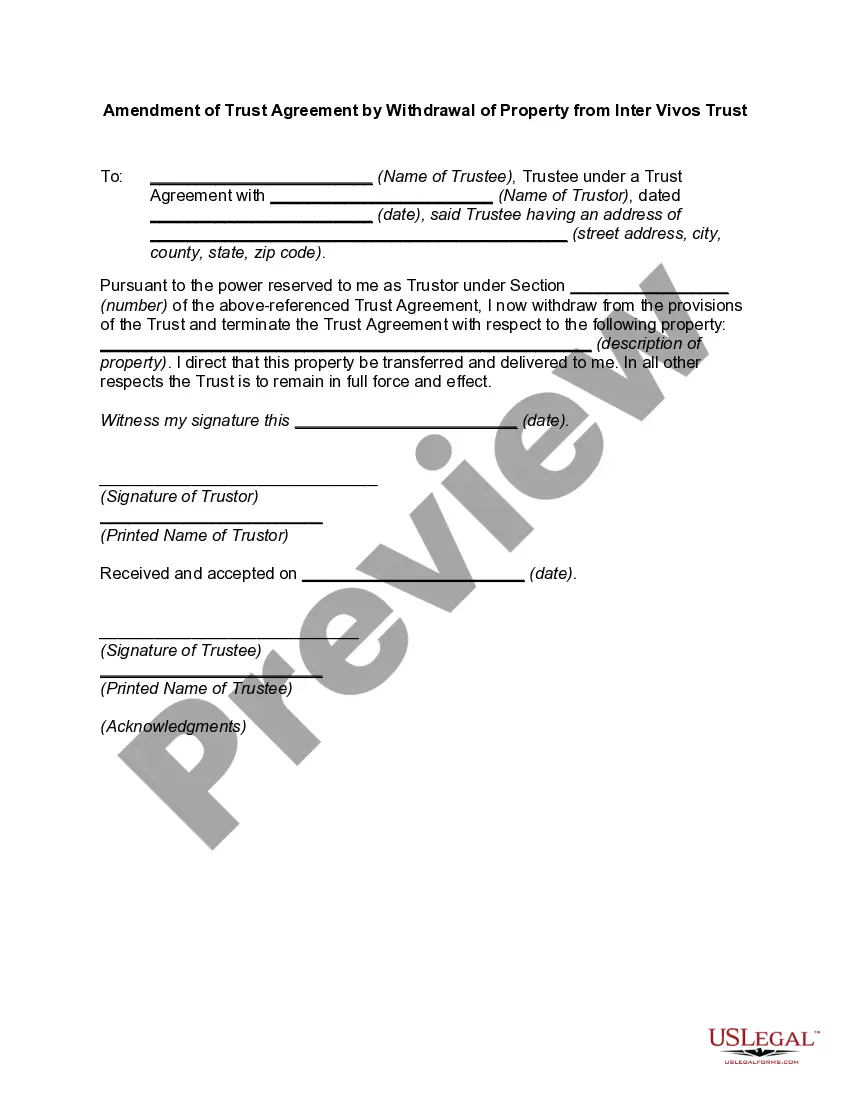
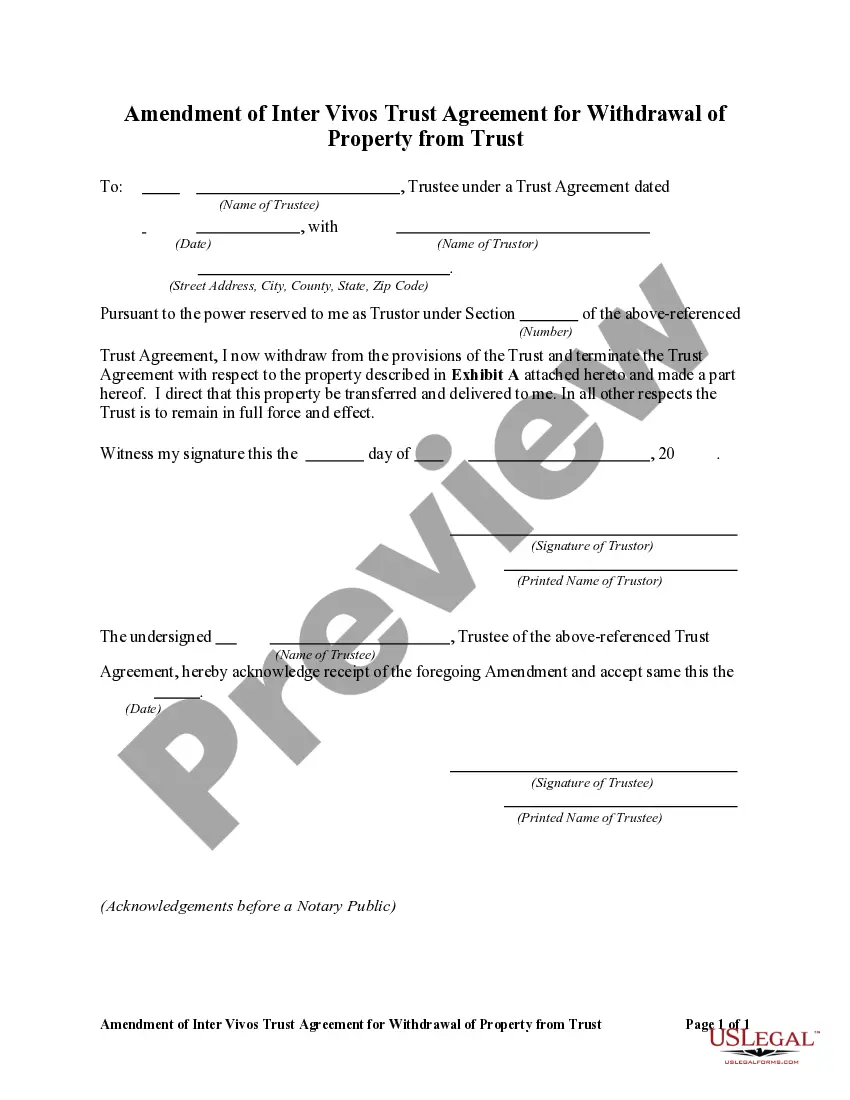
The Amendment of Trust Agreement by Withdrawal of Property from Inter Vivos Trust is a legal document used to modify an existing trust. This specific form allows a trustor to withdraw property from an inter vivos trust and terminate its inclusion in the trust. Unlike other trust amendments that may add beneficiaries or change trustees, this form specifically addresses the removal of assets from the trust while keeping the rest of the agreement intact.
What’s included in this form
- Name of the Trustee and Trustor
- Date of the original Trust Agreement
- Description of the property being withdrawn
- Date of withdrawal and Trustor's signature
- Trustee's signature and acknowledgment of the withdrawal
Common use cases
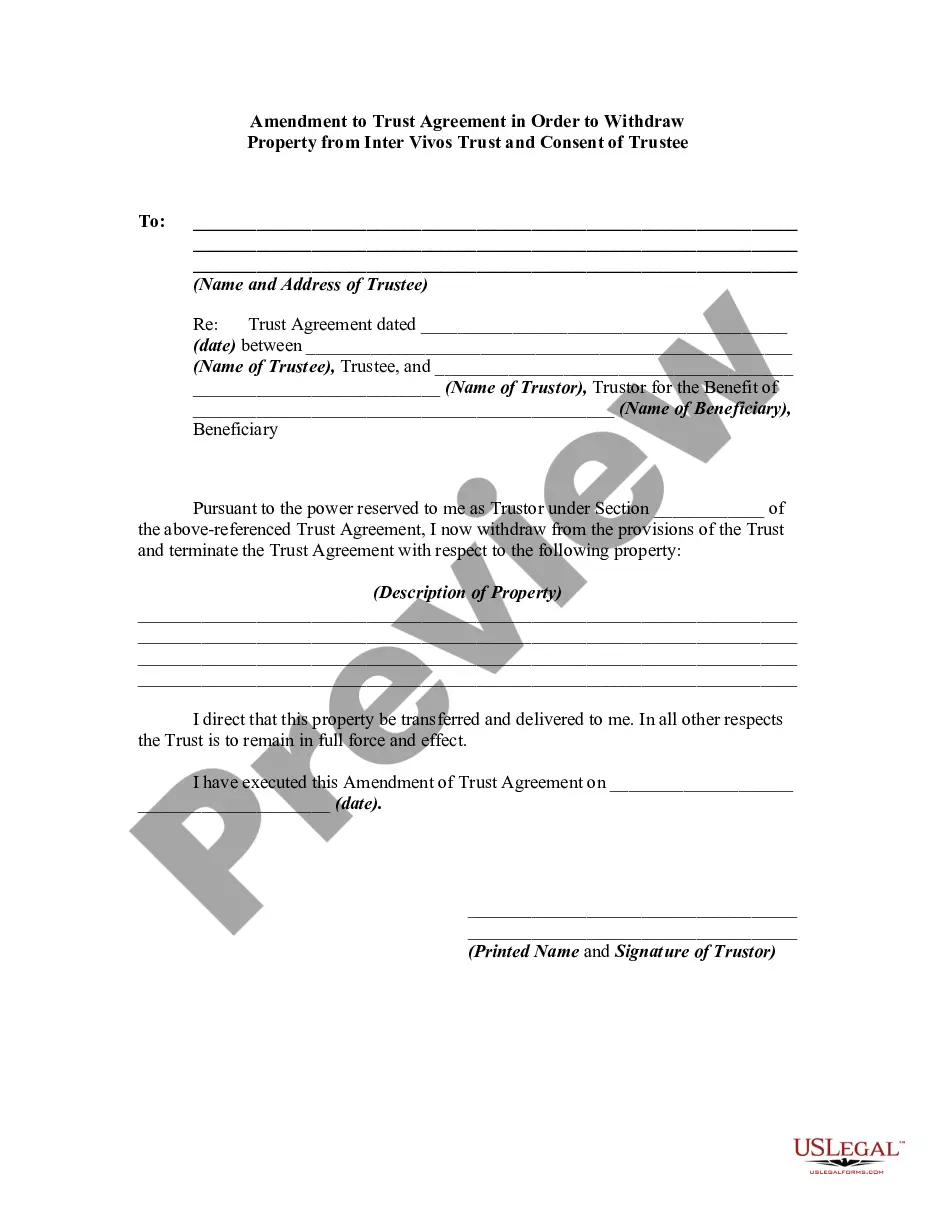
This form is needed when a trustor decides to withdraw specific property from an inter vivos trust. Scenarios include when the trustor wants to take back an asset for personal use, change the use of an asset, or if the trustor wants to consolidate their assets outside of the trust's provisions. It is essential to ensure that the withdrawal aligns with the terms set in the original Trust Agreement.
Who should use this form
This form is intended for:
- Individuals who have established an inter vivos trust and wish to modify it.
- Trustors who want control over certain assets included in the trust.
- Trustors seeking to make legal changes to their trust without creating an entirely new agreement.
How to prepare this document
- Identify the parties involved by entering the names of the Trustee and Trustor.
- Specify the date of the original Trust Agreement.
- Describe the property being withdrawn clearly.
- Include the date of signing and obtain the Trustor's signature.
- Have the Trustee acknowledge the withdrawal by signing the document.
Does this document require notarization?
Notarization is not commonly needed for this form. However, certain documents or local rules may make it necessary. Our notarization service, powered by Notarize, allows you to finalize it securely online anytime, day or night.
Get your form ready online
Our built-in tools help you complete, sign, share, and store your documents in one place.
Make edits, fill in missing information, and update formatting in US Legal Forms—just like you would in MS Word.
Download a copy, print it, send it by email, or mail it via USPS—whatever works best for your next step.
Sign and collect signatures with our SignNow integration. Send to multiple recipients, set reminders, and more. Go Premium to unlock E-Sign.
If this form requires notarization, complete it online through a secure video call—no need to meet a notary in person or wait for an appointment.
We protect your documents and personal data by following strict security and privacy standards.

Make edits, fill in missing information, and update formatting in US Legal Forms—just like you would in MS Word.

Download a copy, print it, send it by email, or mail it via USPS—whatever works best for your next step.

Sign and collect signatures with our SignNow integration. Send to multiple recipients, set reminders, and more. Go Premium to unlock E-Sign.

If this form requires notarization, complete it online through a secure video call—no need to meet a notary in person or wait for an appointment.

We protect your documents and personal data by following strict security and privacy standards.
Mistakes to watch out for
- Failing to sign and date the document correctly.
- Not providing a clear description of the property being withdrawn.
- Omitting the Trustee's signature or acknowledgment.
- Not checking for compatibility with the existing Trust Agreement terms.
Benefits of completing this form online
- Conveniently download and complete the form at your own pace.
- Easy to edit for specific details regarding the trust and property.
- Access reliable templates drafted by licensed attorneys to ensure legality.
Legal use & context
- The form is legally binding once completed and signed by both parties.
- It is important to ensure the amendment aligns with the terms prescribed in the original Trust Agreement.
- Consulting an attorney can provide additional guidance to avoid potential legal issues.
Looking for another form?
Form popularity
FAQ
The trustee of an irrevocable trust can only withdraw money to use for the benefit of the trust ing to terms set by the grantor, like disbursing income to beneficiaries or paying maintenance costs, and never for personal use.
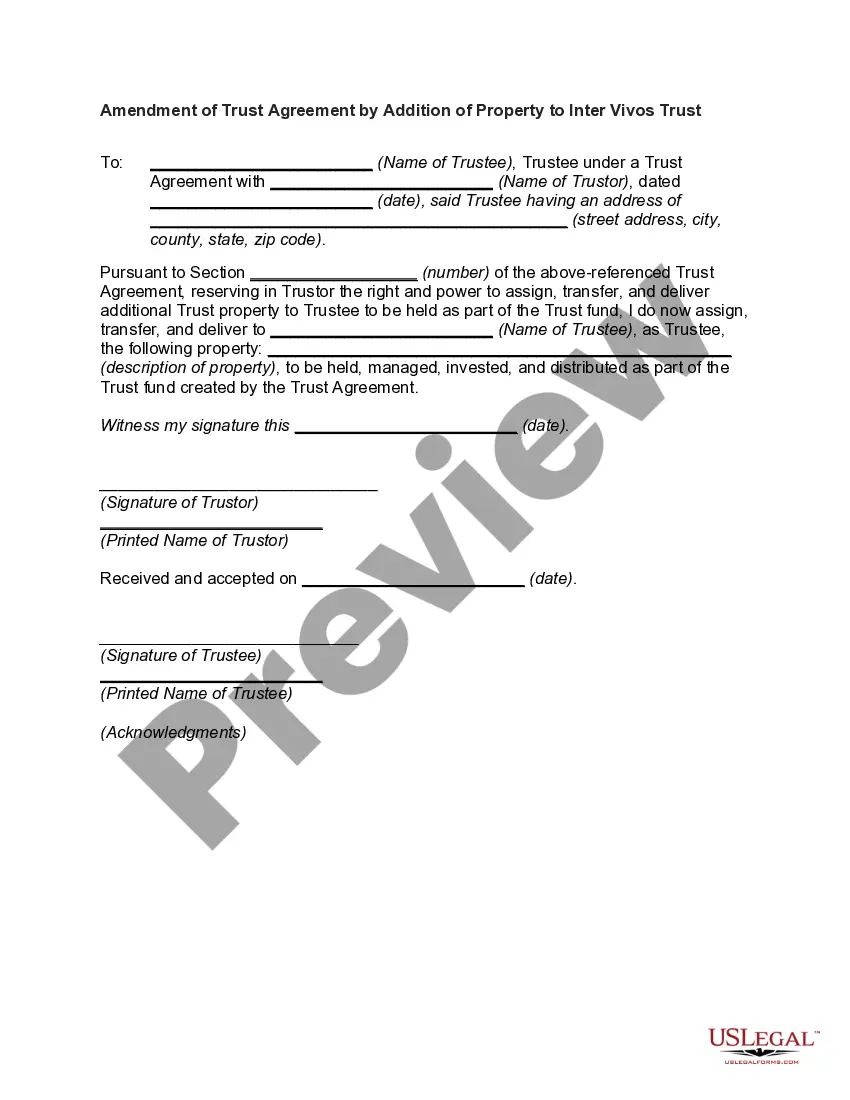
Yes, you could withdraw money from your own trust if you're the trustee. Since you have an interest in the trust and its assets, you could withdraw money as you see fit or as needed. You can also move assets in or out of the trust.
A withdrawal right is the right, given to the beneficiary of a trust, to withdraw all or a portion of each gift made to the trust. For example, if a $1,000 gift is made to a trust and a beneficiary of the trust has a withdrawal right over that gift, he or she can withdraw up to $1,000 from the trust.
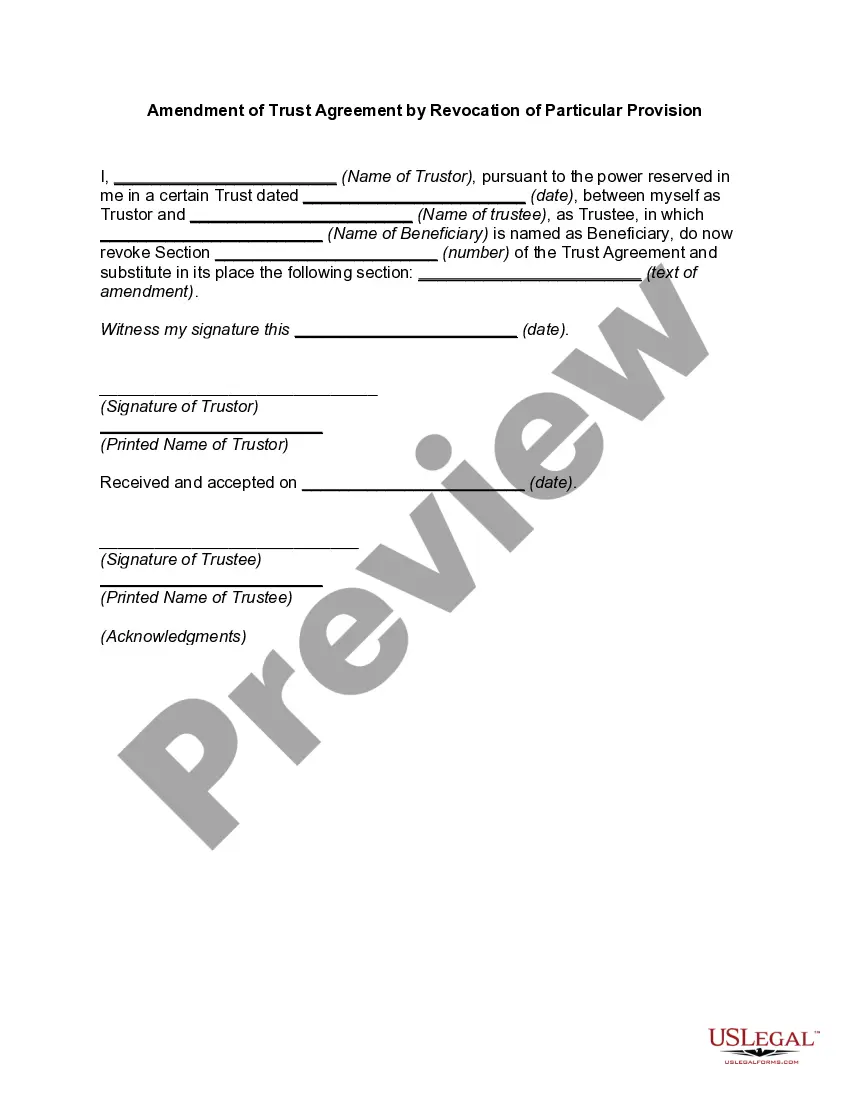
A trust amendment form is a legal document you use to make changes to your revocable trust. It isn't meant to change your trust document as a whole. Instead, a trust amendment form is used to change certain trust provisions, which are the terms or ?rules? you've set in your trust document.
Trust money can only be dispersed in ance with a direction given by the person on whose behalf the money is been held. Further, trust money can only be withdrawn by cheque or electronic funds transfer.
The Trust Deed and Deed of Variation For making any change to a trust, the golden rule is to always follow the trust deed's instructions. To change the trust deed itself, you must execute a deed of variation. This is a document that updates the relevant section of the original trust deed.
A 5 by 5 Power in Trust is a clause that lets the beneficiary make withdrawals from the trust on a yearly basis. The beneficiary can cash out $5,000 or 5% of the trust's fair market value each year, whichever is a higher amount.
Be very clear about how you are changing this section of the trust. Make sure you state you are amending this section of the trust. Sign your living trust amendment before a notary. Attach the amendment to your original trust document and to any copies you made.