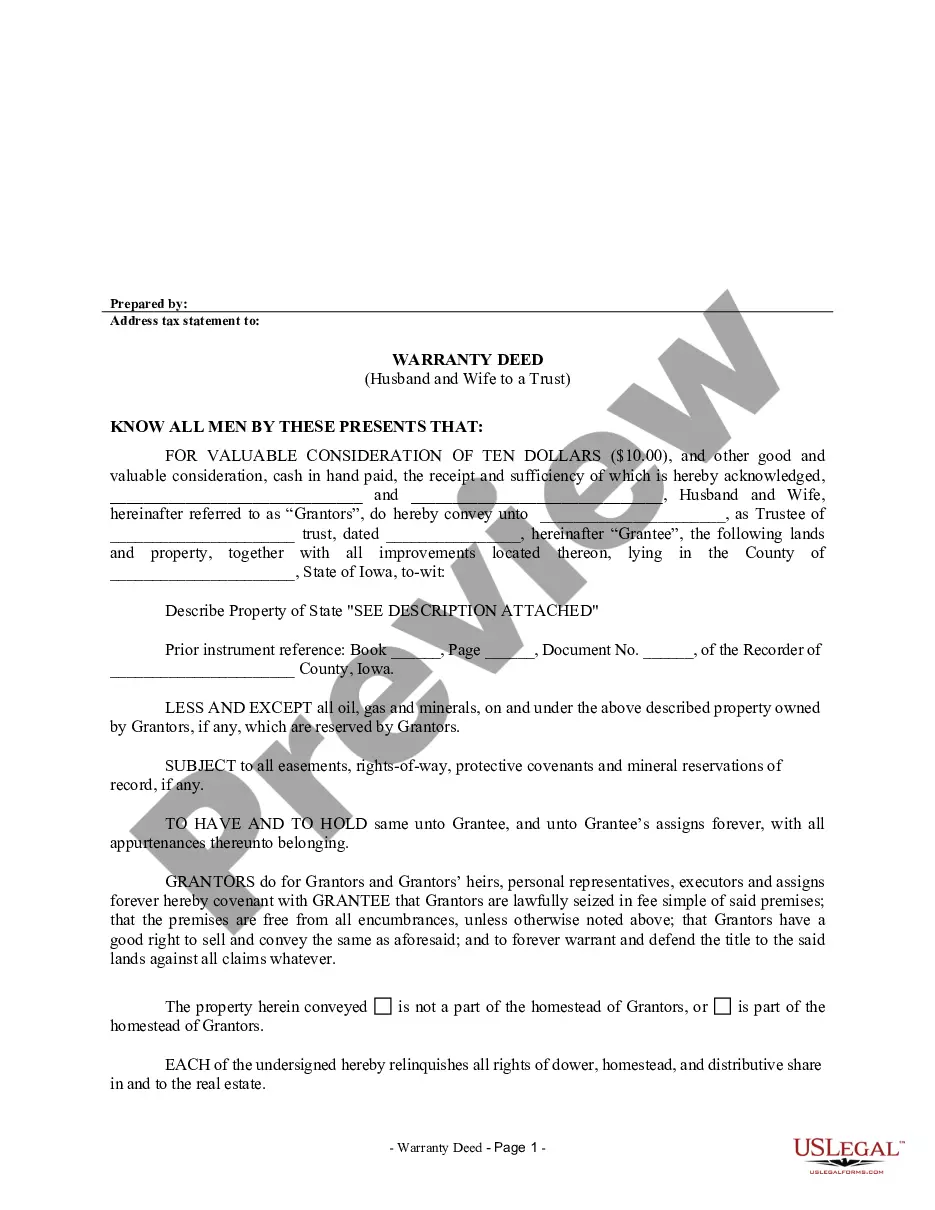
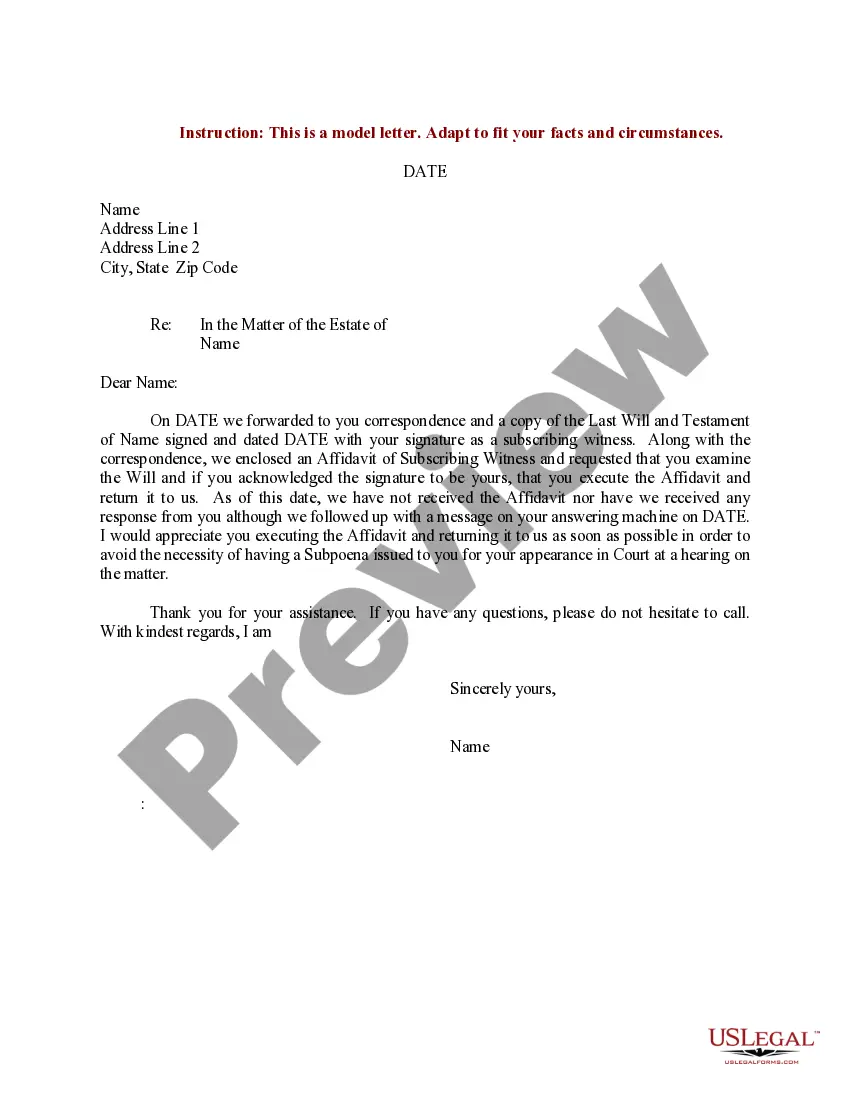
Sample Letter for Update to Witness Verification
What this document covers
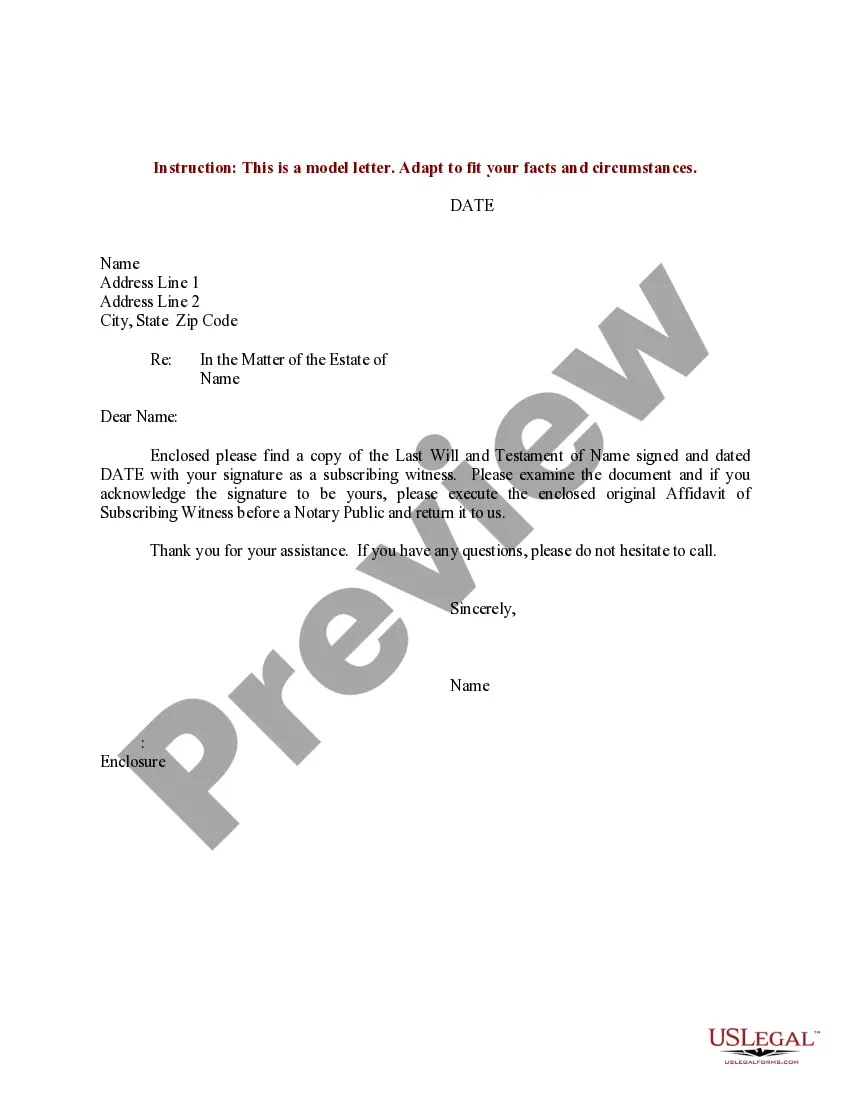
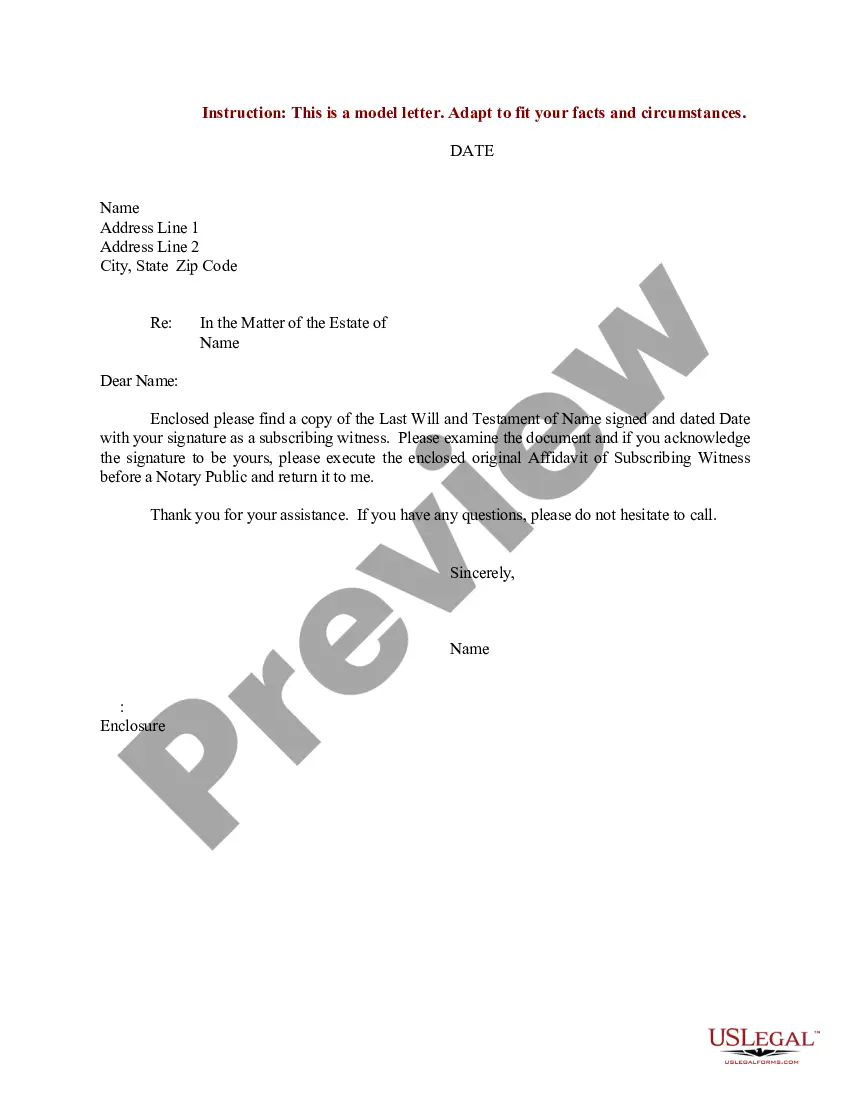
The Sample Letter for Update to Witness Verification is a template designed to remind a witness to complete and return an Affidavit of Subscribing Witness. This form is particularly useful in estates and probate matters, adding a formal touch to communications and ensuring that the witness's input is legally acknowledged. Unlike generic correspondence, this sample letter specifically addresses the verification of a signature on a last will and testament, making it essential for estate executors and representatives.
Form components explained
- Date of correspondence
- Recipient's name and address
- Subject line identifying the estate matter
- Details regarding previous correspondence and Affidavit request
- Call to action for the witness to respond
- Contact information for follow-up
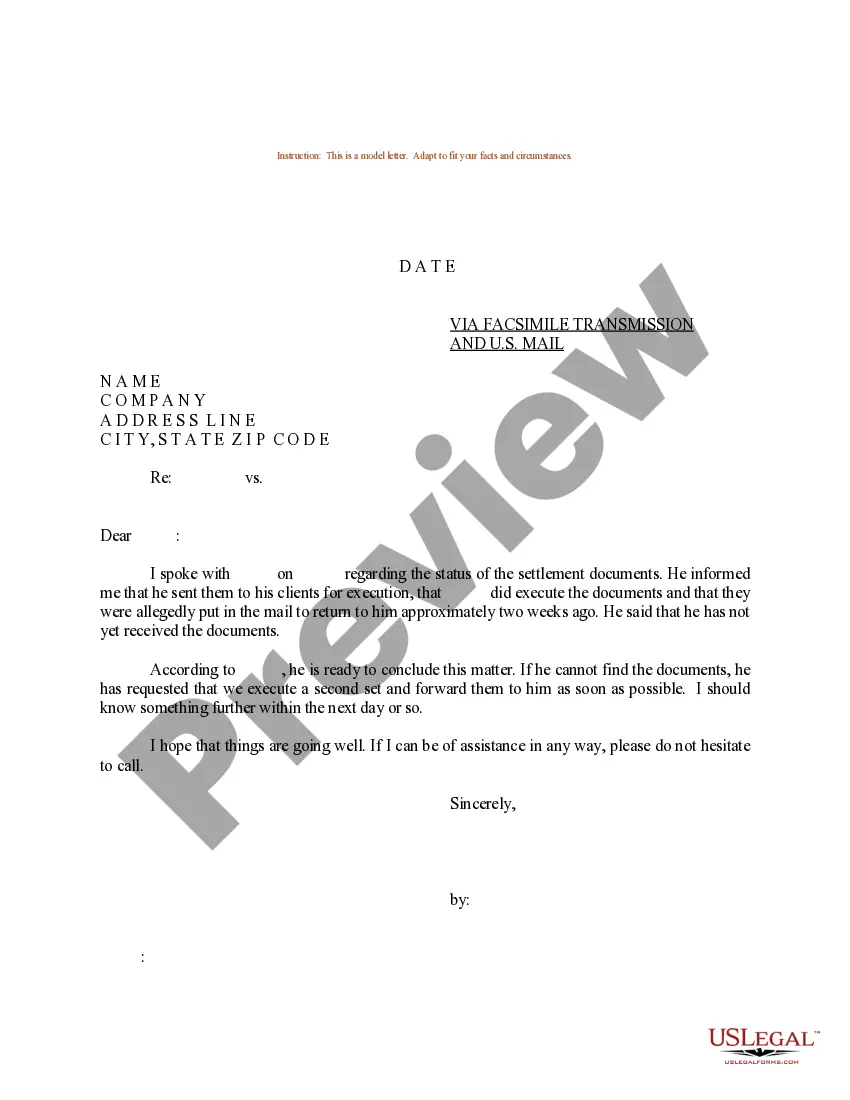
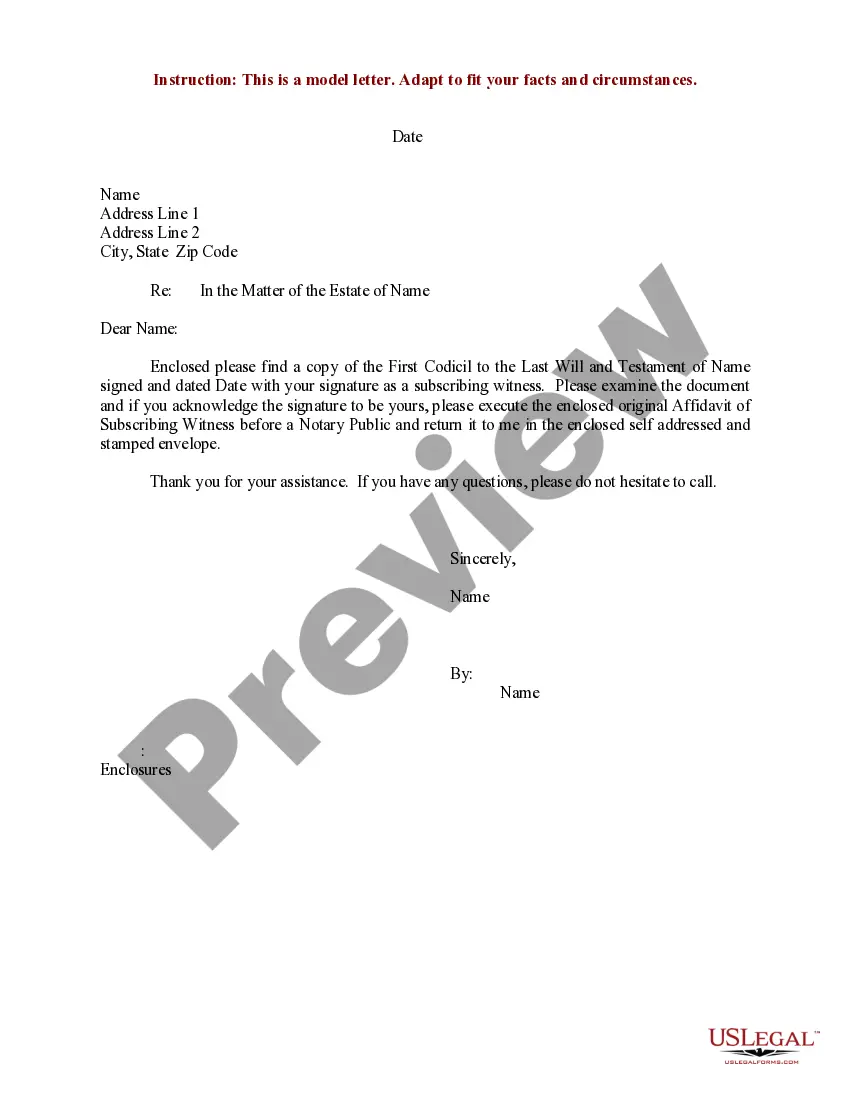
Situations where this form applies
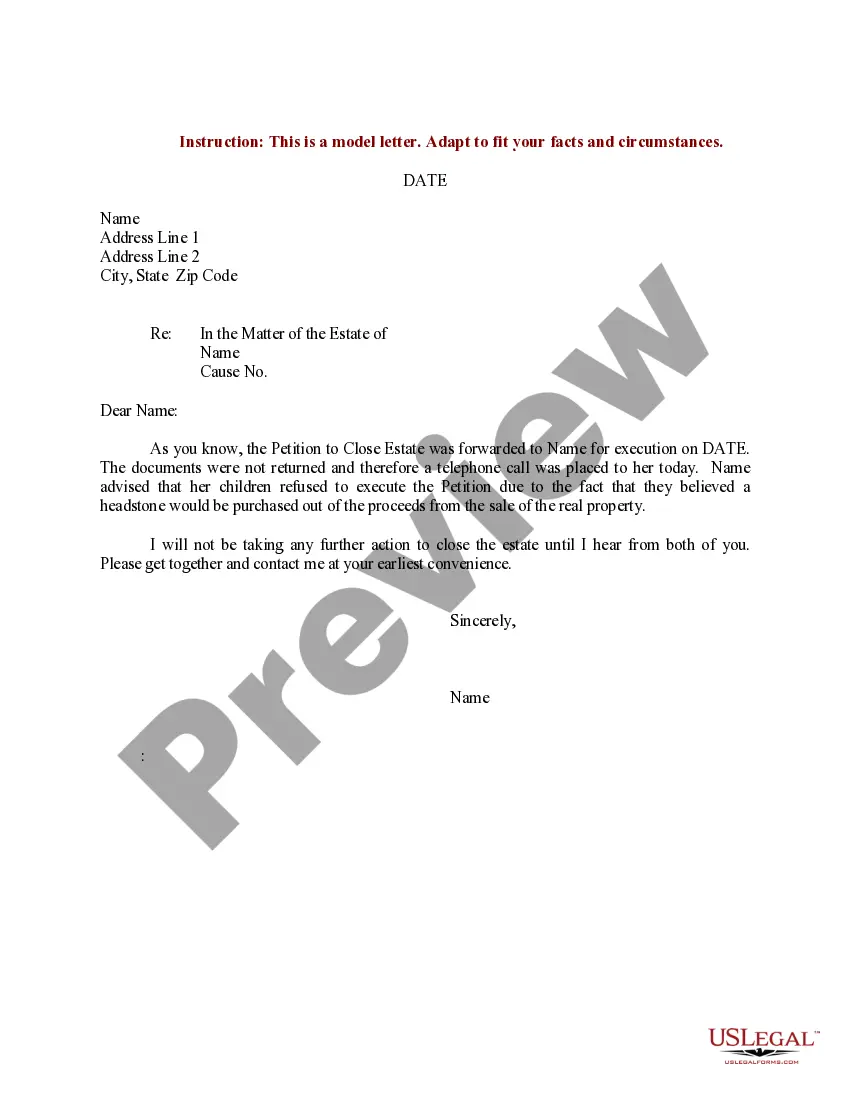
This form should be used when an executor or legal representative needs to follow up with a witness regarding their signature on an estate's last will and testament. Specifically, it comes into play when the witness has not responded to previous requests and there is a need to prompt their action to avoid legal complications, such as the issuance of a subpoena.
Who this form is for
- Executors of an estate
- Attorneys representing an estate
- Legal representatives involved in probate matters
- Individuals seeking to confirm witness testimony for wills
How to prepare this document
- Enter the date of the letter at the top.
- Fill in the recipient's name and address accurately.
- Specify the subject of the letter regarding the estate matter.
- Provide details about previous communications and the need for a response.
- Include your contact information for any follow-up.
- Sign the letter to finalize it.
Does this form need to be notarized?
This form does not typically require notarization to be legally valid. However, some jurisdictions or document types may still require it. US Legal Forms provides secure online notarization powered by Notarize, available 24/7 for added convenience.
Get your form ready online
Our built-in tools help you complete, sign, share, and store your documents in one place.
Make edits, fill in missing information, and update formatting in US Legal Forms—just like you would in MS Word.
Download a copy, print it, send it by email, or mail it via USPS—whatever works best for your next step.
Sign and collect signatures with our SignNow integration. Send to multiple recipients, set reminders, and more. Go Premium to unlock E-Sign.
If this form requires notarization, complete it online through a secure video call—no need to meet a notary in person or wait for an appointment.
We protect your documents and personal data by following strict security and privacy standards.

Make edits, fill in missing information, and update formatting in US Legal Forms—just like you would in MS Word.

Download a copy, print it, send it by email, or mail it via USPS—whatever works best for your next step.

Sign and collect signatures with our SignNow integration. Send to multiple recipients, set reminders, and more. Go Premium to unlock E-Sign.

If this form requires notarization, complete it online through a secure video call—no need to meet a notary in person or wait for an appointment.

We protect your documents and personal data by following strict security and privacy standards.
Mistakes to watch out for
- Failing to include the date of the letter.
- Not updating the recipient's address if it has changed.
- Overlooking to personalize the salutation and closing.
- Neglecting to provide clear instructions for the witness's next steps.
Benefits of using this form online
- Convenient access to a professionally drafted template.
- Customizable format for unique estate circumstances.
- Easy to download and print for immediate use.
- Reduces the risk of legal issues due to missing documentation.
Looking for another form?
Form popularity
FAQ
Letters should include the employee's full name, their date of hire, annual salary or hourly wage (depending on how pay is calculated), and a short summary of their duties. You'll also need to include your company address, and a phone number where you can be reached directly to verify that you wrote the letter.
Your name, address and contact number. The exact time and location where the crime took place. Names and addresses of the people involved, if you know them.
Explain the nature and theory of the case to the witness; Explain the significance of the witness's anticipated testimony in relation to the entire case; Review any evidence the witness will testify to or about; Make certain the witness knows to tell the truth at all times;
Start with the name of the case and the claim number; State the full name and address of the witness; Set out the witness's evidence clearly in numbered paragraphs on numbered pages; End with this paragraph: 'I believe that the facts stated in this witness statement are true. ' and. be signed by the witness and dated.
Use "Re:" (an abbreviation for "regarding" or "with reference to"), followed by a brief identifying phrase. Begin with a salutation. Write "Dear Judge (last name)," to start the message of your letter. Note that you should use "the Honorable" when referring to the judge, but use "Judge" addressing him or her directly.
Character letters should include your name, mailing address, phone number and email address so that the court can verify your information. They should be addressed either to the Honorable FIRST NAME LAST NAME or Judge FIRST NAME LAST NAME.
First, write down the name of the case and the claim number. Below that, write down your full name and address. Address the letter to Your Honor: or Dear Honorable Judge: In your introduction, you can state some general facts about yourself like name, age, occupation.
If you are making a witness statements it should: be written in your own words, in the first person. state facts within your personal knowledge, and if not. specify the source of the information or belief is not within your direct knowledge.