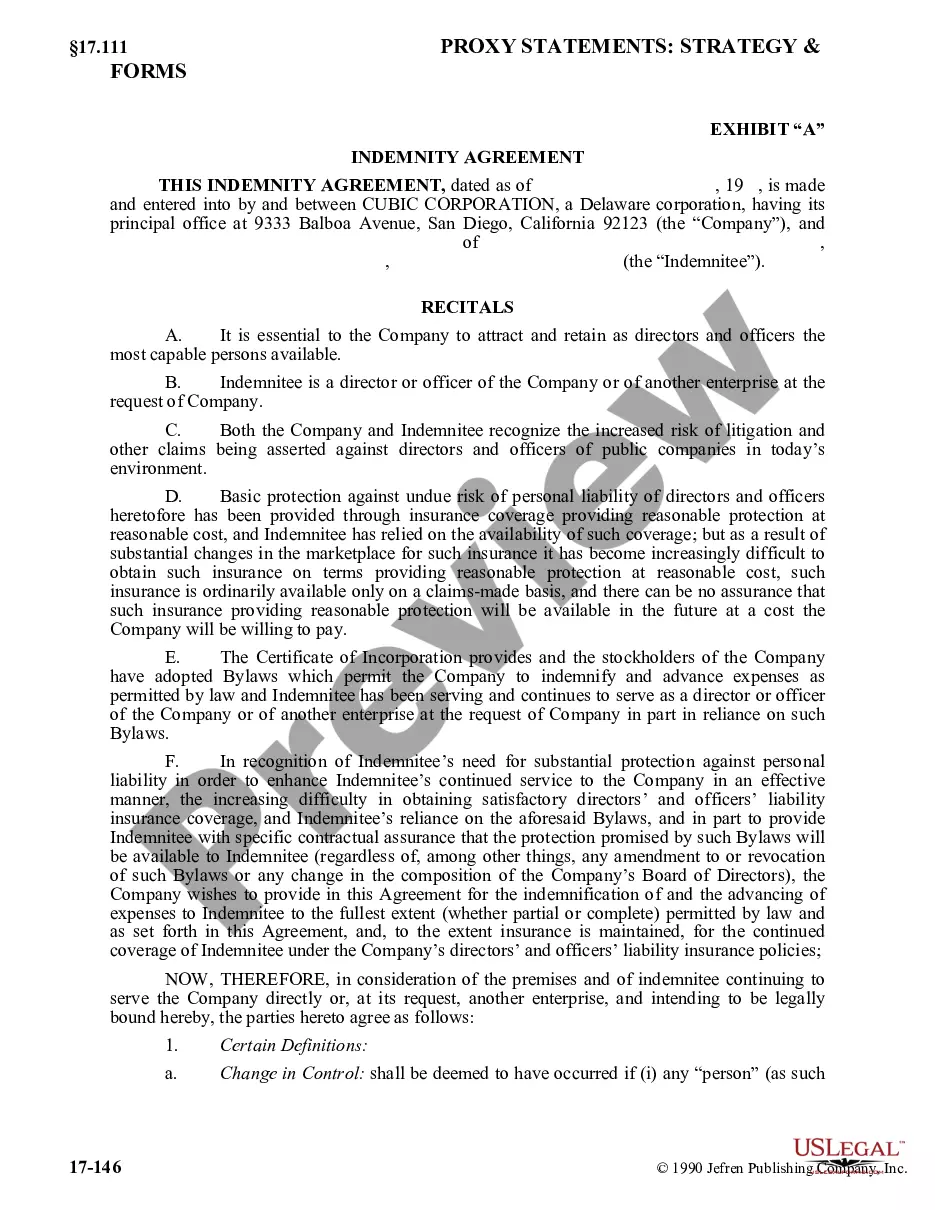
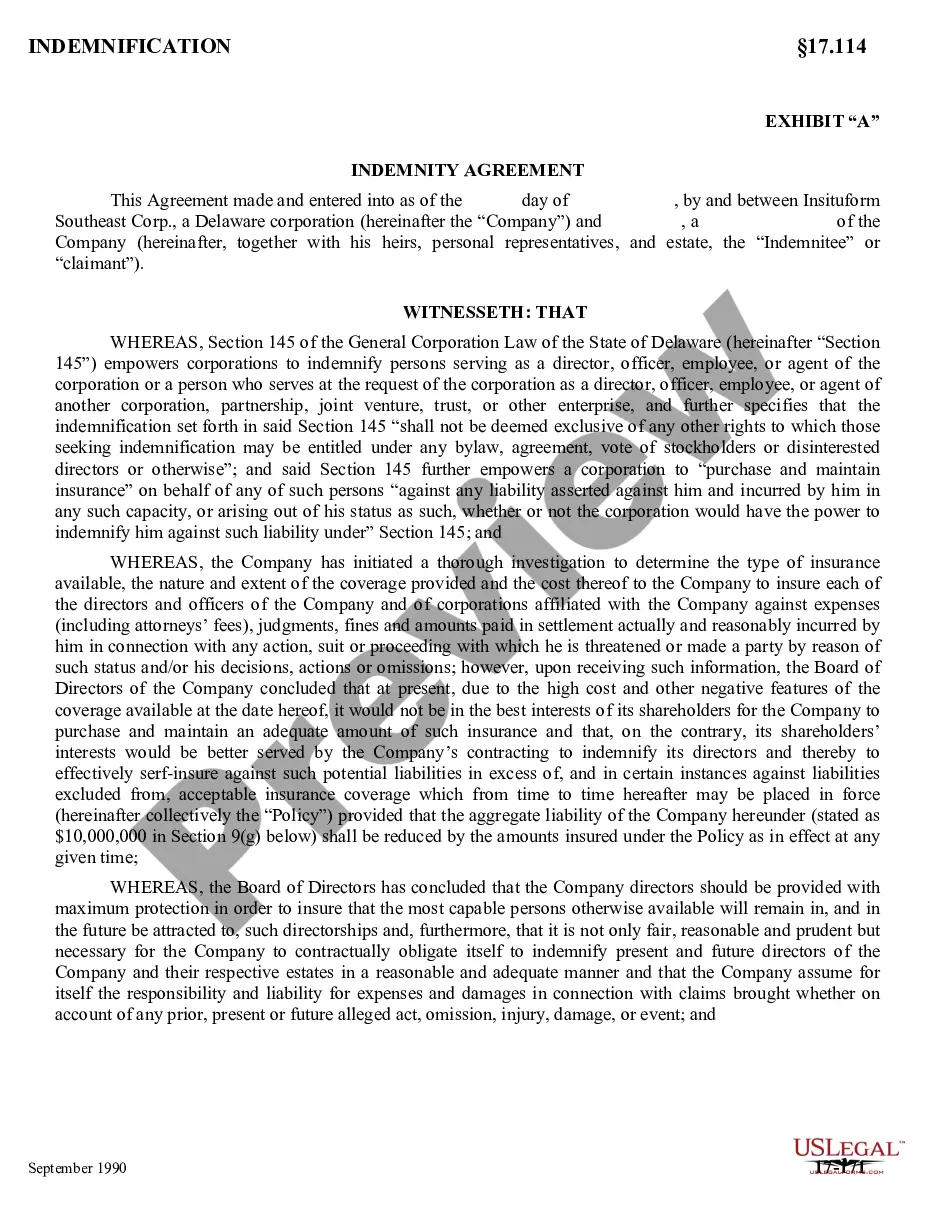
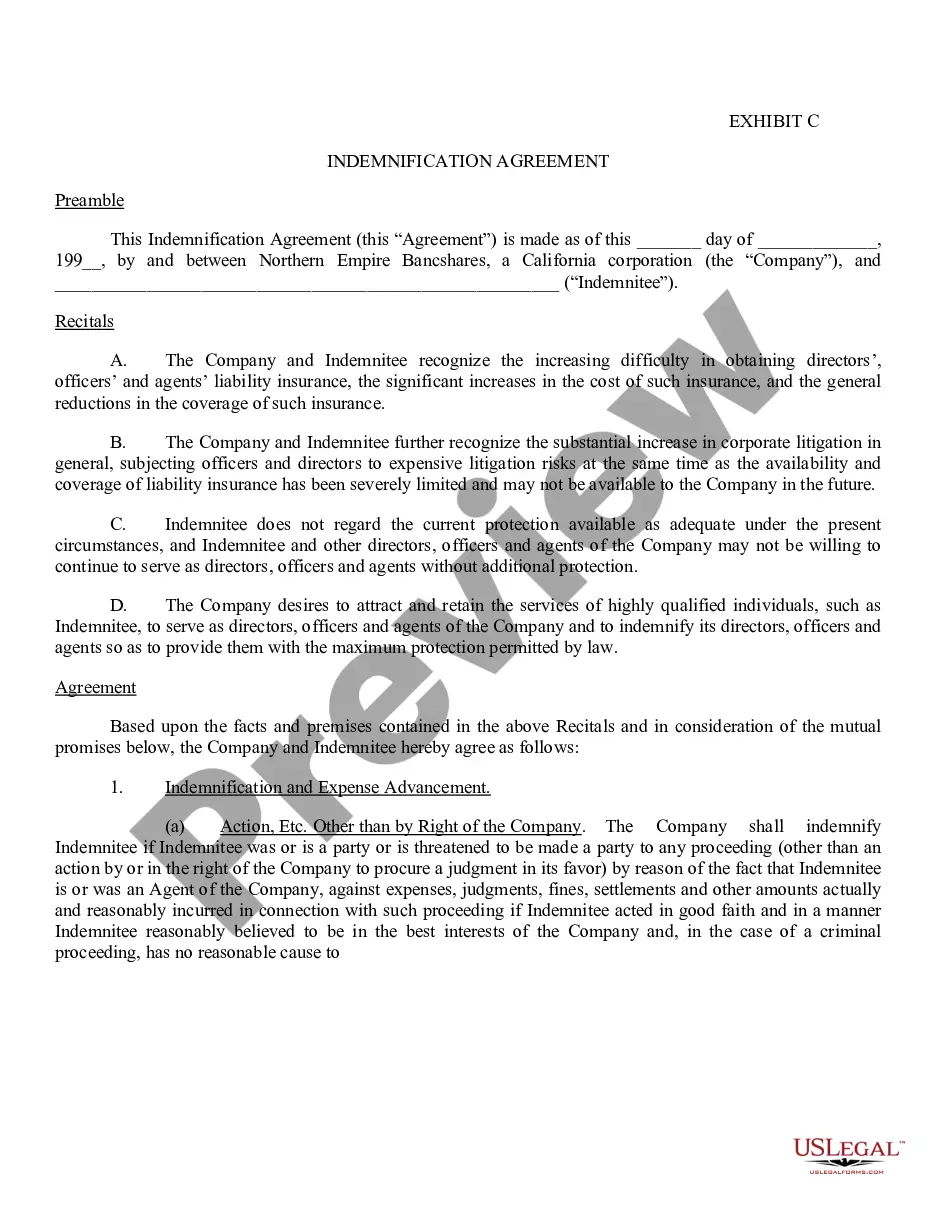
Under many statues, a corporation may, but is not required, to indemnify a director, officer, employee, or agent in certain third-party proceedings if the person acted in good faith and in a manner he or she reasonably believed to be in or not opposed to the best interest of the corporation, and in criminal cases if he or she had no reasonable cause to believe that his or her conduct was unlawful. The great majority of indemnification statutes require the indemnification of these persons if they are successful in their defense in specified proceedings, the differences among the various jurisdictions being in the degree and type of successful outcome that merits payment of litigation expenses. Many indemnification statutes authorize corporations to buy insurance for these persons against any liability asserted against them and incurred by then in their respective capacities, whether or not the corporation would have the power to indemnify them against such liability under the statute.
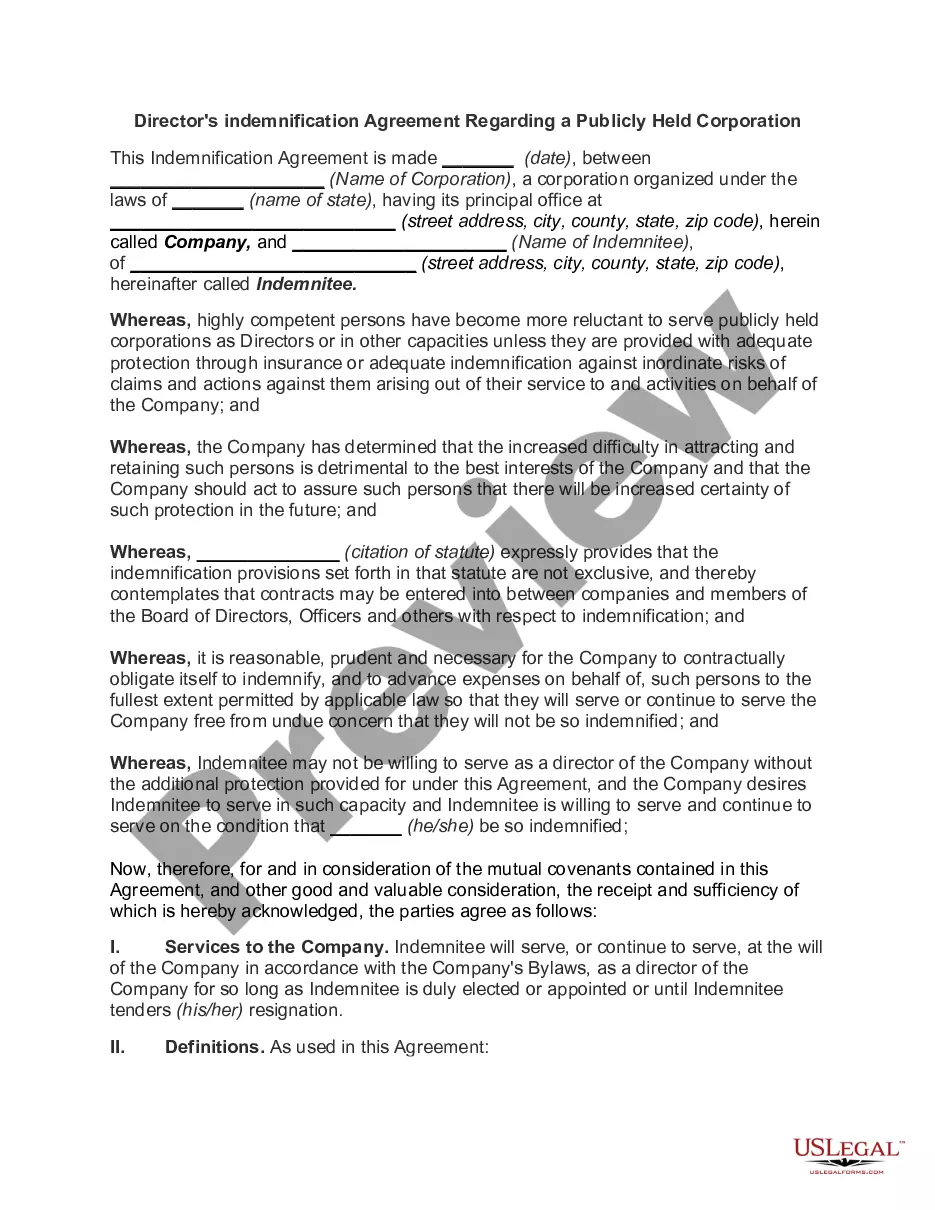
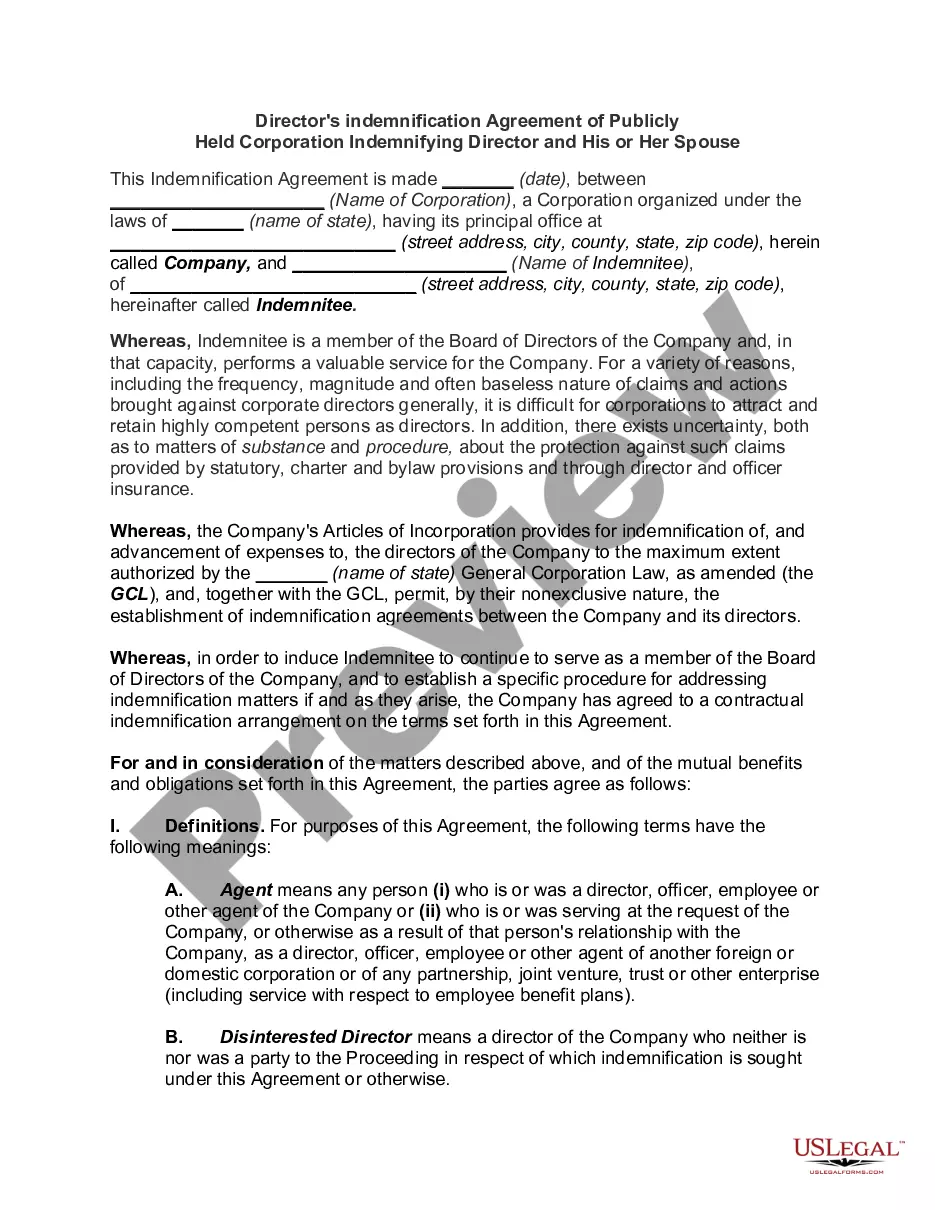
A Director’s Indemnification Agreement is a written contract that provides protection for a director from any civil or criminal liability that may arise from their actions while carrying out their duties as a director. It is designed to protect the director from any financial losses, legal fees, or other damages that may occur as a result of their services. There are two types of Director’s Indemnification Agreement: Standard and Enhanced. A Standard Director’s Indemnification Agreement provides basic protection for a director from potential legal claims arising from their role as a director. It typically covers a director’s own negligence, but does not cover intentional wrongdoing. An Enhanced Director’s Indemnification Agreement provides more comprehensive protection and includes protection from potential claims for intentional wrongdoings. It may also include additional coverage such as reimbursement for legal fees and other expenses related to defending against a claim.