Sample Letter for Plaintiff's Motion to Compel Answers to Plaintiff's Second Set of Interrogatories
What this document covers
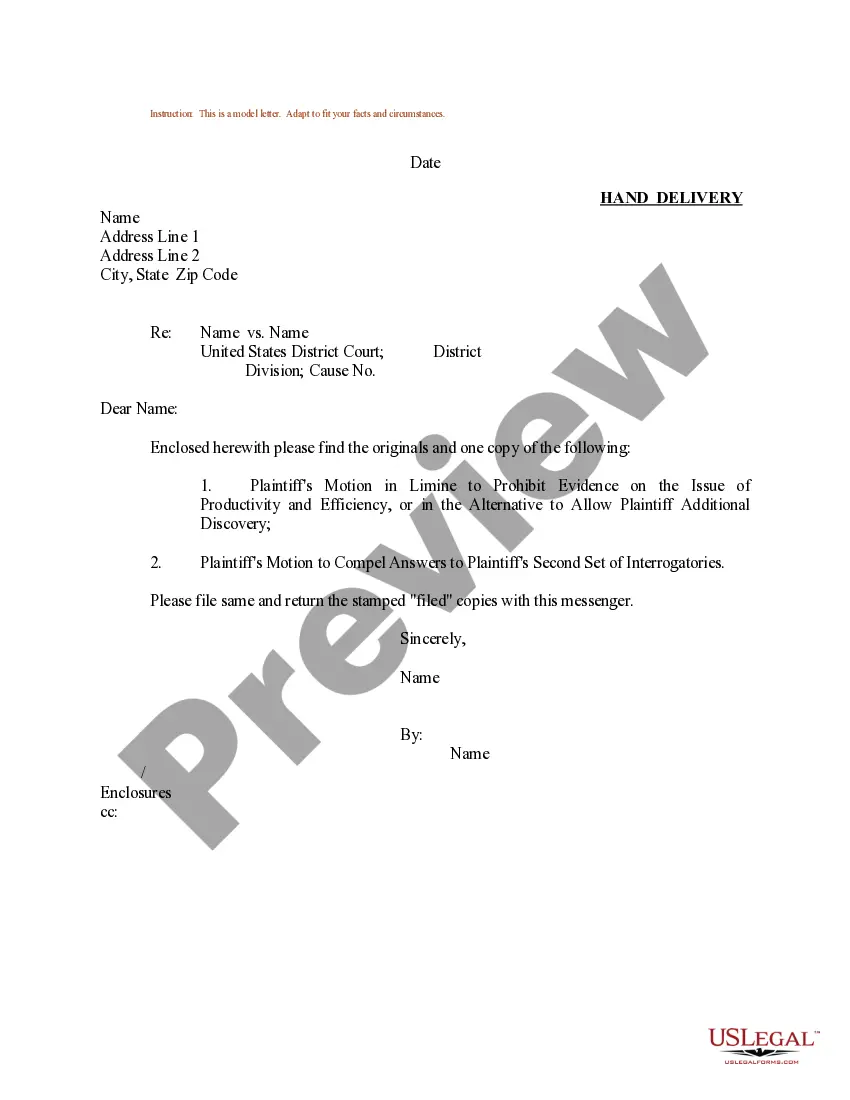
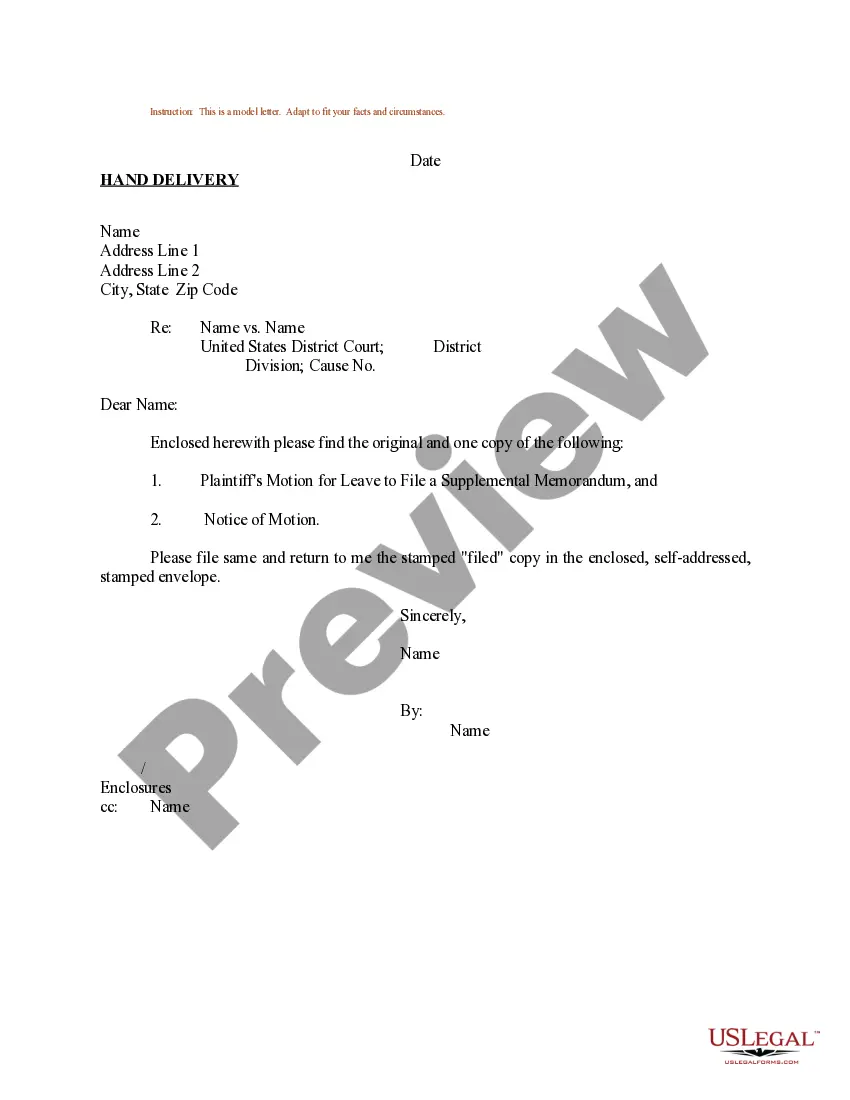
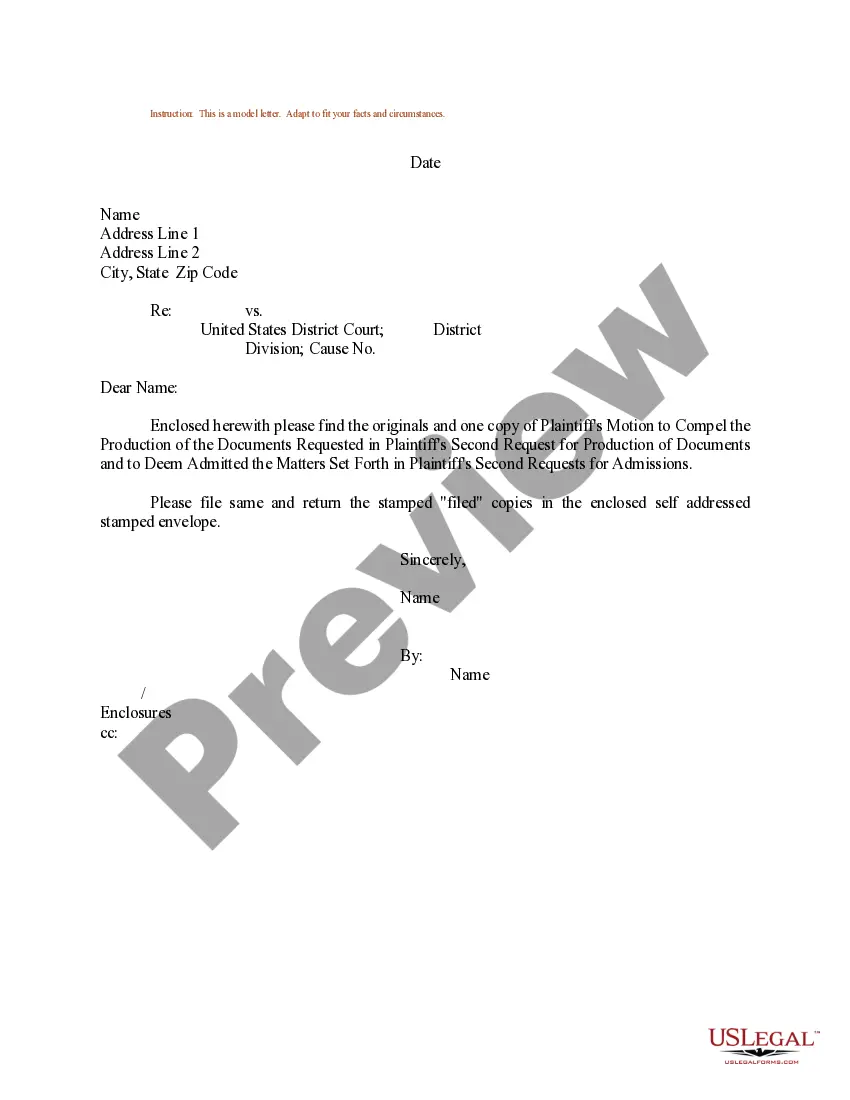
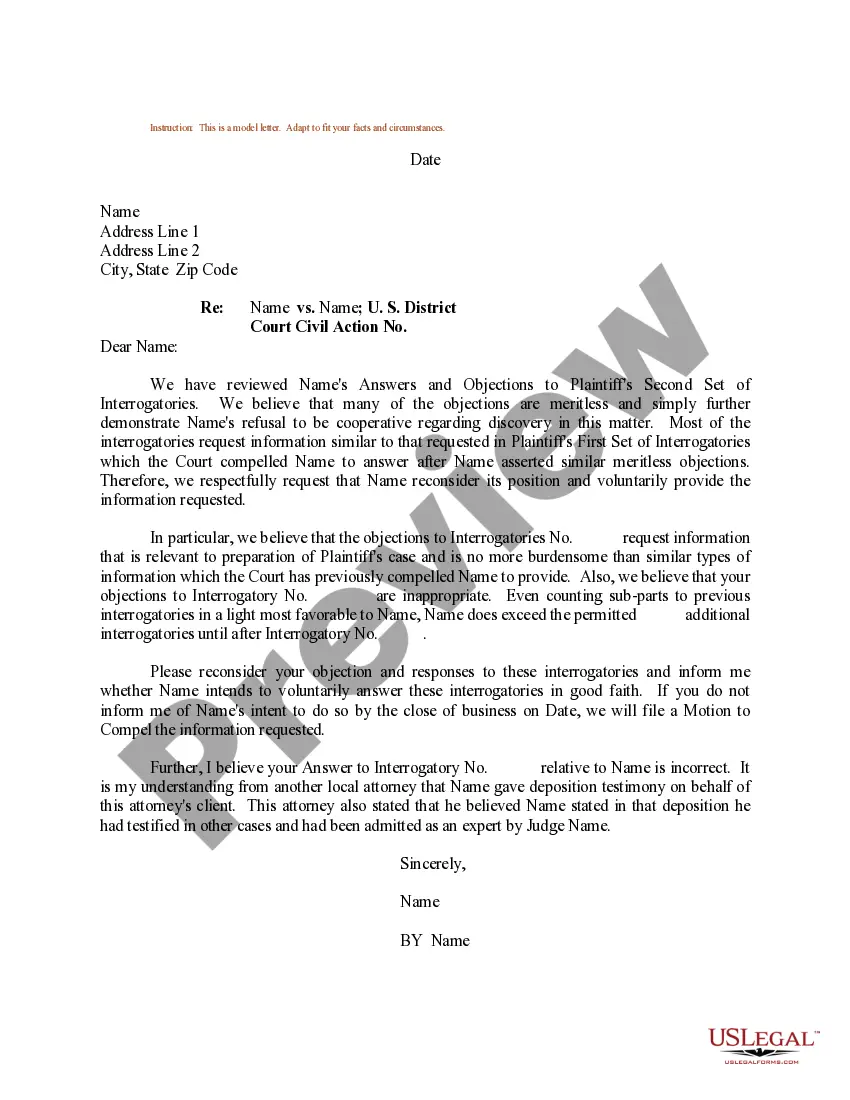
This form is a Sample Letter for Plaintiff's Motion to Compel Answers to Plaintiff's Second Set of Interrogatories. It is a legal template designed to assist plaintiffs in formally requesting the court to compel defendants to respond to interrogatories that have not been answered adequately. This form is typically used in civil litigation and is a necessary tool when a party fails to provide the requested information in discovery.
Form components explained
- Date: Specify the date of the letter.
- Recipient Information: Include the name and address of the individual or entity to whom the letter is addressed.
- Subject Line: Clearly state the purpose of the letter, referencing the motion to compel.
- Request for Filing: Instructions for filing and returning stamped copies for record-keeping.
- Signature Block: Sections for signatures of the plaintiff or their attorney, affirming the letter's authenticity.
Common use cases
This form is used when a plaintiff needs to ensure that a defendant answers interrogatories as required by discovery rules. It is applicable in scenarios where the defendant has failed to respond or has provided insufficient or evasive answers, necessitating a formal request to the court to intervene and compel compliance.
Who can use this document
- Plaintiffs in civil lawsuits who have served interrogatories to defendants.
- Attorneys representing plaintiffs navigating the discovery process.
- Individuals with limited legal experience needing a structured template for legal correspondence.
Instructions for completing this form
- Identify the date you are sending the letter and include it at the top.
- Fill in the recipient's name and address accurately in the designated fields.
- Craft a clear subject line, mentioning the motion to compel and referencing your interrogatories.
- Indicate any filing instructions to the court as needed.
- Sign the document, ensuring the name and title of the signatory are included below the signature.
Does this form need to be notarized?
Notarization is not commonly needed for this form. However, certain documents or local rules may make it necessary. Our notarization service, powered by Notarize, allows you to finalize it securely online anytime, day or night.
Get your form ready online
Our built-in tools help you complete, sign, share, and store your documents in one place.
Make edits, fill in missing information, and update formatting in US Legal Forms—just like you would in MS Word.
Download a copy, print it, send it by email, or mail it via USPS—whatever works best for your next step.
Sign and collect signatures with our SignNow integration. Send to multiple recipients, set reminders, and more. Go Premium to unlock E-Sign.
If this form requires notarization, complete it online through a secure video call—no need to meet a notary in person or wait for an appointment.
We protect your documents and personal data by following strict security and privacy standards.

Make edits, fill in missing information, and update formatting in US Legal Forms—just like you would in MS Word.

Download a copy, print it, send it by email, or mail it via USPS—whatever works best for your next step.

Sign and collect signatures with our SignNow integration. Send to multiple recipients, set reminders, and more. Go Premium to unlock E-Sign.

If this form requires notarization, complete it online through a secure video call—no need to meet a notary in person or wait for an appointment.

We protect your documents and personal data by following strict security and privacy standards.
Common mistakes to avoid
- Failing to include the correct date or recipient's information.
- Not specifying the interrogatories in question clearly.
- Omitting filing instructions, which could cause delays.
- Neglecting to proofread for errors before submission.
Why complete this form online
- Convenience: Instant access to a downloadable form that can be customized easily.
- Editability: Allows users to fill in specific details relevant to their case without starting from scratch.
- Reliability: Each form is drafted by licensed attorneys to ensure compliance with legal standards.
Looking for another form?
Form popularity
FAQ
If the plaintiff does not respond to the court order, then you can file a Motion to Dismiss and you may win your case. Send a final request. If they do not respond to the final request within 30 days you can send the court an application for entry of final judgment or dismissal.
You must answer each interrogatory separately and fully in writing under oath, unless you object to it. You must explain why you object. You must sign your answers and objections.
So, can you refuse to answer interrogatories? The answer is, no, you may not.That answer must either permit inspection of the requested information or object to the production of the information for a specific reason.
Responding to Form InterrogatoriesAnswer each question, being careful to answer each subpart, if one exists. Read the question carefully, and answer only what it asks. You may attach exhibits, if necessary. The response must be verified, meaning you must swear that the responses given are true.
Motions to Compel If a party doesn't respond to interrogatories or requests for production, then the party seeking those answers must file a motion to compel with the court. If the court grants the motion to compel, then the party who objected or failed to answer must then do so.
Motion for Sanctions If the court issues an order compelling discovery, and the party fails to comply with that order, then the court may sanction the party in numerous ways such as refusing to let in the party's evidence at trial, dismissing their lawsuit or striking their defense to a lawsuit, and imposing
The plaintiff must give you responses to the request for interrogatories within 45 days of when you mailed the request. If they do not give you a response you can send a final request to the plaintiff. In the final request tell the plaintiff they have another 30 days to give you answers to your interrogatory requests.
A motion to compel asks the court to enforce a request for information relevant to a case.The requesting party files a motion to compel discovery responses if the opposing party continues to deny the discovery request.
Your answers to the interrogatories should usually be short, clear, and direct and should answer only the question that is being asked. This is not the time to set out your entire case or defense to the other side. Take the time to make sure your answers are correct and truthful.