Mortgage, Assignment of Rents and Profits, and Fixture Financing Statement Securing Revolving Line of Credit
What this document covers
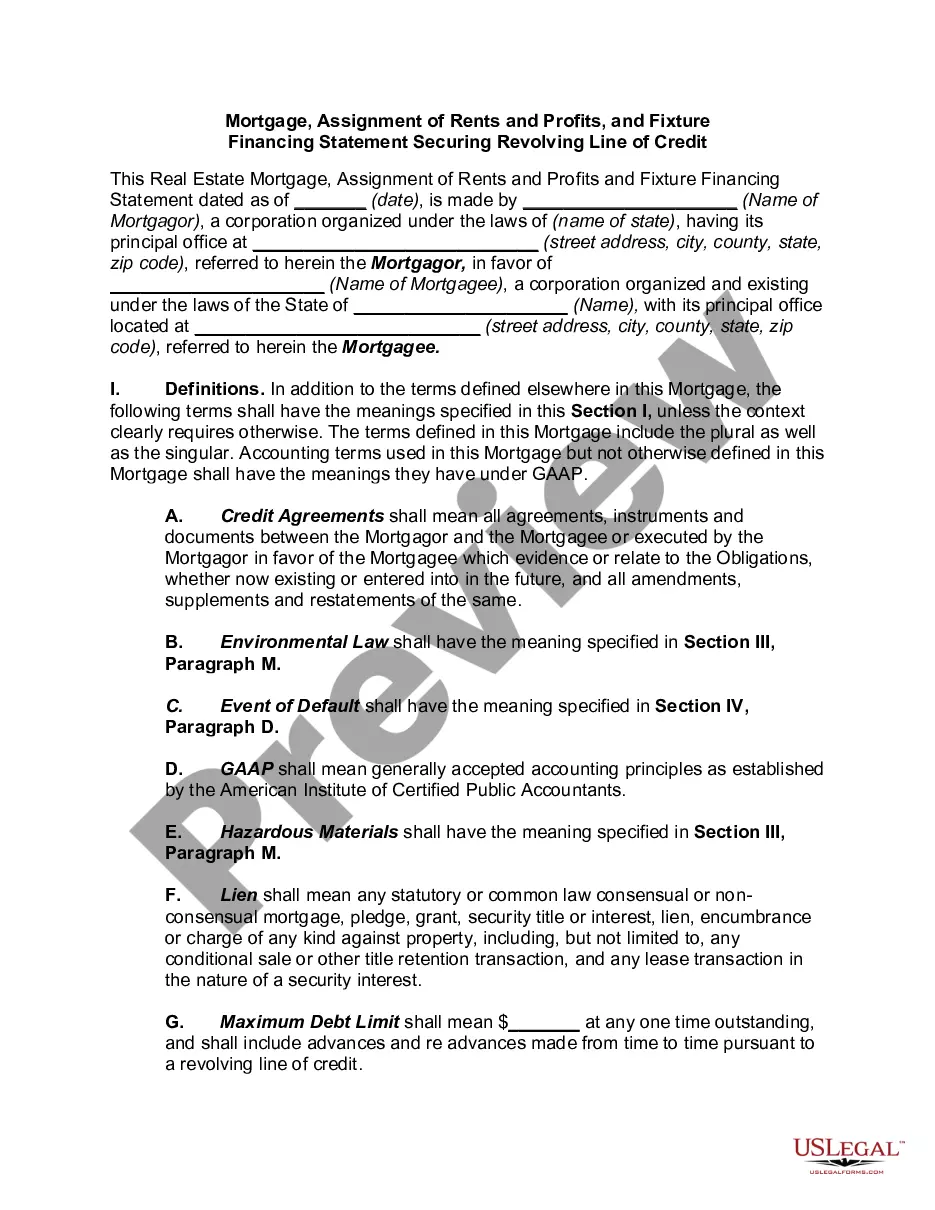
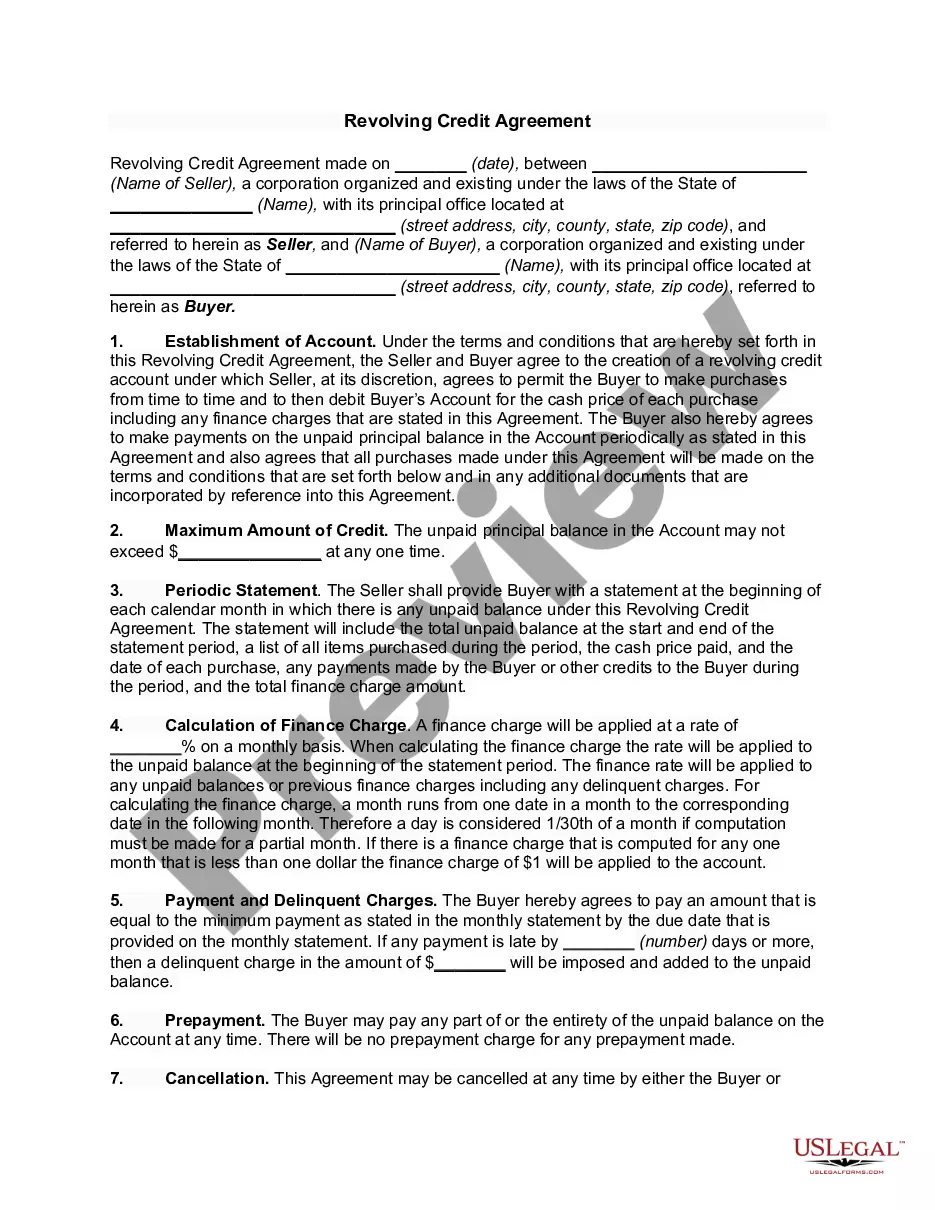
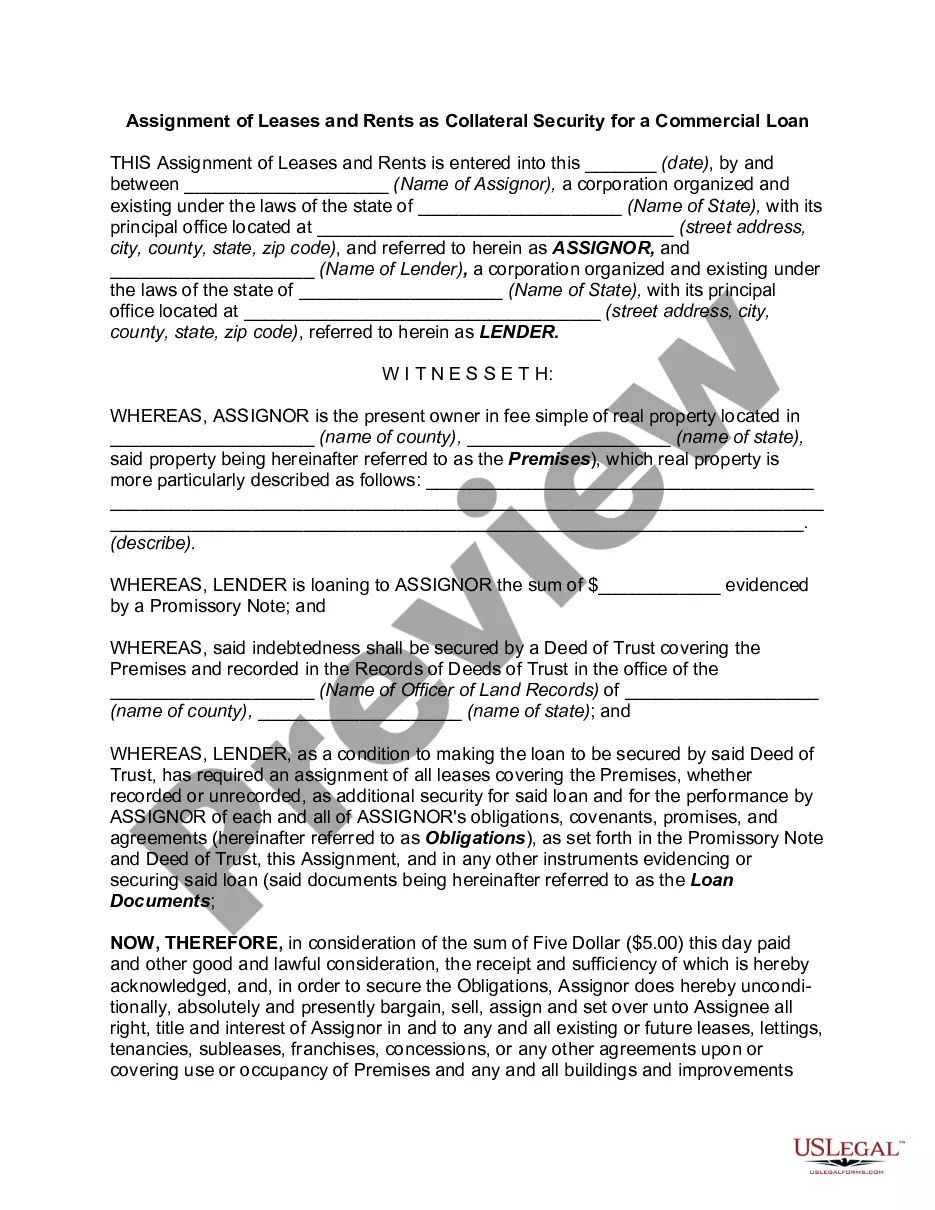
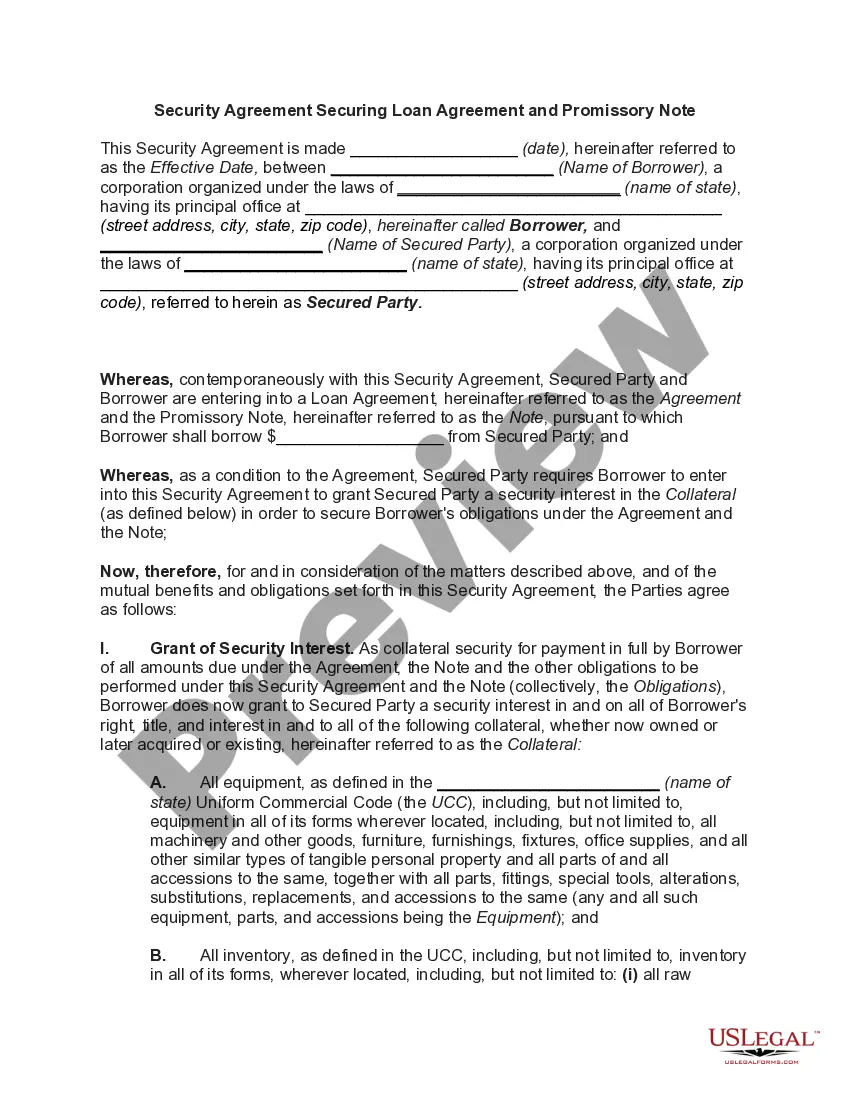
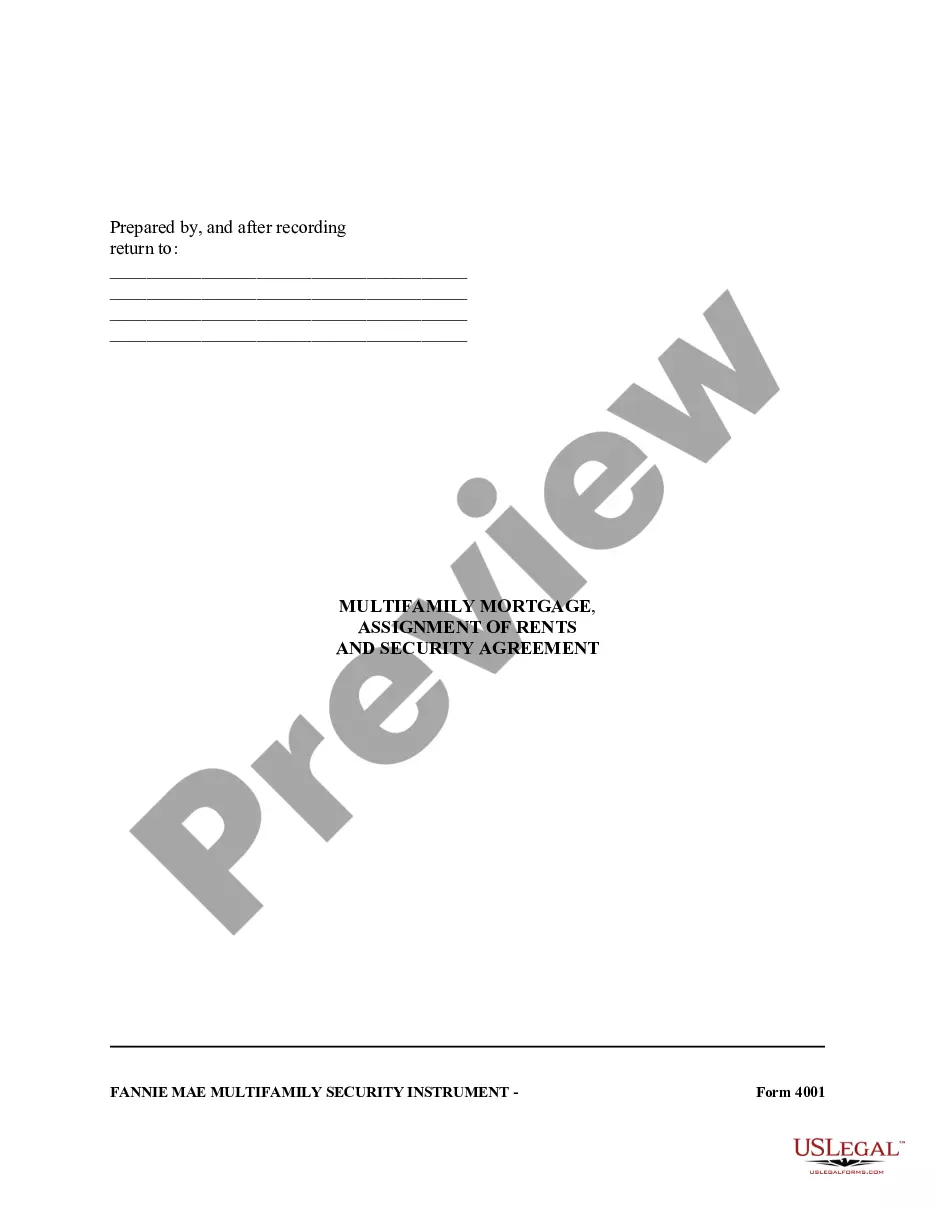
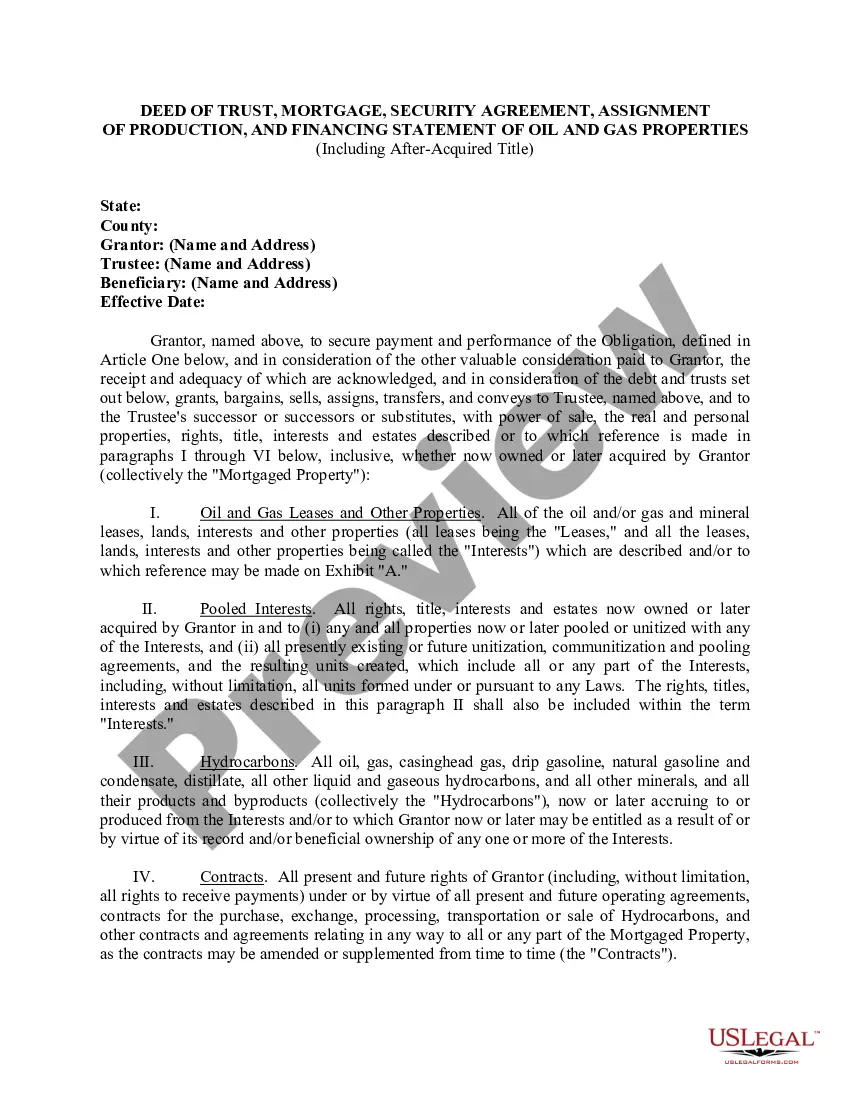
The Mortgage, Assignment of Rents and Profits, and Fixture Financing Statement Securing Revolving Line of Credit is a comprehensive legal document designed to secure a line of credit extended to the borrower. This form allows a lender to establish a lien against real property and its associated income, ensuring that they have legal recourse should payments not be met. Unlike standard mortgage agreements, this form includes provisions for assigning rents and profits, making it more robust for lenders seeking additional security in their financial transactions.
What’s included in this form
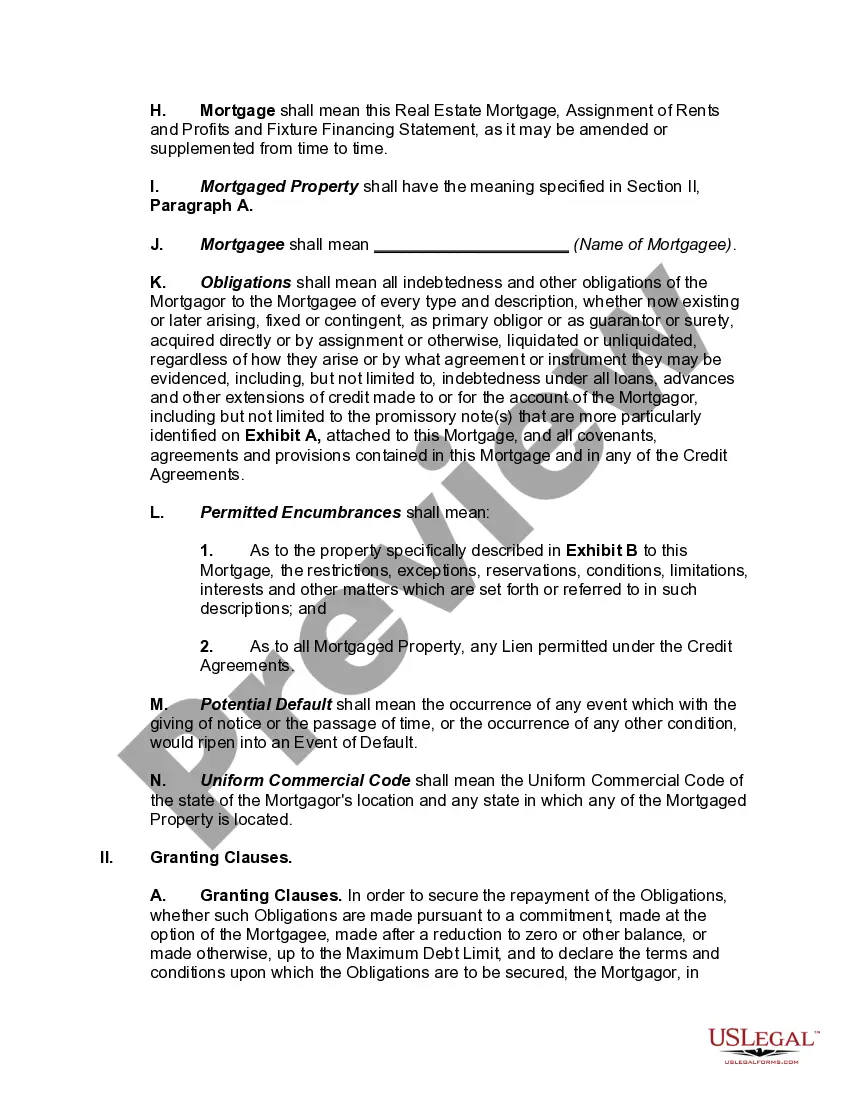
- Definitions of key terms, including obligations, environmental laws, and events of default.
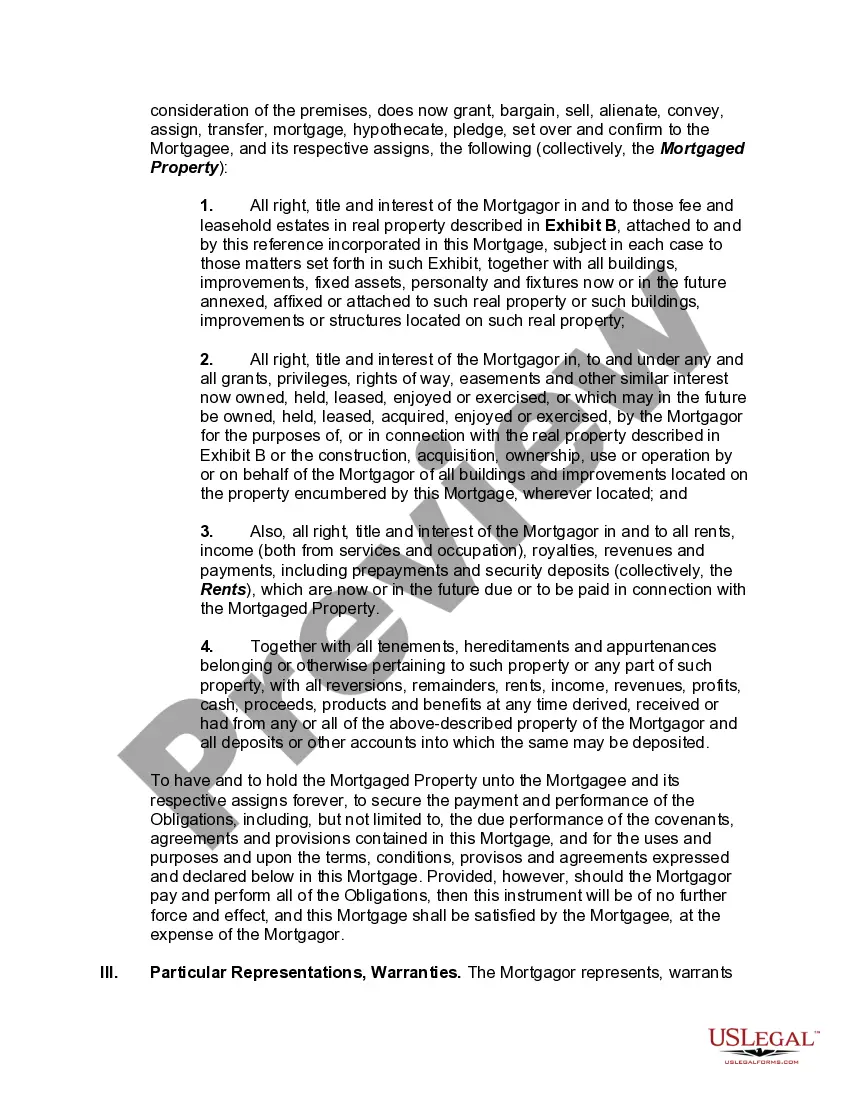
- Granting clauses that specify the property and rights being mortgaged.
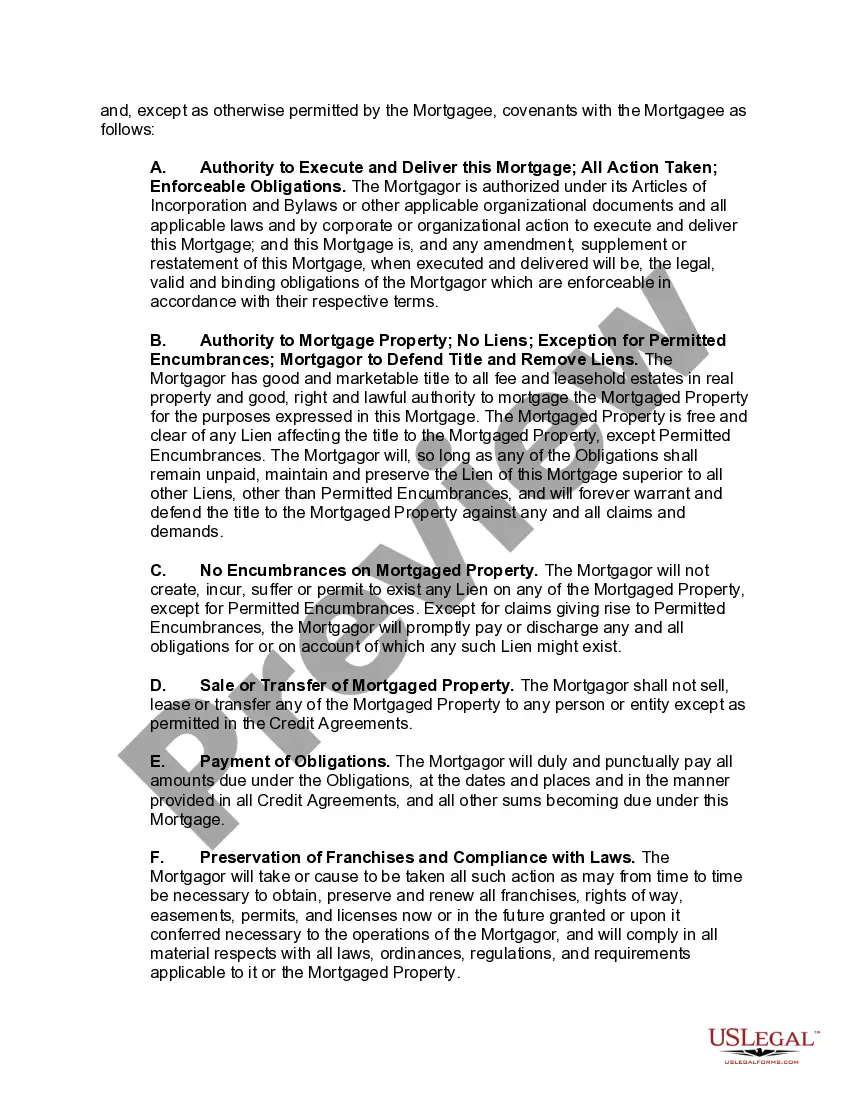
- Particular representations and warranties from the mortgagor regarding the title and condition of the property.
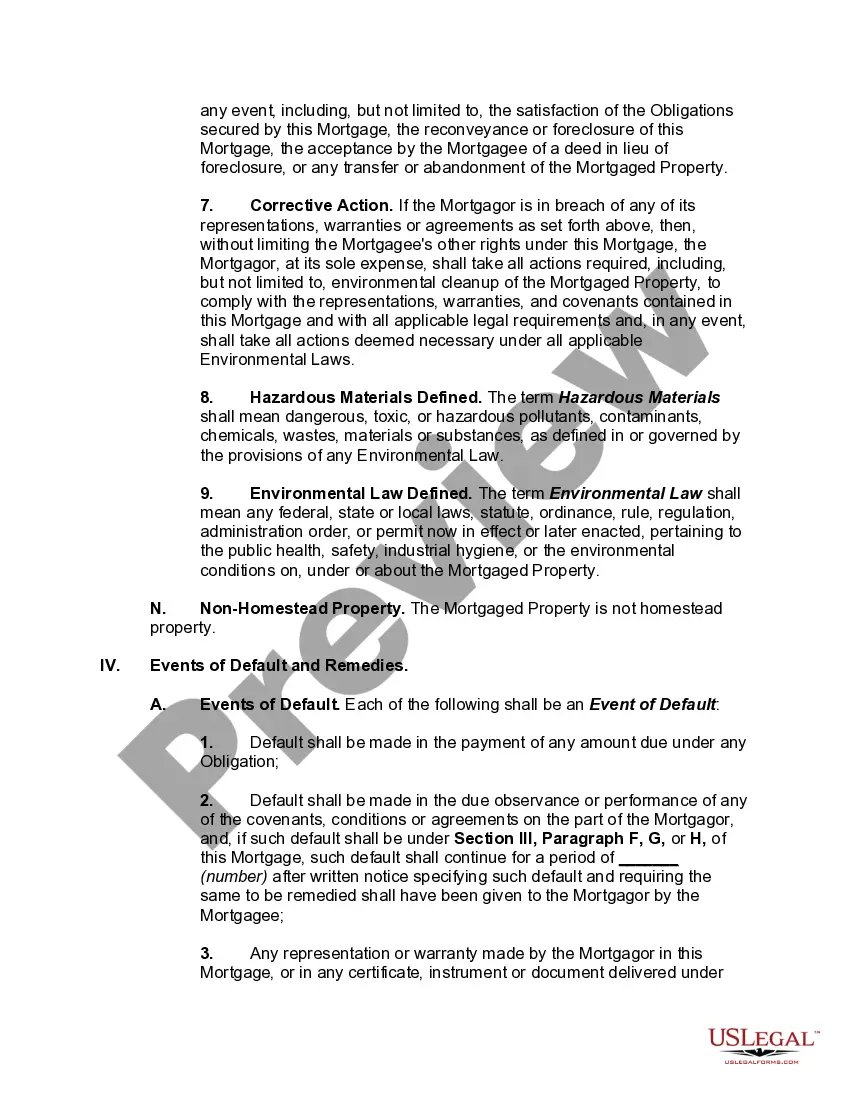
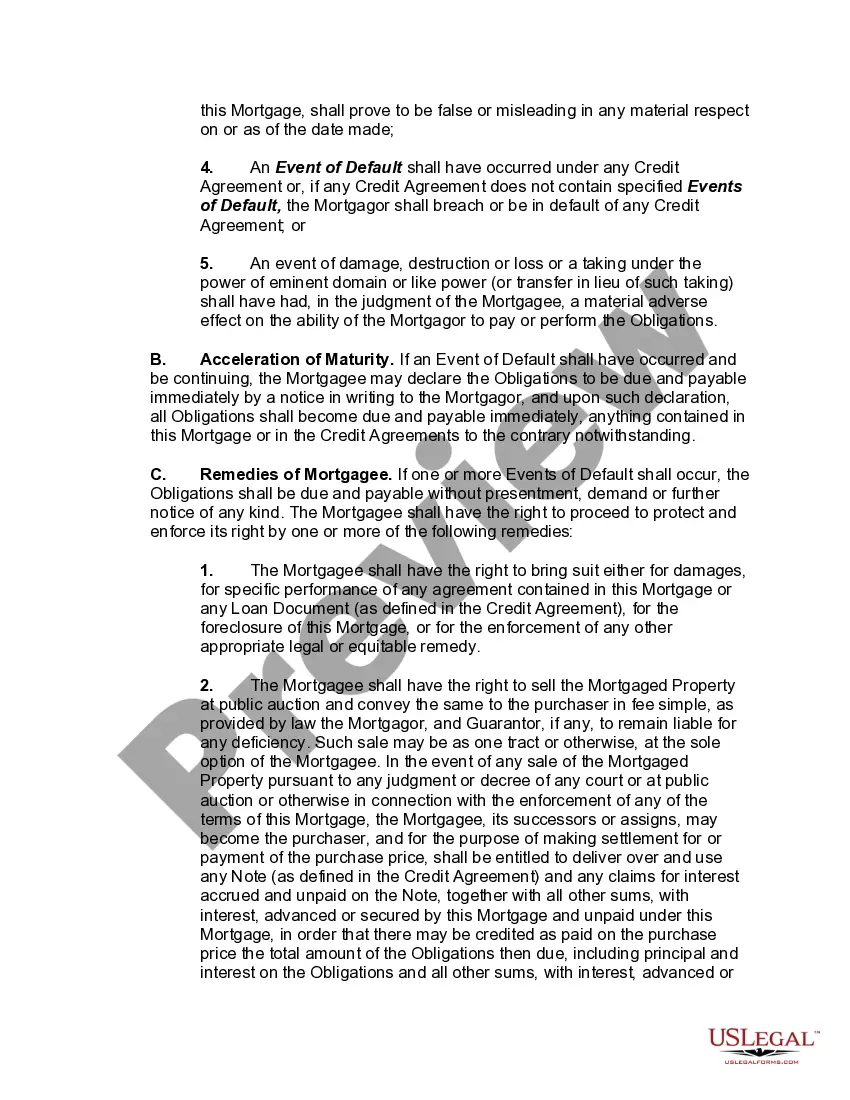
- Events of default and the remedies available to the mortgagee in case of a default.
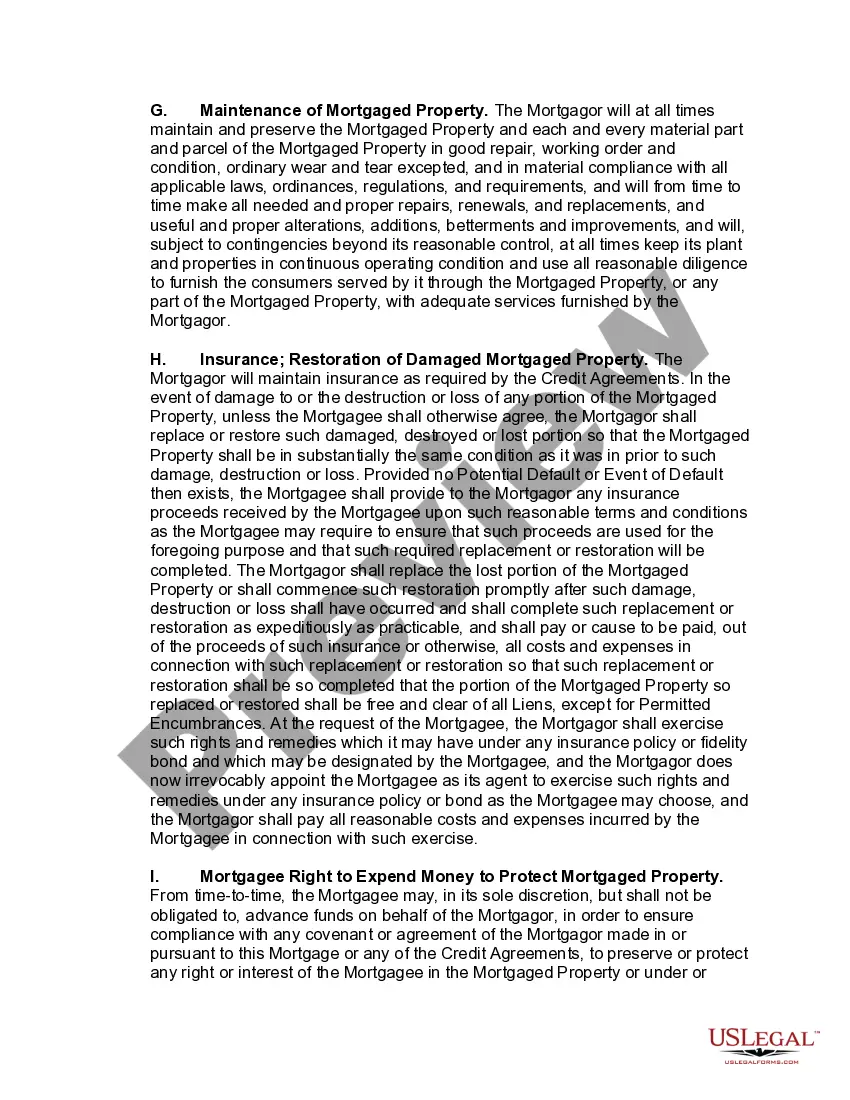
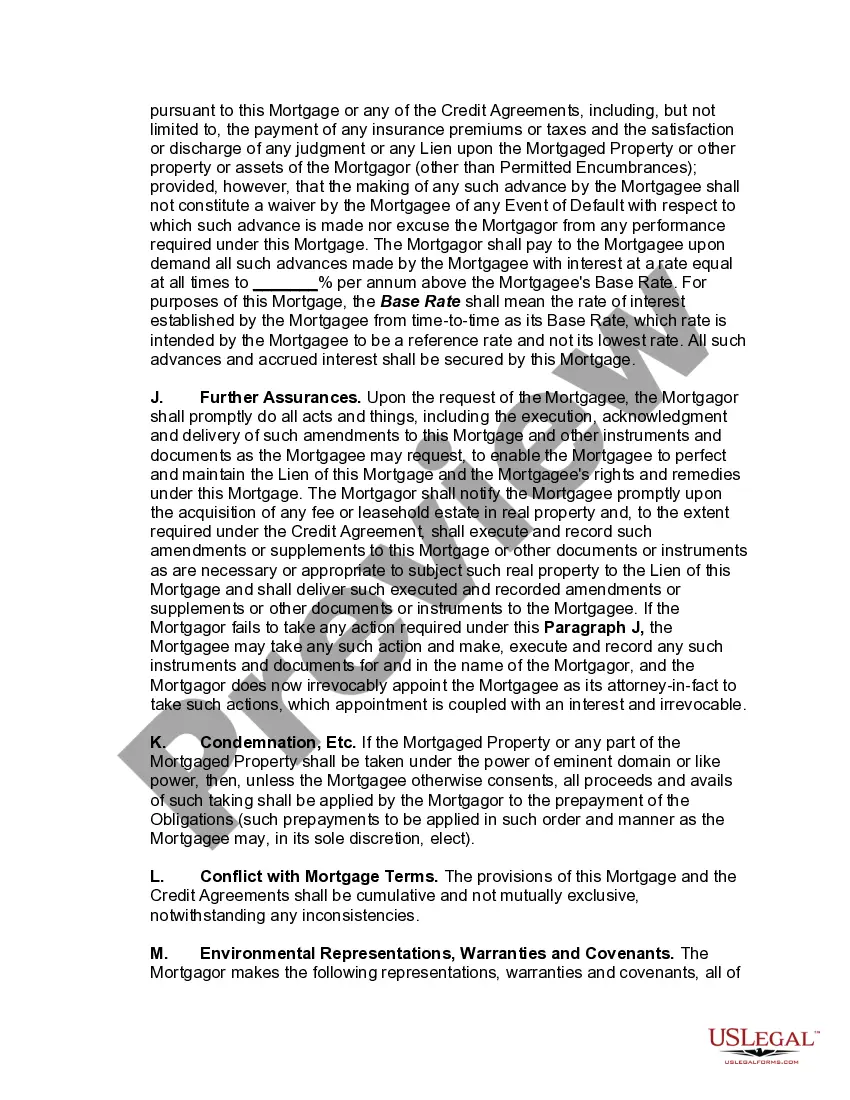
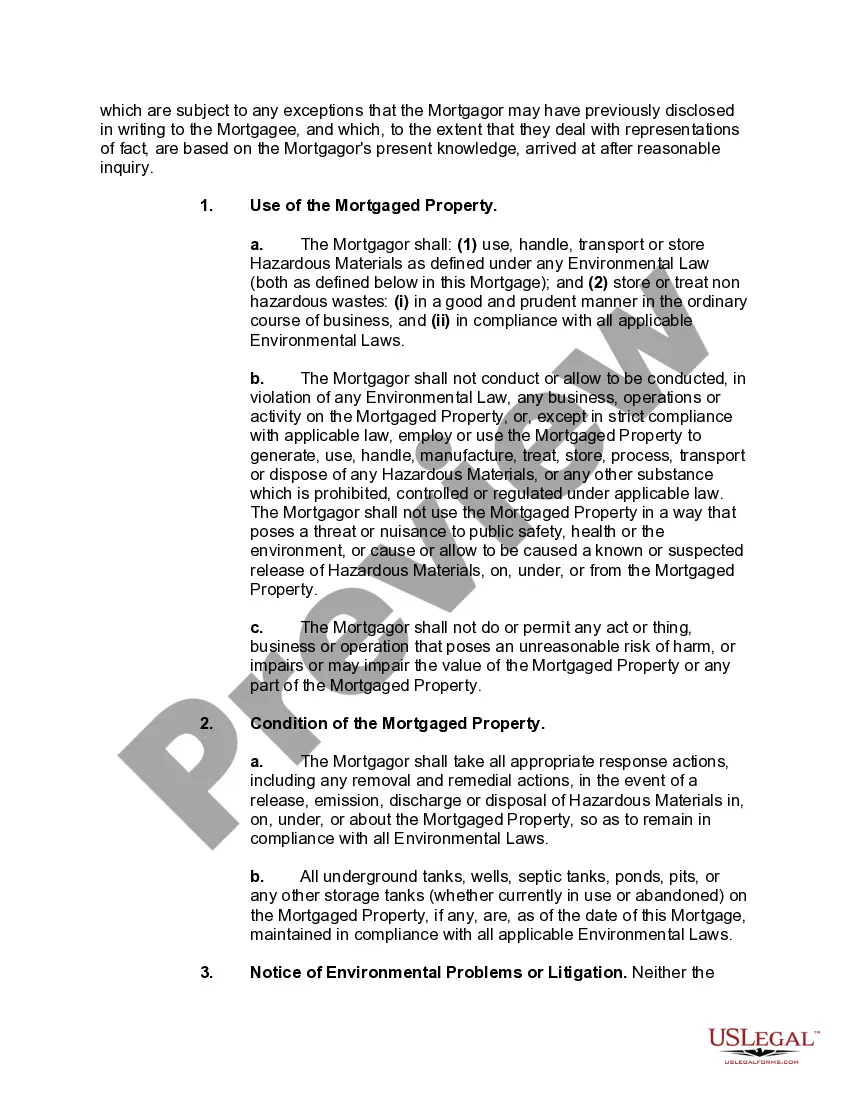
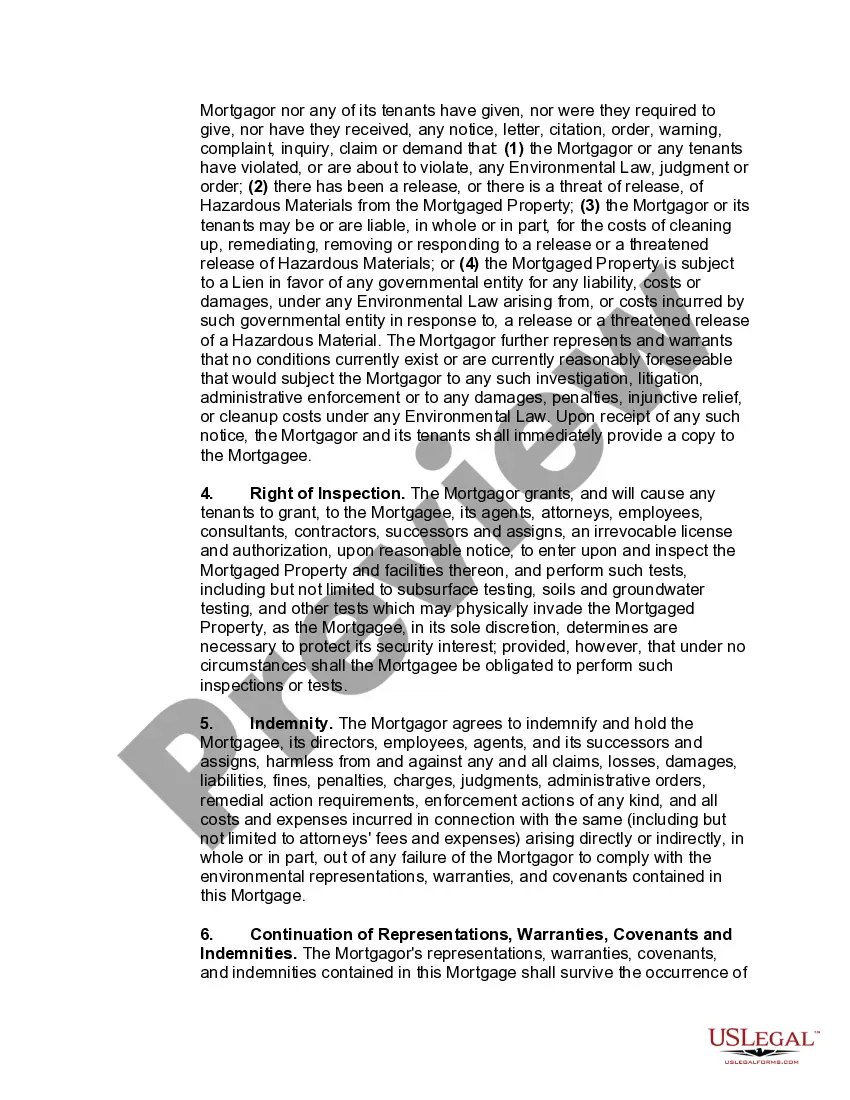
- Provisions regarding insurance requirements and environmental compliance.

Situations where this form applies
This form is typically used when a business seeks a line of credit from a financial institution and requires additional security through a mortgage on real property. It is particularly useful for businesses facing liquidity issues or those needing flexibility in their borrowing capacity. Additionally, this form should be used when lenders want to secure both the property and the cash flow generated from it.
Who can use this document
- Businesses seeking a revolving line of credit from lenders.
- Corporations looking to leverage their real estate holdings for additional financing.
- Lenders who require a comprehensive security agreement to protect their investment.
- Real estate entities that need to document the assignment of rents connected to their properties.
Instructions for completing this form
- Identify the parties involved: name and address of both the borrower (mortgagor) and the lender (mortgagee).
- Specify the property being mortgaged, including a detailed description and any exhibits referenced in the form.
- Fill in the date of the agreement and details regarding the maximum credit limit.
- Complete the definitions section with terms as applicable to your situation.
- Have authorized representatives sign and date the document, as required.
Is notarization required?
To make this form legally binding, it must be notarized. Our online notarization service, powered by Notarize, lets you verify and sign documents remotely through an encrypted video session.
Get your form ready online
Our built-in tools help you complete, sign, share, and store your documents in one place.
Make edits, fill in missing information, and update formatting in US Legal Forms—just like you would in MS Word.
Download a copy, print it, send it by email, or mail it via USPS—whatever works best for your next step.
Sign and collect signatures with our SignNow integration. Send to multiple recipients, set reminders, and more. Go Premium to unlock E-Sign.
If this form requires notarization, complete it online through a secure video call—no need to meet a notary in person or wait for an appointment.
We protect your documents and personal data by following strict security and privacy standards.

Make edits, fill in missing information, and update formatting in US Legal Forms—just like you would in MS Word.

Download a copy, print it, send it by email, or mail it via USPS—whatever works best for your next step.

Sign and collect signatures with our SignNow integration. Send to multiple recipients, set reminders, and more. Go Premium to unlock E-Sign.

If this form requires notarization, complete it online through a secure video call—no need to meet a notary in person or wait for an appointment.

We protect your documents and personal data by following strict security and privacy standards.
Avoid these common issues
- Failing to accurately describe the mortgaged property and associated rights.
- Leaving blank sections or fields, which can render the form incomplete.
- Not including all parties involved in the agreement.
- Overlooking applicable state-specific regulations related to financing statements.
Benefits of using this form online
- Convenience of downloading and completing the form at your own pace.
- Ability to edit and customize the form as per your business needs.
- Access to templates drafted by licensed attorneys, ensuring legal compliance.
- Streamlined process with easy-to-follow instructions for completion.
Looking for another form?
Form popularity
FAQ
Sometimes called Assignment of Leases, Rents and Profits or simply Assignment of Rents, this is a document attached to a mortgage loan agreement which entitles the lender to any income (from leases, rents, etc.) derived from the property once the owner defaults on the loan.
A deed of trust with assignment of rents acts as extra security for the lender. It gives the lender the right to collect any rents that the property generates if you don't make your loan payments.
Assignment of leases and rents allows lenders to a degree of financial protection in case a loan default occurs. This document is an agreement made between a borrower and a lender of mortgage loans. It often details an exact amount the lender will be entitled to if a default happens.
Who benefits most from a clause in a trust deed calling for an assignment of rents? A beneficiary. When the borrower defaults on the underlying loan, an assignment of rents clause allows the lender to collect the rents on an income-producing property.
What Does Assignment Of Mortgage Mean? An assignment of mortgage is a legal term that refers to the transfer of the security instrument that underlies your mortgage loan ? aka your home. When a lender sells the mortgage on, an investor effectively buys the note, and the mortgage is assigned to them at this time.
When you buy a rental property, you'll sign an equivalent document called a "deed of trust with assignment of rents." This deed puts teeth in the lender's security interest by giving it the right to collect rents directly from the tenant if you default on the mortgage payments.
Assignment of leases and rents allows lenders to a degree of financial protection in case a loan default occurs. This document is an agreement made between a borrower and a lender of mortgage loans. It often details an exact amount the lender will be entitled to if a default happens.
An assignment of trust deed is necessary if a lender sells a loan secured by a trust deed. It assigns the trust deed to whoever buys the loan (such as another lender), granting them all the rights to the property. It is recorded along with the original, making it a matter of public record.