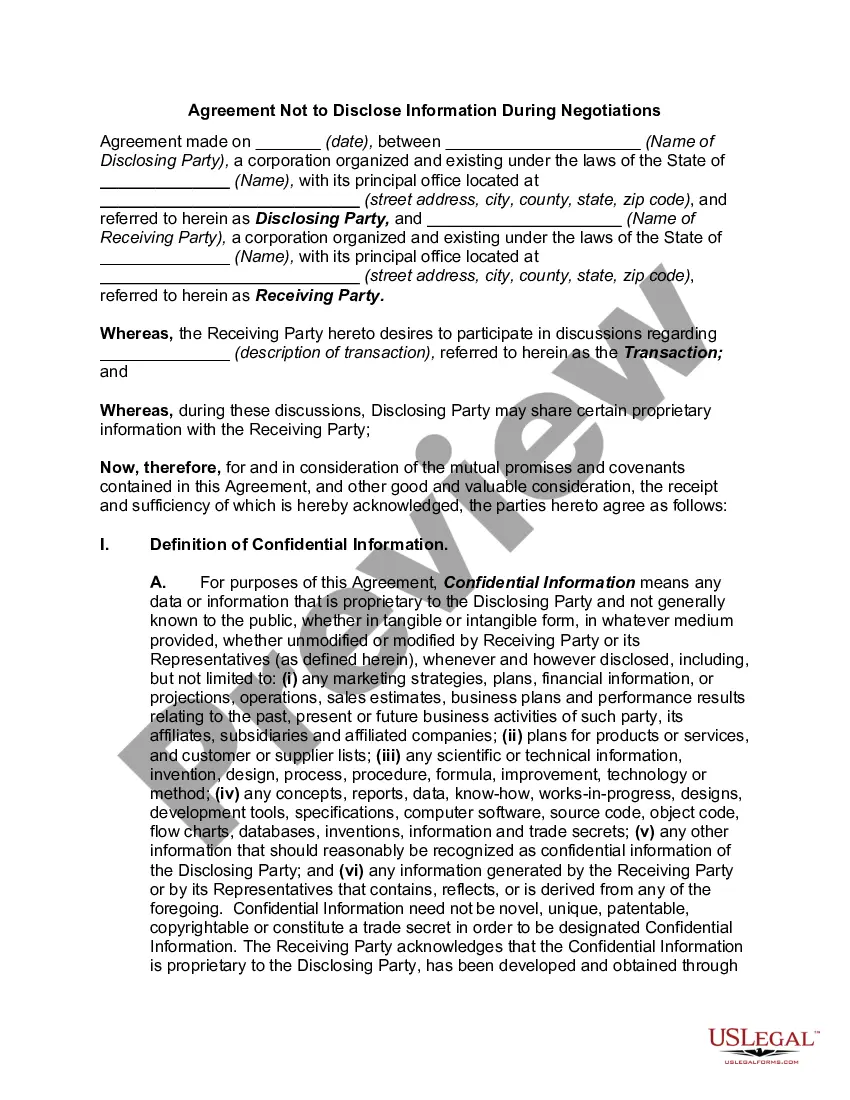
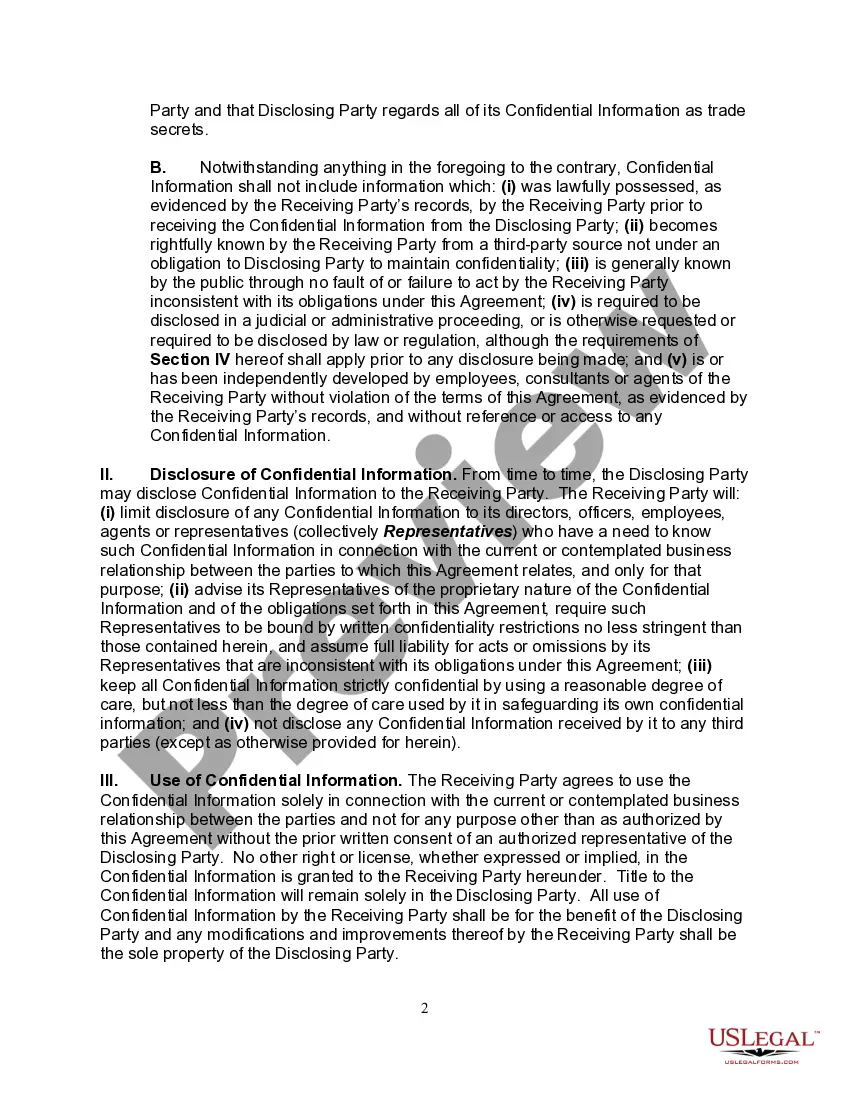
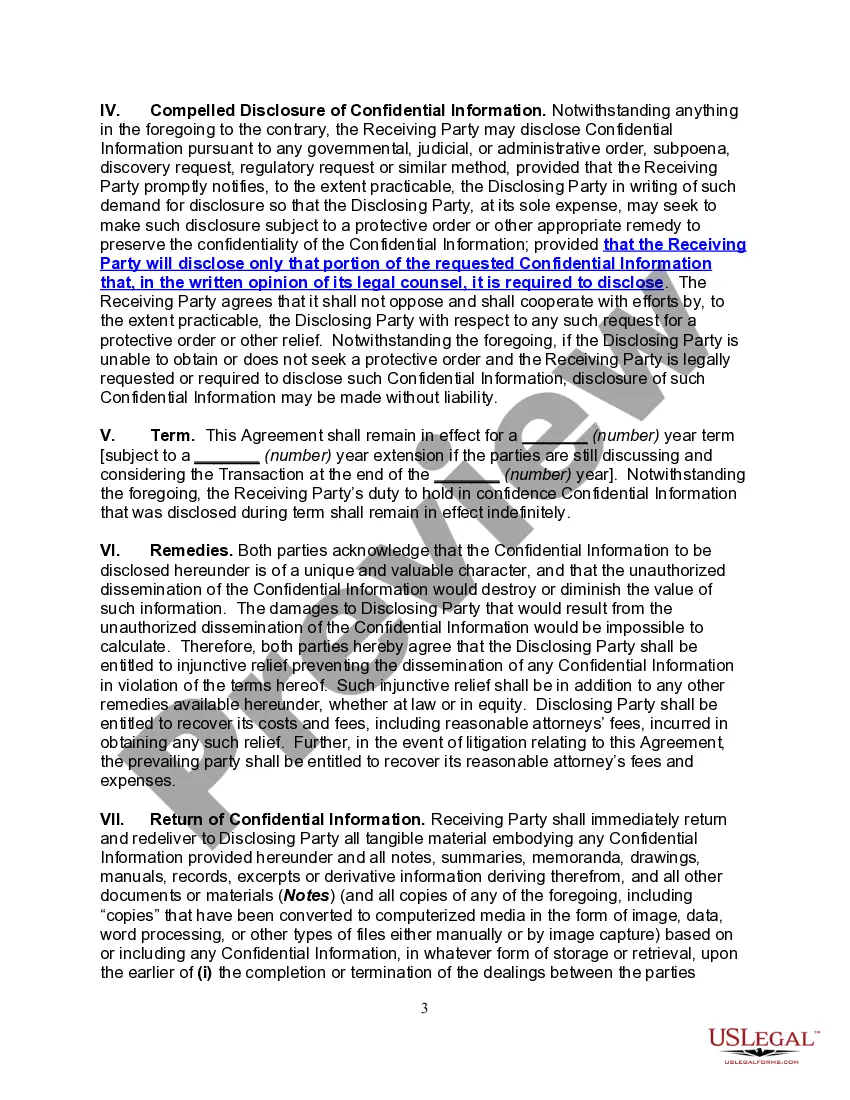
Agreement Not to Disclose Information During Negotiations
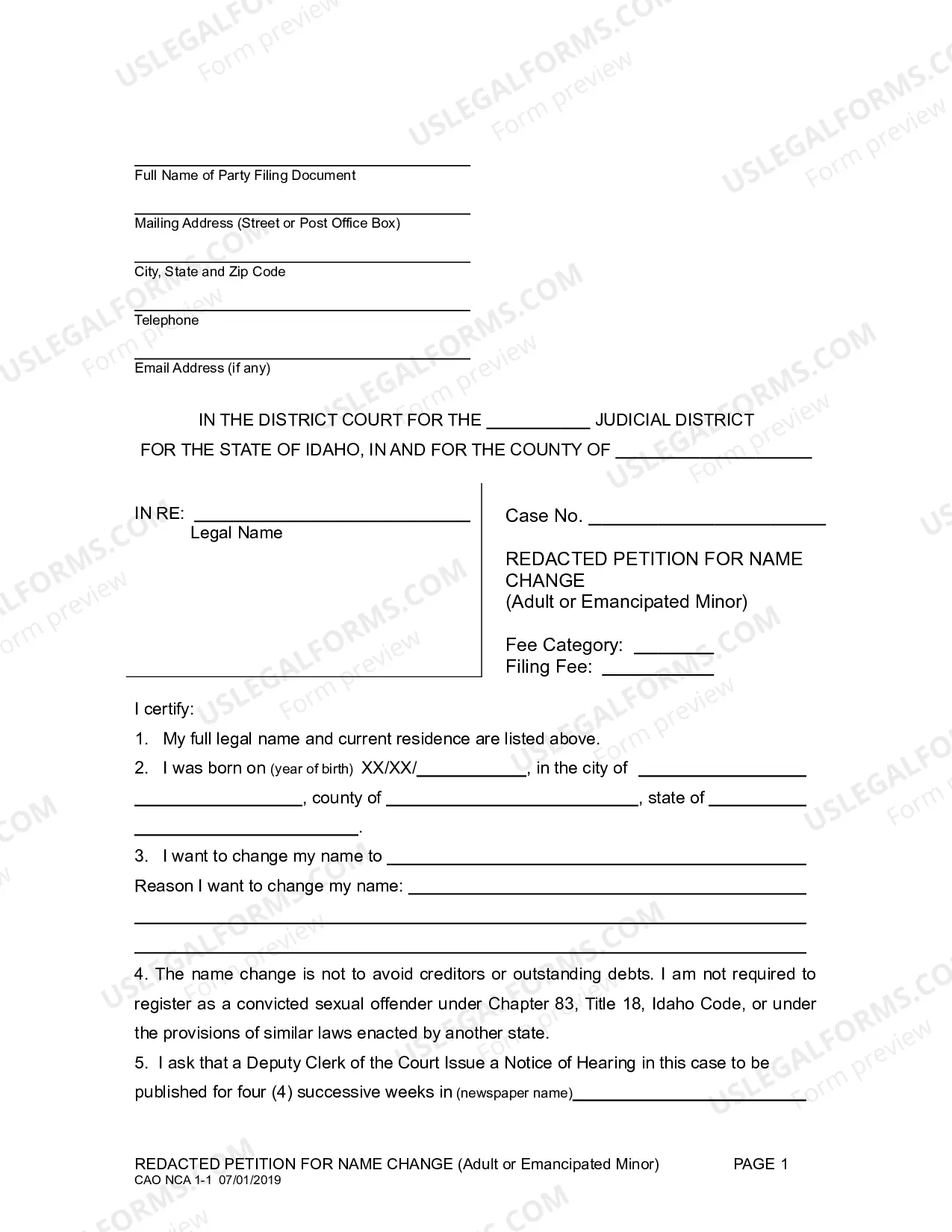
What is this form?
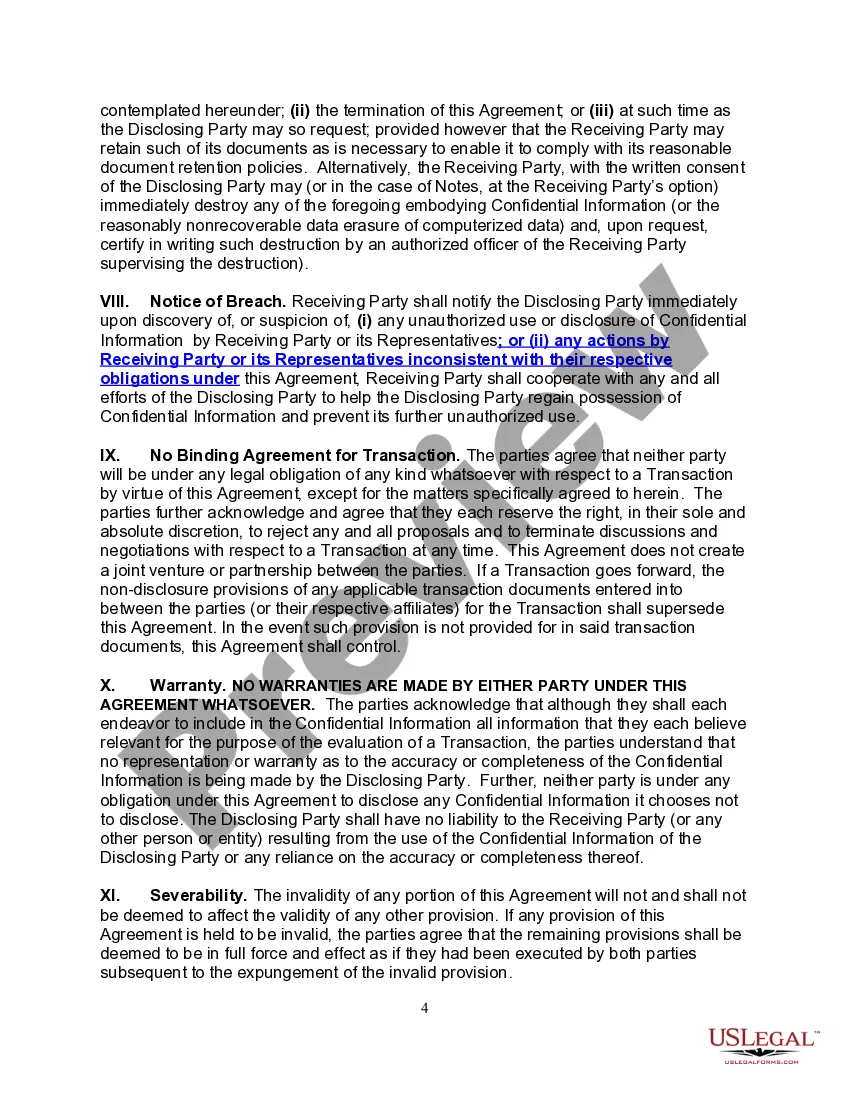
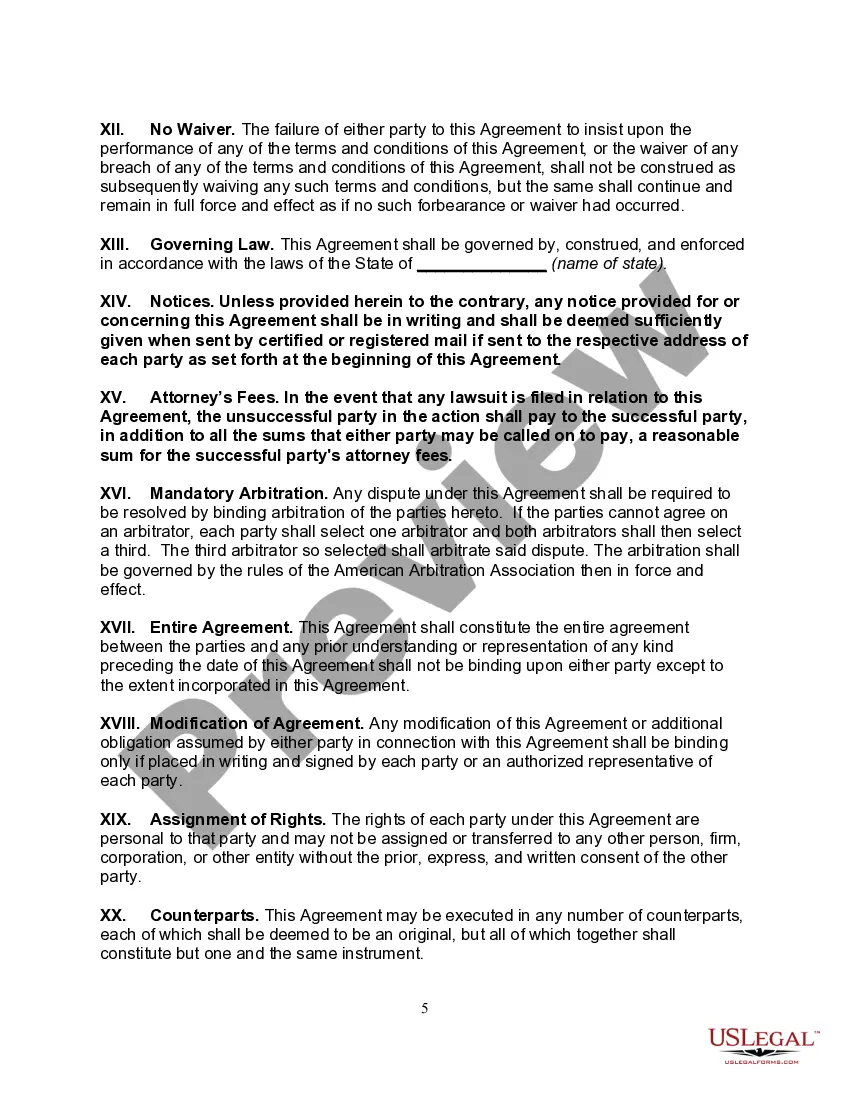
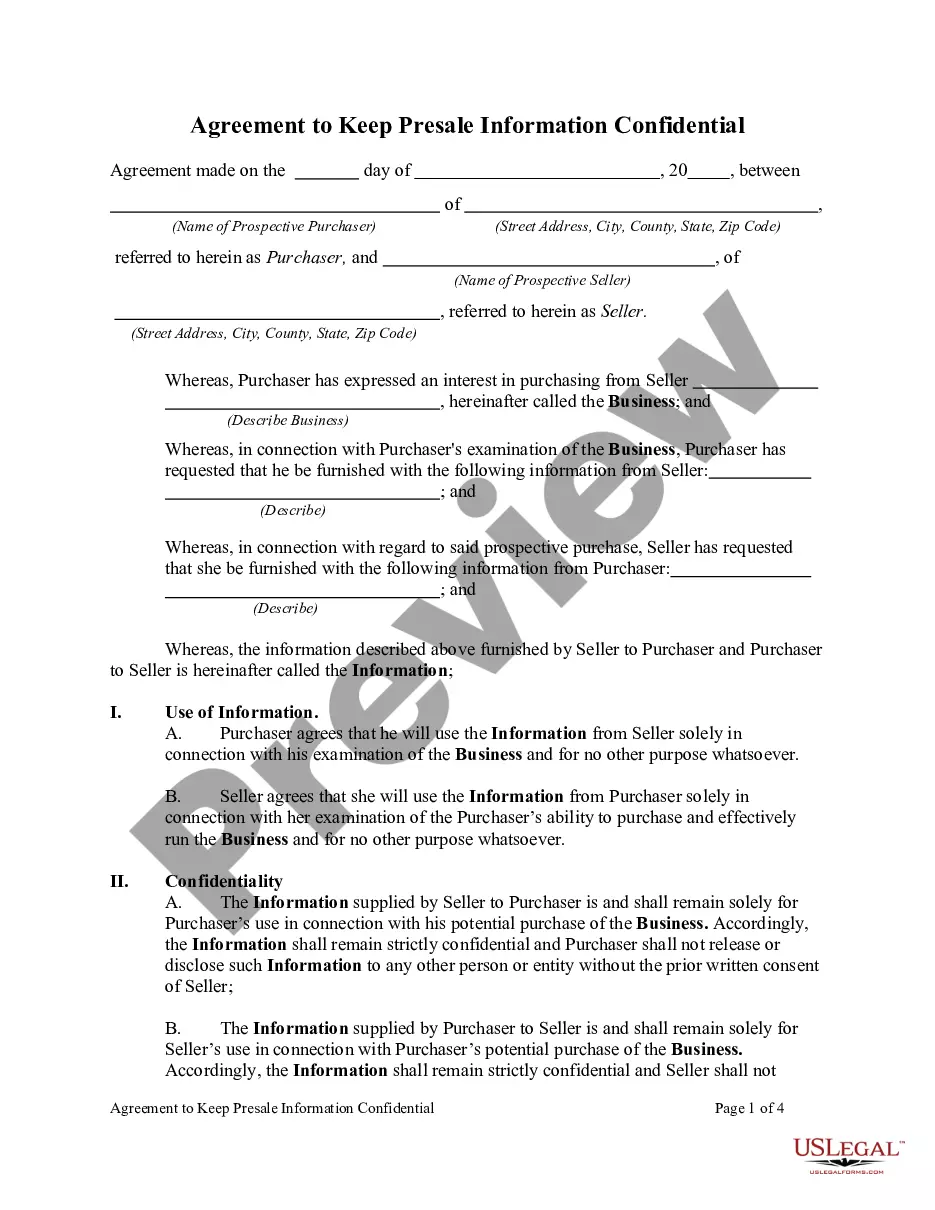
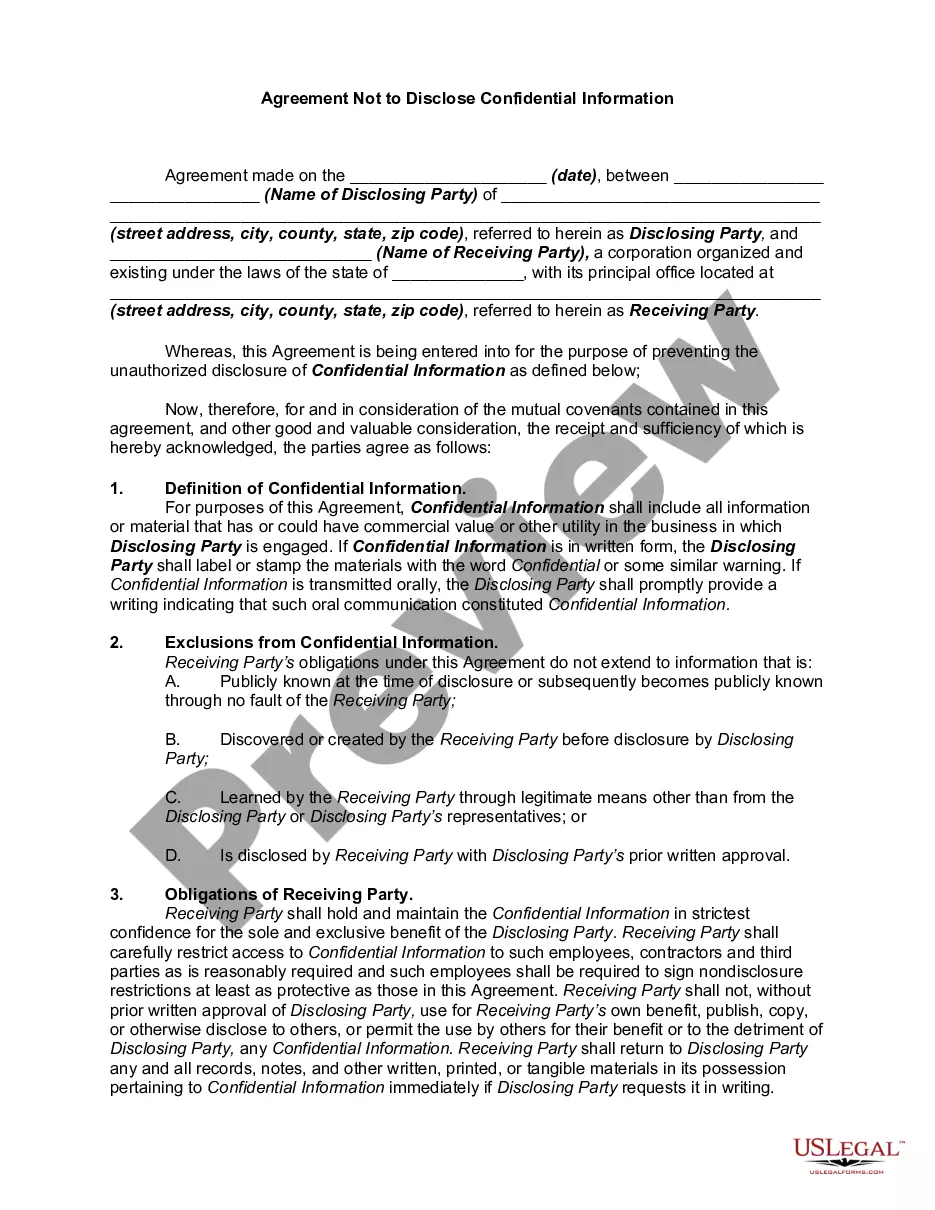
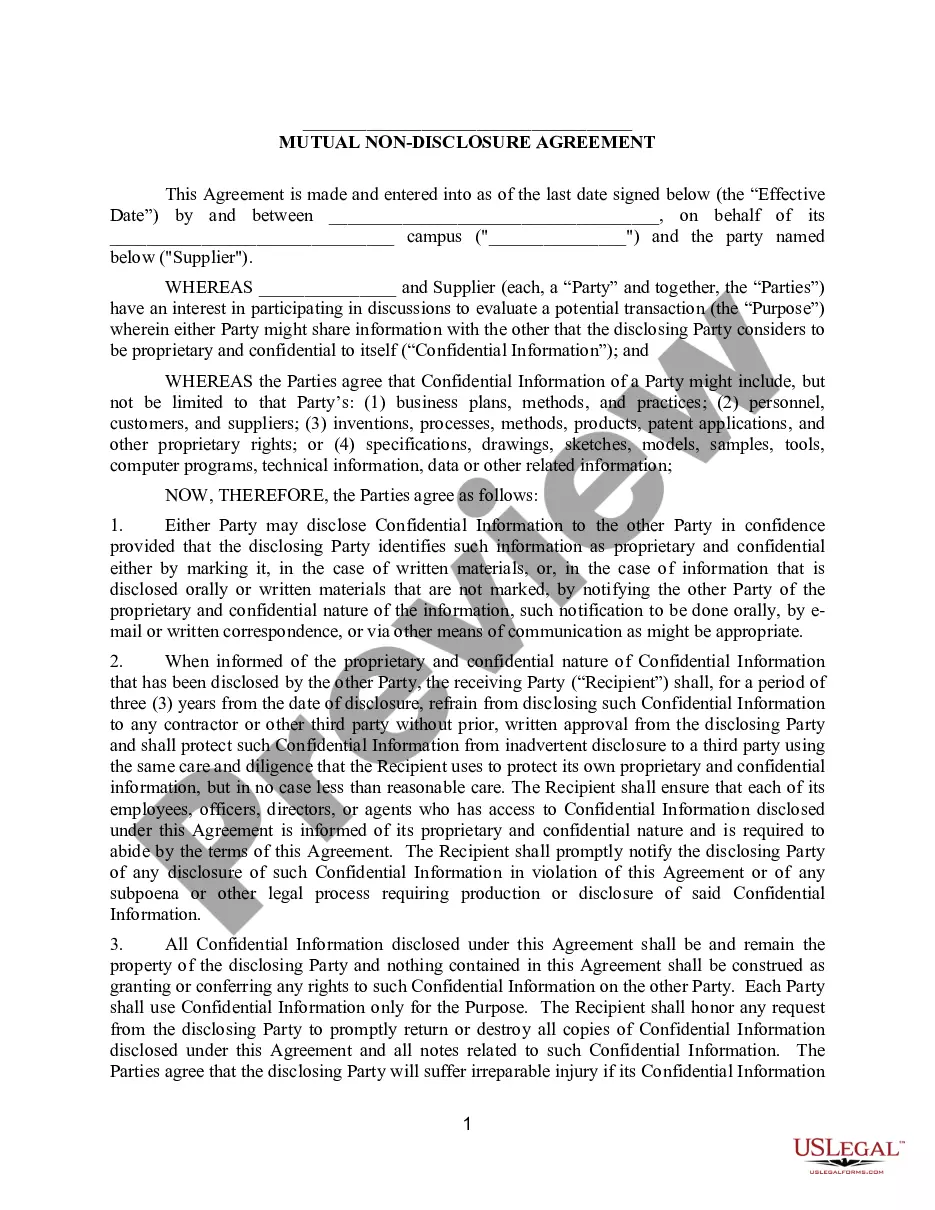
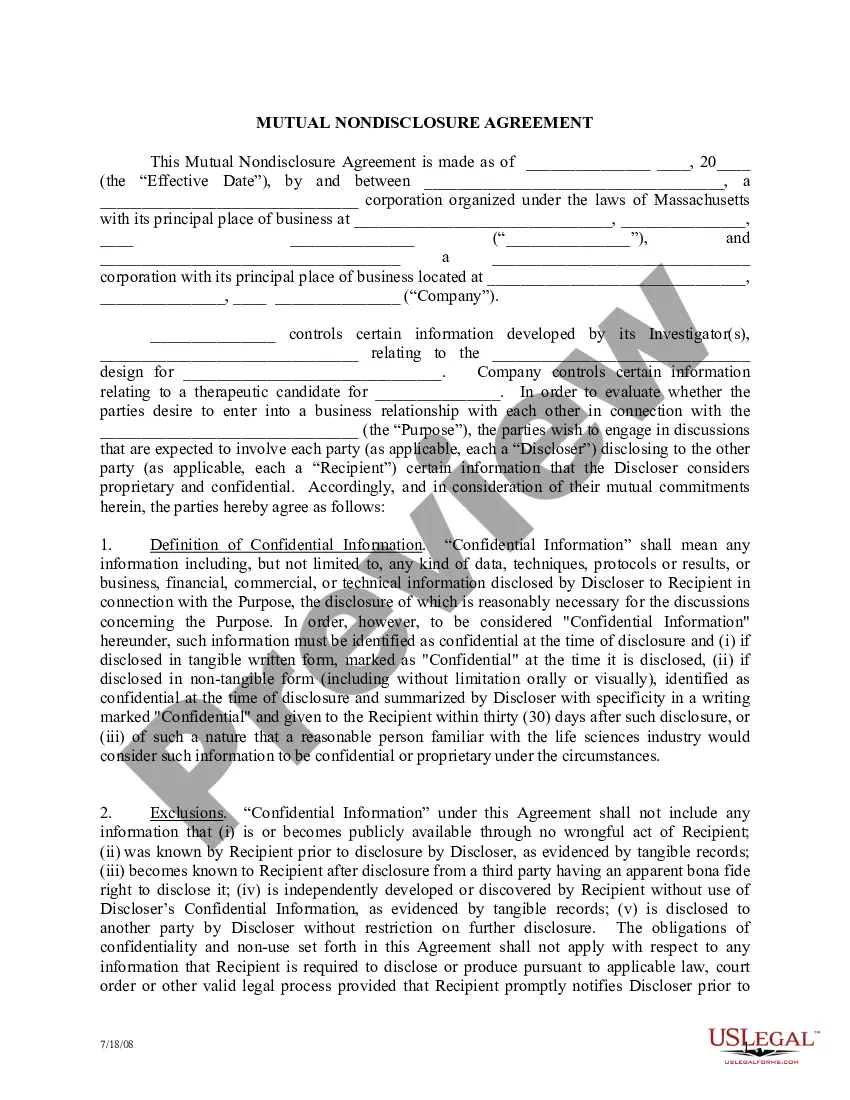
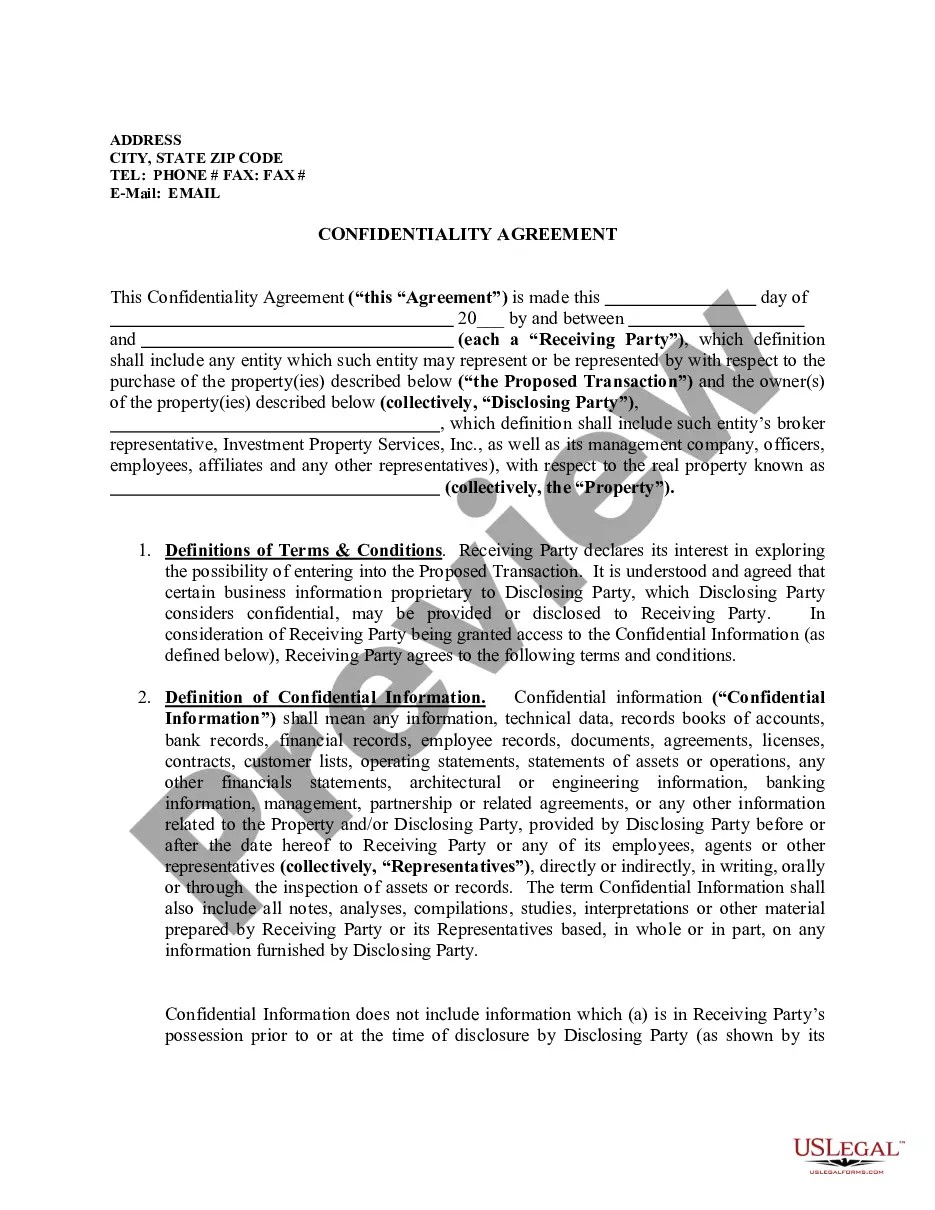
The Agreement Not to Disclose Information During Negotiations, commonly known as a confidentiality agreement, is a legal document that establishes a confidential relationship between parties. Its primary purpose is to protect sensitive information shared during negotiations. Unlike other agreements, this form specifically focuses on keeping discussions confidential to prevent unauthorized disclosure of proprietary information. This can be crucial in various contexts, especially in business transactions where trade secrets or confidential strategies are involved.
Key parts of this document
- Date of agreement and parties involved.
- Definition of what constitutes confidential information.
- Obligations of the receiving party regarding the confidential information.
- Terms and duration of the confidentiality obligations.
- Conditions under which disclosure is permissible (e.g., legal orders).
- Consequences of breach of confidentiality.
When to use this document
This form is typically used when two or more parties engaged in business negotiations need to protect sensitive information. Scenarios include discussions about mergers and acquisitions, joint ventures, or partnerships where proprietary data, financial information, or trade secrets will be shared. Utilizing this agreement helps ensure that all parties maintain confidentiality and build trust during negotiations.
Intended users of this form
This form is suitable for:
- Businesses entering negotiations with potential partners or investors.
- Employees who need to discuss confidential information with their employers.
- Freelancers or consultants offering sensitive services to clients.
- Organizations seeking to protect their intellectual property during discussions.
How to prepare this document
- Identify and enter the date of the agreement.
- Fill in the names and addresses of the Disclosing Party and the Receiving Party.
- Describe the specific transaction or purpose for which confidential information will be shared.
- Specify the duration of the confidentiality obligation.
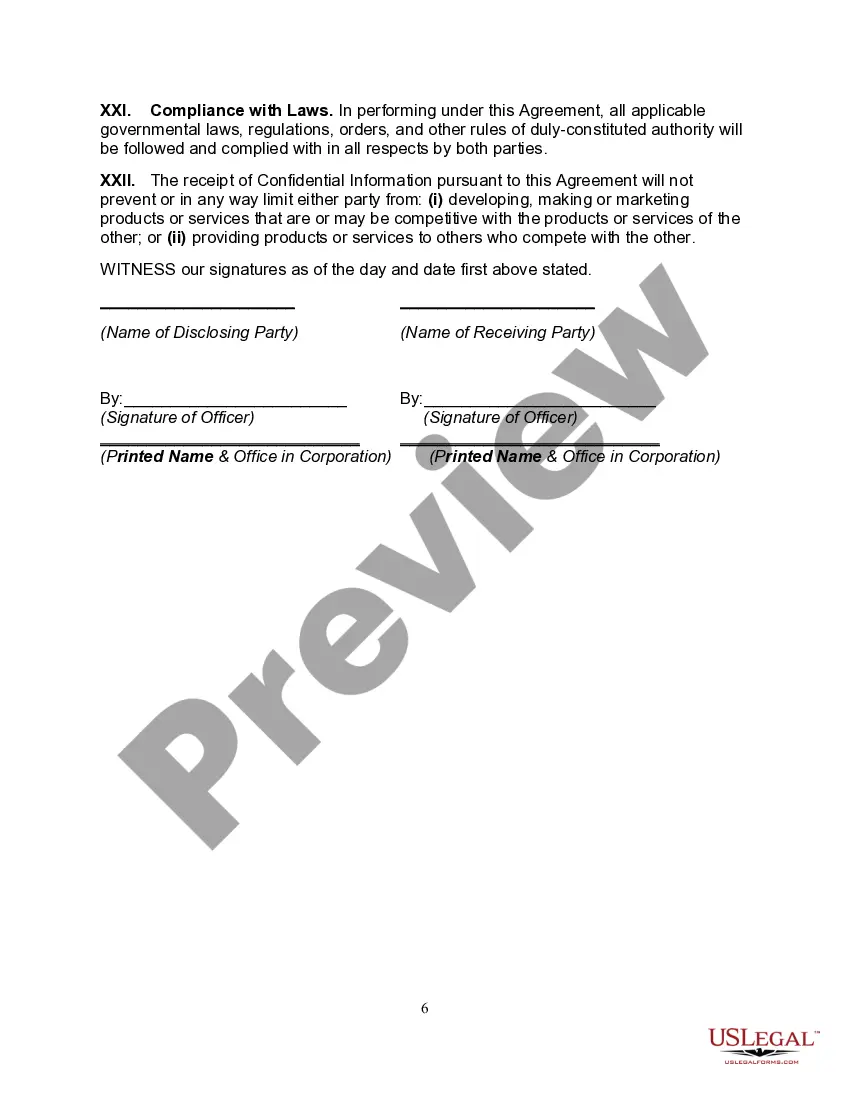
- Sign and date the agreement to make it effective.
Does this document require notarization?
Notarization is not commonly needed for this form. However, certain documents or local rules may make it necessary. Our notarization service, powered by Notarize, allows you to finalize it securely online anytime, day or night.
Get your form ready online
Our built-in tools help you complete, sign, share, and store your documents in one place.
Make edits, fill in missing information, and update formatting in US Legal Forms—just like you would in MS Word.
Download a copy, print it, send it by email, or mail it via USPS—whatever works best for your next step.
Sign and collect signatures with our SignNow integration. Send to multiple recipients, set reminders, and more. Go Premium to unlock E-Sign.
If this form requires notarization, complete it online through a secure video call—no need to meet a notary in person or wait for an appointment.
We protect your documents and personal data by following strict security and privacy standards.

Make edits, fill in missing information, and update formatting in US Legal Forms—just like you would in MS Word.

Download a copy, print it, send it by email, or mail it via USPS—whatever works best for your next step.

Sign and collect signatures with our SignNow integration. Send to multiple recipients, set reminders, and more. Go Premium to unlock E-Sign.

If this form requires notarization, complete it online through a secure video call—no need to meet a notary in person or wait for an appointment.

We protect your documents and personal data by following strict security and privacy standards.
Typical mistakes to avoid
- Failing to clearly define what constitutes confidential information.
- Not specifying the duration of the confidentiality obligations.
- Overlooking the need for signatures from both parties.
- Assuming oral agreements are sufficient; written agreements are essential.
Why use this form online
- Convenience of instant downloading and accessing the form anytime.
- Editability to customize the agreement to fit specific needs.
- Reliability of professionally drafted templates that comply with legal standards.
Legal use & context
- This agreement is legally binding once executed by both parties.
- Confidentiality agreements can help protect trade secrets and sensitive business information.
- Failure to comply with the terms may result in legal consequences, including lawsuits for breach of contract.
Looking for another form?
Form popularity
FAQ
disclosure agreement (NDA) is a legally binding contract that establishes a confidential relationship. The party or parties signing the agreement agree that sensitive information they may obtain will not be made available to any others. An NDA may also be referred to as a confidentiality agreement.
What is an NDA? An NDA is a legally enforceable contract that prohibits the unauthorized sharing of sensitive information and establishes a ?confidential relationship? between the parties. A confidential relationship means that at least one party has a duty not to disclose the relevant knowledge without authorization.
A client confidentiality agreement is a contract between a company and its client where the parties agree not to disclose certain information without authorization from the other party. The agreement will identify the specific information to be treated as confidential under the agreement.
What Is a Non-Disclosure Agreement (NDA)? A non-disclosure agreement (NDA) is a legally binding contract that establishes a confidential relationship. The party or parties signing the agreement agree that sensitive information they may obtain will not be made available to any others.
NDA, a nondisclosure agreement, is used to establish a confidential relationship between two different parties. As per a relationship of confidentiality, at least one of the parties must not disclose any information without permission. In other terms, NDA is a contract that prohibits one from sharing any information.
Depending on your needs, you can choose from three types of NDAs: unilateral, bilateral, and unilateral. Unilateral NDAs only require one party to disclose confidential information, while bilateral NDAs require two parties to disclose private information.
I hereby agree that I will not discuss with or reveal to any representative of any governmental entity, business organization, other entity, or any individual person (except persons specifically authorized by the Procuring Contracting Officer (PCO)), either within or outside the U.S. Government, any aspect of the
When negotiating an NDA, keep the following in mind. Don't release information before the agreement is signed.Work with a professional.Use a unilateral NDA, if possible.Choose an end date.Define the confidential information.Provide extra protection for trade secrets.Define how the information will be used.