Contingent Fee Contract to Employ Attorney with Retainer and Hourly Fee in Case Representation is Terminated
Overview of this form
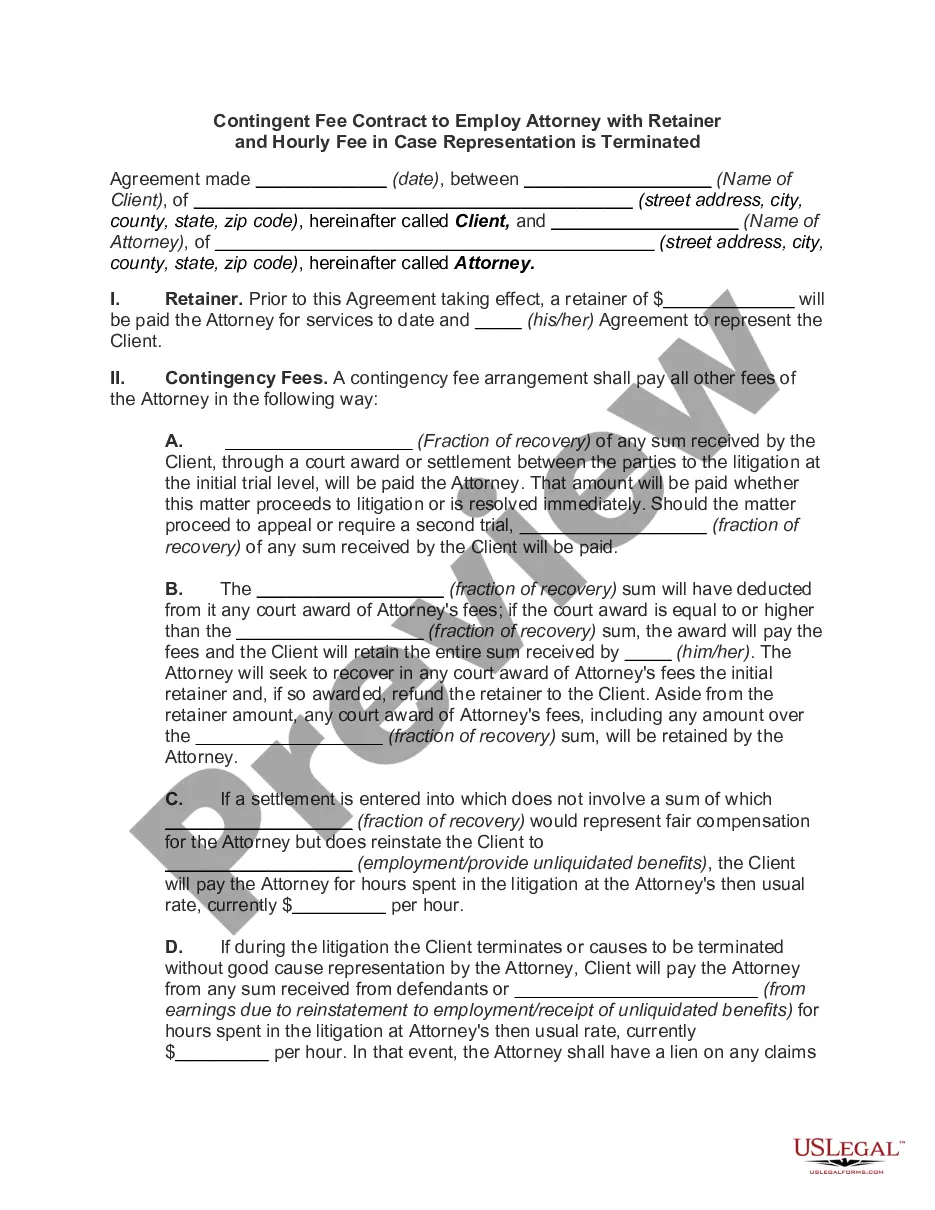
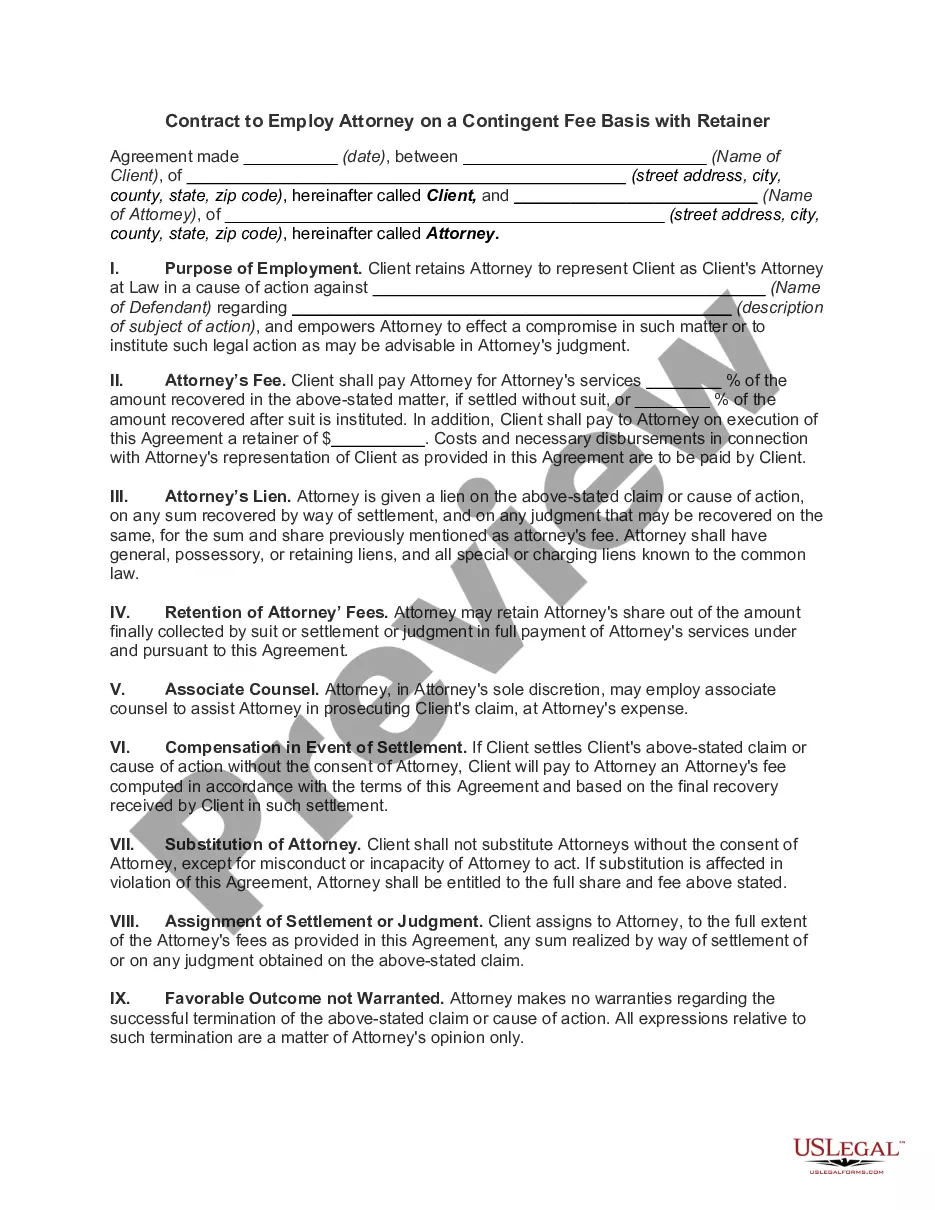
The Contingent Fee Contract to Employ Attorney with Retainer and Hourly Fee in Case Representation is Terminated is a legal agreement that outlines the payment structure between a client and an attorney for legal services. This form primarily establishes a contingency fee arrangement, where the attorney is compensated based on a percentage of the recovery awarded to the client. This is particularly useful for clients who may not be able to afford upfront legal fees, making legal representation more accessible.
Main sections of this form
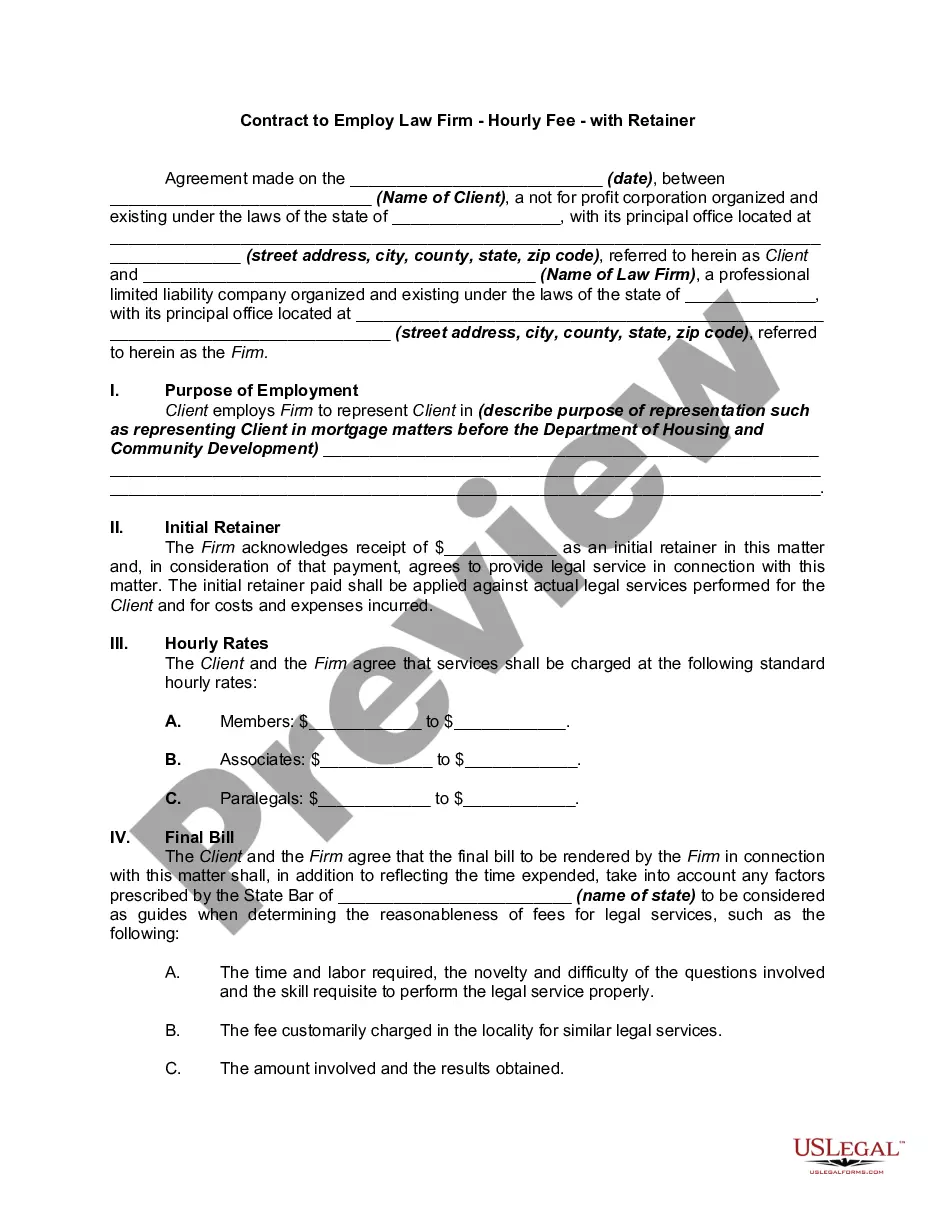
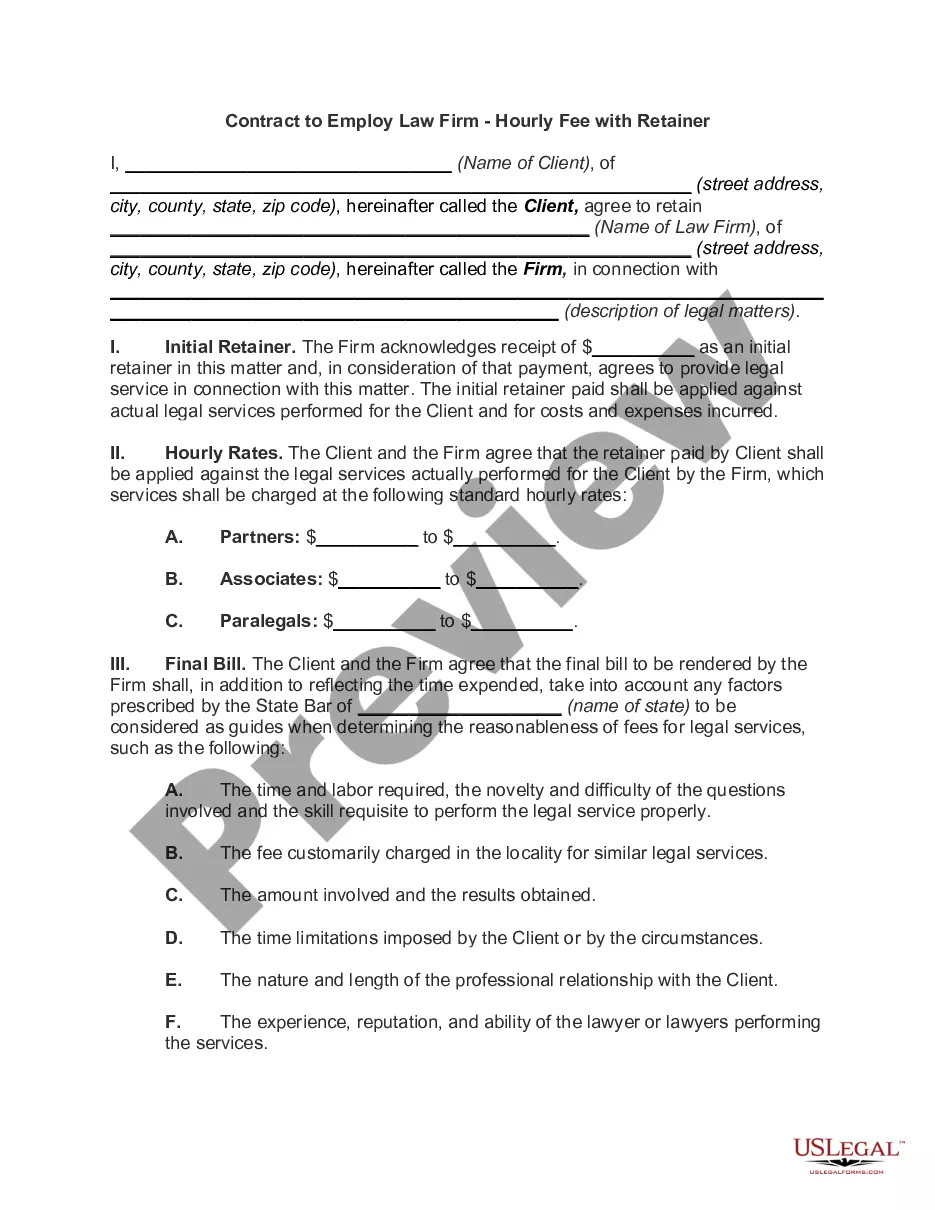
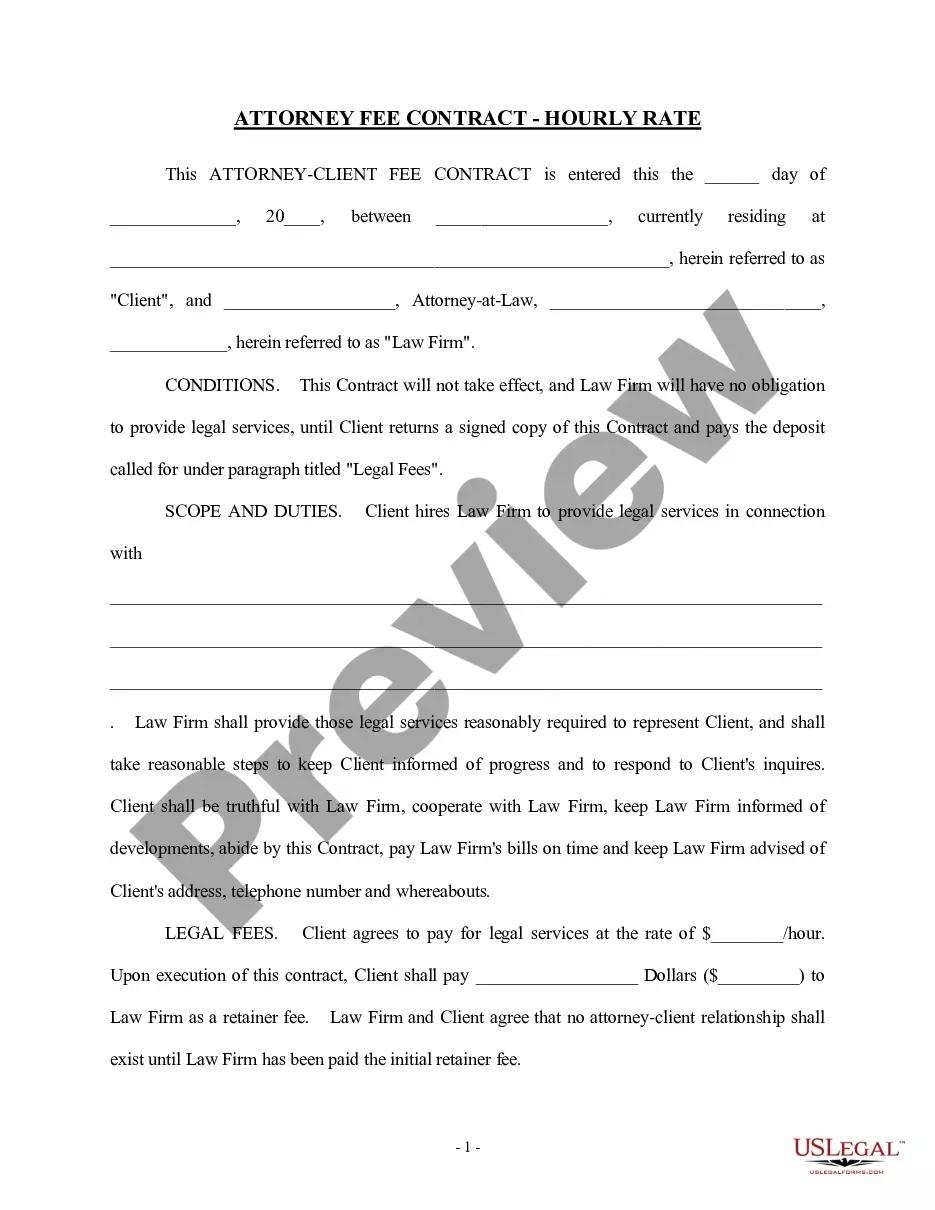
- Retainer Fee: Specifies the initial amount the client pays for the attorney's services.
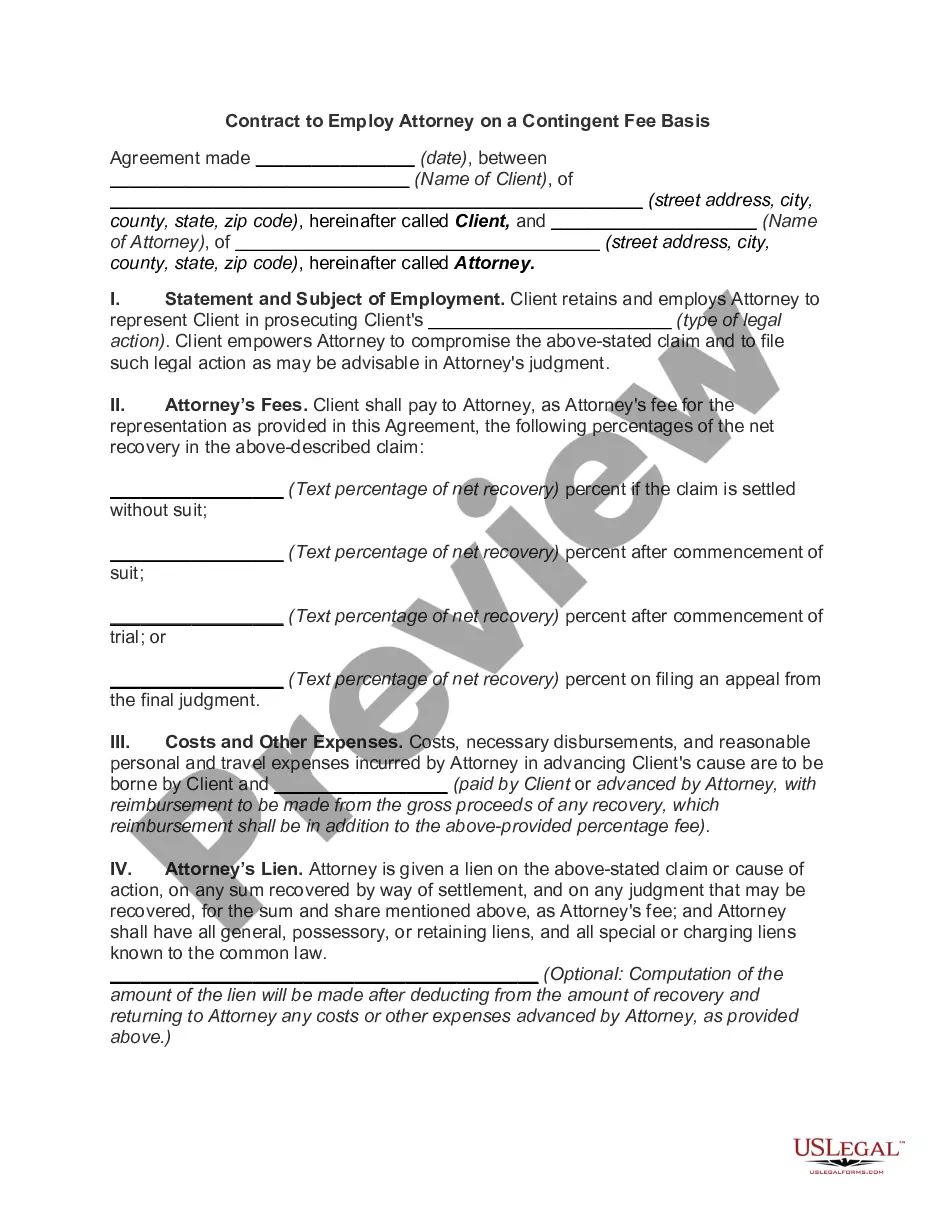
- Contingency Fees: Outlines the percentage of recovery that will be paid to the attorney based on the outcome of the case.
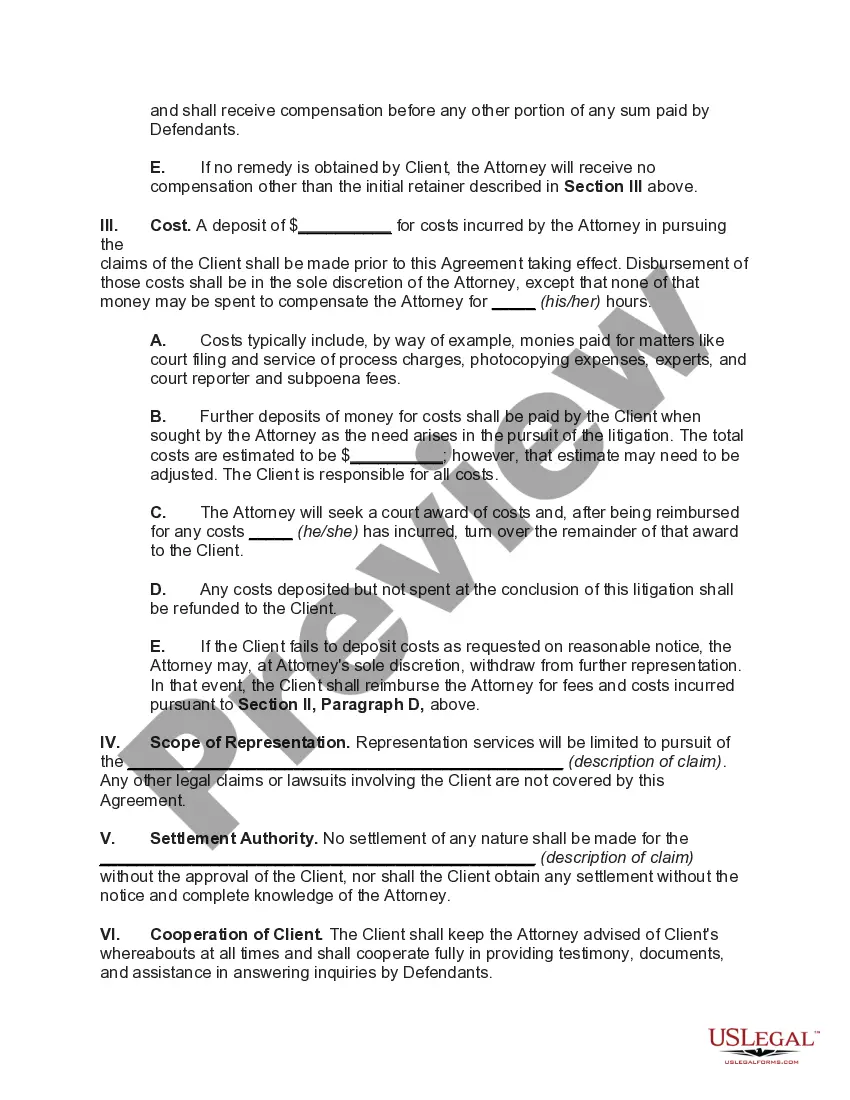
- Cost Responsibilities: Details the client's obligation to cover litigation costs, such as court fees and expert witness expenses.
- Scope of Representation: Defines what legal matters the attorney will represent the client on.
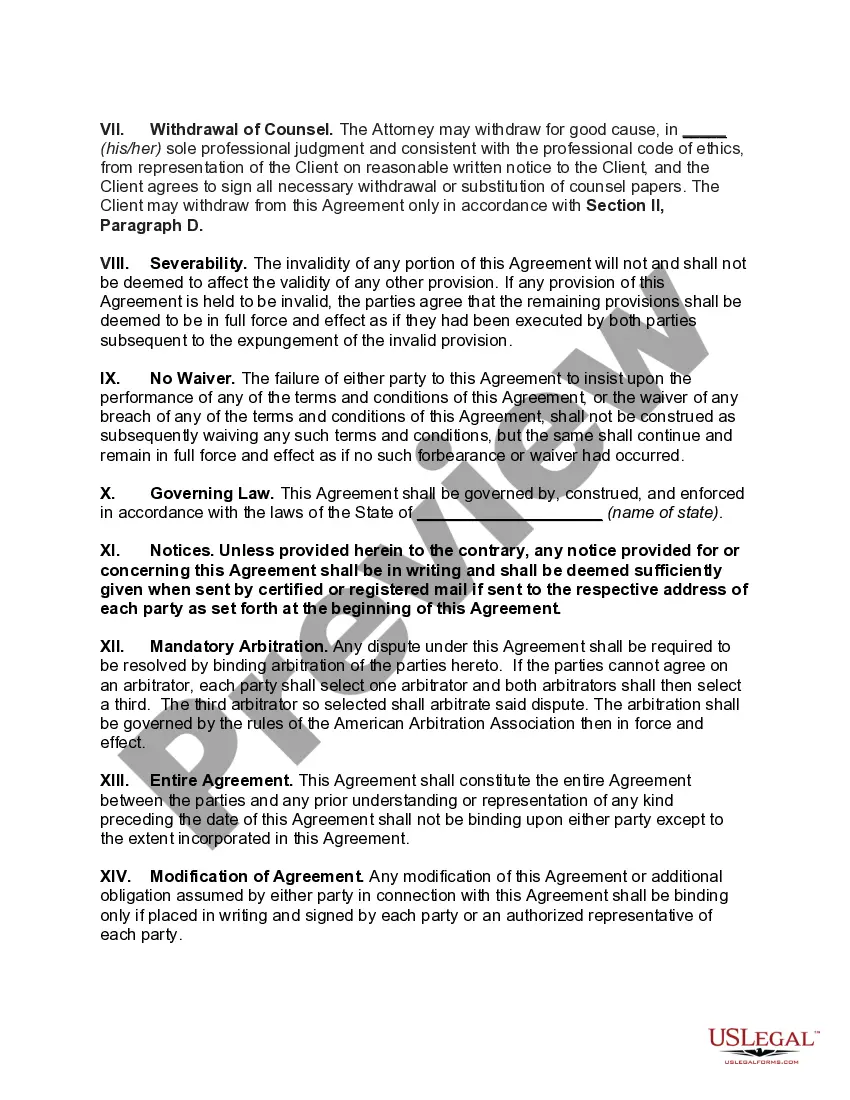
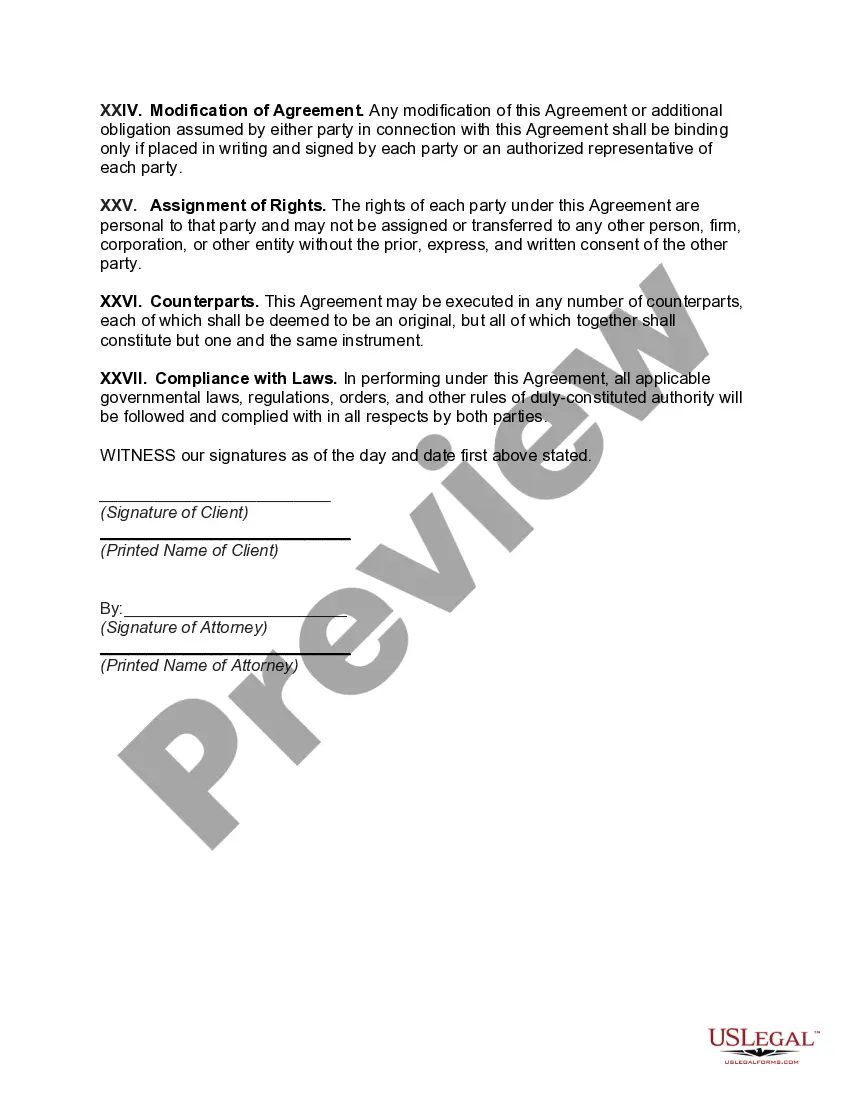
- Termination Clause: Explains the process and consequences if the client or attorney terminates the representation.
When to use this form
This form should be used when a client engages an attorney under a contingent fee arrangement, especially in personal injury cases or other situations where upfront legal fees might pose a financial barrier. It is beneficial when the client believes they have a valid claim and seeks legal representation without the means to pay hourly rates upfront.
Who this form is for
- Individuals filing personal injury claims or other litigations where legal costs are a concern.
- Clients looking for a clear understanding of their financial obligations under a contingent fee arrangement.
- Those who want to establish a formal agreement with an attorney regarding payment and representation.
Instructions for completing this form
- Identify the parties involved, including the client's and attorney's names and addresses.
- Specify the retainer amount and the hourly fee the attorney will charge.
- Fill in the agreed-upon contingency fee percentages for different recovery scenarios.
- Outline any additional costs the client is responsible for during litigation.
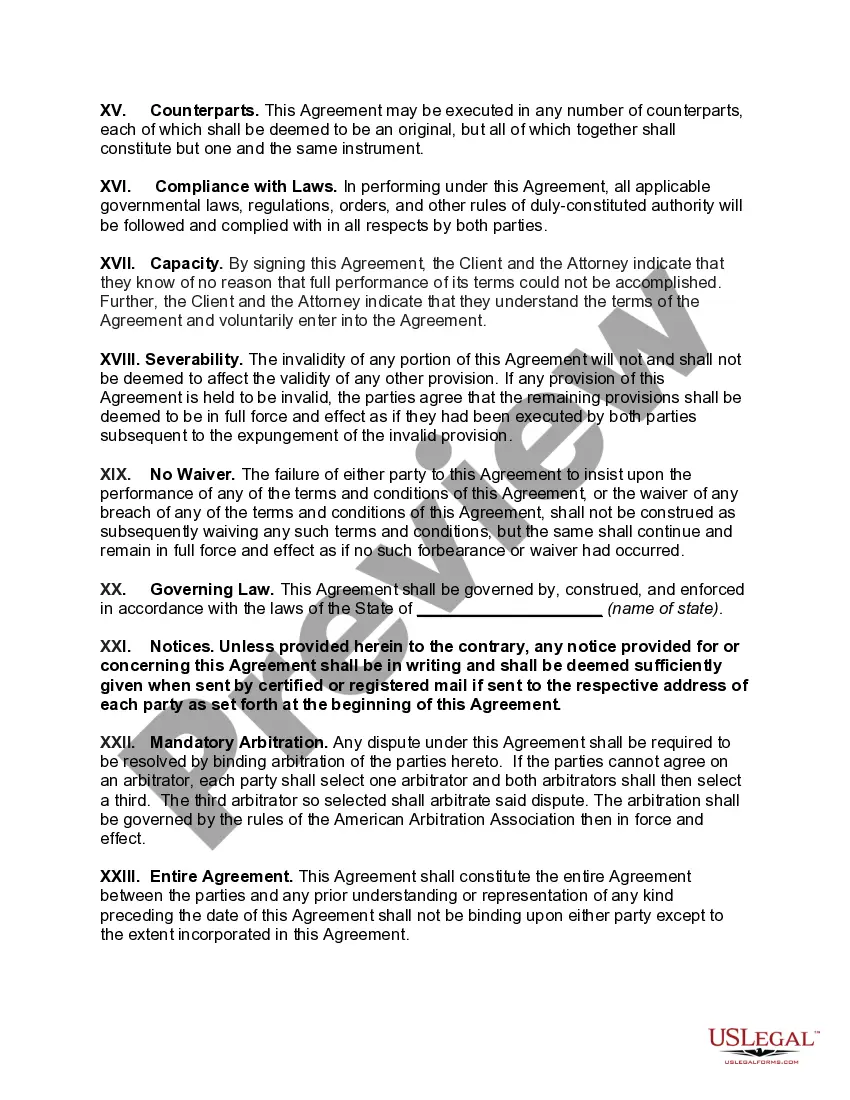
- Sign and date the agreement to make it legally binding.
Notarization guidance
This form does not typically require notarization unless specified by local law. However, it is always advisable to check local requirements to ensure full compliance.
Get your form ready online
Our built-in tools help you complete, sign, share, and store your documents in one place.
Make edits, fill in missing information, and update formatting in US Legal Forms—just like you would in MS Word.
Download a copy, print it, send it by email, or mail it via USPS—whatever works best for your next step.
Sign and collect signatures with our SignNow integration. Send to multiple recipients, set reminders, and more. Go Premium to unlock E-Sign.
If this form requires notarization, complete it online through a secure video call—no need to meet a notary in person or wait for an appointment.
We protect your documents and personal data by following strict security and privacy standards.

Make edits, fill in missing information, and update formatting in US Legal Forms—just like you would in MS Word.

Download a copy, print it, send it by email, or mail it via USPS—whatever works best for your next step.

Sign and collect signatures with our SignNow integration. Send to multiple recipients, set reminders, and more. Go Premium to unlock E-Sign.

If this form requires notarization, complete it online through a secure video call—no need to meet a notary in person or wait for an appointment.

We protect your documents and personal data by following strict security and privacy standards.
Typical mistakes to avoid
- Failing to specify the retainer amount or hourly fee.
- Not clearly defining the scope of the attorney's representation.
- Leaving out the contingencies and percentages for fee arrangements.
- Overlooking the need for both parties to sign the agreement.
Benefits of completing this form online
- Convenient access to reliable legal forms from anywhere.
- Editability allows customization to fit individual needs without the cost of attorney consultations.
- Quick download and implementation to expedite the legal engagement process.
Looking for another form?
Form popularity
FAQ
To put it another way, with a contingency fee, payment for your attorney's services is "contingent upon" your receiving some amount of compensation. Your attorney will take an agreed-upon percentage of your recovery. This percentage is often around 1/3 or 33%.
The standard contingency fee for an attorney is a percentage amount rather than a fixed amount. Most personal injury lawyers charge 33 1/3 percent if the case settles without filing a lawsuit and 40% if a lawsuit is filed. Most employment lawyers charge a 40% fee.
The amount serves as a guarantee by the client to pay the attorney upon completion of the agreed work. The attorney cannot claim the retainer fee until he has completed the work and invoiced the client. Any remaining retainer fee after paying the hourly attorney fees should be returned to the client.
There are many factors that determine how much your lawyer will charge following your win, including the difficulty of your case, the amount of experience and knowledge the lawyer has, and your location. However, the amount charged generally ranges between 15 and 40 percent of your overall settlement.
The contingency fee will usually be 25% of the amount awarded to a client in a court case, if the client is successful in his/her case. The basis of the agreement between the attorney and his/her client is on a no-win-no-fee basis.
When to Negotiate Attorney Fees You won't be able to negotiate lower fees after you've already signed a contract. You can successfully negotiate contingency fees for injury cases if you are well organized and ready to give the attorney a good reason for the reduction.
A retainer fee is a payment made to a professional, often a lawyer, by a client for future services. Retainer fees do not guarantee an outcome or final product. Portions of retainer fees can be refunded if services end up costing less than originally planned.
Answer. In a contingency fee arrangement, the lawyer who represents you will get paid by taking a percentage of your award as a fee for services.Not all lawyers will take contingency cases because they require an attorney to do a significant amount of work without payat least for an extended period.
In order to avoid any potential financial backlash from your decision, you should fire your attorney using a notarized letter that you've sent to him or her via certified mail. This letter must outline the reasons that you've chosen to fire him or her and demand the repayment of any unused portion of your retainer.