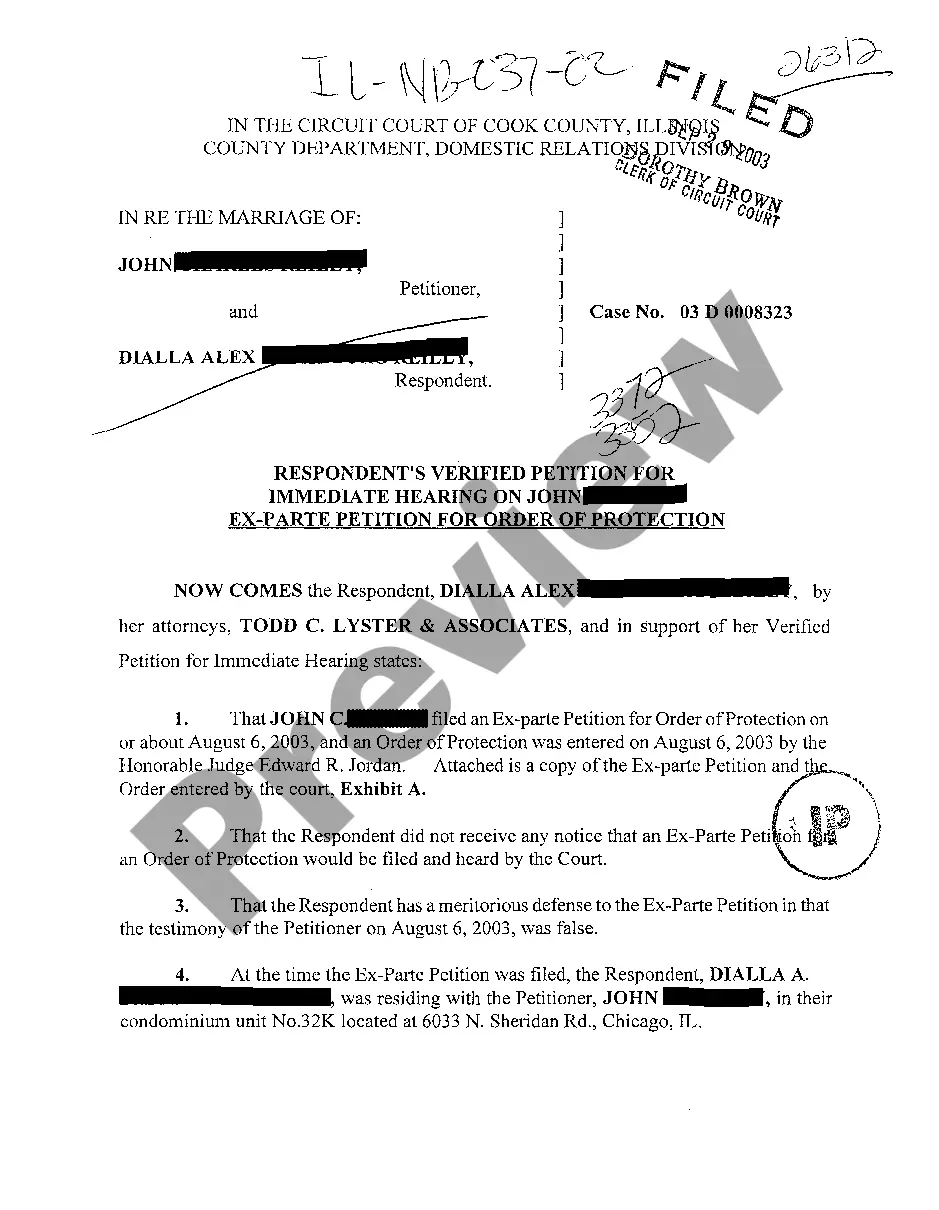
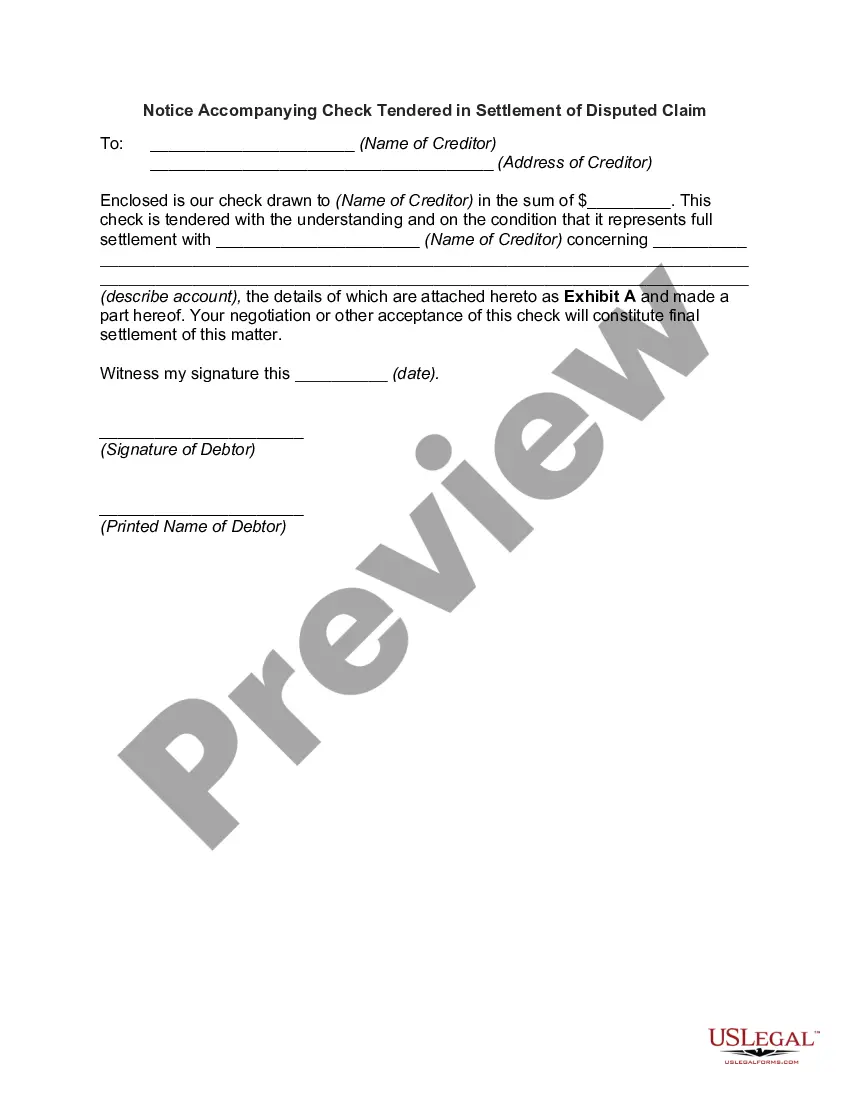
Notice Accompanying Check Tendered in Settlement of Disputed Claim
About this form
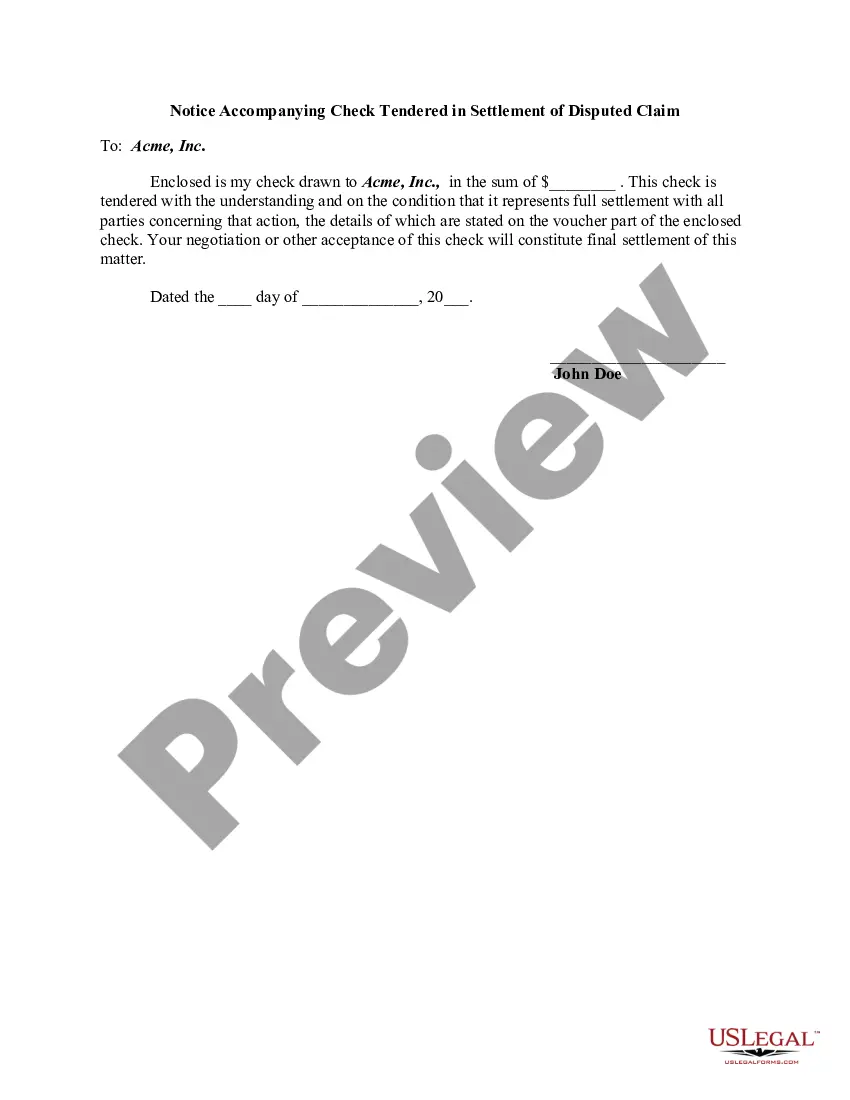
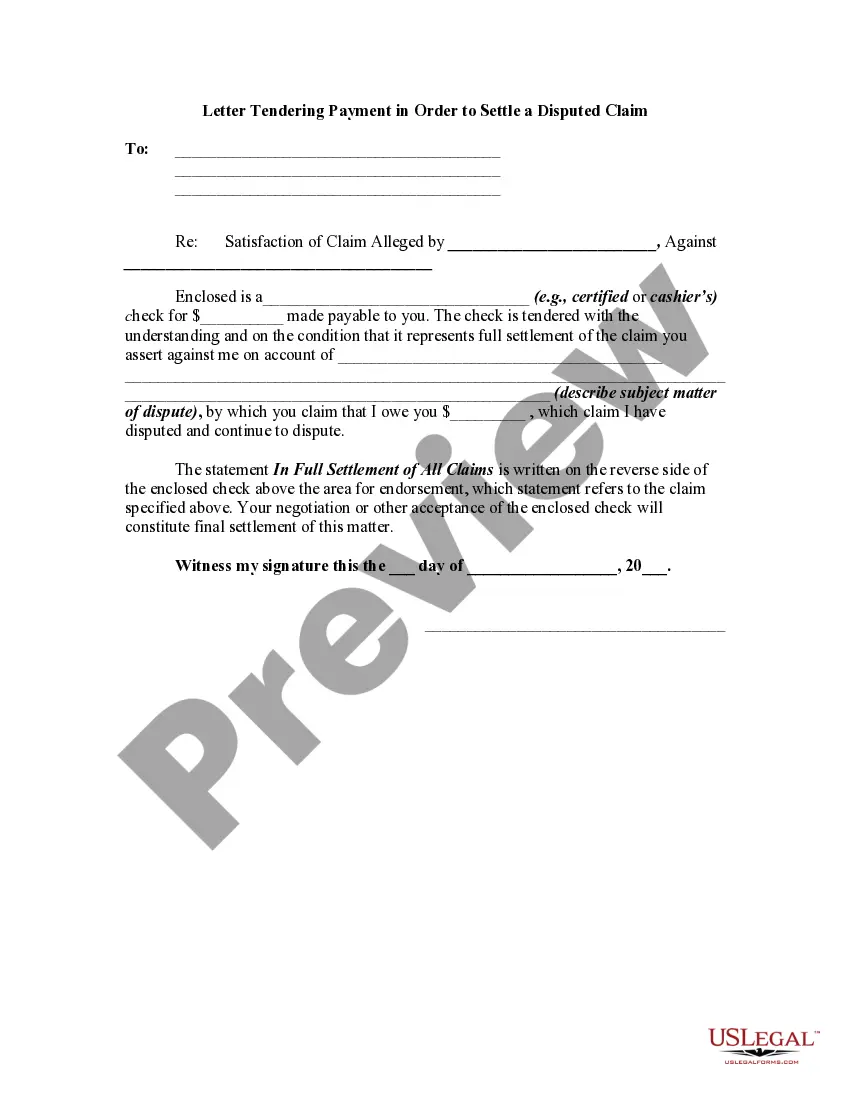
The Notice Accompanying Check Tendered in Settlement of Disputed Claim is a legal document used to indicate that a check is being issued as full payment to settle a disputed claim. This form serves as a written acknowledgment of the payment conditions between a debtor and creditor, ensuring clear communication regarding the settlement. It is essential for documenting disputes and resolving financial disagreements legally and professionally.
Main sections of this form
- Name and address of the creditor.
- Amount of the check being tendered.
- Statement clarifying that the check represents full settlement of a specific claim.
- Description of the disputed account.
- Signature of the debtor along with their printed name and date.
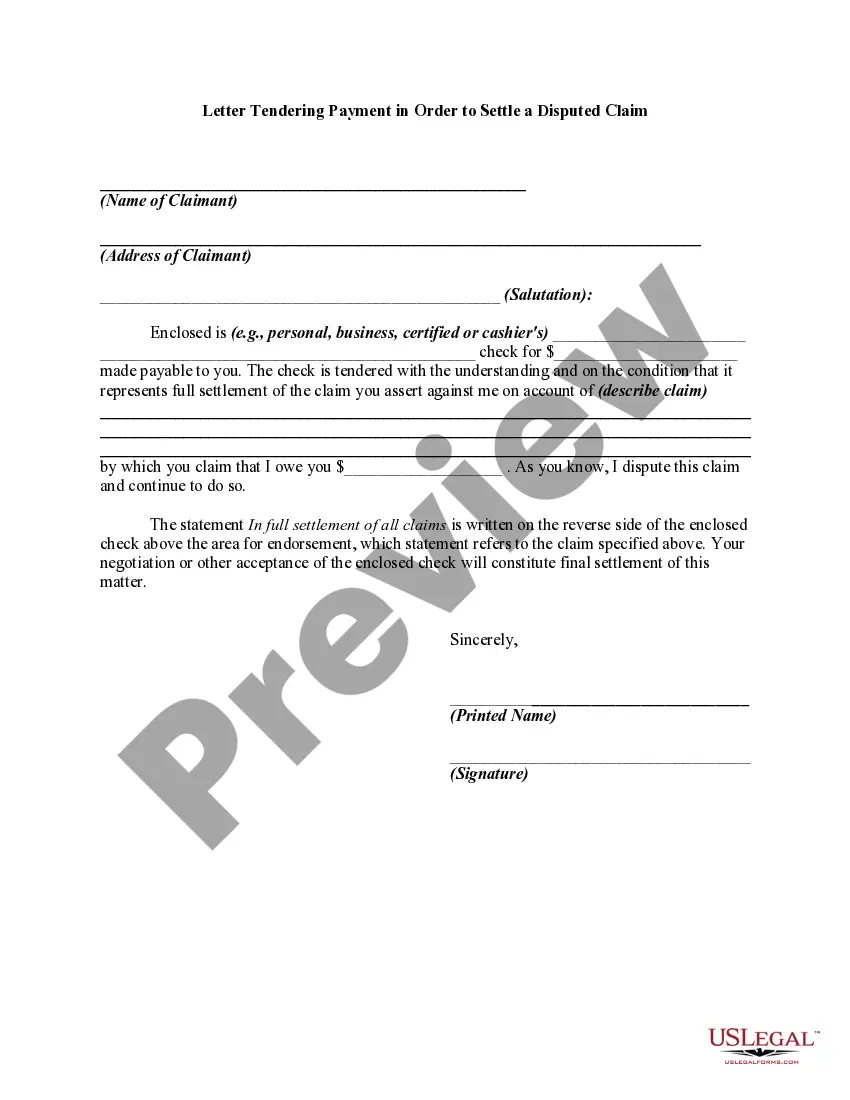
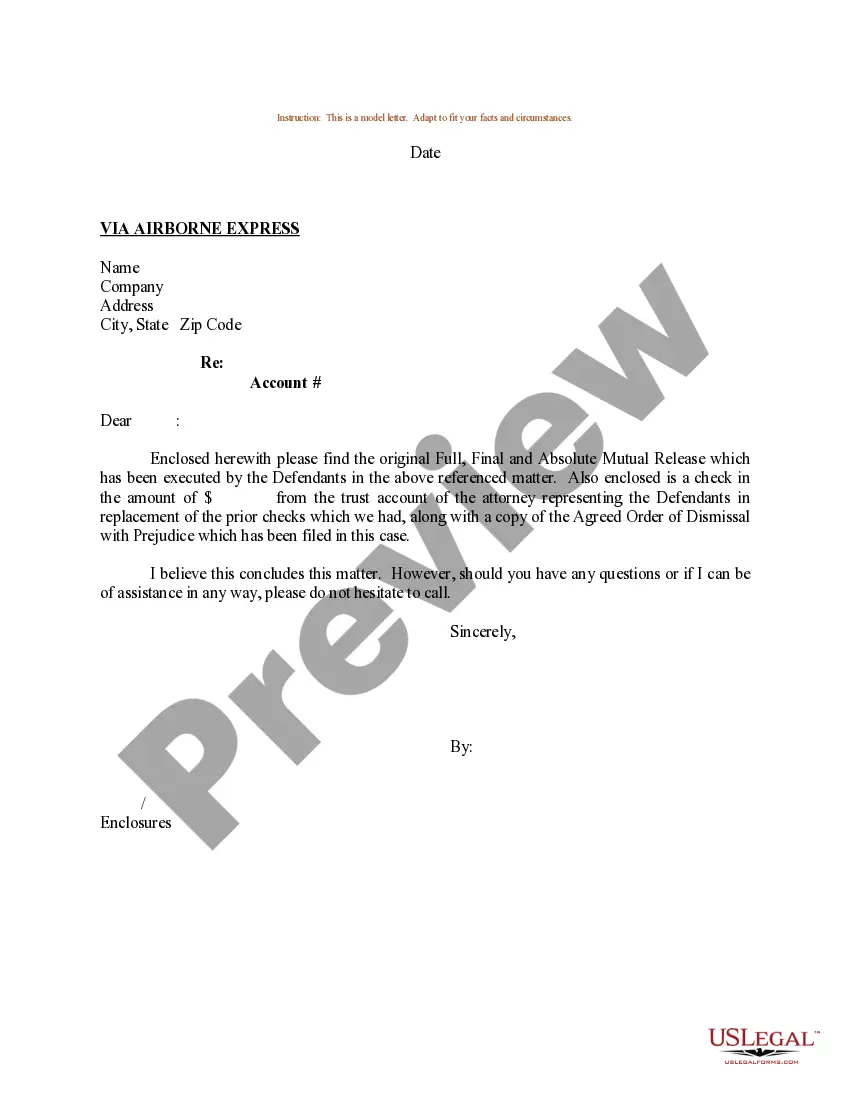
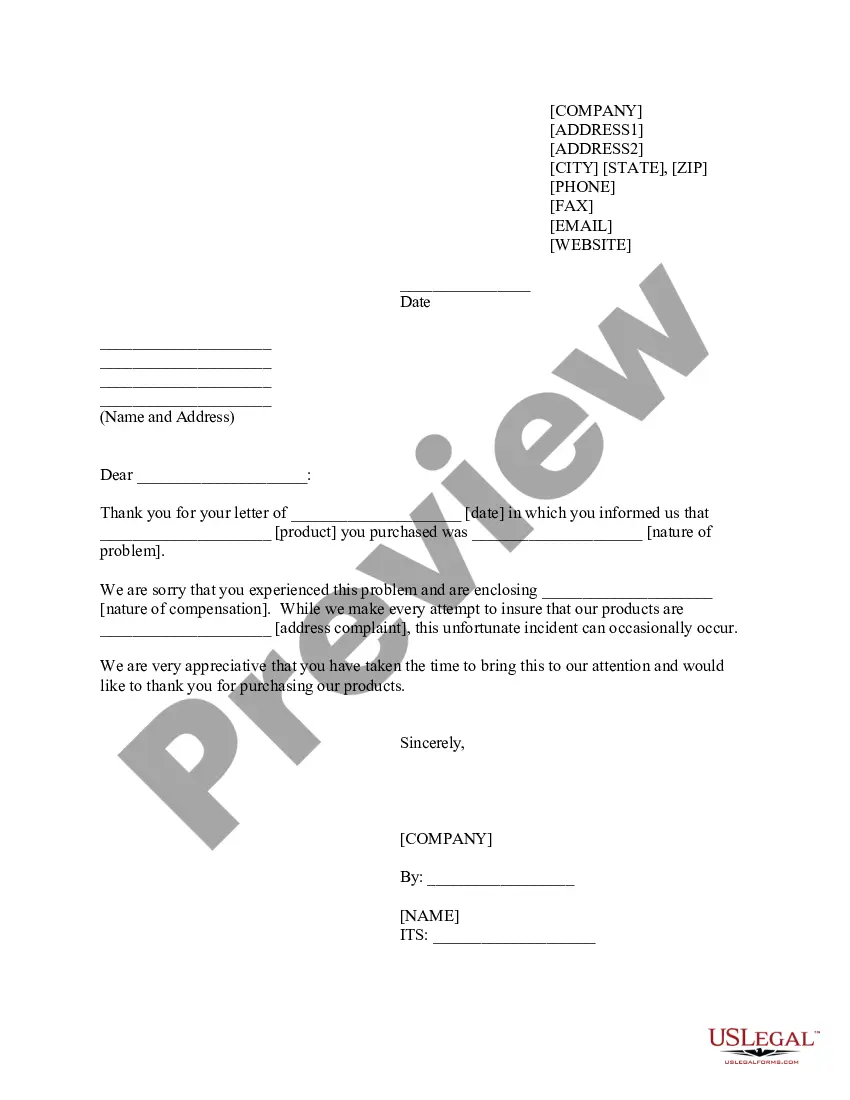
Situations where this form applies
This form is applicable in situations where a debtor wants to settle a dispute with a creditor, specifically when there is an ongoing disagreement about payment or the terms of a financial obligation. It is particularly useful when a debtor is offering a check as a final payment to resolve the dispute and wants to ensure that their payment is accepted as full settlement of the claim.
Who this form is for
- Individuals or businesses involved in a financial dispute with a creditor.
- Debtors who are making a payment to resolve a disputed claim.
- Attorneys representing clients in financial negotiations and settlements.
- Anyone looking to formally document a settlement agreement in writing.
How to complete this form
- Identify the parties involved by filling in the creditor's name and address.
- Enter the amount of the check you are tendering.
- Clearly state that the check is offered as full settlement of the specified claim.
- Describe the account or the details of the dispute in the designated section.
- Sign and print your name, then enter the date of signing.
Notarization requirements for this form
This form does not typically require notarization unless specified by local law. However, having it notarized can provide an added layer of verification and may be beneficial in some disputes.
Get your form ready online
Our built-in tools help you complete, sign, share, and store your documents in one place.
Make edits, fill in missing information, and update formatting in US Legal Forms—just like you would in MS Word.
Download a copy, print it, send it by email, or mail it via USPS—whatever works best for your next step.
Sign and collect signatures with our SignNow integration. Send to multiple recipients, set reminders, and more. Go Premium to unlock E-Sign.
If this form requires notarization, complete it online through a secure video call—no need to meet a notary in person or wait for an appointment.
We protect your documents and personal data by following strict security and privacy standards.

Make edits, fill in missing information, and update formatting in US Legal Forms—just like you would in MS Word.

Download a copy, print it, send it by email, or mail it via USPS—whatever works best for your next step.

Sign and collect signatures with our SignNow integration. Send to multiple recipients, set reminders, and more. Go Premium to unlock E-Sign.

If this form requires notarization, complete it online through a secure video call—no need to meet a notary in person or wait for an appointment.

We protect your documents and personal data by following strict security and privacy standards.
Common mistakes
- Failing to clearly describe the disputed claim.
- Not including the creditorâs complete name and address.
- Leaving the check amount blank or incorrectly stated.
- Not signing the form or failing to print your name.
Benefits of completing this form online
- Convenience of downloading and completing the form anytime.
- Editability allows for quick customization to fit your needs.
- Reliable formats based on templates drafted by licensed attorneys.
- Easy documentation of legal processes for personal records.
Summary of main points
- The form is essential for formalizing settlements in disputed claims.
- It includes vital details such as the creditorâs information and claim description.
- Completing the form correctly helps avoid misunderstandings in financial agreements.
- Using the form online offers convenience and ensures legal compliance.
Looking for another form?
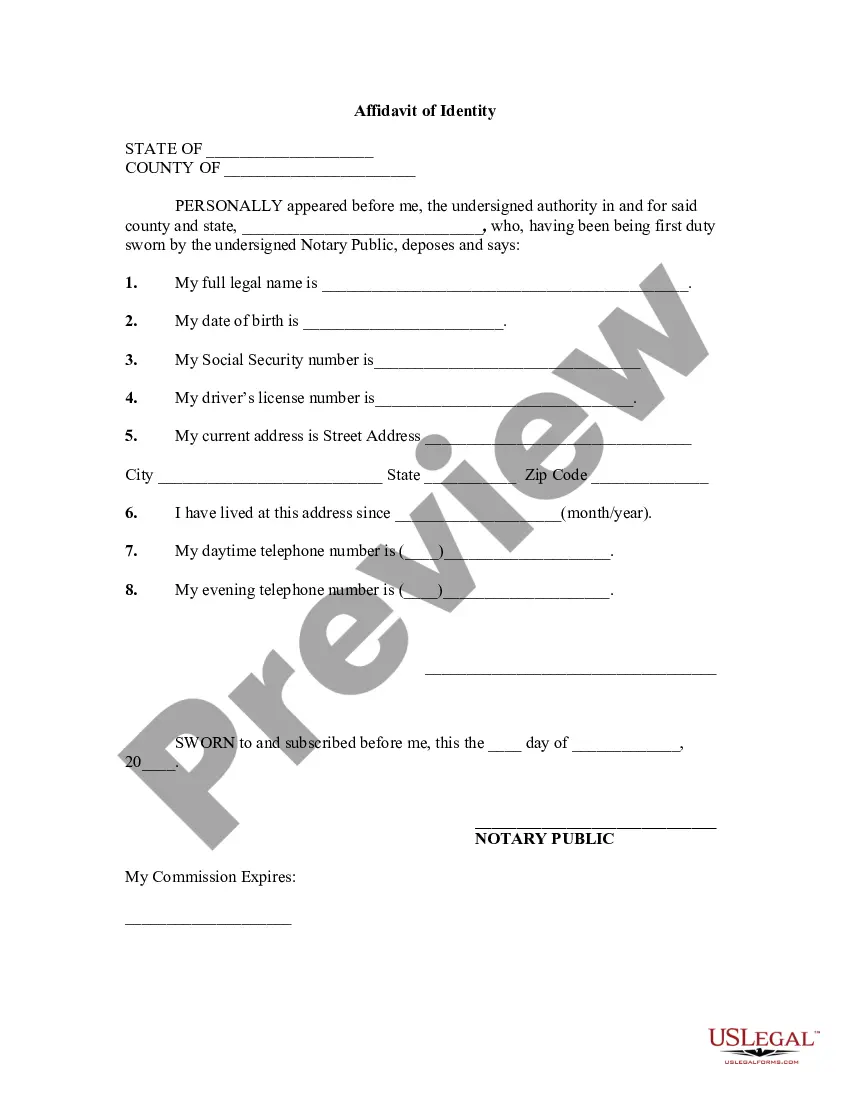
Form popularity
FAQ
Add details for your personal recordkeeping. Include an account, invoice, or transaction number for paying bills. Add notes when you're writing checks to friends or family.
Use a Pen. Do not use a pencil, not even a colored one. Write the Correct Date. Most banks say they won't cash checks that are more than 6 months old. Request Stop Payments When Necessary. Be Careful if You Post-Date. Prevent Changes in Amounts.
No, it is not legally binding. One party may not unilaterally change the amount owed or terms of payment by doing this. There is a common myth that the memo line on a check has legal force - it doesn't. It's just for informational purposes.
You can write additional information just about anywhere on the front of a check, as long as it doesn't cover up any important information. However, you should not use the back of the check for writing any memo information.
Cashing the check is considered to be acceptance of the offer and extinguishes the debt. In order to be effective, however, the words must be clear and conspicuous on the check.Otherwise, return the check to the sender along with an explanation of why you didn't cash the check.
An accord and satisfaction is a legal contract whereby two parties agree to discharge a tort claim, contract, or other liability for an amount based on terms that differ from the original amount of the contract or claim. Accord and satisfaction is also used to settle legal claims prior to bringing them to court.
Categories. Short Beware checks with Payment in Full, Full and Final Settlement or similar language written in the memo line or endorsement area. When these Payment in Full checks are cashed, they are very often binding, and can eliminate your rights to recover under contract or the mechanics lien laws.
If a debtor makes a written or verbal statement saying that they are making payment to you in full and final settlement of the debt, or words to that effect, and that payment is less than the debt owed, care needs to be taken as you could inadvertently lose your legal right to pursue the balance of the debt.
Beware checks with "Payment in Full," "Full and Final Settlement" or similar language is written in the memo field or endorsement area. When these checks are cashed, they are very often binding and can eliminate your rights to recover under contract or the mechanics lien laws.