Jury Instruction - Interstate Transmission Of Extortionate Communication
Overview of this form
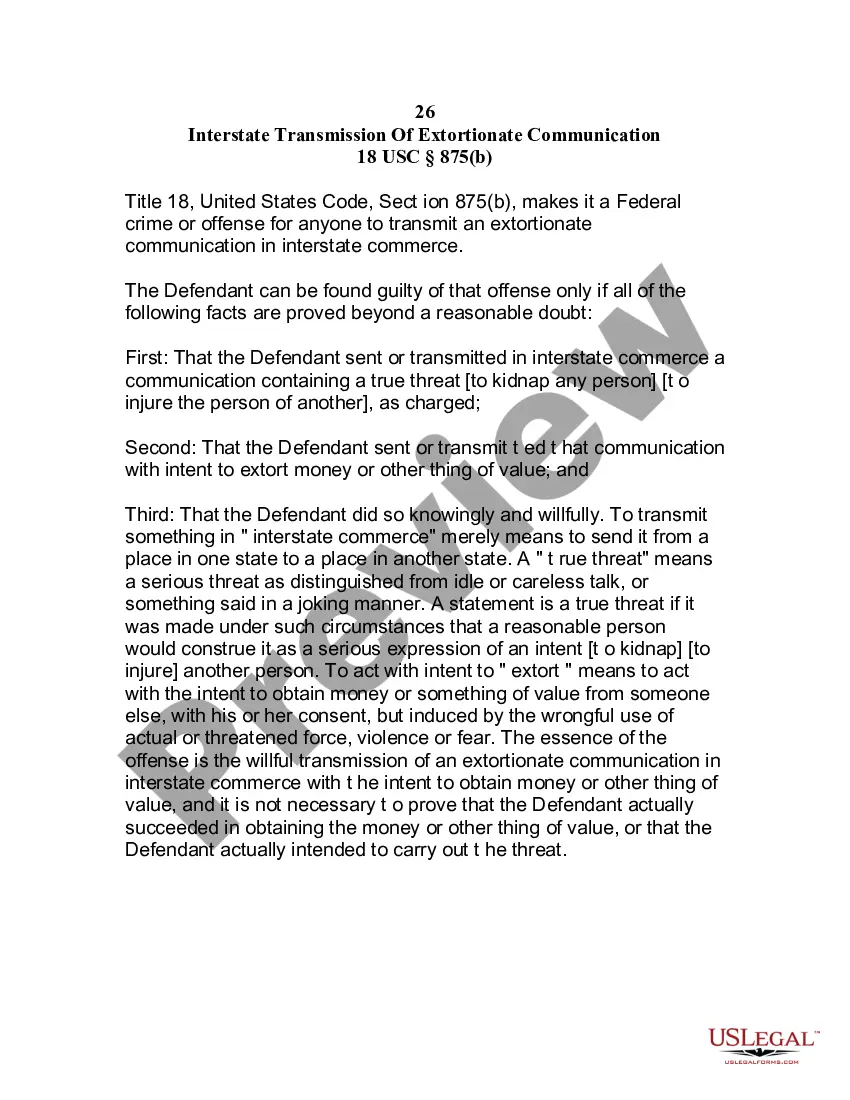
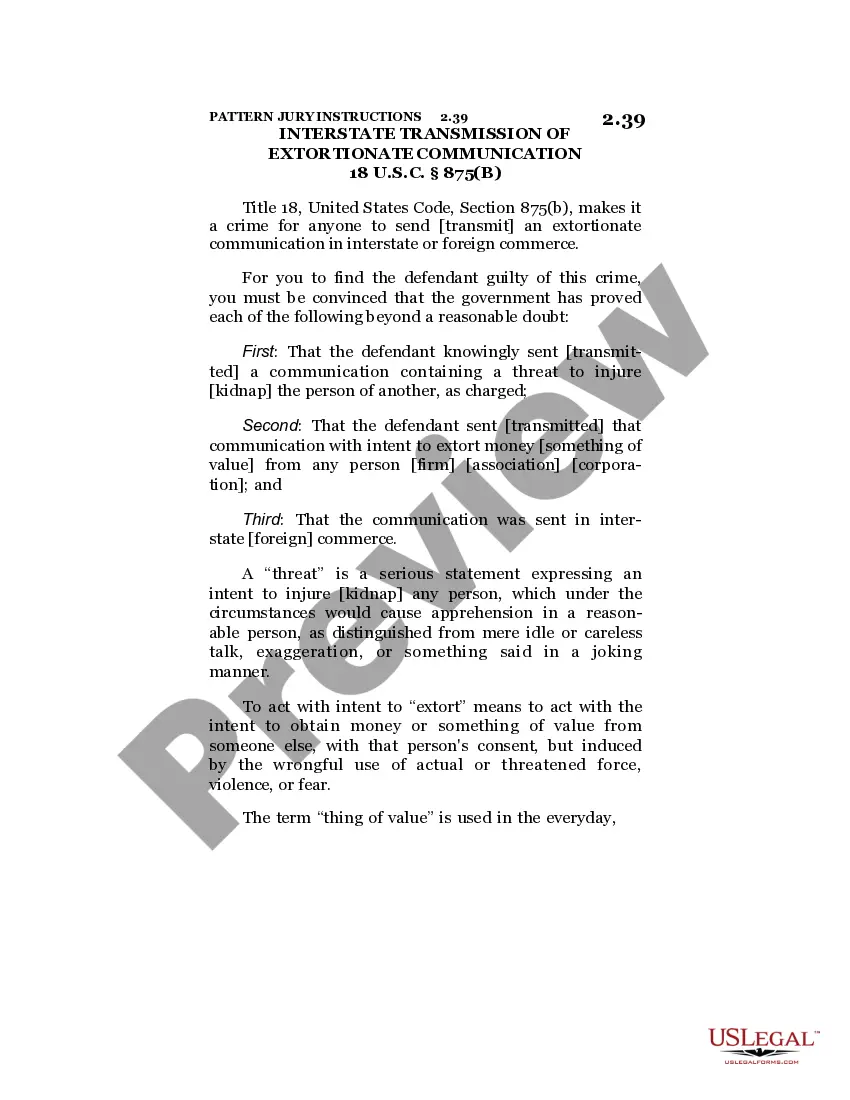
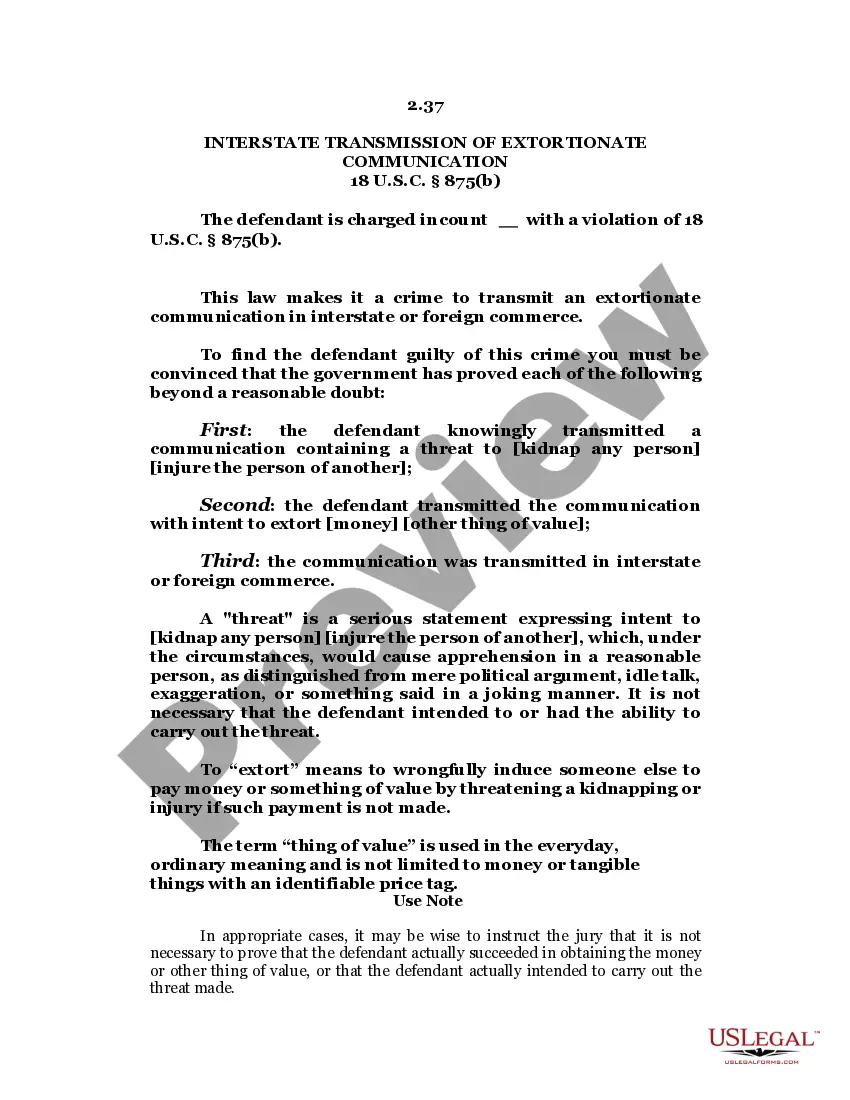
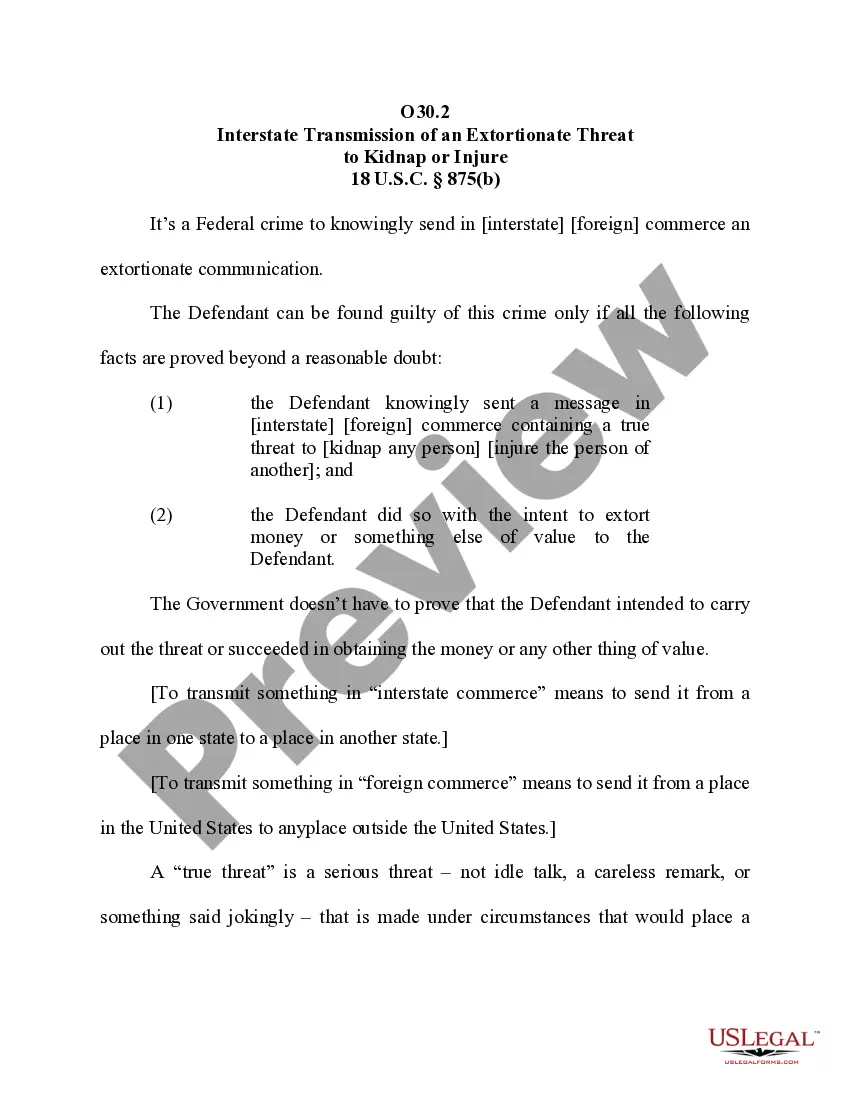
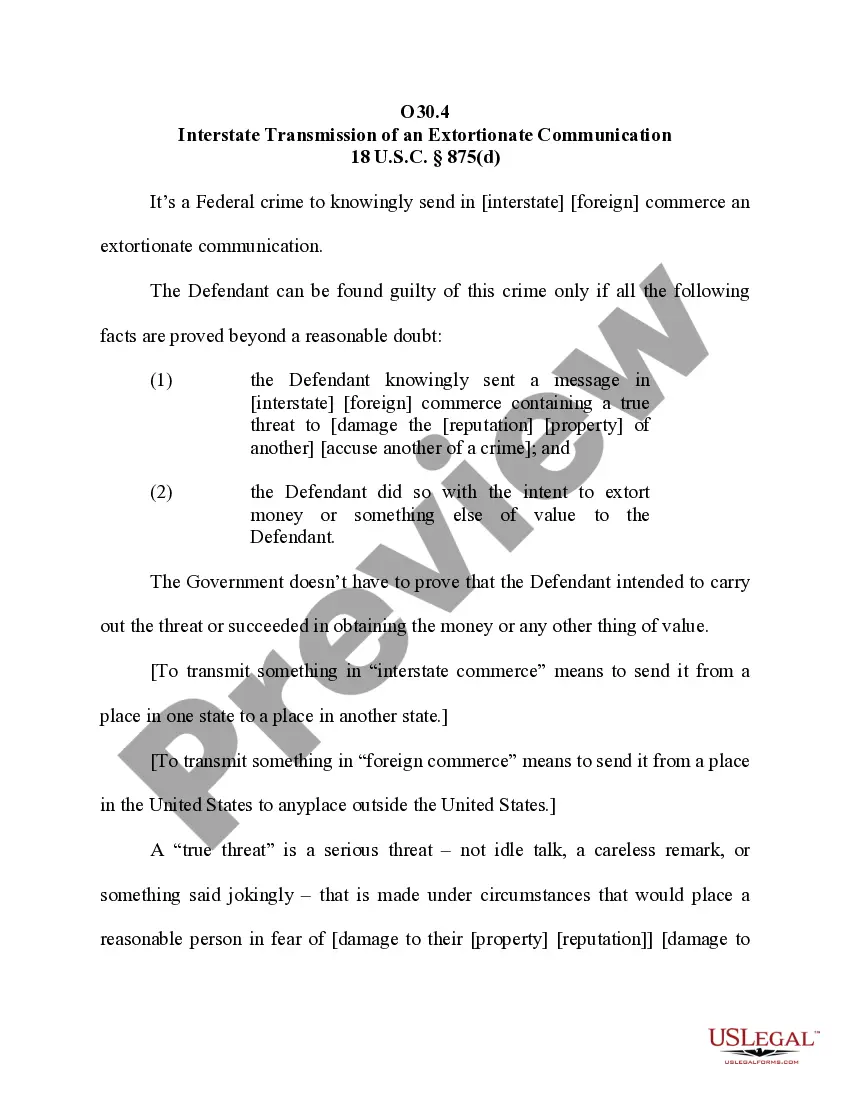
The Jury Instruction for Interstate Transmission of Extortionate Communication provides sample jury instructions relevant to federal cases concerning the transmission of extortionate communications across state lines. This form is essential for guiding juries in understanding the specific legal standards associated with the offense outlined in 18 USC 875(b). Unlike other jury instructions, this template focuses specifically on the elements required to determine whether a communication constitutes a true threat with intent to extort.
Form components explained
- Description of the offense related to interstate transmission of extortionate communications.
- Elements needed to prove the offense, including intent and knowledge.
- Clarification of what constitutes a "true threat" versus idle talk.
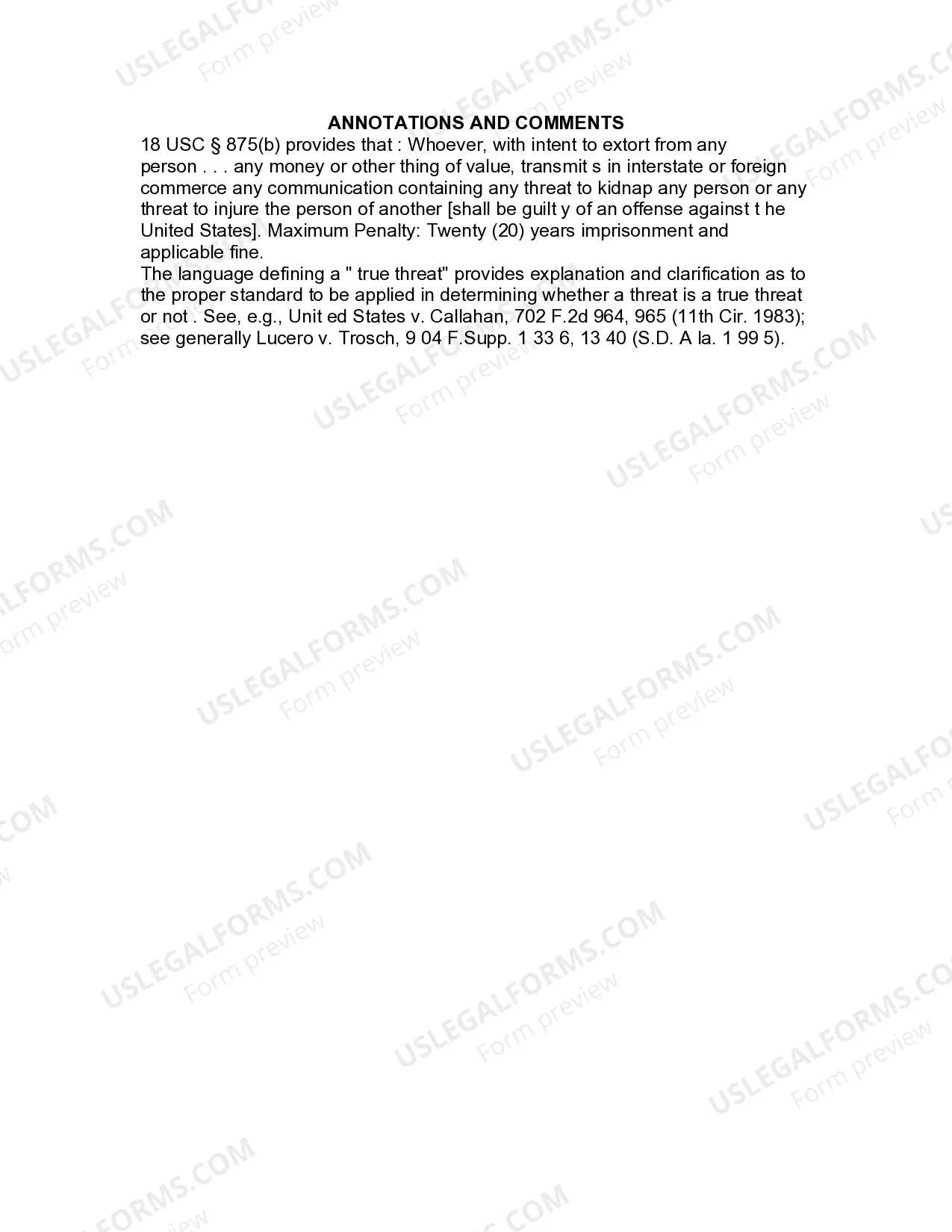
- Legal implications and potential penalties for the defendant.
- References to pertinent legal precedents and statutes.
Common use cases
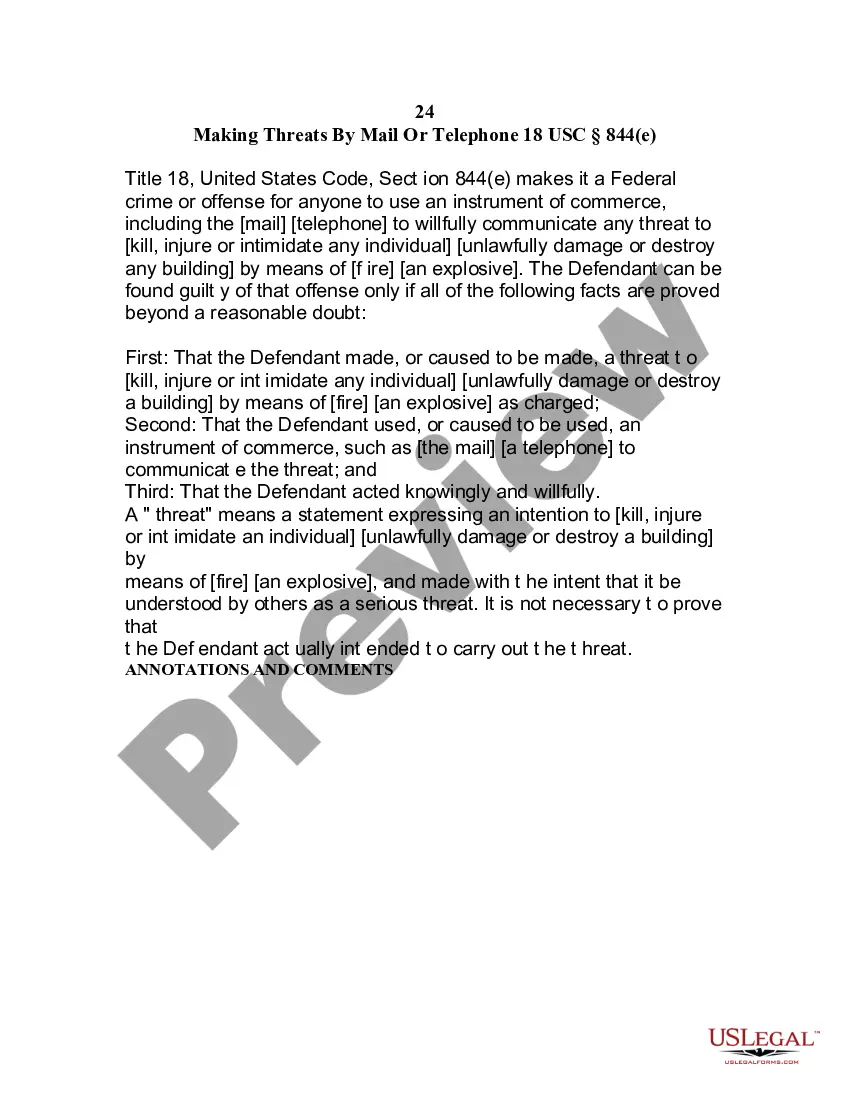
This form is utilized in federal court cases when a defendant is charged with transmitting extortionate communications through interstate commerce. It serves as a guideline for jury instructions, ensuring that jurors are accurately informed of the legal standards and requirements needed to determine guilt or innocence in such cases. This form can be used whenever a case involves alleged threats to kidnap or injure others with the aim of extortion.
Intended users of this form
- Attorneys preparing jury instructions for federal criminal cases involving extortionate communication.
- Judges looking for a standardized set of instructions to provide to juries on this subject.
- Legal professionals seeking clarity on the elements of the offense as defined by federal law.
- Defendants and their attorneys who want to understand the jury's perspective based on the legal definitions provided.
Instructions for completing this form
- Identify the elements of the offense as outlined in the template.
- Edit the sample instructions to fit the specific facts of your case.
- Ensure clarity on what constitutes a true threat and the requisite intent to extort.
- Review the legal precedents mentioned and incorporate them as necessary.
- Finalize the document for presentation to the jury, ensuring all pertinent details are included.
Does this form need to be notarized?
In most cases, this form does not require notarization. However, some jurisdictions or signing circumstances might. US Legal Forms offers online notarization powered by Notarize, accessible 24/7 for a quick, remote process.
Get your form ready online
Our built-in tools help you complete, sign, share, and store your documents in one place.
Make edits, fill in missing information, and update formatting in US Legal Forms—just like you would in MS Word.
Download a copy, print it, send it by email, or mail it via USPS—whatever works best for your next step.
Sign and collect signatures with our SignNow integration. Send to multiple recipients, set reminders, and more. Go Premium to unlock E-Sign.
If this form requires notarization, complete it online through a secure video call—no need to meet a notary in person or wait for an appointment.
We protect your documents and personal data by following strict security and privacy standards.

Make edits, fill in missing information, and update formatting in US Legal Forms—just like you would in MS Word.

Download a copy, print it, send it by email, or mail it via USPS—whatever works best for your next step.

Sign and collect signatures with our SignNow integration. Send to multiple recipients, set reminders, and more. Go Premium to unlock E-Sign.

If this form requires notarization, complete it online through a secure video call—no need to meet a notary in person or wait for an appointment.

We protect your documents and personal data by following strict security and privacy standards.
Typical mistakes to avoid
- Failing to clarify the definition of a true threat, leading to juror confusion.
- Neglecting to outline all necessary elements of the offense clearly.
- Using vague language that does not convey the seriousness of the charges.
- Not referencing applicable legal precedents which can support the jury's understanding.
Why complete this form online
- Convenience of immediate access and download for legal professionals.
- Editability allows for customization to fit specific case details.
- Reliability, as the templates are drafted by licensed attorneys ensuring legal accuracy.
- Time-saving feature to generate forms quickly without extensive additional research.
Quick recap
- The form provides essential jury instructions for federal cases involving extortionate communications.
- Ensure clarity and specificity when drafting instructions tailored to individual cases.
- This template aids in understanding complex legal standards surrounding true threats and extortion.
Looking for another form?






Form popularity
FAQ
Under California Penal Code Section 422 PC, it is illegal to make criminal threats.To prove that someone is guilty of making criminal threats, a prosecutor must be able to establish the following elements: The defendant willfully threatened to unlawfully kill or unlawfully cause great bodily injury to another person.
Whoever transmits in interstate or foreign commerce any communication containing any threat to kidnap any person or any threat to injure the person of another, shall be fined under this title or imprisoned not more than five years, or both.
In California, making criminal threats is a wobbler and may be charged as either a misdemeanor or a felony under California Penal Code 422. A felony criminal threat is a strike under California's three strikes law.
A criminal threat involves one person threatening someone else with physical harm. The threat must be communicated in some way, though it doesn't necessarily have to be verbal. A person can make a threat through email, text message, or even through non-verbal body language such as gestures or movements.
Wire or Radio Communication; General Provisions the term interstate communication or interstate transmission means communication or transmission (A) from any State, Territory, or possession of the United States (other than the Philippine Islands and the Canal Zone), or the District of Columbia, to any other State,
We all have a right to personal safety. It's illegal to kill or inflict personal body harm on someone else. The threat is verbal, in writing or sent via an electronic medium, and.
For serious threats, if life or property are threatened, or if calls are obscene, you should call the police and file a report. Provide as much information to law enforcement as you can. Indicate the gender of the caller and describe the caller's voice. Note the time and date of the call(s).
Extortion is a federal offense when it interferes with interstate commerce. It is punishable by a fine, imprisonment, or both. All extortion statutes require that a threat must be made to the person or property of the victim. A threat to harm a person in his/her career or reputation is also extortion.