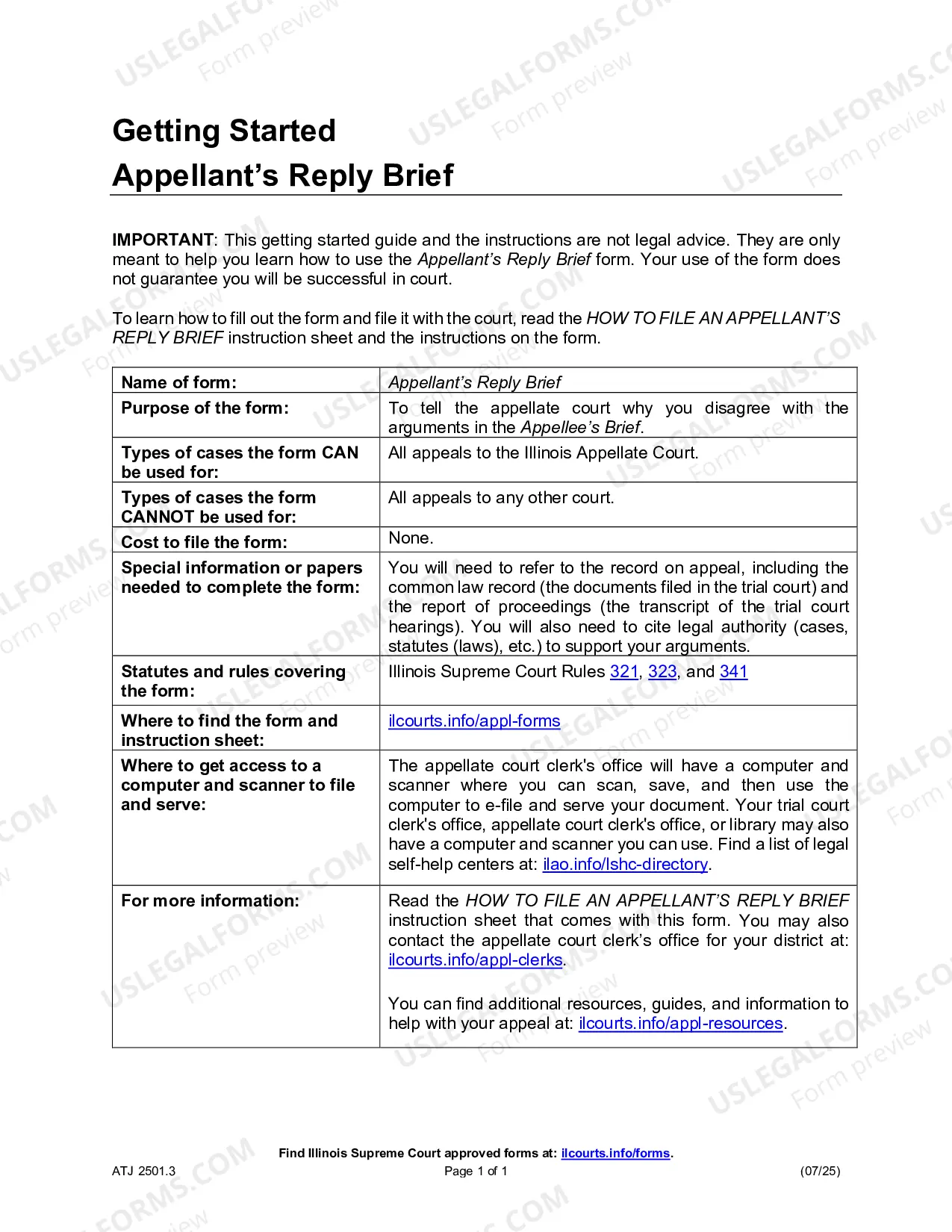
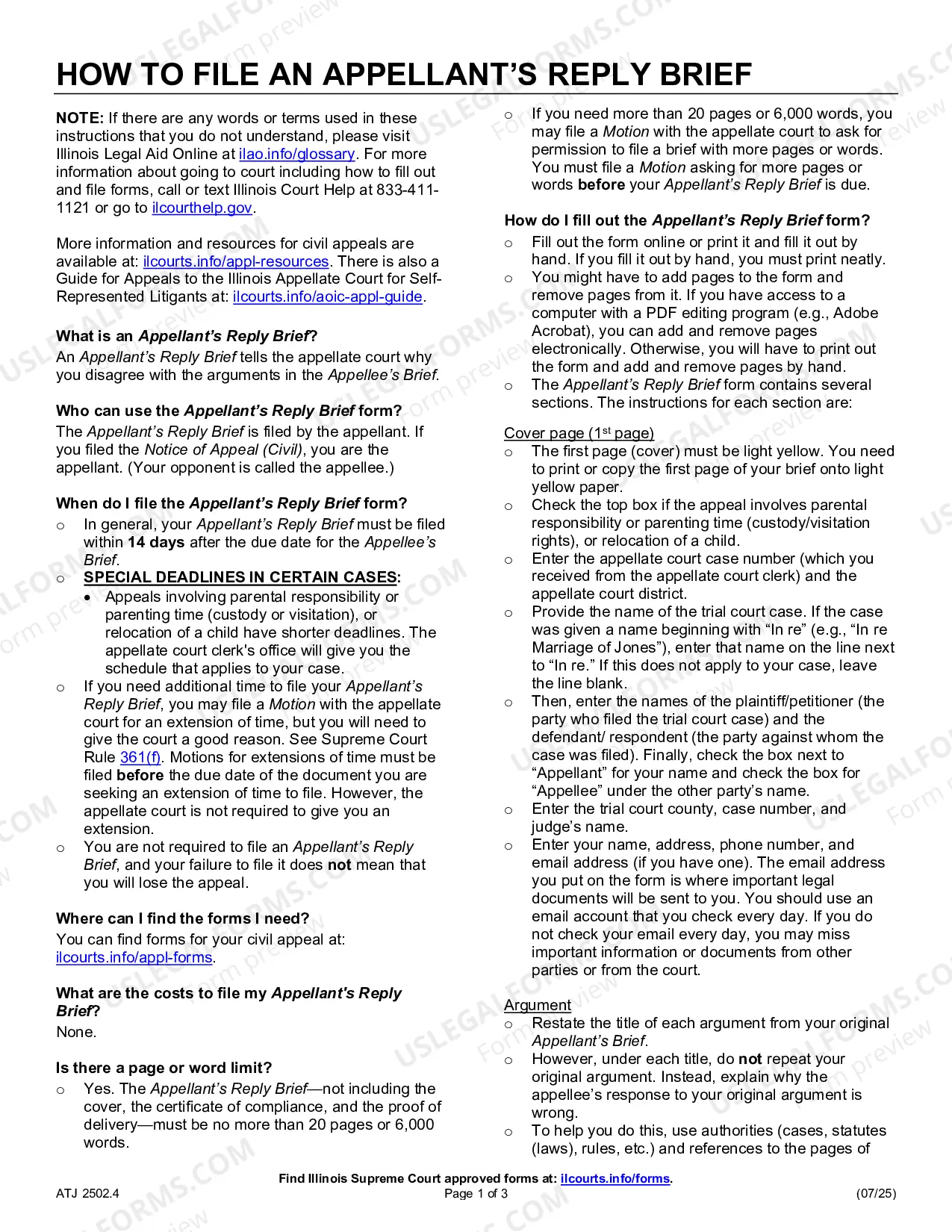
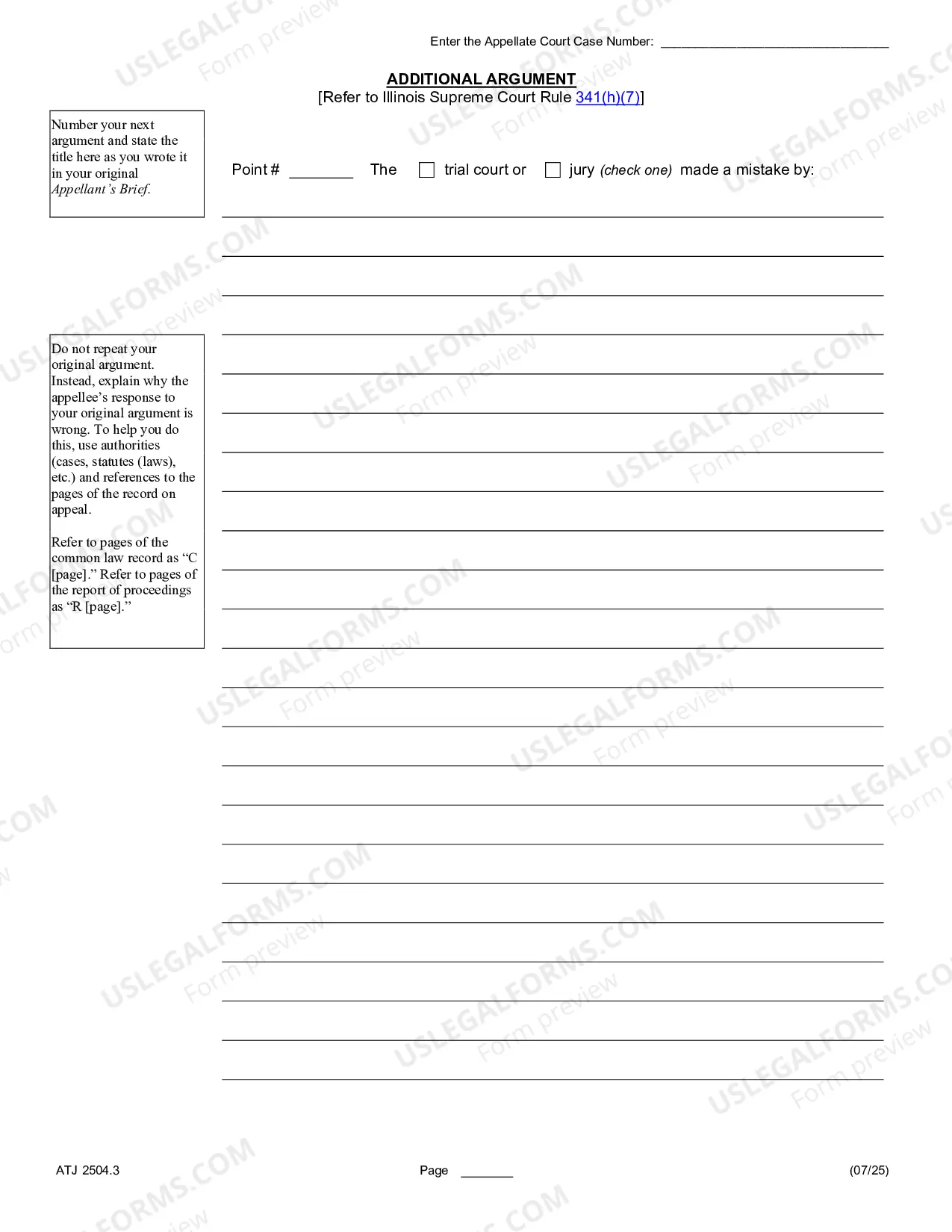
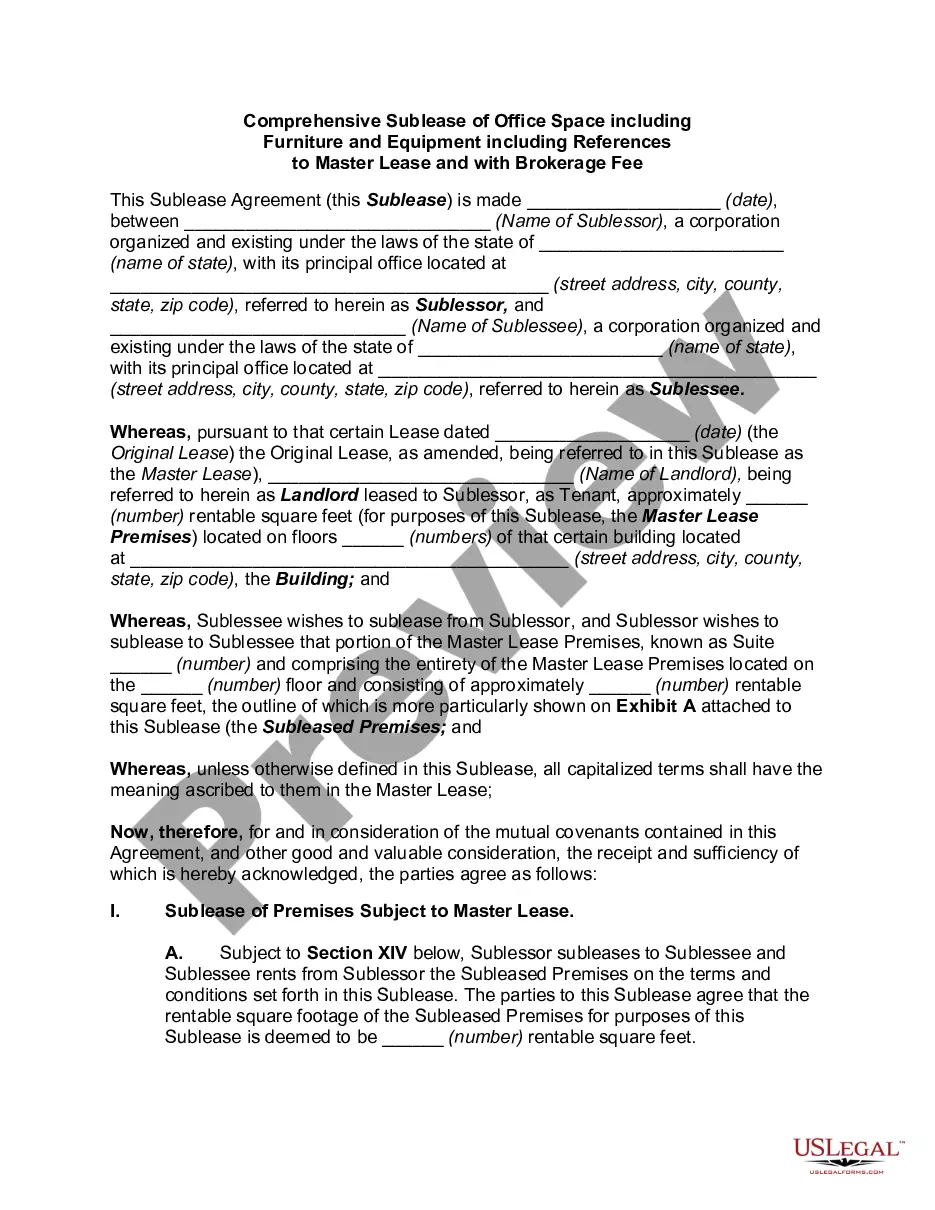
Comprehensive Sublease of Office Space including Furniture and Equipment including References to Master Lease and with Brokerage Fee
About this form
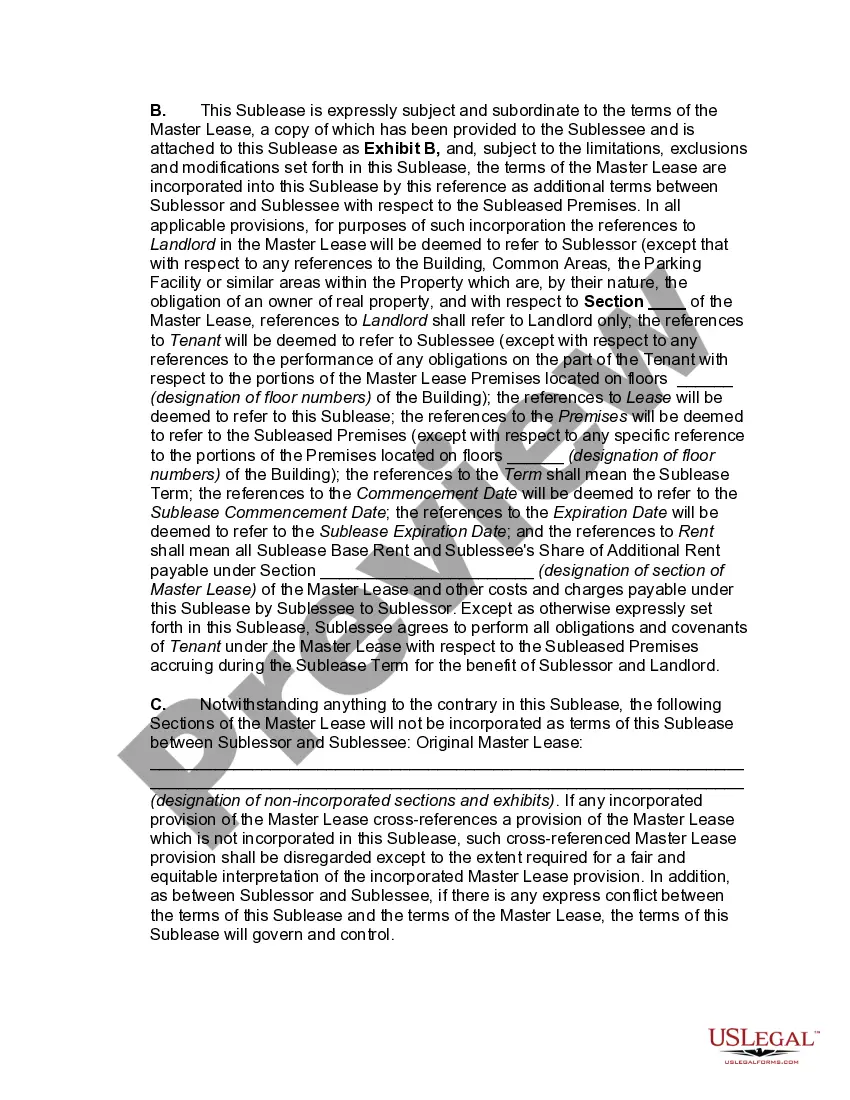
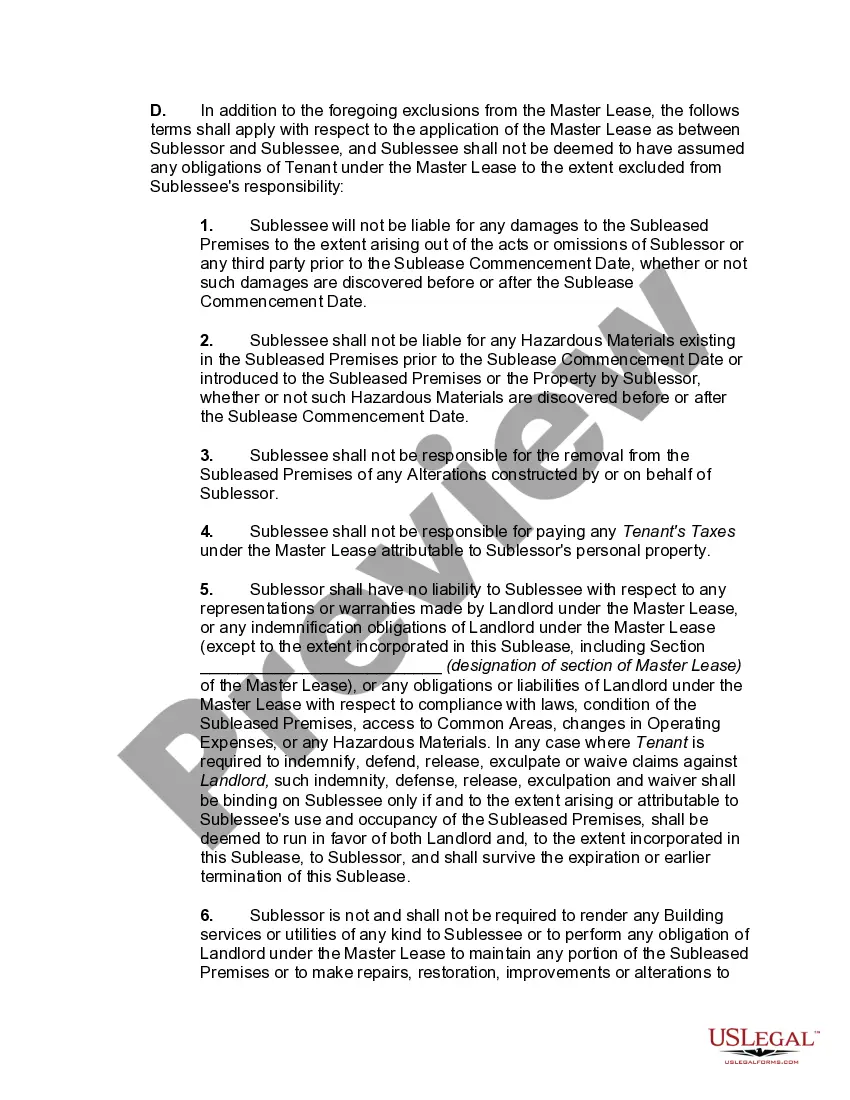
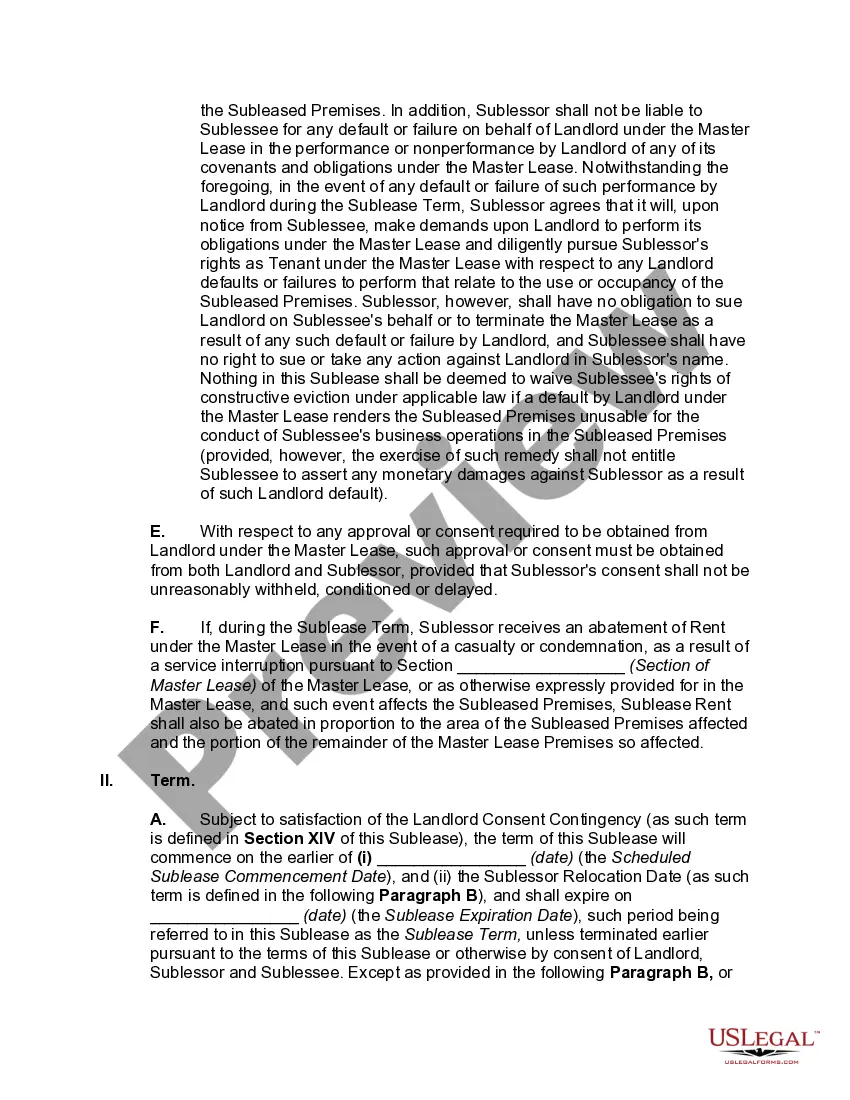
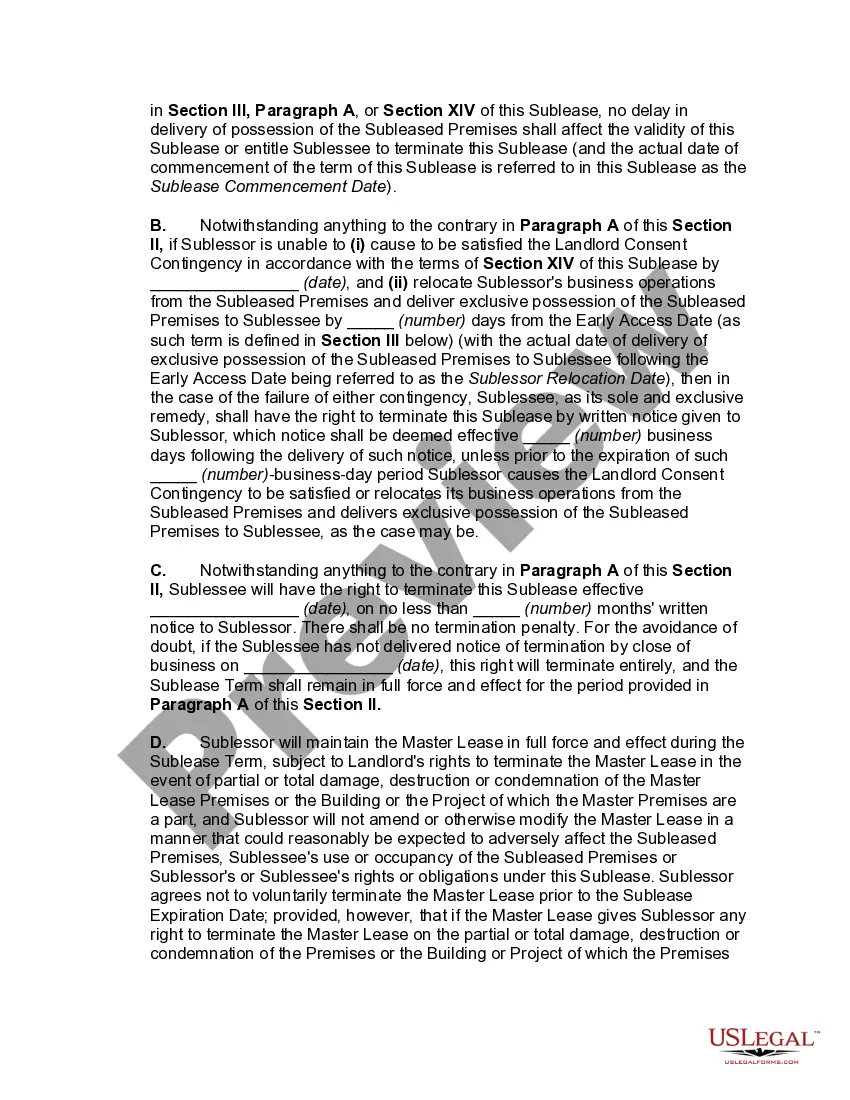
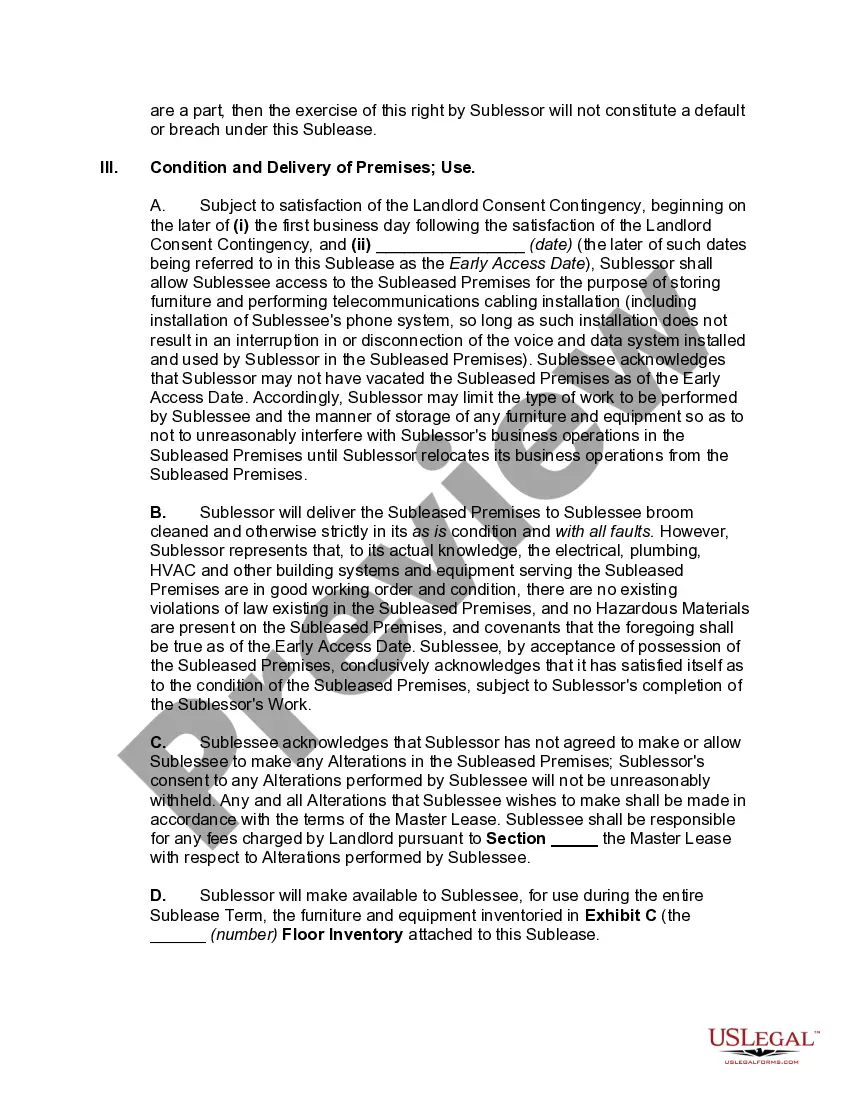
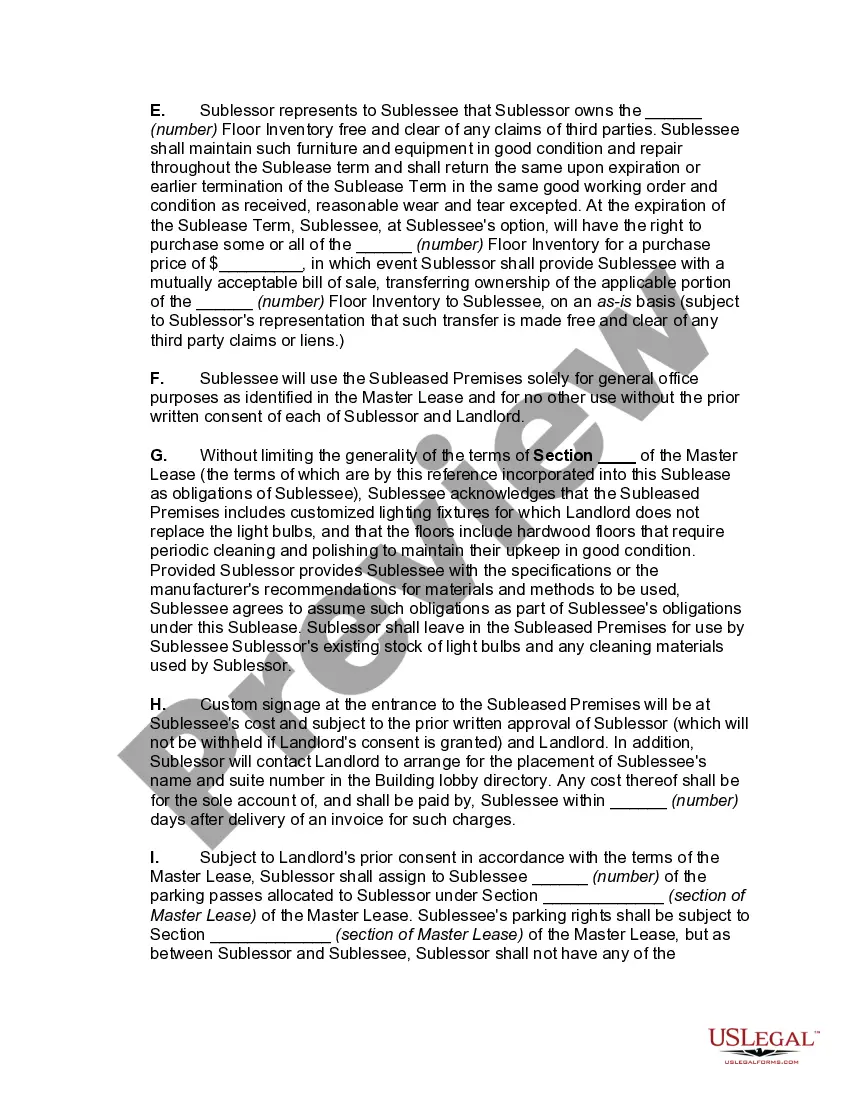
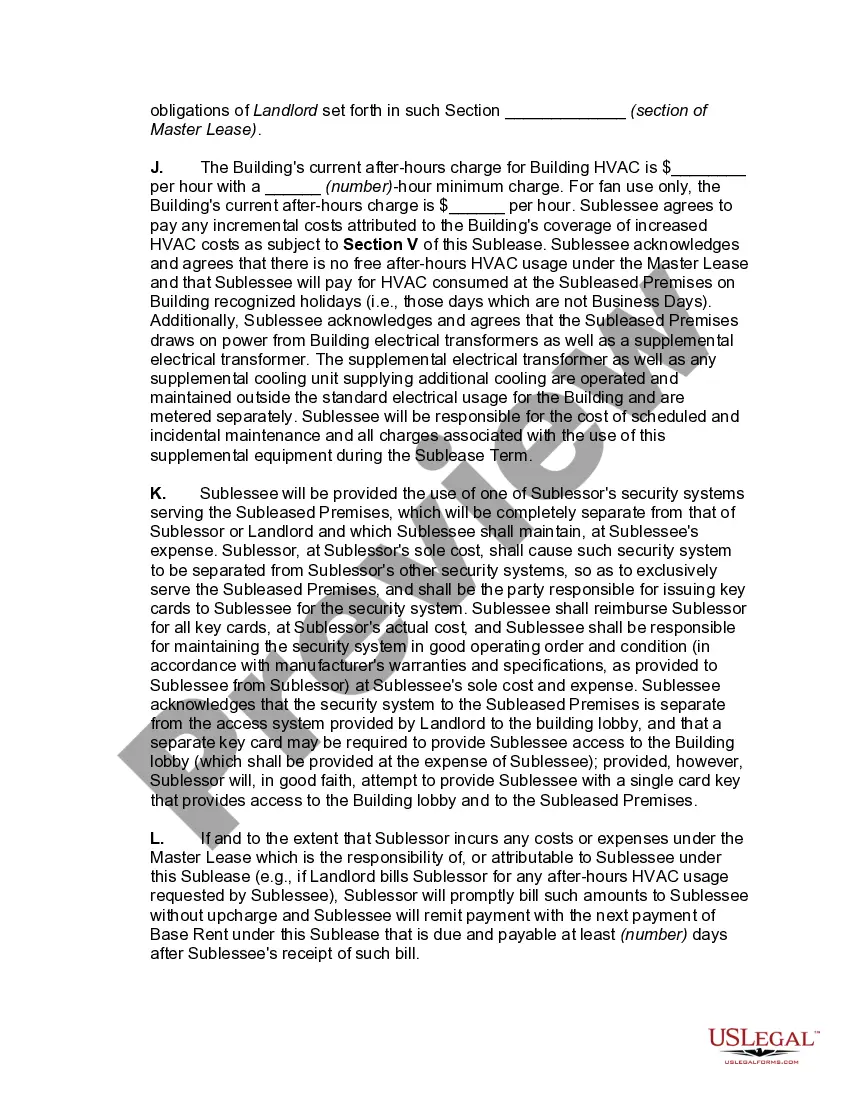
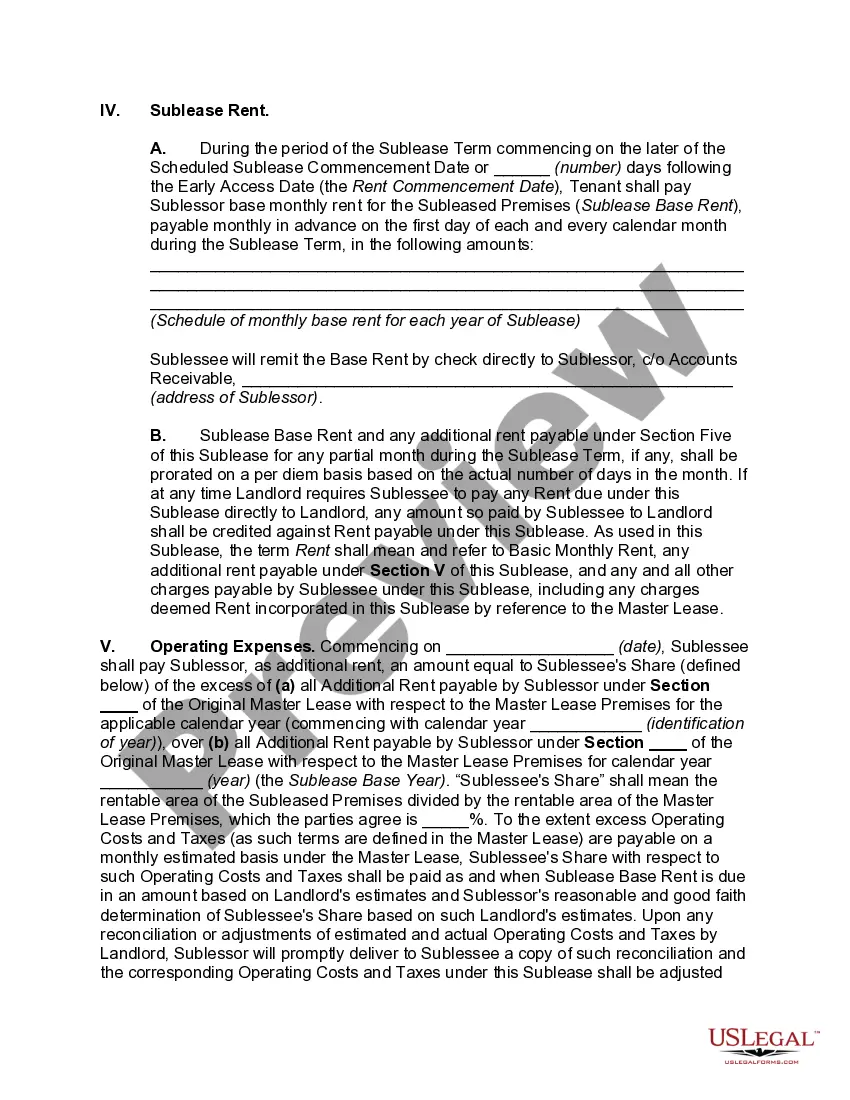
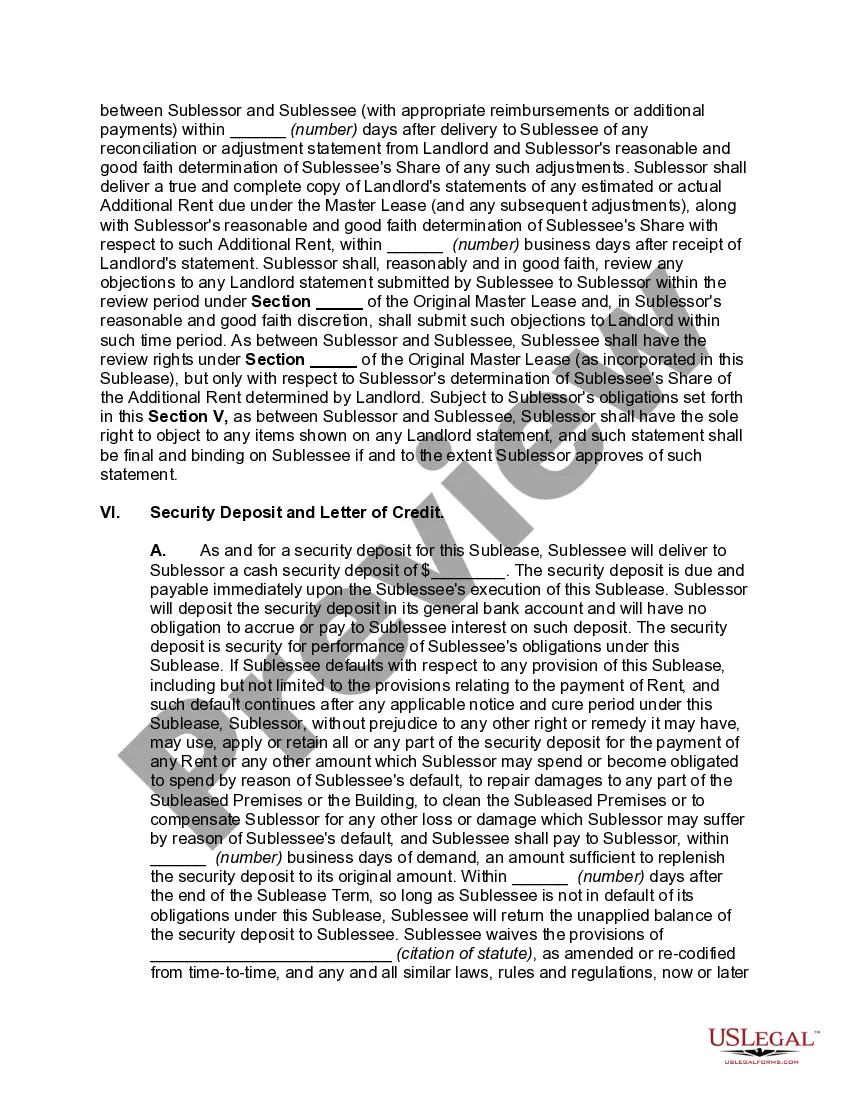
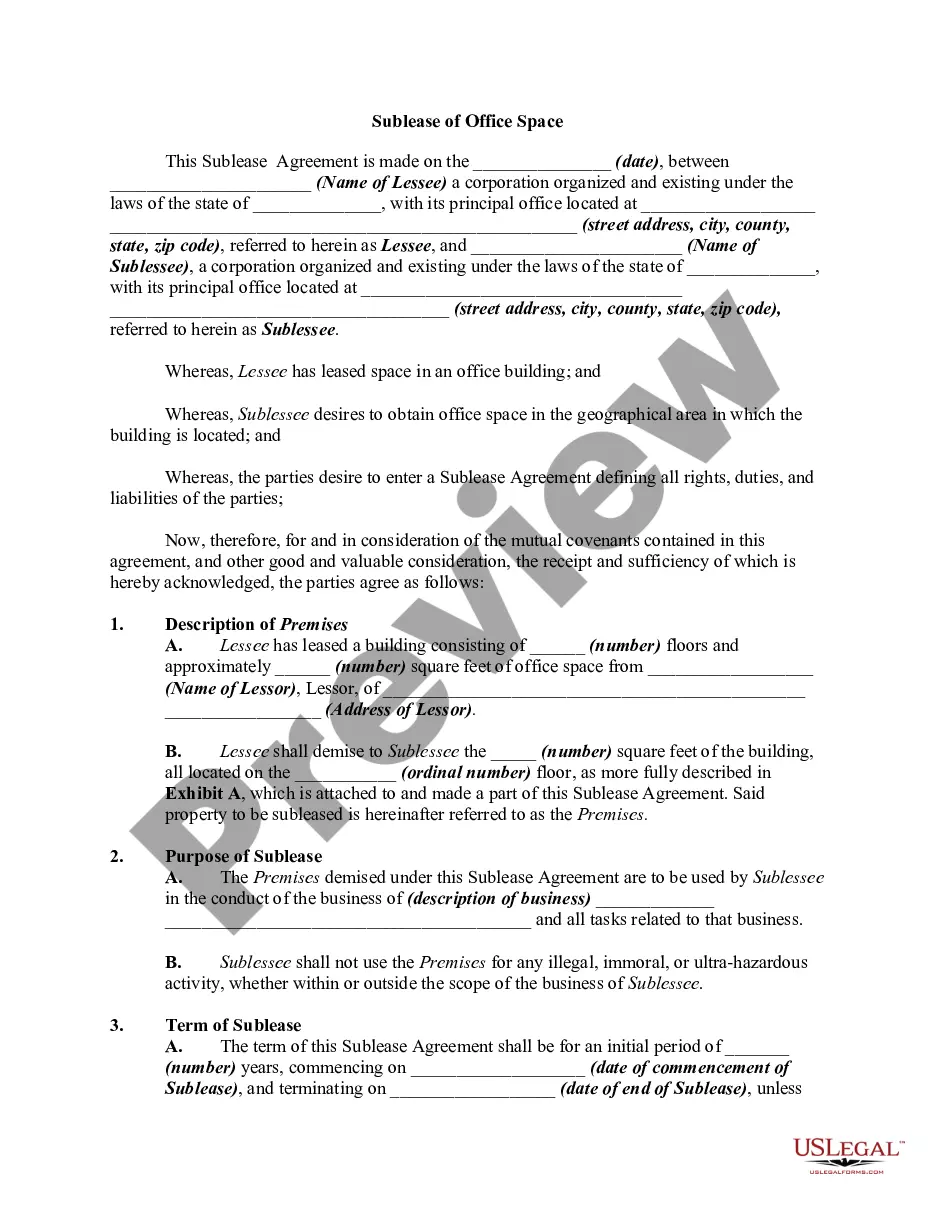
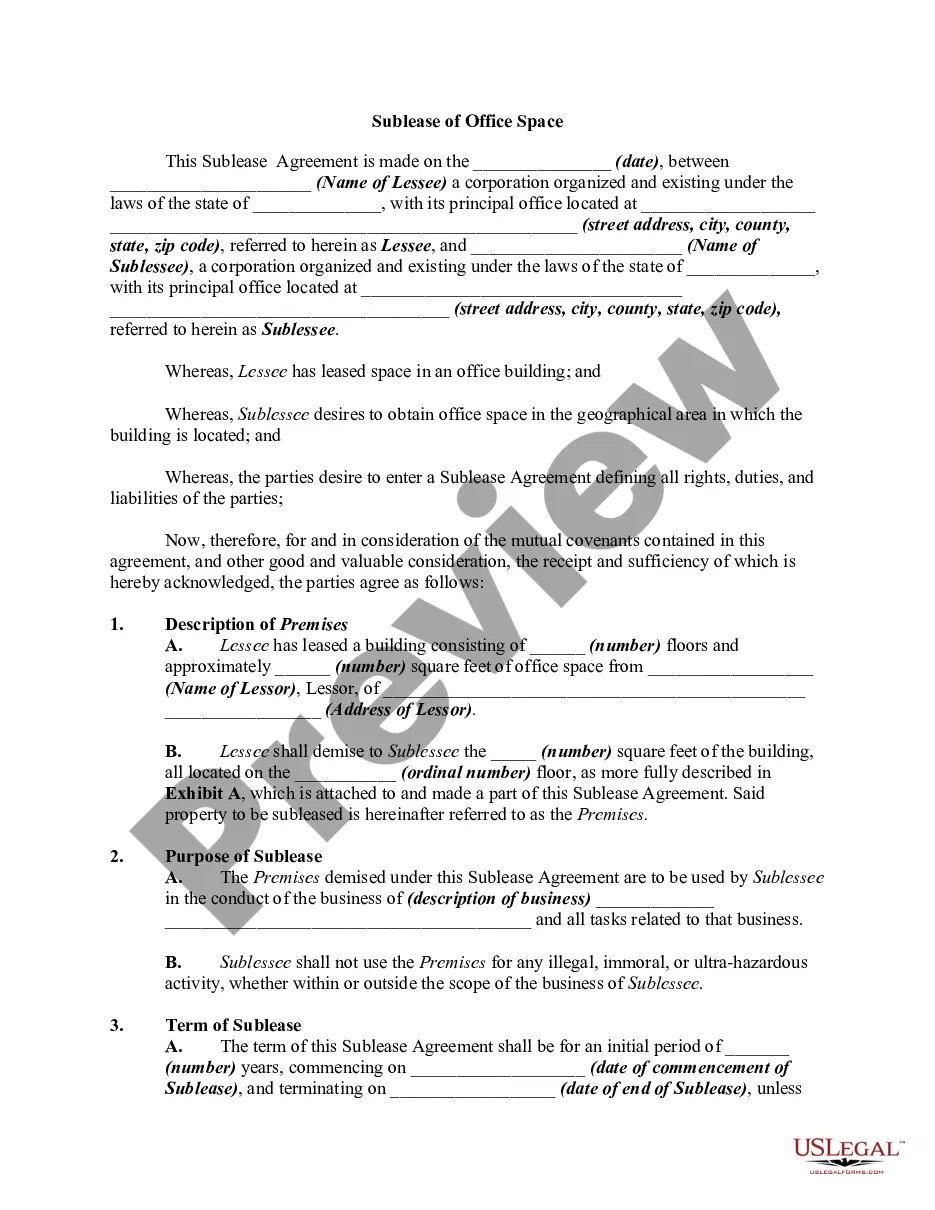
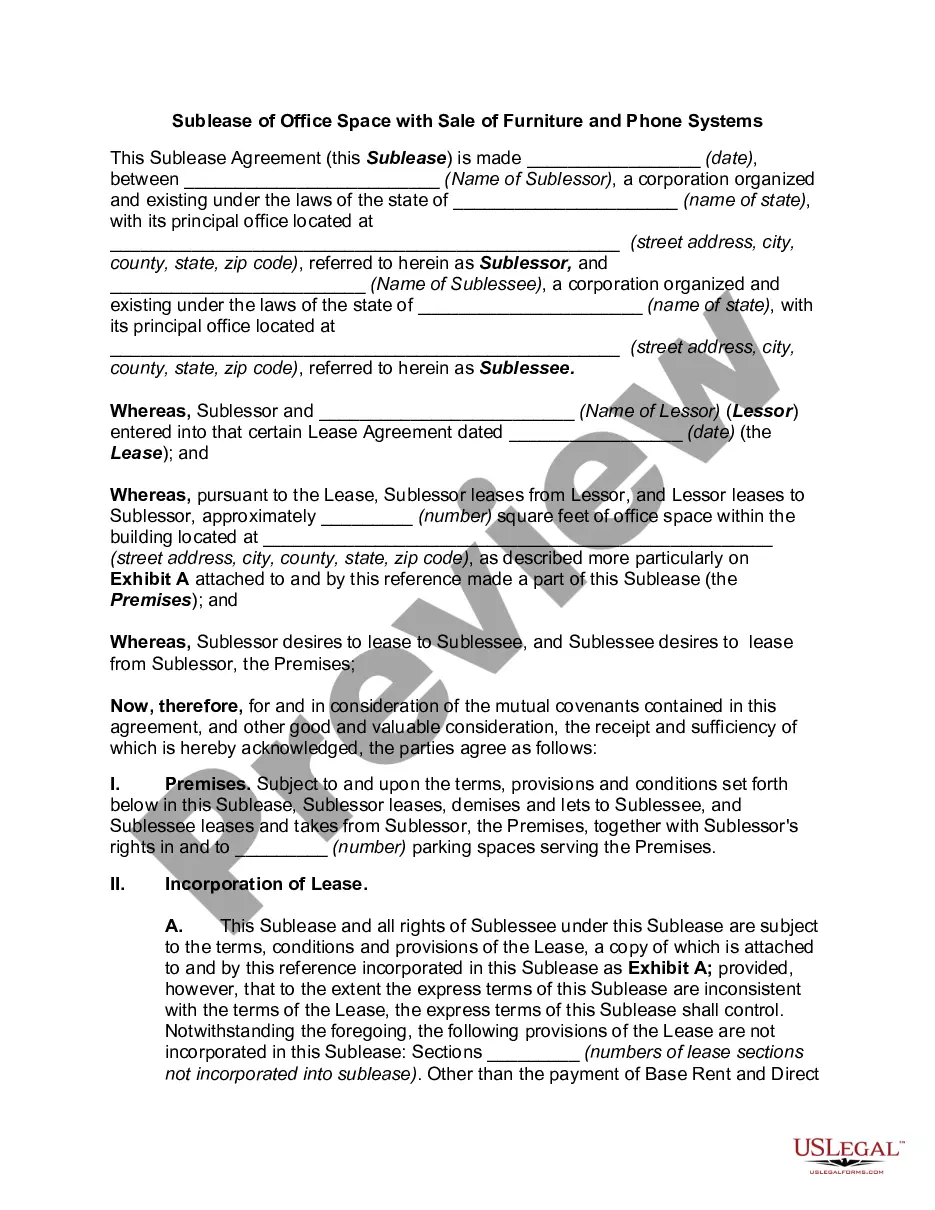
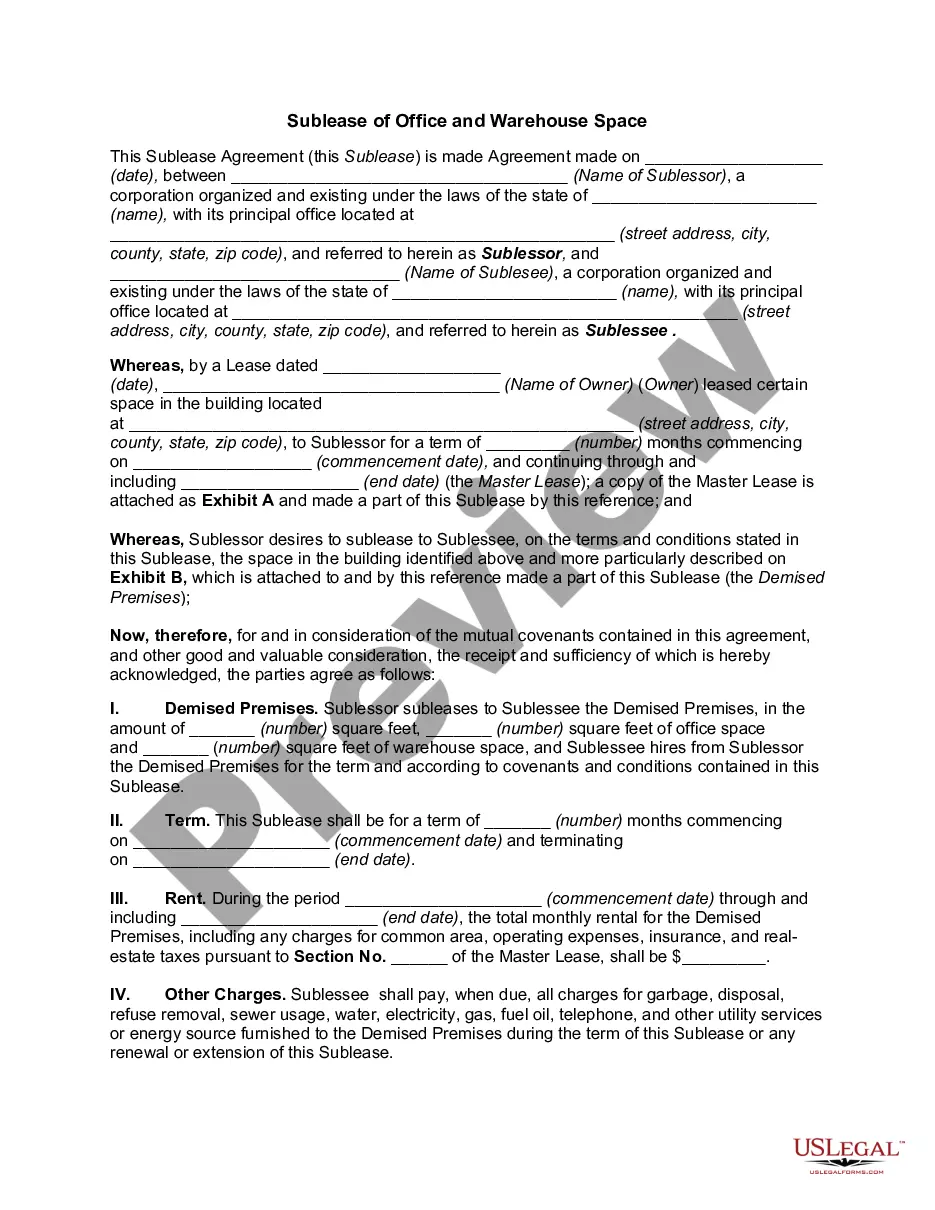
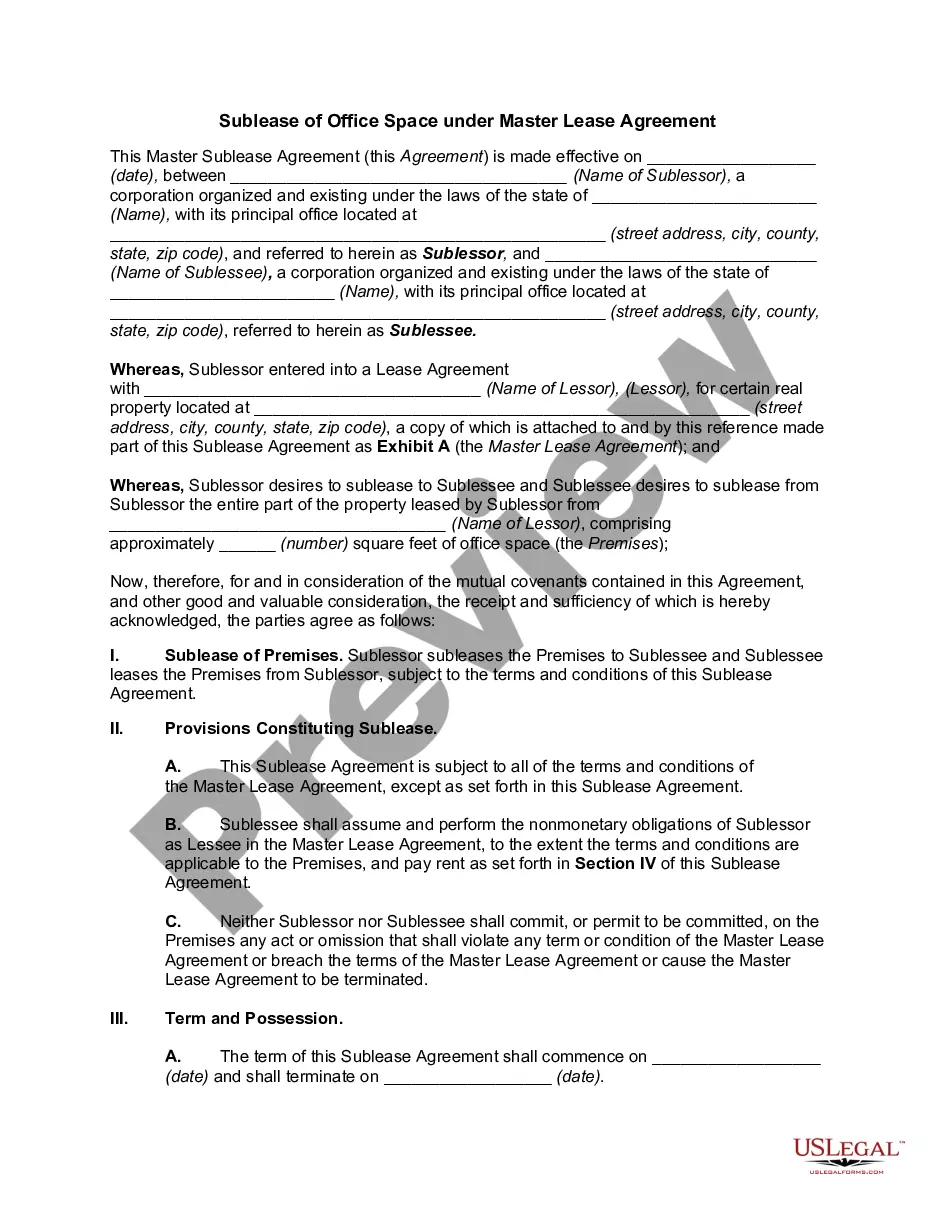
The Comprehensive Sublease of Office Space, including Furniture and Equipment, is a legally binding agreement that enables a business (the sublessor) to lease out a portion of leased office space to another entity (the sublessee). This form also addresses the inclusion of furniture and equipment, ensuring both parties understand their rights and obligations. Unlike standard lease agreements, this sublease includes references to a master lease agreement and stipulates terms related to a brokerage fee, making it suitable for transactions where such details are essential.
Key components of this form
- Identification of the sublessor and sublessee with respective addresses.
- Description of the subleased premises and its relation to the master lease.
- Terms regarding rent, including due dates and calculation of operating expenses.
- Procedures surrounding security deposits and letters of credit.
- Provisions for entering the premises and conducting inspections.
- Conditions related to repairs, alterations, and installation of equipment.
- Responsibilities for insurances, indemnities, and other liabilities.

Common use cases
This form is needed when a tenant of a commercial space wishes to sublease part of the property to another company or individual while ensuring all terms of the original lease are maintained. It is ideal for situations where the original tenant is looking to offset costs while retaining liability for the space, or when they have excess office space that another business can utilize. Potential scenarios include downsizing, relocating, or temporarily renting out part of the space.
Who should use this form
- Businesses currently leasing office space looking to sublease part of that space.
- Entities wanting to include furniture and equipment in the sublease agreement.
- Sublessors who are aware of their obligations under the master lease and wish to comply with it.
- Sublessees seeking to understand their rights, responsibilities, and any potential brokerage fees involved.
Completing this form step by step
- Identify and fill in the names and addresses of the sublessor and sublessee.
- Specify the details of the subleased premises, including the size and description of the area being subleased.
- Enter the terms of the rent, including any additional operating expenses and due dates.
- Include clauses related to security deposits and any associated letters of credit.
- Review all terms concerning maintenance responsibilities and permitted uses of the space.
- Ensure all parties sign and date the document in appropriate sections.
Notarization guidance
This form does not typically require notarization unless specified by local law. Users should check if their jurisdiction has specific requirements regarding notarization for sublease agreements.
Get your form ready online
Our built-in tools help you complete, sign, share, and store your documents in one place.
Make edits, fill in missing information, and update formatting in US Legal Forms—just like you would in MS Word.
Download a copy, print it, send it by email, or mail it via USPS—whatever works best for your next step.
Sign and collect signatures with our SignNow integration. Send to multiple recipients, set reminders, and more. Go Premium to unlock E-Sign.
If this form requires notarization, complete it online through a secure video call—no need to meet a notary in person or wait for an appointment.
We protect your documents and personal data by following strict security and privacy standards.

Make edits, fill in missing information, and update formatting in US Legal Forms—just like you would in MS Word.

Download a copy, print it, send it by email, or mail it via USPS—whatever works best for your next step.

Sign and collect signatures with our SignNow integration. Send to multiple recipients, set reminders, and more. Go Premium to unlock E-Sign.

If this form requires notarization, complete it online through a secure video call—no need to meet a notary in person or wait for an appointment.

We protect your documents and personal data by following strict security and privacy standards.
Common mistakes
- Failing to accurately describe the subleased premises and the terms of the original lease.
- Not specifying the rent payment schedule or how operating expenses will be calculated.
- Neglecting to include necessary approvals from the landlord, which can invalidate the sublease.
- Overlooking personal liability for damages or violations occurring during the sublease term.
Benefits of using this form online
- Convenient access to a comprehensive, attorney-drafted document that saves time and reduces the potential for errors.
- Editability allows users to customize terms to fit specific needs.
- Easy download means you can have a legal agreement ready quickly without waiting for legal service appointments.
- Ensures compliance with general legal standards, reducing worries about enforceability.
Looking for another form?
Form popularity
FAQ
California isn't the most tenant-friendly state when it comes to subletting. According to California law you must receive written consent from your landlord prior to subletting, and if your lease says no subletting, then that really means no subletting.
On your sublease agreement, include a list of various areas of the property (including the subtenant's room, hardwood floors, walls, exterior, etc.) and note its condition. And since you and your subtenant will need to abide by the original lease that you signed, it's important to include this with your sublease.
If your lease doesn't allow you to sublet your apartment, subletting could land you in serious legal trouble. You or your tenant might be evicted, and you could have to pay hefty fines. Your landlord could also sue you for damages caused by your tenant.
Subleasing occurs when the tenant transfers a part of their legal tenancy to a third-party as a new tenant.That means that if a new subtenant does not pay rent for three months, the original tenant that subleased the property is liable to the landlord for the overdue rent amount and any late fees.
Sublease. When a tenant transfers less than the remaining term or less than the tenant's entire estate, thus leaving the original tenant with a reversionary interest in the lease, the transfer is a sublease.
Review your current lease. Plan for the future of your business. Interview and engage a commercial real estate expert. Review your floorplan. Carefully screen your subtenant applicants.
In short, subletting allows a new renter to take over the lease directly with the landlord, while subleasing involves renting all or part of the space to another renter through the original renter.
A sublease is the re-renting of property by an existing tenant to a new third party for a portion of the tenant's existing lease contract.Even if a sublease is permitted, the original tenant is still liable for the obligations stated in the lease agreement, such as the payment of rent each month.
A lease is a rental contract between a property owner and a tenant; a sublease is a contract between a tenant and a third party who lives in the rental property during part of the tenant's lease term.