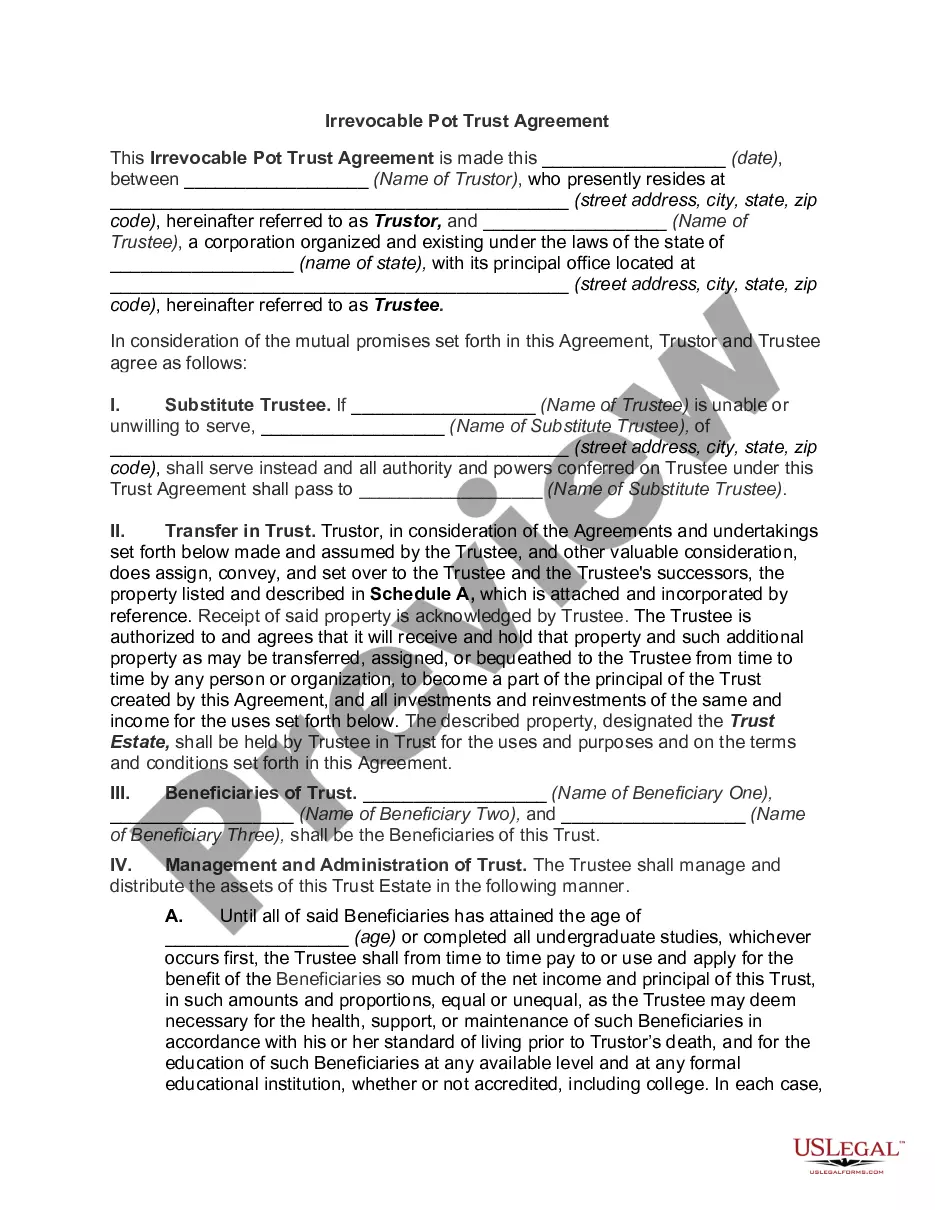
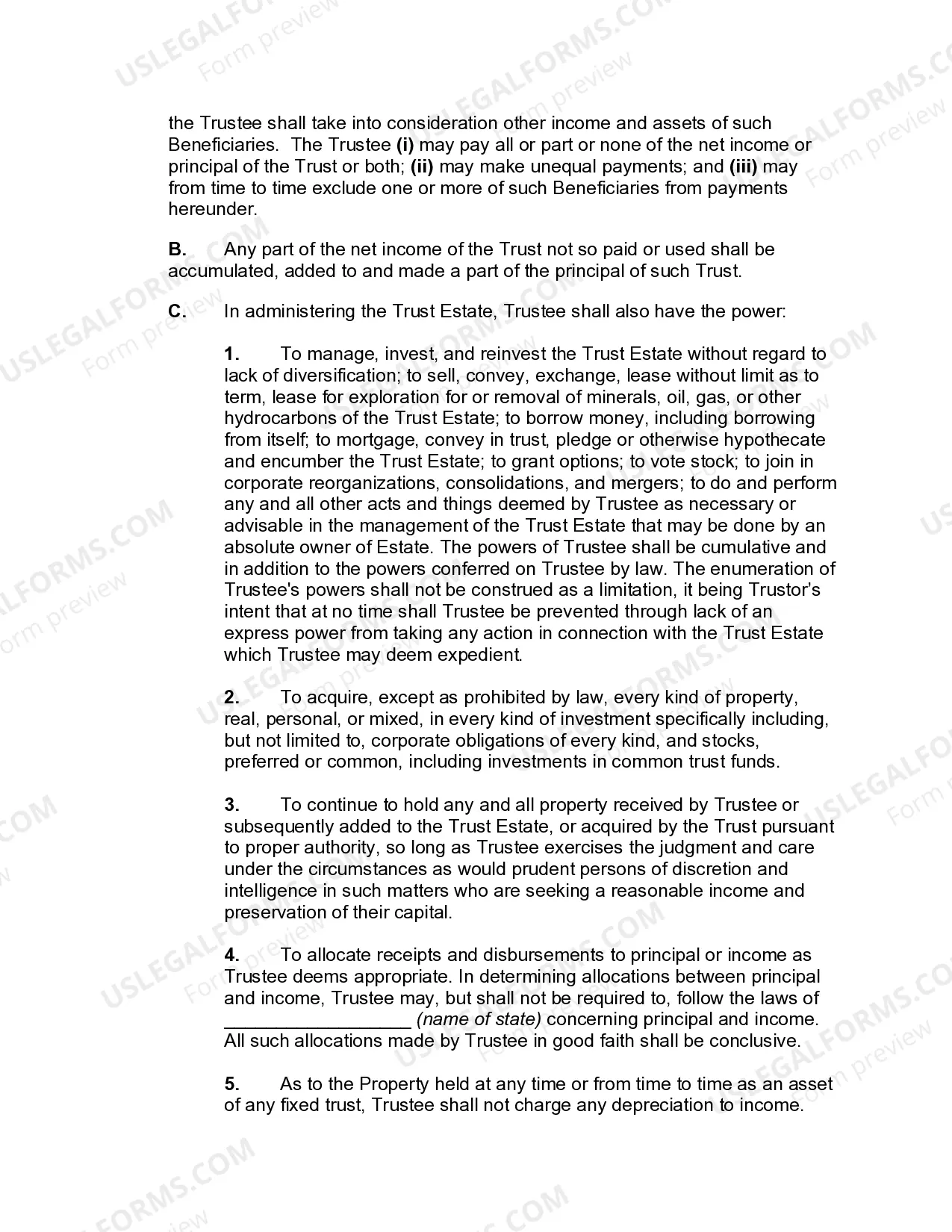
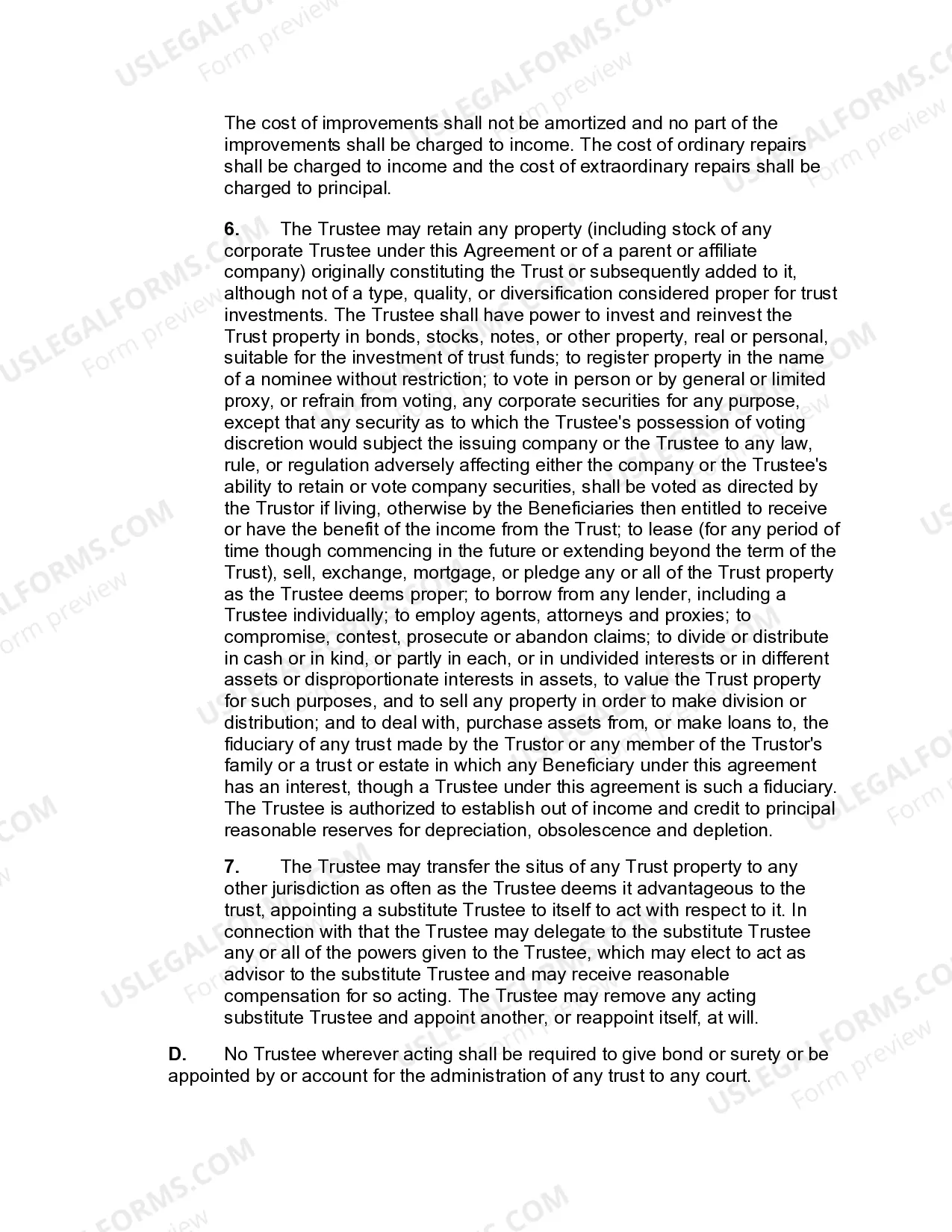
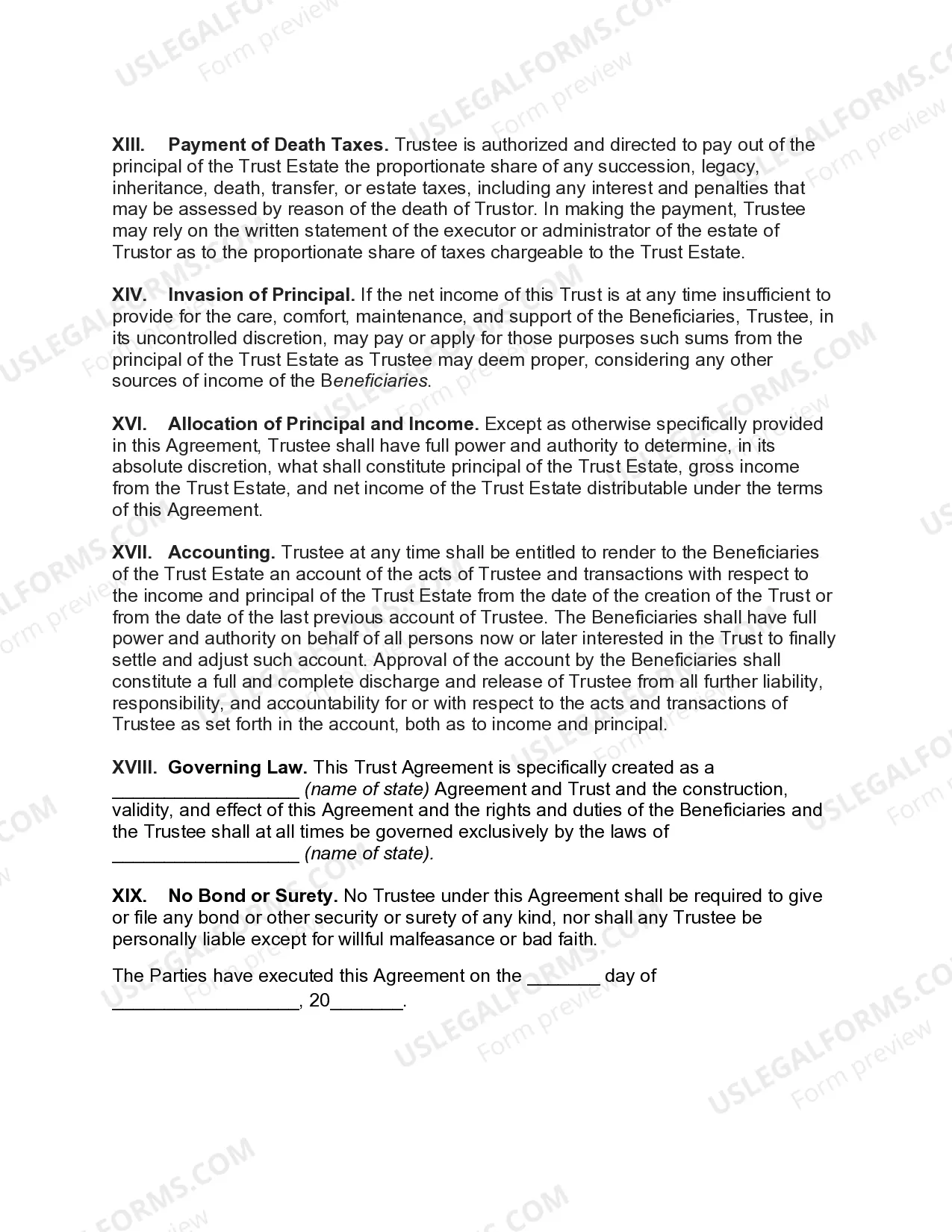
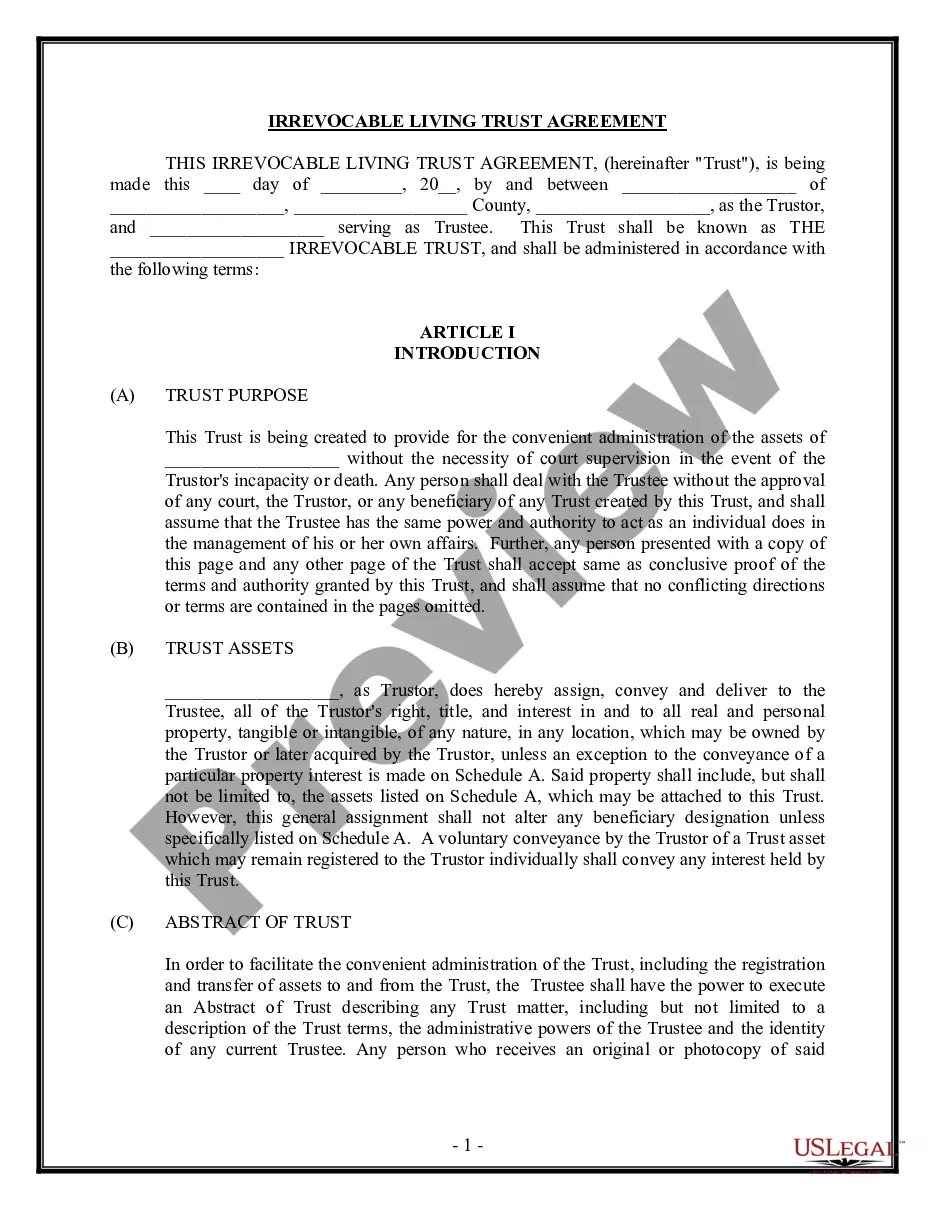
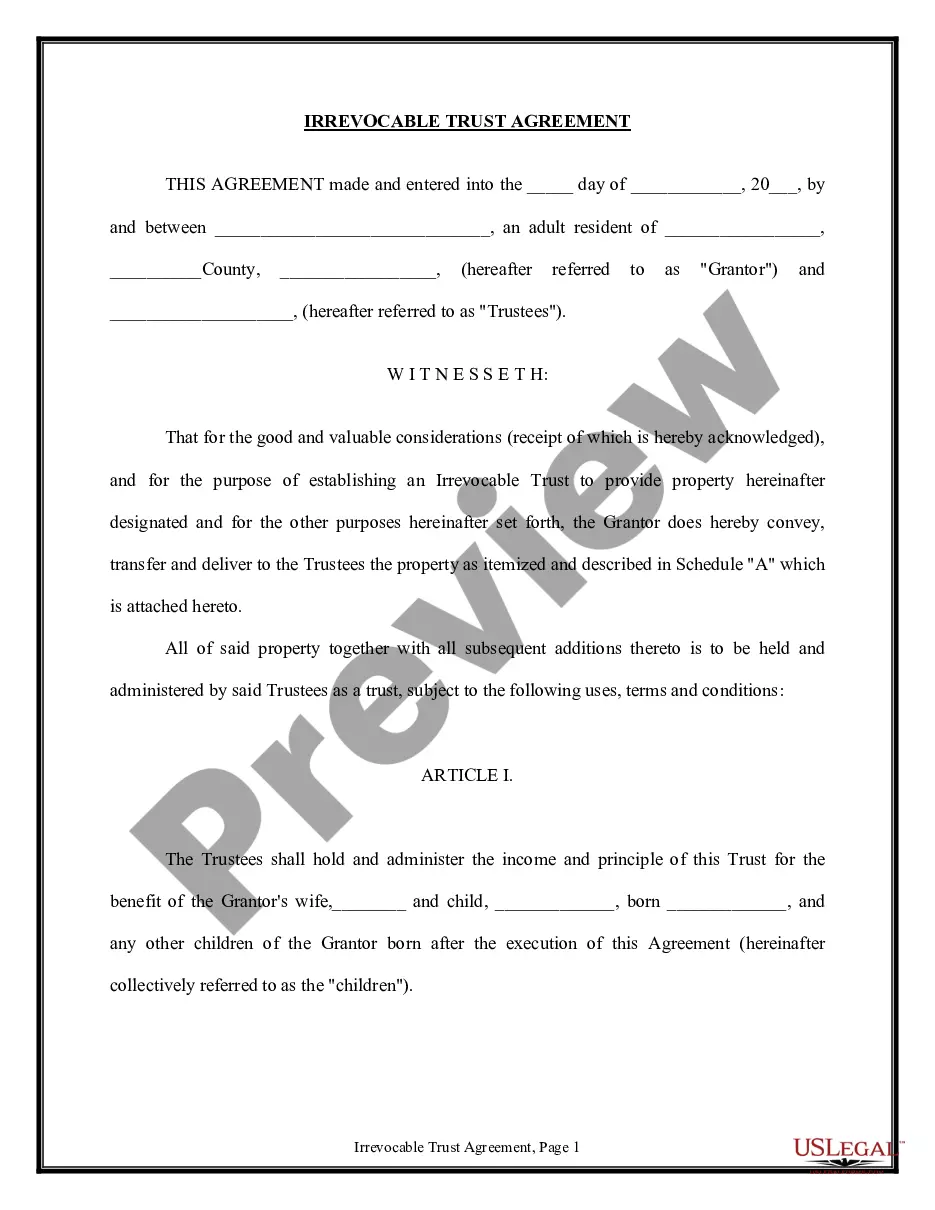
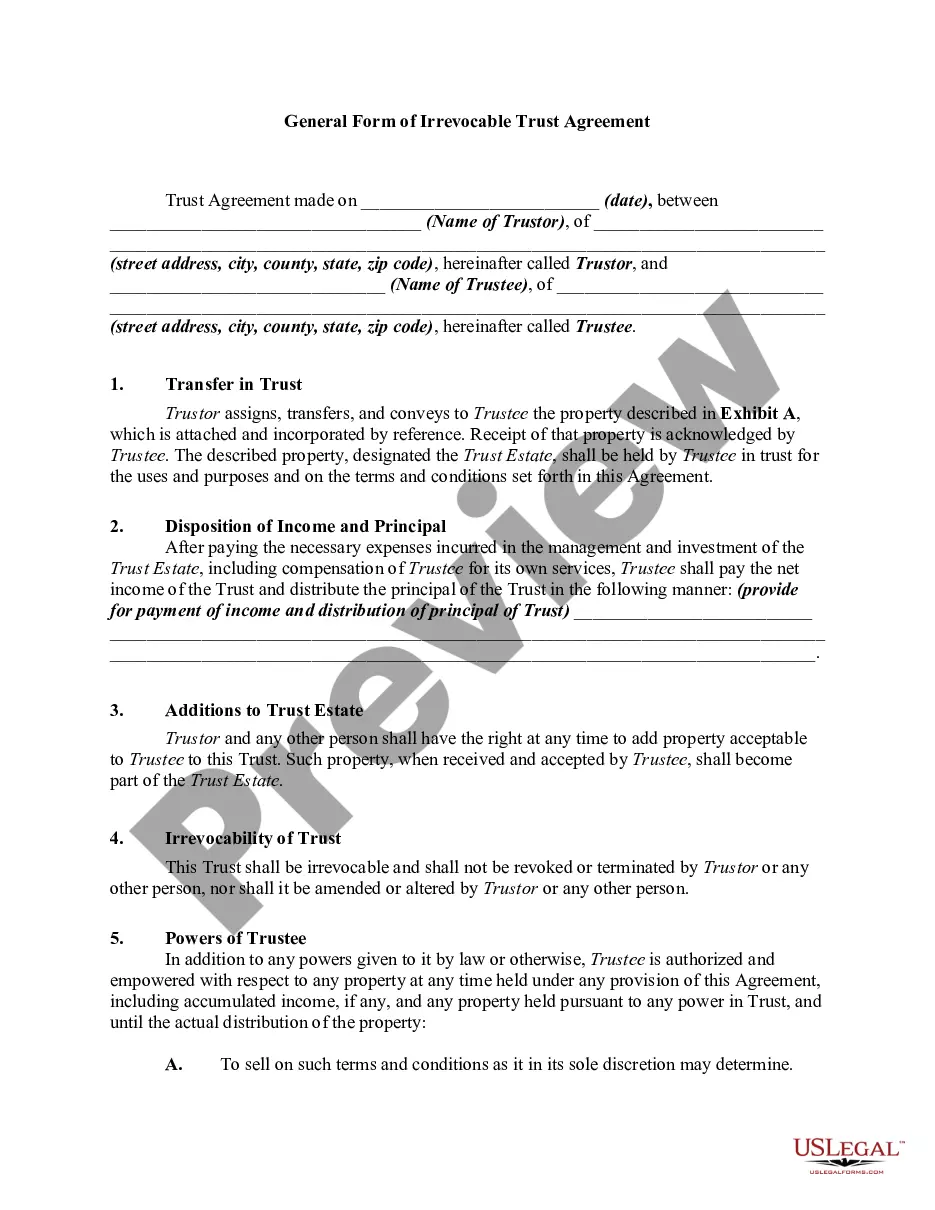
An irrevocable trust is a trust that cannot be modified or terminated without the permission of the beneficiary. In most states, a trust will be deemed irrevocable unless the Trustor specifies otherwise. Once the Trustor has transferred assets into the trust, s/he has no rights of ownership to the assets and the trust. Irrevocable trusts are preferred because it removes all incidents of ownership, thereby effectively removing the trust's assets from the grantor's taxable estate. The Trustor is also relieved of the tax liability on the income generated by the assets. This is the opposite of a "revocable trust", which allows the Trustor to modify the trust.
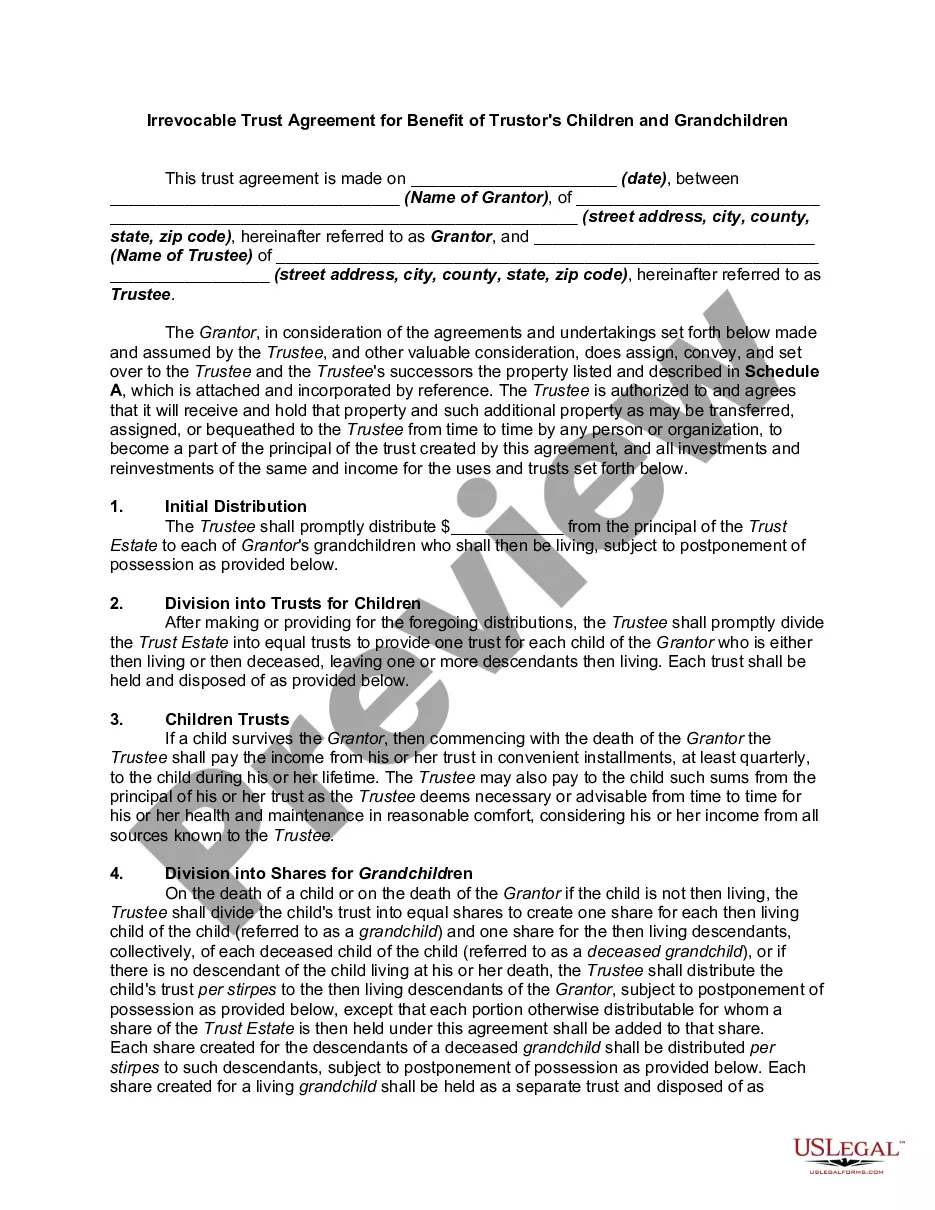
A Pot Trust is a trust set up for more than one beneficiary, typically children. The purpose of a Pot Trust is to keep the funds in one pot until a later event. For example, at the death of the parents, the assets may be kept in one pot until all the children have graduated from college or reached age 21.
Irrevocable Pot Trust Agreement
Instant download
Description
Free preview


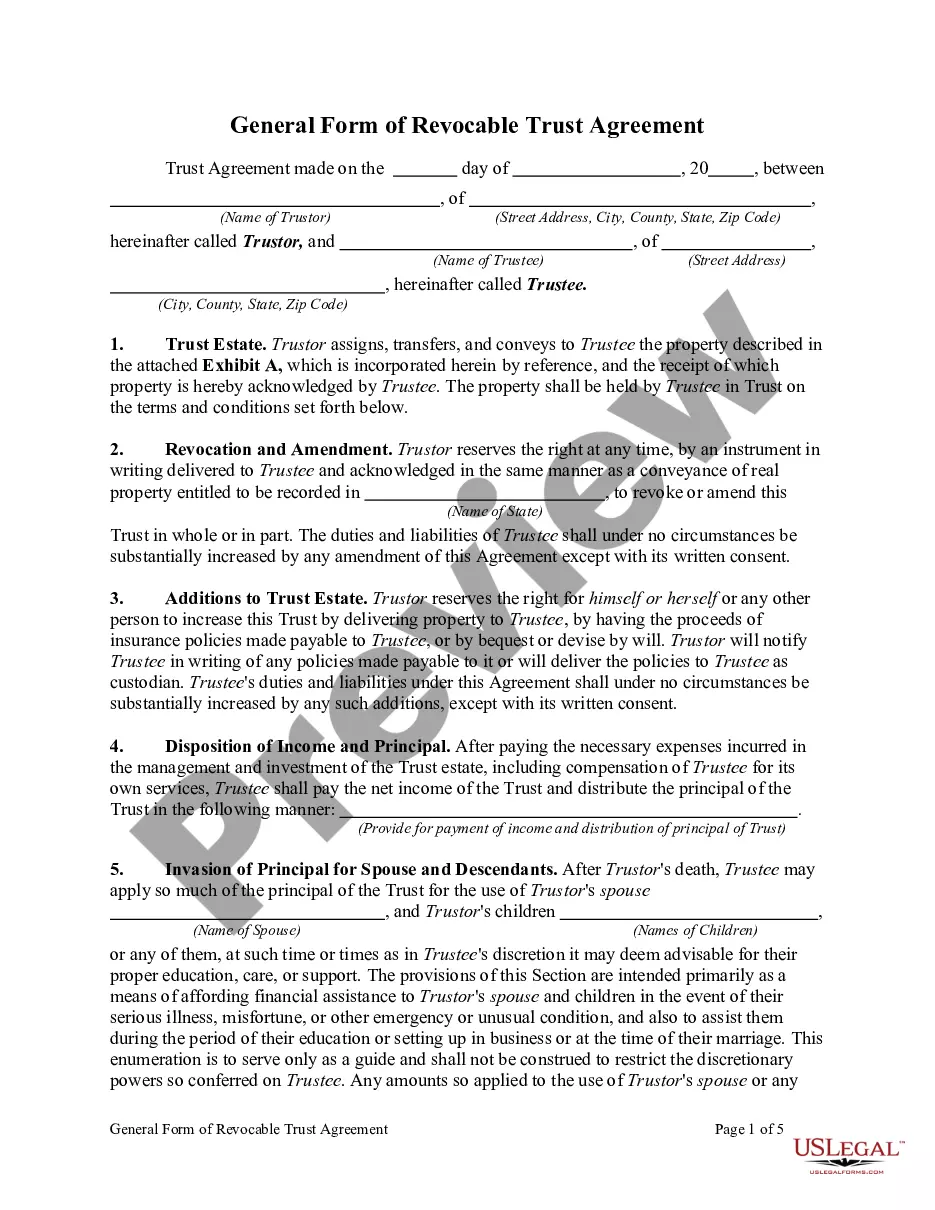
Key Concepts & Definitions
Irrevocable Pot Trust Agreement: An irrevocable pot trust agreement is a legal arrangement in the United States where assets are transferred into a trust, managed by a trustee for the benefit of multiple beneficiaries. Once the agreement is in place, it cannot be altered or terminated without the permission of the trust's beneficiaries.
Step-by-Step Guide
- Choose the Trust Type: Decide if an irrevocable pot trust fits your estate planning needs.
- Select a Trustee: Appoint a trustworthy and competent individual or institution to manage the trust.
- Define the Terms: Clearly outline the distribution protocols, beneficiary designations, and the conditions under which the trust operates.
- Transfer Assets: Legally transfer the assets you wish to include in the trust to the named trustee.
- Execute the Agreement: Both the trust creator and the trustee sign the trust agreement, thereby making it active and enforceable.
Risk Analysis
- Lack of Flexibility: Once established, it's challenging to modify an irrevocable trust, which can pose problems if the financial or personal circumstances change significantly.
- Complexity: Managing and setting up an irrevocable pot trust can be legally and administratively complex, requiring professional assistance.
- Costs: The costs associated with setting up and maintaining a pot trust may be considerable, including legal fees and trustee compensation.
Pros & Cons
Pros:- Asset Protection: Shields assets from creditors and legal judgements.
- Tax Benefits: Potentially reduces estate taxes payable upon the grantors death.
- Control Over Asset Distribution: Allows the grantor to specify terms and conditions for asset distribution.
- Irrevocability: No flexibility to make changes once established.
- Initial Setup Costs: Can be expensive to create and require ongoing management.
- Complexity in Management: Requires active management and can lead to disputes among beneficiaries.
Key Takeaways
An irrevocable pot trust agreement is a powerful tool in estate planning, providing asset protection and tax benefits, but it requires careful planning and consideration due to its complexity and irrevocable nature.
FAQ
What is the main advantage of an irrevocable pot trust?
The main advantage is asset protection from creditors and legal suits, and potential tax benefits.
Can an irrevocable pot trust be changed?
Once established, it is very difficult and often impossible to alter the terms of an irrevocable pot trust without the consent of all beneficiaries.
How to fill out Irrevocable Pot Trust Agreement?
Use the most comprehensive legal catalogue of forms. US Legal Forms is the perfect place for finding updated Irrevocable Pot Trust Agreement templates. Our platform offers 1000s of legal forms drafted by certified lawyers and categorized by state.
To get a sample from US Legal Forms, users only need to sign up for a free account first. If you are already registered on our service, log in and select the template you need and purchase it. Right after buying templates, users can see them in the My Forms section.
To get a US Legal Forms subscription online, follow the steps below:
- Find out if the Form name you have found is state-specific and suits your requirements.
- If the form features a Preview function, use it to review the sample.
- If the template does not suit you, use the search bar to find a better one.
- PressClick Buy Now if the sample meets your requirements.
- Select a pricing plan.
- Create a free account.
- Pay with the help of PayPal or with the credit/bank card.
- Select a document format and download the template.
- Once it is downloaded, print it and fill it out.
Save your time and effort with our service to find, download, and fill out the Form name. Join a large number of delighted clients who’re already using US Legal Forms!
Form popularity
FAQ
To the extent they do distribute income, they issue k-1s to the beneficiaries who received the income, who must report it on their income tax returns, whether or not they are the grantor of the trust. The trust then pays taxes on any undistributed income.
The main reasons for setting up an irrevocable trust are for estate and tax considerations. The benefit of this type of trust for estate assets is that it removes all incidents of ownership, effectively removing the trust's assets from the grantor's taxable estate.
A revocable living trust will not protect your assets from a nursing home. This is because the assets in a revocable trust are still under the control of the owner. To shield your assets from the spend-down before you qualify for Medicaid, you will need to create an irrevocable trust.
To oversimplify, the rule stated that a trust couldn't last more than 21 years after the death of a potential beneficiary who was alive when the trust was created. Some states (California, for example) have adopted a different, simpler version of the rule, which allows a trust to last about 90 years.
The main downside to an irrevocable trust is simple: It's not revocable or changeable. You no longer own the assets you've placed into the trust. In other words, if you place a million dollars in an irrevocable trust for your child and want to change your mind a few years later, you're out of luck.
The trustee of an irrevocable trust can only withdraw money to use for the benefit of the trust according to terms set by the grantor, like disbursing income to beneficiaries or paying maintenance costs, and never for personal use.
A 'beneficial owner' is any individual who ultimately, either directly or indirectly, owns or controls the trust and includes the settlor or settlors, the trustee or trustees, the protector or protectors (if any), the beneficiaries or the class of persons in whose main interest the trust is established.
The main reasons for setting up an irrevocable trust are for estate and tax considerations. The benefit of this type of trust for estate assets is that it removes all incidents of ownership, effectively removing the trust's assets from the grantor's taxable estate.