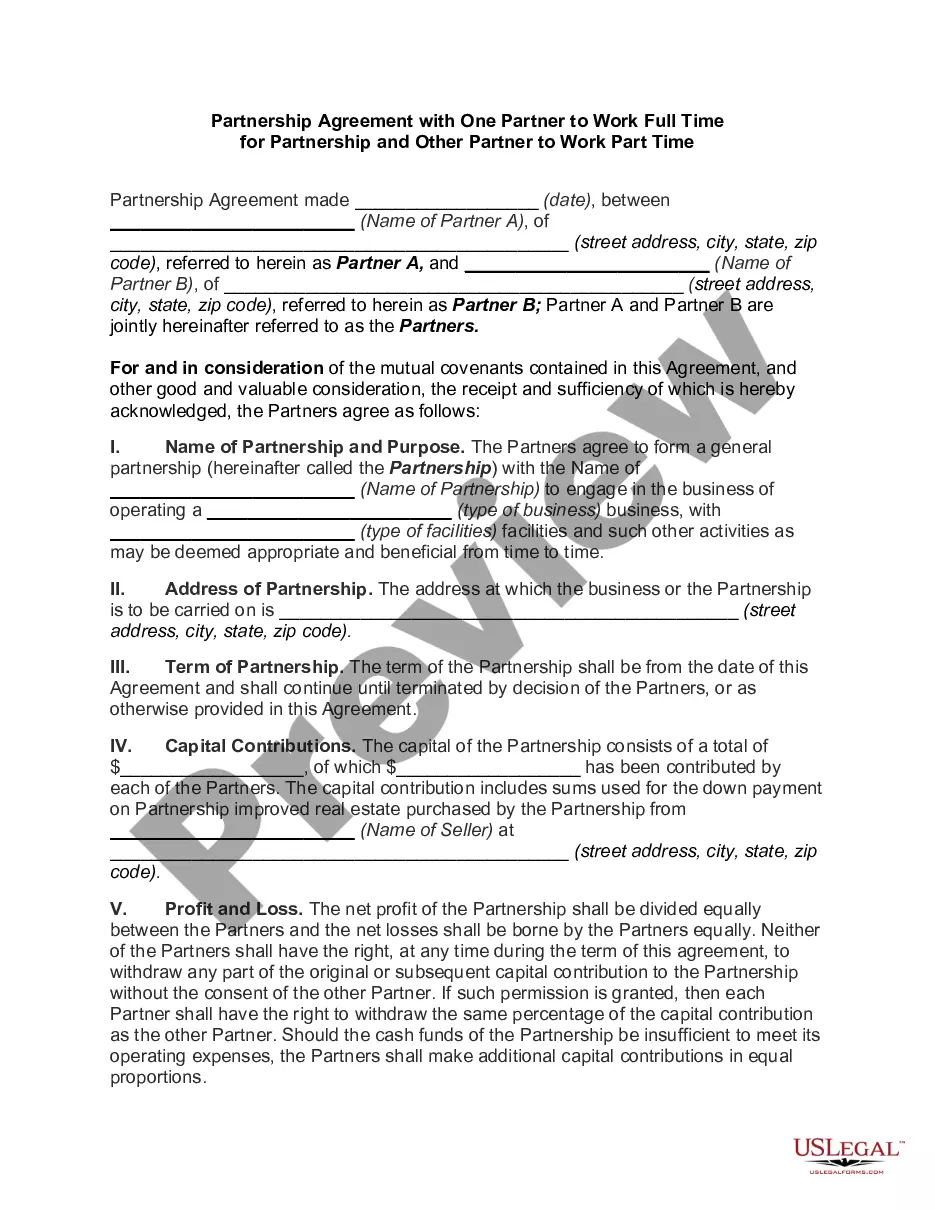
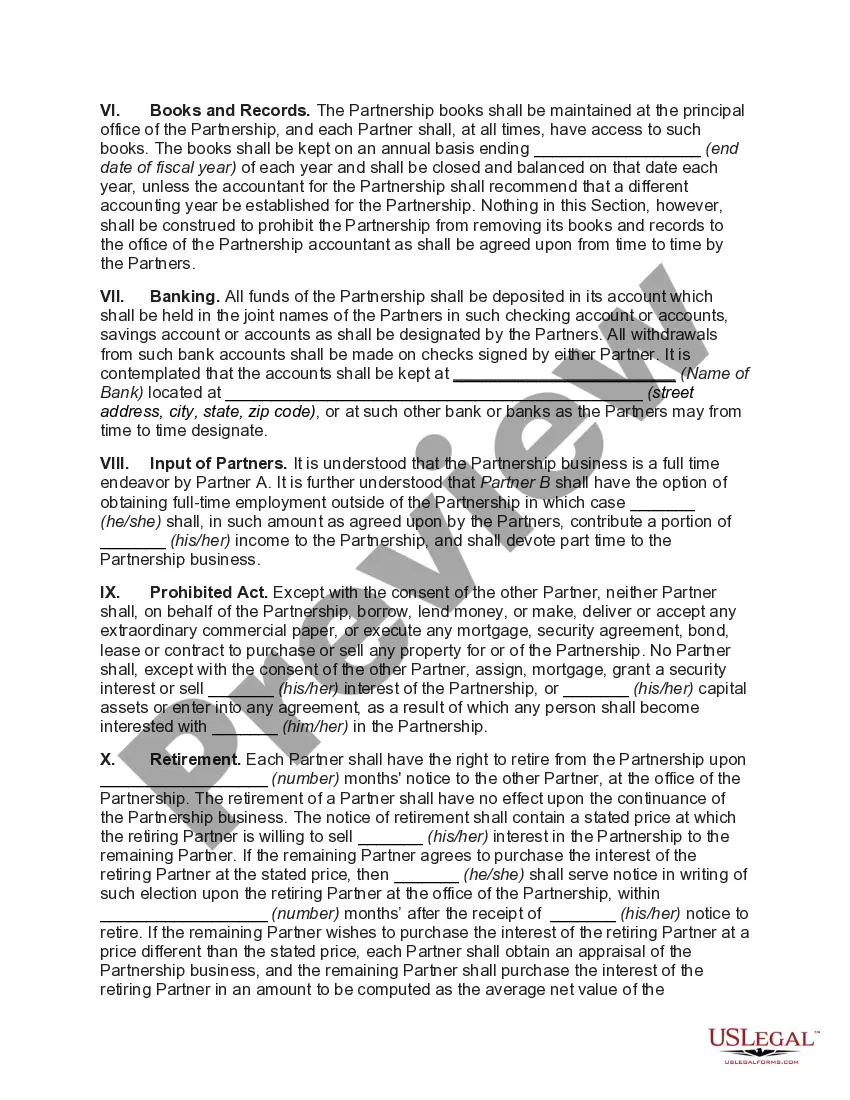
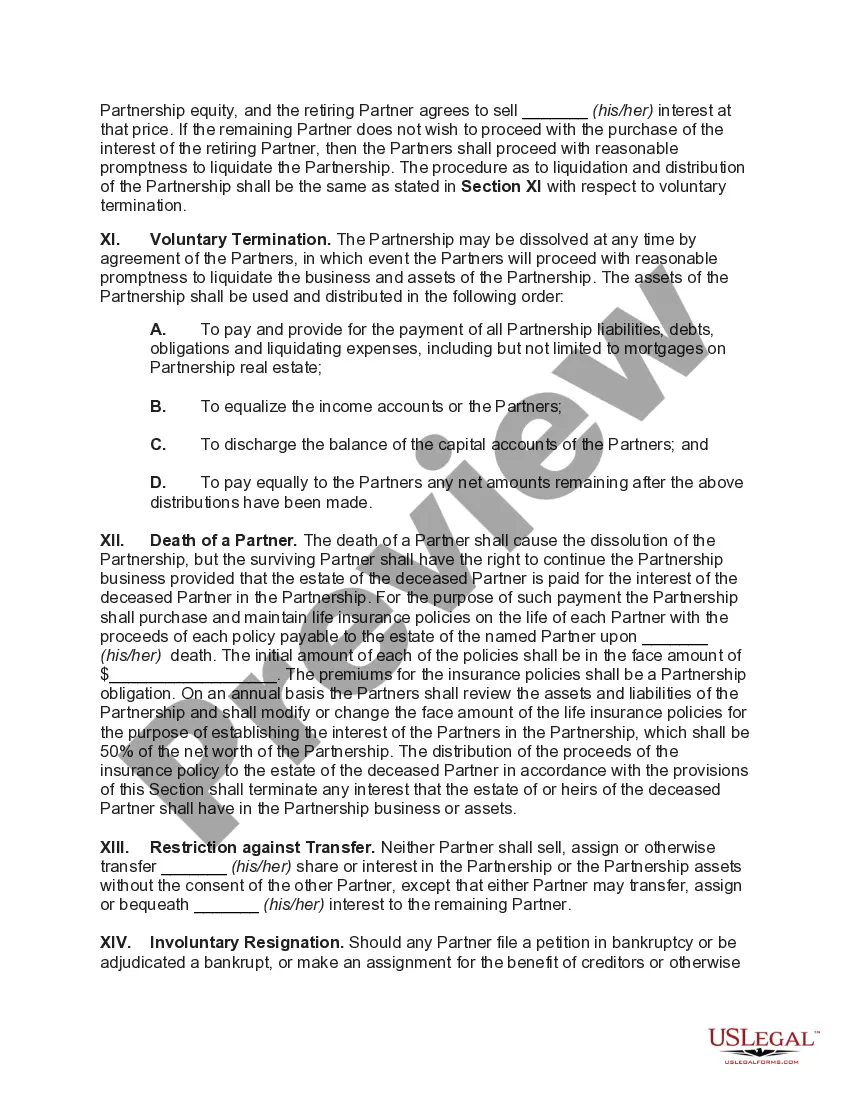
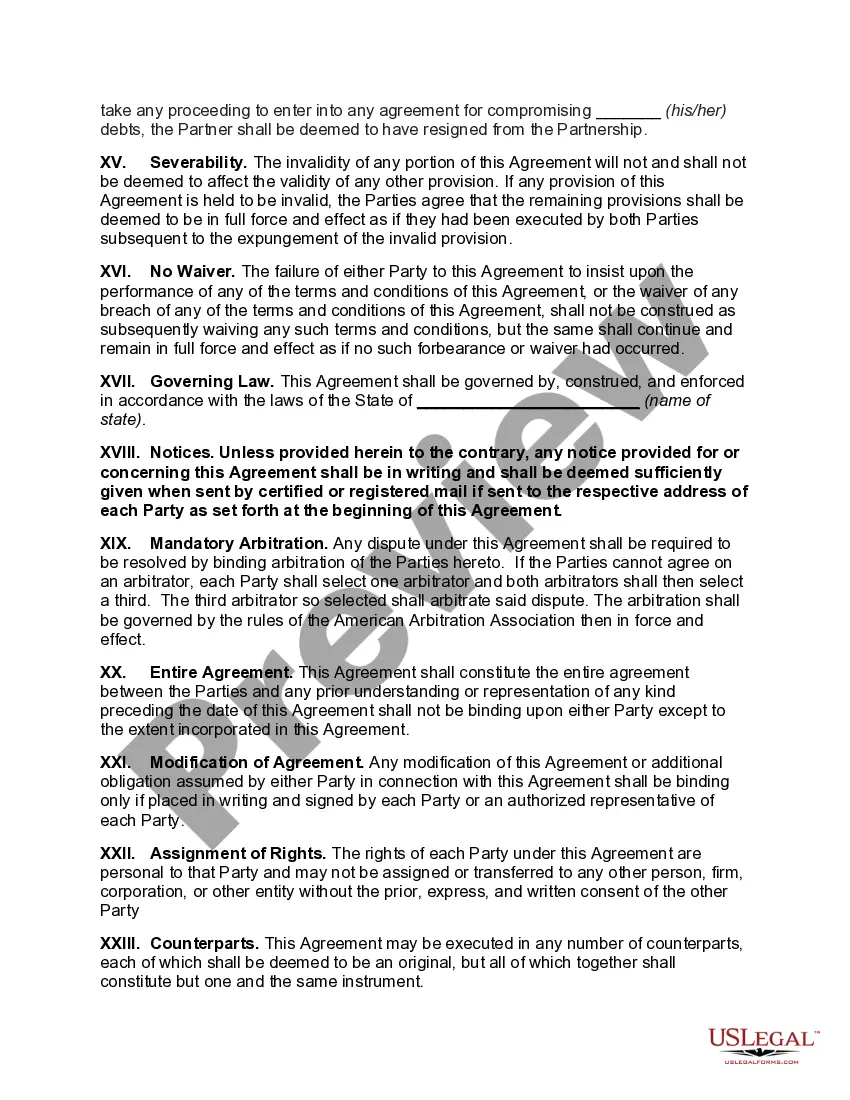
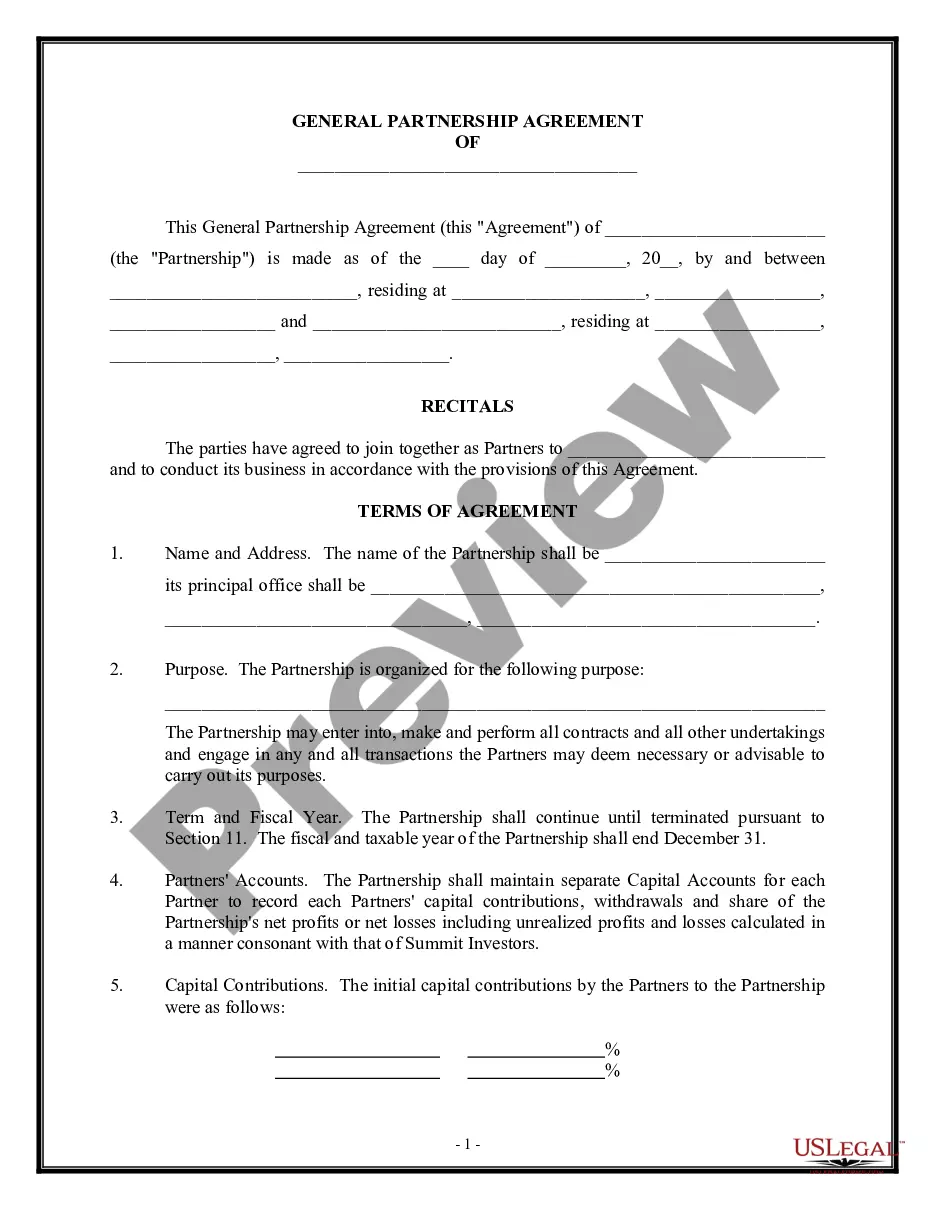
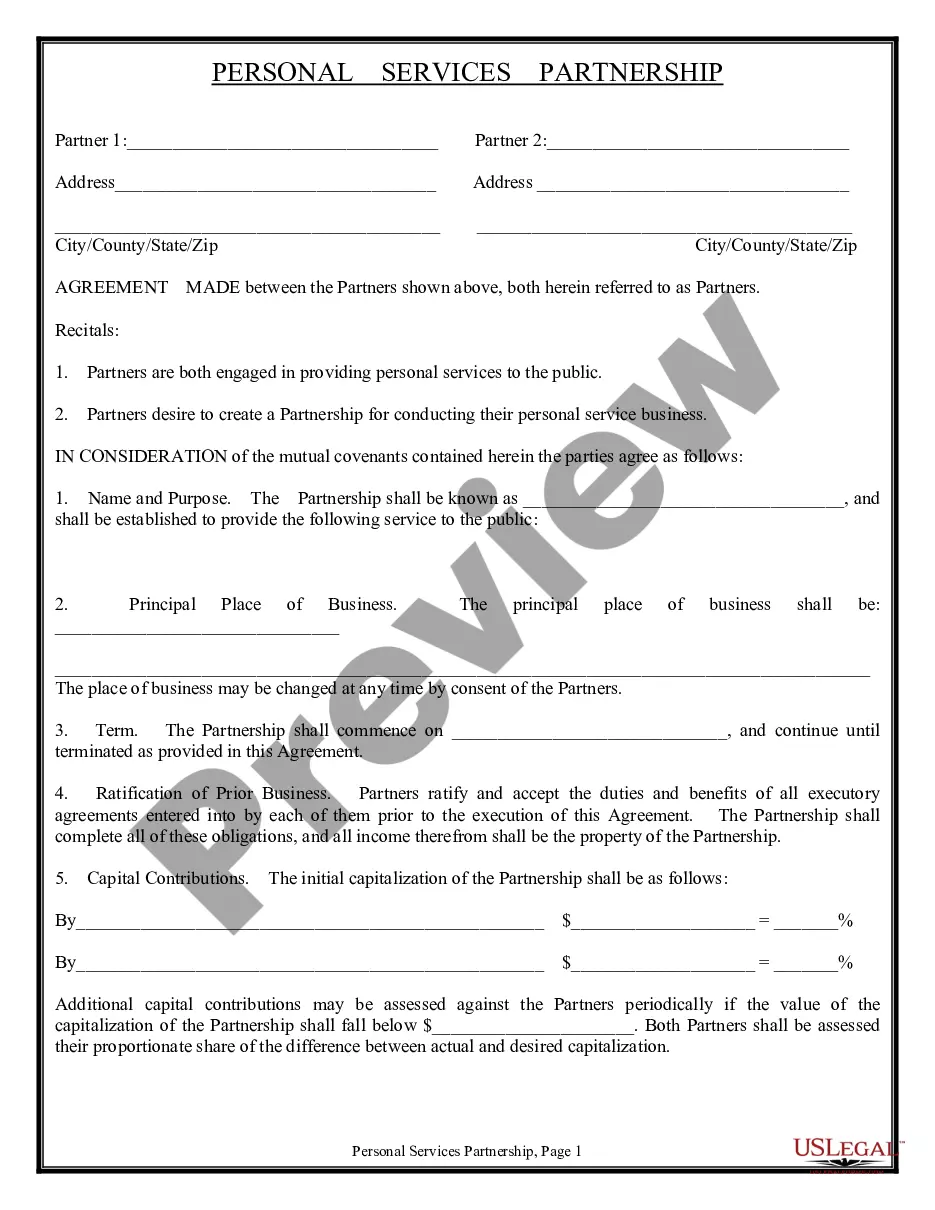
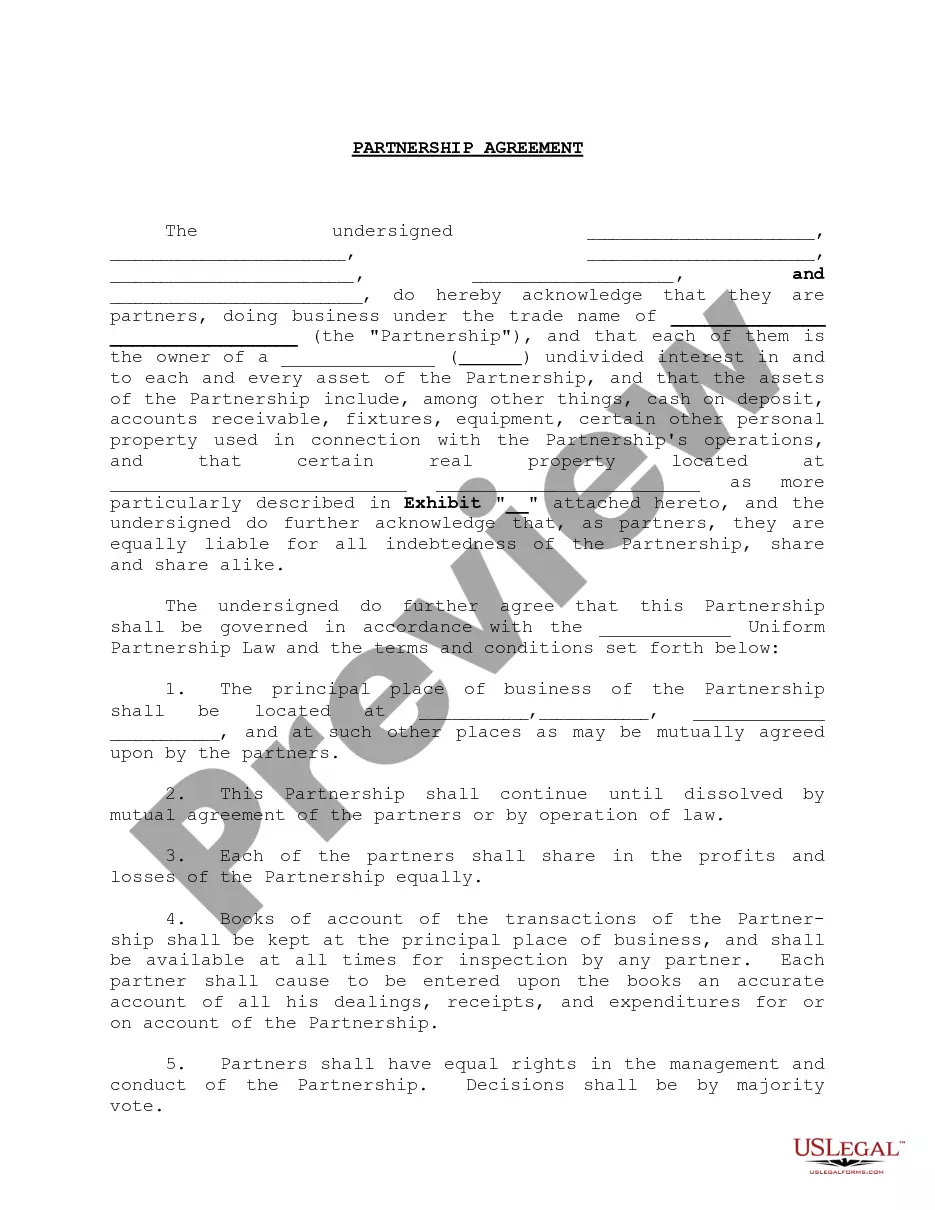
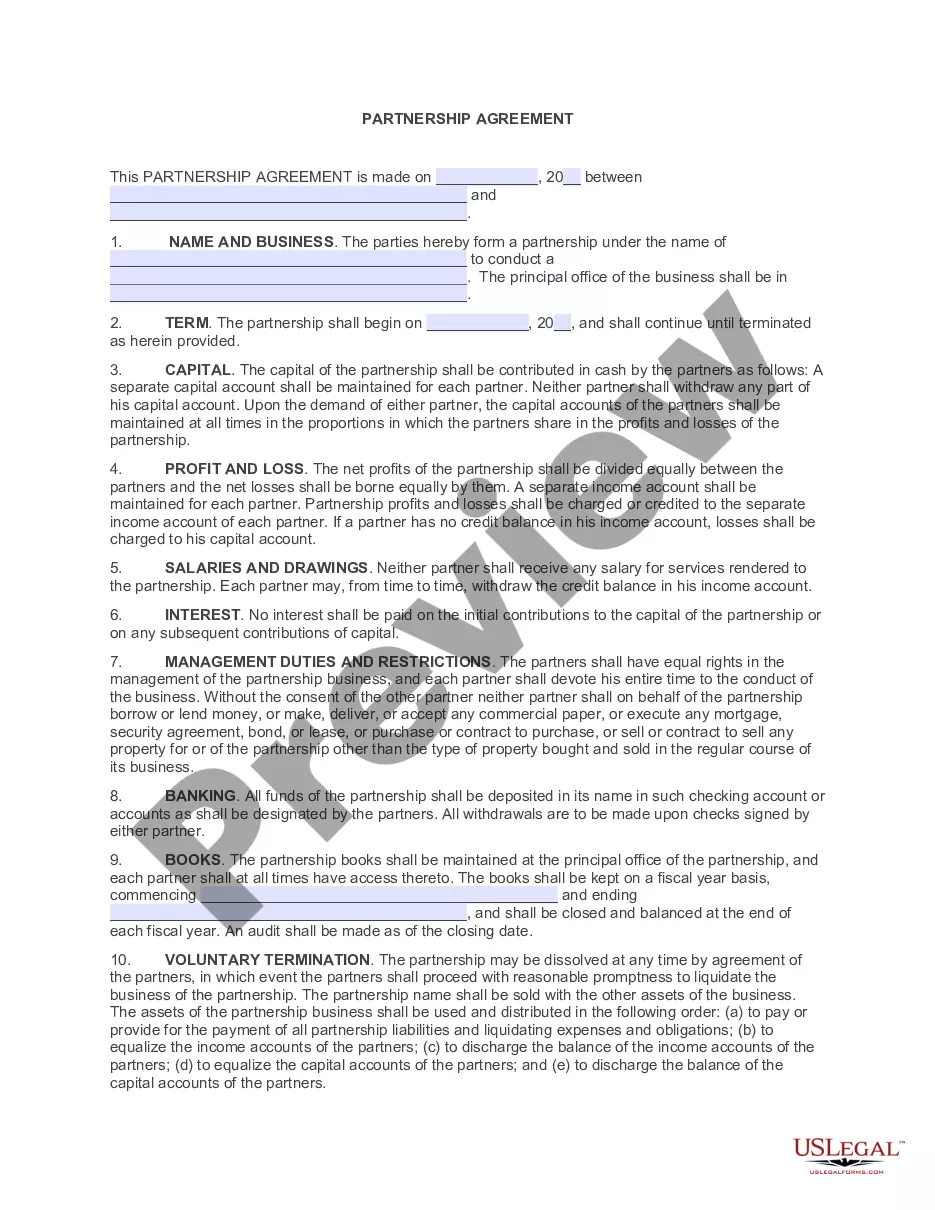
Partnership Agreement with One Partner to Work Full Time for Partnership and Other Partner to Work Part Time
Notarization guidance
In most cases, this form does not require notarization. However, some jurisdictions or signing circumstances might. US Legal Forms offers online notarization powered by Notarize, accessible 24/7 for a quick, remote process.
Get your form ready online
Our built-in tools help you complete, sign, share, and store your documents in one place.
Make edits, fill in missing information, and update formatting in US Legal Forms—just like you would in MS Word.
Download a copy, print it, send it by email, or mail it via USPS—whatever works best for your next step.
Sign and collect signatures with our SignNow integration. Send to multiple recipients, set reminders, and more. Go Premium to unlock E-Sign.
If this form requires notarization, complete it online through a secure video call—no need to meet a notary in person or wait for an appointment.
We protect your documents and personal data by following strict security and privacy standards.
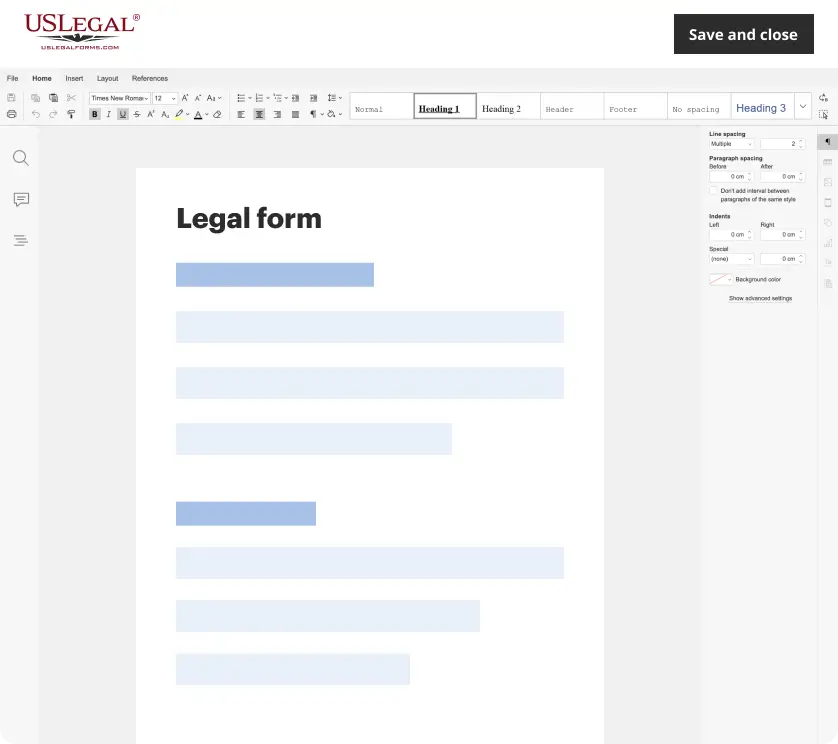
Make edits, fill in missing information, and update formatting in US Legal Forms—just like you would in MS Word.
Download a copy, print it, send it by email, or mail it via USPS—whatever works best for your next step.
Sign and collect signatures with our SignNow integration. Send to multiple recipients, set reminders, and more. Go Premium to unlock E-Sign.
If this form requires notarization, complete it online through a secure video call—no need to meet a notary in person or wait for an appointment.
We protect your documents and personal data by following strict security and privacy standards.
Looking for another form?






Form popularity
FAQ
Partners in a partnership (including certain members of a limited liability company (LLC)) are considered to be self-employed, not employees, when performing services for the partnership.
A Partnership agreement must clearly specify the name of the partnership firm, the names of the partners, the capital to be contributed by each partner, the profit or loss sharing ratio between partners, the business of the partnership, the duties, rights, powers and obligations of each partner and other relevant
Your Partnership's Name. Partnership Contributions. Allocations profits and losses. Partners' Authority and Decision Making Powers. Management. Departure (withdrawal) or Death. New Partners. Dispute Resolution.
Name of your partnership. Contributions to the partnership and percentage of ownership. Division of profits, losses and draws. Partners' authority. Withdrawal or death of a partner.
Name of the partnership. Contributions to the partnership. Allocation of profits, losses, and draws. Partners' authority. Partnership decision-making. Management duties. Admitting new partners. Withdrawal or death of a partner.
In a true "general partnership" you cannot have one partner. At the "end" of the partnership, the assets and liablities are distributed, paid or provided for. If one partner wishes to continue and the former partner does not object, after the...
Under current federal income tax law, the IRS has firmly established its position that an individual cannot be both a partner and an employee of the same partnership (e.g., Rev. Rul.
A partnership or LLC is a type of pass-through entity, where the profits and losses of the business pass through to the partners. Unlike in an S-Corporation (another pass-through entity), members or partners of this type of entity are not eligible to be paid as a W-2 employee, but they make take owner draws.
Under the IRS' view, an individual cannot be both a partner and an employee for purposes of wage withholding, payroll taxes or FUTA (Revenue Ruling 69-184).A partner's salary is reported to the partner on a Schedule K-1 as a guaranteed payment rather than on a Form W-2.