Indemnification Agreement for the Benefit of Corporate Director, Officer, Employee, Agent, or Representative
What is this form?
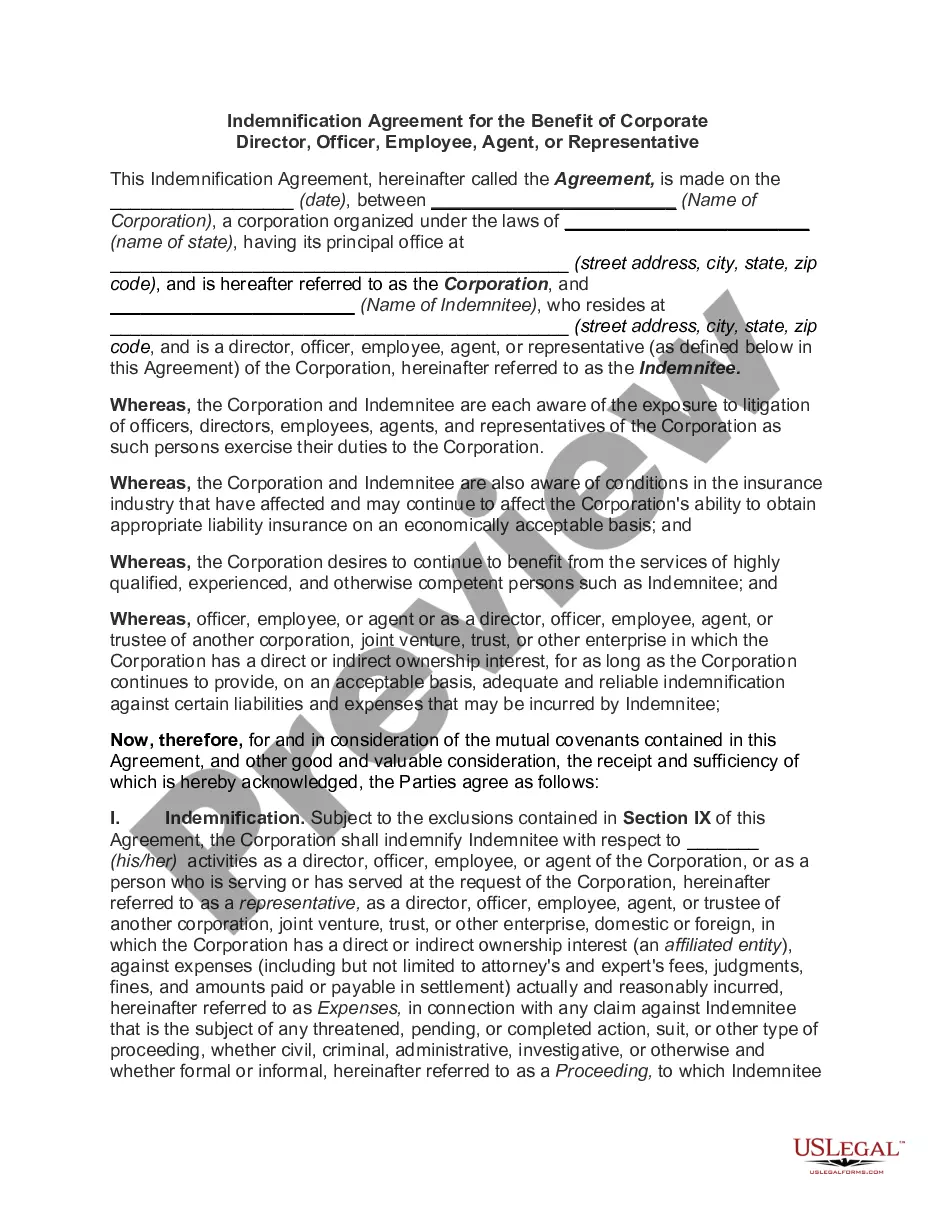
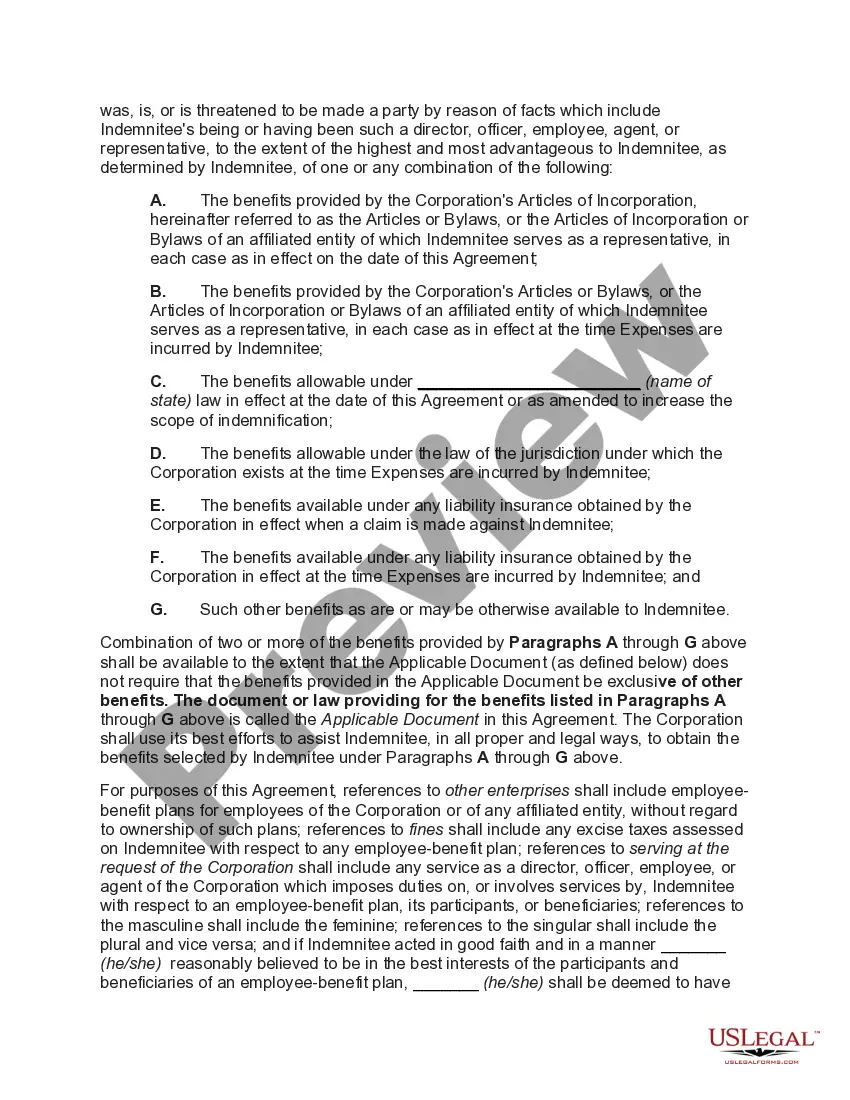
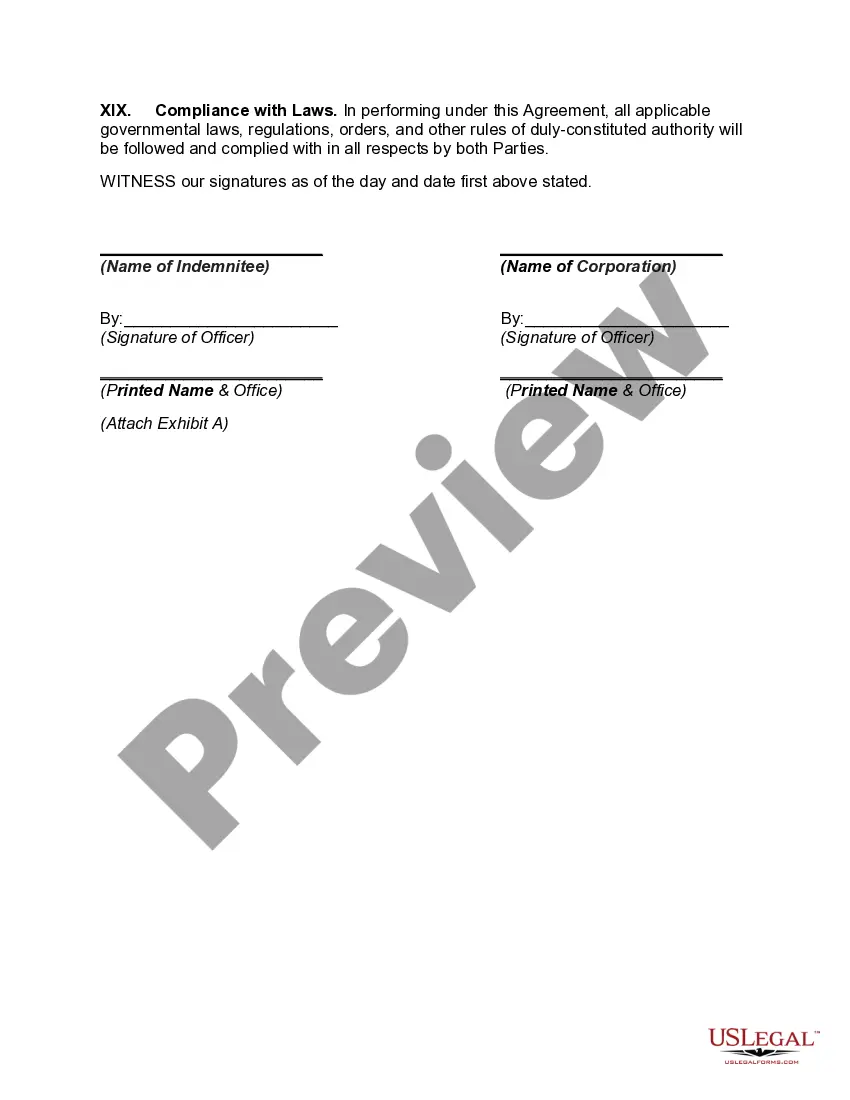
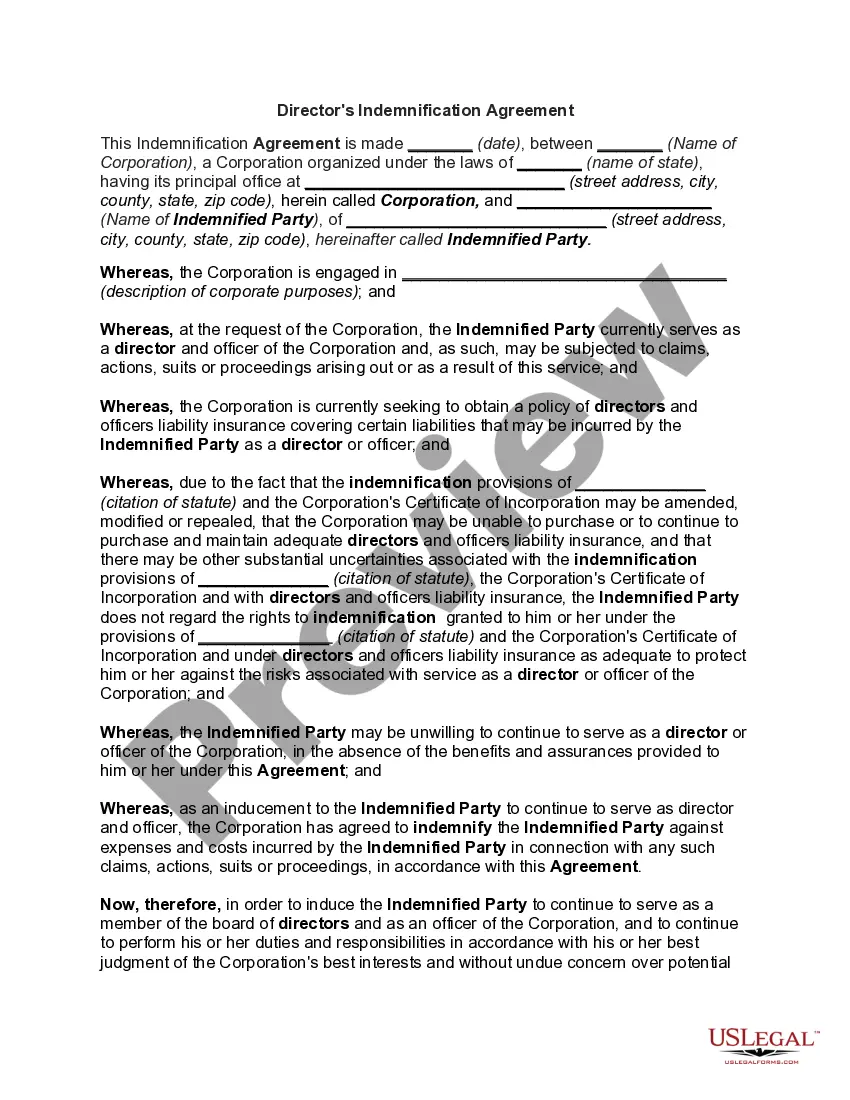
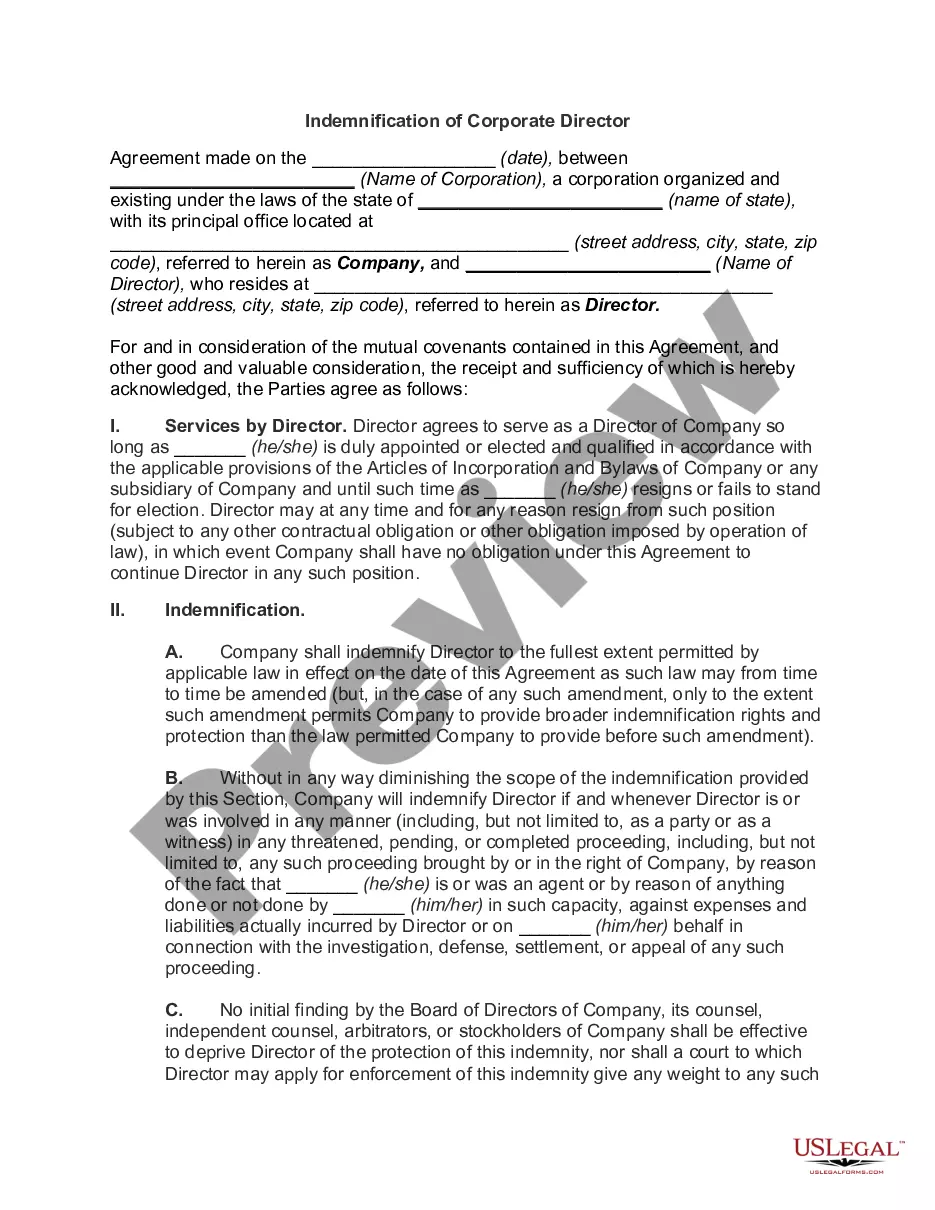
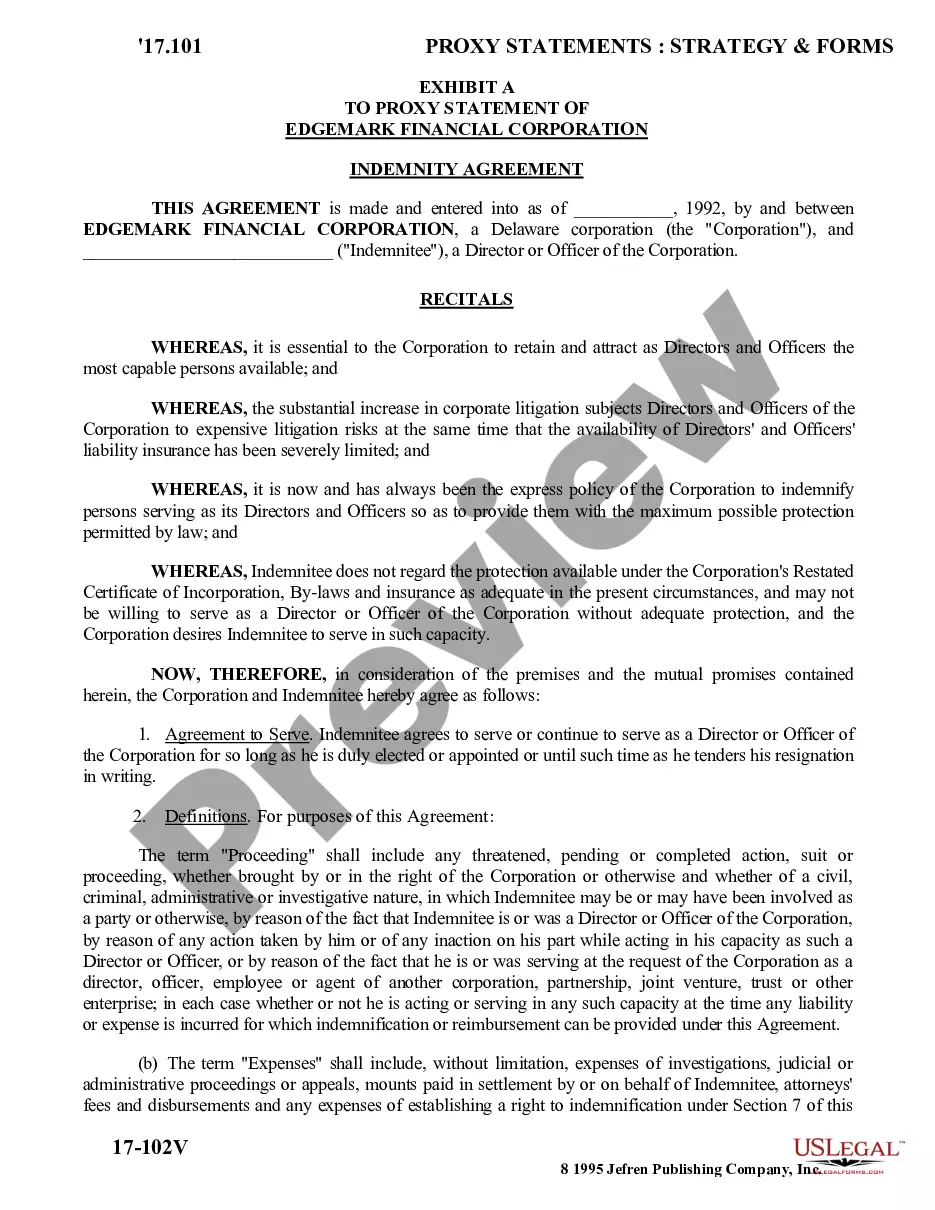
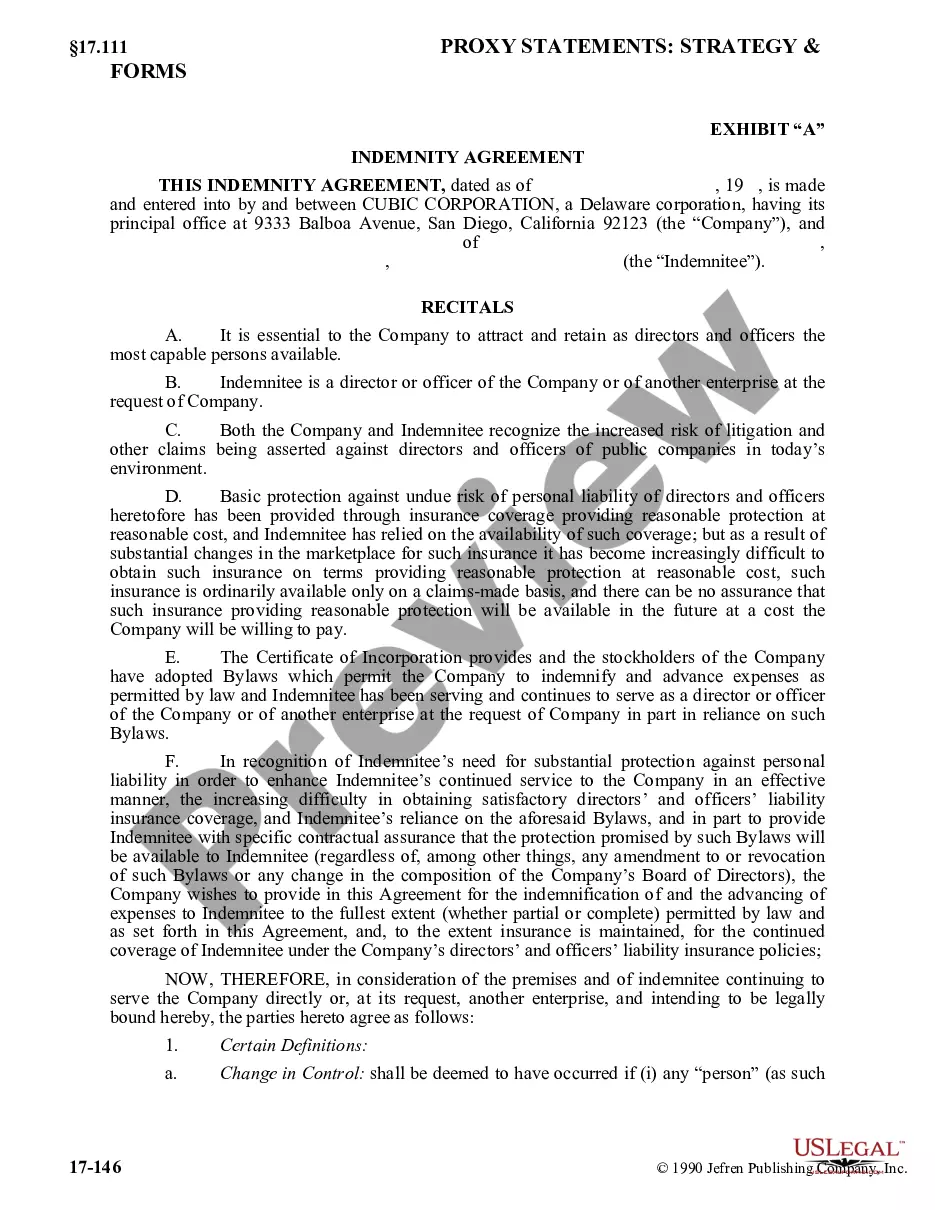
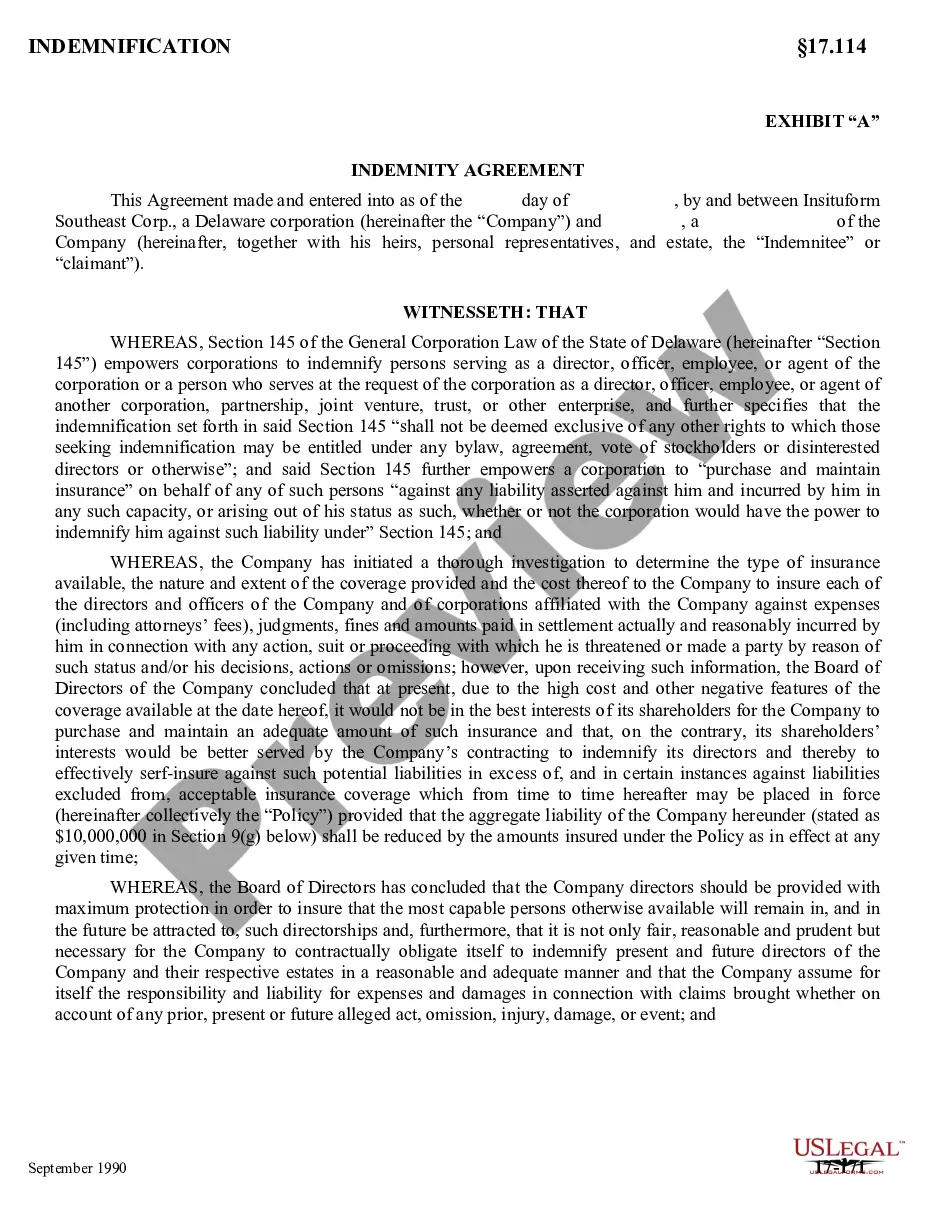
This Indemnification Agreement provides legal protection for corporate directors, officers, employees, agents, or representatives from potential liabilities arising from their official duties. It outlines the Corporation's commitment to indemnify these individuals against legal claims, ensuring they do not face financial ruin due to actions taken in good faith while serving the Corporation. This agreement is crucial for fostering a secure environment for individuals to perform their roles without fear of personal liability, differing from general liability waivers or other indemnification forms which may not be specific to corporate settings.
Main sections of this form
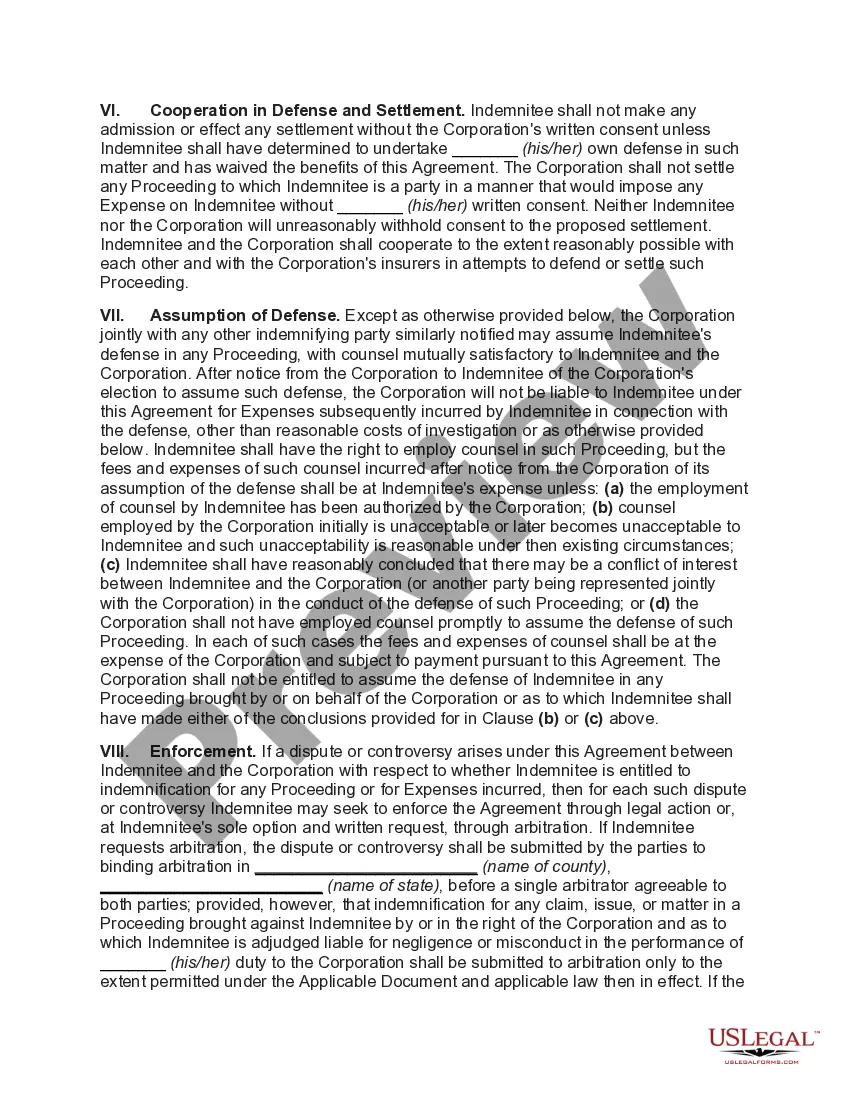
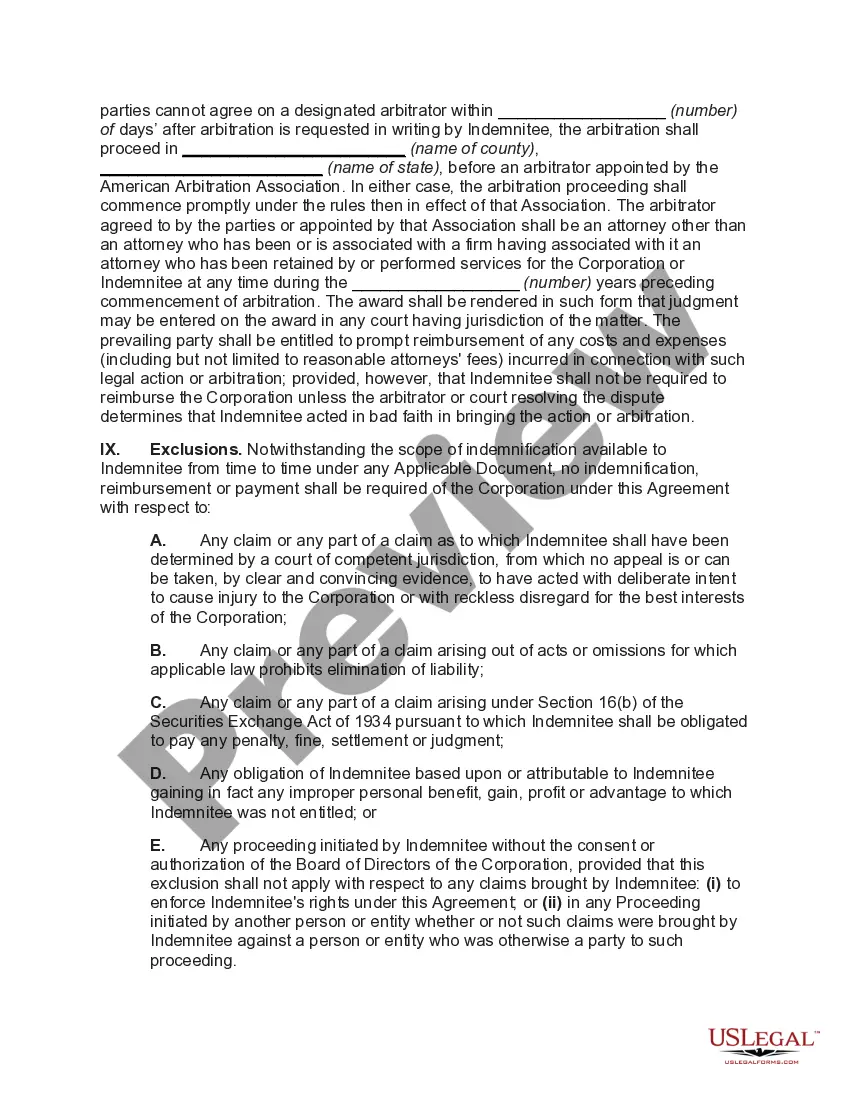
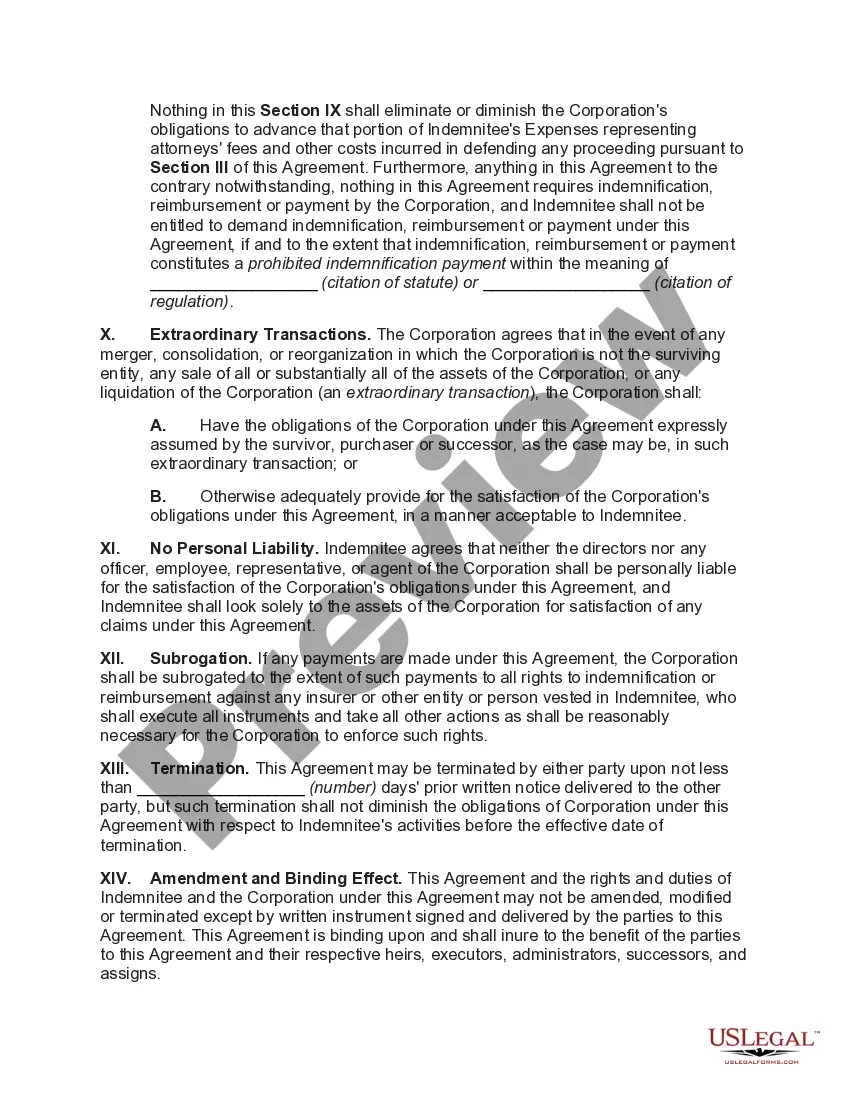
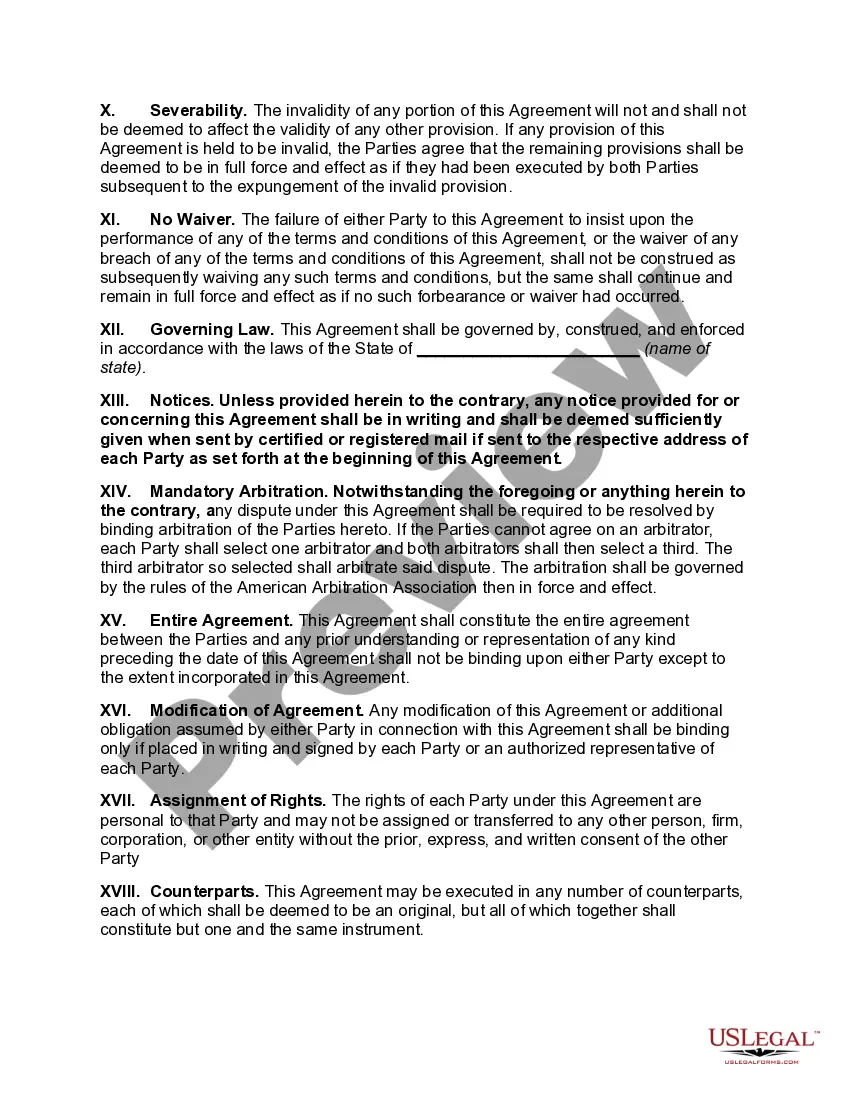
Indemnification Clause: Details the Corporation's obligations to cover expenses incurred by the Indemnitee in legal proceedings.
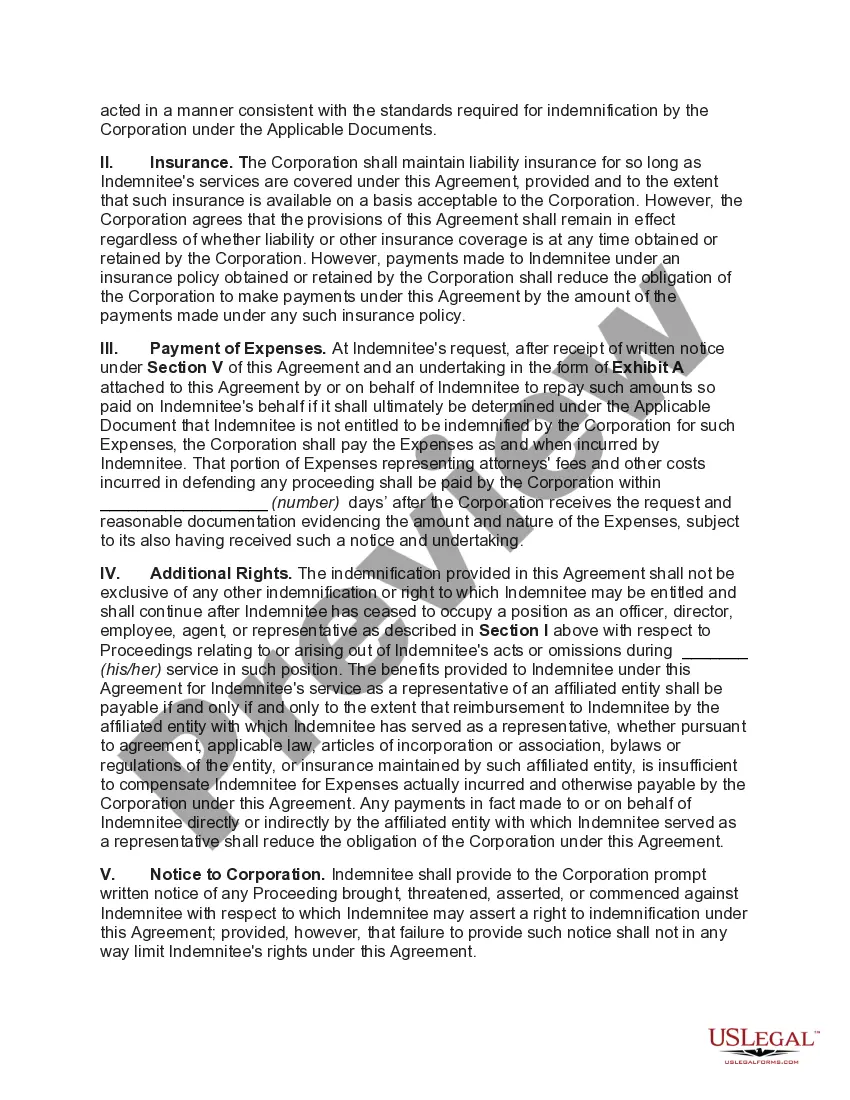
Insurance Requirements: States the terms of liability insurance the Corporation must maintain for the benefit of the Indemnitee.
Payment of Expenses: Outlines how and when the Corporation will reimburse the Indemnitee for legal costs.
Exclusions: Specifies circumstances where the Corporation is not liable to indemnify the Indemnitee.
Notice Requirements: Mandates the Indemnitee to inform the Corporation promptly about any claims against them.
Governing Law: Indicates which state's laws govern the terms of the agreement.
Situations where this form applies
This form should be used when a corporation wants to formally protect its directors, officers, or employees from potential legal claims arising from their actions performed on behalf of the corporation. It is particularly beneficial in cases where these individuals face litigation related to their duties, allowing them to focus on their responsibilities rather than the fear of personal financial loss.
Intended users of this form
- Corporate directors
- Corporate officers
- Corporate employees
- Agents of the corporation
- Representatives involved in corporate activities
Completing this form step by step
- Identify the parties involved: Fill in the names of the Corporation and the Indemnitee.
- Specify the date of the agreement and the relevant state where the Corporation is organized.
- Complete the indemnification clauses by entering conditions under which indemnification applies.
- Include any specific exclusions as necessary within the appropriate section.
- Have the designated corporate officer sign the agreement and attach any required exhibits.
Notarization guidance
This form does not typically require notarization unless specified by local law. However, checking jurisdictional requirements is advisable to ensure compliance.
Get your form ready online
Our built-in tools help you complete, sign, share, and store your documents in one place.
Make edits, fill in missing information, and update formatting in US Legal Forms—just like you would in MS Word.
Download a copy, print it, send it by email, or mail it via USPS—whatever works best for your next step.
Sign and collect signatures with our SignNow integration. Send to multiple recipients, set reminders, and more. Go Premium to unlock E-Sign.
If this form requires notarization, complete it online through a secure video call—no need to meet a notary in person or wait for an appointment.
We protect your documents and personal data by following strict security and privacy standards.

Make edits, fill in missing information, and update formatting in US Legal Forms—just like you would in MS Word.

Download a copy, print it, send it by email, or mail it via USPS—whatever works best for your next step.

Sign and collect signatures with our SignNow integration. Send to multiple recipients, set reminders, and more. Go Premium to unlock E-Sign.

If this form requires notarization, complete it online through a secure video call—no need to meet a notary in person or wait for an appointment.

We protect your documents and personal data by following strict security and privacy standards.
Common mistakes to avoid
- Failing to provide accurate information regarding the Corporation and Indemnitee.
- Not reviewing local state laws that may affect the indemnification terms.
- Overlooking notification requirements regarding claims.
- Neglecting to update clauses concerning changes in management or corporate structure.
Why use this form online
- Convenient and quick access to professional legal forms.
- Easily editable for customization to specific corporate needs.
- Reliable templates crafted by licensed attorneys. li>Secure storage of important legal documents for future use.
Looking for another form?
Form popularity
FAQ
Section 145(b) empowers a corporation to indemnify its directors against expenses incurred in connection with the defense or settlement of an action brought by or in the right of the corporation, subject to the standard of conduct determination, and except that no indemnification may be made as to any claim to which
Indemnification is a legal term which means ?to pay the costs of or to reimburse another person for costs incurred?. In the context of a non-profit corporation, indemnification would involve the payment. by the corporation of the legal costs, expenses, settlements and judgments of a director or.
With two exceptions, the Companies Act prohibits a company from exempting or indemnifying a director from any liability arising from any negligence, default, breach of duty, or breach of trust.
In the indemnification agreement, the company agrees to reimburse the director or officer for losses incurred in legal proceedings related to his service as company director or officer and to advance funds to the director or officer to pay expenses as they are incurred.
Under a typical indemnification provision, the employer agrees to indemnify the executive against lawsuits, claims, or demands against the employee resulting from the employee's good faith performance of his or her duties and obligations.
With respect to criminal proceedings, a director or officer is entitled to indemnification or advancement only if he or she had no reasonable basis to believe that his or her conduct was unlawful.
Many company constitutions set out rights of indemnity for directors, and often also include provision for directors and officers (D&O) insurance. Alternatively, they may simply provide that the company may indemnify directors. The deed of indemnity is an agreement between the company and a director.