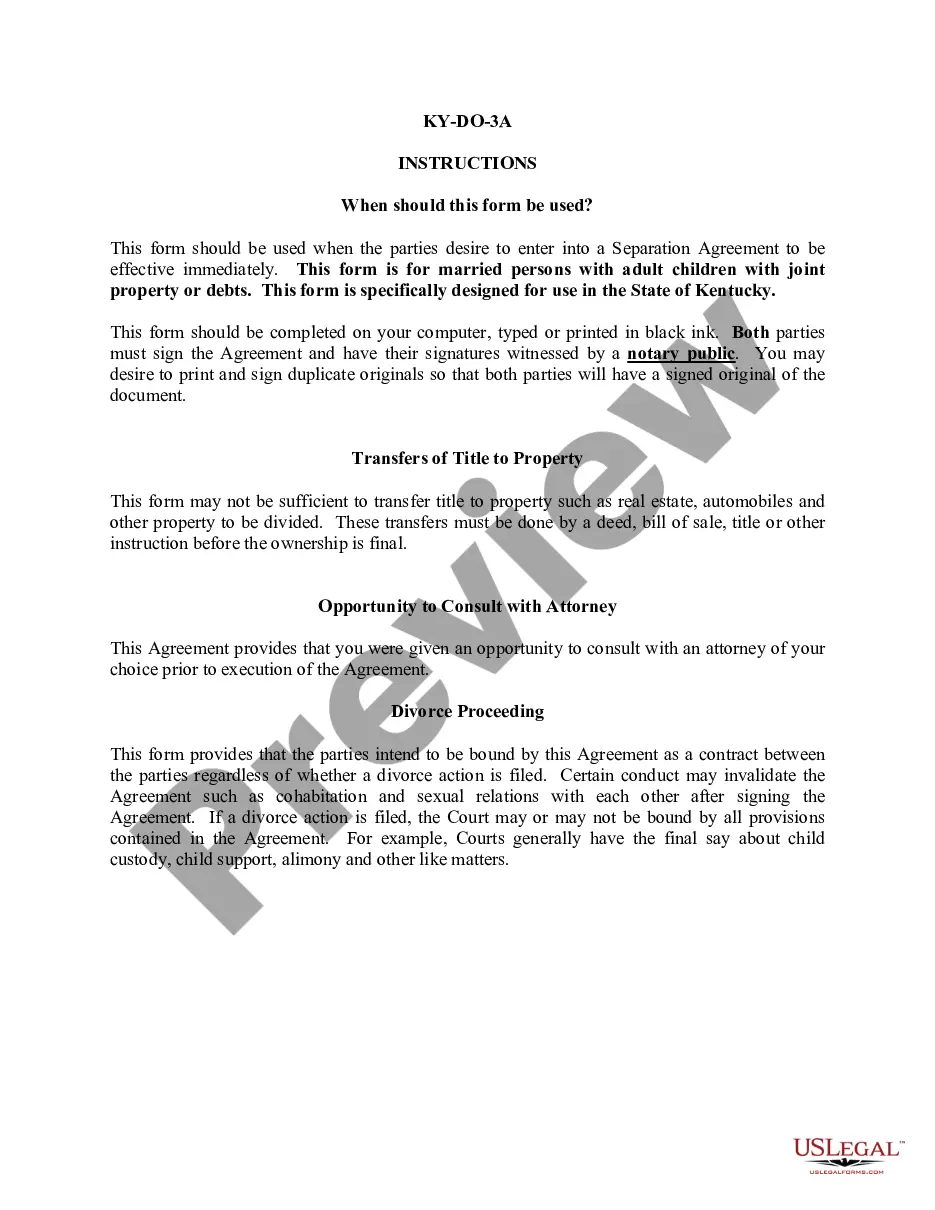
Indemnification of Surety by Subcontractor on Contractor's Bond
About this form
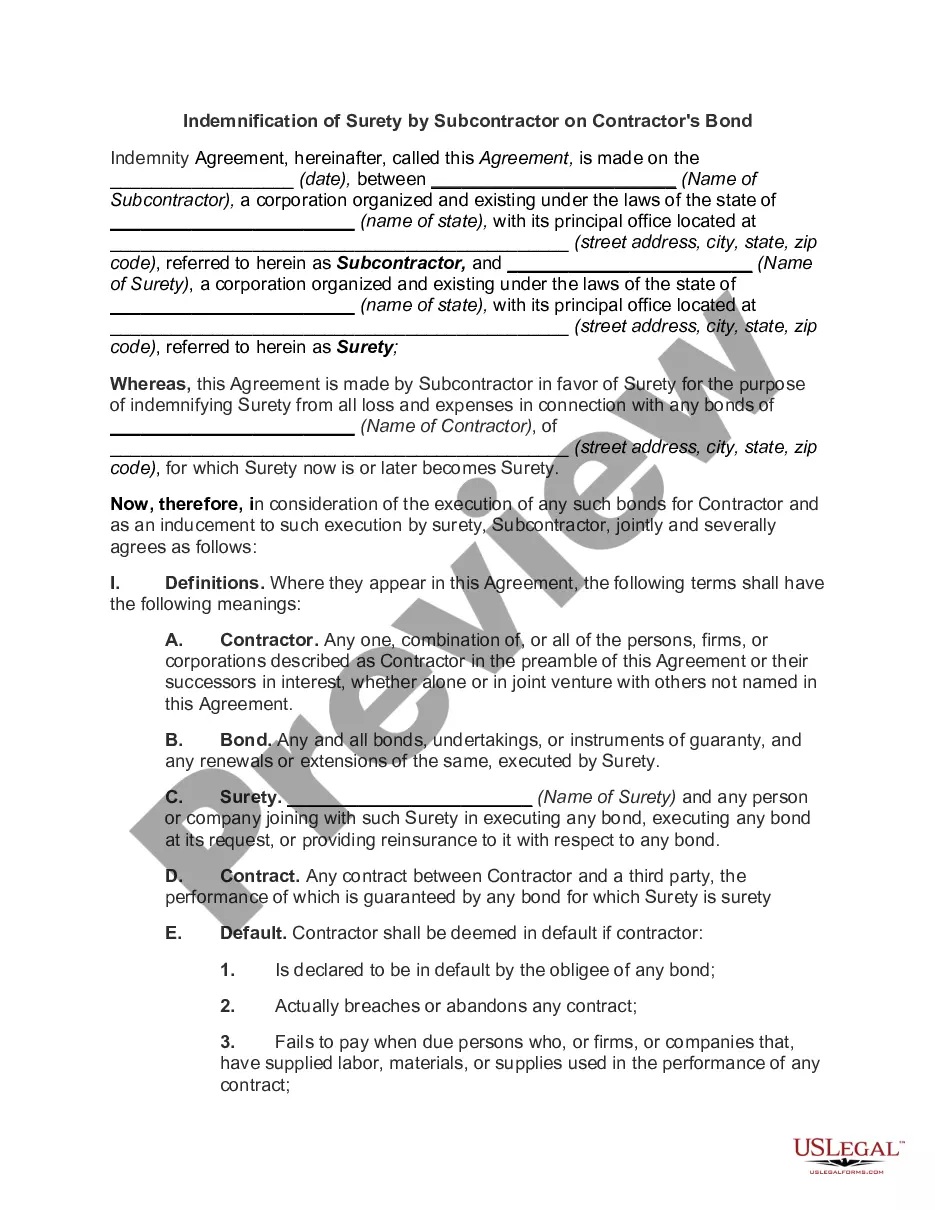
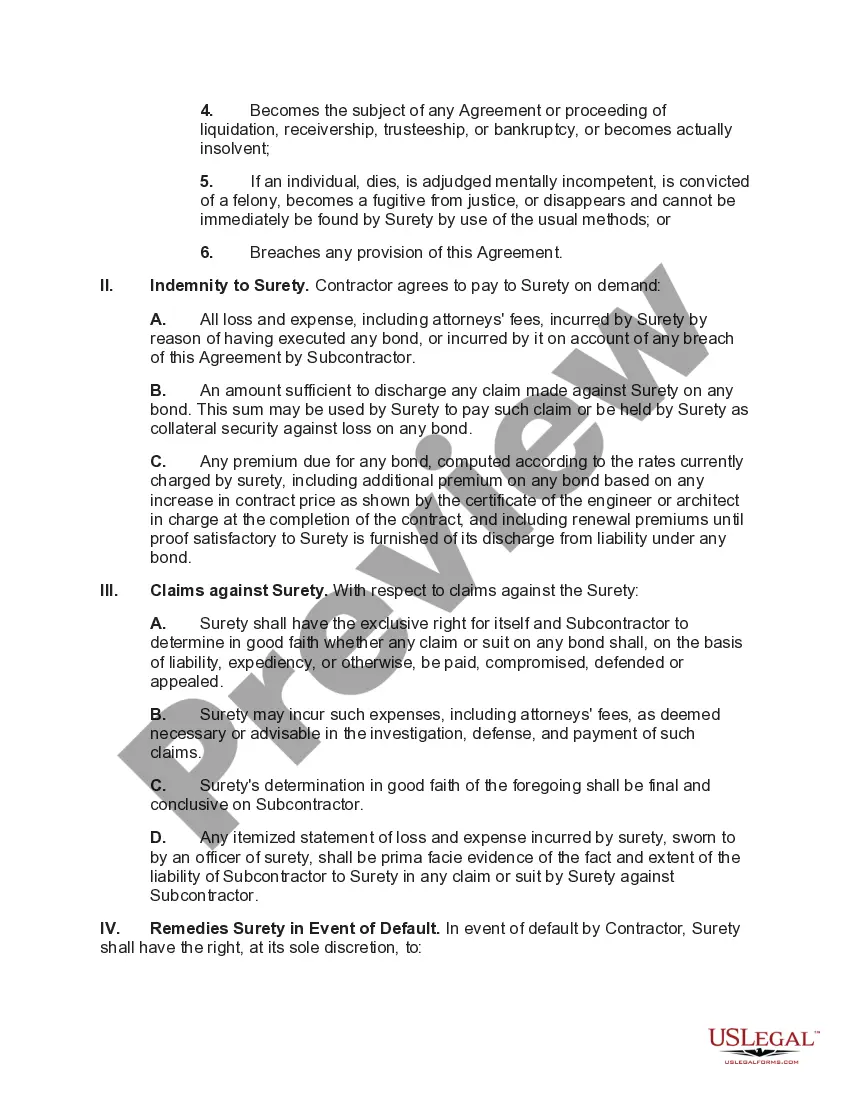
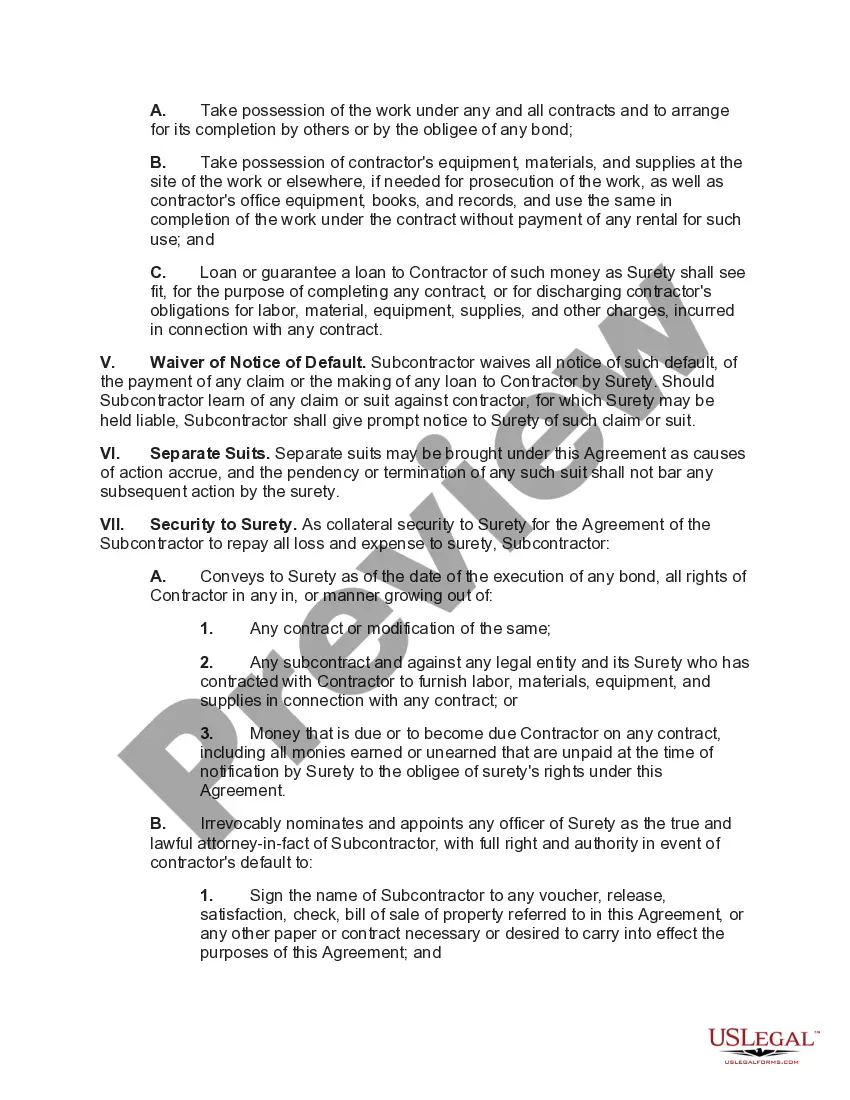
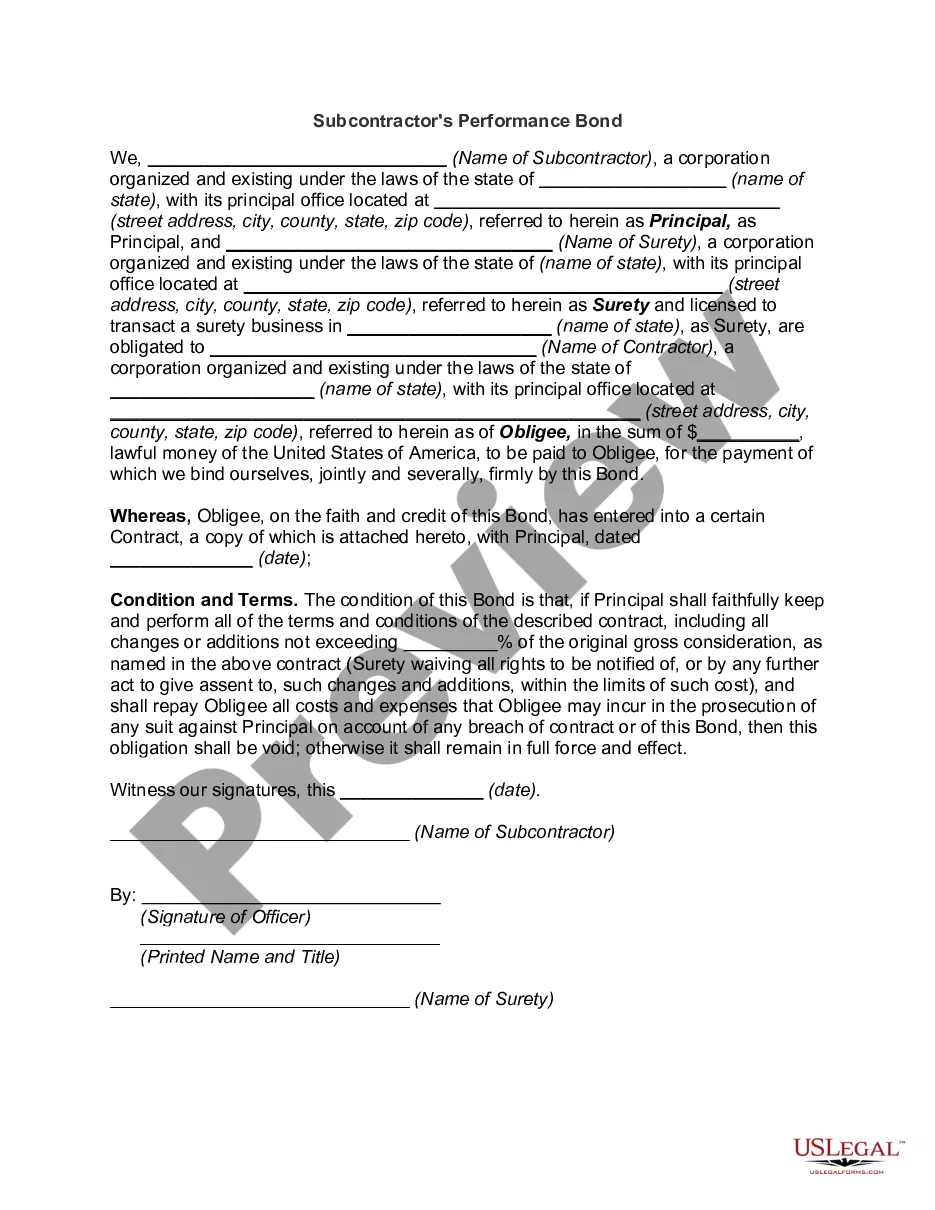
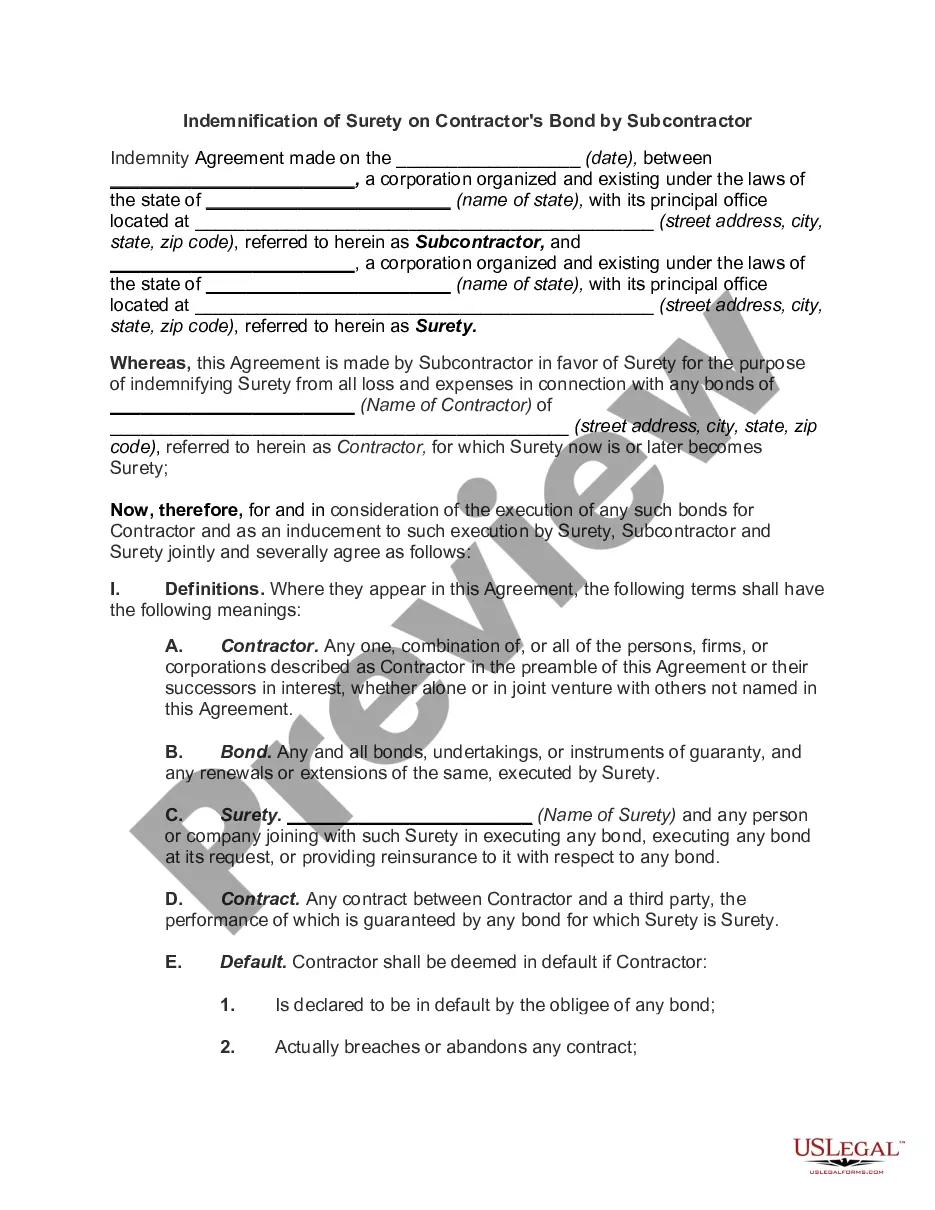
The Indemnification of Surety by Subcontractor on Contractor's Bond is a legal document that establishes an agreement between a subcontractor and a surety. This form ensures that the subcontractor indemnifies the surety for any losses or expenses arising from bonds related to the subcontractor's work on a contractor's project. This form differs from other indemnity forms by specifically outlining the roles and responsibilities of both the subcontractor and the surety in relation to contractor bonds.
Form components explained
- Definitions: Clarifies key terms such as Contractor, Surety, Bond, and Default.
- Indemnity Agreement: Details the obligations of the subcontractor to cover losses incurred by the surety.
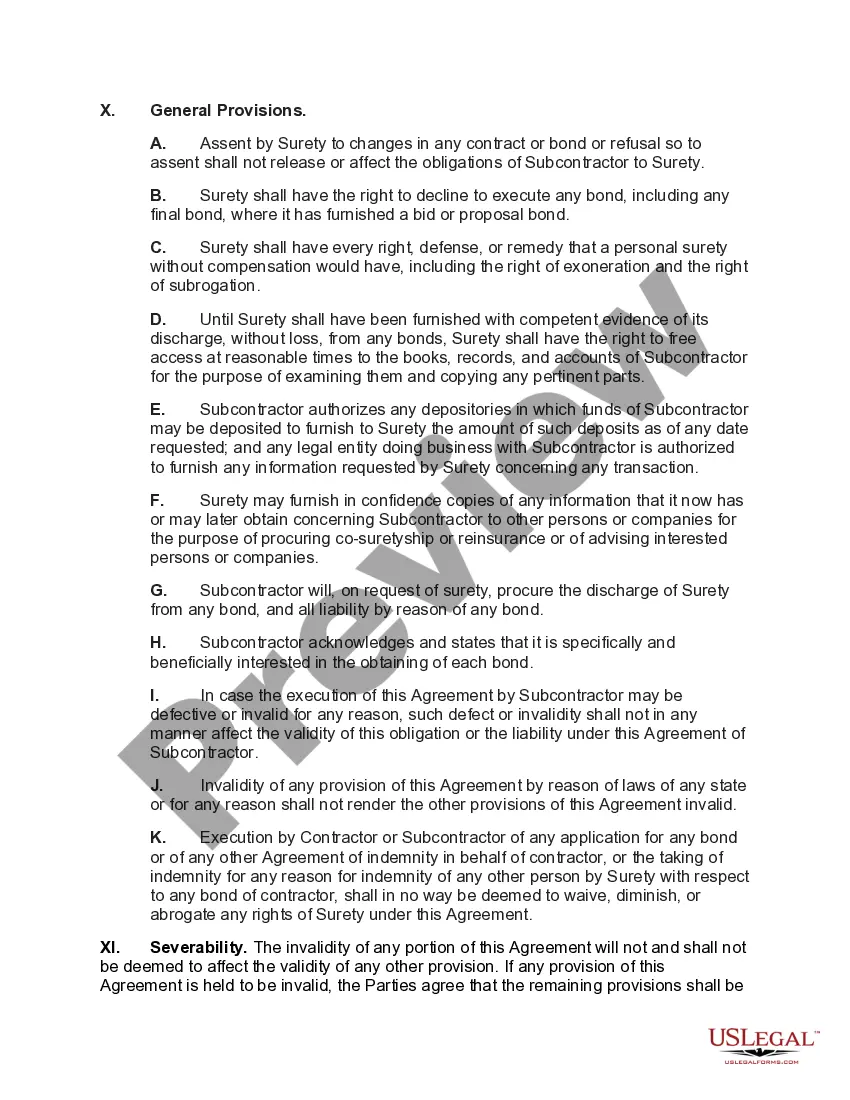
- Claims against Surety: Outlines how claims will be handled, including the surety's rights to make decisions regarding claims.
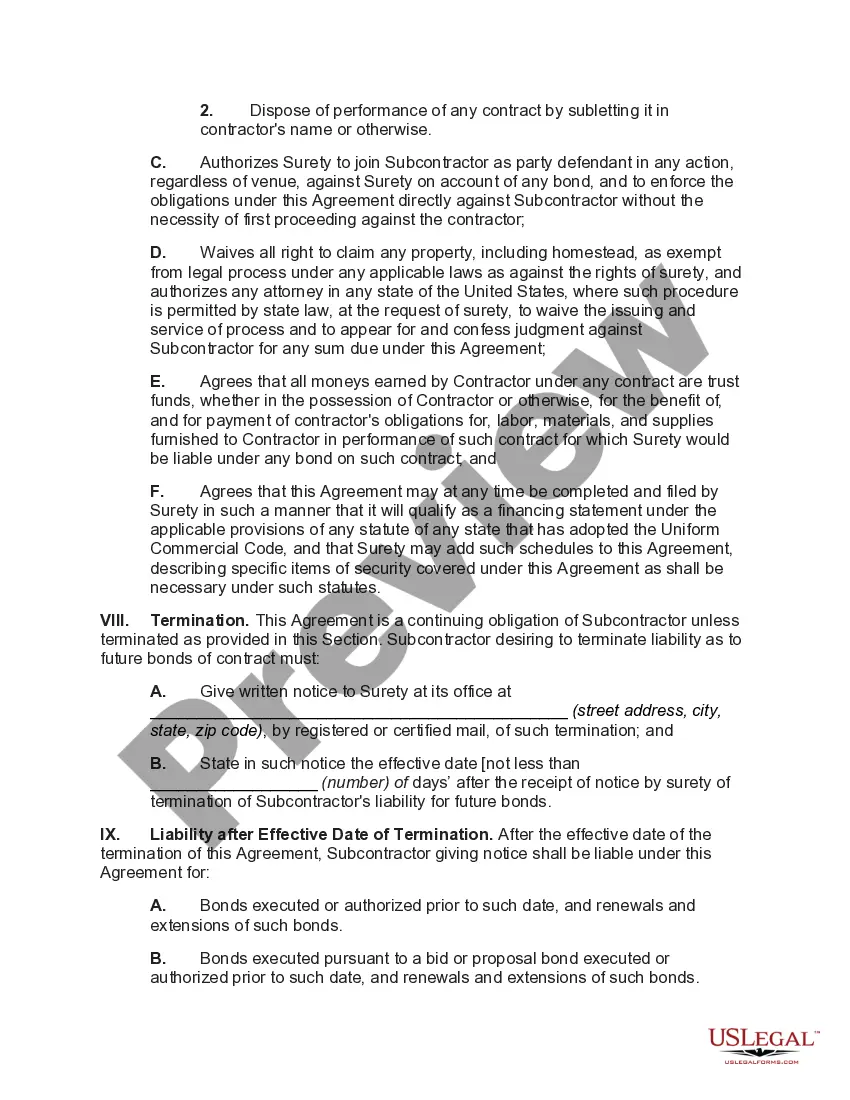
- Termination Clause: Specifies how the indemnity agreement can be terminated and the liability that persists after termination.
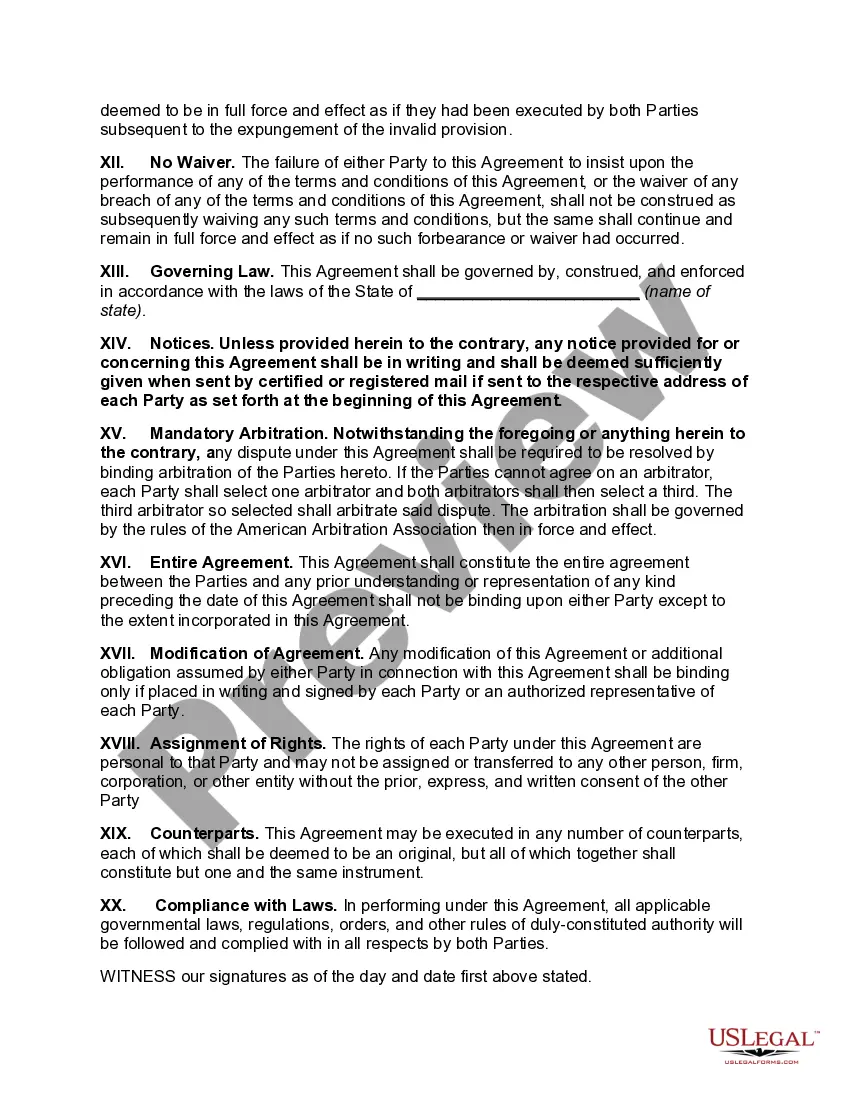
- Governing Law: Identifies the legal jurisdiction applicable to this agreement.

Common use cases
This form should be used whenever a subcontractor is involved in a project that requires the contractor to post a bond. It protects the surety from financial losses that may occur if the contractor defaults on their obligations. Typical situations include construction projects where the contractor needs to secure payment or performance bonds to fulfill contractual obligations with third parties.
Intended users of this form
- Subcontractors looking to establish a financial responsibility to their surety.
- Contractors who need to ensure their subcontractors can support the bonds taken out on their behalf.
- Sureties that wish to outline their rights and recourse in maintaining the indemnity of their bonds.
How to prepare this document
- Identify the parties involved: Clearly list the names and addresses of the subcontractor and surety.
- Enter the relevant dates: Specify the date on which the agreement is made.
- Define the terms: Fill in the key definitions, including those for Contractor and Surety, as they relate to the agreement.
- Sign and date the agreement: Ensure that authorized representatives from both parties sign and provide their titles.
- Provide notice requirements: Include any necessary information related to the termination or changes to the agreement.
Does this document require notarization?
This form does not typically require notarization unless specified by local law. Ensure to check state-specific requirements to confirm notarization rules.
Get your form ready online
Our built-in tools help you complete, sign, share, and store your documents in one place.
Make edits, fill in missing information, and update formatting in US Legal Forms—just like you would in MS Word.
Download a copy, print it, send it by email, or mail it via USPS—whatever works best for your next step.
Sign and collect signatures with our SignNow integration. Send to multiple recipients, set reminders, and more. Go Premium to unlock E-Sign.
If this form requires notarization, complete it online through a secure video call—no need to meet a notary in person or wait for an appointment.
We protect your documents and personal data by following strict security and privacy standards.

Make edits, fill in missing information, and update formatting in US Legal Forms—just like you would in MS Word.

Download a copy, print it, send it by email, or mail it via USPS—whatever works best for your next step.

Sign and collect signatures with our SignNow integration. Send to multiple recipients, set reminders, and more. Go Premium to unlock E-Sign.

If this form requires notarization, complete it online through a secure video call—no need to meet a notary in person or wait for an appointment.

We protect your documents and personal data by following strict security and privacy standards.
Common mistakes
- Failing to accurately identify all parties in the agreement can lead to disputes.
- Not including the correct definitions for terms may cause confusion regarding responsibilities.
- Neglecting to provide signatures from authorized representatives can invalidate the form.
- Inaccurate entries in dates might impact the enforceability of the agreement.
Benefits of completing this form online
- Convenience: Easily download and fill out the form from anywhere.
- Editability: Modify the form to suit specific project needs or requirements.
- Legal reliability: Forms drafted by licensed attorneys ensure they meet legal standards.
Looking for another form?
Form popularity
FAQ
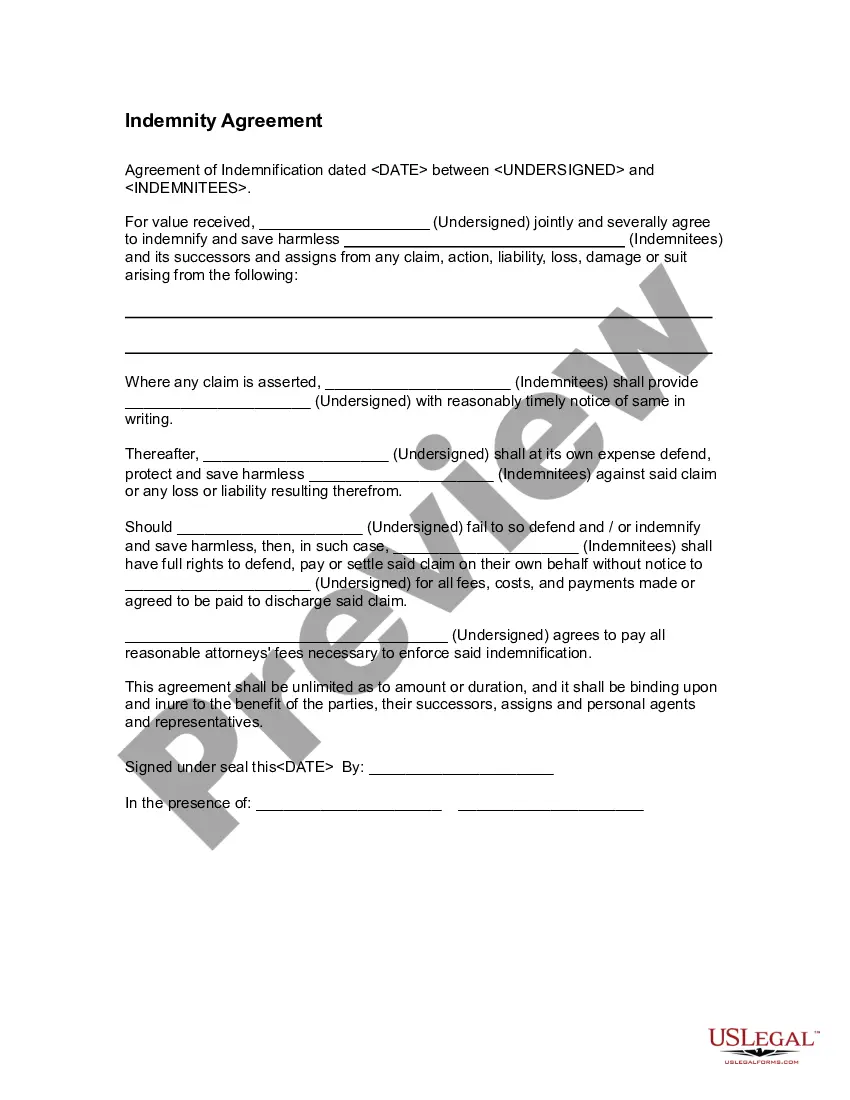
Typically, an insurance contract dictates that the insurer, also known as the indemnitor, agrees to compensate the other party involved (the insured or the indemnitee) for any damage or losses in return for premiums paid by the insured.
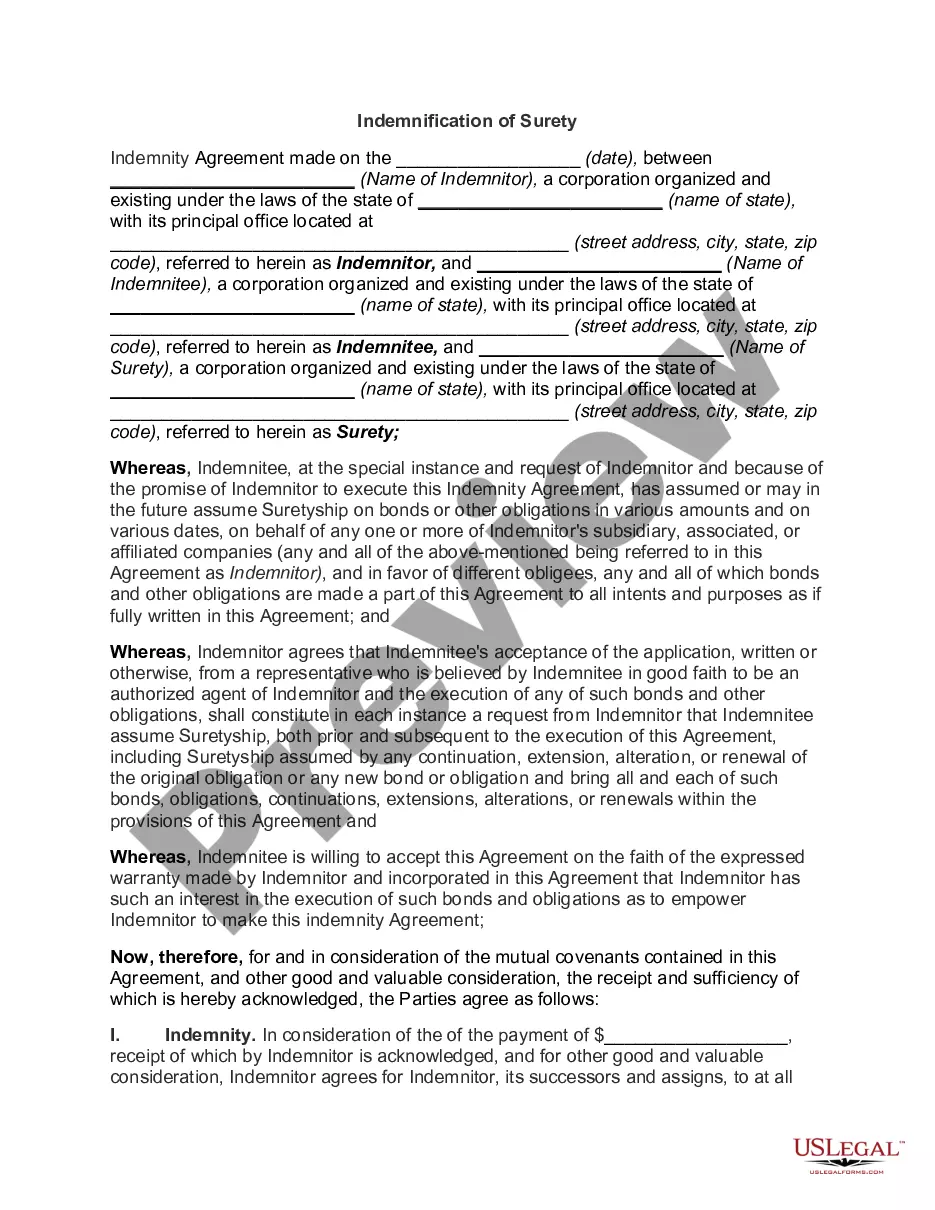
A general indemnity agreement is a separate legal contract between the surety and the contractor that guarantees the indemnitor (contractor) assumes full liability, giving the indemnitee (surety) legal protection in case it has to pay a claim on the bond.
An indemnitor is a company or person agreeing to take on the obligation that would typically be placed on a surety if an individual defaults on a bond issued to him. If the applicant doesn't qualify for reasons of risk by the standards of the surety, an indemnitor might be necessary for the bond process.
Indemnification in a Contractor-Subcontractor Relationship A contractor remains liable to the property owner when one of its subcontractors fails to use due care in their work on the job.
Indemnity bonds are issued by 3rd party institutions such as banks or insurance companies.
The payment or performance bond surety assumes an obligation of its principal with the understanding that either the principal or some third party, known as an indemnitor, will indemnify or hold the surety harmless if the principal fails to fulfill the underlying bonded obligation and the surety sustains a loss.
While the bond itself is created by the obligee, an indemnity is a separate agreement that the surety requires the principal to sign prior to issuing the bond that guarantees the principal is responsible for repaying any money paid by the surety in the process of settling a claim.
Indemnity is the backbone of many surety bonds. In short, indemnity compels a party to compensate another party. Regarding a surety bond, this means that the obligee has the legal right to collect from the surety if the principal of the bond fails to uphold their end of the bond.