Bailment Agreement with Bailee to Maintain and Care for Property, and Assumption of Liability for Damage or Loss
Overview of this form
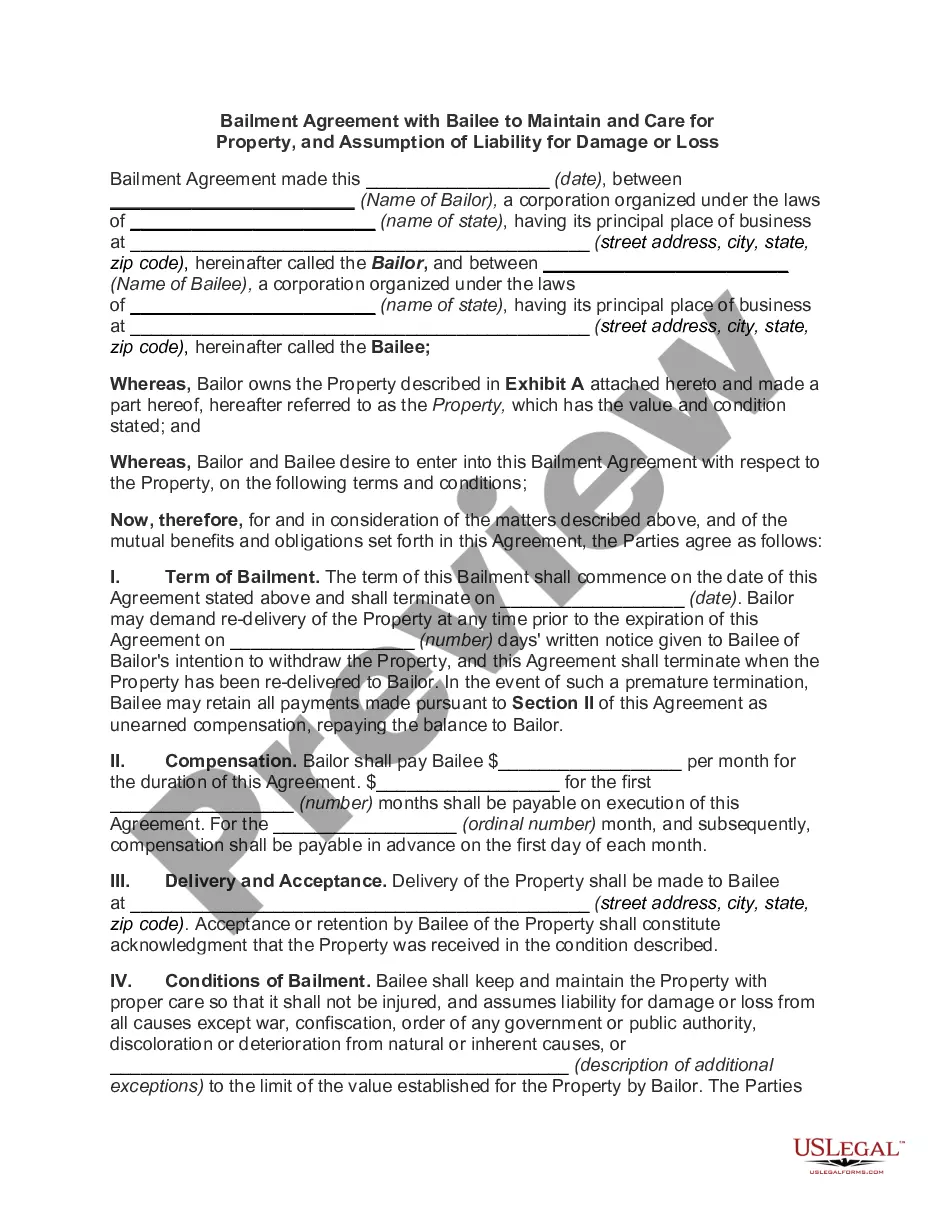
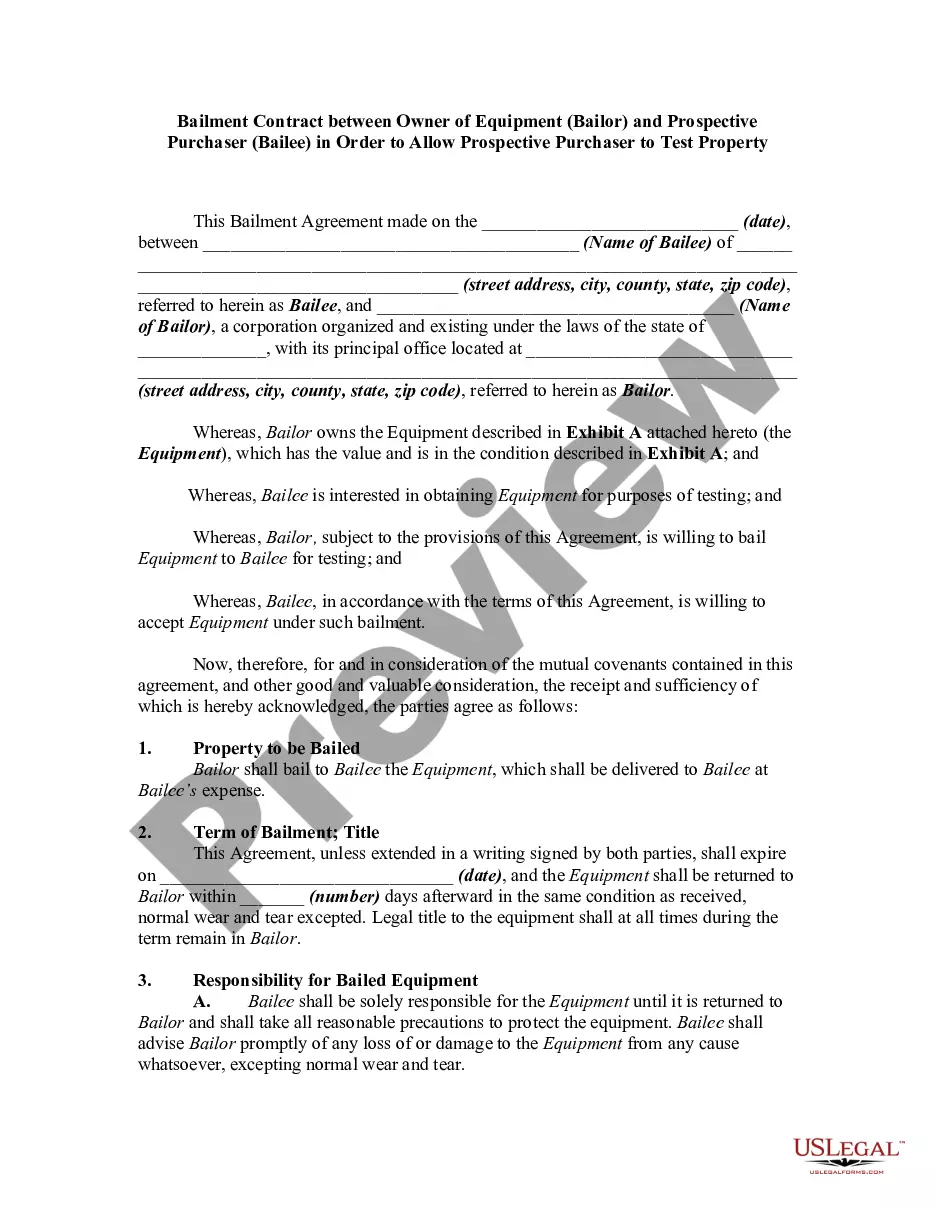
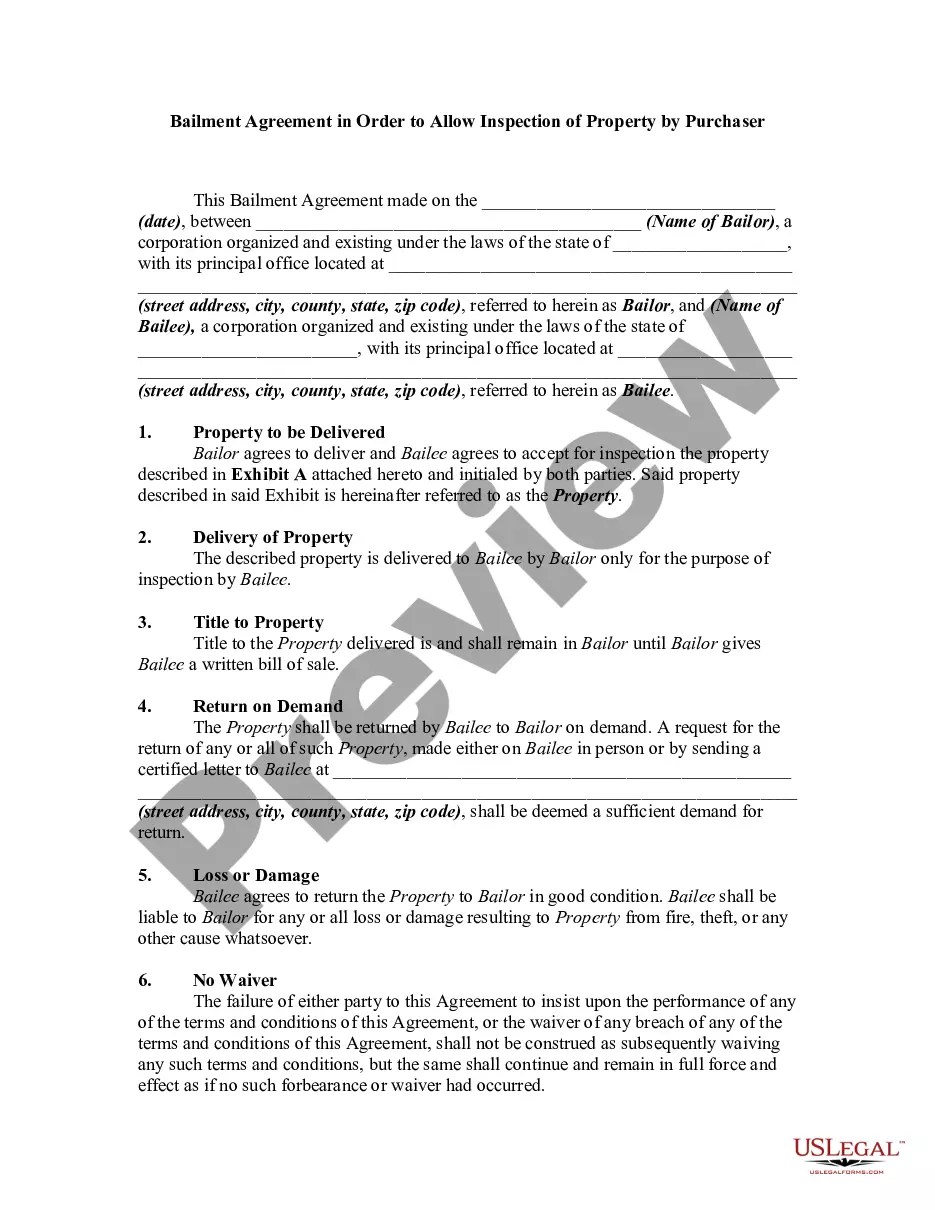
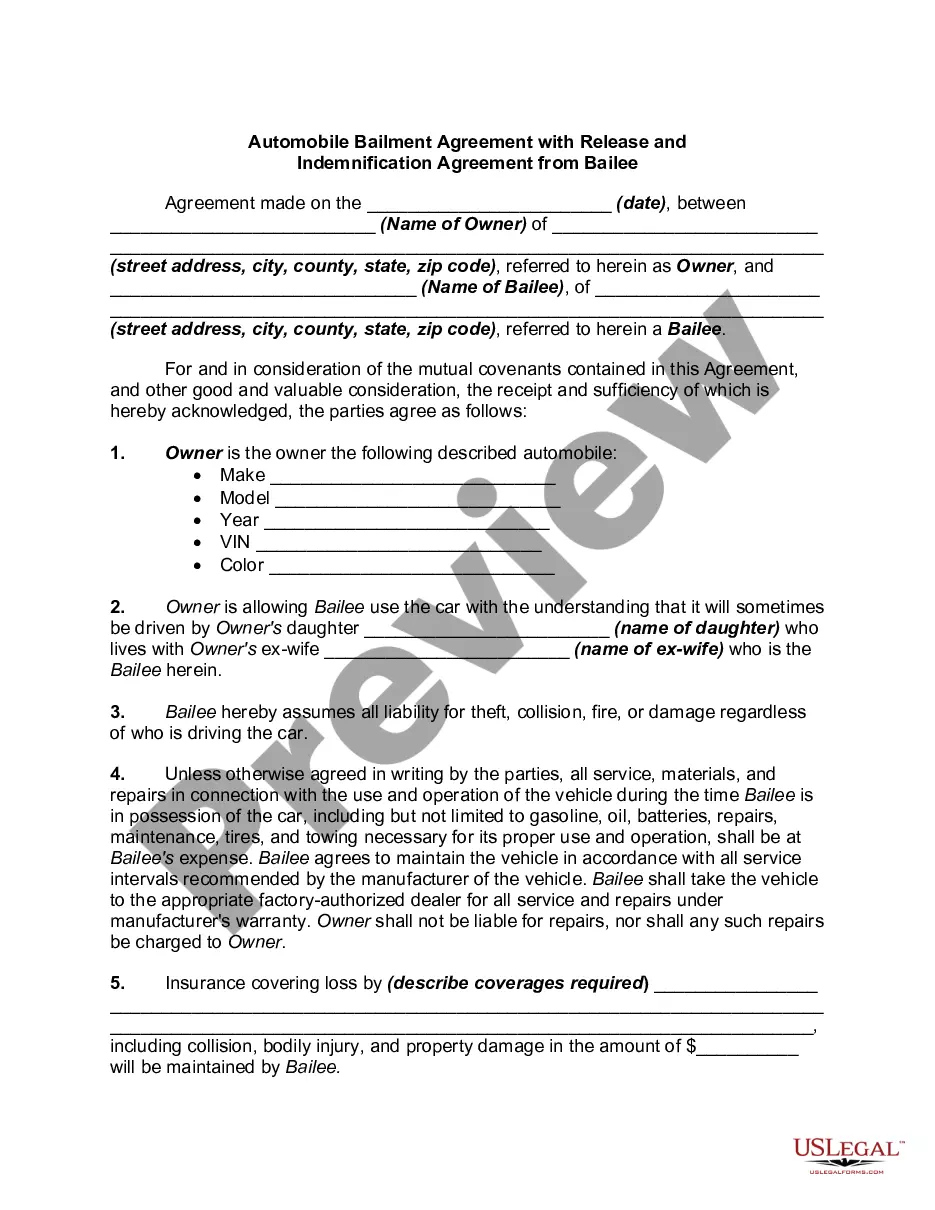
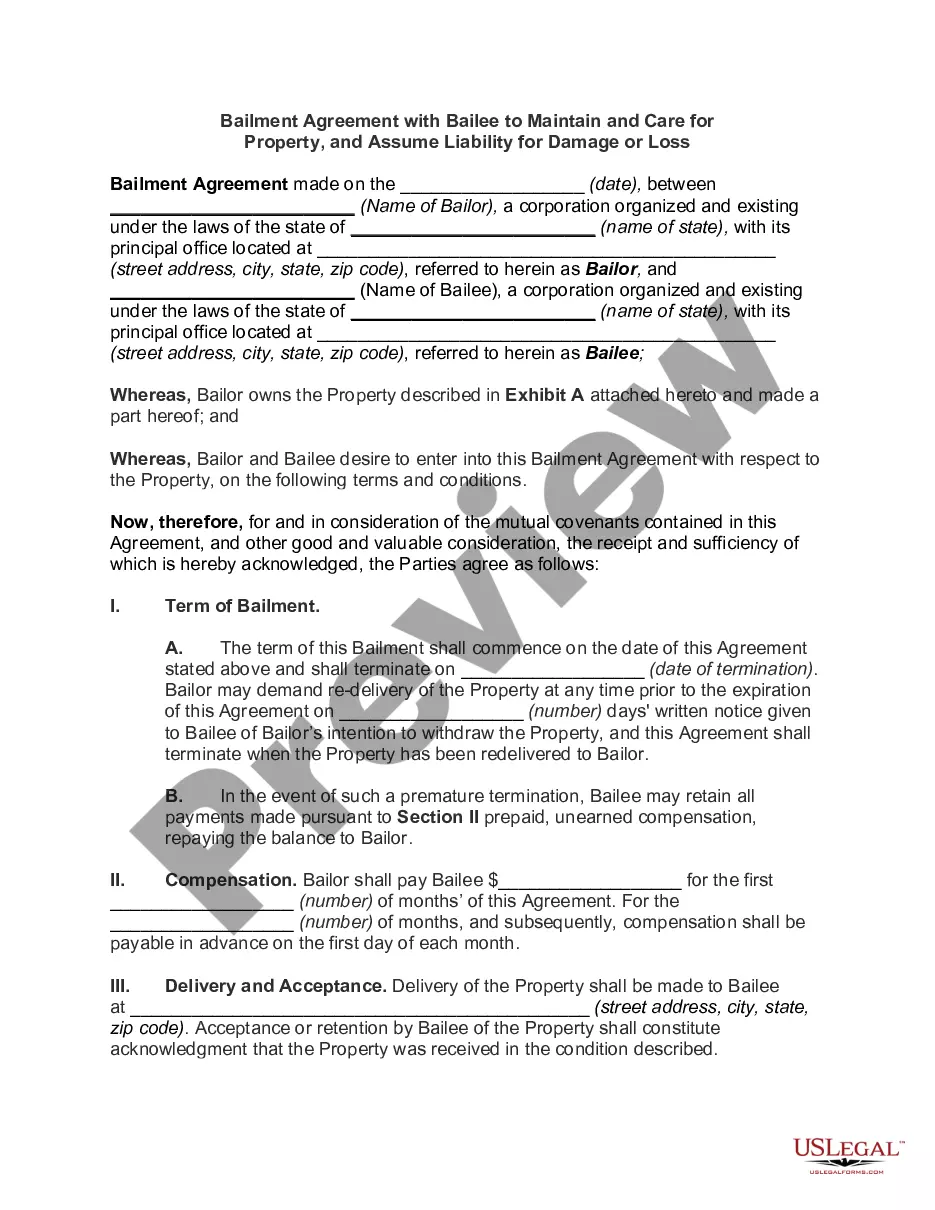
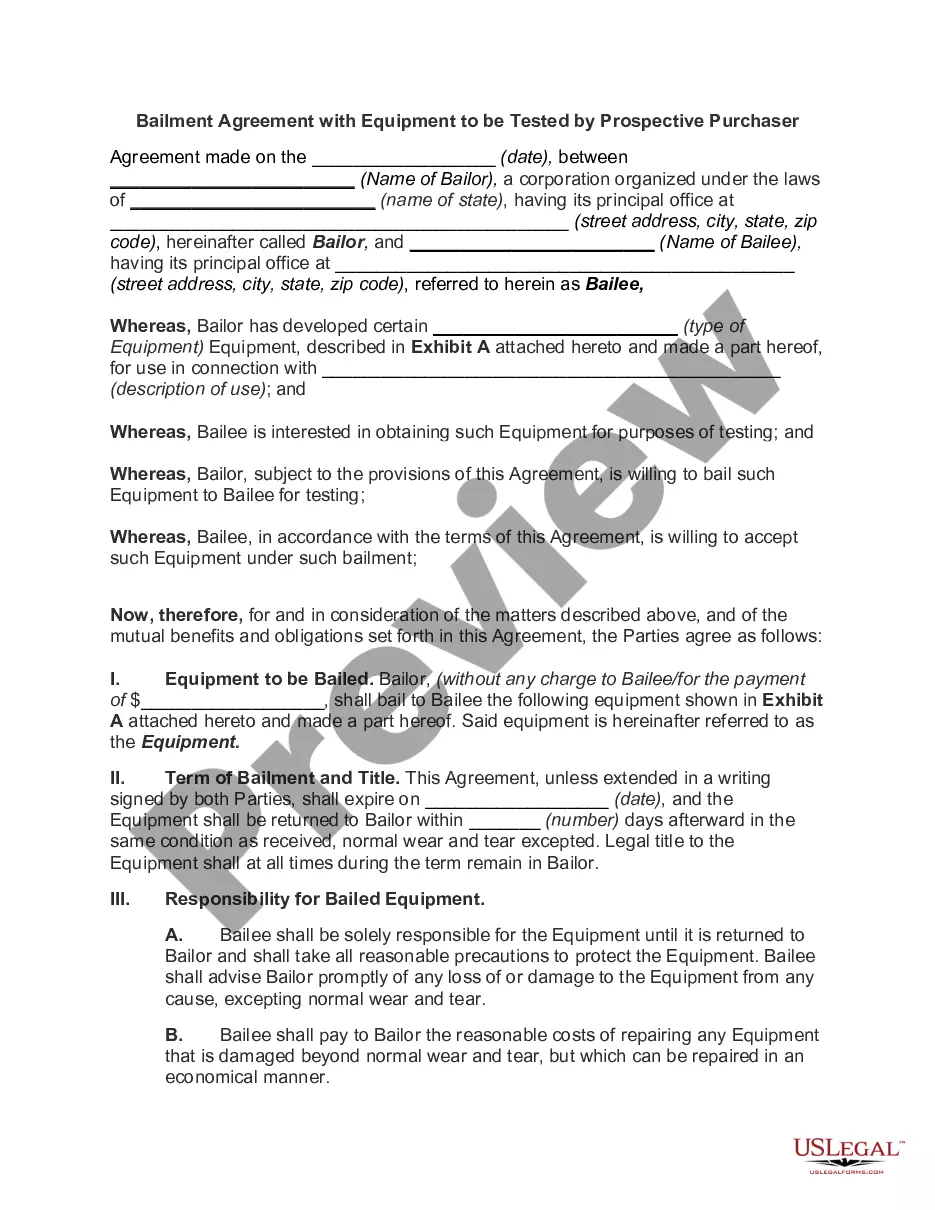
The Bailment Agreement with Bailee to Maintain and Care for Property, and Assumption of Liability for Damage or Loss is a legal document that outlines the relationship between a bailor and a bailee. In this agreement, the bailor entrusts property to the bailee for safekeeping and maintenance. It establishes the responsibilities and liabilities regarding the property's care and return, distinguishing it from other agreements by specifically focusing on the custody and control of personal property. This form is essential for ensuring both parties are aware of their rights and obligations during the bailment period.
Key parts of this document
- Identification of the parties involved, including the bailor and bailee.
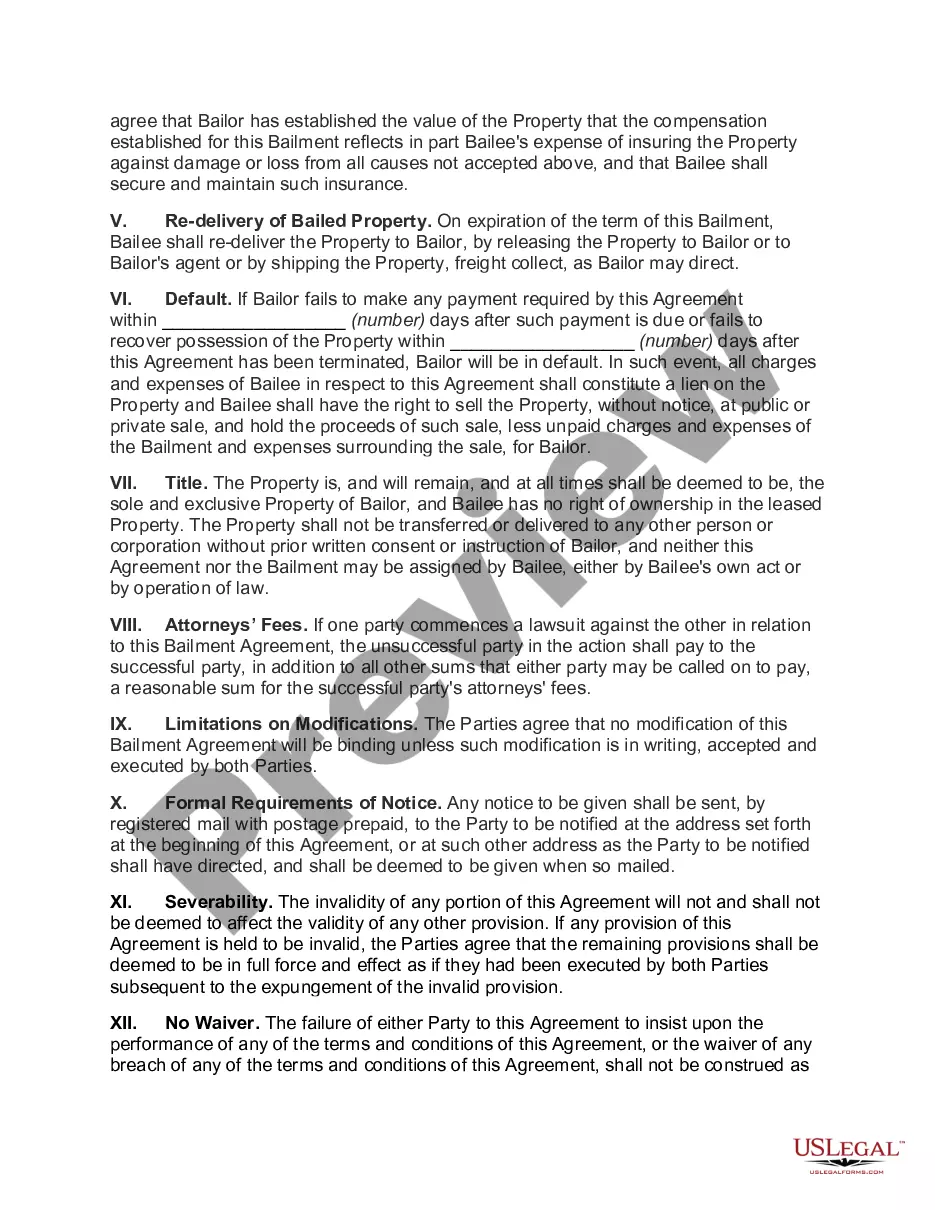
- Terms of the bailment, such as the duration and conditions for re-delivery of the property.
- Details regarding compensation for the bailee's services.
- Clauses outlining the bailee's liability for damage or loss of the property.
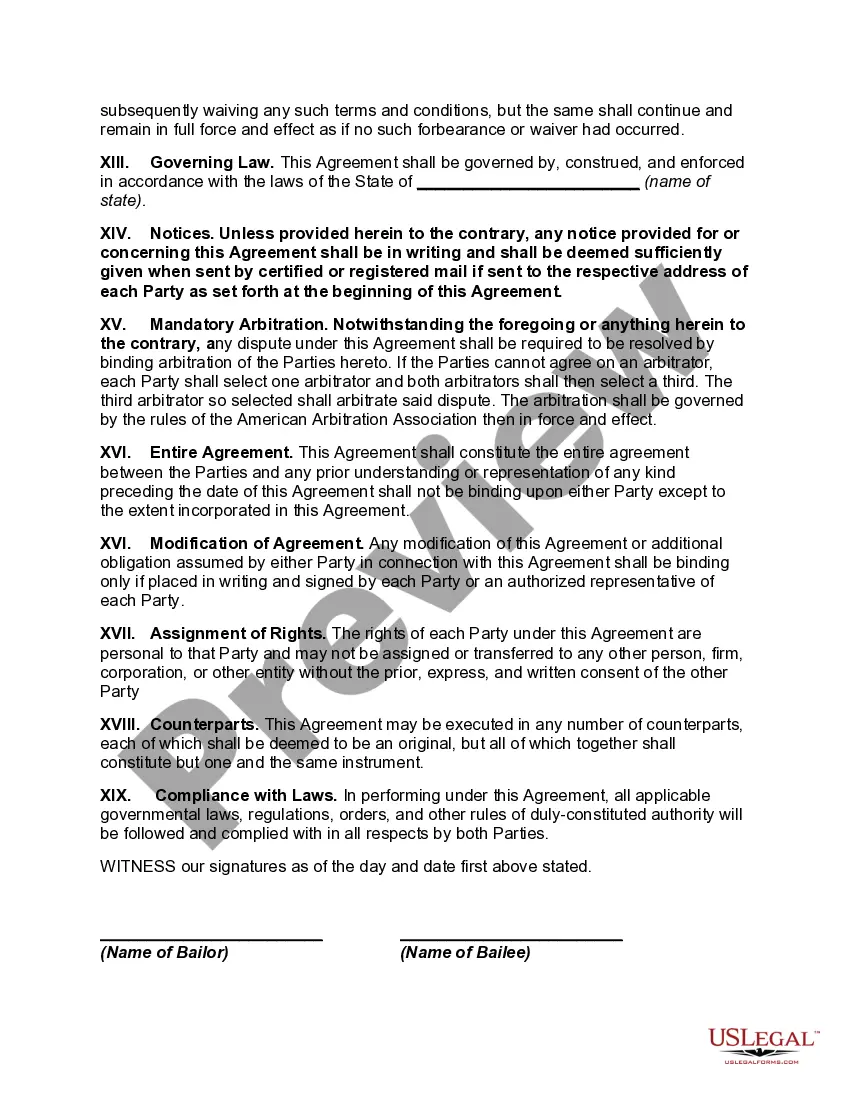
- Conditions for termination of the agreement and remedy provisions in case of default.
When to use this form
This form should be used when a property owner (bailor) needs to place their property in the care of another party (bailee) for maintenance or safekeeping. Common scenarios include parking vehicles in a garage, storing personal items in a facility, or leaving pets with a kennel. It is crucial whenever there is a need to clarify the responsibilities and liabilities regarding the property during the duration it is held by the bailee.
Who this form is for
This form is suitable for:
- Property owners (bailors) looking to safeguard their interests while entrusting their items to others.
- Businesses or individuals (bailees) providing services that involve caring for someone elseâs property.
- Legal professionals assisting clients with property management matters.
Completing this form step by step
- Identify and enter the names and addresses of the bailor and bailee at the beginning of the agreement.
- Specify the property details in Exhibit A, including its value and condition.
- Clearly outline the term of bailment, including start and end dates.
- Indicate the compensation amount and payment schedule for the bailee.
- Sign the agreement at the bottom to solidify the contract between both parties.
Notarization requirements for this form
This form does not typically require notarization unless specified by local law. However, having it notarized can add an extra layer of authenticity, should any disputes arise.
Get your form ready online
Our built-in tools help you complete, sign, share, and store your documents in one place.
Make edits, fill in missing information, and update formatting in US Legal Forms—just like you would in MS Word.
Download a copy, print it, send it by email, or mail it via USPS—whatever works best for your next step.
Sign and collect signatures with our SignNow integration. Send to multiple recipients, set reminders, and more. Go Premium to unlock E-Sign.
If this form requires notarization, complete it online through a secure video call—no need to meet a notary in person or wait for an appointment.
We protect your documents and personal data by following strict security and privacy standards.
Make edits, fill in missing information, and update formatting in US Legal Forms—just like you would in MS Word.
Download a copy, print it, send it by email, or mail it via USPS—whatever works best for your next step.
Sign and collect signatures with our SignNow integration. Send to multiple recipients, set reminders, and more. Go Premium to unlock E-Sign.

If this form requires notarization, complete it online through a secure video call—no need to meet a notary in person or wait for an appointment.
We protect your documents and personal data by following strict security and privacy standards.
Common mistakes
- Failing to specify the property details in Exhibit A can lead to disputes.
- Not clearly stating the duration of the bailment may create confusion.
- Omitting the compensation terms, which can lead to misunderstandings about payments.
Why use this form online
- Immediate access to a professionally drafted agreement tailored for bailment situations.
- Easy customization allows users to modify the template according to their specific needs.
- Secure downloading and storage ensures that users can keep their documents safe and accessible.
Looking for another form?
Form popularity
FAQ
If the bailee used the required degree of care, then the bailor won't be entitled to damages. With a gratuitous bailment for the sole benefit of the bailor, the bailee usually won't be liable for damage to the property unless they were grossly negligent.
The basic rule is that the bailee is expected to return to its owner the bailed goods when the bailee's time for possession of them is over, and he is presumed liable if the goods are not returned.
This means the bailor is still the rightful owner, even while the goods are in the bailee's possession. However, the bailee is responsible for the property's safekeeping and the eventual return of the goods. The bailee is typically not entitled to use the goods or property.
15227 says that if the bailee takes due care that is prescribed in S. 15128, then he will be absolved of his liability unless there is a contract to the contrary. The burden, though, is on the bailee to show that he acted as a reasonable prudent man or loss had happened to the goods, irrespective of his negligence.
The bailee has a responsibility to return the goods without asking for payment once the intended purpose has been achieved or the time period has passed. If he fails to do so, even without being negligent, he will be held responsible for any loss, destruction, deterioration, damages, or destruction of products.
The duty of the bailee is to return the goods without demand on the accomplishment of the purpose or the expiration of the time period. In case of his failure to do so, he shall be liable for the loss, destruction, deterioration, damages or destruction of goods even without negligence.
The bailor can be liable too for negligently delivering goods likely to cause damage to the bailee. In either case reasonable disclaimers of liability are allowed.