Loan Agreement between Corporate Borrowers and Bank with Line of Credit
About this form
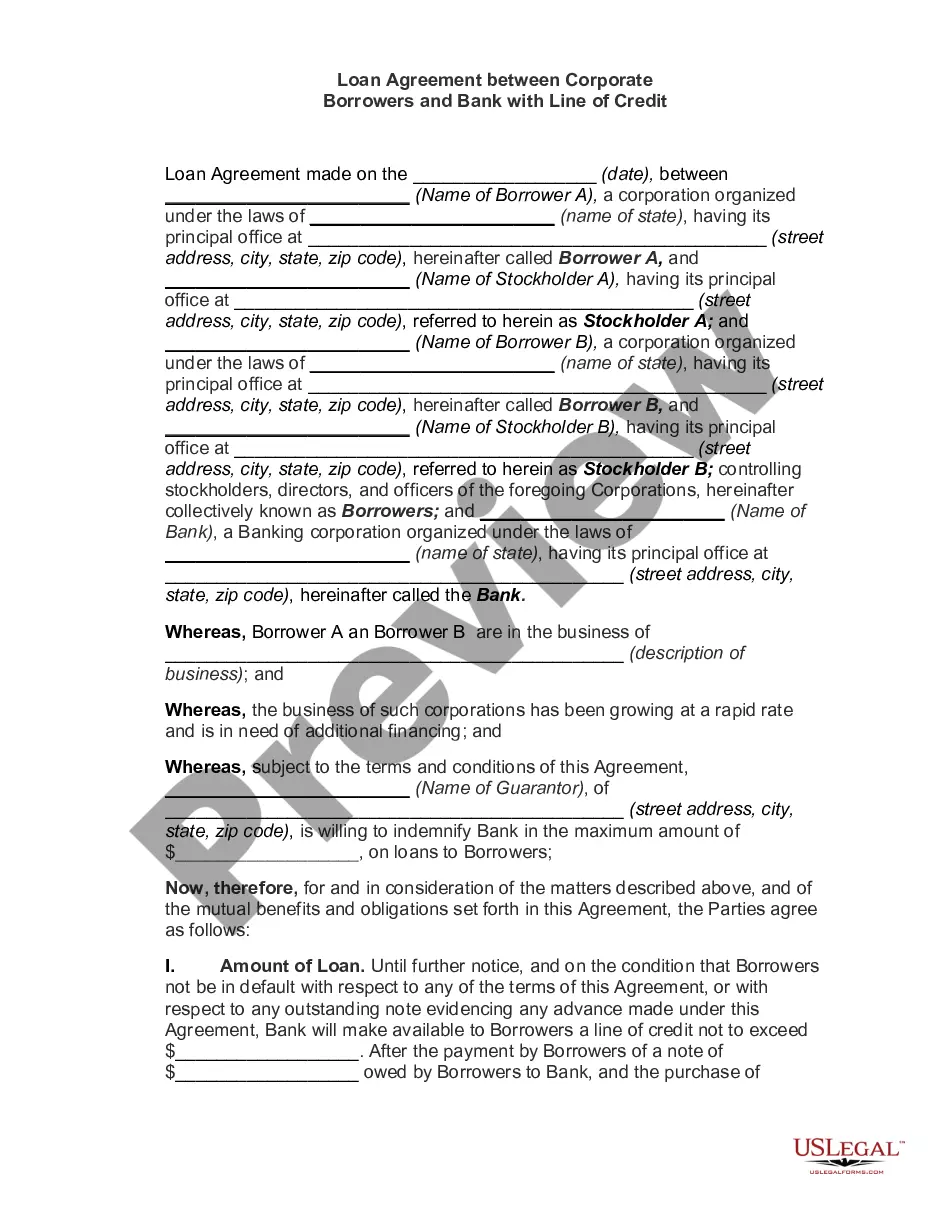
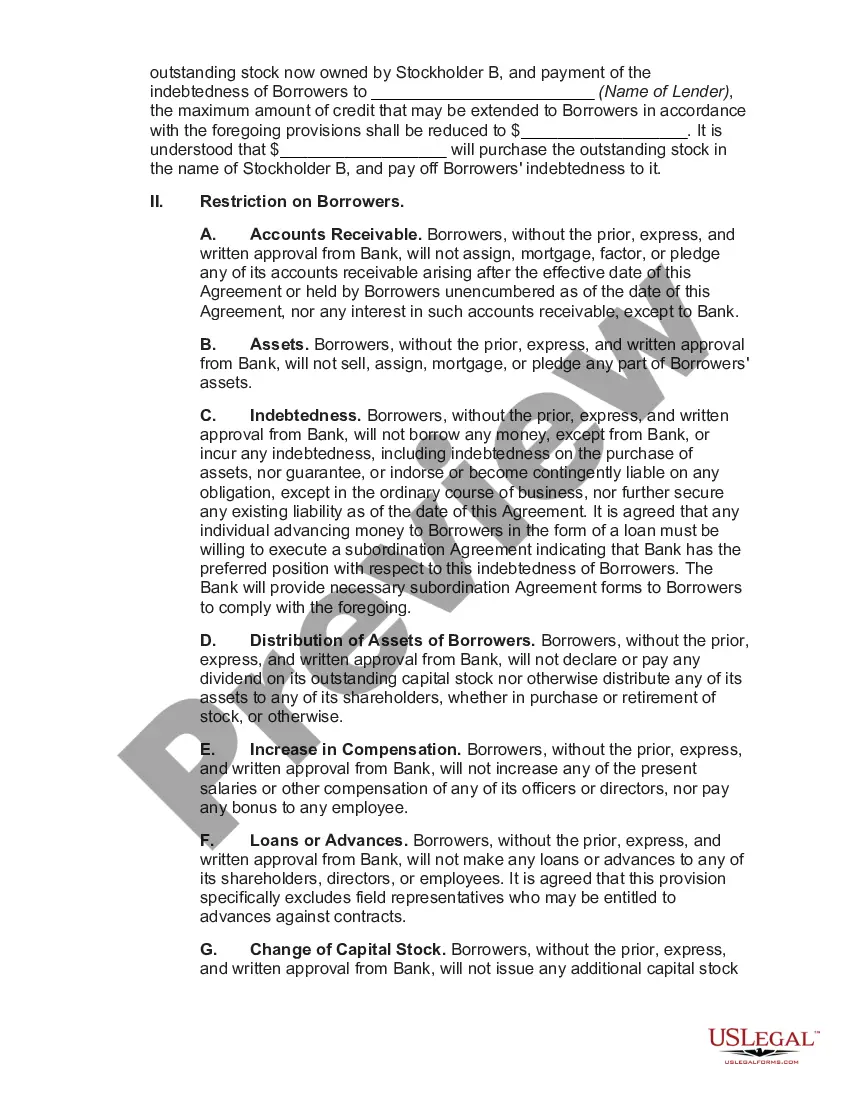
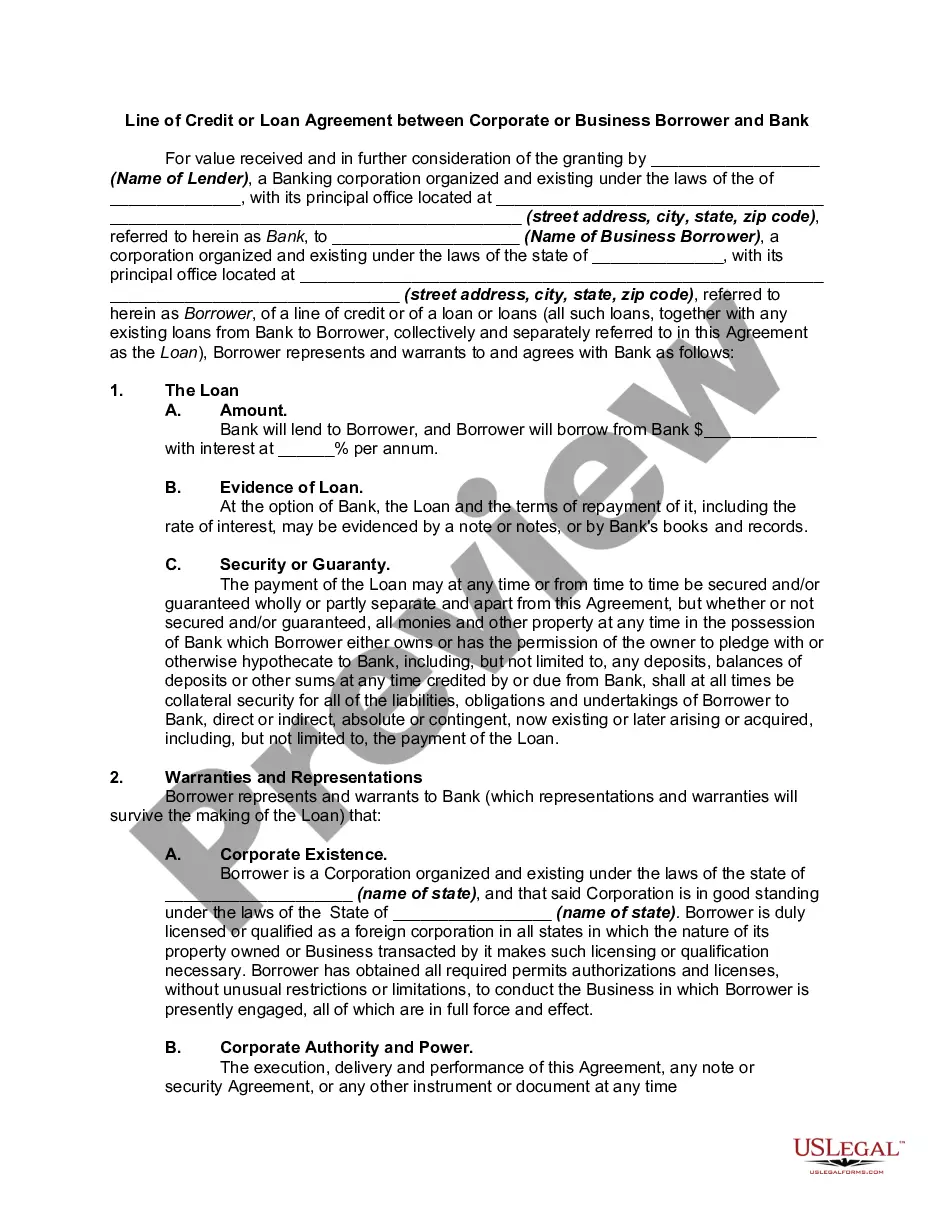
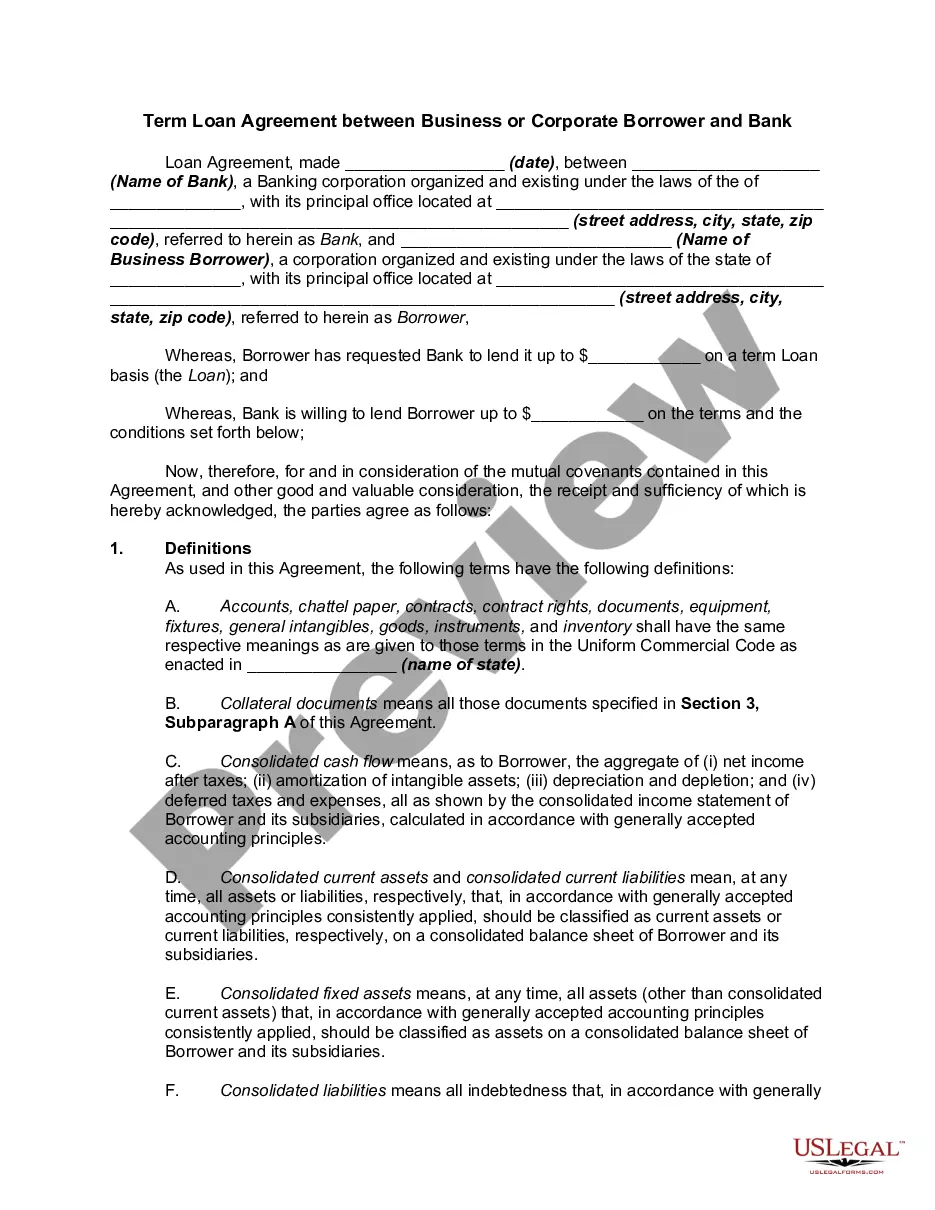
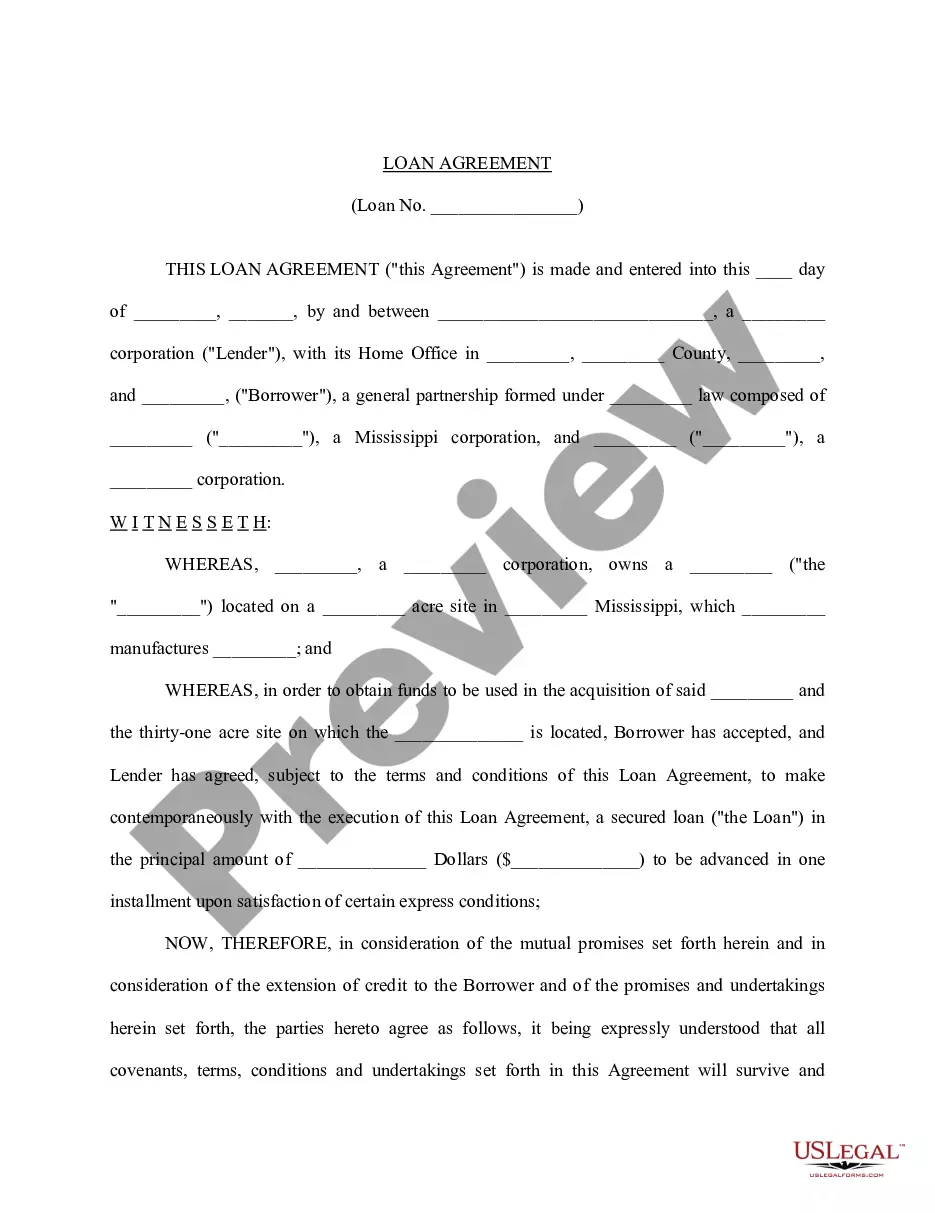
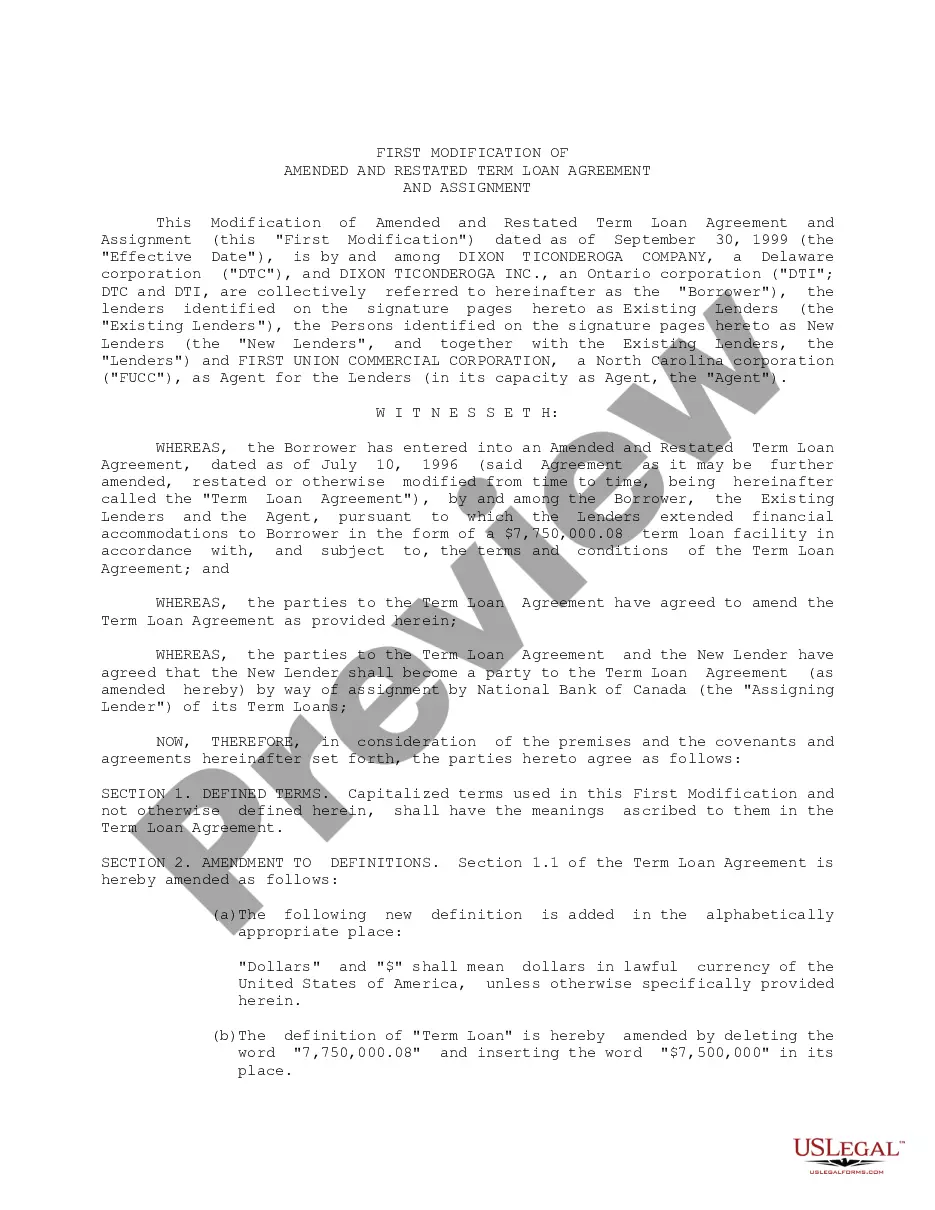
This Loan Agreement between Corporate Borrowers and Bank with Line of Credit is a legal document that outlines the terms and conditions under which a bank provides a line of credit to corporate borrowers. This form allows businesses to access funds as needed, up to a certain limit, while ensuring that both parties understand their obligations. This agreement is specifically tailored for corporate relationships, making it distinct from personal loan agreements.
Key parts of this document
- Date the agreement is made.
- Details of the Borrowers and the Bank, including names and addresses.
- Description of the business of Borrowers.
- Amount of the loan and line of credit limit.
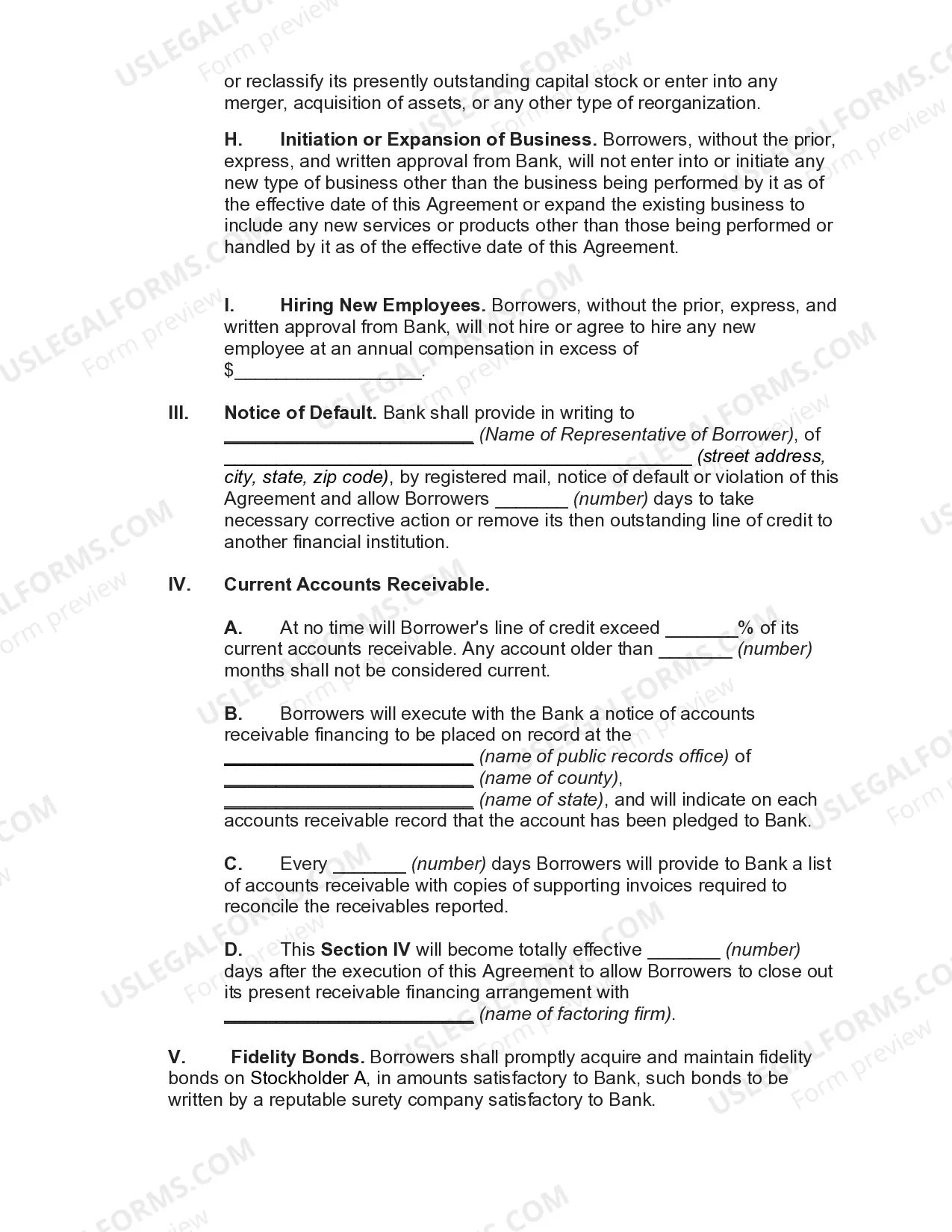
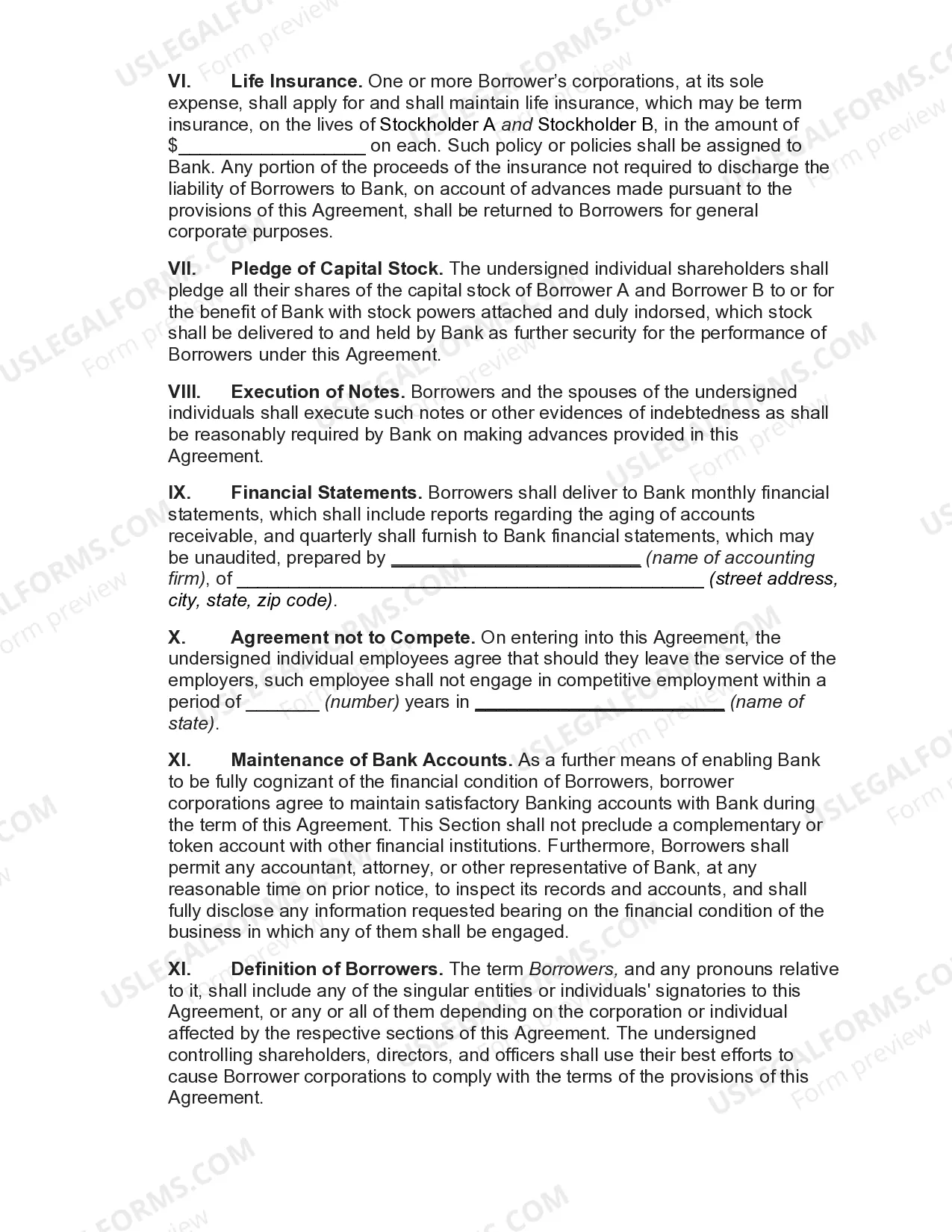
- Restrictions on Borrowers regarding financial actions and asset management.
- Conditions for default and notice requirements.
When to use this document
This form is ideal for businesses seeking to establish a line of credit with a bank or financial institution. Corporations that need flexibility in borrowing funds for growth, operational expenses, or managing cash flow will find this agreement beneficial. It is particularly useful for businesses experiencing rapid expansion that may require immediate access to capital.
Who this form is for
- Corporate entities looking for financing options.
- Business owners aiming to secure a line of credit with a financial institution.
- Shareholders or directors of corporations seeking to manage company debt effectively.
- Financial managers responsible for corporate funding strategies.
Steps to complete this form
- Identify the parties involved in the agreement, including the corporate borrowers and the bank.
- Specify the date the agreement is created and fill in the names and addresses of all parties.
- Outline the amount of the loan and establish the line of credit limit.
- Enter necessary terms regarding restrictions on financial actions for Borrowers.
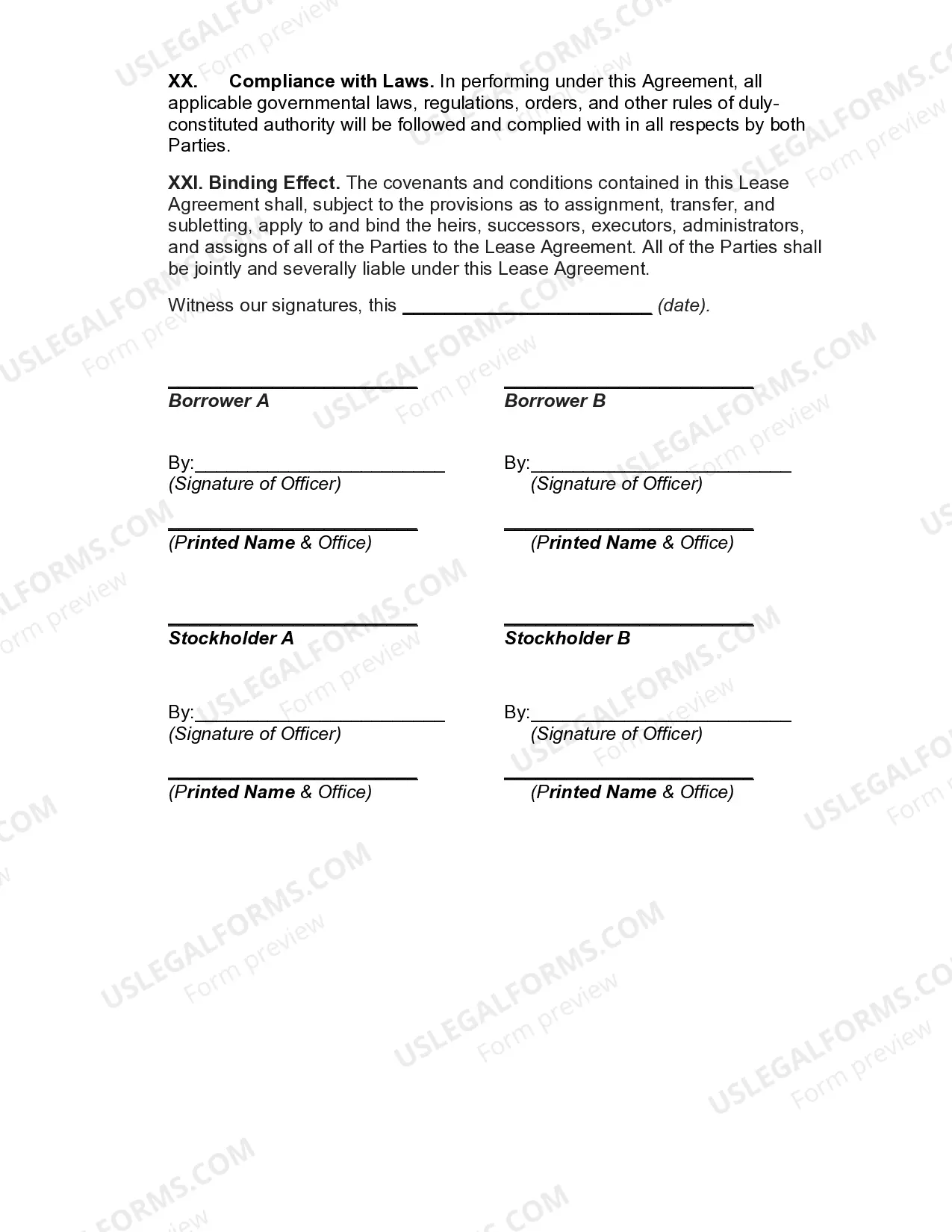
- Ensure signatures from authorized representatives of both Borrowers and the Bank are included to finalize the agreement.
Does this document require notarization?
This form does not typically require notarization unless specified by local law. It is advisable to check local regulations to ensure compliance with any additional requirements.
Get your form ready online
Our built-in tools help you complete, sign, share, and store your documents in one place.
Make edits, fill in missing information, and update formatting in US Legal Forms—just like you would in MS Word.
Download a copy, print it, send it by email, or mail it via USPS—whatever works best for your next step.
Sign and collect signatures with our SignNow integration. Send to multiple recipients, set reminders, and more. Go Premium to unlock E-Sign.
If this form requires notarization, complete it online through a secure video call—no need to meet a notary in person or wait for an appointment.
We protect your documents and personal data by following strict security and privacy standards.

Make edits, fill in missing information, and update formatting in US Legal Forms—just like you would in MS Word.

Download a copy, print it, send it by email, or mail it via USPS—whatever works best for your next step.

Sign and collect signatures with our SignNow integration. Send to multiple recipients, set reminders, and more. Go Premium to unlock E-Sign.

If this form requires notarization, complete it online through a secure video call—no need to meet a notary in person or wait for an appointment.

We protect your documents and personal data by following strict security and privacy standards.
Common mistakes to avoid
- Failing to accurately specify the maximum loan amount or line of credit limit.
- Not including necessary signatures from all parties.
- Leaving out crucial details regarding the Borrowers' business and restrictions.
- Neglecting to review state-specific requirements before finalizing the form.
Benefits of completing this form online
- Convenient access to professionally drafted legal templates.
- Ability to easily customize the form to fit the specific needs of the business.
- Instant downloads allow for quick completion and implementation.
- Ensures compliance with current legal standards and regulations.
Legal use & context
- This agreement outlines a legal framework for the financial relationship between the Borrowers and the Bank.
- Adherence to the document's terms is critical to enforceability in a legal setting.
- Understanding the obligations set forth in this agreement can mitigate risks for all parties involved.
Quick recap
- A Loan Agreement establishes the terms for a line of credit between corporate borrowers and a bank.
- Carefully specifying terms and ensuring compliance with state laws is essential for validity.
- Utilizing this form online provides convenience and reliability in securing necessary funds.
Looking for another form?
Form popularity
FAQ
A line of credit is essentially a revolving loan that allows you to access the money you need as you need it, up to a certain limit. As the money is repaid, you can borrow up to that limit again.
Loan agreements typically include covenants, value of collateral involved, guarantees, interest rate terms and the duration over which it must be repaid. Default terms should be clearly detailed to avoid confusion or potential legal court action.
Lines of credit, also referred to as revolving credit facilities or loan commitments, are almost always provided by banks or financing companies. They can be provided by one bank or multiple banks through syndication.
A line of credit gives you access to money ?on demand? and can help you with expenses like a home project or unexpected car maintenance. A line of credit is typically offered by lenders such as banks or credit unions, and, if you qualify, you can draw on it up to a maximum amount for a set period of time.
An LOC is an arrangement between a financial institution?usually a bank?and a customer that establishes the maximum loan amount that the customer can borrow. The borrower can access funds from the LOC at any time as long as they do not exceed the maximum amount (or credit limit) set in the agreement.
It is NOT a guaranteed loan; rather, it indicates that if the bank has sufficient funds available, it will allow the borrower to owe it up to a certain amount of money. The amount of a line of credit is the at any point in time.
A line of credit is a pool of money that you can borrow from as you need. A credit card is a common example of a line of credit, where you have an available balance up to which you can spend. Of course, you need to pay it back and you may be charged interest.
Opening a personal LOC usually requires a credit history of no defaults, a credit score of 670 or higher, and reliable income. Having savings helps, as does collateral in the form of stocks or certificates of deposit (CDs), though collateral is not required for a personal LOC.