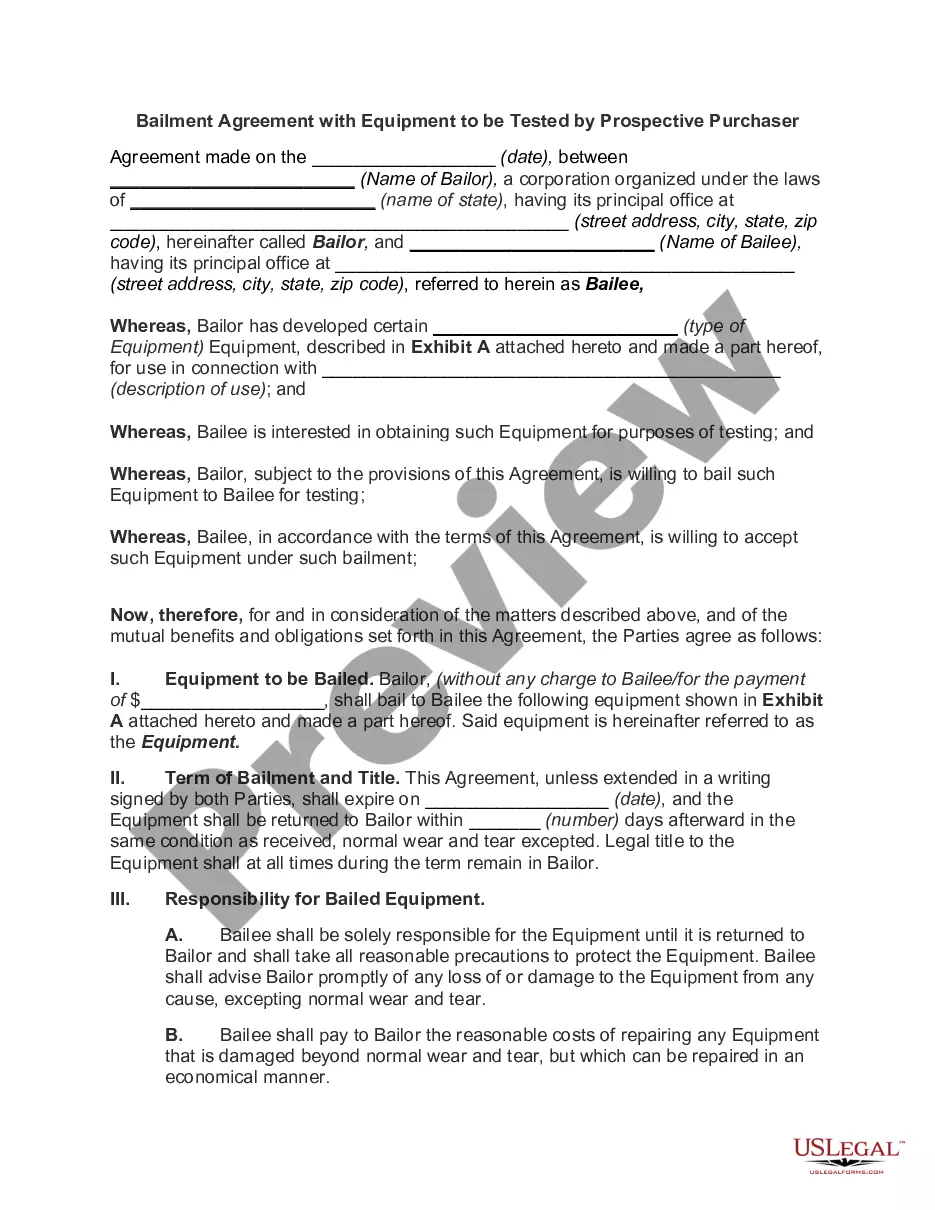
Bailment Agreement with Equipment to be Tested by Prospective Purchaser
Overview of this form
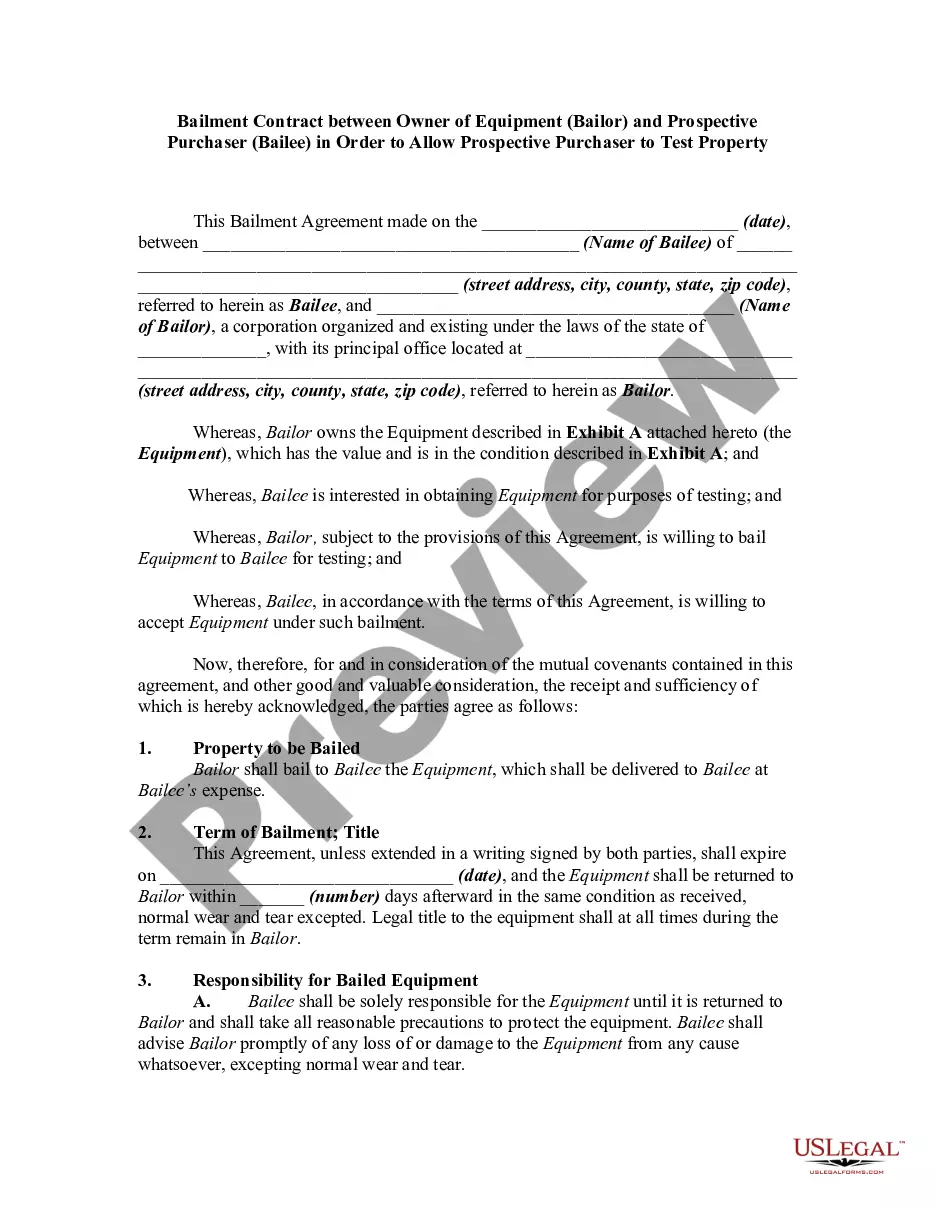
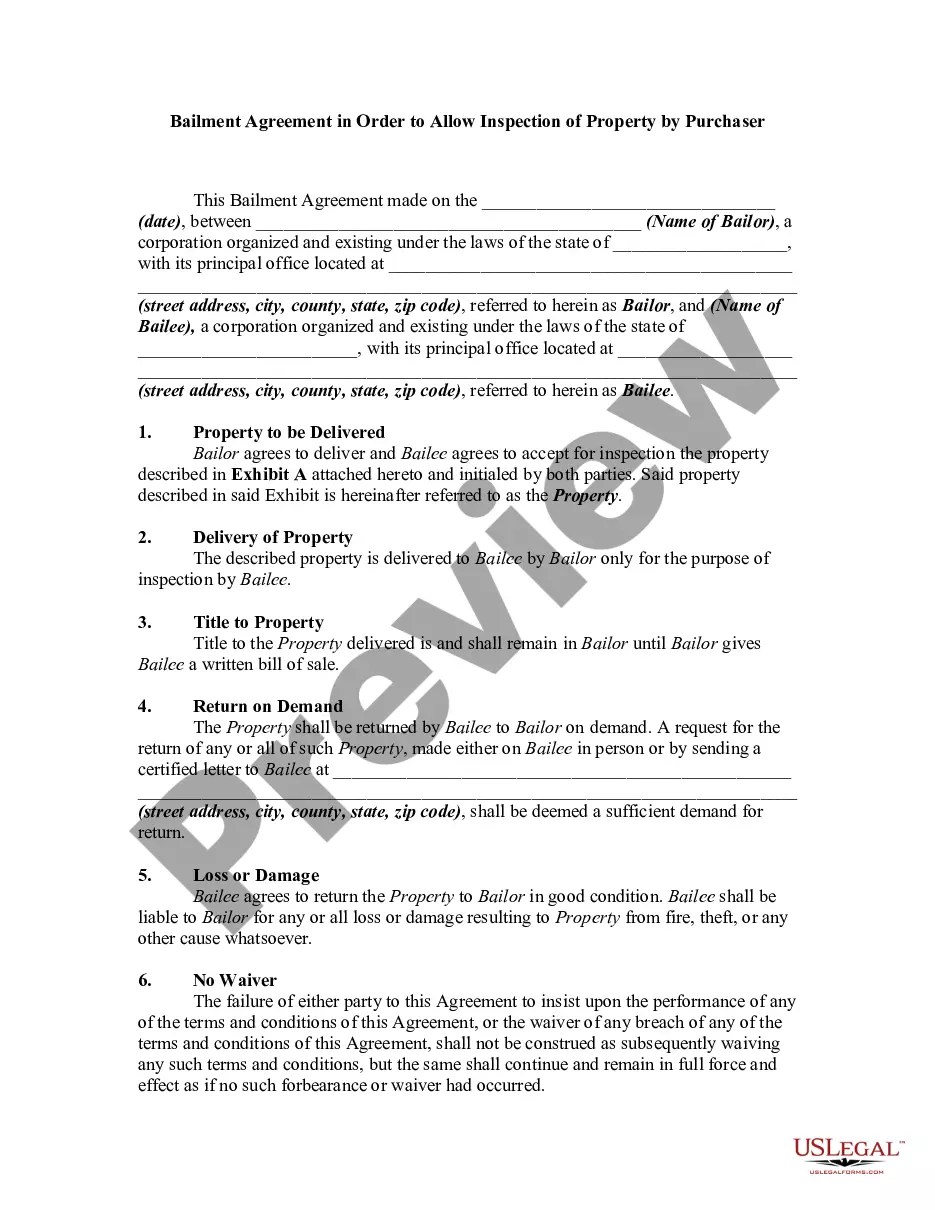
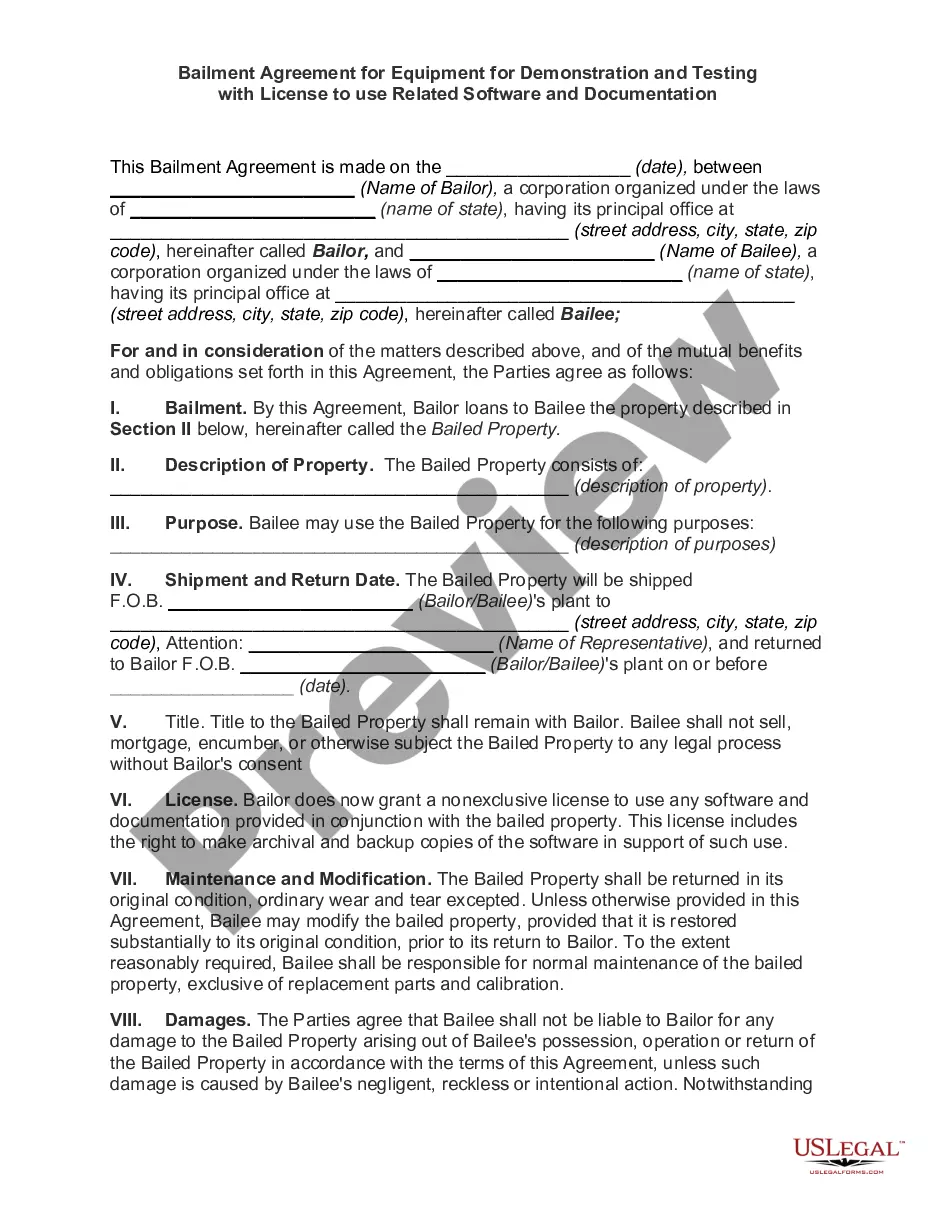
A Bailment Agreement with Equipment to be Tested by Prospective Purchaser is a legal document that outlines the terms under which one party (the Bailor) allows another party (the Bailee) to possess certain equipment for testing purposes. This form establishes the responsibilities of both parties regarding the care and return of the equipment, distinguishing it from other leasing or rental agreements by focusing specifically on temporary possession for evaluation. This form is crucial for protecting the owner's rights and ensuring accountability while the equipment is in use by the prospective buyer.
What’s included in this form
- Identification of the Bailor and Bailee, including their respective addresses.
- Description of the equipment being loaned for testing purposes.
- Terms of the bailment, including duration and conditions for returning the equipment.
- Responsibilities of the Bailee for maintaining and protecting the equipment.
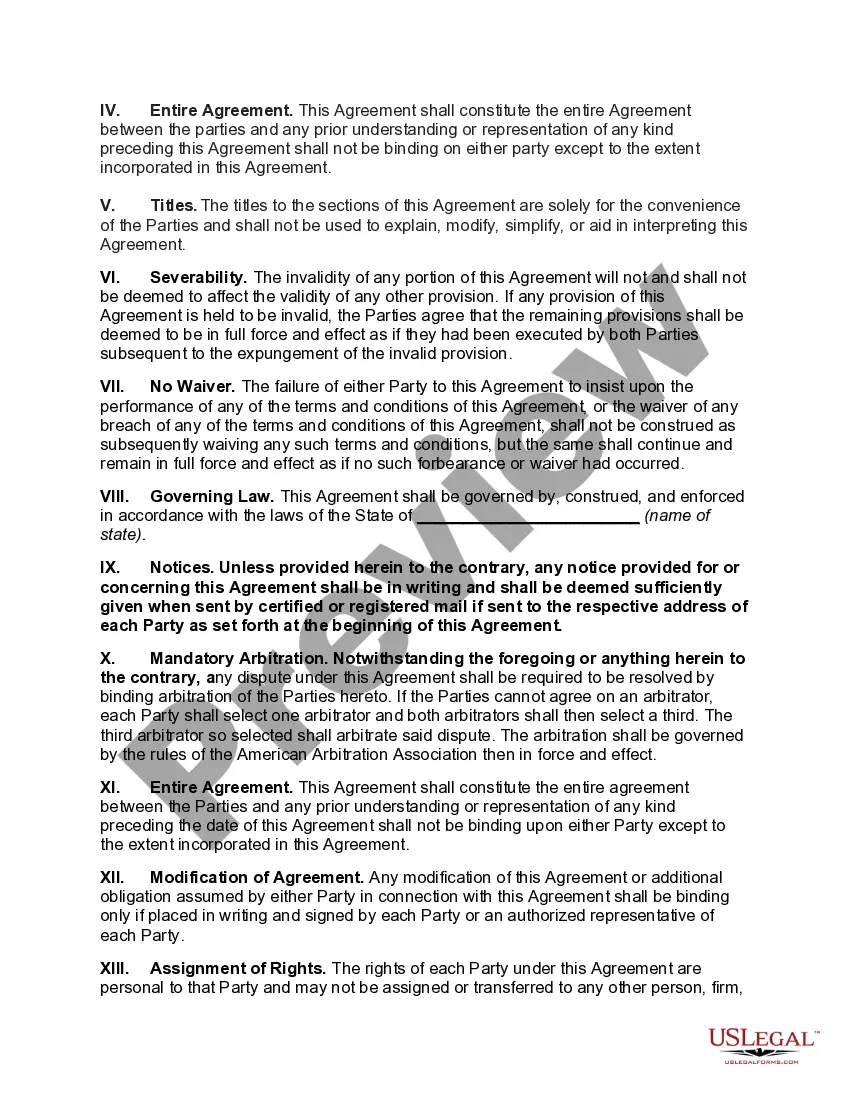
- Procedures for handling damage or loss of the equipment.
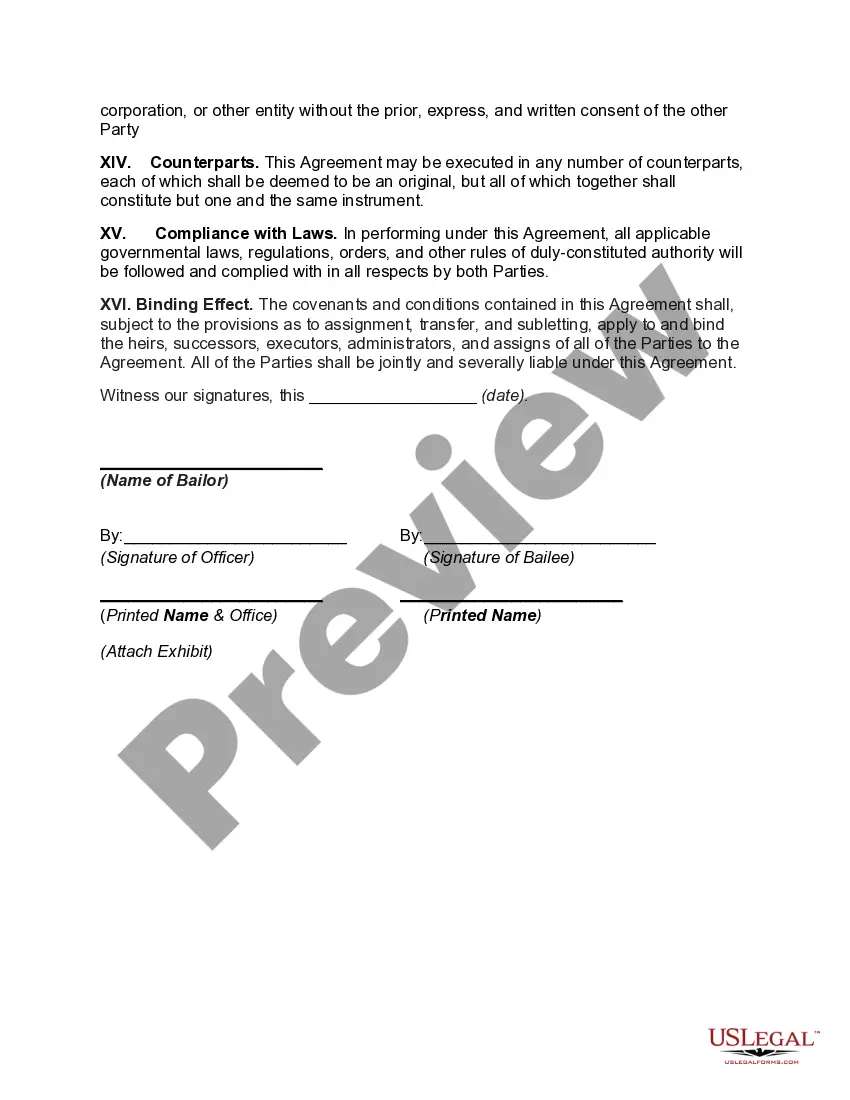
- Governing law and dispute resolution through mandatory arbitration.
When this form is needed
This form is necessary when a business or individual wants to allow a prospective purchaser to test specific equipment before making a buying decision. It ensures that both parties understand their rights and obligations, providing legal protection in case of disputes or damage during the testing period. This agreement is commonly used in industries dealing with high-value equipment or specialized machinery.
Who should use this form
- Business owners or companies looking to let potential buyers evaluate their equipment.
- Individuals wanting to offer equipment for testing without transferring ownership.
- Prospective purchasers who wish to assess equipment before finalizing a purchase agreement.
- Legal professionals drafting agreements for clients involved in equipment sales and testing.
Instructions for completing this form
- Identify the parties: Fill in the names and addresses of the Bailor and Bailee.
- Describe the equipment: Specify the type of equipment in Exhibit A and detail its intended use.
- Enter terms of the bailment: Specify the duration of the agreement and any payment terms if applicable.
- Outline responsibilities: Clearly define the Bailee's obligations regarding the care and return of the equipment.
- Sign the agreement: Ensure both parties sign and date the document to make it legally binding.
Is notarization required?
This form does not typically require notarization unless specified by local law. It is advisable to check with your local regulations to confirm any specific requirements regarding the execution of bailment agreements.
Get your form ready online
Our built-in tools help you complete, sign, share, and store your documents in one place.
Make edits, fill in missing information, and update formatting in US Legal Forms—just like you would in MS Word.
Download a copy, print it, send it by email, or mail it via USPS—whatever works best for your next step.
Sign and collect signatures with our SignNow integration. Send to multiple recipients, set reminders, and more. Go Premium to unlock E-Sign.
If this form requires notarization, complete it online through a secure video call—no need to meet a notary in person or wait for an appointment.
We protect your documents and personal data by following strict security and privacy standards.

Make edits, fill in missing information, and update formatting in US Legal Forms—just like you would in MS Word.

Download a copy, print it, send it by email, or mail it via USPS—whatever works best for your next step.

Sign and collect signatures with our SignNow integration. Send to multiple recipients, set reminders, and more. Go Premium to unlock E-Sign.

If this form requires notarization, complete it online through a secure video call—no need to meet a notary in person or wait for an appointment.

We protect your documents and personal data by following strict security and privacy standards.
Typical mistakes to avoid
- Failing to specify the condition of the equipment at the time of transfer.
- Not detailing the responsibilities for maintaining the equipment during the testing period.
- Omitting signatures from both parties, which can invalidate the agreement.
- Neglecting to set a clear return date for the equipment.
Why use this form online
- Convenience: Easily download and complete the form from anywhere at any time.
- Editability: Customize the form to fit your specific needs without hassle.
- Reliability: Ensure that you are using a template drafted by licensed attorneys, tailored to legal standards.
Looking for another form?
Form popularity
FAQ
There are three types of bailments: those that benefit both parties, those that benefit only the bailor, and those that benefit only the bailee. Although the burden depends on the type of bailment, the bailee must always treat the bailor's property with a reasonable amount of care.
Important Points In the case of hire-purchase agreements, the relationship between the hire-purchaser and seller is of the bailor and bailee which does not allow the hire-purchaser to dispose of the goods in any manner.
In the contract of hire-purchase, there is always an option vesting in the hands of the hirer whereas in the case of bailment there is never an intention from the bailee towards the bailor to buy the property or the goods of bailment.
Gratuitous bailment is a type of bailment in which the bailee receives no compensation. For example, borrowing a friend's car.
If the bailment relationship benefits both parties (e.g., when a person rents a car from a car rental agency), the term for the relationship is ?bailment for hire.? In such a case, the bailee will be liable if the bailment gets damaged through his or her "ordinary negligence."
A "bailment" is the delivery of goods by one person to another for some purpose, upon a contract that they shall, when the purpose is accomplished, be returned or otherwise disposed of ing to the directions of the person delivering them. The person delivering the goods is called the "bailor".
There must be a delivery of goods, which means, delivery of possession of the goods by the bailer to the bailee to fulfill the purpose of bailment. Possession refers to exercising control over the good and excluding any other person to do the same. Section 149 of the Indian Contract Act, 1872 talks about the same.
Bailment ing to The Indian Contract Act, 1872 is when one party of the contract passes the possession of goods to the other for a specific purpose with the direction to return the possession of the same good after fulfillment of the purpose.1