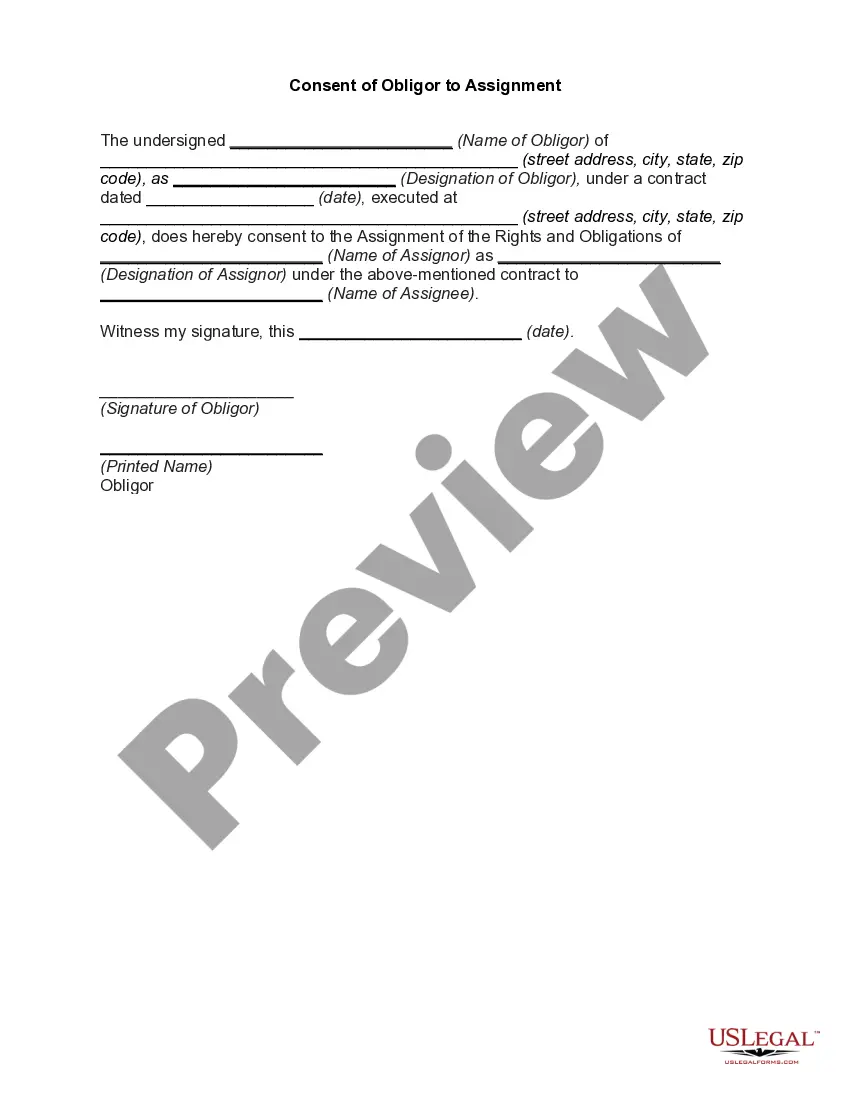
Consent of Obligor to Assignment
What this document covers
The Consent of Obligor to Assignment is a legal document in which an obligor agrees to transfer their rights and obligations under a contract to another party. This form is essential when changes in contract assignments occur, providing clarity and consent from the obligor. It differs from other assignment forms by specifically focusing on the obligor's consent, ensuring that all parties involved are legally recognized in the process.
Key components of this form
- Name of the obligor, including their designation, such as debtor or promissory note holder.
- Details of the contract, including its date and execution location.
- Name and designation of the assignor transferring rights.
- Name of the assignee receiving rights from the assignor.
- Signature of the obligor, along with the date of consent.
When this form is needed
This form is used when an obligor needs to formally agree to transfer their contractual rights and obligations to another party. Common situations include the sale of a business, transfer of rights in a loan agreement, or assignment of lease agreements. It ensures that all parties are aware of the change and agree to the new arrangement.
Intended users of this form
Individuals or entities involved in a contract where an assignment of rights is being proposed. This includes:
- Obligors who need to authorize a transfer of their contractual obligations.
- Assignors looking to assign their rights to another party.
- Assignees who are taking on the rights and responsibilities of the original obligor.
Steps to complete this form
- Identify the obligor and enter their full name and address.
- Specify the designation of the obligor related to the contract.
- Fill in the details of the original contract, including its date and execution location.
- State the name and designation of the assignor transferring rights.
- Indicate the name of the assignee who will receive the rights and obligations.
- Ensure the obligor signs and dates the form to validate their consent.
Is notarization required?
This form does not typically require notarization unless specified by local law. It is advisable to consult legal sources or an attorney for your specific jurisdiction.
Get your form ready online
Our built-in tools help you complete, sign, share, and store your documents in one place.
Make edits, fill in missing information, and update formatting in US Legal Forms—just like you would in MS Word.
Download a copy, print it, send it by email, or mail it via USPS—whatever works best for your next step.
Sign and collect signatures with our SignNow integration. Send to multiple recipients, set reminders, and more. Go Premium to unlock E-Sign.
If this form requires notarization, complete it online through a secure video call—no need to meet a notary in person or wait for an appointment.
We protect your documents and personal data by following strict security and privacy standards.

Make edits, fill in missing information, and update formatting in US Legal Forms—just like you would in MS Word.

Download a copy, print it, send it by email, or mail it via USPS—whatever works best for your next step.

Sign and collect signatures with our SignNow integration. Send to multiple recipients, set reminders, and more. Go Premium to unlock E-Sign.

If this form requires notarization, complete it online through a secure video call—no need to meet a notary in person or wait for an appointment.

We protect your documents and personal data by following strict security and privacy standards.
Common mistakes to avoid
- Failing to include the correct names and designations of all parties involved.
- Not providing the original contract's details accurately.
- Omitting the signature or date, which can invalidate the document.
Why complete this form online
- Convenient access to a legally recognized document that can be downloaded and filled out quickly.
- Editability allows for customization based on specific needs and situations.
- Reliability as the forms are drafted by licensed attorneys to ensure legal validity.
Looking for another form?
Form popularity
FAQ
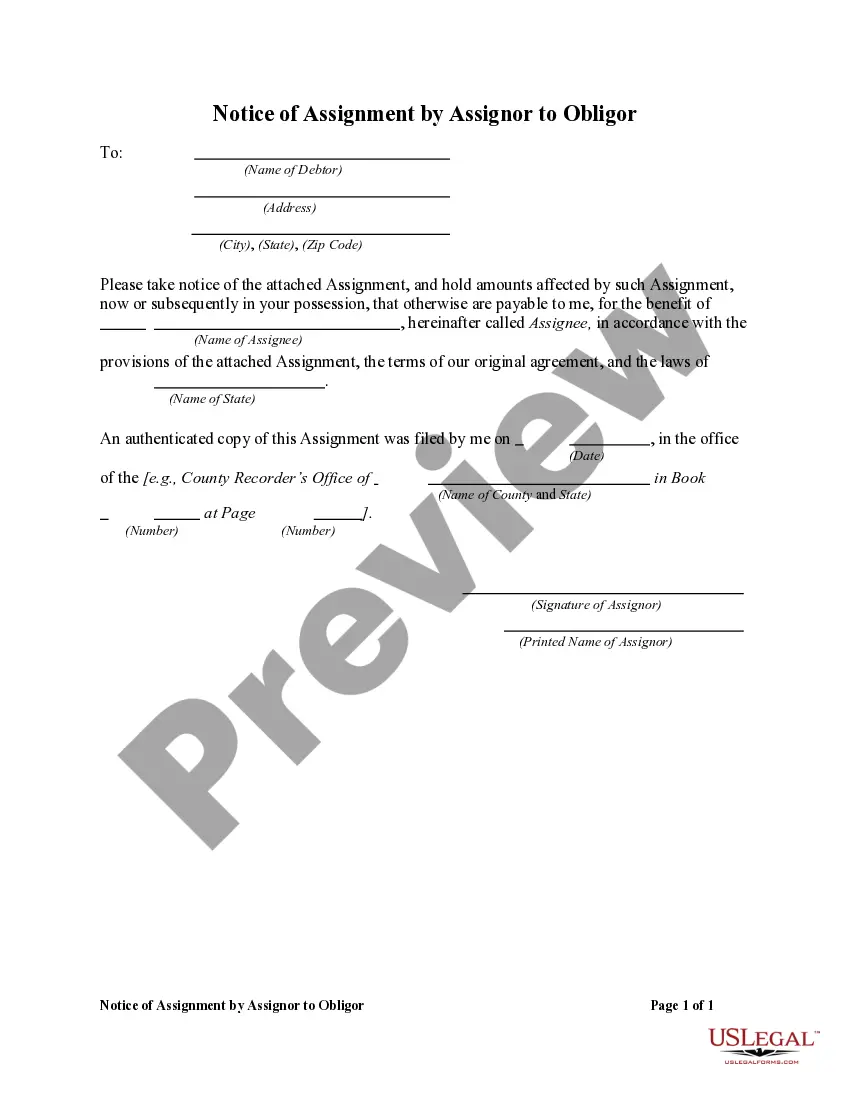
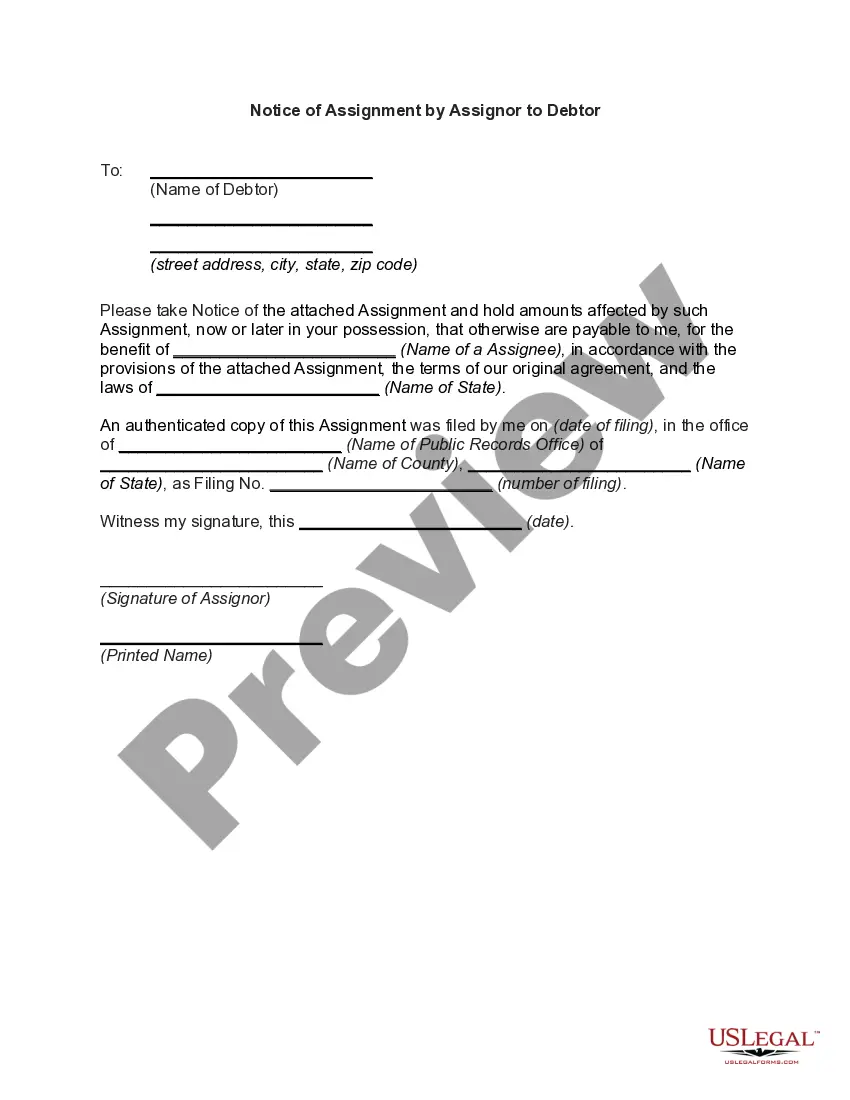
Legal Principle- The assignee should always give notice to the obligor as soon as possible after receiving the assignment, because the obligor may satisfy his or her obligations by performing for the assignor until receiving notice of the assignment from the assignee.
Parties Involved in a Contract Assignment Obligor: The party that is committed to transferring benefits or rights to the party specified in the contract. The obligor is most likely the party that initially makes the contract. Assignor: The party that is the initial beneficiary of the benefits or rights.
First, it informs your customers that you are factoring your invoices and that your factoring company has been assigned as the payee for your accounts receivables. Next, a notice of assignment provides your customer with an updated remittance address for all current and future payments to be sent to.
The ASSIGNNEE should notify the obligor. If an obligor renders performance to the assignor without notice of the assignment, the obligor has no further liability under the contract to pay the correct party which would now be the assignee.
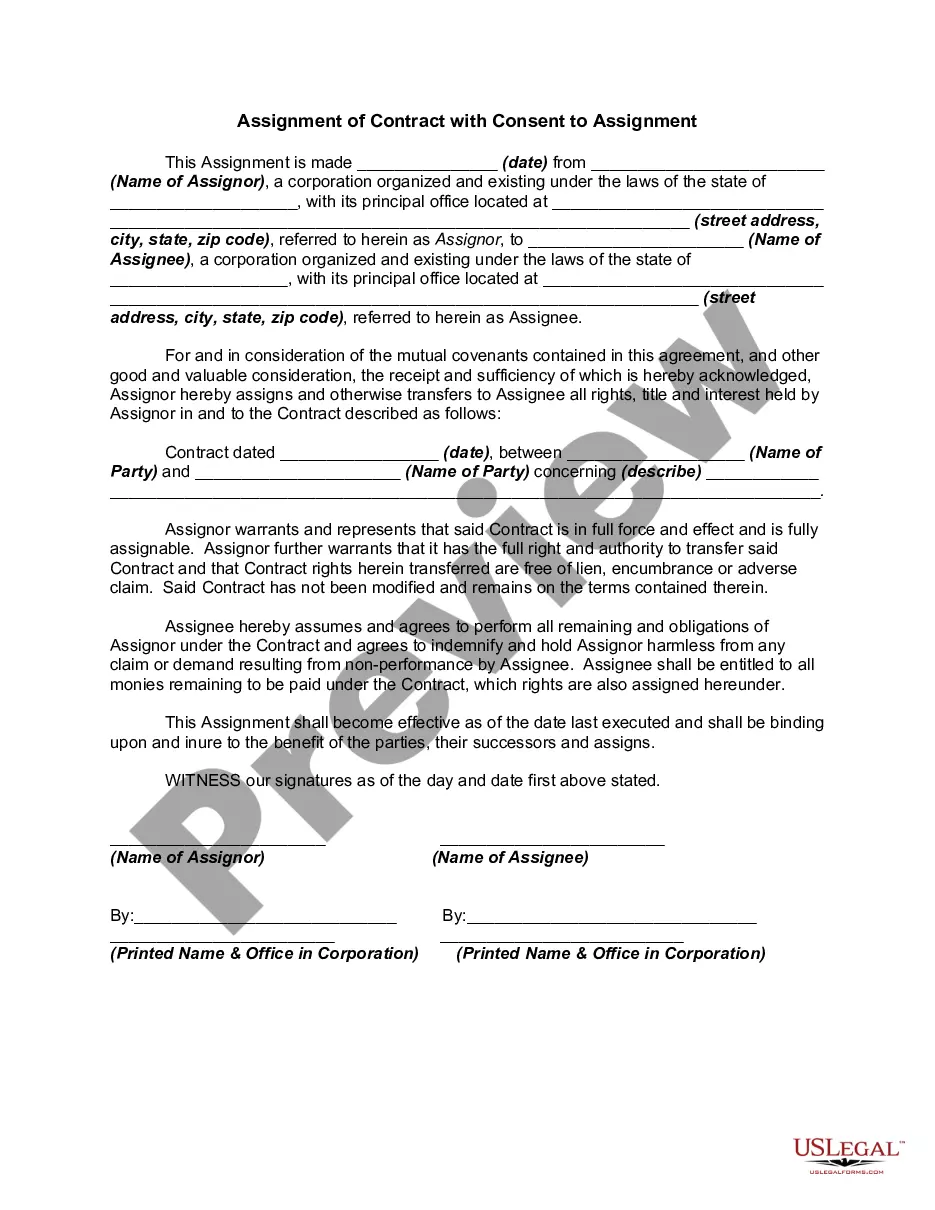
Consent to assignment refers to allowing a party of a contract to assign a contract and move the obligations to another party. The party of the existing contract, known as the assignor, will pass on the contract to another party, known as the assignee.
An assignee can compel an obligor with notice of the assignment to perform. A right to the payment of money may be assigned. An assignment is not effective without notice. False; An assignment is effective with or without notice.
Once a valid assignment of rights has been made to a third party, the third party (the assignee) should notify the obligor of the assignment. N.B. Notice that we say ?should,? rather than ?must,? because the assignment is effective immediately, whether or not notice is given to the obligor.