Complaint or Petition for Injunctive Relief Against Adjoining Landowner - Easement
About this form
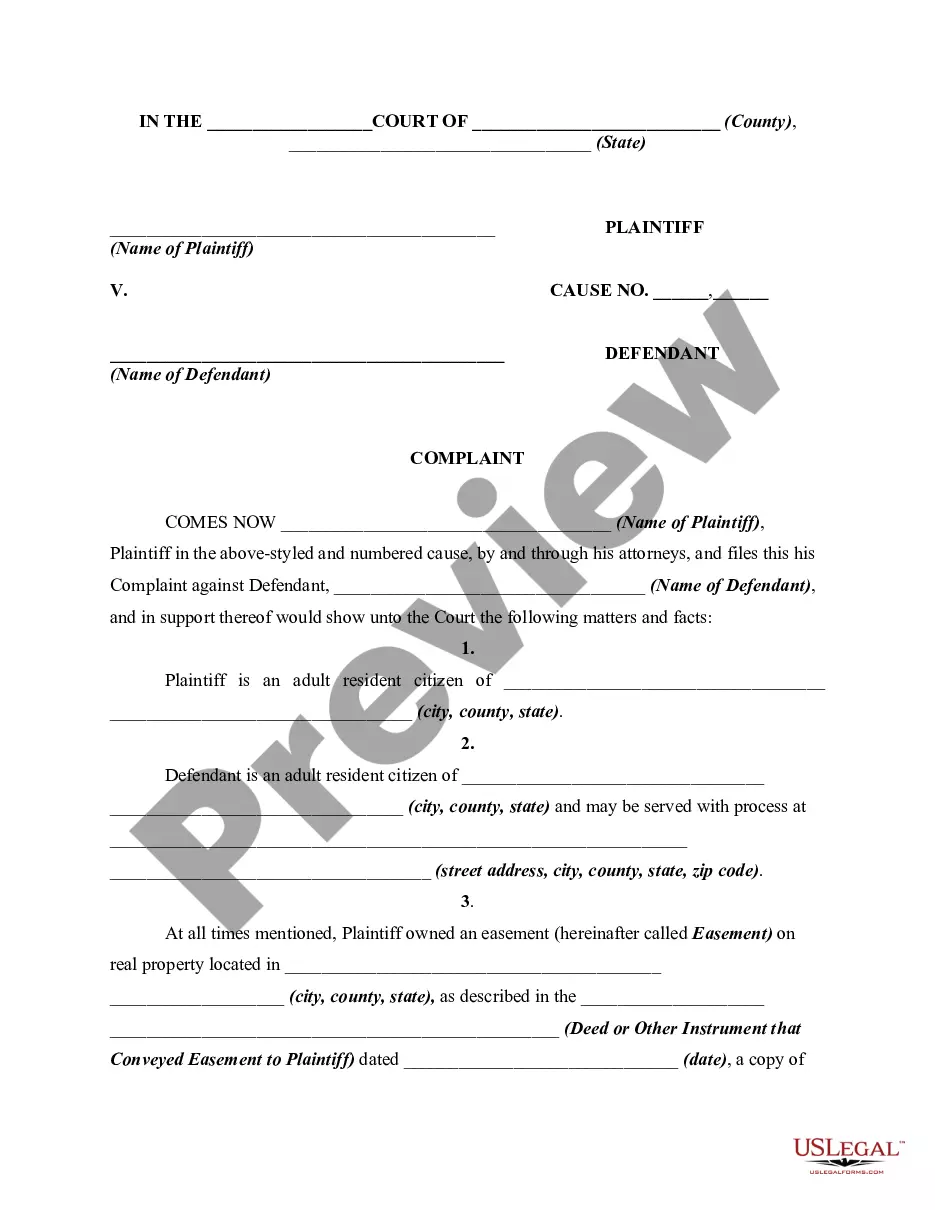
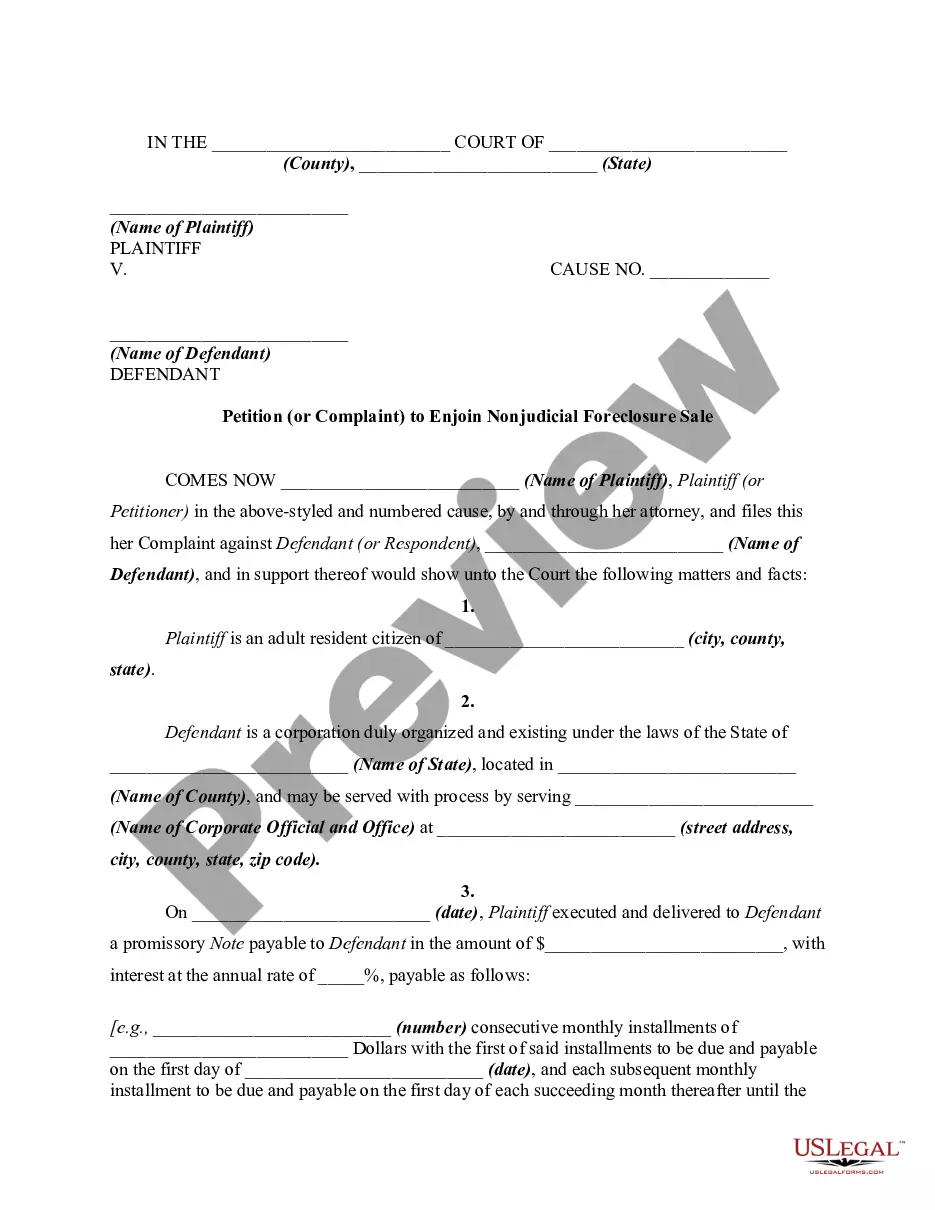
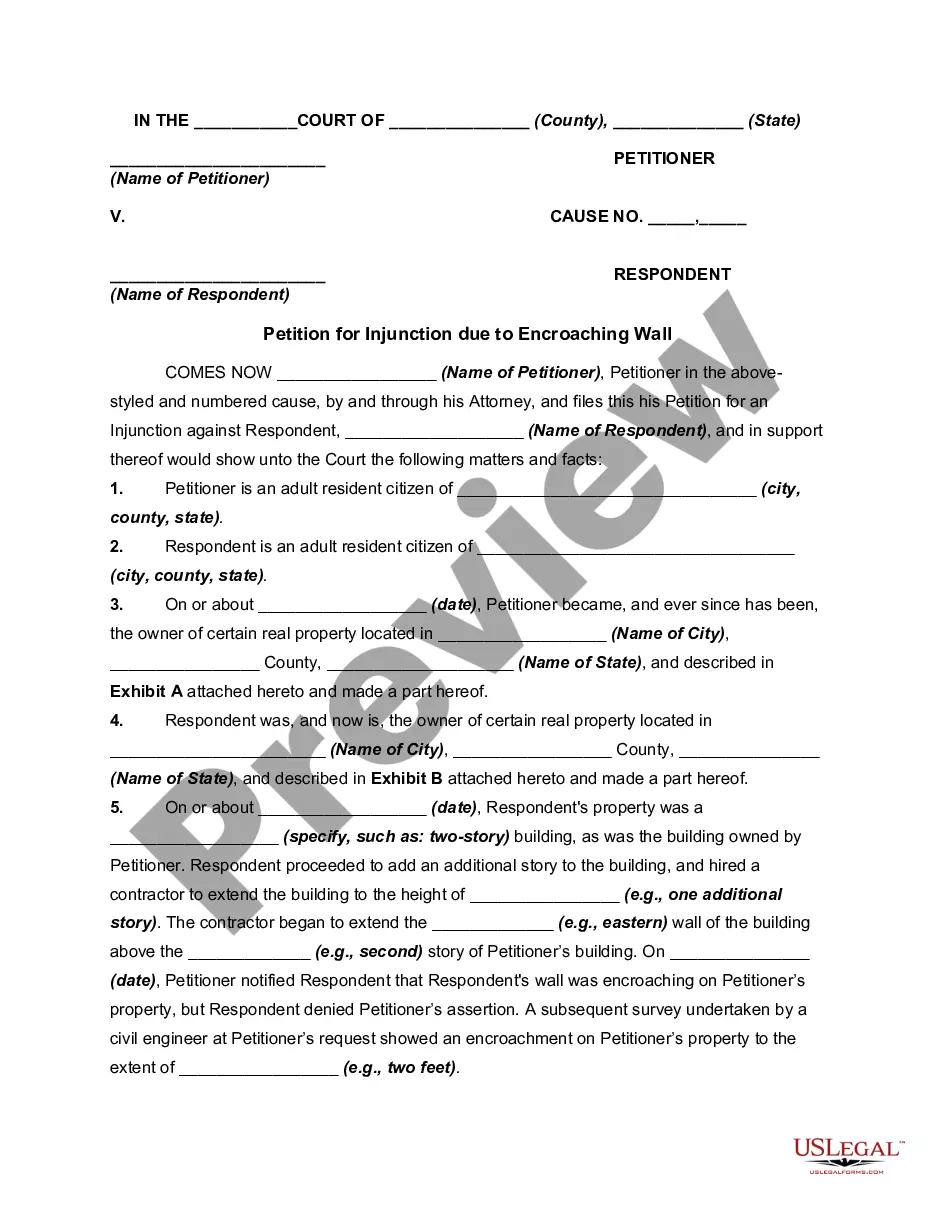
The Complaint or Petition for Injunctive Relief Against Adjoining Landowner - Easement is a legal document requesting a court order (injunction) to prevent a neighboring landowner from interfering with an easement you own. This form follows the "notice pleadings" format outlined in the Federal Rules of Civil Procedure, which makes it different from traditional complaints as it focuses on basic information rather than extensive details.
Form components explained
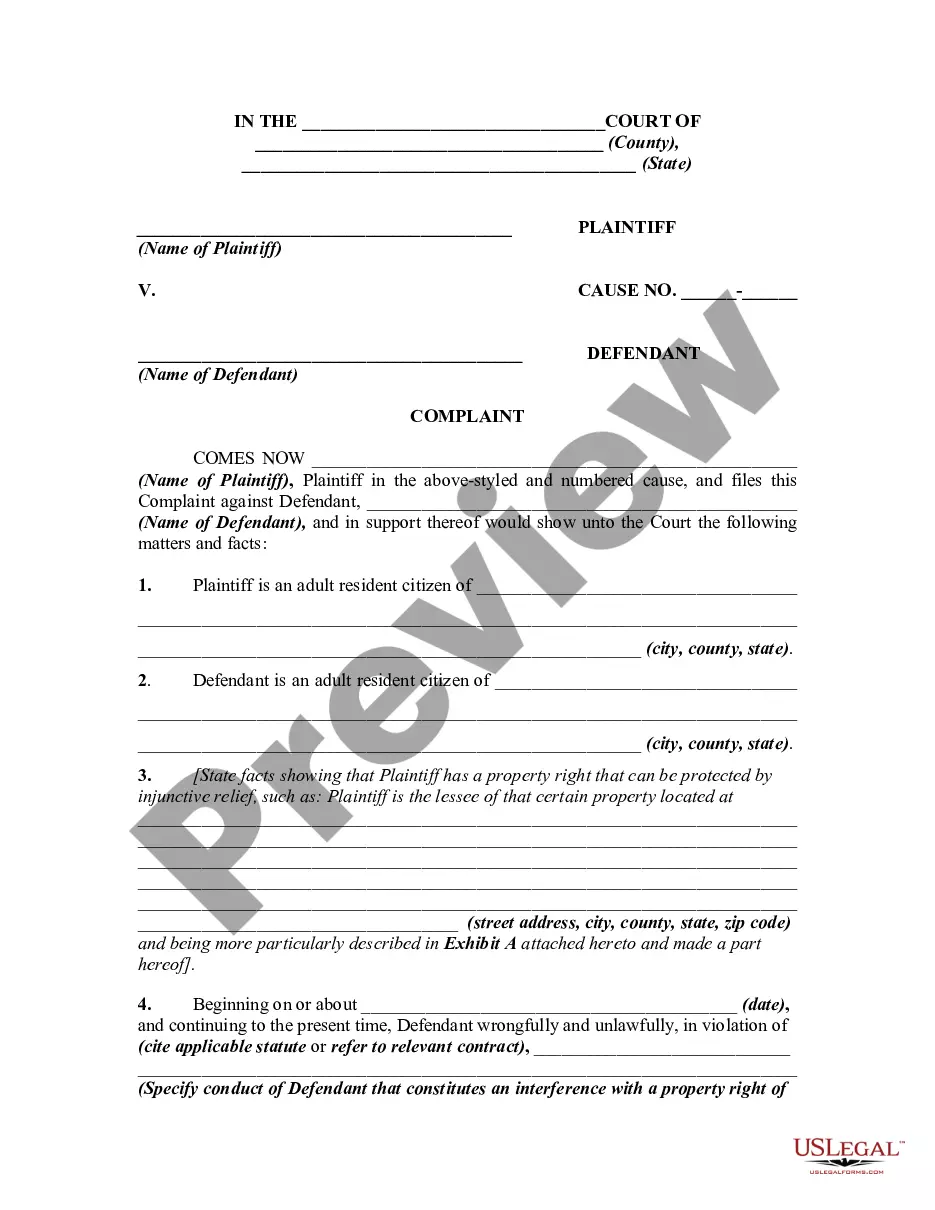
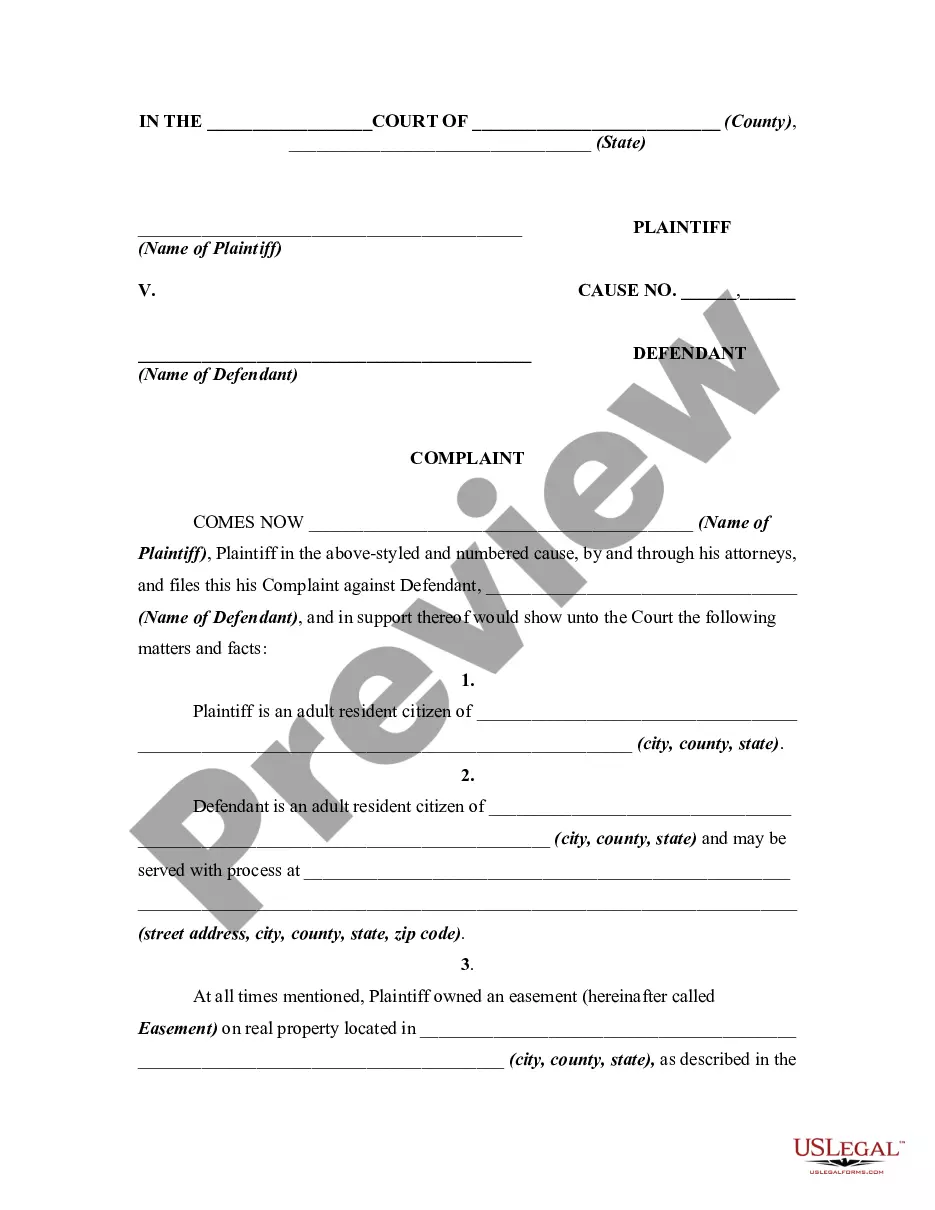
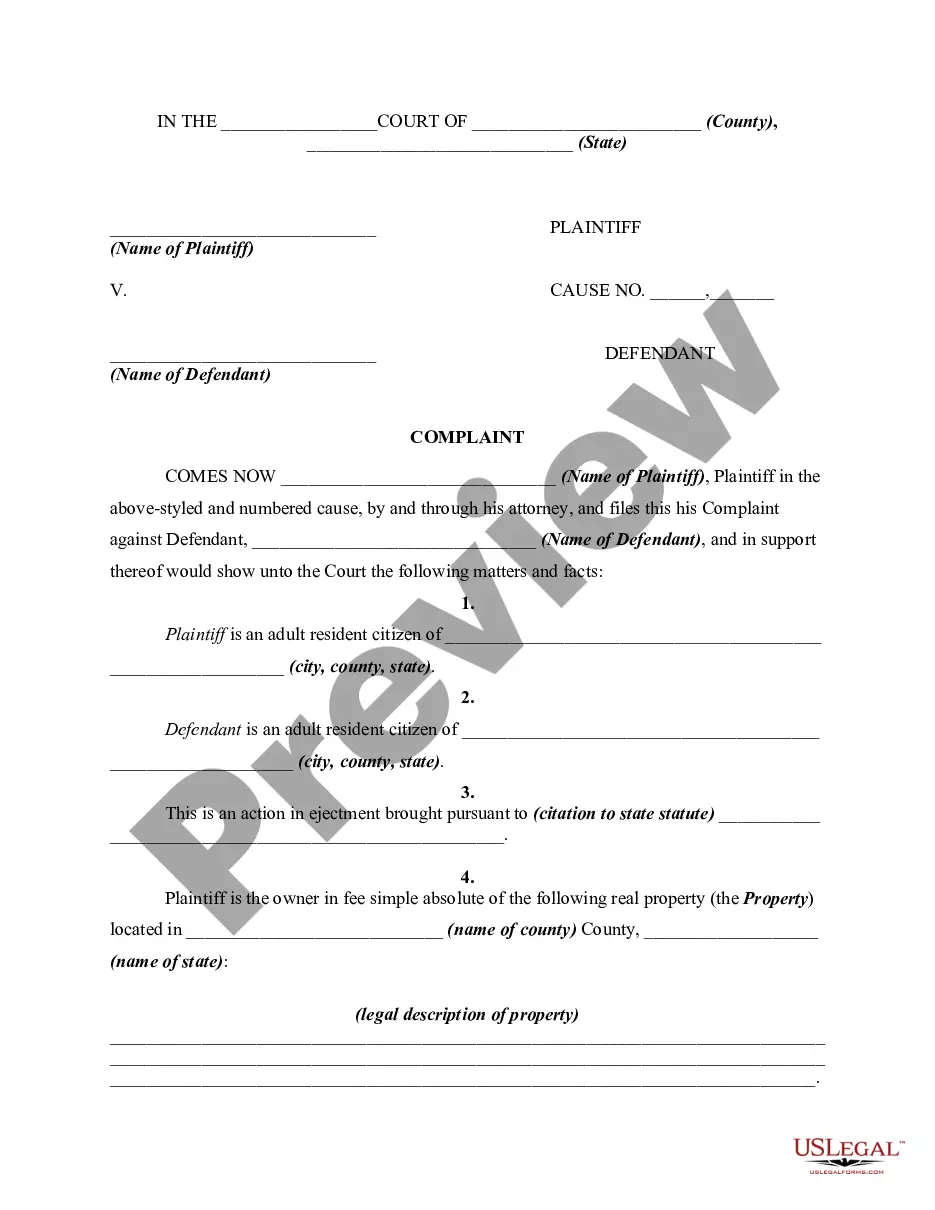
- Identification of the plaintiff and defendant, including addresses.
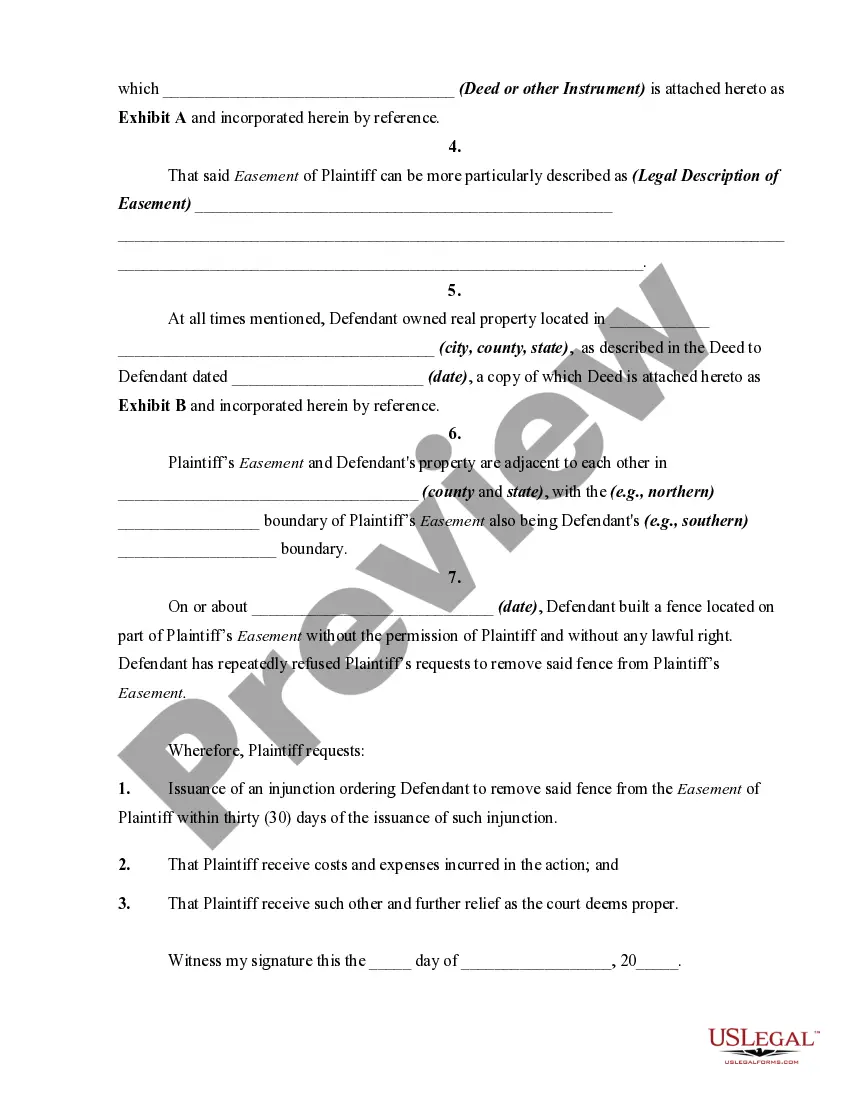
- Description of the easement, including legal details and reference documents.
- Allegations of interference by the defendant, including specifics of the action taken.
- Request for specific relief from the court, including the removal of obstacles.
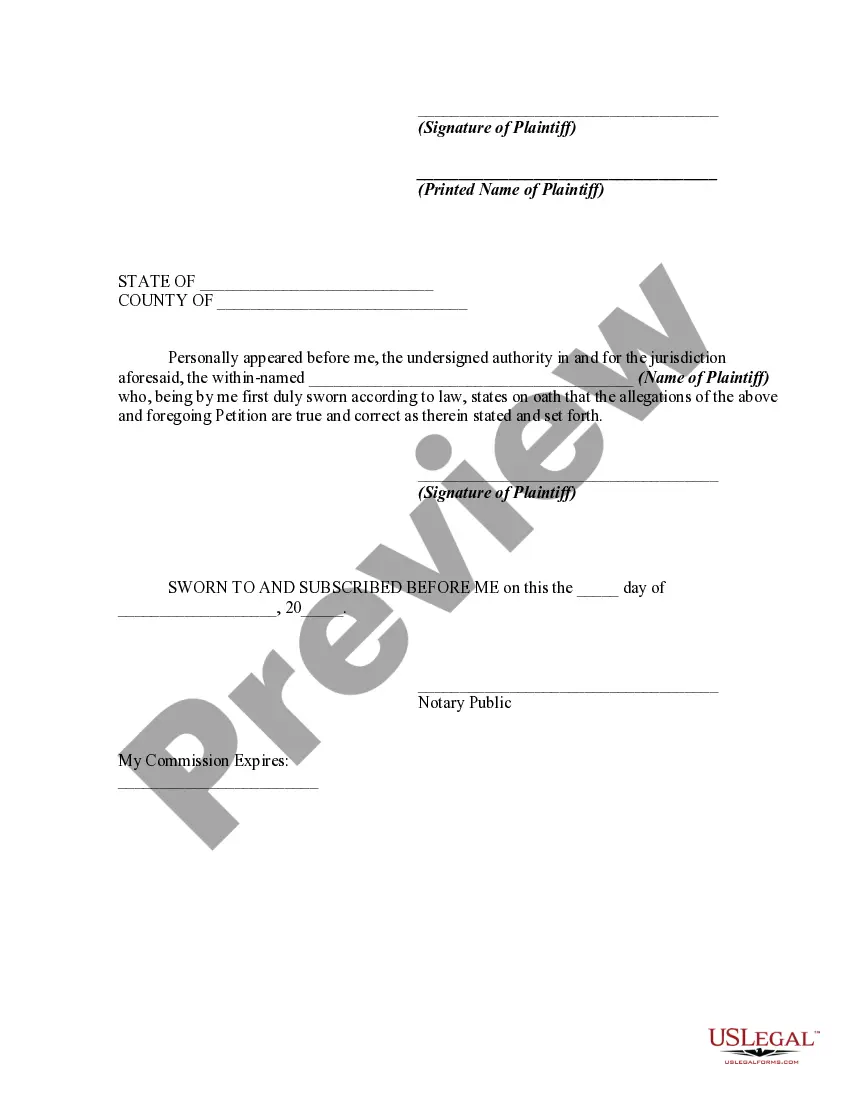
- Signature lines for the plaintiff and notary acknowledgment.
Situations where this form applies
You should use this form when you need to stop a neighbor from unlawfully using or obstructing your easement. Examples include situations where a neighboring landowner has built a fence on your easement, preventing you from accessing a property or utilizing it as intended. This form helps establish your legal claim in court.
Intended users of this form
- Homeowners or landowners with an established easement that is being violated.
- Individuals seeking legal recourse against neighbors obstructing their rights.
- People who are unfamiliar with legal proceedings and need a straightforward process to follow.
Completing this form step by step
- Identify the parties by filling in the names and addresses of both the plaintiff and defendant.
- Describe the easement in detail, including any relevant legal descriptions or documents.
- State the facts surrounding the interference, including dates and actions taken by the defendant.
- Complete the request for relief that you are seeking from the court.
- Sign the form and ensure it is notarized as required.
Notarization requirements for this form
Yes, this form must be notarized to be legally valid. This ensures that the signatures are authenticated and that the document can be presented in court. US Legal Forms offers integrated online notarization services, providing secure video calls and ensuring that your document meets legal standards without requiring in-person visits.
Get your form ready online
Our built-in tools help you complete, sign, share, and store your documents in one place.
Make edits, fill in missing information, and update formatting in US Legal Forms—just like you would in MS Word.
Download a copy, print it, send it by email, or mail it via USPS—whatever works best for your next step.
Sign and collect signatures with our SignNow integration. Send to multiple recipients, set reminders, and more. Go Premium to unlock E-Sign.
If this form requires notarization, complete it online through a secure video call—no need to meet a notary in person or wait for an appointment.
We protect your documents and personal data by following strict security and privacy standards.

Make edits, fill in missing information, and update formatting in US Legal Forms—just like you would in MS Word.

Download a copy, print it, send it by email, or mail it via USPS—whatever works best for your next step.

Sign and collect signatures with our SignNow integration. Send to multiple recipients, set reminders, and more. Go Premium to unlock E-Sign.

If this form requires notarization, complete it online through a secure video call—no need to meet a notary in person or wait for an appointment.

We protect your documents and personal data by following strict security and privacy standards.
Common mistakes
- Failing to provide complete and accurate descriptions of the property and easement.
- Not including necessary legal documents as exhibits.
- Omitting signatures or notary acknowledgments, which can delay court proceedings.
- Submitting the form in the wrong court jurisdiction.
Benefits of using this form online
- Immediate access to a professionally drafted form that can be customized to your needs.
- Convenience of downloading and completing the form at your own pace.
- Legal assurance that the document is compliant with the appropriate procedures.
This ease of use enables individuals without extensive legal knowledge to navigate complex legal situations effectively.
Legal use & context
- This form is used in civil court to seek injunctive relief related to property disputes.
- It requires the plaintiff to demonstrate clear rights to the easement and the harm caused by the defendant's actions.
- Successful use of this form may lead to a court order enforcing the easement rights.
What to keep in mind
- The form serves as a formal request for an injunction against actions affecting your easement rights.
- Accurate description of both properties and the easement is crucial for success.
- Follow local laws regarding easements to ensure compliance when filing.
Looking for another form?
Form popularity
FAQ
Primary tabs. Injunctive relief, also known as an injunction, is a remedy which restrains a party from doing certain acts or requires a party to act in a certain way. It is generally only available when there is no other remedy at law and irreparable harm will result if the relief is not granted.
The party seeking a preliminary injunctive relief must demonstrate: (1) irreparable injury in the absence of such an order; (2) that the threatened injury to the moving party outweighs the harm to the opposing party resulting from the order; (3) that the injunction is not adverse to public interest; and (4) that the
For example, if a former employee is accused of violating a severance agreement by failing to follow the terms of a non-compete clause, their former employer may ask the court to issue an injunction preventing the employee from engaging in competitive activities.
Injunctive relief usually takes one of three forms: temporary restraining order (TRO), preliminary injunction, and permanent injunction.
Where equity prevents a threatened wrong or injury, or proceeds to set right an injury that has already been inflicted, it accomplishes this by granting an injunction. This injunction will order the defendant either to cease doing or commence performing a certain act.
The three main instances of an injunction are restraining orders, preliminary (temporary) injunctions, and permanent injunctions. Cease and desist orders are a common type of injunction that demands an individual or entity to stop some activity.
What Is an Example of Injunctive Relief? Theft of Clients: If a former employee poaches a company's clients, the innocent party may try to stop the former client from causing further damage.Breach of Contract: Injunctive relief is an effective way to stop an offending party from continuing to breach a contract.