ADA Jobs Requirements Checklist
Overview of this form
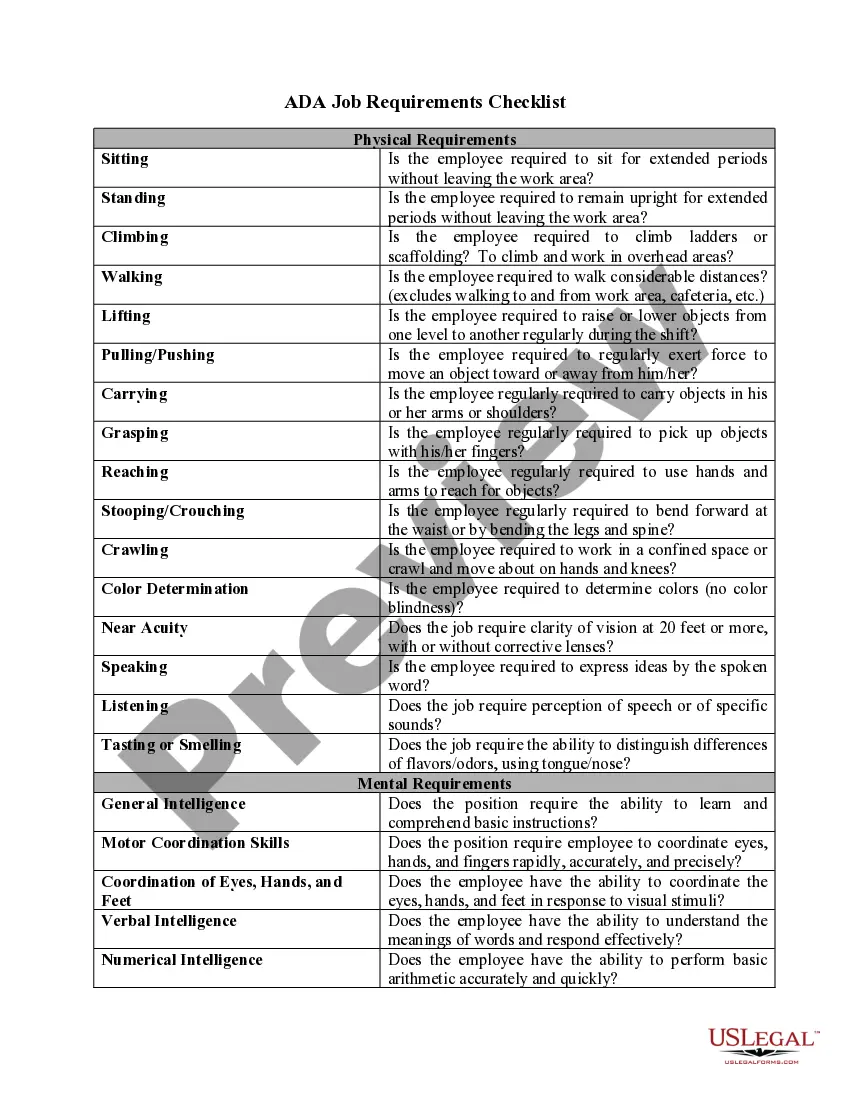
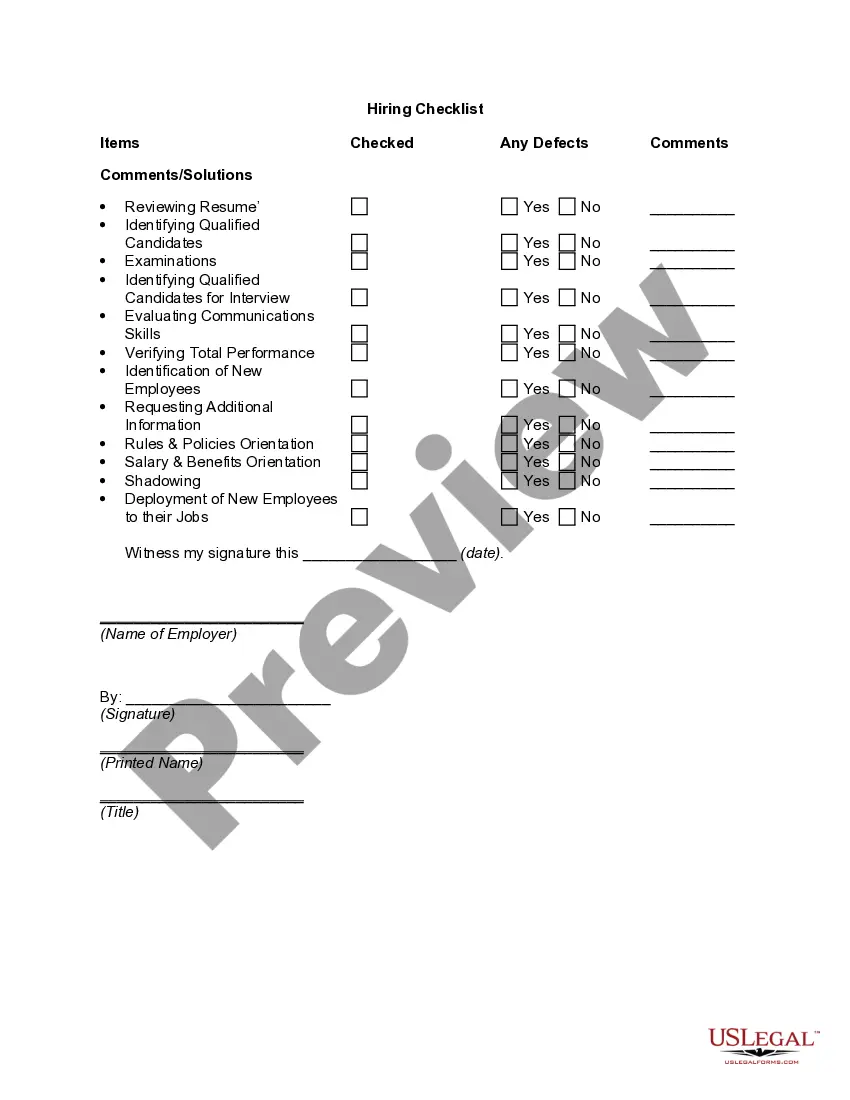
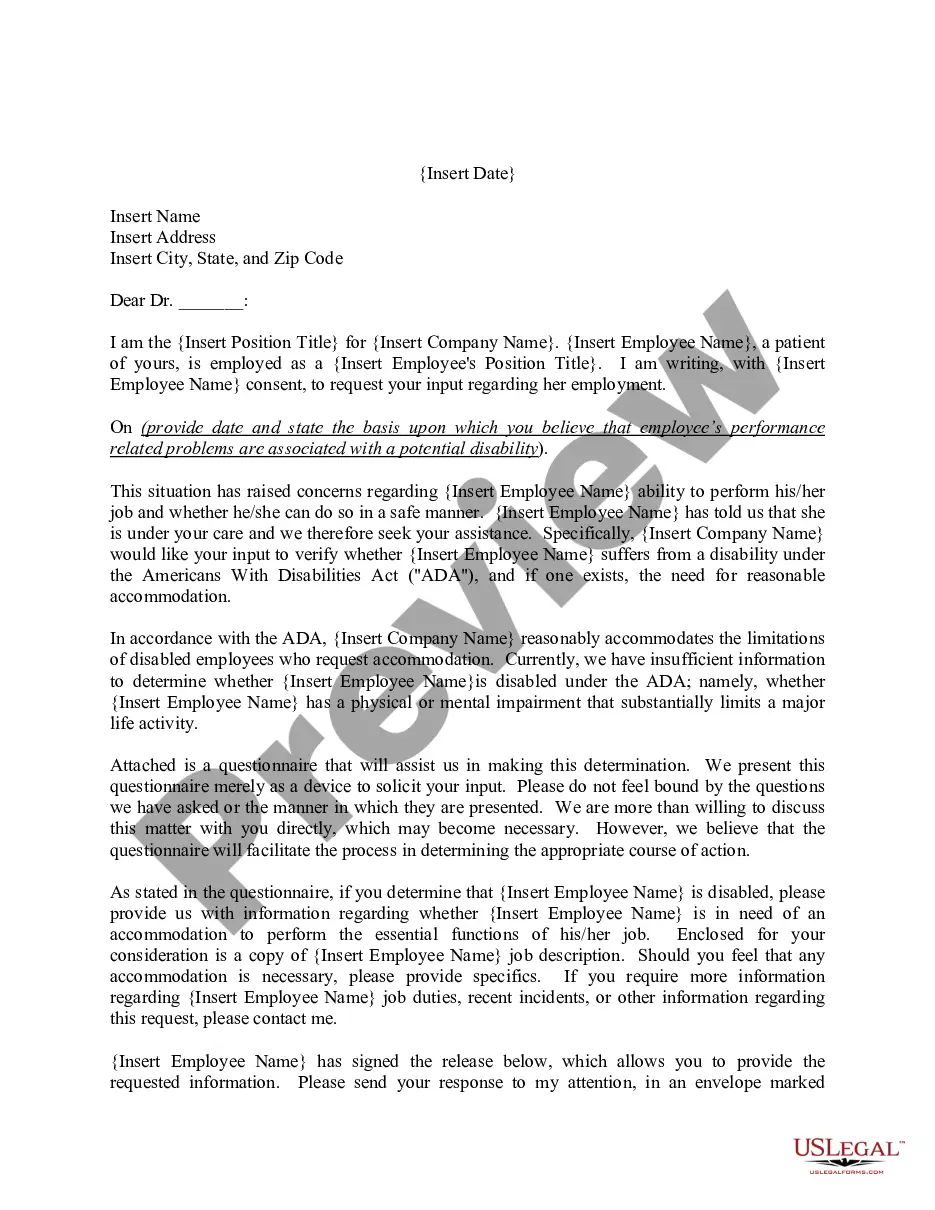
The ADA Jobs Requirements Checklist is designed to help employers identify and evaluate the physical and mental requirements of various job positions within their organization. This checklist serves as a tool to ensure compliance with the Americans with Disabilities Act (ADA), differentiating it from other employment forms that may not focus specifically on job requirements related to disability accommodation.
Main sections of this form
- Physical requirements for sitting, standing, climbing, and walking.
- Lifting, pushing, pulling, and carrying specifications.
- Grasping, reaching, stooping, and crawling activities.
- Visual, auditory, and sensory requirements such as color determination and near acuity.
- Mental requirements including general intelligence and coordination skills.
When to use this form
This checklist should be utilized when a company is evaluating positions to ensure that job descriptions align with ADA standards. It is particularly useful during the hiring process, for job evaluations, and when considering reasonable accommodations for employees with disabilities.
Who needs this form
- Human resource professionals assessing job requirements.
- Employers wanting to ensure ADA compliance in their job evaluations.
- Managers or team leaders involved in hiring processes.
- Legal professionals advising companies on employment practices.
How to prepare this document
- Determine the job title and general functions of the position.
- Evaluate and document the physical requirements such as lifting, standing, and walking.
- Assess and list the mental requirements and necessary coordination skills.
- Ensure clarity on sensory requirements, such as vision and hearing abilities.
- Review the checklist for completeness before finalizing the job description.
Notarization requirements for this form
This form does not typically require notarization to be legally valid. However, some jurisdictions or document types may still require it. US Legal Forms provides secure online notarization powered by Notarize, available 24/7 for added convenience.
Get your form ready online
Our built-in tools help you complete, sign, share, and store your documents in one place.
Make edits, fill in missing information, and update formatting in US Legal Forms—just like you would in MS Word.
Download a copy, print it, send it by email, or mail it via USPS—whatever works best for your next step.
Sign and collect signatures with our SignNow integration. Send to multiple recipients, set reminders, and more. Go Premium to unlock E-Sign.
If this form requires notarization, complete it online through a secure video call—no need to meet a notary in person or wait for an appointment.
We protect your documents and personal data by following strict security and privacy standards.

Make edits, fill in missing information, and update formatting in US Legal Forms—just like you would in MS Word.

Download a copy, print it, send it by email, or mail it via USPS—whatever works best for your next step.

Sign and collect signatures with our SignNow integration. Send to multiple recipients, set reminders, and more. Go Premium to unlock E-Sign.

If this form requires notarization, complete it online through a secure video call—no need to meet a notary in person or wait for an appointment.

We protect your documents and personal data by following strict security and privacy standards.
Mistakes to watch out for
- Failing to consider all physical and mental requirements relevant to the job.
- Not updating the checklist when job roles change or evolve.
- Overlooking the needs for reasonable accommodations for employees with disabilities.
Advantages of online completion
- Convenience of accessing the form from anywhere at any time.
- Editability allows for customization to meet specific job requirements.
- Reliable and secure download of legal documents prepared by attorneys.
Legal use & context
- This checklist supports ADA compliance by clearly setting out job requirements, which is essential for ensuring fair hiring practices.
- Properly completed job requirements can protect employers from discrimination claims by providing documented evidence of job demands.
What to keep in mind
- The ADA Jobs Requirements Checklist is crucial for ensuring ADA compliance in job descriptions.
- Completion of the checklist helps clarify job expectations for potential employees.
- Employers should review and update the checklist regularly to reflect any changes in job demands.
Looking for another form?
Form popularity
FAQ
An employer is required to provide a reasonable accommodation to a qualified applicant or employee with a disability unless the employer can show that the accommodation would be an undue hardship -- that is, that it would require significant difficulty or expense.
Title I of the Americans with Disabilities Act (ADA) requires employers to provide reasonable accommodation to qualified applicants and employees with a disability unless the employer can demonstrate that doing so creates an undue hardship to the employer or poses a direct threat to the safety of the employee or others
An individual meets the Americans with Disabilities with Act definition act of disability that would qualify them for reasonable accommodations if they have a physical or mental impairment that substantially limits one or more major life activities (sometimes referred to in the regulations as an actual disability)
Deafness. Blindness. Diabetes. Cancer. Epilepsy. Intellectual disabilities. Partial or completely missing limbs. Mobility impairments requiring the use of a wheel chair.
The ADA requires employers to provide accommodations to ensure that employees with disabilities receive equal benefits of employment. For employees on leave and former employees, benefits of employment may include health and disability insurance, job protection, and bonuses and promotions.
Reasonable accommodation does not include removing essential job functions, creating new jobs, and providing personal need items such as eye glasses and mobility aids. Nothing in the ADA prohibits employers from providing these types of accommodations; they simply are not required accommodations.
Americans with Disabilities Act (ADA) The ADA prohibits discrimination on the basis of disability in employment, State and local government, public accommodations, commercial facilities, transportation, and telecommunications. It also applies to the United States Congress.
Under Title I of the Americans with Disabilities Act (ADA), a reasonable accommodation is a modification or adjustment to a job, the work environment, or the way things are usually done during the hiring process.
Needed accommodations may include providing: Accessible training sites; Training materials in alternate formats (e.g., large print, Braille, audiotape, or electronic format) to accommodate a disability; and. Sign language interpreters or captioning.