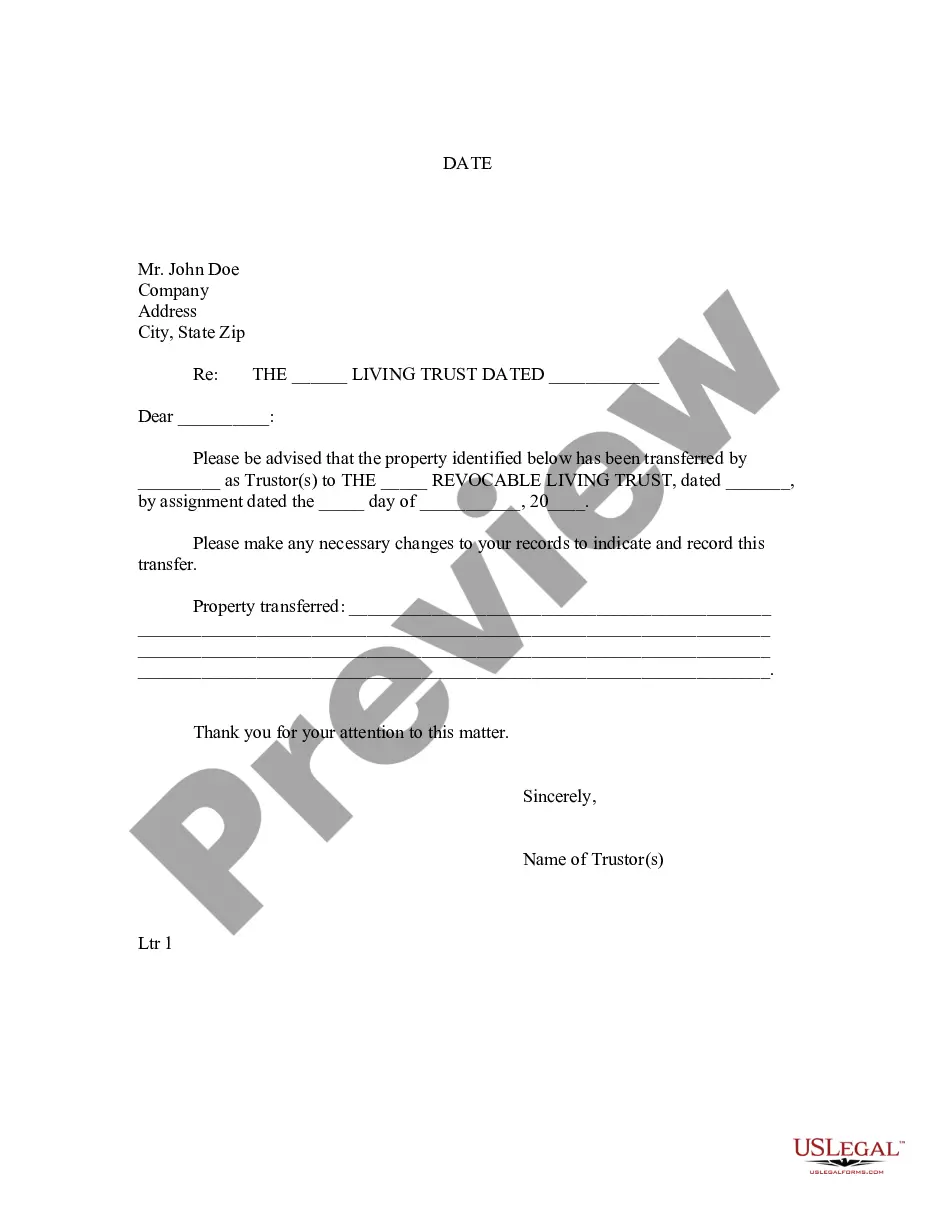
Employee Proprietary Rights Acknowledgment
Overview of this form
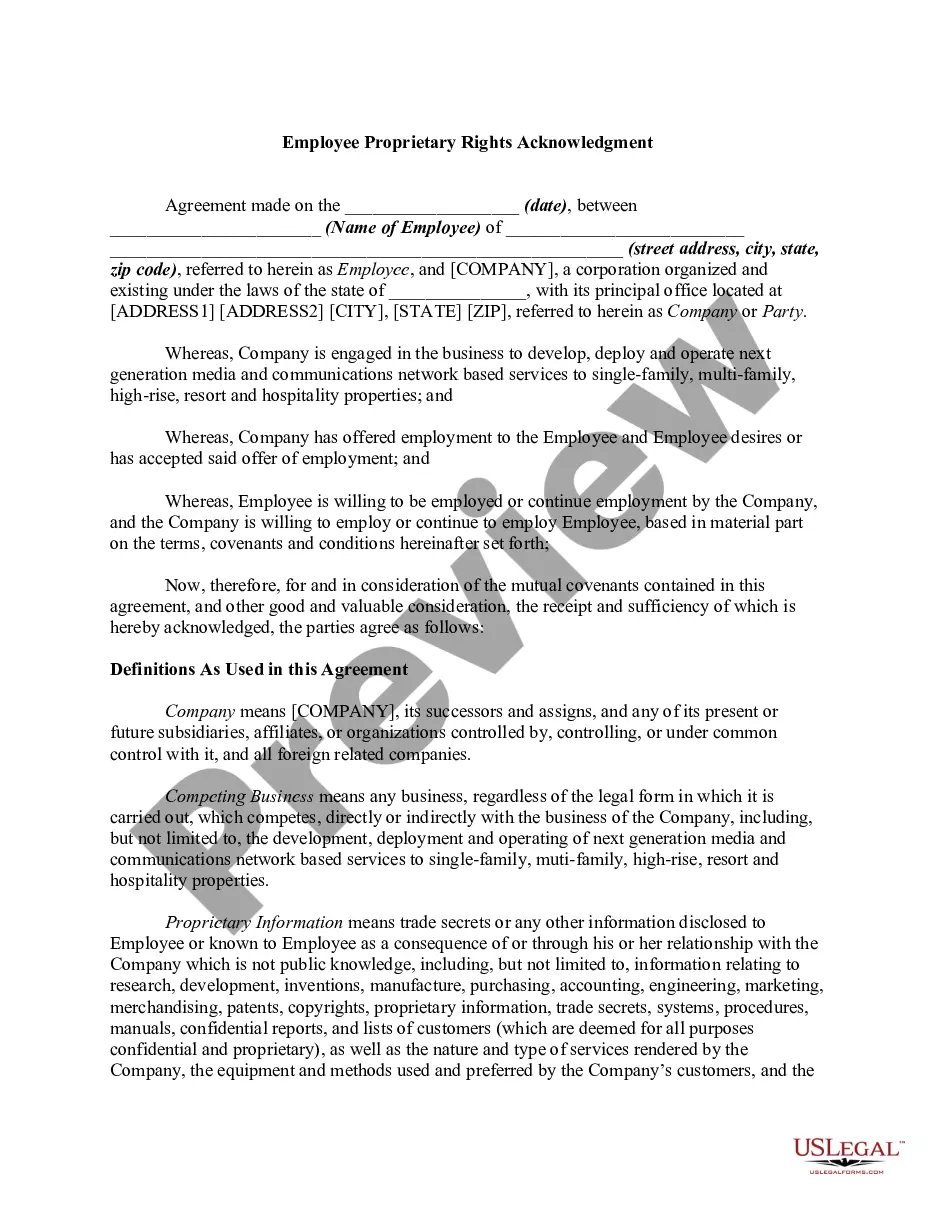
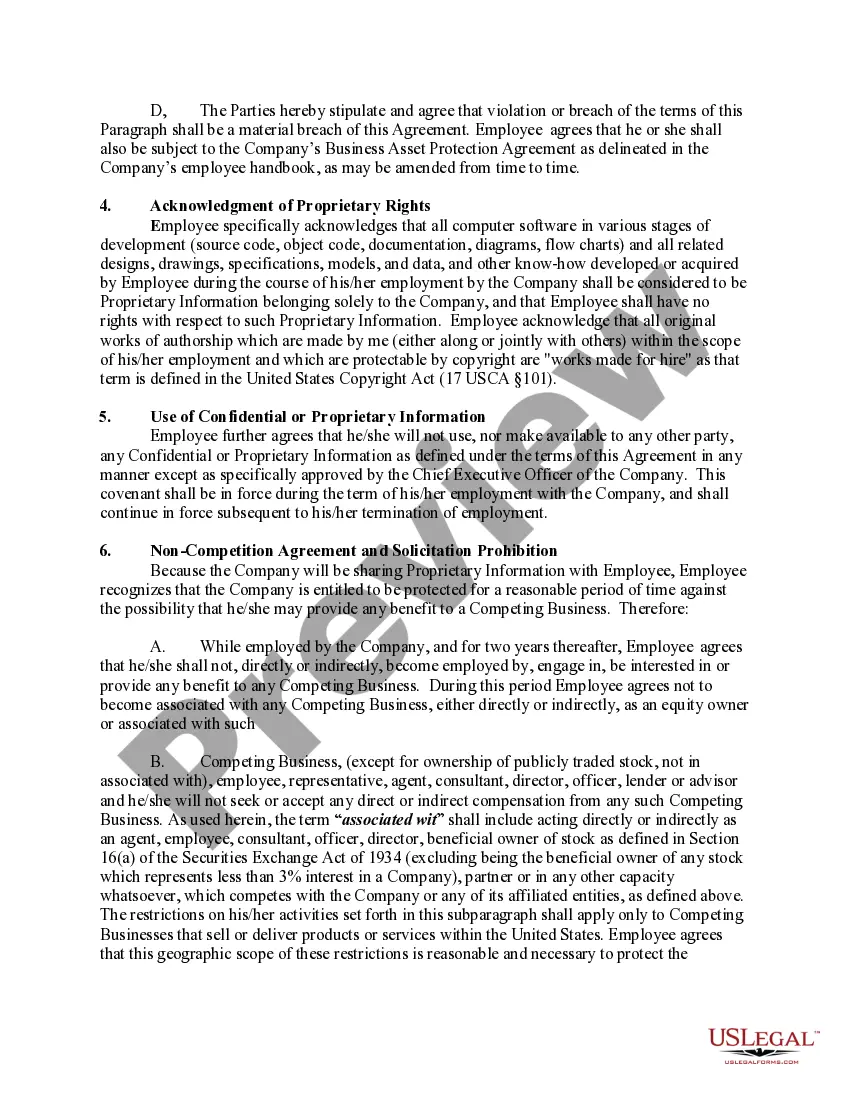
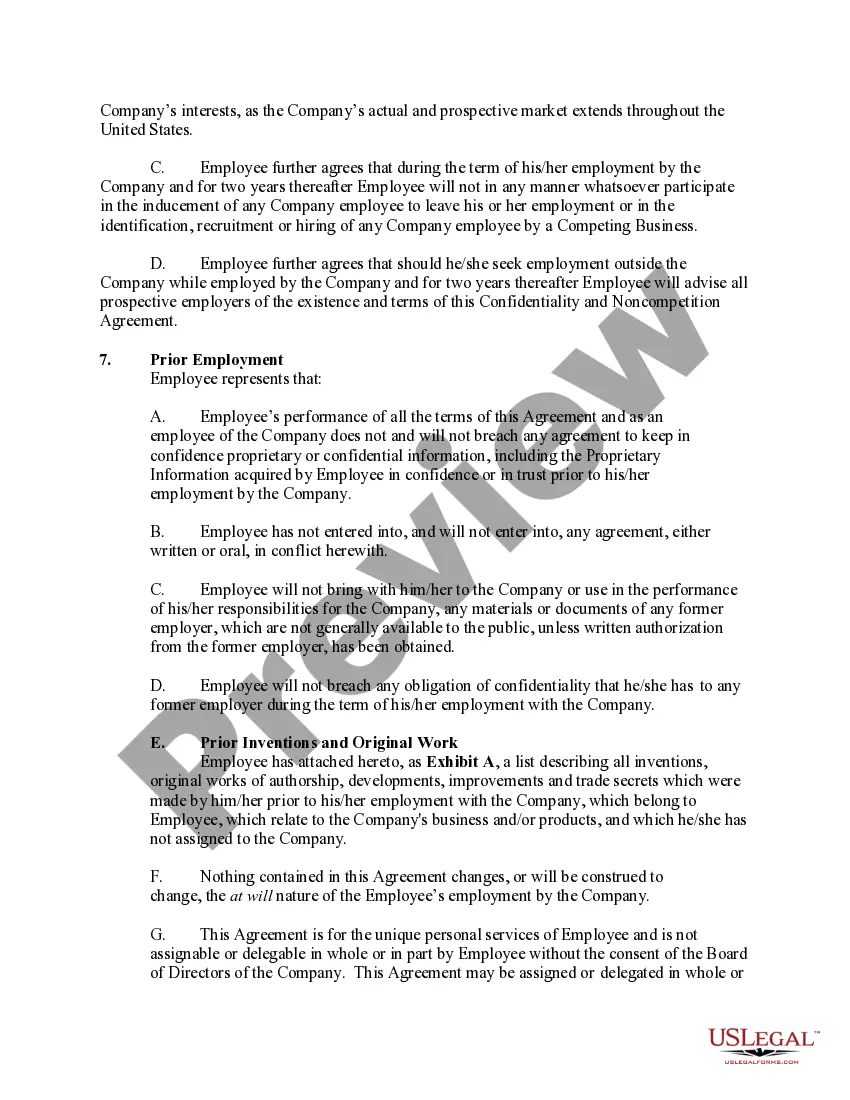
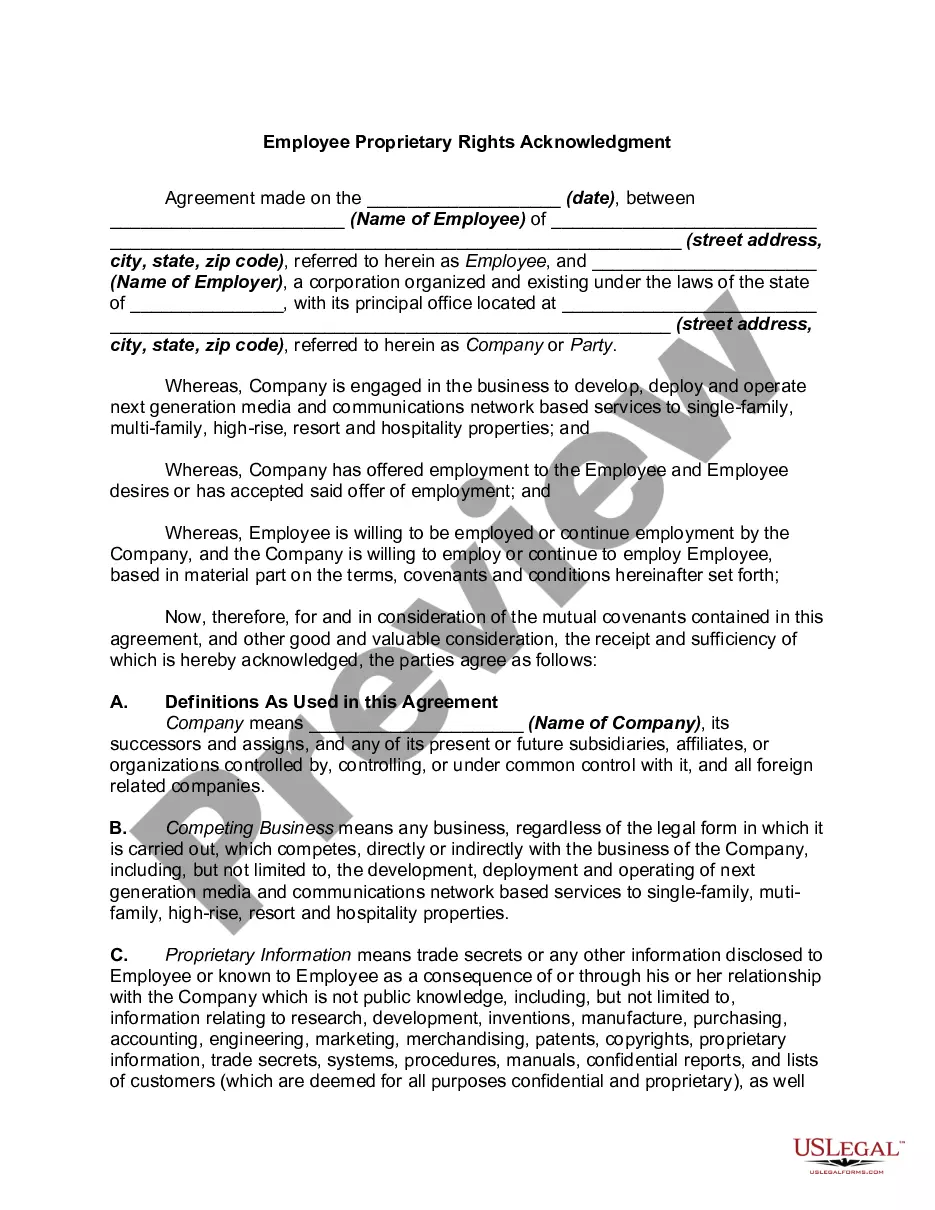
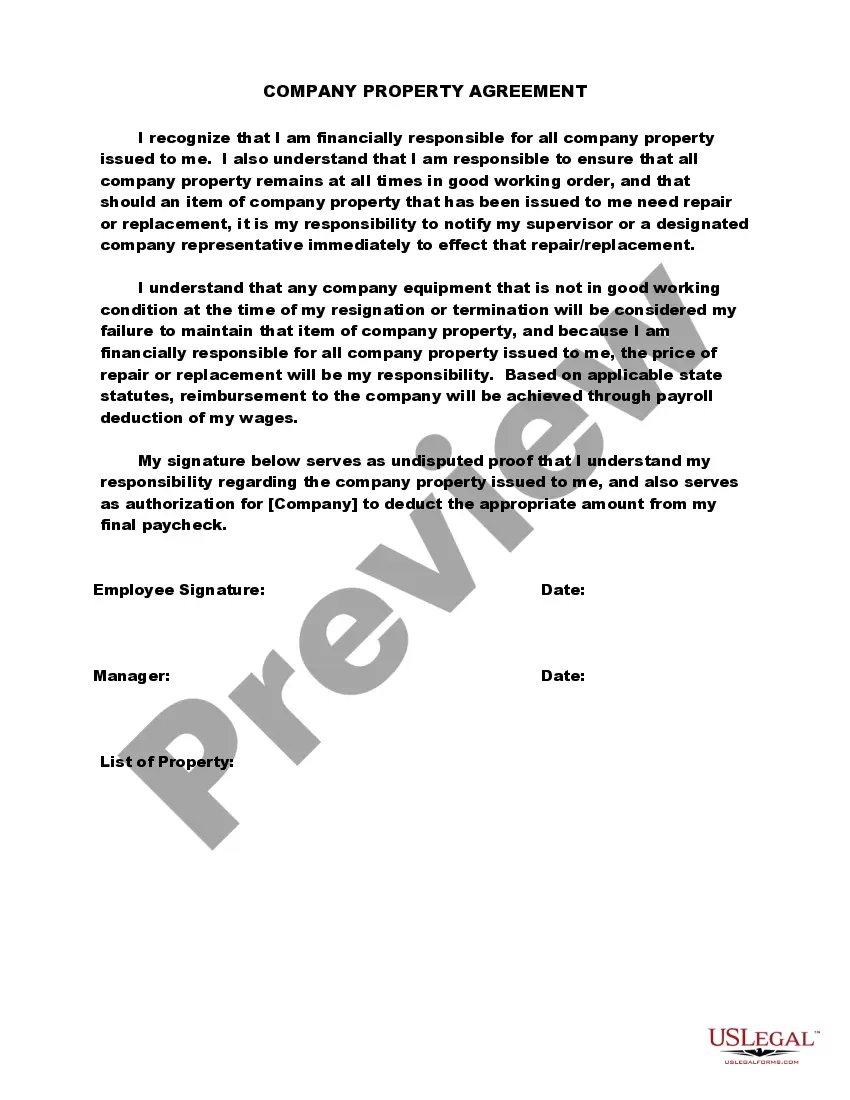
The Employee Proprietary Rights Acknowledgment is a legal document that outlines the proprietary rights of an employee concerning information obtained during their employment. This form helps protect a company's confidential information and inventions by securing employee acknowledgment of its proprietary nature. Unlike other employment agreements, this acknowledgment specifically addresses the handling of proprietary information, inventions, and confidentiality obligations that arise during and after employment.
Key components of this form
- Identification of the employee and the company, including their addresses.
- Definitions of proprietary information, inventions, and competing business.
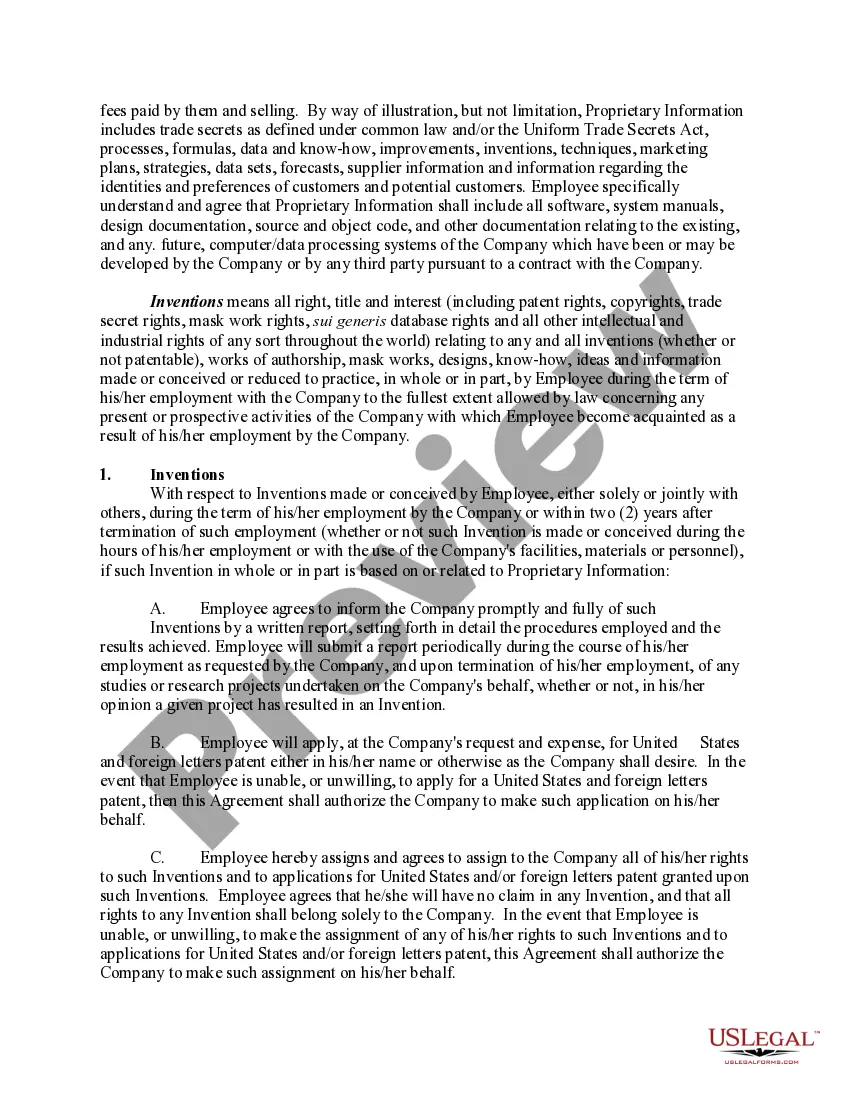
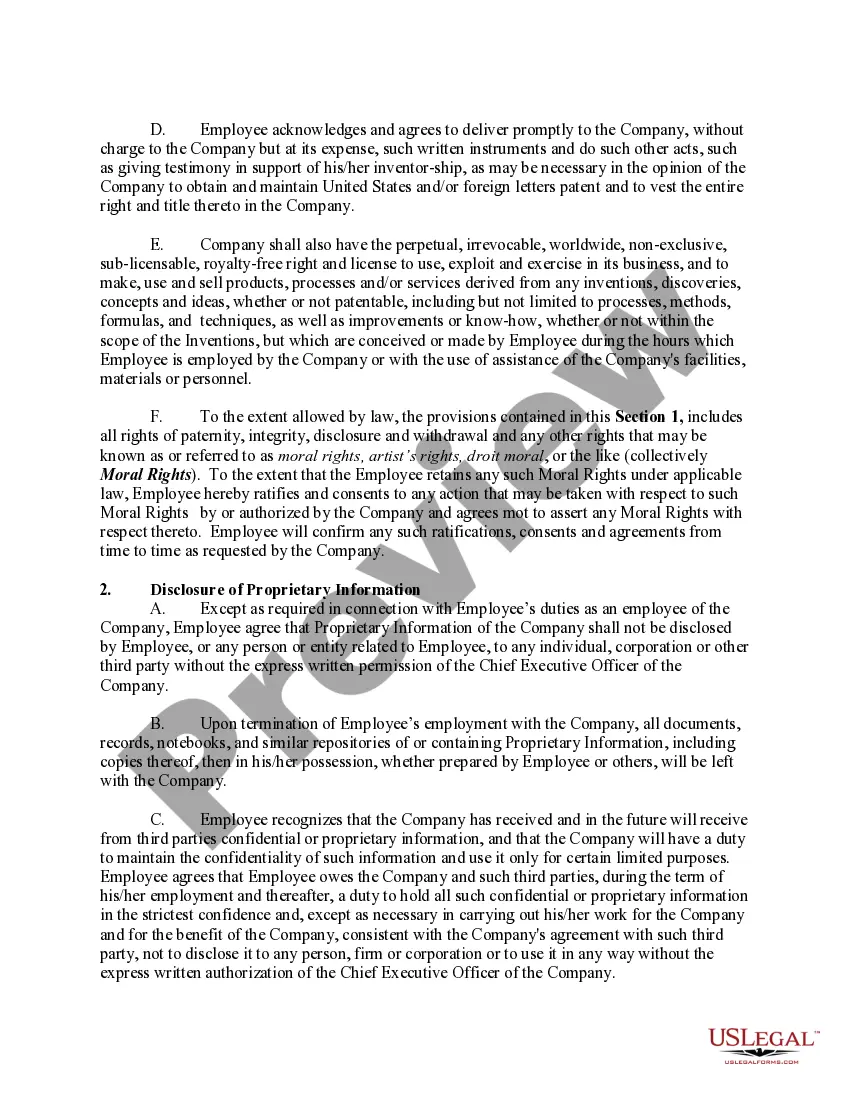
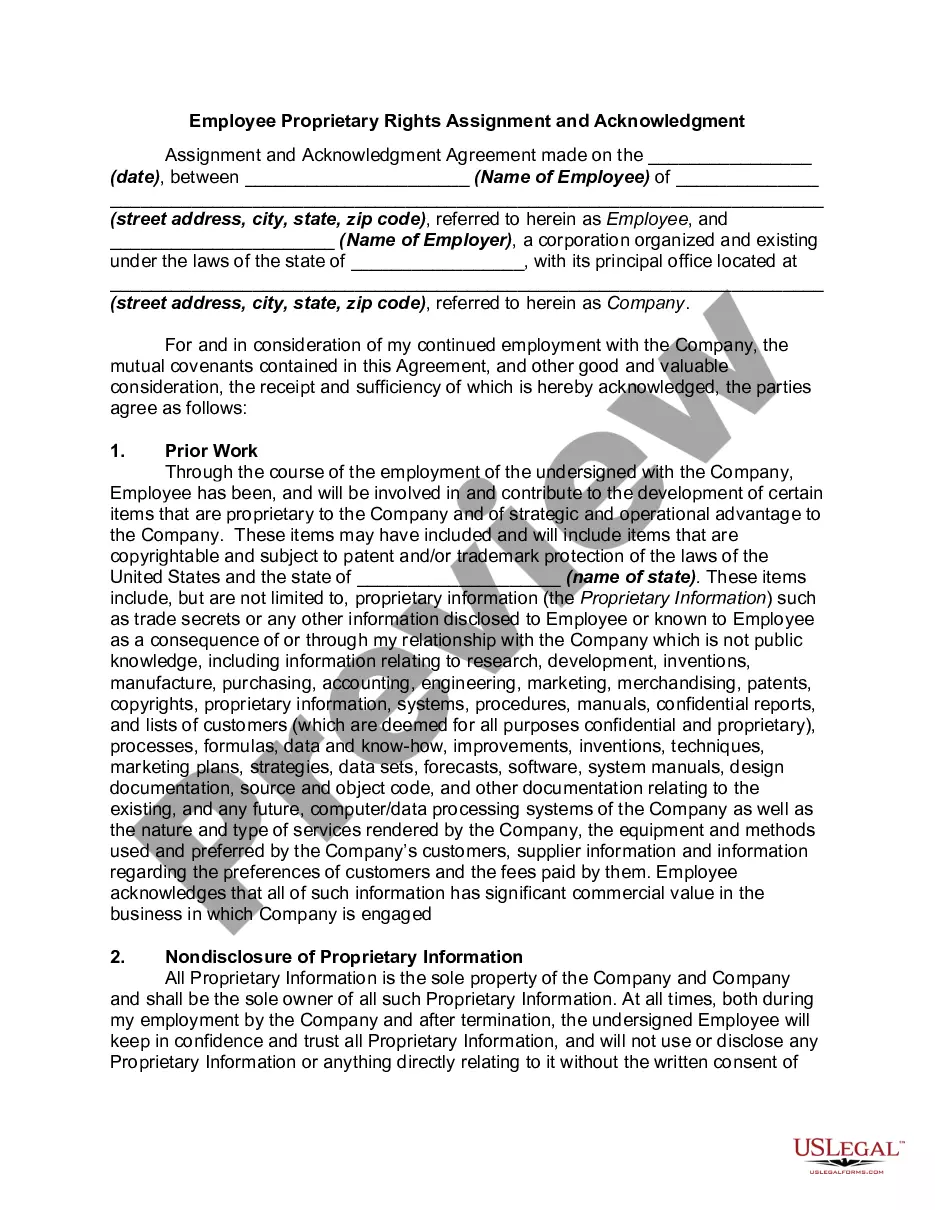
- Employee obligations regarding the disclosure and handling of proprietary information.
- Assignment of rights to inventions created during employment.
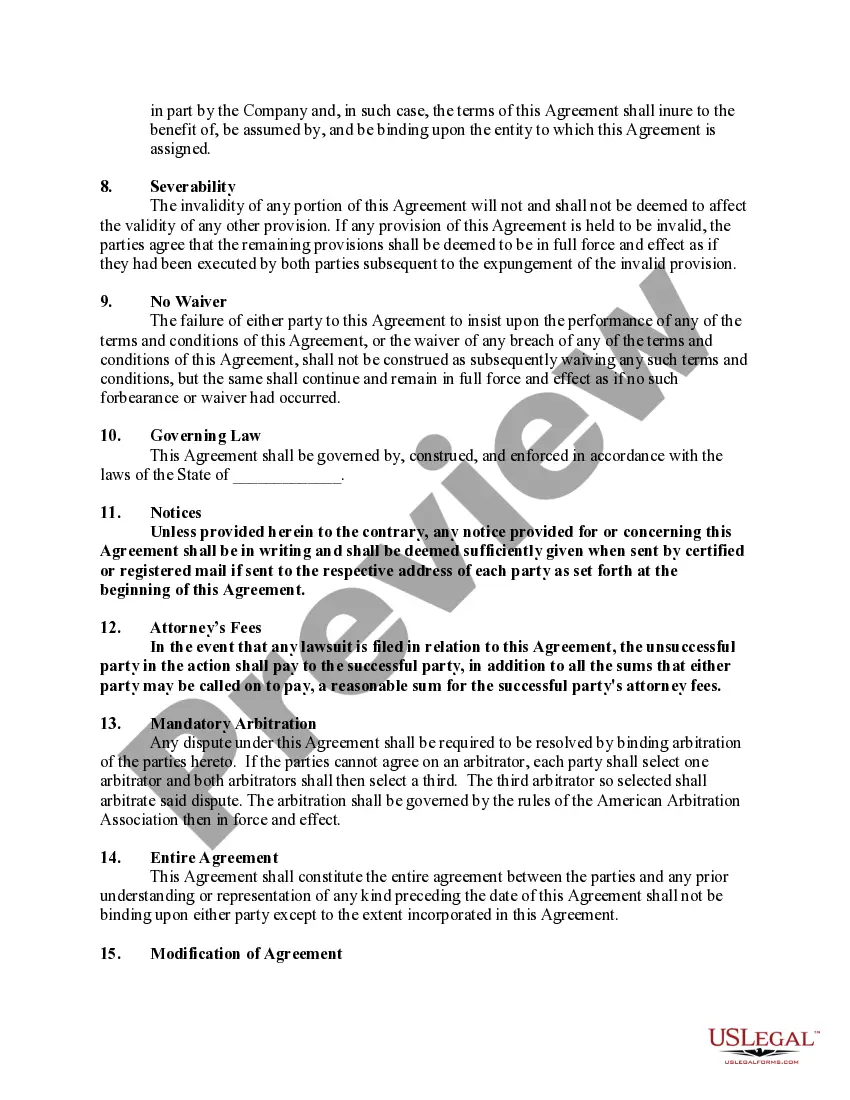
- Non-competition clause preventing the employee from joining competing businesses for a specified period.
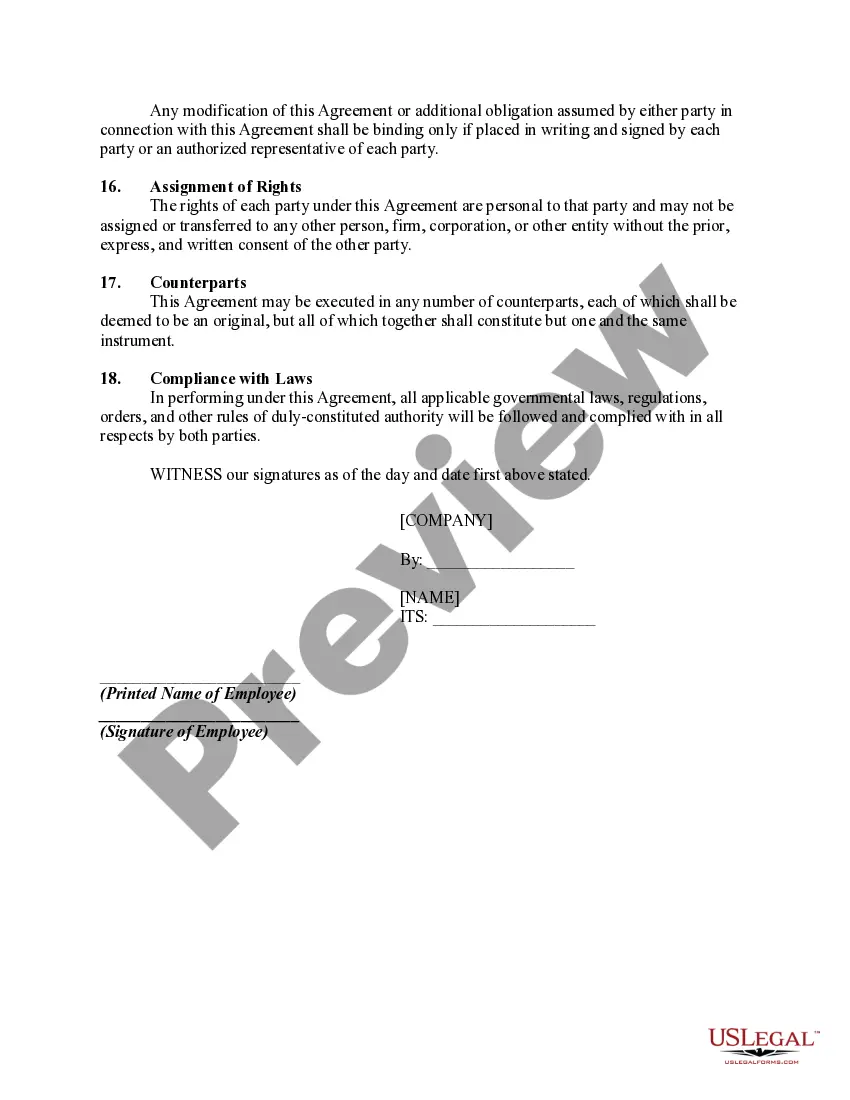
- Governing law and dispute resolution via arbitration.
When this form is needed
This form should be used by employers when hiring new employees who will have access to proprietary information or when existing employees are required to acknowledge their obligations regarding confidentiality and ownership of inventions. It is essential during the onboarding process or when introducing changes to an employee's responsibilities that involve proprietary information.
Who should use this form
- Employers looking to protect their proprietary information and inventions.
- Human resources departments responsible for managing employment agreements.
- Employees who are offered positions involving sensitive or confidential company information.
Completing this form step by step
- Fill in the date of the agreement.
- Include the full name and address of the employee.
- Specify the name and details of the company.
- Review and understand the definitions provided for proprietary information and inventions.
- Sign the document, ensuring both parties receive a copy for their records.
Notarization requirements for this form
Notarization is generally not required for this form. However, certain states or situations might demand it. You can complete notarization online through US Legal Forms, powered by Notarize, using a verified video call available anytime.
Get your form ready online
Our built-in tools help you complete, sign, share, and store your documents in one place.
Make edits, fill in missing information, and update formatting in US Legal Forms—just like you would in MS Word.
Download a copy, print it, send it by email, or mail it via USPS—whatever works best for your next step.
Sign and collect signatures with our SignNow integration. Send to multiple recipients, set reminders, and more. Go Premium to unlock E-Sign.
If this form requires notarization, complete it online through a secure video call—no need to meet a notary in person or wait for an appointment.
We protect your documents and personal data by following strict security and privacy standards.

Make edits, fill in missing information, and update formatting in US Legal Forms—just like you would in MS Word.

Download a copy, print it, send it by email, or mail it via USPS—whatever works best for your next step.

Sign and collect signatures with our SignNow integration. Send to multiple recipients, set reminders, and more. Go Premium to unlock E-Sign.

If this form requires notarization, complete it online through a secure video call—no need to meet a notary in person or wait for an appointment.

We protect your documents and personal data by following strict security and privacy standards.
Avoid these common issues
- Failing to define key terms such as proprietary information and inventions clearly.
- Not including all necessary signatures, which may render the agreement unenforceable.
- Overlooking to provide copies of the signed agreement to all parties involved.
- Neglecting to update the document to comply with changing state laws or company policies.
Why use this form online
- Convenience of downloading and completing forms at any time.
- Editability allows for easy customization to fit specific circumstances.
- Streamlined process for ensuring all necessary legal elements are included.
- Reliability of attorney-drafted information minimizes legal risks.
Looking for another form?

Form popularity
FAQ
A confidentiality agreement is a standard written agreement that is used to protect the owner of an invention or idea for a new business. It is also an important document between two companies that are contemplating a merger or a commercial transaction that must be withheld from public knowledge.
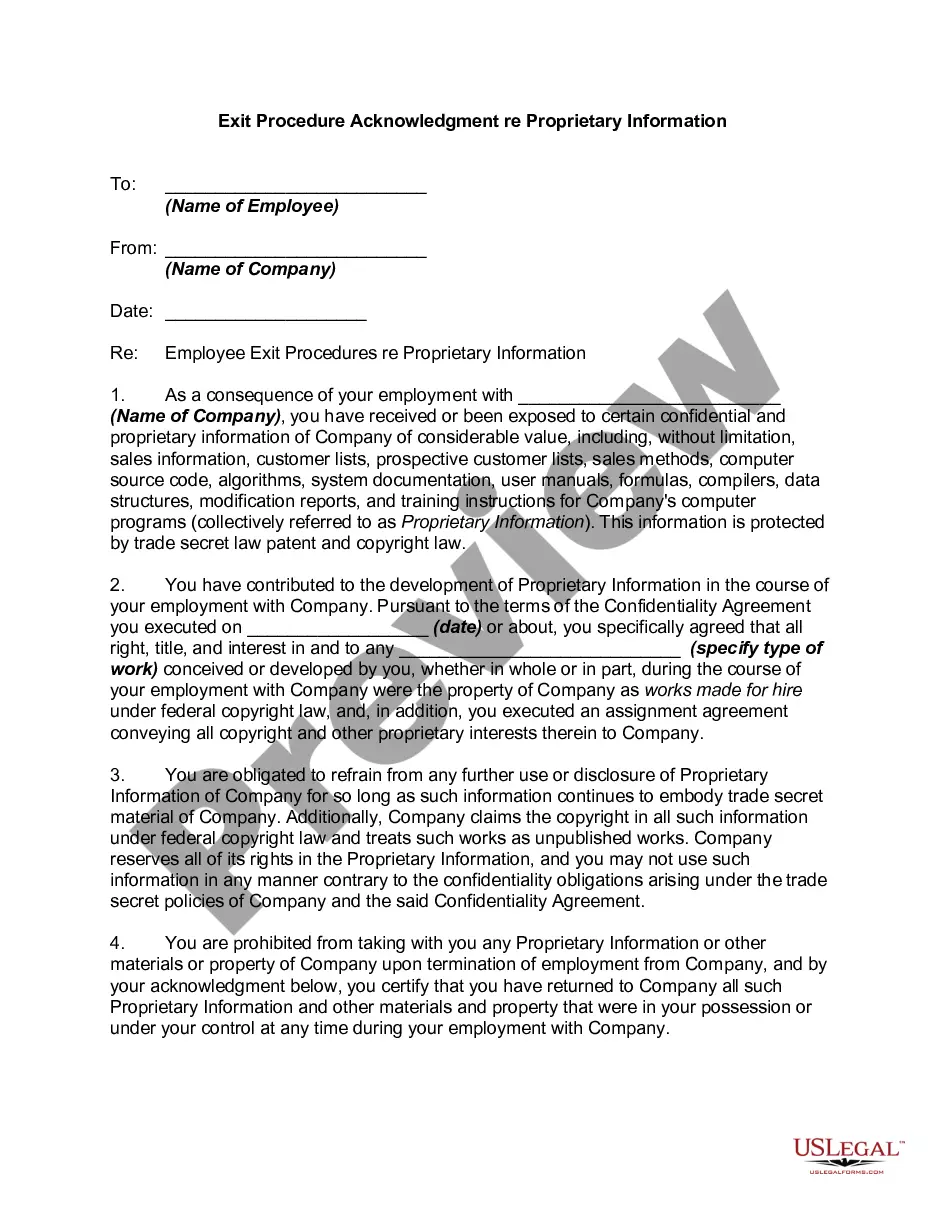
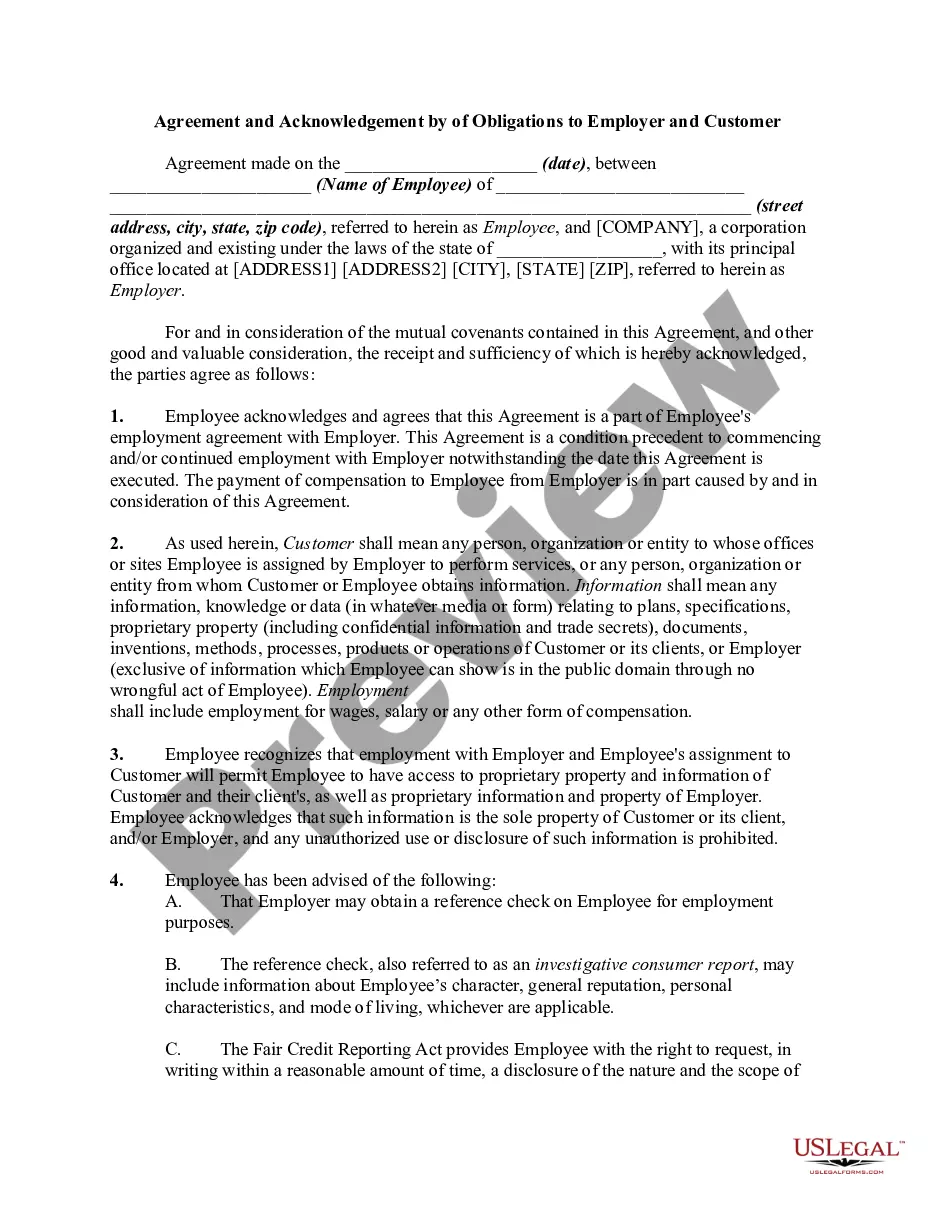
An agreement between an employer and an employee concerning confidentiality and appropriate handling of the employer's commercially valuable information, compliance with relevant security rules and policies, and protection of the employer's intellectual property assets.
PIIA means the Proprietary Information and Inventions Agreement (or similar type agreement) between Executive and the Company.
A confidential disclosure agreement, also called a confidentiality agreement or CDA, is a legal agreement which prohibits employees from disclosing certain information about a company. It is a permanent agreement, which means a signed confidentiality agreement remains valid after employment has ended.
A proprietary rights agreement is a legal document that ensures a party has the right to use another person's trademarked name, logo, slogan, or idea. This allows you to protect your company from being sued by somebody else for infringing on their intellectual property.
Therefore, the PIIA is the employee's agreement that everything created by the employee for the employer is owned by the employer, and if the employer needs the employee to do anything or sign any document to confirm that the employer owns all the rights in the intellectual property developments, the employee agrees in
Businesses use employee confidentiality agreements to protect their innovative ideas, effective processes, unique products, or customer information. With a confidentiality agreement, you can train employees on the ins and outs of your business and still protect your company's most private information.