Preliminary Instructions to Jury Panel
What is this form?
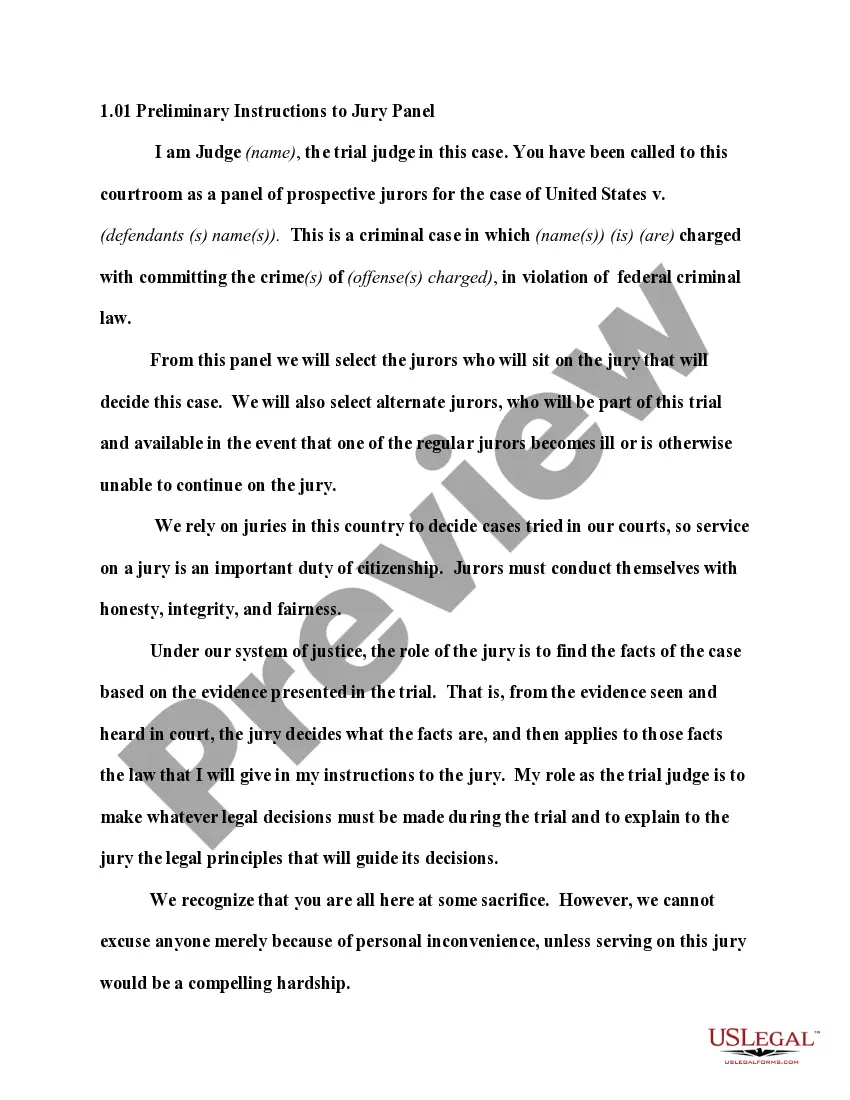
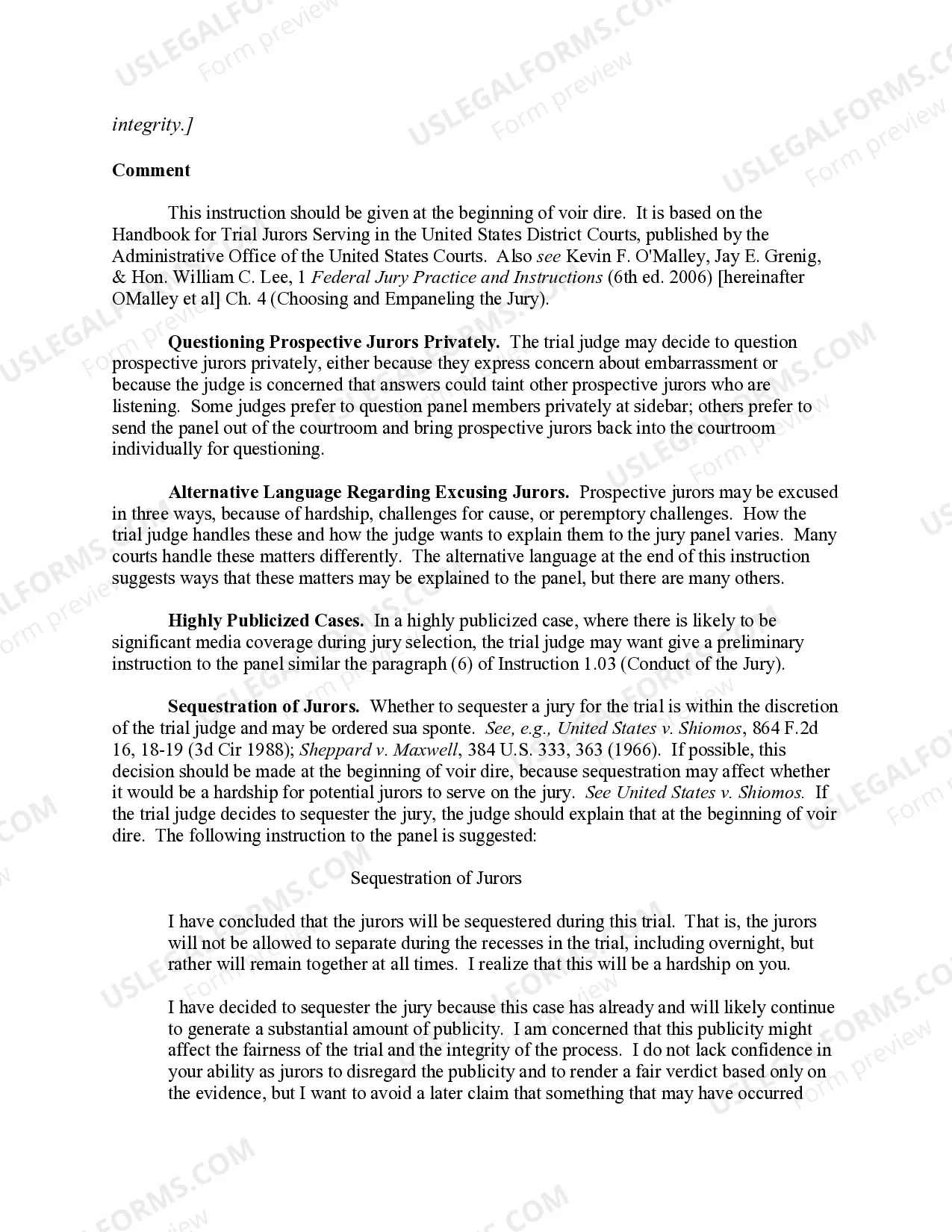
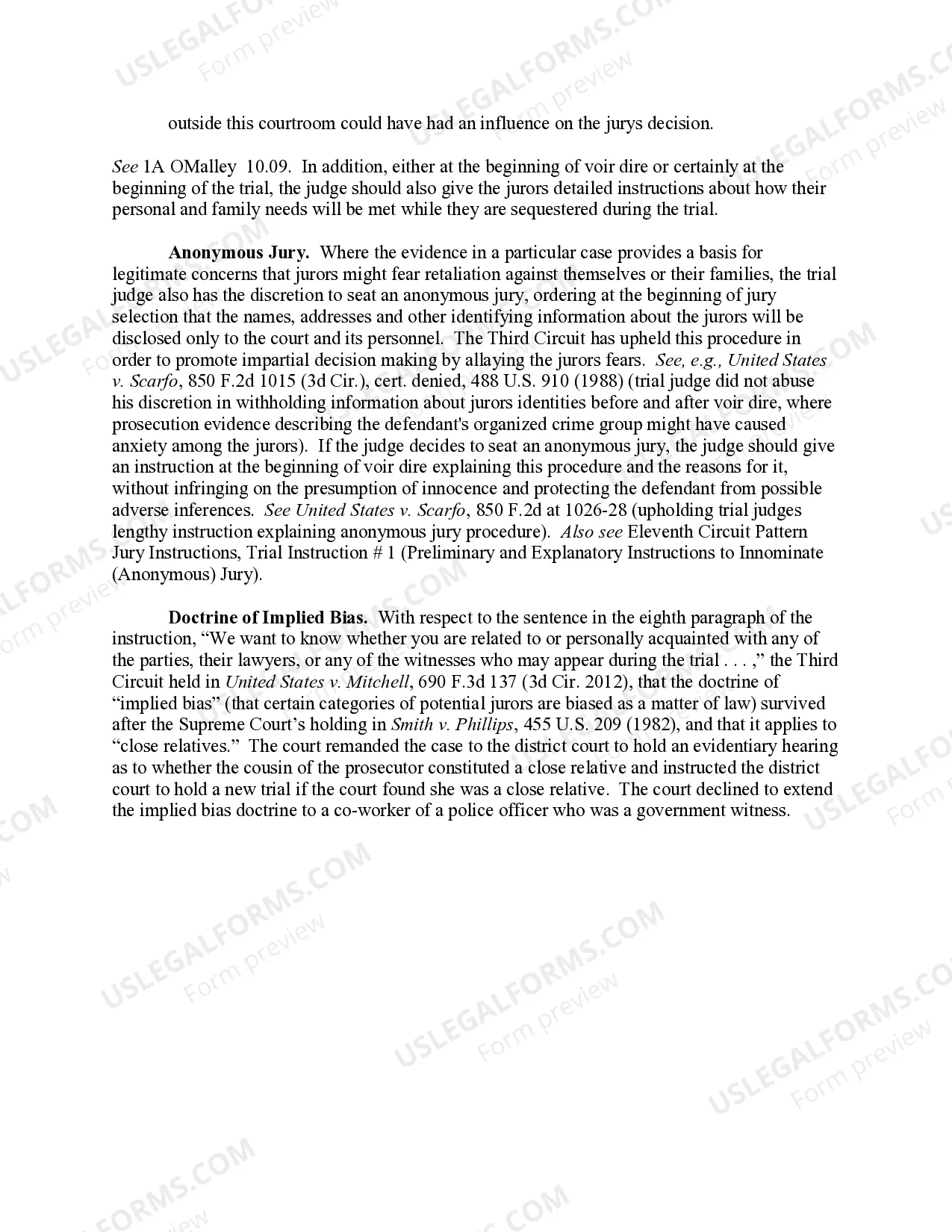
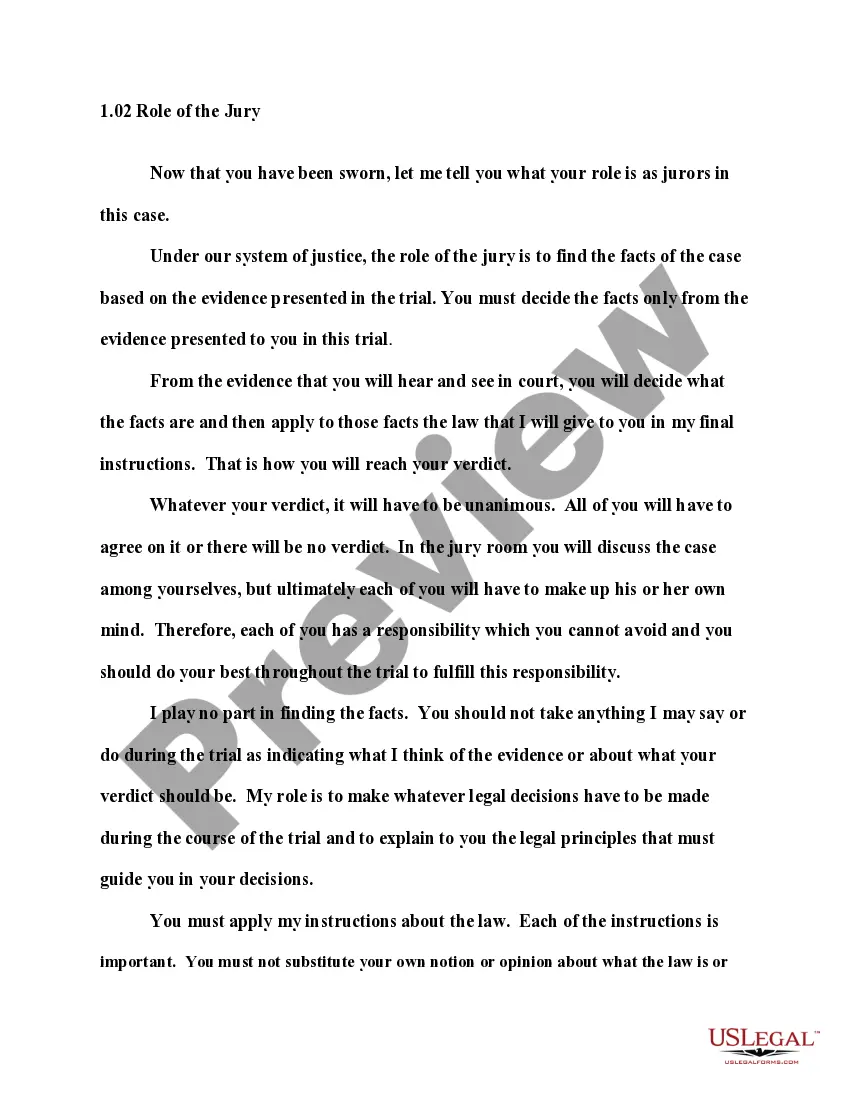
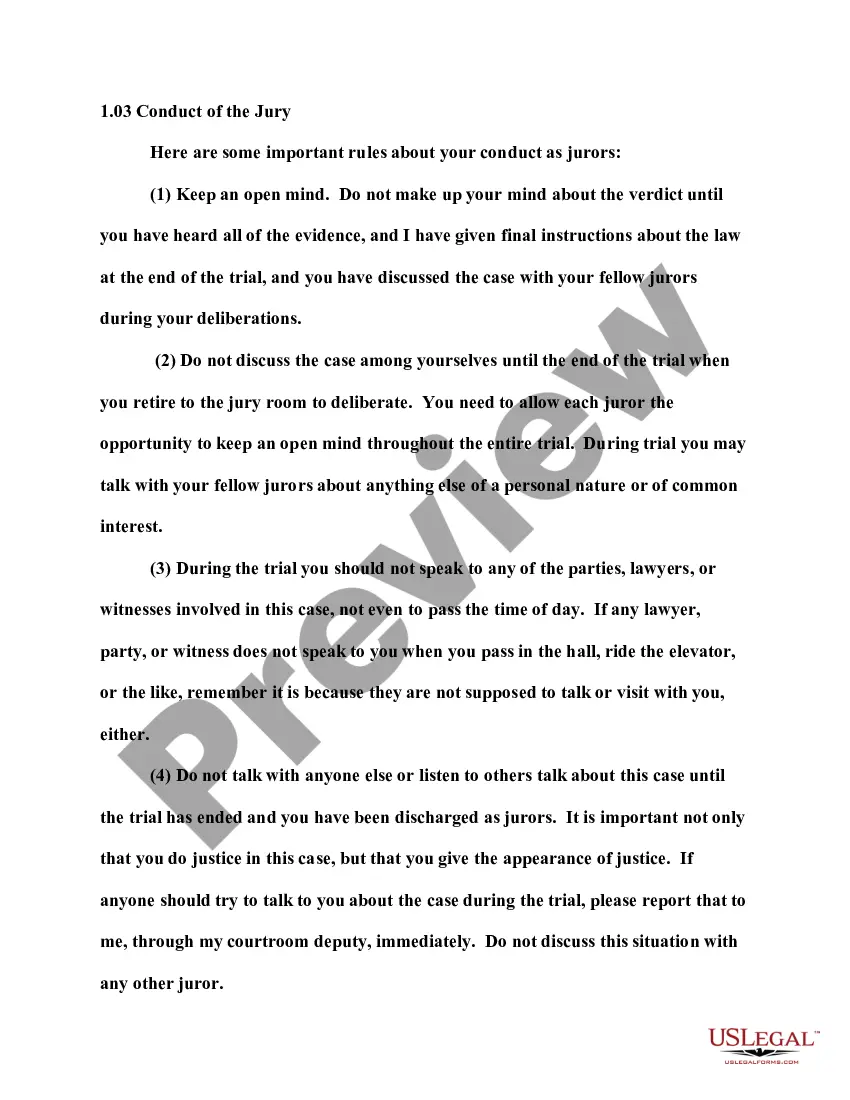
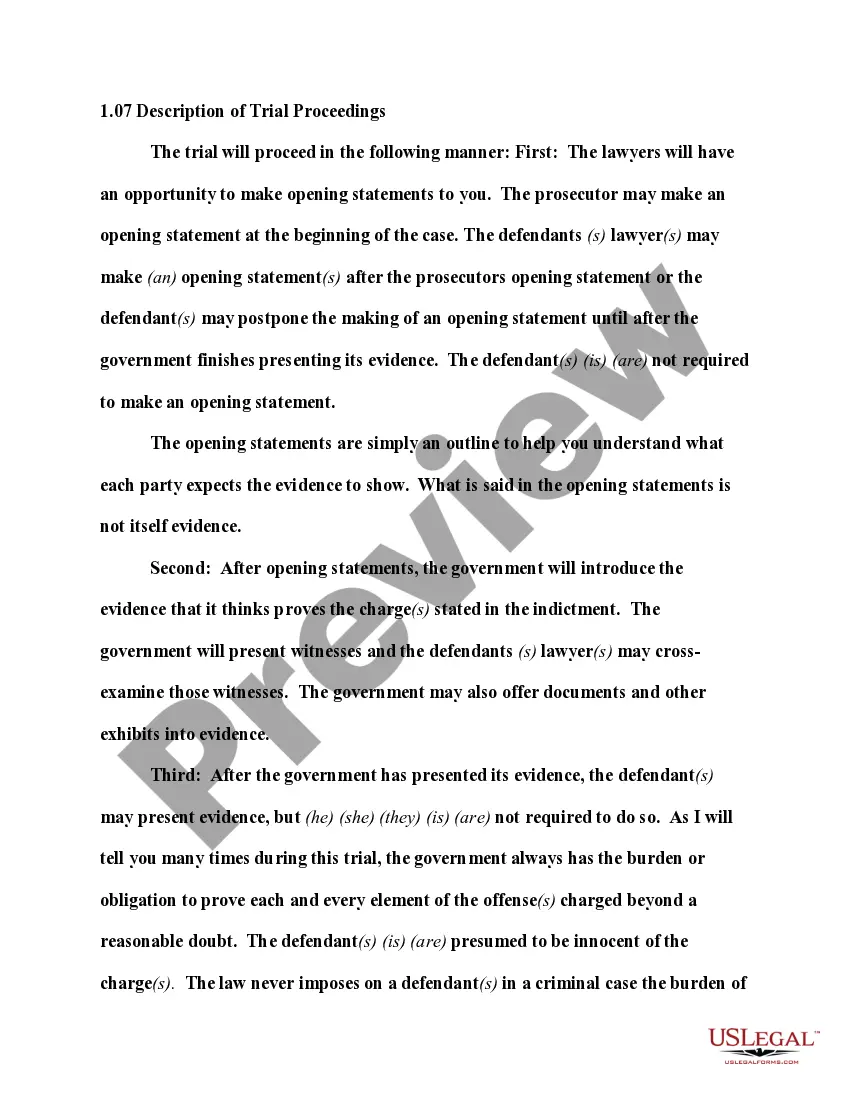
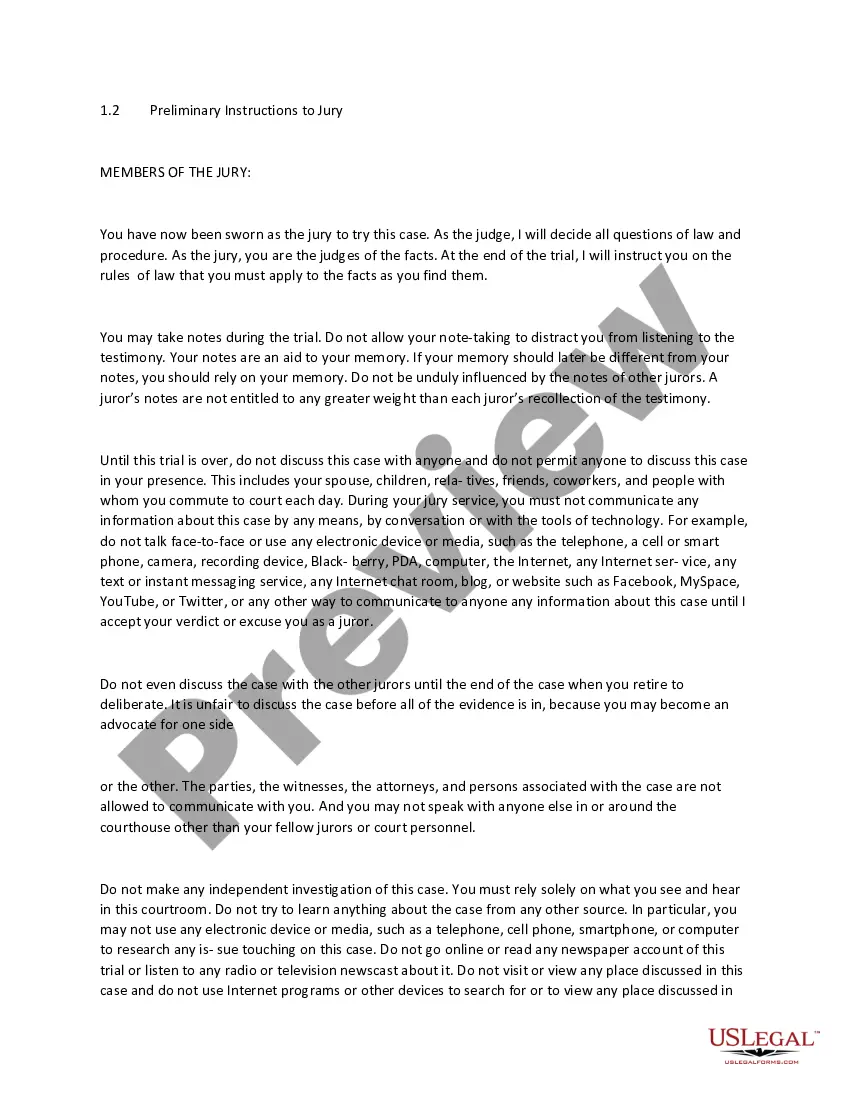
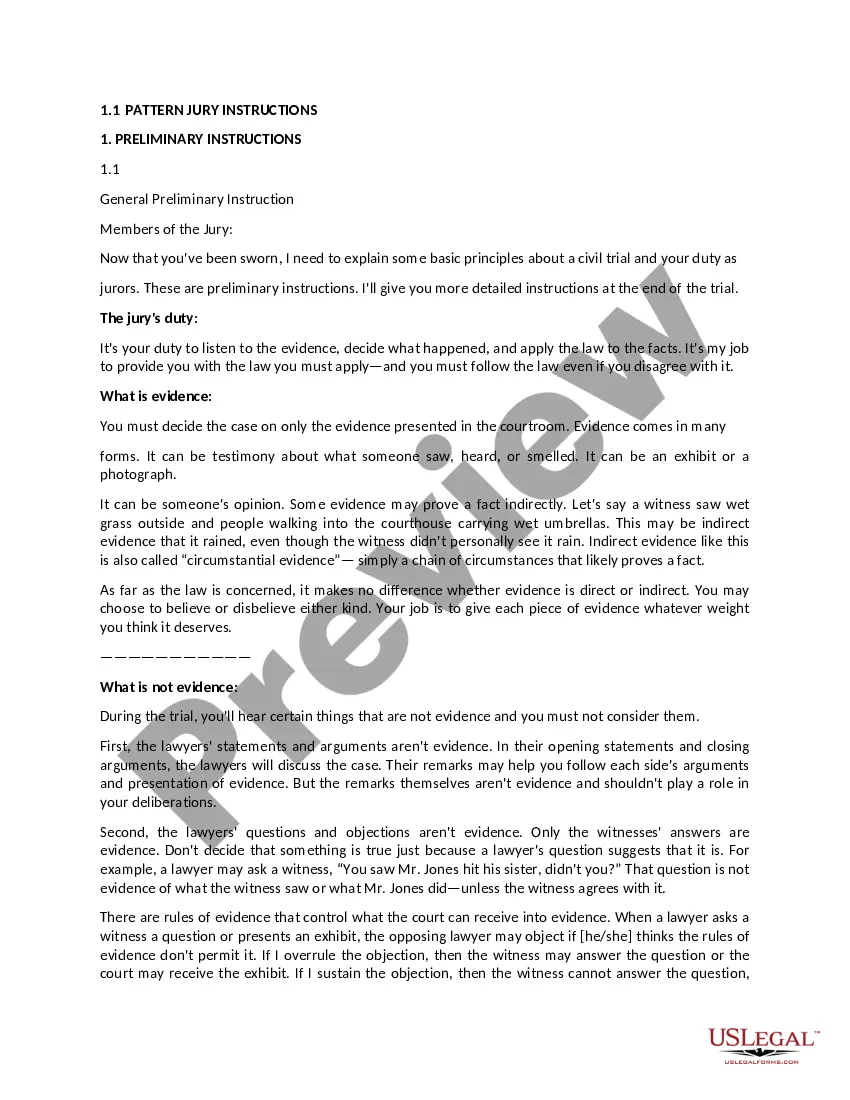
The Preliminary Instructions to Jury Panel form is a legal document used at the outset of jury selection in a criminal trial. It provides essential information to potential jurors about their role, the process they will undergo, and the importance of their service. This form is distinct because it specifically outlines the instructions that jurors will receive, guiding them on how to conduct themselves and participate in the voir dire process, where jurors are questioned for their suitability to serve on a jury.
What’s included in this form
- Introduction by the trial judge identifying the case and the parties involved.
- Explanation of the jury selection process and the importance of honest and fair conduct.
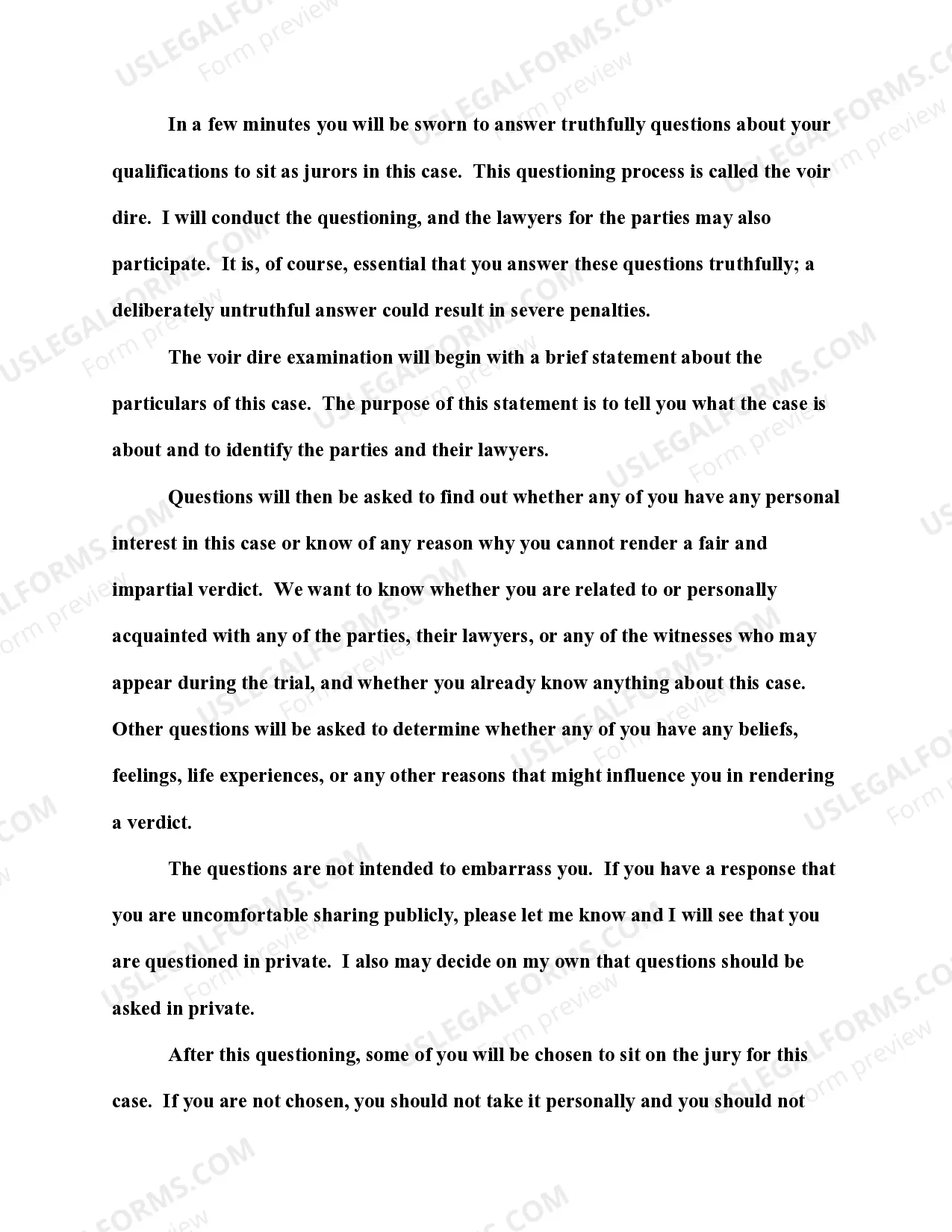
- Details about the voir dire examination, including what questions will be asked.
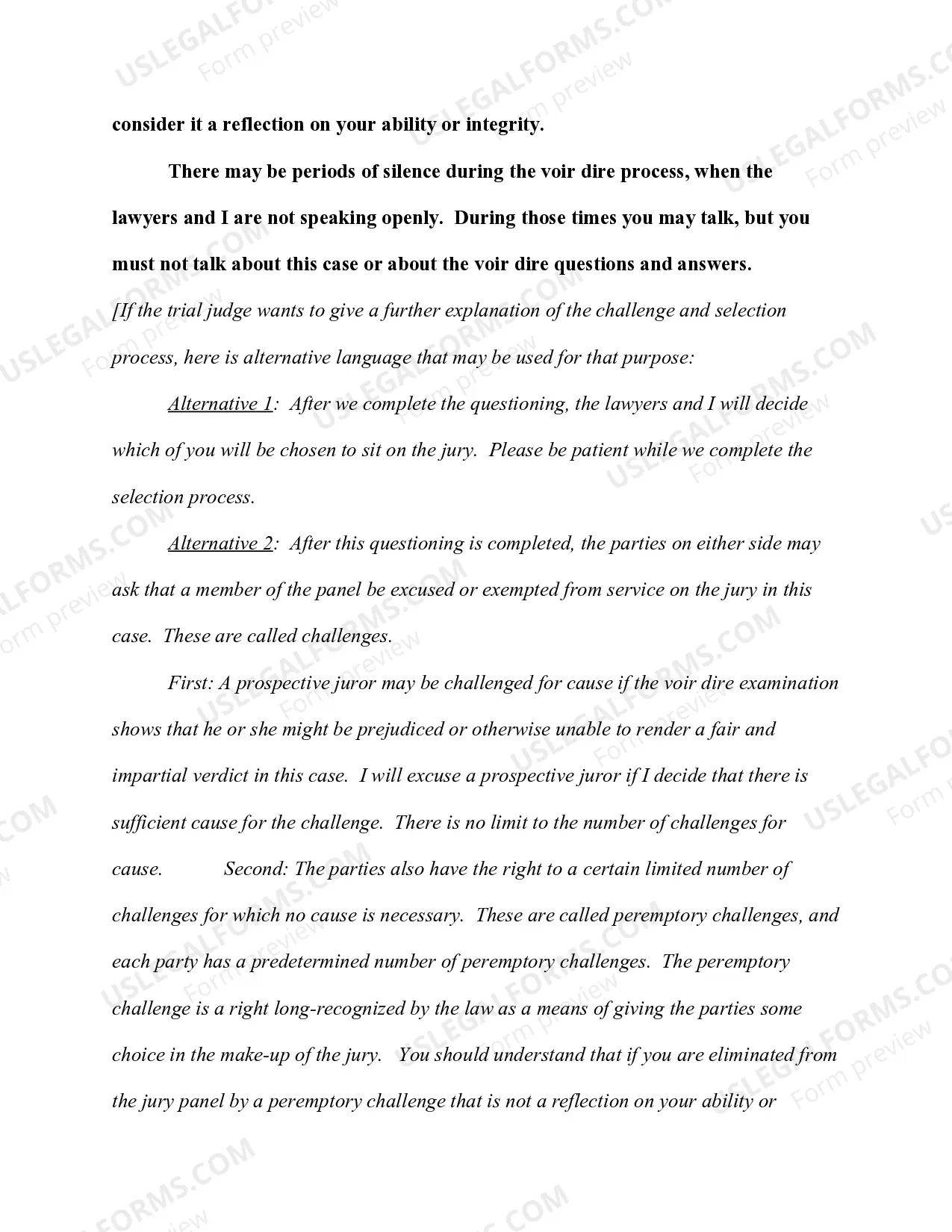
- Clarification of juror challenges, such as challenges for cause and peremptory challenges.
- Instructions regarding juror privacy and concerns about sharing personal information.
Situations where this form applies
This form should be used at the beginning of jury selection in criminal trials. It is particularly relevant when a judge is preparing to conduct the voir dire process, which is the procedure for selecting jurors from the larger panel. The form is essential when the case involves sensitive issues, including highly publicized matters, as it helps to set a clear understanding of the jurors' duties and the trial's expectations.
Who should use this form
- Judges presiding over criminal trials who need to instruct potential jurors.
- Legal professionals involved in the jury selection process.
- Court personnel responsible for managing jury duty protocols.
Instructions for completing this form
- Identify the parties involved in the case and provide their names.
- Explain the nature of the charges against the defendants to the jury panel.
- Outline the importance of jury duty and the jurors' responsibilities for fair conduct.
- Conduct the voir dire questioning, asking potential jurors about their qualifications and any biases.
- Provide an explanation of the challenge and selection process following the voir dire examination.
Is notarization required?
In most cases, this form does not require notarization. However, some jurisdictions or signing circumstances might. US Legal Forms offers online notarization powered by Notarize, accessible 24/7 for a quick, remote process.
Get your form ready online
Our built-in tools help you complete, sign, share, and store your documents in one place.
Make edits, fill in missing information, and update formatting in US Legal Forms—just like you would in MS Word.
Download a copy, print it, send it by email, or mail it via USPS—whatever works best for your next step.
Sign and collect signatures with our SignNow integration. Send to multiple recipients, set reminders, and more. Go Premium to unlock E-Sign.
If this form requires notarization, complete it online through a secure video call—no need to meet a notary in person or wait for an appointment.
We protect your documents and personal data by following strict security and privacy standards.

Make edits, fill in missing information, and update formatting in US Legal Forms—just like you would in MS Word.

Download a copy, print it, send it by email, or mail it via USPS—whatever works best for your next step.

Sign and collect signatures with our SignNow integration. Send to multiple recipients, set reminders, and more. Go Premium to unlock E-Sign.

If this form requires notarization, complete it online through a secure video call—no need to meet a notary in person or wait for an appointment.

We protect your documents and personal data by following strict security and privacy standards.
Common mistakes
- Failing to provide complete and accurate details about the case or parties involved.
- Not emphasizing the importance of truthfulness during the voir dire process.
- Overlooking to explain the distinction between challenges for cause and peremptory challenges.
- Not addressing juror concerns about personal privacy during questioning.
Benefits of completing this form online
- Convenience of accessing the form anytime, allowing for quicker jury preparation.
- Editability to customize instructions based on specific cases or court protocols.
- Reliability in using templates drafted by licensed attorneys, ensuring legal compliance.
Main things to remember
- The Preliminary Instructions to Jury Panel is crucial for effective jury selection in criminal cases.
- Clear communication of juror expectations fosters a fair trial process.
- Judges and legal professionals play a key role in guiding jurors through selection and questioning.
Looking for another form?
Form popularity
FAQ
The judge and the attorneys then ask the potential jurors questions to determine their suitability to serve on the jury, a process called voir dire. The purpose of voir dire is to exclude from the jury people who may not be able to decide the case fairly.
Summary: Preliminary substantive jury instructions are instructions provided to jurors at the start of a trial, before the presentation of evidence by the parties, on the elements of a claim or defense.
The judge and the attorneys will then ask questions to determine whether there are any reasons you cannot be fair and impartial. This process is called voir dire and is an important part of jury selection.
Lawyers and judges select juries by a process known as "voir dire," which is Latin for "to speak the truth." In voir dire, the judge and attorneys for both sides ask potential jurors questions to determine if they are competent and suitable to serve in the case.
The judge instructs the jury about the relevant laws that should guide its deliberations. (In some jurisdictions, the court may instruct the jury at any time after the close of evidence. This sometimes occurs before closing arguments.) The judge reads the instructions to the jury.
The judge and the attorneys ask jurors questions to determine if the jurors are free of bias (prejudice) or whether there is any other reason why they cannot be fair and impartial; this process is called voir dire.
This questioning of the potential jurors is known as voir dire (to speak the truth). If either lawyer believes there is information that suggests a juror is prejudiced about the case, he or she can ask the judge to dismiss that juror for cause.
Voir dire refers to the preliminary examination of a potential witness or juror when the individual's competence is at issue. During voir dire, questions are put to prospective jurors by the attorneys or judge or both.