Witness Who Has Pleaded Guilty to the Same or Related Charges (revised 2017)
What is this form?
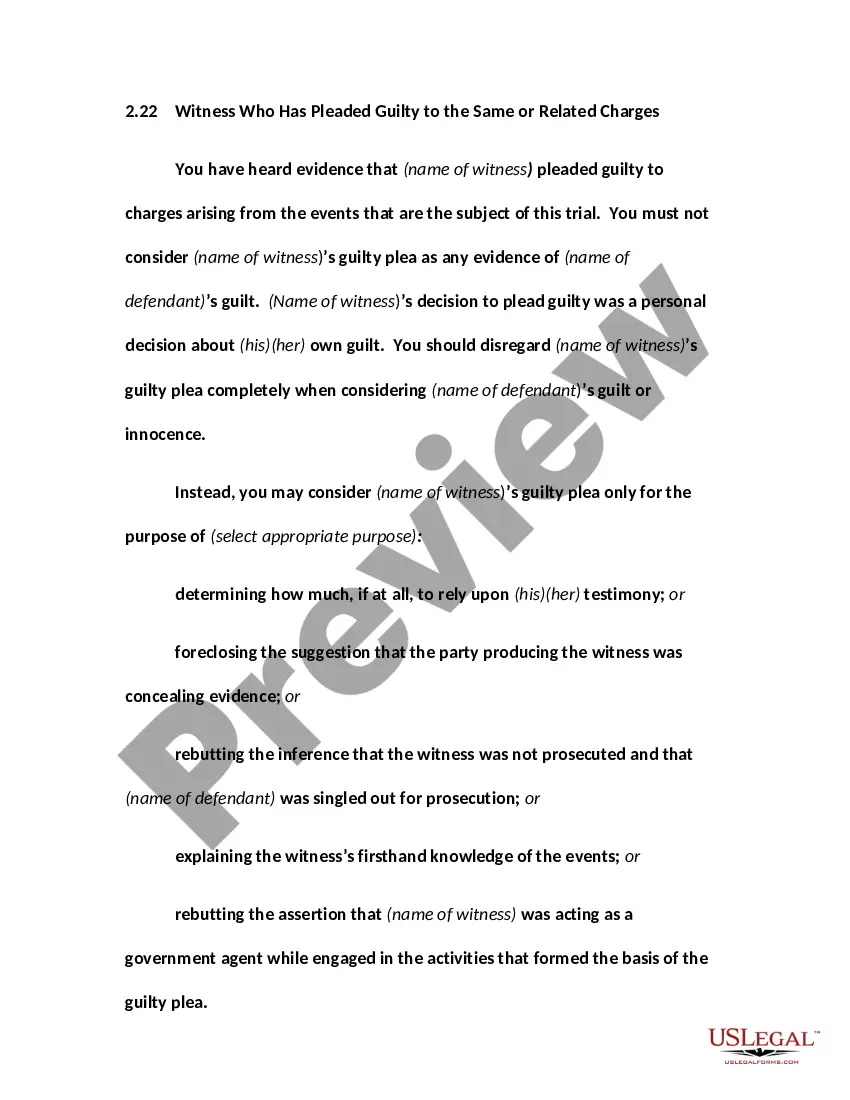
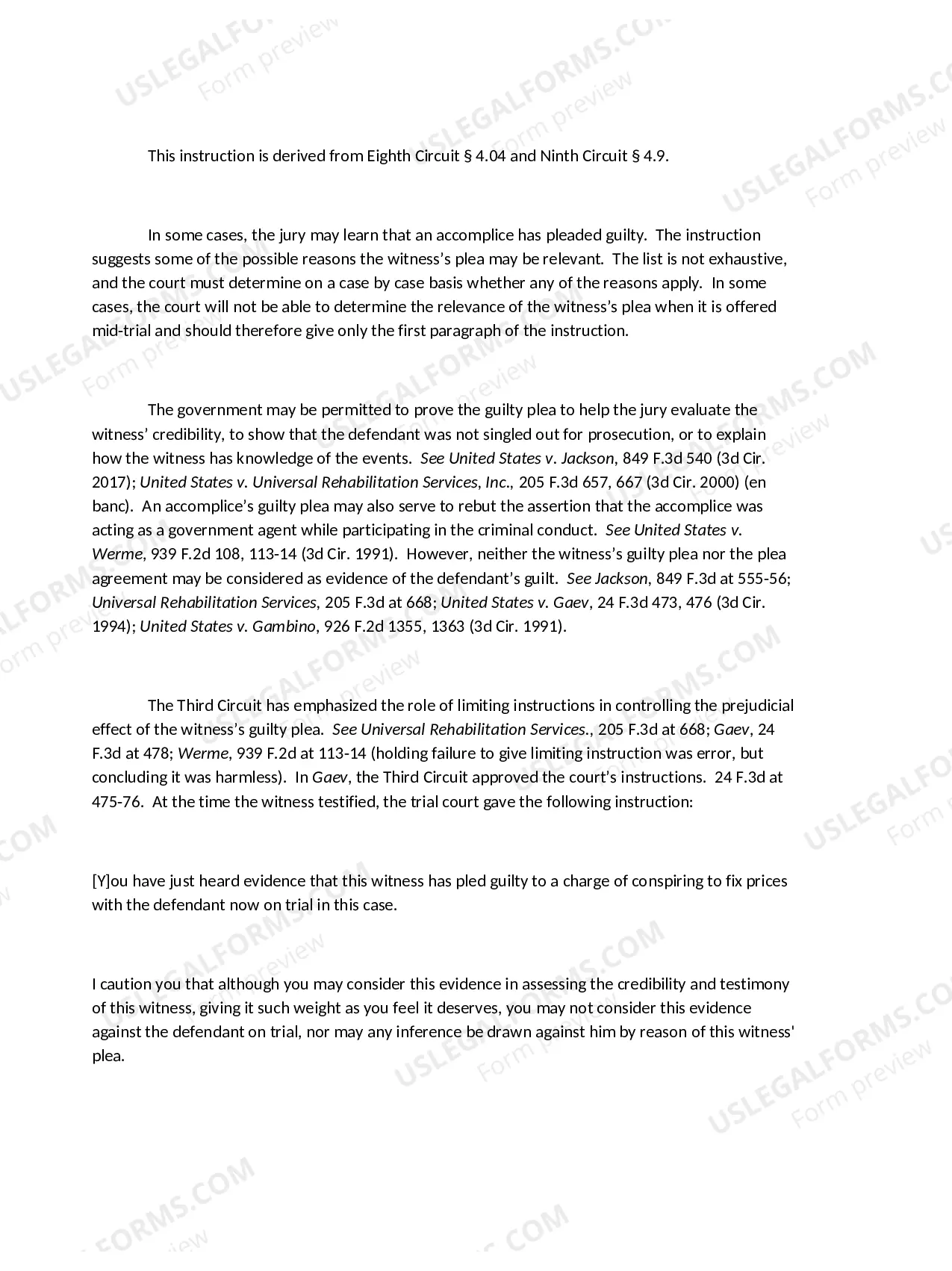
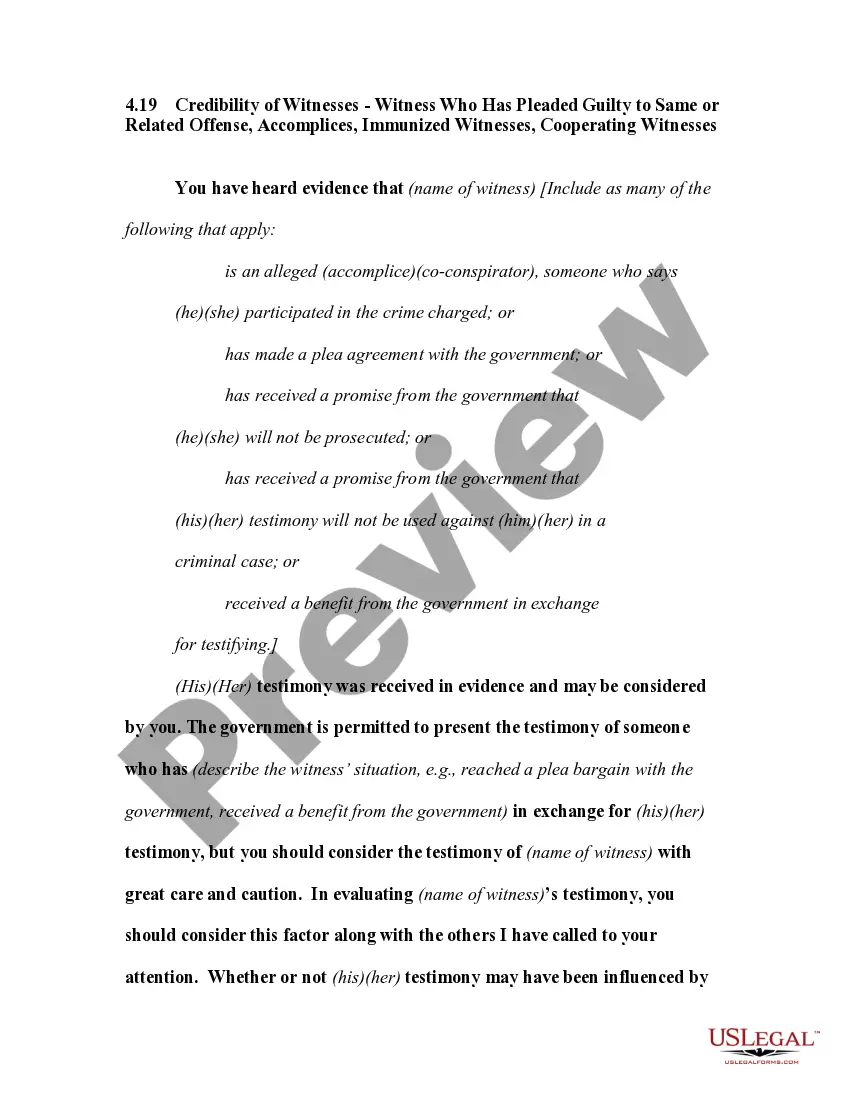
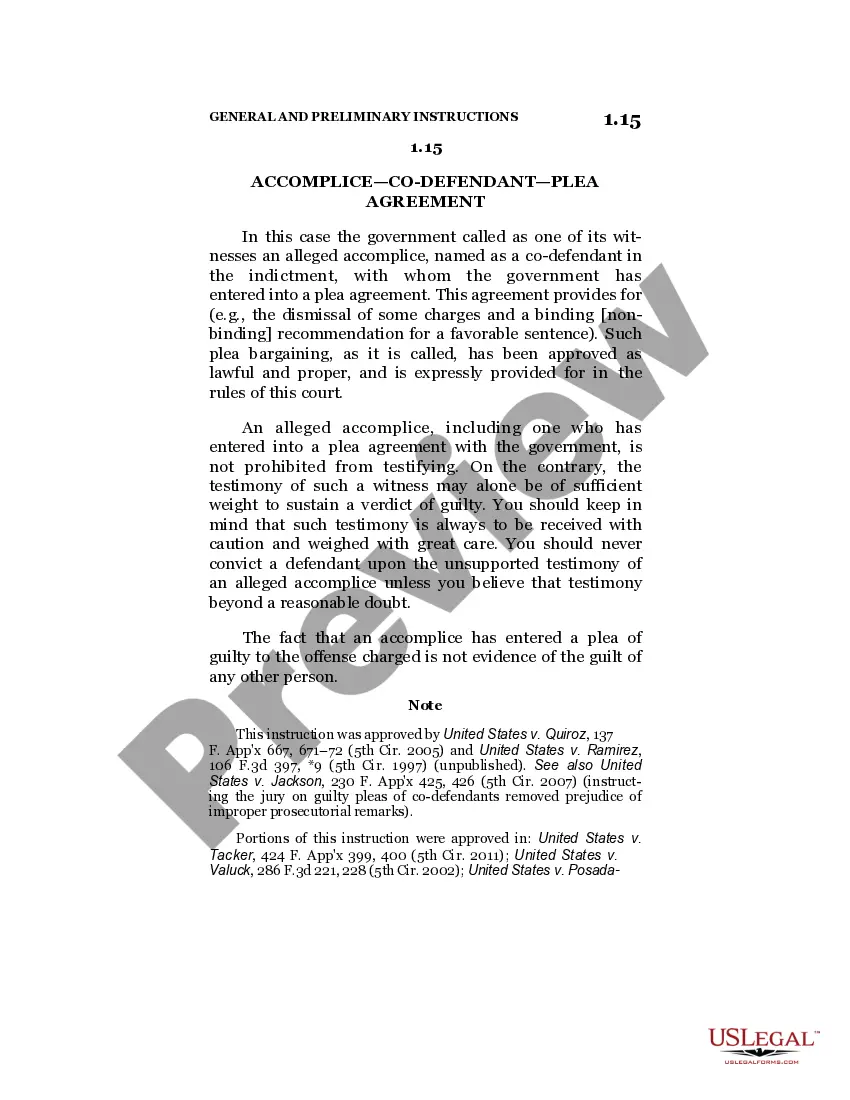
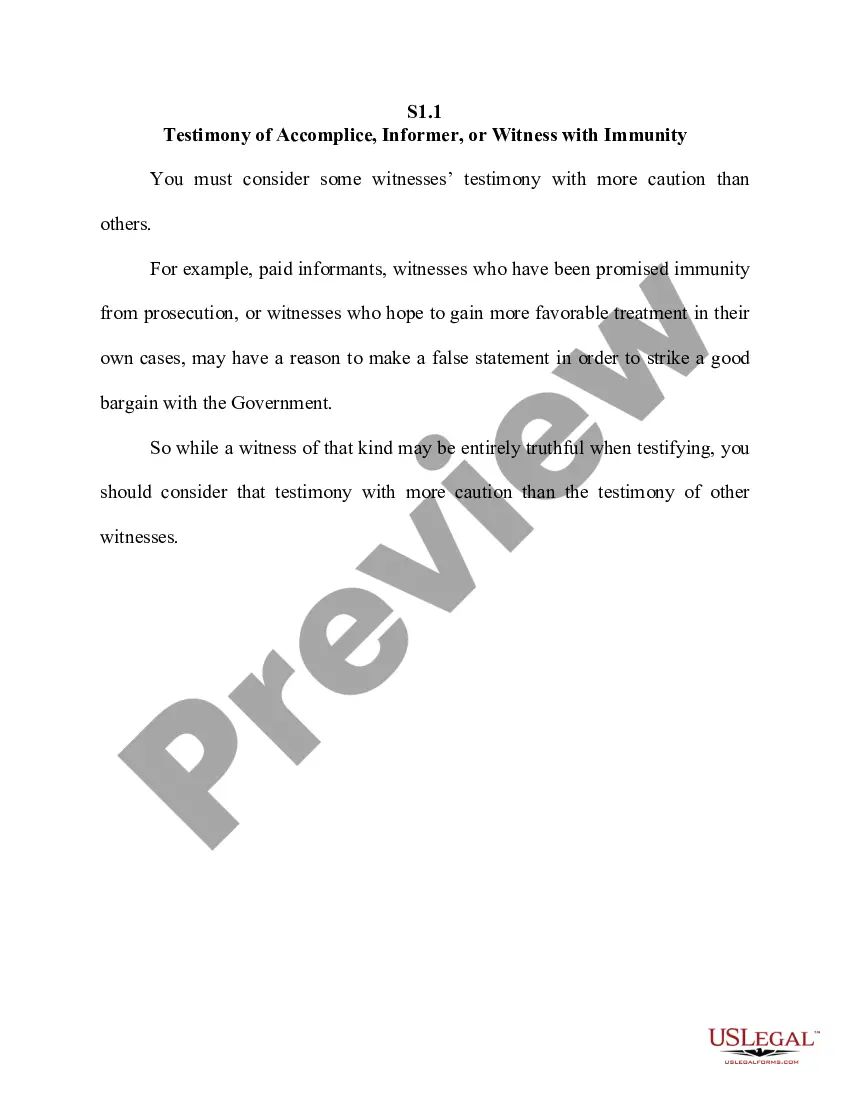
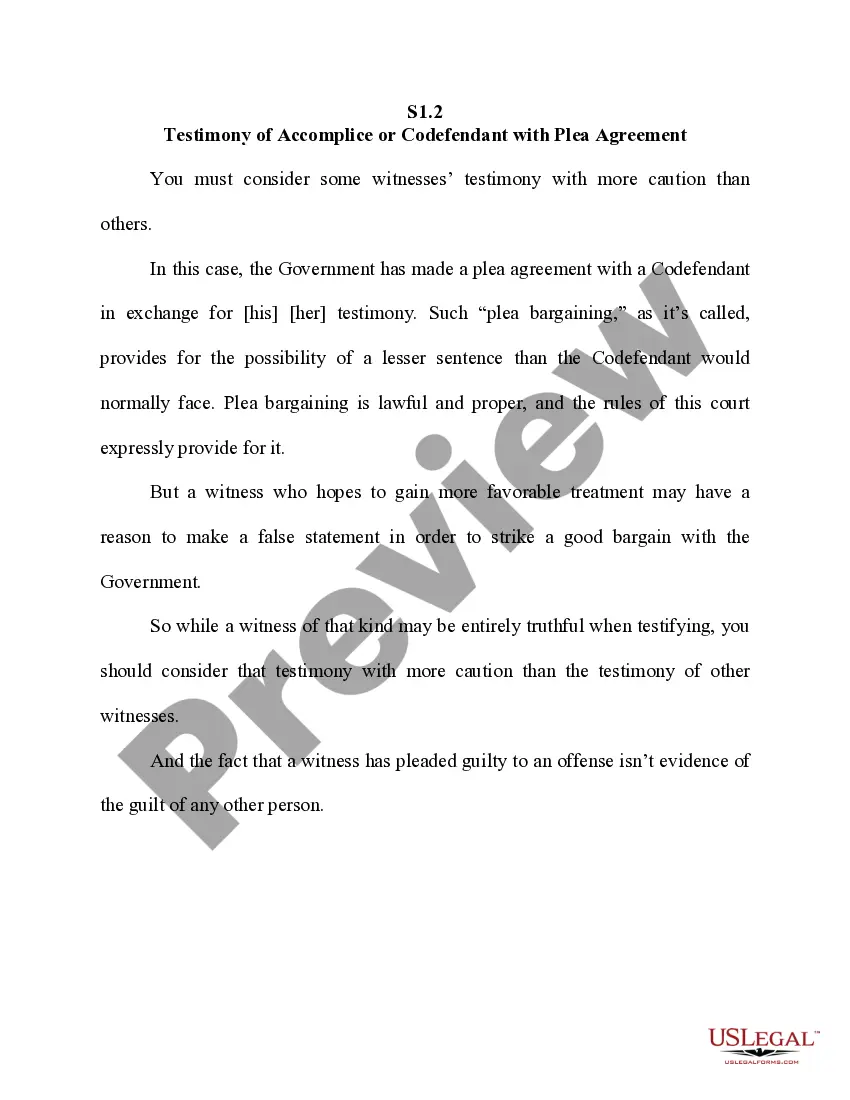
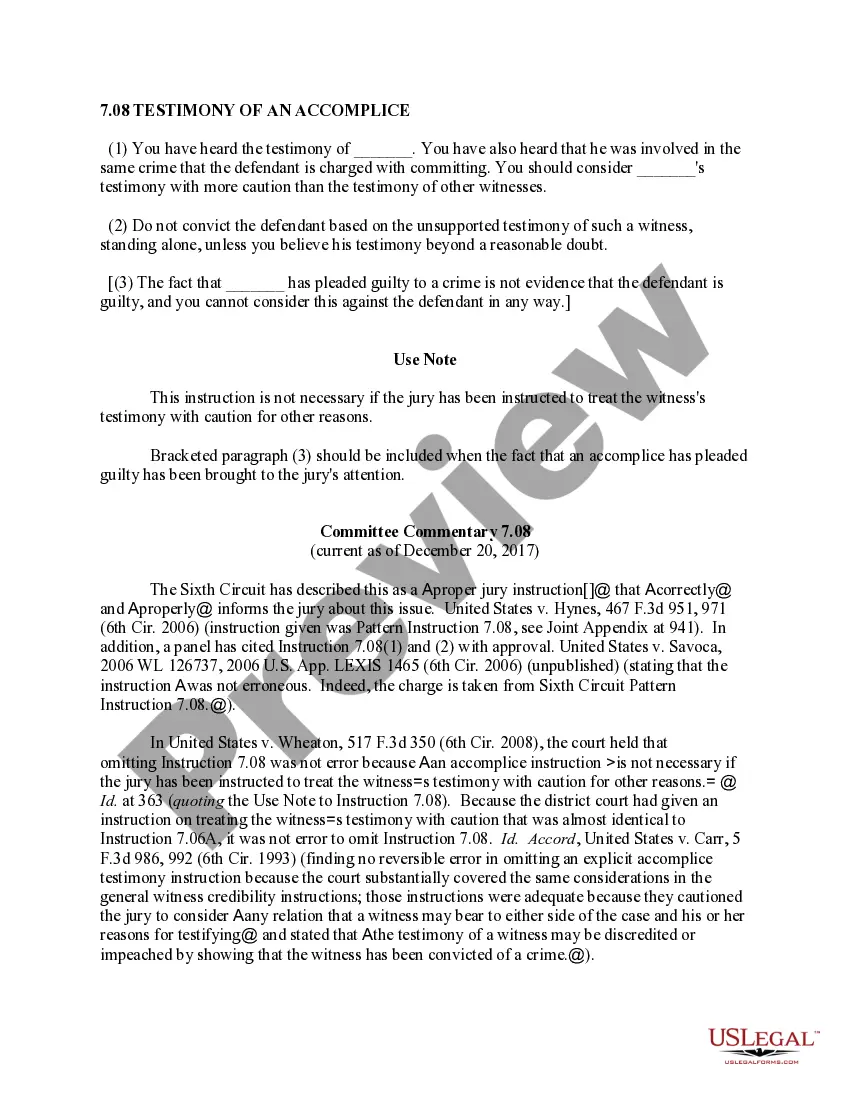
The Witness Who Has Pleaded Guilty to the Same or Related Charges form is a legal instruction provided to jurors in a trial. This form helps jurors understand how to properly assess the credibility of a witness who has admitted guilt to similar charges. It clarifies that the witness's guilty plea should not be interpreted as evidence of the defendant's guilt, allowing jurors to focus solely on the relevant facts of the case.
What’s included in this form
- Introduction of the witness's guilty plea and its limitations on consideration for the defendant.
- Guidance on specific scenarios where the witness's plea is relevant, such as evaluating their testimony or addressing prosecutorial bias.
- Cautions to jurors regarding the careful consideration of the witness's statements due to their guilty plea.

When to use this document
This form is used during criminal trials when jurors are informed that a witness has pleaded guilty to charges related to the case at hand. It ensures that jurors do not mistakenly conflate the witness's plea with the defendant's guilt, which is crucial for maintaining a fair trial.
Who can use this document
- Jurors serving on a criminal trial where a witness has entered a guilty plea.
- Judges who need to provide clear instructions to jurors about how to handle evidence from witness testimonies.
- Legal professionals seeking to understand jury instructions related to witness credibility.
Completing this form step by step
- Review the witness's guilty plea and the associated charges.
- Understand the limitations of using this plea as evidence against the defendant.
- Analyze the relevance of the guilty plea to the witness's testimony based on the scenarios provided.
- Consider the implications of the witness's plea when assessing their credibility.
- Apply the provided instruction carefully during deliberations to ensure fair consideration of the evidence.
Notarization requirements for this form
Notarization is not commonly needed for this form. However, certain documents or local rules may make it necessary. Our notarization service, powered by Notarize, allows you to finalize it securely online anytime, day or night.
Get your form ready online
Our built-in tools help you complete, sign, share, and store your documents in one place.
Make edits, fill in missing information, and update formatting in US Legal Forms—just like you would in MS Word.
Download a copy, print it, send it by email, or mail it via USPS—whatever works best for your next step.
Sign and collect signatures with our SignNow integration. Send to multiple recipients, set reminders, and more. Go Premium to unlock E-Sign.
If this form requires notarization, complete it online through a secure video call—no need to meet a notary in person or wait for an appointment.
We protect your documents and personal data by following strict security and privacy standards.

Make edits, fill in missing information, and update formatting in US Legal Forms—just like you would in MS Word.

Download a copy, print it, send it by email, or mail it via USPS—whatever works best for your next step.

Sign and collect signatures with our SignNow integration. Send to multiple recipients, set reminders, and more. Go Premium to unlock E-Sign.

If this form requires notarization, complete it online through a secure video call—no need to meet a notary in person or wait for an appointment.

We protect your documents and personal data by following strict security and privacy standards.
Typical mistakes to avoid
- Failing to disregard the witness's guilty plea when considering the defendant's guilt.
- Misunderstanding the scenarios where the plea is relevant to the witness's testimony.
- Ignoring the cautionary instructions about assessing the weight of the testimony.
Advantages of online completion
- Convenient online access allows for easy downloading and use during trials.
- Templates crafted by licensed attorneys enhance reliability and accuracy.
- Editable format enables customization to suit specific legal needs.
- This form provides essential guidance for jurors, enhancing the fairness of the trial process.
- Properly understanding the plea's relevance can influence jury deliberations and verdicts.
- Limiting instructions protect the integrity of the judicial process by preventing bias against the defendant.
What to keep in mind
- The form instructs jurors on ignoring the implications of a witnessâs guilty plea regarding the defendantâs guilt.
- It emphasizes careful consideration of how a witnessâs testimony is evaluated.
- Understanding and application are critical for fair jury deliberations in criminal cases.
Looking for another form?
Form popularity
FAQ
Opinion of the Court In Giglio's case, the Court found that neither DiPaola's authority nor his failure to inform his superior Hoey or his associate Golden was controlling.
In criminal law, exculpatory evidence is evidence, such as a statement, tending to excuse, justify, or absolve the alleged fault or guilt of a defendant. In other words, the evidence is favorable to the defendant. In contrast to it, inculpatory evidence tends to stress guilt. See also: Brady Rule.
Evidence that could be used to challenge the credibility of a prosecution witness is also exculpatory and must be turned over to the defense. The U.S. Supreme Court has ruled repeatedly for more than 60 years that the prosecutor's disclosure of exculpatory evidence to the defendant is essential to a fair trial.
Maryland, 373 U.S. 83, 87 (1963); Giglio v. United States, 405 U.S. 150, 154 (1972). The law requires the disclosure of exculpatory and impeachment evidence when such evidence is material to guilt or punishment.
Upon a defendant's request, the government must disclose to the defendant the substance of any relevant oral statement made by the defendant, before or after arrest, in response to interrogation by a person the defendant knew was a government agent if the government intends to use the statement at trial.
Being Brady/Giglio listed can end careers and ruin reputations. In addition to placing an officer on such a list, prosecutors can tell departments not to send them any cases in which such officers are witnesses. If an officer can't testify, they can't perform a critical function of their job and can be terminated.
Noun. lily noun a type of tall plant grown from a bulb, with white or coloured flowers.
In Brady v. Maryland, the United States Supreme Court held that prosecutors must provide exculpatory information to defense counsel, and in Giglio v. United States, it extended the holding to include information suggesting a witness may not be credible.