Previous Proceeding (Trial) of Defendant
Understanding this form
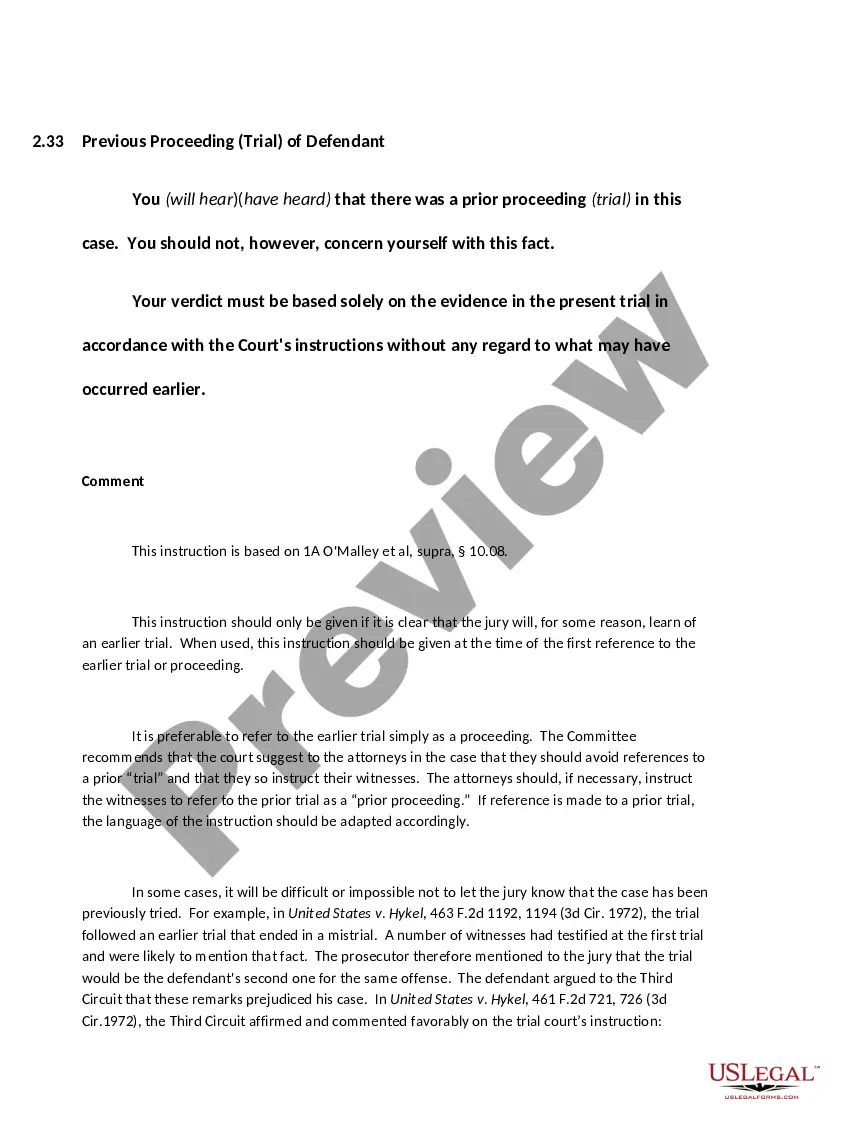
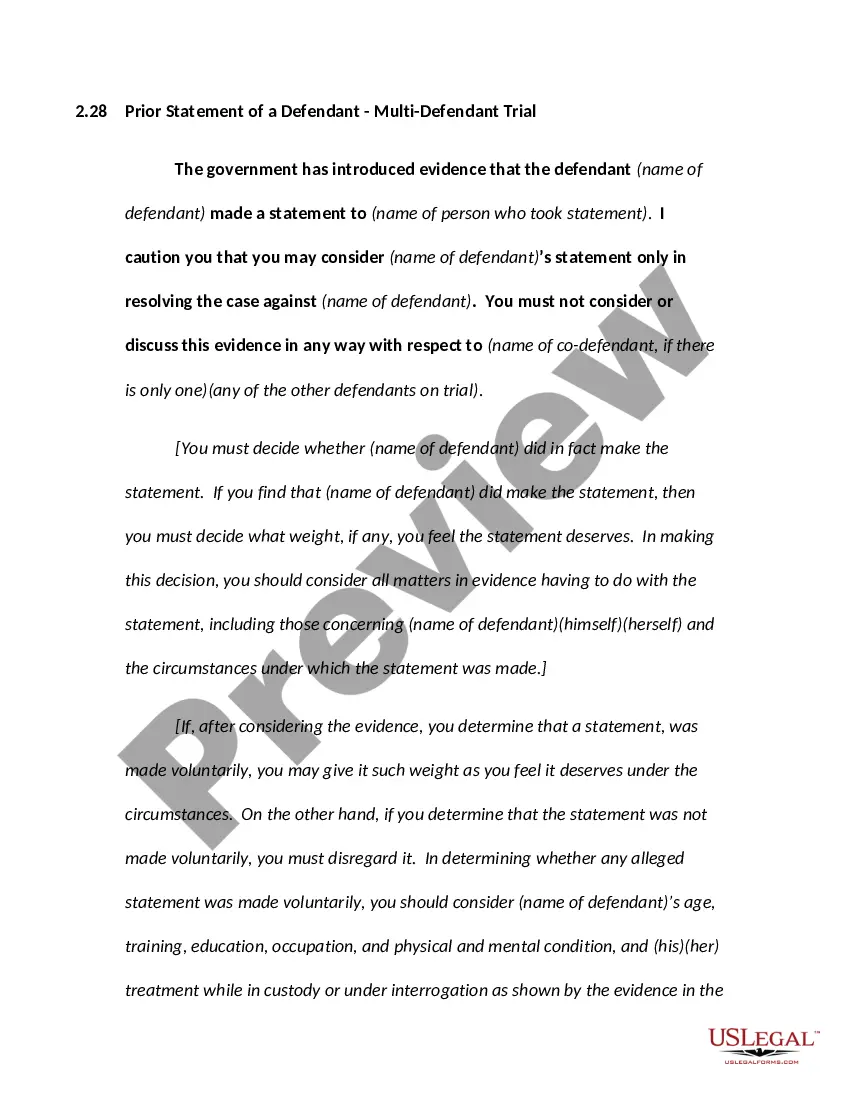
The Previous Proceeding (Trial) of Defendant form is a legal instruction used in criminal trials to guide jurors about previous trial proceedings involving the defendant. It emphasizes that jurors should focus solely on the evidence presented in the current trial, without being influenced by any prior proceedings. This form serves to maintain the fairness of the trial process and distinguish it from similar instructions by reinforcing the idea that past trials should not inform current verdicts.
Key parts of this document
- The acknowledgment of a prior proceeding or trial.
- The directive for jurors to disregard information about prior proceedings.
- Instructions on how to handle references to previous trials.
- A reminder that the current verdict must be based solely on current trial evidence.
When this form is needed
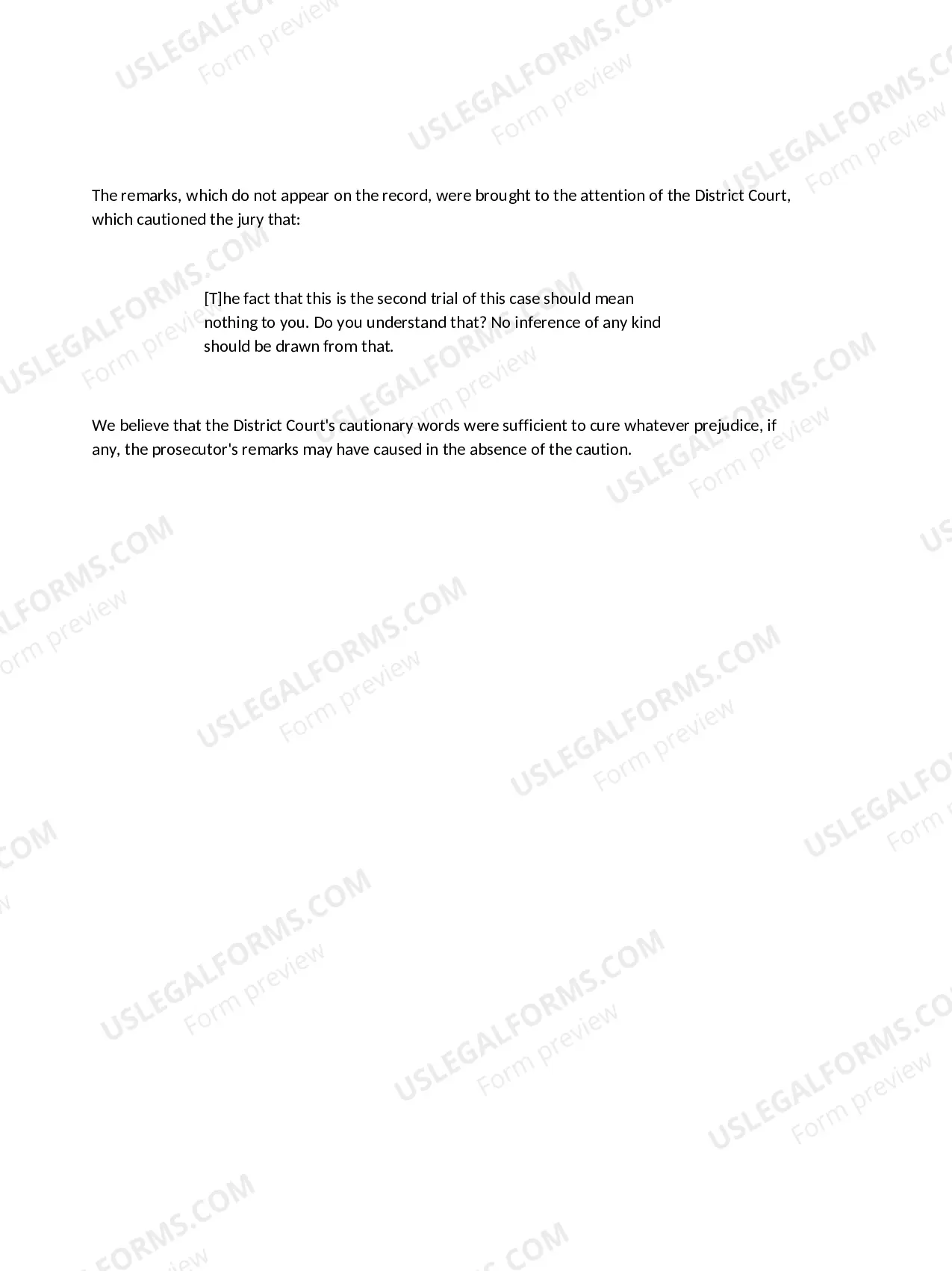
This form is used when a jury may learn about a past trial of the defendant due to witness statements or attorney comments. It is critical to ensure jurors do not let this knowledge influence their decisions in the current trial, making it essential in cases with prior proceedings.
Who needs this form
- Judges overseeing criminal trials.
- Prosecutors presenting cases with previous trials.
- Defense attorneys representing defendants with prior proceedings.
- Jury instruction coaches or consultants.
Steps to complete this form
- Identify if the jury will learn of any previous trial proceedings.
- Reference the prior proceeding with careful phrasing, avoiding the term "trial" where possible.
- Provide clear instructions to jurors about the need to focus solely on current trial evidence.
- Issue the instruction during the first reference to any prior proceedings.
Notarization guidance
In most cases, this form does not require notarization. However, some jurisdictions or signing circumstances might. US Legal Forms offers online notarization powered by Notarize, accessible 24/7 for a quick, remote process.
Get your form ready online
Our built-in tools help you complete, sign, share, and store your documents in one place.
Make edits, fill in missing information, and update formatting in US Legal Forms—just like you would in MS Word.
Download a copy, print it, send it by email, or mail it via USPS—whatever works best for your next step.
Sign and collect signatures with our SignNow integration. Send to multiple recipients, set reminders, and more. Go Premium to unlock E-Sign.
If this form requires notarization, complete it online through a secure video call—no need to meet a notary in person or wait for an appointment.
We protect your documents and personal data by following strict security and privacy standards.

Make edits, fill in missing information, and update formatting in US Legal Forms—just like you would in MS Word.

Download a copy, print it, send it by email, or mail it via USPS—whatever works best for your next step.

Sign and collect signatures with our SignNow integration. Send to multiple recipients, set reminders, and more. Go Premium to unlock E-Sign.

If this form requires notarization, complete it online through a secure video call—no need to meet a notary in person or wait for an appointment.

We protect your documents and personal data by following strict security and privacy standards.
Avoid these common issues
- Referring to a previous trial instead of a âprior proceeding.â
- Failure to issue the instruction at the appropriate time during the trial.
- Not emphasizing the importance of focusing solely on current evidence.
Benefits of using this form online
- Convenience of accessing legal instructions anytime, anywhere.
- Editable templates that can be customized as per case requirements.
- Reliable legal language drafted by licensed attorneys for accuracy.
Legal use & context
- The instruction is crucial for maintaining fairness in jury trials.
- It helps prevent juror bias arising from previous trial knowledge.
- Instructing jurors correctly is a critical aspect of legal compliance in court proceedings.
Looking for another form?
Form popularity
FAQ
The Double Jeopardy Clause in the Fifth Amendment to the US Constitution prohibits anyone from being prosecuted twice for substantially the same crime.
The obvious application of double jeopardy is when law enforcement finds new evidence of the defendant's guilt after the jury has already acquitted them. The prosecution cannot charge them again, even if the evidence shows that they probably are guilty.
After-discovered evidence, or newly discovered evidence, is evidence which existed at the time of the original trial but was only discovered after the conclusion of the trial. After-discovered evidence is an issue predominantly in criminal proceedings and may be used as the basis for a motion for a new trial.
While the trial itself is a critical process, the actual outcome is often decided long before you set foot in front of a jury. The pretrial hearing happens before the trial, and it lays the foundation for everything that will come later.
Criminal Trial Phases Choosing a Jury. Opening Statements. Witness Testimony and Cross-Examination. Closing Arguments. Jury Instruction. Jury Deliberation and Announcement of Verdict.
With one exception, in the United States an acquittal cannot be appealed by the prosecution because of constitutional prohibitions against double jeopardy. The U.S. Supreme Court has ruled: If the judgment is upon an acquittal, the defendant, indeed, will not seek to have it reversed, and the government cannot.
Further, under double jeopardy law, if a defendant has already served their sentence, then they cannot be tried again, even with new evidence that would have increased the criminal punishment.
Federal criminal charges can be brought in one of three forms: indictment, criminal complaint (followed by indictment), or information. Grand juries hear evidence presented by the government to determine whether there is probable cause that a crime has been committed.