Silence in the Face of Accusation (revised 2016)
What is this form?
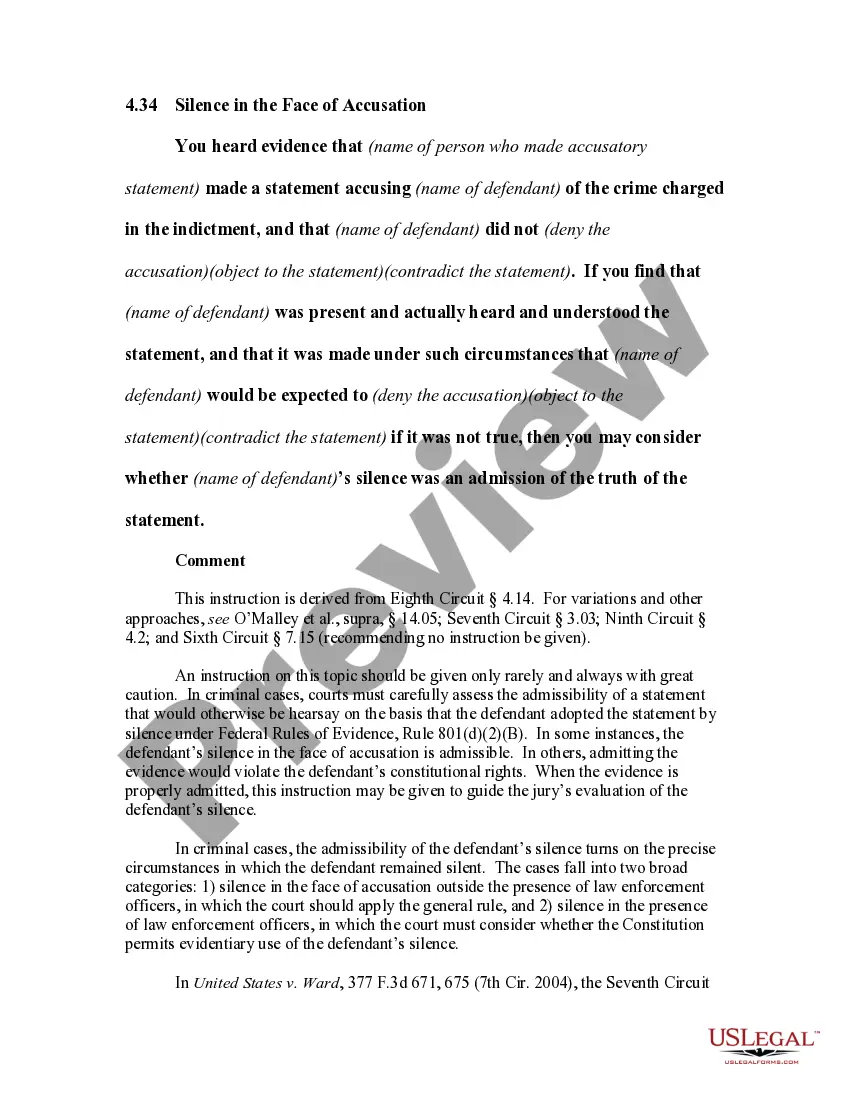
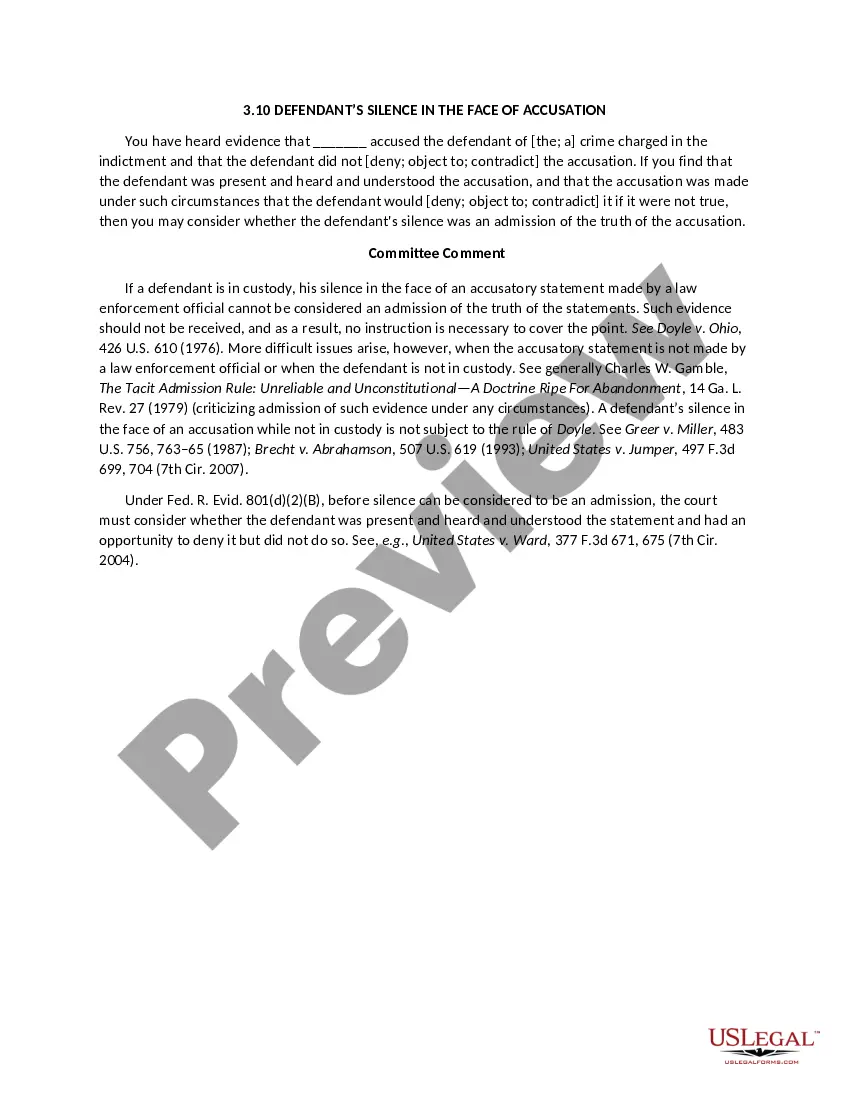
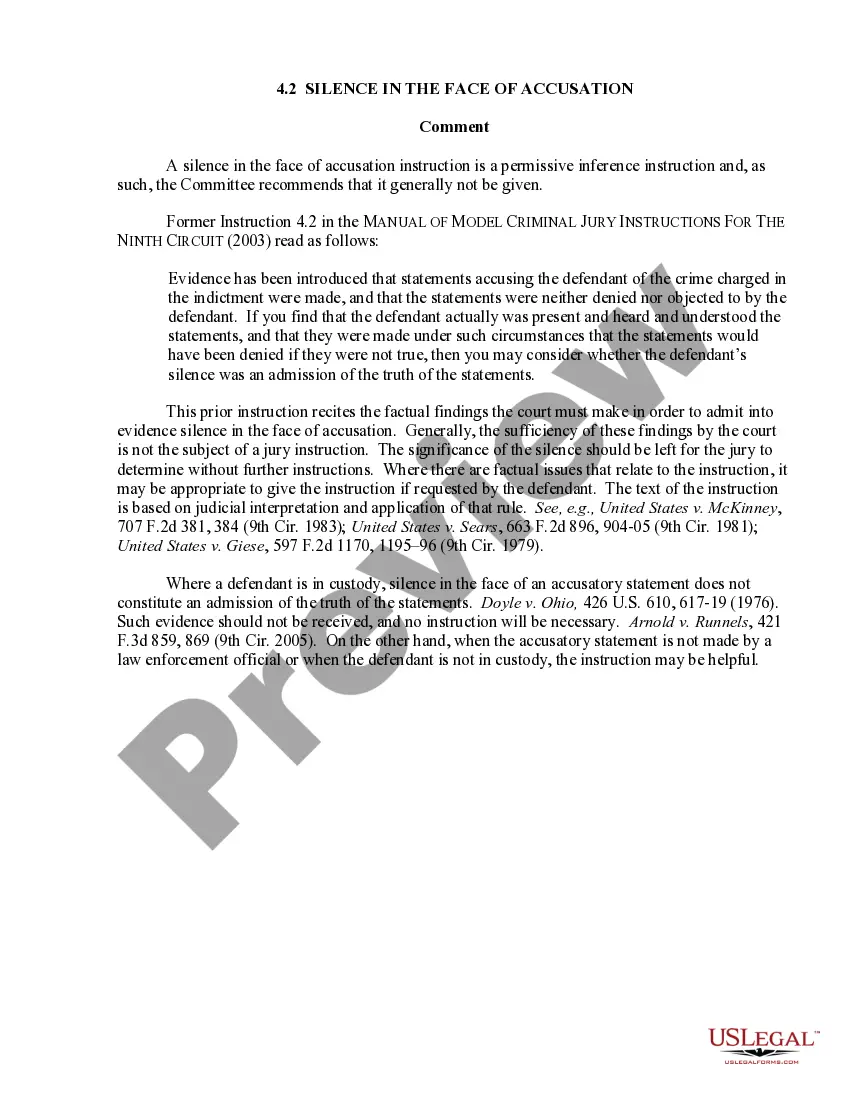
The Silence in the Face of Accusation form (revised 2016) is a legal instruction used in criminal cases. This form provides guidance to juries on how to interpret a defendant's silence when faced with accusations. It highlights the specific circumstances under which silence may be considered as an admission of guilt. Unlike other legal forms that address direct evidence or testimonies, this form specifically focuses on the implications of a defendant's lack of response to accusations made in their presence.
Key components of this form
- Identification of the person making the accusatory statement.
- Clarification on the context of the defendant's silence.
- Assessment criteria for determining whether silence may imply truth.
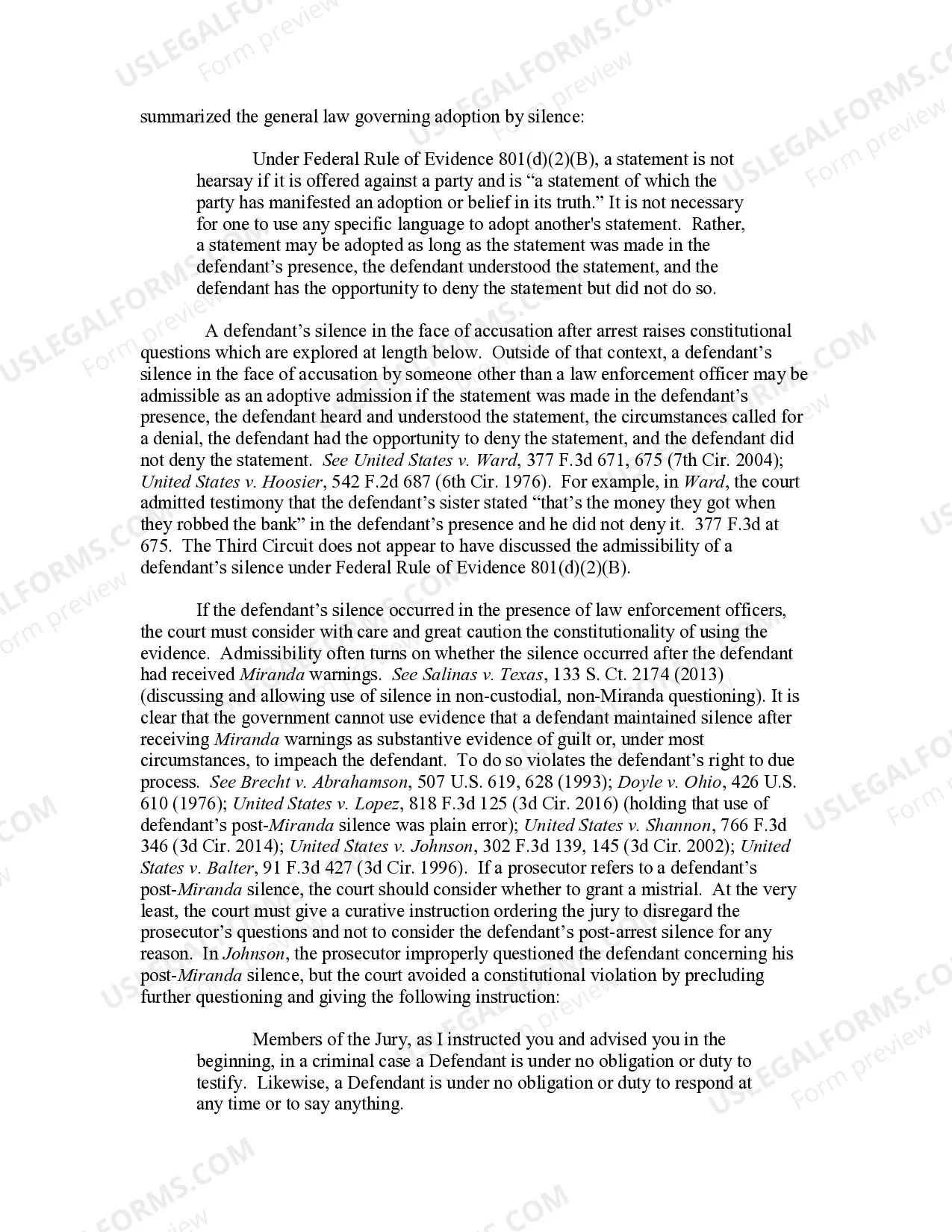
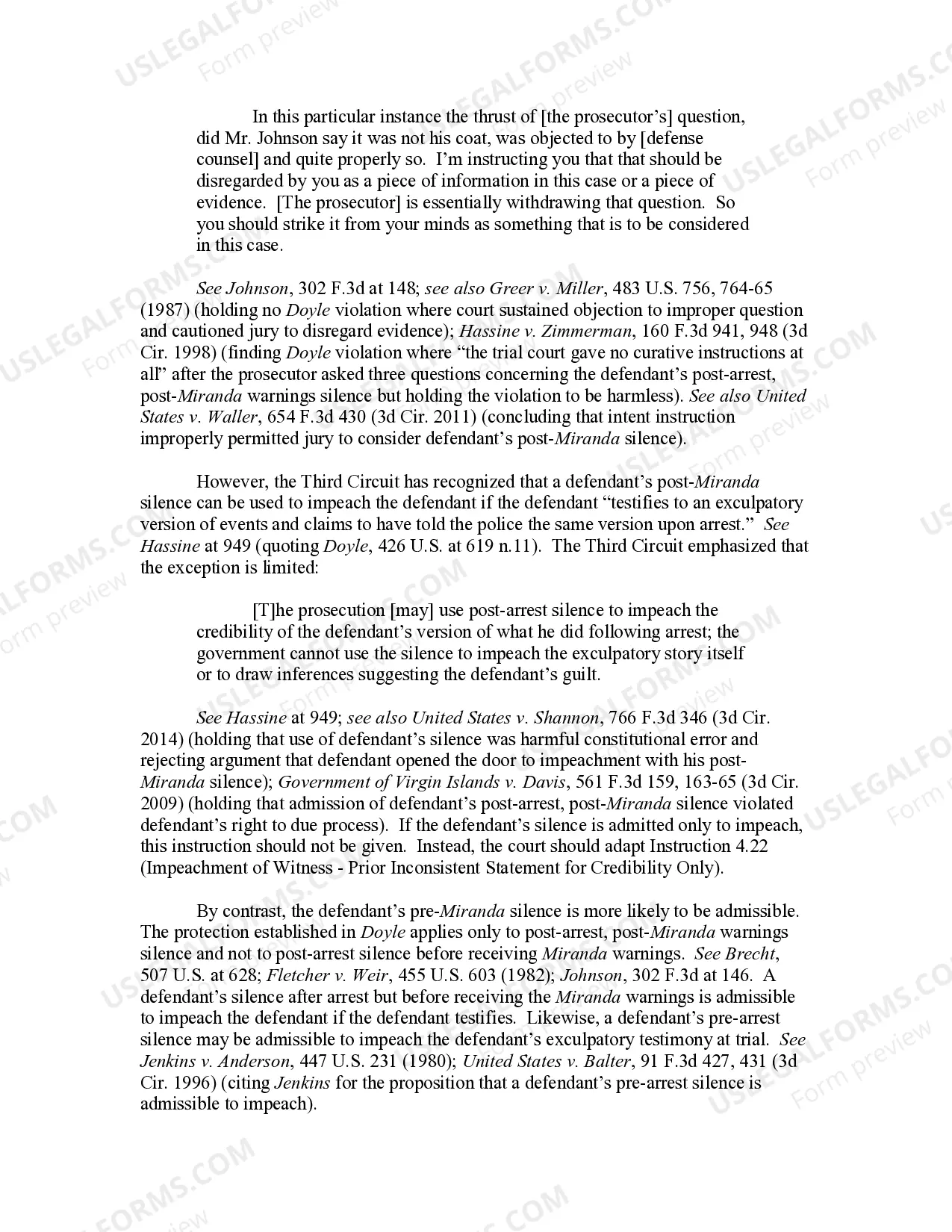
- Guidance on the specific judicial standards for admitting evidence of silence.
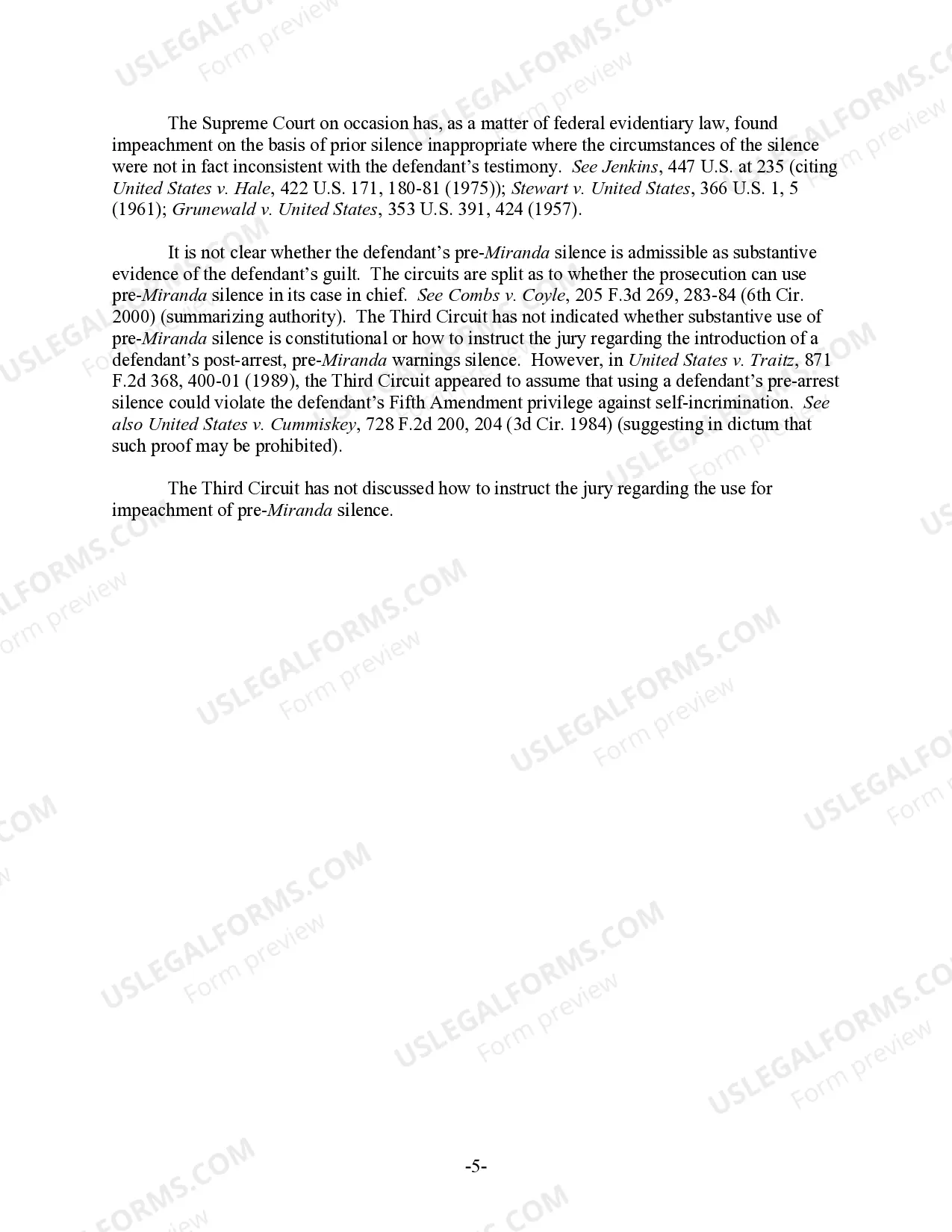
- Reference to relevant legal precedents and rules of evidence.

Common use cases
This form is applicable in scenarios where a defendant has remained silent in response to accusations made against them, particularly in a courtroom setting. It is necessary when the silence may be construed as an admission of guilt based on the circumstances under which the statement was made. It aids judges and juries in evaluating the implications of the defendant's silence in determining guilt or innocence.
Who needs this form
- Judges overseeing criminal trials who need to instruct juries on this matter.
- Legal professionals and attorneys involved in criminal defense cases.
- Jurors who require clarification on the legal interpretation of silence in relation to accusations.
- Students and researchers studying criminal law and jury instructions.
Completing this form step by step
- Identify the parties involved, including the defendant and the accuser.
- Document the exact nature of the accusation made against the defendant.
- Specify the context in which the defendant was expected to respond.
- Include relevant legal standards that apply to the interpretation of silence.
- Provide references to applicable case law that supports the instruction.
Does this form need to be notarized?
This form usually doesn’t need to be notarized. However, local laws or specific transactions may require it. Our online notarization service, powered by Notarize, lets you complete it remotely through a secure video session, available 24/7.
Get your form ready online
Our built-in tools help you complete, sign, share, and store your documents in one place.
Make edits, fill in missing information, and update formatting in US Legal Forms—just like you would in MS Word.
Download a copy, print it, send it by email, or mail it via USPS—whatever works best for your next step.
Sign and collect signatures with our SignNow integration. Send to multiple recipients, set reminders, and more. Go Premium to unlock E-Sign.
If this form requires notarization, complete it online through a secure video call—no need to meet a notary in person or wait for an appointment.
We protect your documents and personal data by following strict security and privacy standards.

Make edits, fill in missing information, and update formatting in US Legal Forms—just like you would in MS Word.

Download a copy, print it, send it by email, or mail it via USPS—whatever works best for your next step.

Sign and collect signatures with our SignNow integration. Send to multiple recipients, set reminders, and more. Go Premium to unlock E-Sign.

If this form requires notarization, complete it online through a secure video call—no need to meet a notary in person or wait for an appointment.

We protect your documents and personal data by following strict security and privacy standards.
Common mistakes
- Failing to consider the context in which the silence occurred.
- Not properly identifying the parties involved in the accusation.
- Overlooking established legal precedents that guide admissibility of silence.
- Inadequately discussing the impact of Miranda rights on silence.
Benefits of completing this form online
- Easy access to legally vetted instructions drafted by licensed attorneys.
- Convenient downloadable format for immediate use in legal proceedings.
- Time-saving ability to edit and adapt the form for specific cases.
- Clarity in legal language to assist those with little legal experience.
Legal use & context
- This instruction clarifies how juries should treat a defendant's silence and is particularly relevant in criminal cases.
- Its usage must be approached with caution to avoid violating constitutional rights.
- Varied interpretations exist across different jurisdictions regarding the admissibility of silence as evidence.
Looking for another form?
Form popularity
FAQ
The Fifth Amendment privilege against self-incrimination precludes the admission of a defendant's silence as an adoptive admission if there is evidence that, by remaining mute, the defendant was exercising his constitutional right to remain silent. (People v. Preston (1973) 9 Cal.
This decision clarified that a suspect's silence can be used against them in court if they have not been formally arrested or advised of their Miranda rights, and if they have not affirmatively invoked their right to remain silent.
Held, that silence in the face of pertinent and direct accusation of crime par- takes of the nature of a confession, and is admissible as a circumstance to be considered by the jury as tending to show guilt, even though the person accused is in custody on the charge.
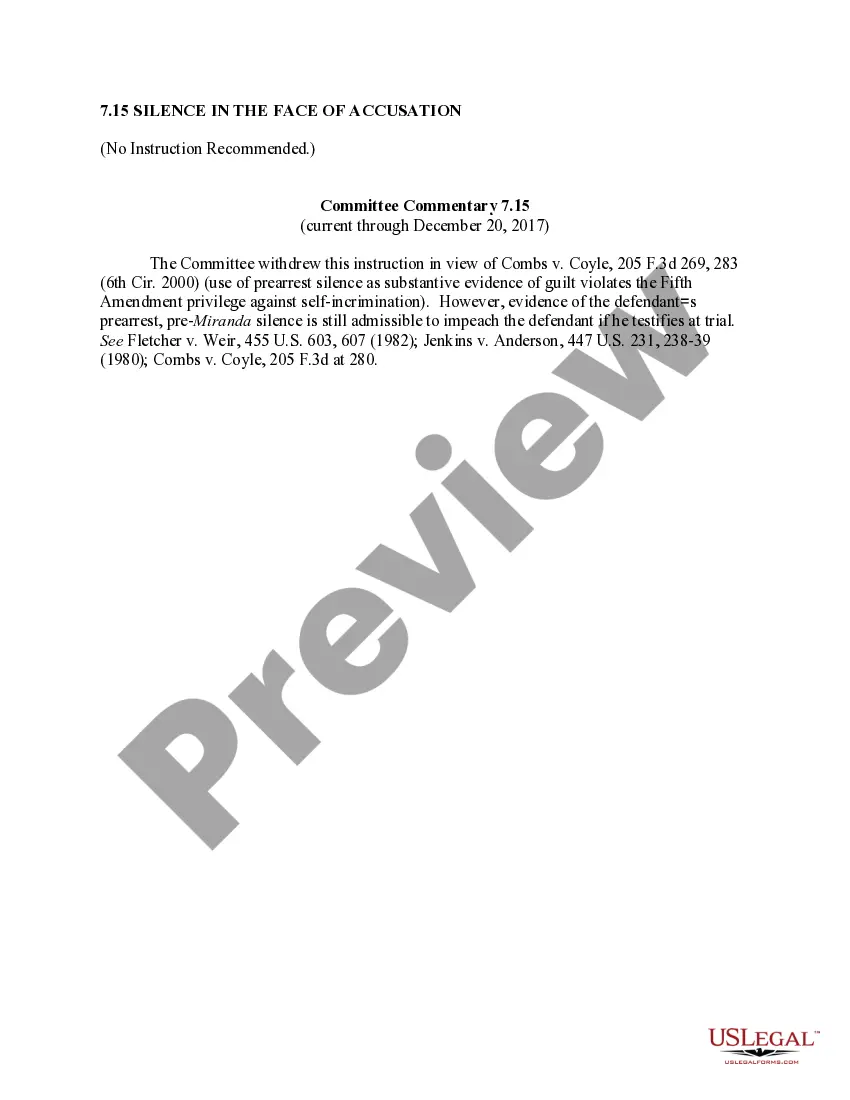
A silence in the face of accusation instruction is a permissive inference instruction and, as such, the Committee recommends that it generally not be given. If a defendant is in custody, silence in the face of an accusatory statement does not constitute an admission of the truth of the statements.
When admissible. Either party may show an ?adoptive admission by silence? by a witness (including a criminal defendant) who, while not under arrest, did not respond (or responded evasively or equivocally) to a direct accusation that he or she would naturally be expected to deny.
Police read Miranda rights when they take suspects into custody. It sounds like this: ?You have the right to remain silent. Anything you say can and will be used against you in a court of law.
Held, that silence in the face of pertinent and direct accusation of crime par- takes of the nature of a confession, and is admissible as a circumstance to be considered by the jury as tending to show guilt, even though the person accused is in custody on the charge.
The Fifth Amendment privilege against self-incrimination precludes the admission of a defendant's silence as an adoptive admission if there is evidence that, by remaining mute, the defendant was exercising his constitutional right to remain silent.