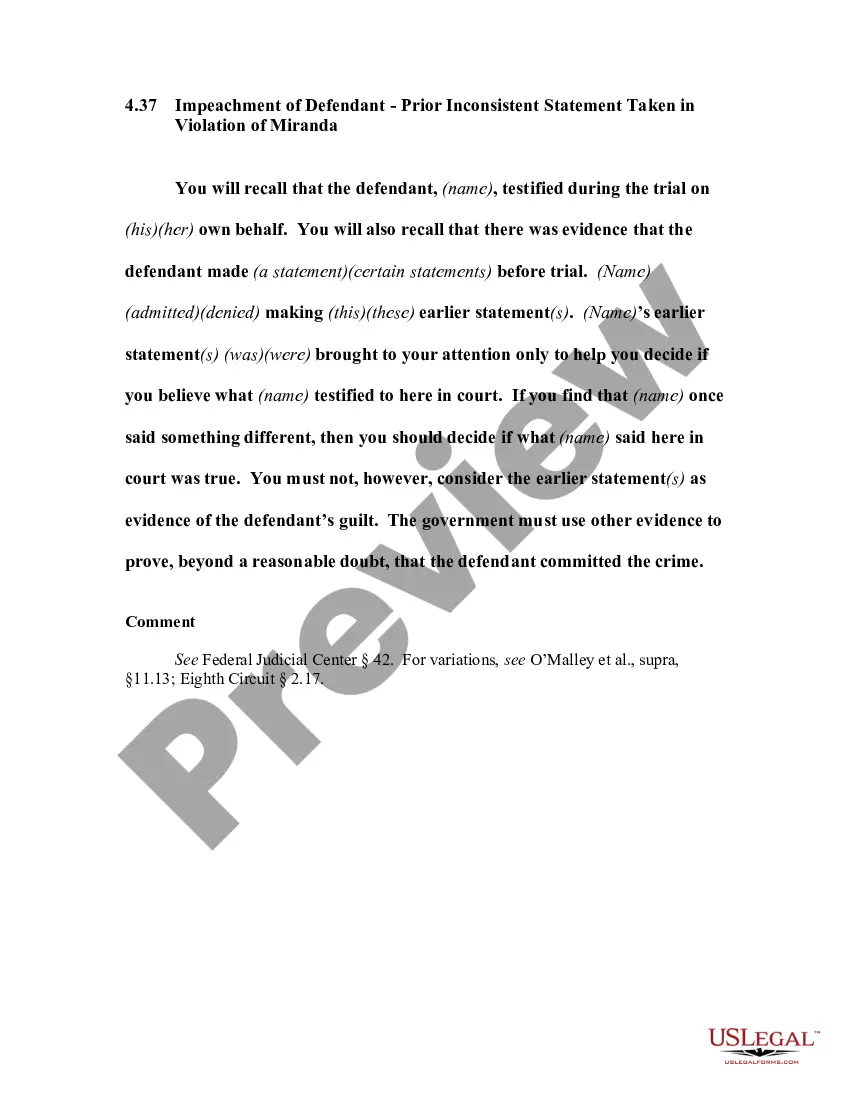
Impeachment of Defendant - Prior Inconsistent Statement Taken in Violation of Miranda
What is this form?
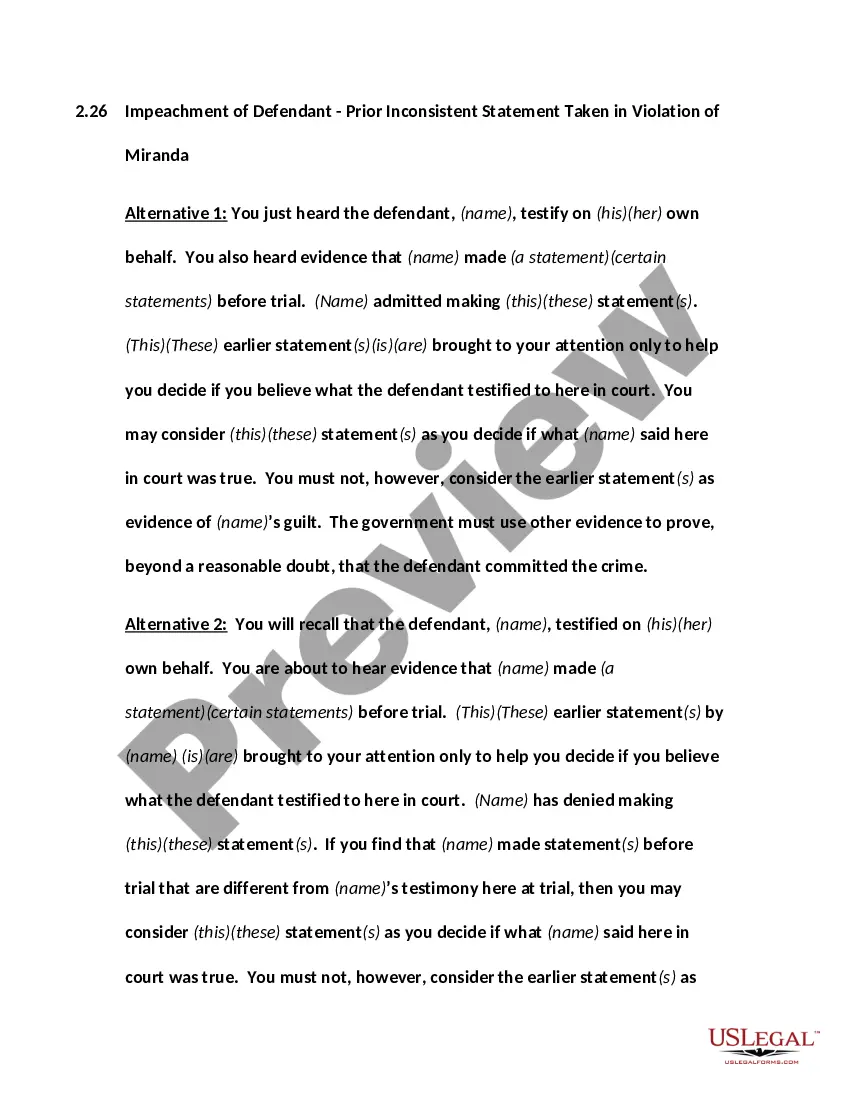
The Impeachment of Defendant form addresses prior inconsistent statements made by a defendant, particularly when these statements were taken in violation of Miranda rights. This form is essential in legal proceedings, as it allows for the introduction of prior statements to challenge the defendant's credibility while emphasizing that these statements cannot be viewed as direct evidence of guilt. Understanding how to use this form properly is crucial for fair trial procedures and maintaining the integrity of the legal process.
Key components of this form
- Defendant's name and the particulars of the case.
- Details of the prior statement provided before the trial.
- Clarification on whether the defendant admitted or denied making the previous statement.
- The limited role of the earlier statement in evaluating the defendant's trial testimony.
- Instructions regarding the burden of proof required for guilt.
When to use this form
This form is used in court proceedings when a defendant has testified and there is an earlier statement that contradicts their testimony. If the statement was taken unlawfully under Miranda guidelines, this form ensures that the jury or judge is made aware of its limited admissibility solely for impeachment purposes. It is vital for defense attorneys and prosecutors aiming to confirm the reliability of the defendant's testimony.
Who can use this document
This form should be utilized by:
- Defense attorneys representing defendants who decide to testify in their own defense.
- Prosecutors seeking to address inconsistencies in a defendant's testimony.
- Judges who need to give correct instructions to juries regarding the evaluation of conflicting statements.
Completing this form step by step
- Identify the defendant and the relevant case details.
- Document the specific statements made by the defendant before the trial.
- Indicate whether the defendant has admitted or denied these statements during the court proceedings.
- Explain how the earlier statements are relevant only for evaluating the defendantâs credibility in court.
- Include instructions for the jury regarding the limited admissibility and non-use of these statements as evidence of guilt.
Is notarization required?
This form usually doesn’t need to be notarized. However, local laws or specific transactions may require it. Our online notarization service, powered by Notarize, lets you complete it remotely through a secure video session, available 24/7.
Get your form ready online
Our built-in tools help you complete, sign, share, and store your documents in one place.
Make edits, fill in missing information, and update formatting in US Legal Forms—just like you would in MS Word.
Download a copy, print it, send it by email, or mail it via USPS—whatever works best for your next step.
Sign and collect signatures with our SignNow integration. Send to multiple recipients, set reminders, and more. Go Premium to unlock E-Sign.
If this form requires notarization, complete it online through a secure video call—no need to meet a notary in person or wait for an appointment.
We protect your documents and personal data by following strict security and privacy standards.

Make edits, fill in missing information, and update formatting in US Legal Forms—just like you would in MS Word.

Download a copy, print it, send it by email, or mail it via USPS—whatever works best for your next step.

Sign and collect signatures with our SignNow integration. Send to multiple recipients, set reminders, and more. Go Premium to unlock E-Sign.

If this form requires notarization, complete it online through a secure video call—no need to meet a notary in person or wait for an appointment.

We protect your documents and personal data by following strict security and privacy standards.
Typical mistakes to avoid
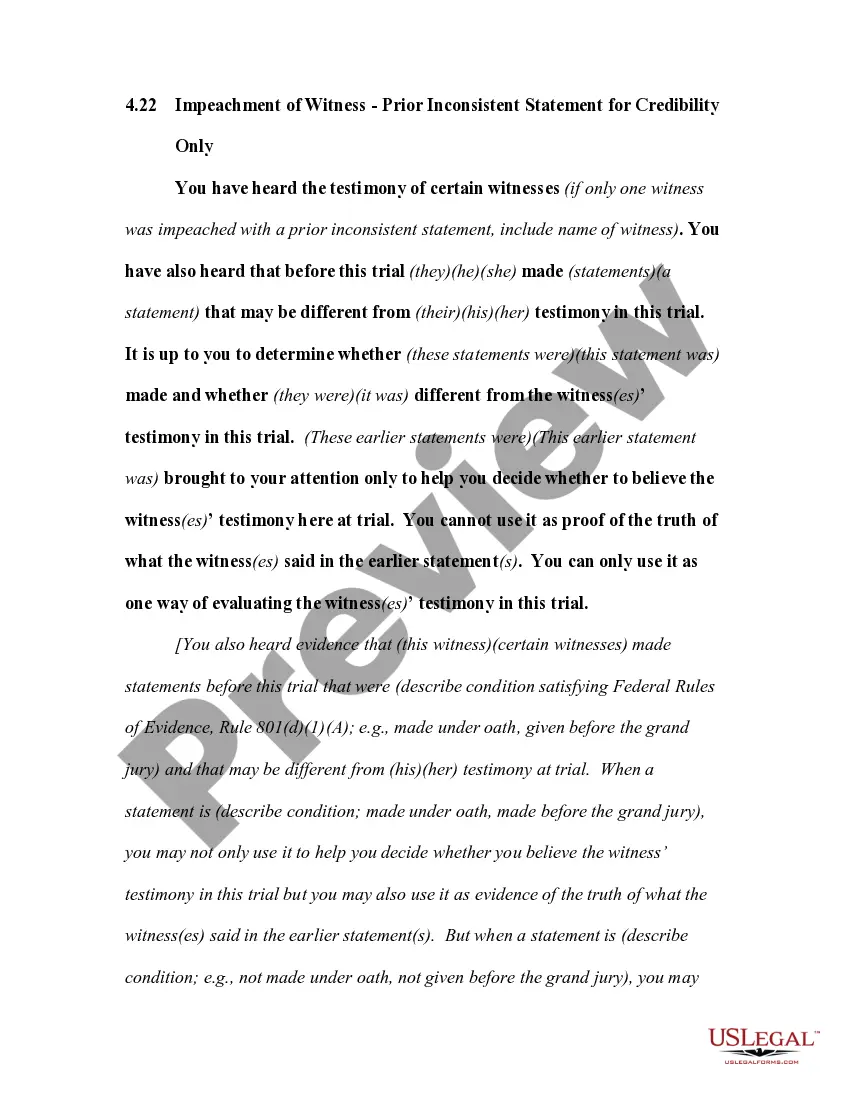
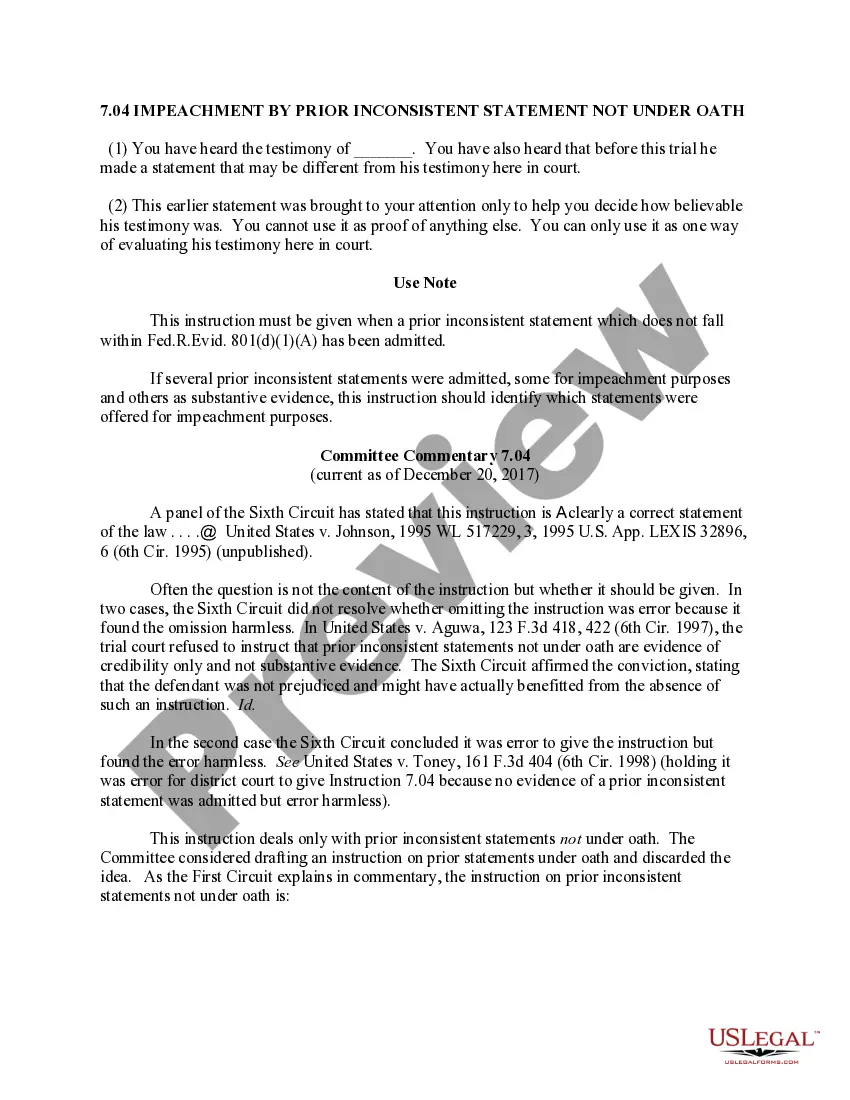
- Failing to clarify the distinction between impeachment and direct evidence of guilt.
- Neglecting to ensure prior statements were properly documented before trial.
- Using prior inconsistent statements inappropriately as evidence of guilt.
Benefits of completing this form online
- Immediate access to the latest legal language and formats, ensuring compliance with current standards.
- Simplified editing options that allow for customization to fit specific case needs.
- Availability for download at any time, making it convenient for legal professionals working on tight schedules.
Legal use & context
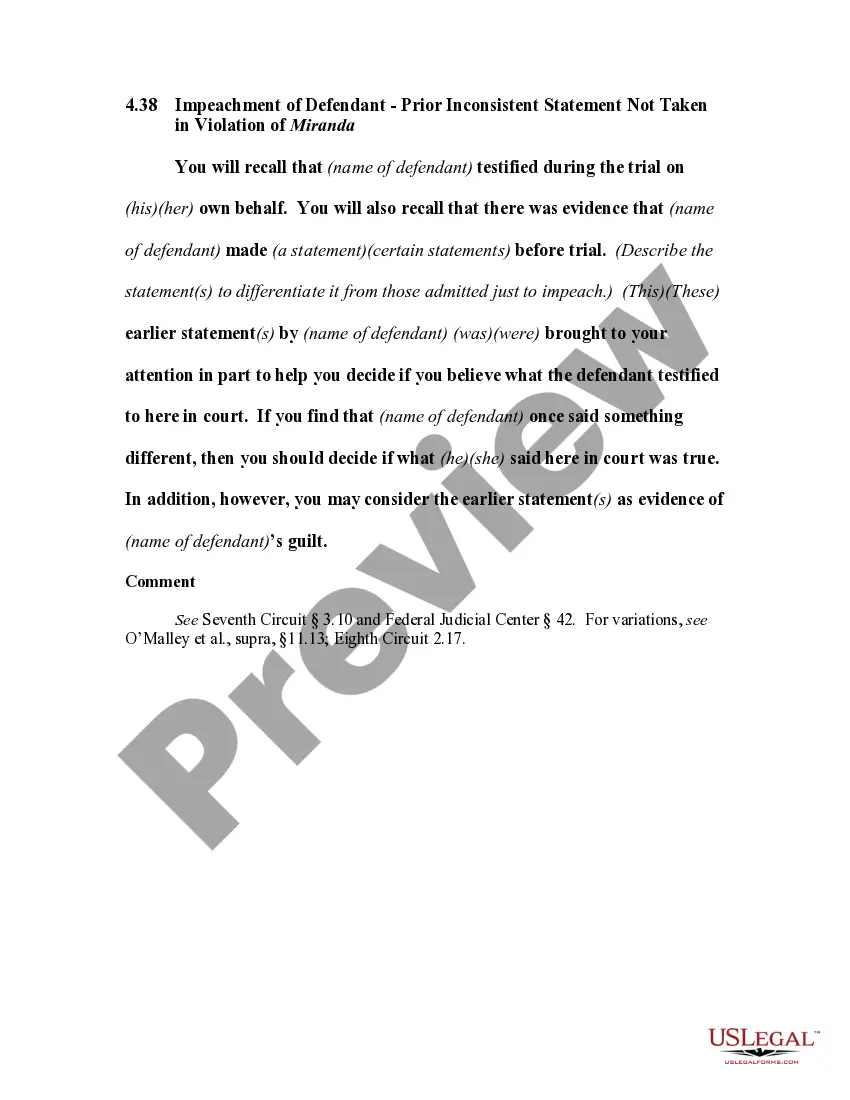
- This form maintains the integrity of legal proceedings by addressing inconsistencies in a defendant's testimony.
- It ensures compliance with legal standards set forth in landmark cases involving Miranda rights.
- The proper use of this form helps prevent the misuse of inadmissible statements as evidence of guilt.
Looking for another form?
Form popularity
FAQ
A statement that the police obtained in violation of Miranda rights can be used to impeach the defendant's credibility as a witness, if it is inconsistent with their statements at trial.
Instead, if you give testimony or give statements, the statements are voluntary and can be used against you for all purposes, including criminally.
These include situations such as: The suspect is being asked questions that are standard booking procedures. The situation involves an emergency hostage situation or negotiation. The person is unaware that they are speaking with a police officer.
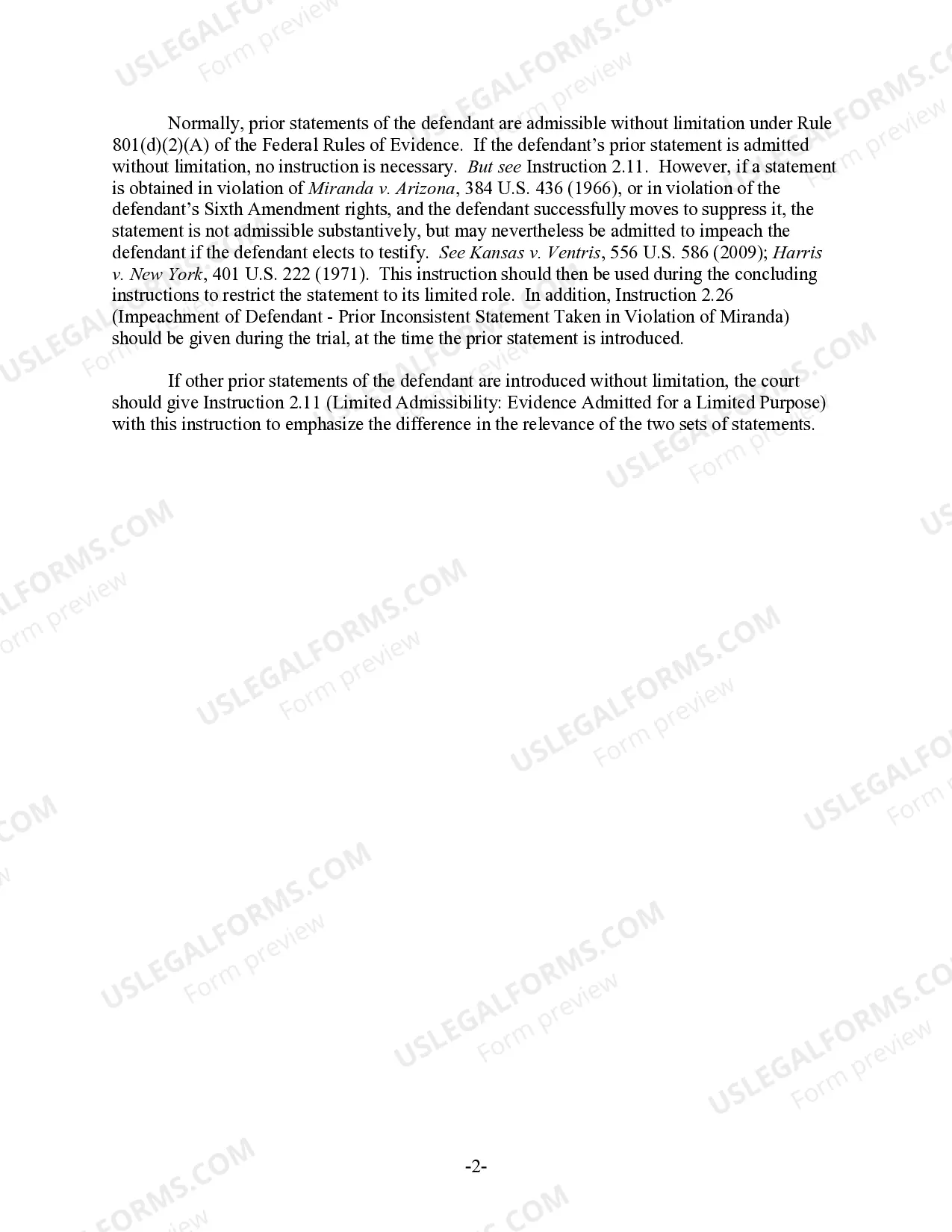
Impeachment Purposes If a defendant gives testimony at trial that conflicts with a statement made to the police, the prosecutor can offer a statement elicited in violation of Miranda to impeach (attack) the defendant's credibility. (Harris v. New York, 401 U.S. 222 (1971).)
The Court has already ruled that statements obtained in violation of Miranda may be used to impeach a defendant. Harris v.
Rule 613(b) allows a party to use a prior inconsistent statement to impeach a witness, but if the witness is called to the stand for sole purpose of impeaching him, the ?impeachment? is really a subterfuge for admitting the hearsay.
?In order to lay the proper predicate for impeachment by prior inconsistent statement, the witness must be advised of the substance of the prior inconsistent statement, the time and place the statement was made, and the person to whom the statement was made.? See Kimble v. State, 537 So.