Receiving Illegal Gratuity by a Public Official
What this document covers
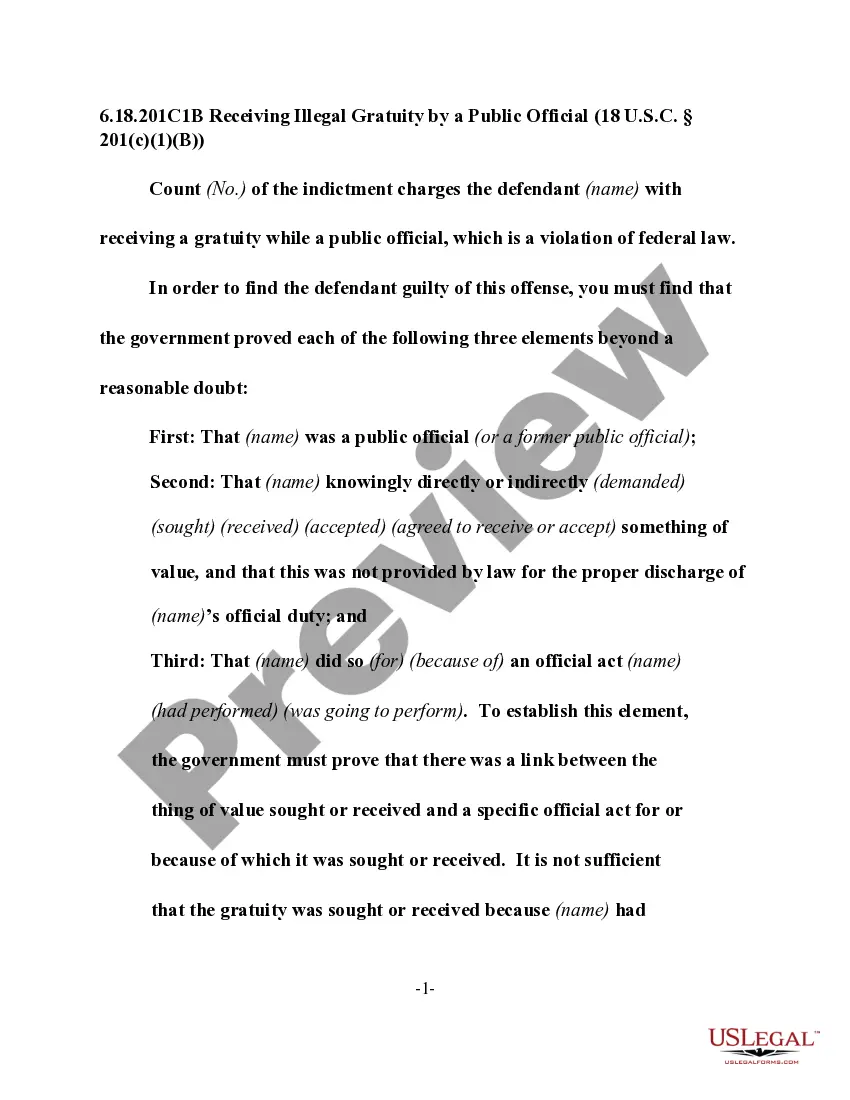
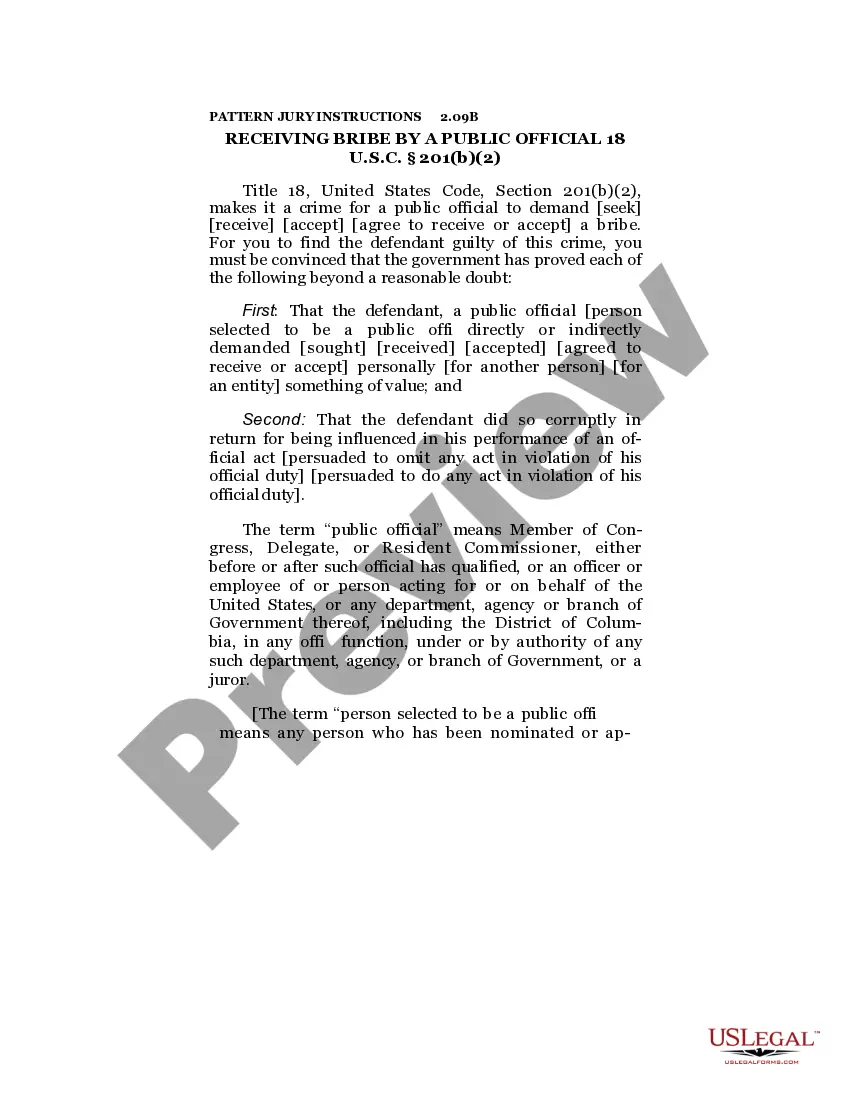
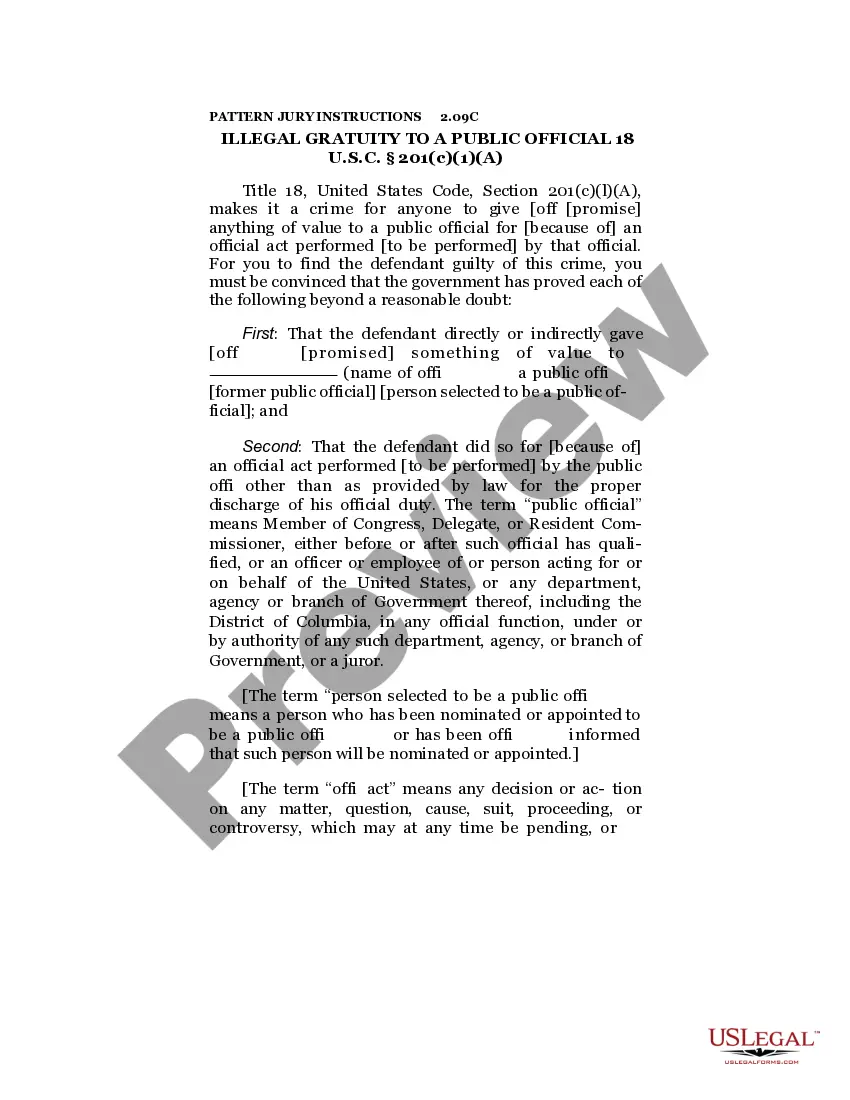
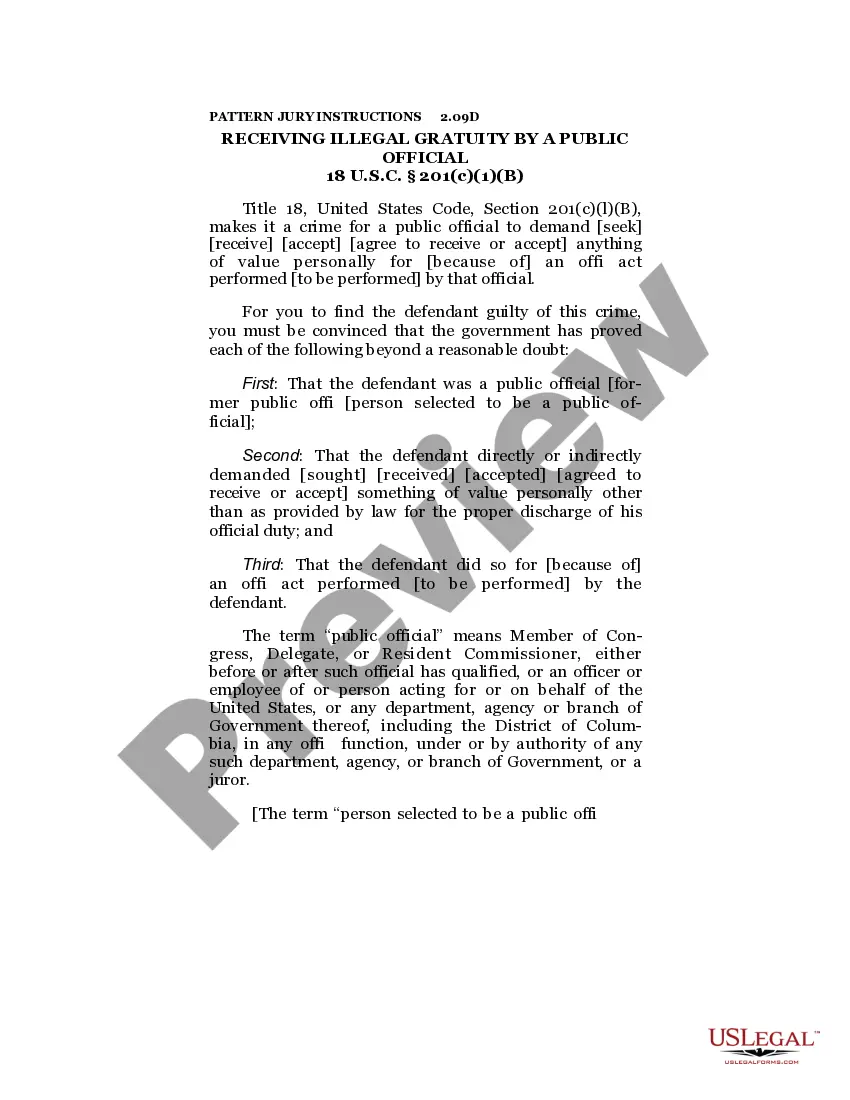
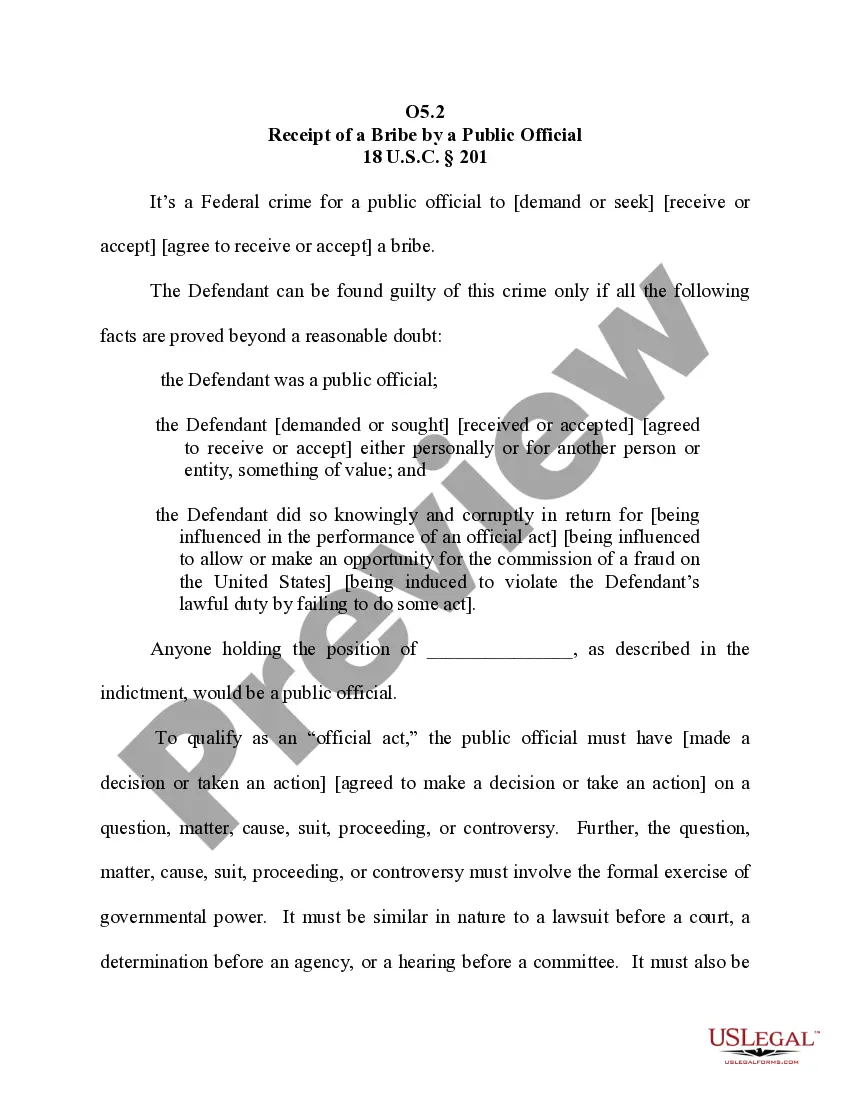
The Receiving Illegal Gratuity by a Public Official form is a legal document used to address violations where a public official receives benefits unlawfully in relation to their official duties. This form outlines the offense defined under 18 U.S.C. § 201(c)(1)(B), distinguishing it from related offenses like bribery. The focus is on situations where a public official accepts something of value not legally sanctioned as compensation for their official acts.
Key components of this form
- Accusation of receipt of a gratuity by a public official.
- Clear definition of âpublic officialâ and the applicable legal framework.
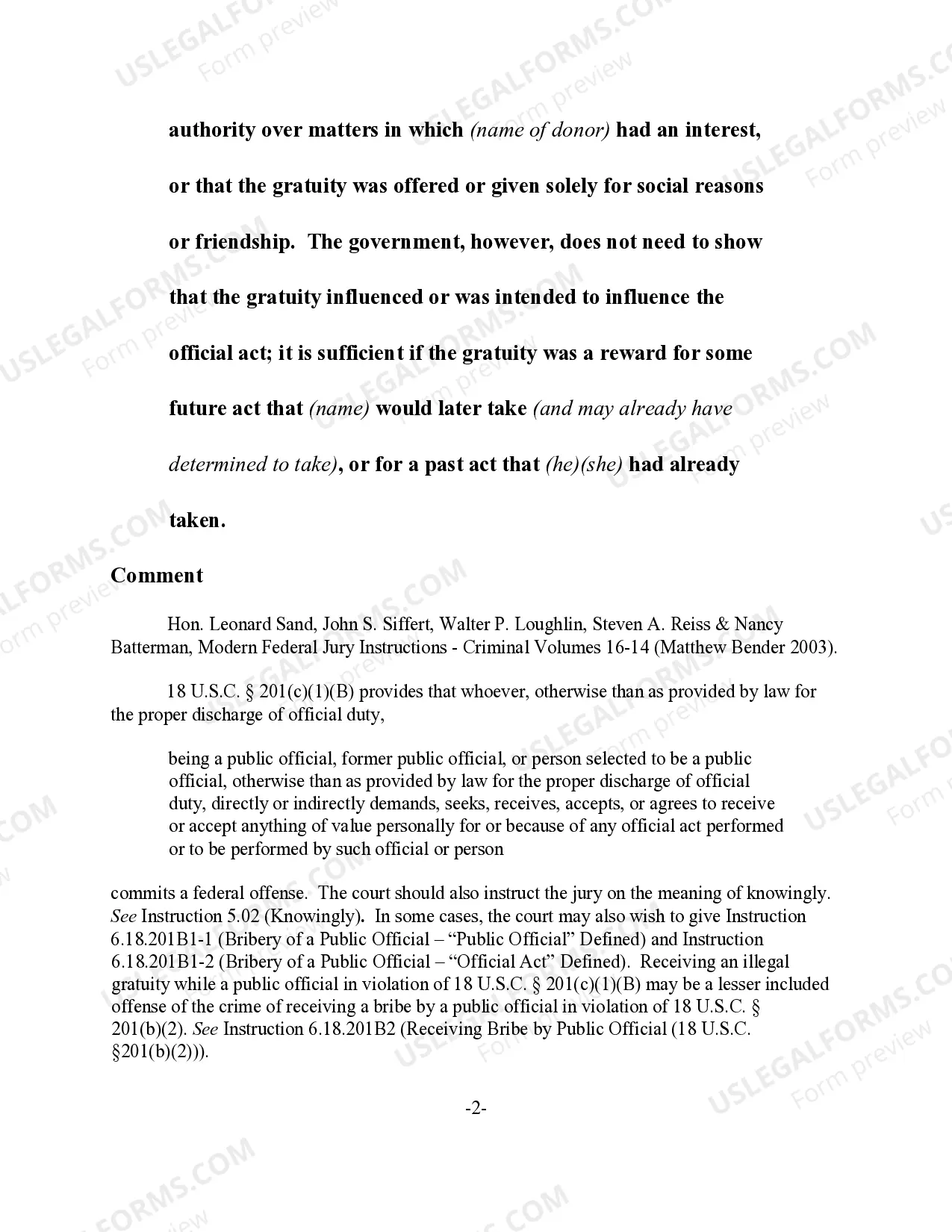
- Criteria for proving receipt of an illegal gratuity, including intent and link to official acts.
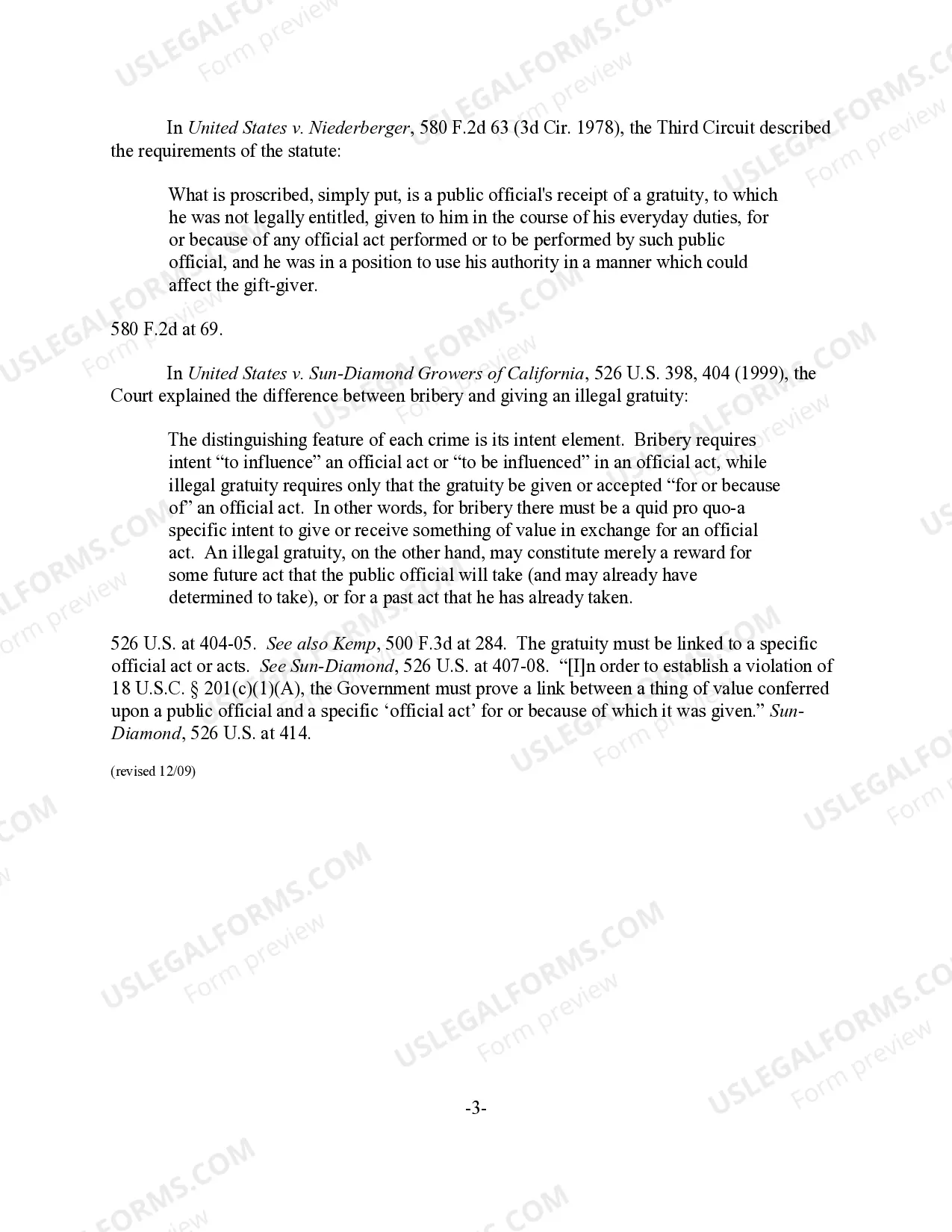
- Clarification of the difference between illegal gratuity and bribery.
- Citations from relevant legal cases and statutes to support claims.
Situations where this form applies
This form should be used when charges are brought against a public official for unlawfully accepting benefits in connection with their official duties. It is relevant when there is evidence of a gratuity given that is not legally justified and is linked to an official action performed or to be performed by the official.
Who needs this form
- Public officials or former public officials facing allegations of receiving illegal gratuities.
- Prosecutors in federal cases involving public officials and illegal gratuities.
- Defendants seeking to understand the elements of the charge against them.
Steps to complete this form
- Identify the defendant and ensure the correct name is used.
- Clearly describe the gratuity received and its context within the scope of official duties.
- Document the link between the gratuity and the specific official act performed or to be performed.
- Review the legal definition of âpublic officialâ and ensure compliance with the necessary criteria.
- Ensure all claims meet the elements required for federal prosecution as outlined in the form.
Is notarization required?
In most cases, this form does not require notarization. However, some jurisdictions or signing circumstances might. US Legal Forms offers online notarization powered by Notarize, accessible 24/7 for a quick, remote process.
Get your form ready online
Our built-in tools help you complete, sign, share, and store your documents in one place.
Make edits, fill in missing information, and update formatting in US Legal Forms—just like you would in MS Word.
Download a copy, print it, send it by email, or mail it via USPS—whatever works best for your next step.
Sign and collect signatures with our SignNow integration. Send to multiple recipients, set reminders, and more. Go Premium to unlock E-Sign.
If this form requires notarization, complete it online through a secure video call—no need to meet a notary in person or wait for an appointment.
We protect your documents and personal data by following strict security and privacy standards.

Make edits, fill in missing information, and update formatting in US Legal Forms—just like you would in MS Word.

Download a copy, print it, send it by email, or mail it via USPS—whatever works best for your next step.

Sign and collect signatures with our SignNow integration. Send to multiple recipients, set reminders, and more. Go Premium to unlock E-Sign.

If this form requires notarization, complete it online through a secure video call—no need to meet a notary in person or wait for an appointment.

We protect your documents and personal data by following strict security and privacy standards.
Avoid these common issues
- Failing to accurately link the gratuity to a specific official act.
- Misinterpreting the legal definition of what constitutes a public official.
- Overlooking the distinction between receiving illegal gratuities and bribery.
Why complete this form online
- Easy access to downloadable legal documentation without the need for in-person visits.
- Editability allows users to tailor the form to their specific case requirements.
- Reliability from templates drafted by licensed attorneys, ensuring accuracy and legal compliance.
Legal use & context
- The form is based on federal law governing the conduct of public officials.
- Understanding this form's components can aid in preparing for legal proceedings effectively.
Summary of main points
- Receiving illegal gratuities is a federal offense requiring a clear link to official acts.
- Proper completion of the form is essential for substantiating claims or defenses.
- Users should be aware of both federal and state laws regarding public corruption.
Looking for another form?
Form popularity
FAQ
In general, bribes can take the form of gifts or payments of money in exchange for favorable treatment, such as awards of government contracts. Other forms of bribes may include property, valuables, privileges, items of value, services, and favors.
Some examples of bribes might include: A construction guaranteeing an elected official ten percent in kickback money in exchange for a large public infrastructure contract. A manufacturing firm paying foreign officials money for preferential treatment or to smuggle unregistered goods across a border.
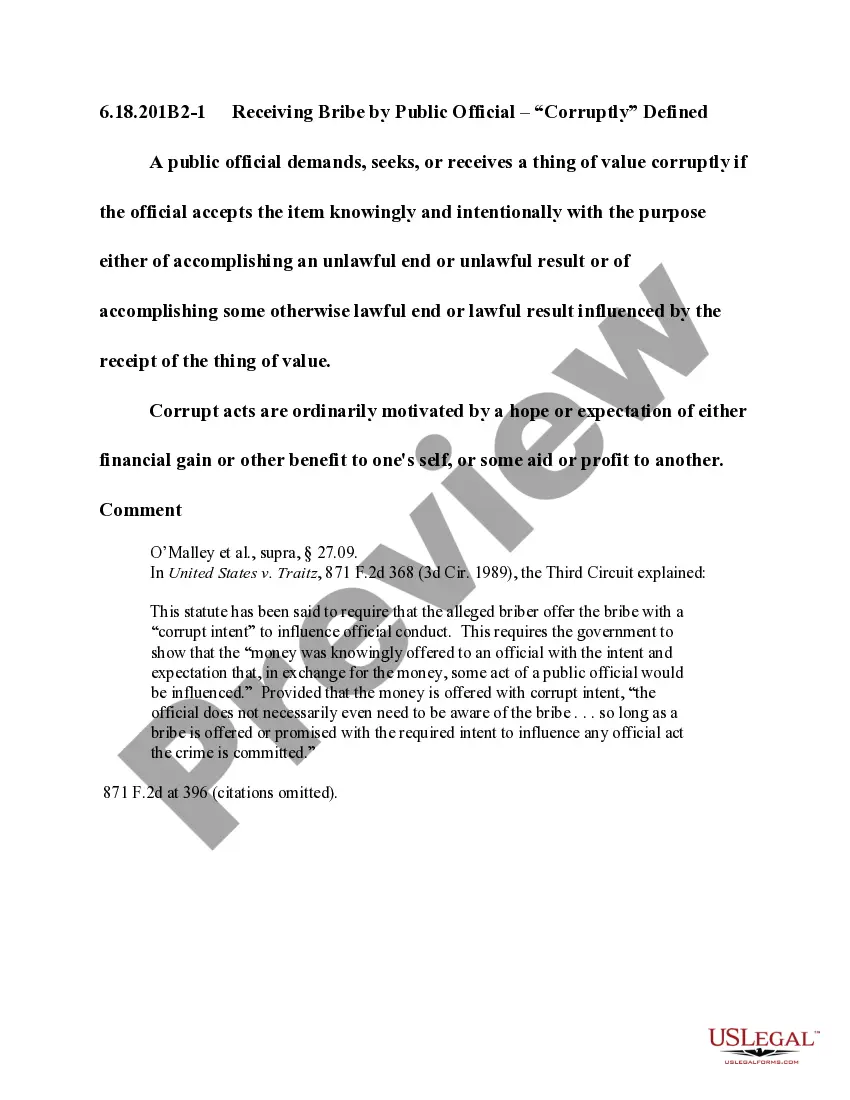
The main difference between bribery and illegal gratuity is the intent involved. Bribery requires proof of a quid pro quo-an exchange of money for an official act. Illegal gratuity, on the other hand, merely requires a gift of money because of an official act.
If convicted of bribery of a public official under 18 U.S.C. 201(b), the penalties include up to 15 years in prison and/or a fine of up to three times the monetary amount of the something of value that you offered to the public official.
Section 201(b) requires that the offender have acted with the intent (as to the giver of a bribe) to influence or (as to the taker of a bribe) to be influenced. Thus, the bribery statute requires proof of an actual or intended quid pro quo: one thing given in exchange for another.
Illegal gratuities are similar to bribery, except that there is no intent to influence a particular business decision, but rather to reward someone for making a favorable decision.
To prove a bribery case, the government must demonstrate that a thing of value was offered and accepted, that there was an illegal intent, and the intent was to pay money and receive something in return that was illegal. That could be an illegal advantage in a bidding process to get a contract.
Bribery is defined generally as corrupt solicitation, acceptance, or transfer of value in exchange for official action.