Theft Concerning a Program Receiving Federal Funds - Stole, Embezzled, Converted, and Misapplied Defined
About this form
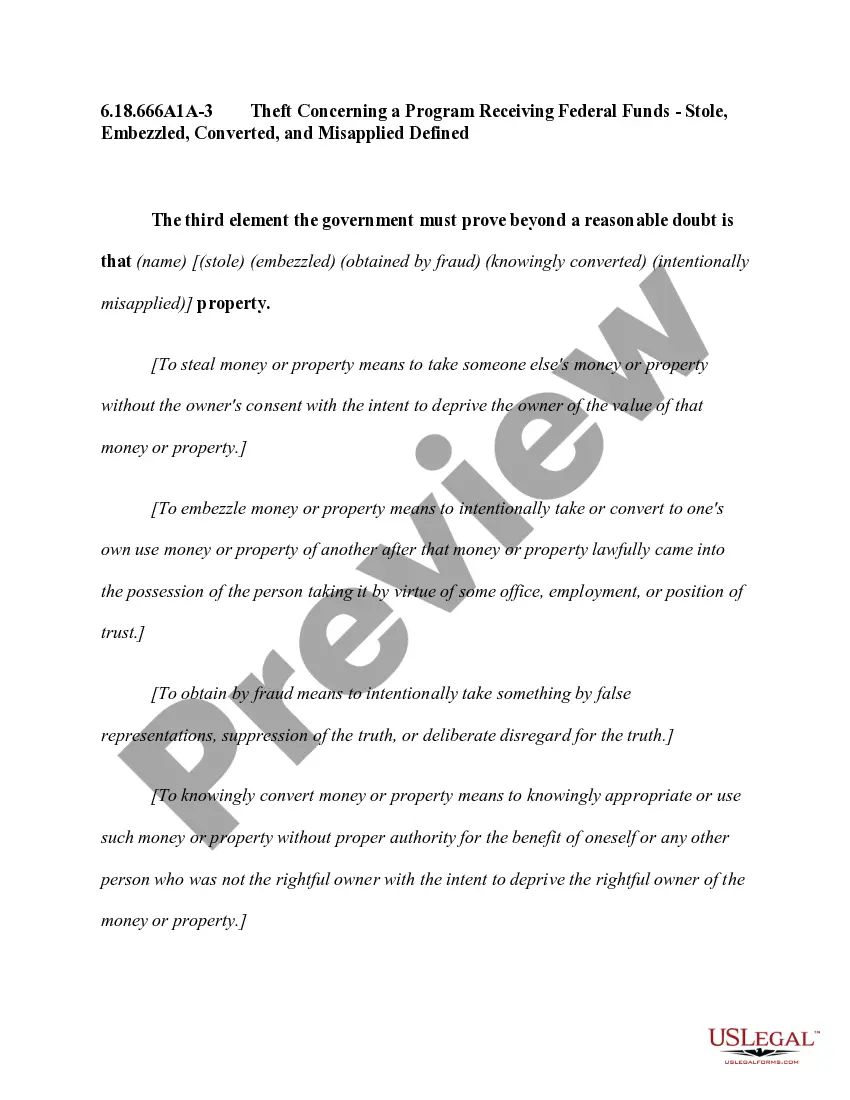
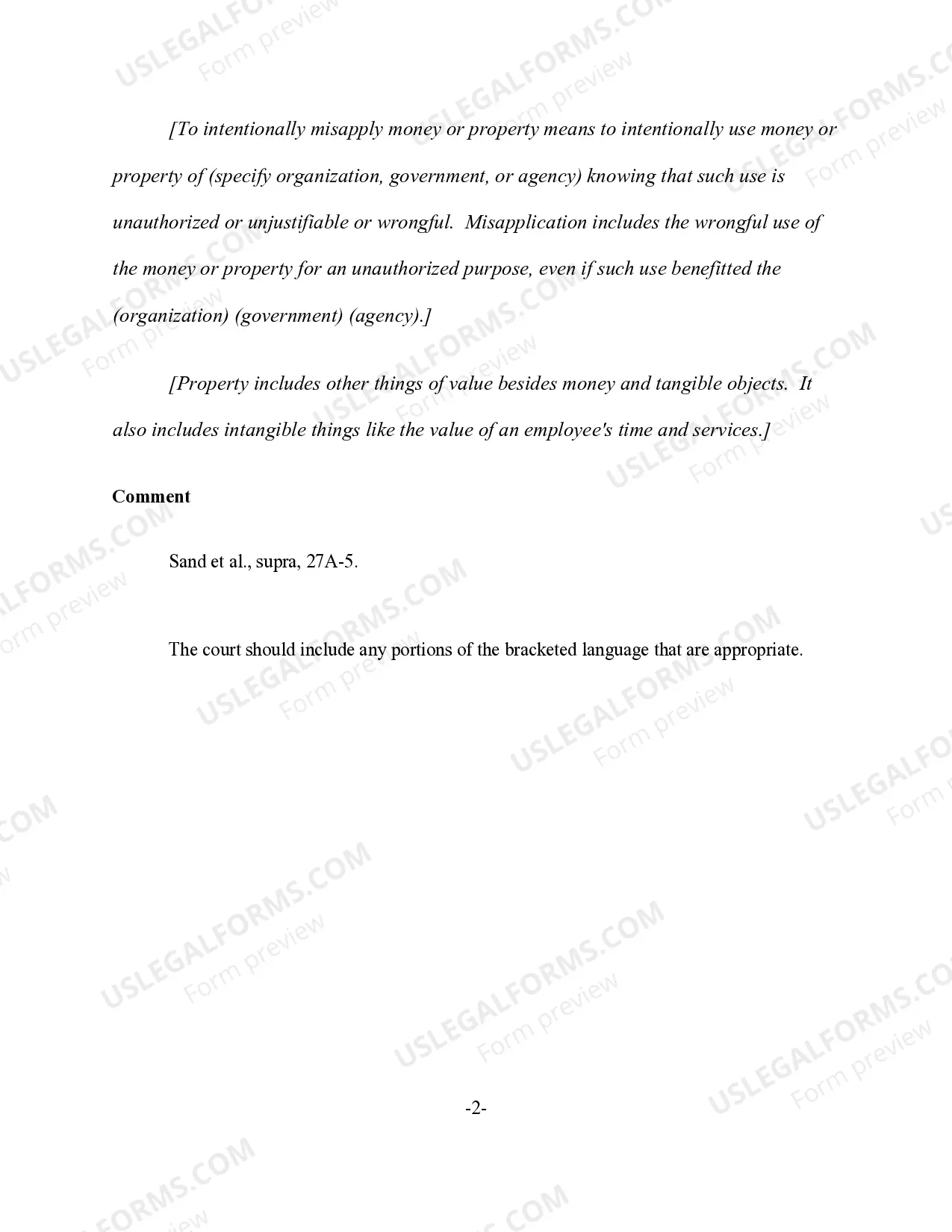
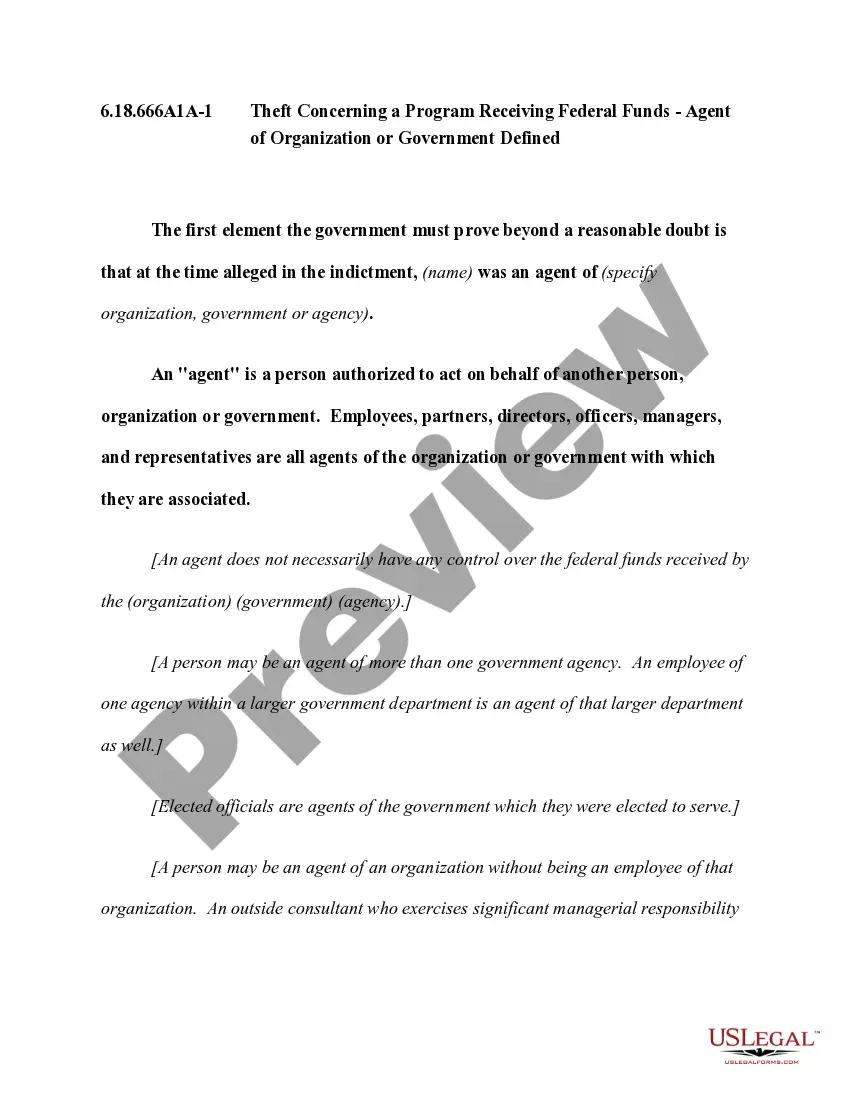
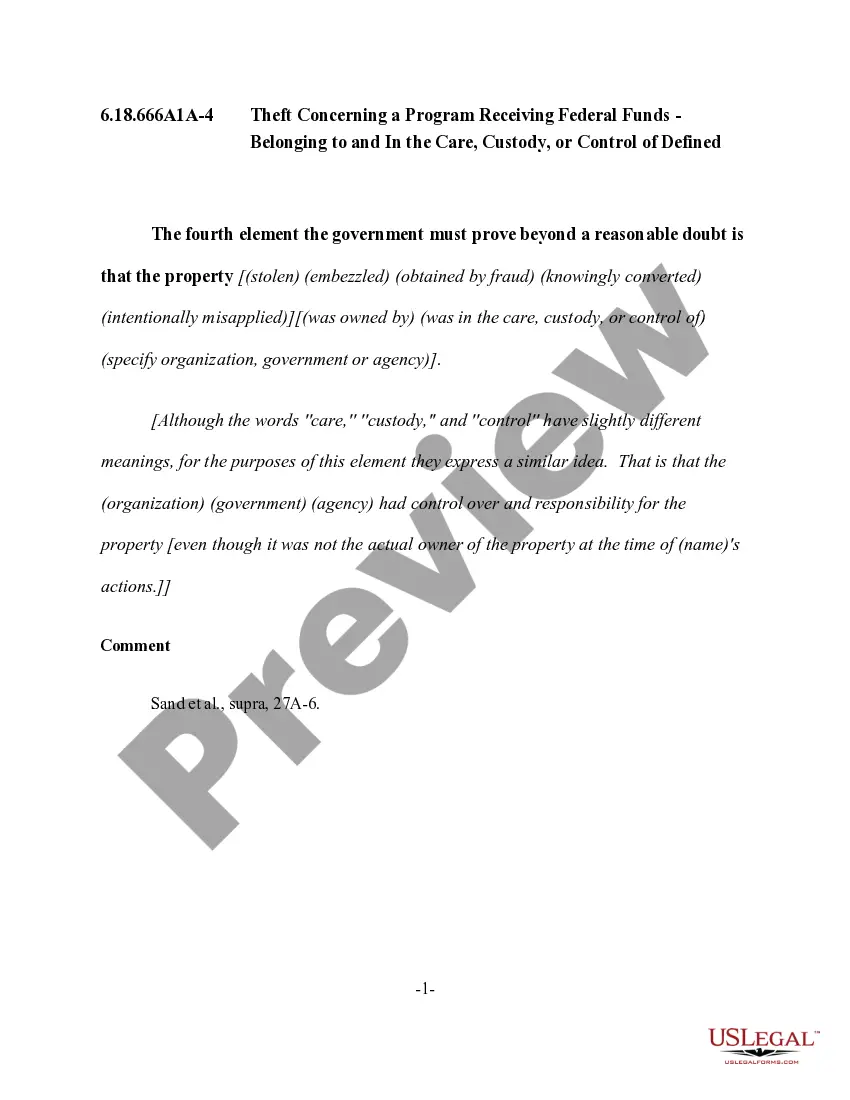
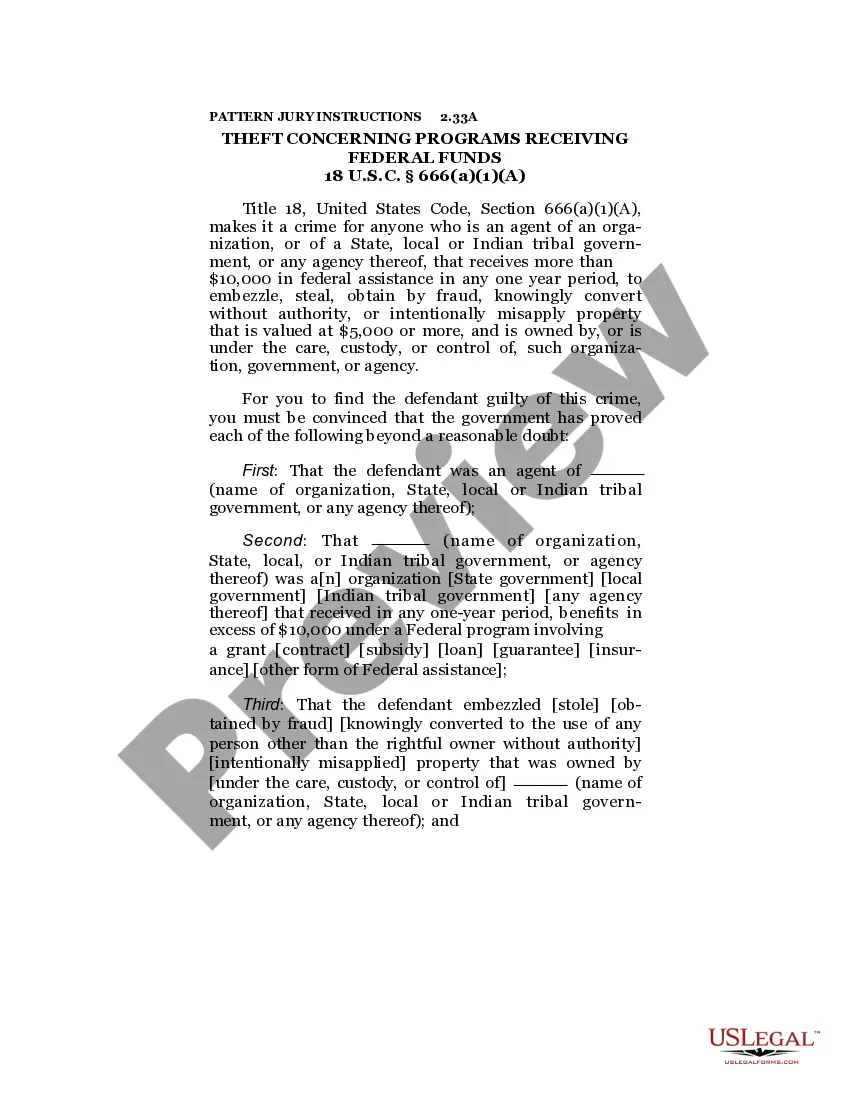
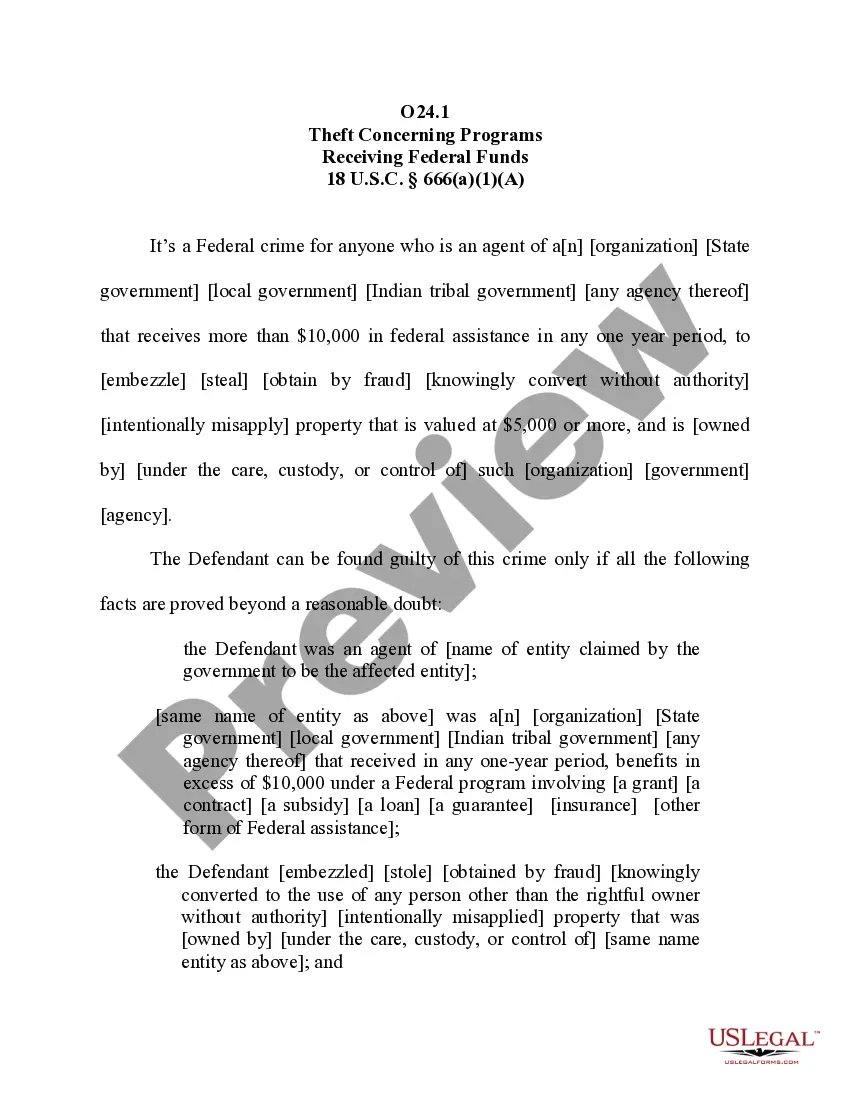
The Theft Concerning a Program Receiving Federal Funds form is designed to define and outline the various ways property may be unlawfully taken or used within programs that receive federal funding. This form helps clarify the different types of theft, such as stealing, embezzling, converting, and misapplying property, as they relate to federal regulations. Understanding this form is essential for entities involved in handling federal funds to ensure compliance with legal standards and to protect against potential misconduct.
Main sections of this form
- Definitions of theft-related terms: stealing, embezzling, obtaining by fraud, knowingly converting, and intentionally misapplying property.
- Clarifications about what constitutes property, including tangible and intangible items.
- Explanation of the legal implications of misusing property within federal funding contexts.
When this form is needed
This form is needed when a person or organization must navigate legal issues related to the theft of property, especially in cases involving federal funds. It is applicable in scenarios such as allegations of fraud in grant programs, misuse of federal resources, or internal investigations within organizations managing federally funded initiatives.
Intended users of this form
- Organizations that receive federal funding and need to understand compliance requirements.
- Legal professionals seeking to define aspects of theft within the context of federal law.
- Individuals involved in cases of alleged misconduct related to federal funds.
Instructions for completing this form
- Identify the specific type of theft being alleged (e.g., stealing, embezzling).
- Clearly define the property involved, noting both tangible items and intangible services.
- Provide details about the context in which the property was misused or taken.
- Document the intended use of the property and how it deviated from authorized actions.
- Include all relevant parties and their roles in the situation involving the federal funds.
Does this form need to be notarized?
Notarization is not commonly needed for this form. However, certain documents or local rules may make it necessary. Our notarization service, powered by Notarize, allows you to finalize it securely online anytime, day or night.
Get your form ready online
Our built-in tools help you complete, sign, share, and store your documents in one place.
Make edits, fill in missing information, and update formatting in US Legal Forms—just like you would in MS Word.
Download a copy, print it, send it by email, or mail it via USPS—whatever works best for your next step.
Sign and collect signatures with our SignNow integration. Send to multiple recipients, set reminders, and more. Go Premium to unlock E-Sign.
If this form requires notarization, complete it online through a secure video call—no need to meet a notary in person or wait for an appointment.
We protect your documents and personal data by following strict security and privacy standards.

Make edits, fill in missing information, and update formatting in US Legal Forms—just like you would in MS Word.

Download a copy, print it, send it by email, or mail it via USPS—whatever works best for your next step.

Sign and collect signatures with our SignNow integration. Send to multiple recipients, set reminders, and more. Go Premium to unlock E-Sign.

If this form requires notarization, complete it online through a secure video call—no need to meet a notary in person or wait for an appointment.

We protect your documents and personal data by following strict security and privacy standards.
Typical mistakes to avoid
- Failing to clearly define the type of theft involved.
- Not detailing the specific property misused or unlawfully taken.
- Overlooking the inclusion of all parties implicated or involved in the case.
Benefits of using this form online
- Convenient access allows for 24/7 availability of legal resources.
- Forms can be easily revised and edited based on specific circumstances.
- Reliable templates drafted by licensed attorneys ensure legally sound documentation.
Main things to remember
- The Theft Concerning a Program Receiving Federal Funds form defines various types of theft relevant to federal funding.
- Understanding how to fill out this form correctly is crucial for compliance and legal protection.
- Common mistakes such as unclear definitions and missing parties can impact the form's effectiveness.
Glossary of terms
- Embezzlement: The act of wrongfully taking or converting funds placed in one's trust.
- Fraud: Deception intended to result in financial or personal gain.
- Misapplication: The unauthorized or wrongful use of funds or property.
Looking for another form?
Form popularity
FAQ
These Are The Four Main Elements of Embezzlement Element 1: Fiduciary Relationship.Element 2: Offense Through Trust.Element 3: Intent.Element 4: Ownership of Property.Penalties for Embezzlement.Fresno, California Embezzlement Defense.
The FBI's Uniform Crime Reporting (UCR) Program defines larceny-theft as the unlawful taking, carrying, leading, or riding away of property from the possession or constructive possession of another.
Misappropriation is a type of white-collar crime associated with the theft and/or misuse of funds, assets or trade secrets, and when someone commits the crime of misappropriation, they take funds, assets or trade secrets that don't belong to them without permission and use them for their own purposes.
When the person commits an act of embezzlement of federal funds, the crime value is based on the $1,000 mark. This determines whether a felony or misdemeanor is given for the offense. Only felonies can be fined up to $250,000, and misdemeanors receive smaller amounts.
United States, 160 U.S. 268, 269 (1895), the Supreme Court defined embezzlement in the following terms: Embezzlement is the fraudulent appropriation of property by a person to whom such property has been entrusted, or into whose hands it has lawfully come.
Federal Embezzlement Laws Depending on the situation, embezzlement can be tried as a state or federal crime. Under federal law, embezzlement may be prosecuted as theft of public money or property, theft by government employees, or through theft of money from a bank or financial institution.
Theft of government property under 18 U.S.C. § 641 makes it a crime to steal, embezzle, or knowing convert with intent for your own personal gain the property, or to sell, convey, or dispose of any record, voucher, money, or something of value issued by a department of the United States government.
Penalty for Embezzlement Under Federal Law Any person who commits embezzlement can face a 10-year prison sentence and fines equal to the value of the embezzled property. Though if the embezzled property is worth less $1,000, the perpetrator may only face a one-year prison sentence.