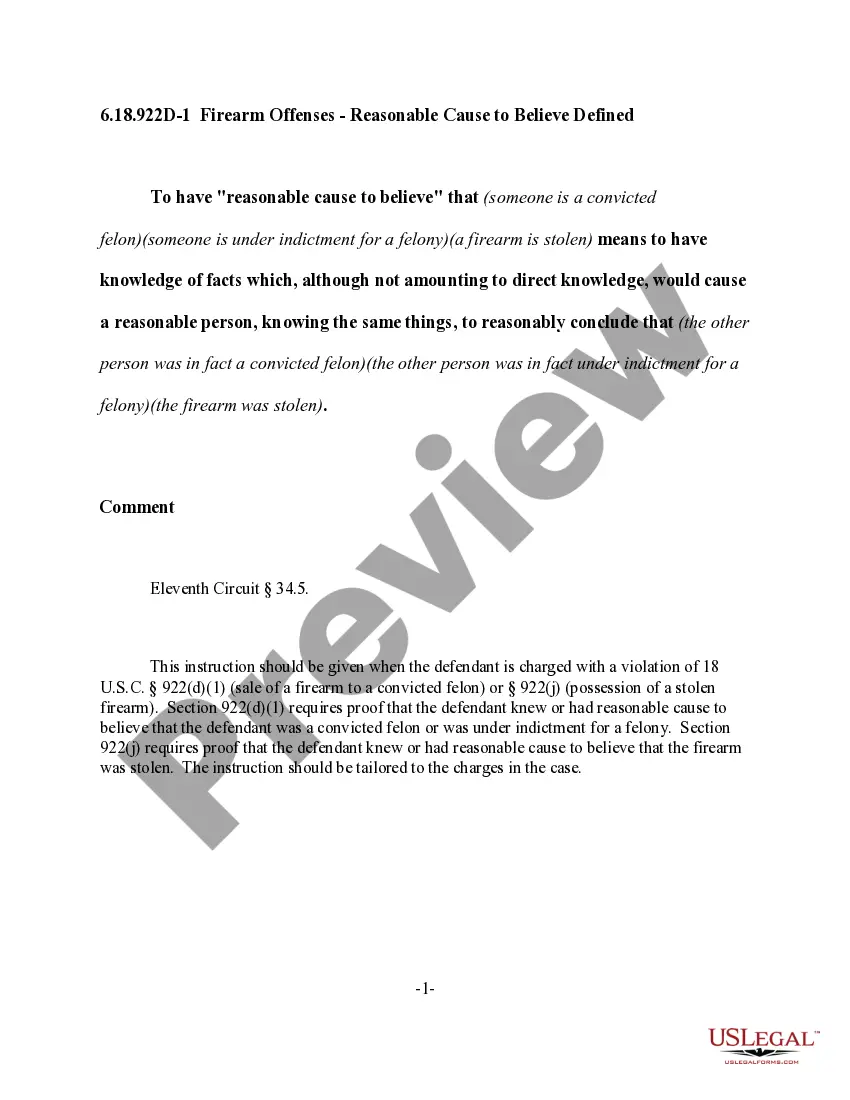
Firearm Offenses - Reasonable Cause to Believe Defined
About this form
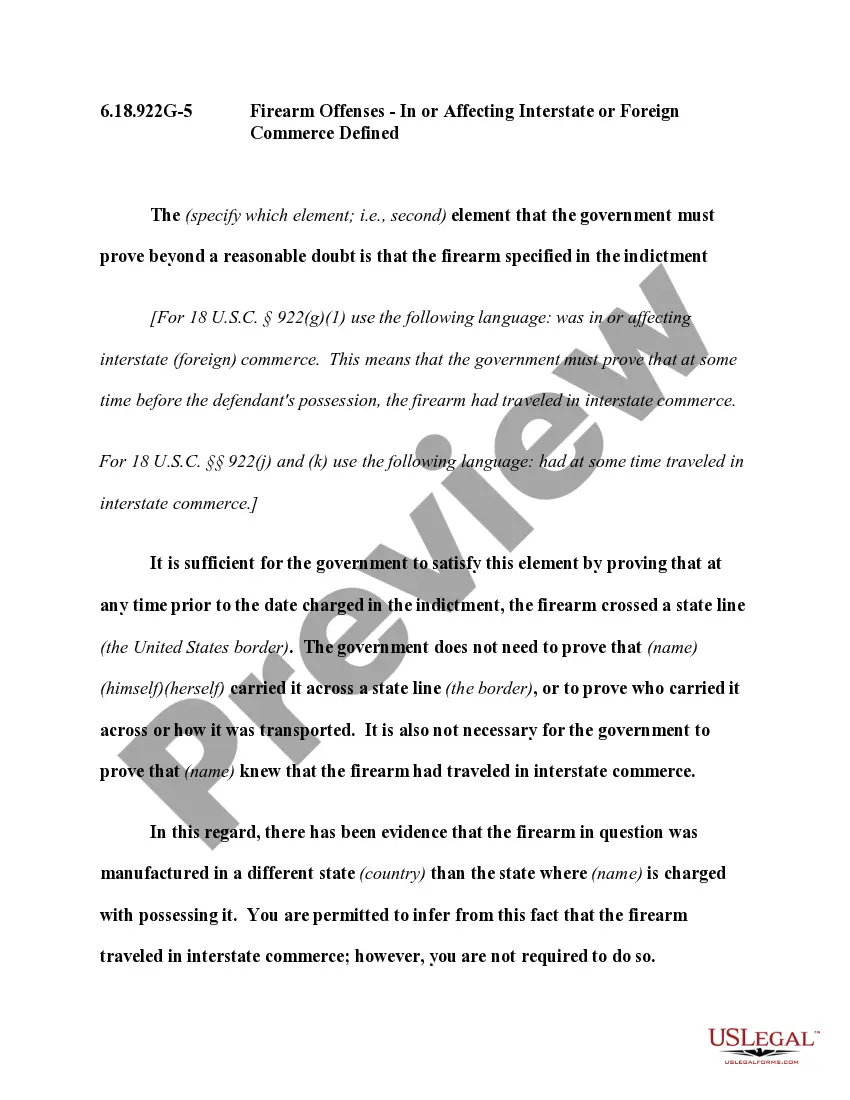
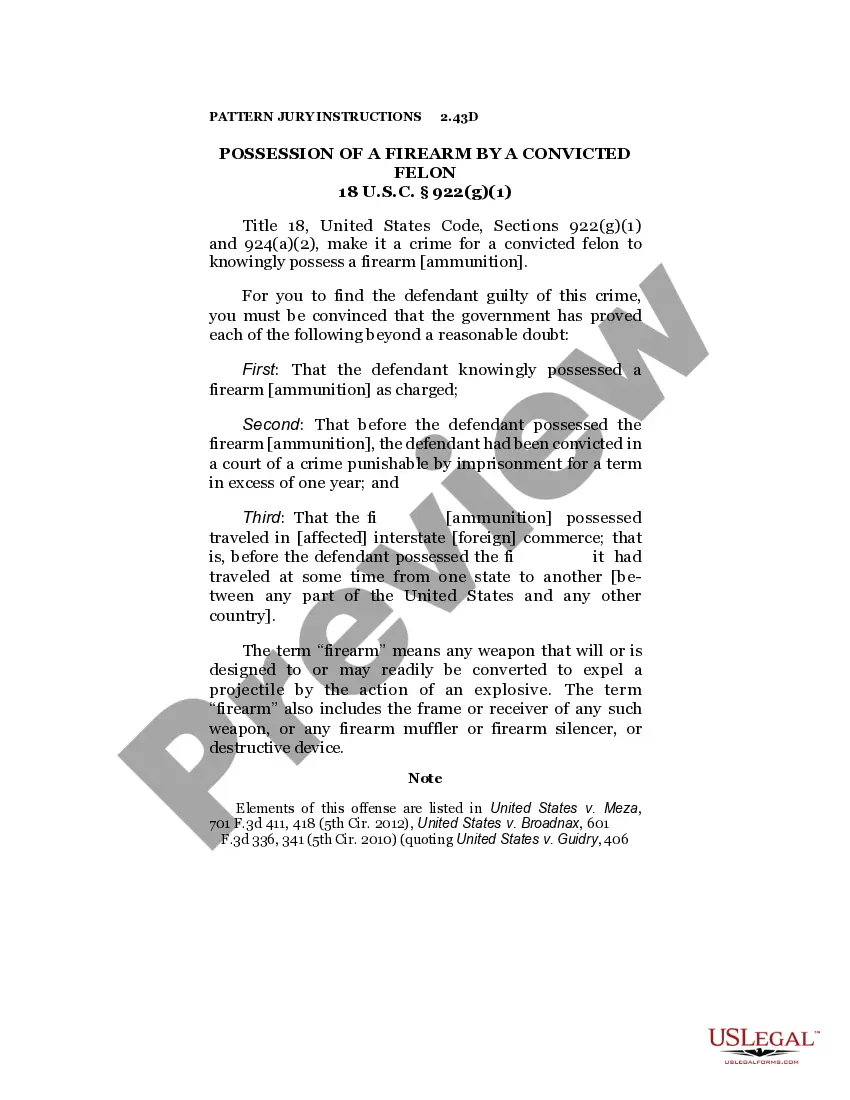
The Firearm Offenses - Reasonable Cause to Believe Defined form is a legal document that clarifies the criteria for establishing reasonable cause in cases involving firearm offenses. This form is particularly important when addressing crimes related to selling firearms to convicted felons or the possession of stolen firearms, as it helps define the necessary understanding of the facts surrounding these situations.
Key components of this form
- Definition of "reasonable cause to believe" regarding a person's felony status or firearm theft.
- Application of this definition to specific charges under U.S. Code Sections 922(d)(1) and 922(j).
- Commentary explaining the usage of this instruction in legal contexts.
When to use this form
This form is typically used in legal proceedings where a defendant is charged with selling a firearm to a convicted felon or possessing a stolen firearm. It serves to provide clarity around the concept of "reasonable cause" in relation to the knowledge and beliefs of the defendant regarding the legality of their actions.
Who needs this form
- Attorneys representing clients in firearm-related criminal cases.
- Defendants facing charges related to firearm offenses.
- Legal professionals seeking to clarify reasonable cause in firearm cases.
Steps to complete this form
- Review the specific charges against the defendant to determine which parts of the form apply.
- Read the definition of "reasonable cause to believe" carefully to understand its implications.
- Identify any facts relevant to the case that support the claim of reasonable cause.
- Apply the appropriate sections of the U.S. Code to the facts of the case as needed.
- Consider seeking legal advice if the case complexities arise.
Notarization requirements for this form
This form does not typically require notarization unless specified by local law. However, it is advisable to confirm specific legal requirements in the relevant jurisdiction.
Get your form ready online
Our built-in tools help you complete, sign, share, and store your documents in one place.
Make edits, fill in missing information, and update formatting in US Legal Forms—just like you would in MS Word.
Download a copy, print it, send it by email, or mail it via USPS—whatever works best for your next step.
Sign and collect signatures with our SignNow integration. Send to multiple recipients, set reminders, and more. Go Premium to unlock E-Sign.
If this form requires notarization, complete it online through a secure video call—no need to meet a notary in person or wait for an appointment.
We protect your documents and personal data by following strict security and privacy standards.

Make edits, fill in missing information, and update formatting in US Legal Forms—just like you would in MS Word.

Download a copy, print it, send it by email, or mail it via USPS—whatever works best for your next step.

Sign and collect signatures with our SignNow integration. Send to multiple recipients, set reminders, and more. Go Premium to unlock E-Sign.

If this form requires notarization, complete it online through a secure video call—no need to meet a notary in person or wait for an appointment.

We protect your documents and personal data by following strict security and privacy standards.
Common mistakes
- Failing to relate the definition of reasonable cause to the specific facts of the case.
- Overlooking the need to tailor the instruction to the unique circumstances of the charges.
- Mistaking reasonable belief for direct knowledge, leading to misinterpretation in legal arguments.
Why complete this form online
- Convenient access to legal definitions and explanations from anywhere.
- Edit and customize the form to fit specific cases and jurisdictions quickly.
- Reliable information drafted by licensed attorneys ensures legal accuracy.
Looking for another form?
Form popularity
FAQ
Title 18, United States Code, Section 922(g) makes it unlawful for certain classes of individuals to ship, transport, possess or receive any firearm or ammunition with the required interstate commerce nexus.
There are many reasons why an applicant may be denied a license or have a license revoked including convictions for the following: Murder, voluntary manslaughter, or involuntary manslaughter by recklessness associated with a firearm. Aggravated assault, stalking, kidnapping, or unlawful restraint.
What is the Average Sentence for a Federal Gun Charge? The most common federal weapons charges are for possessing a firearm by a felon or someone otherwise prohibited from possessing one. Penalties for such crimes range from 10 years to life in prison, but the exact penalty varies based on the precise circumstances.
In ance with 18 PA C.S. §6109, a sheriff may deny a person the right to a License to Carry Firearms if there is reason to believe that the character and reputation of the person is such that they would act in a manner to endanger public safety.
POSSESSION OF A FIREARM OR AMMUNITION BY A PROHIBITED PERSON: 18 USC § 922(g) & (n). Punishable by up to 10 years imprisonment.
However, you must apply for a License to Carry Firearms (LTCF) to carry a concealed weapon in the Keystone State. If you have been convicted of a violent crime that resulted in a felony or a misdemeanor, you are not allowed to purchase a firearm in Pennsylvania.
While the requirements in Pennsylvania are strict enough to require a thorough background check and form submission, the application process is relatively straightforward. As soon as you decide to obtain a license, you can receive one within two months.
Individuals convicted of any felony offense in Pennsylvania are essentially barred from possessing a firearm. Under most circumstances, a convicted felon cannot legally buy or own a gun in Pennsylvania.