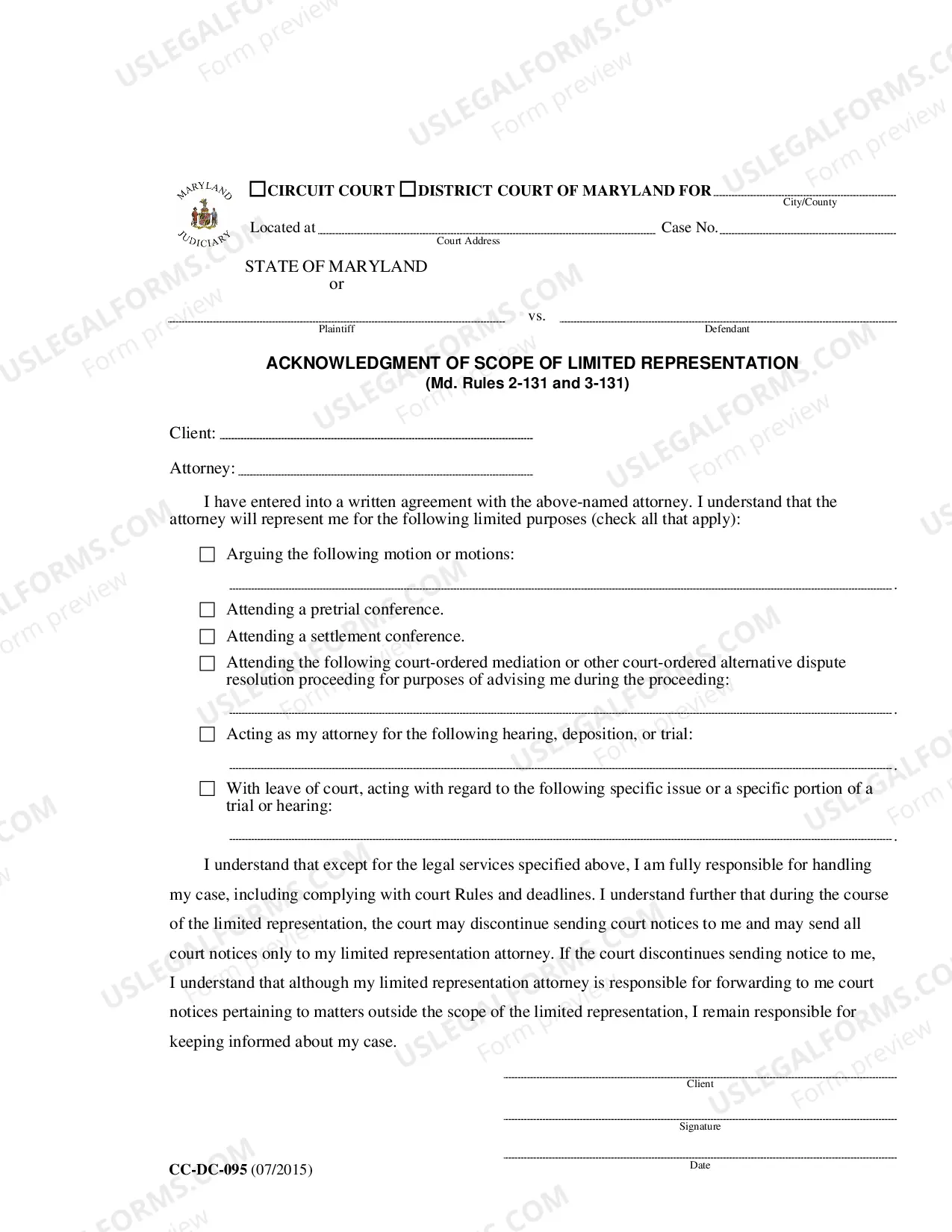
Controlled Substances Offenses - Intent to (Manufacture) (Distribute) Defined
What this document covers
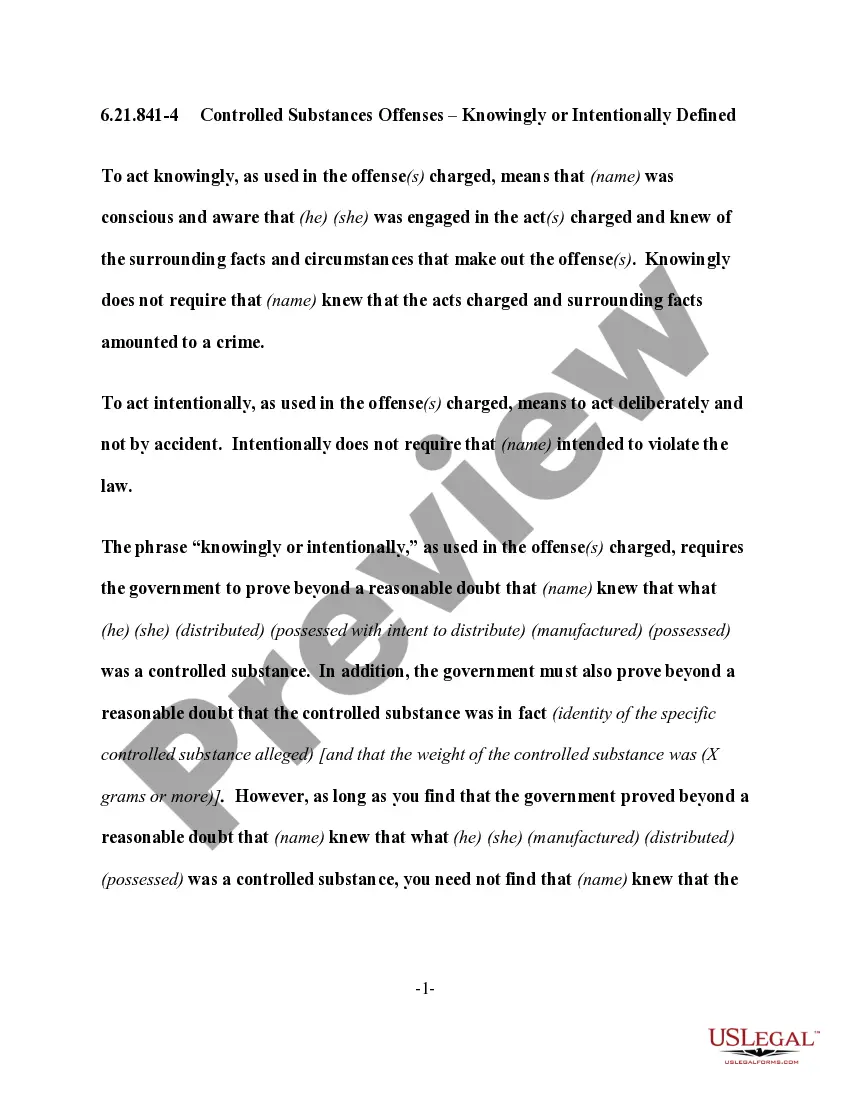
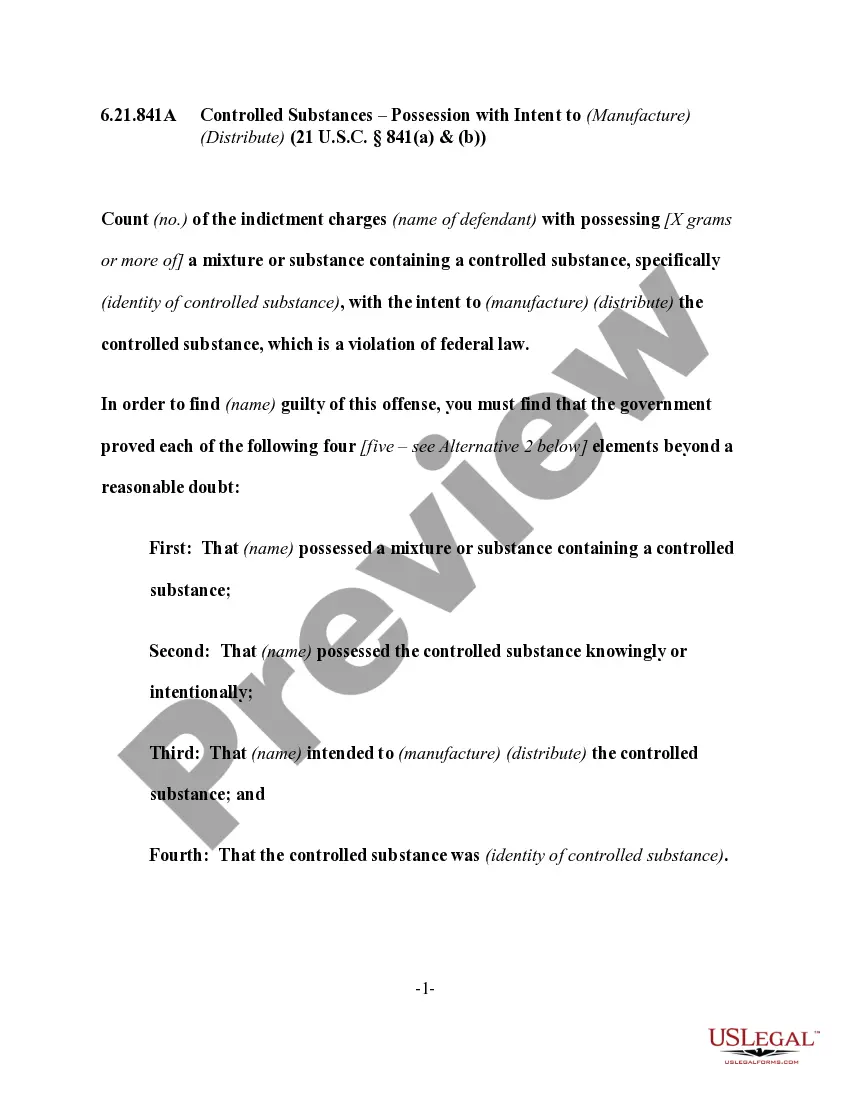
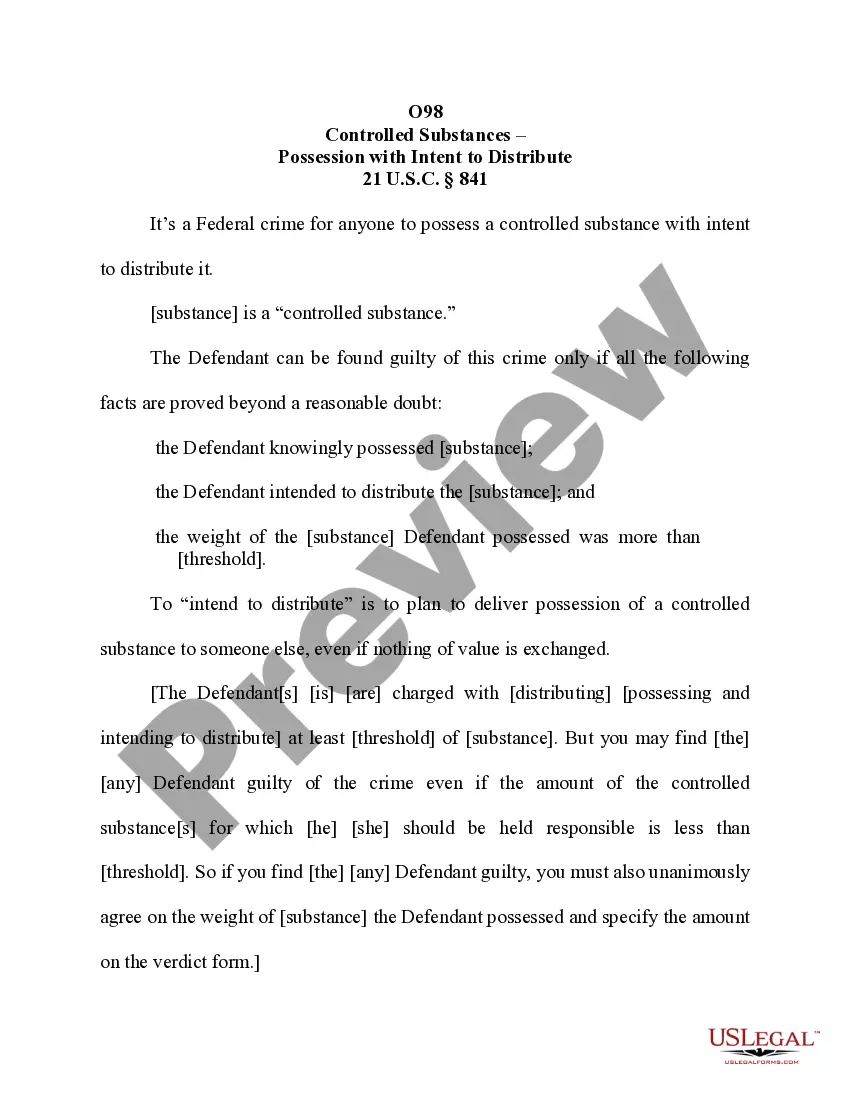
The Controlled Substances Offenses - Intent to (Manufacture) (Distribute) Defined form is a legal document used to establish the criteria for proving an individual's intent to manufacture or distribute controlled substances. This form outlines the specific elements that must be demonstrated in court, distinguishing it from other legal documents related to drug offenses. It serves as a guideline for understanding how intent is defined in drug-related charges.
Key components of this form
- Definition of intent as it relates to manufacturing or distributing controlled substances.
- Criteria for proving intent to manufacture or distribute a controlled substance.
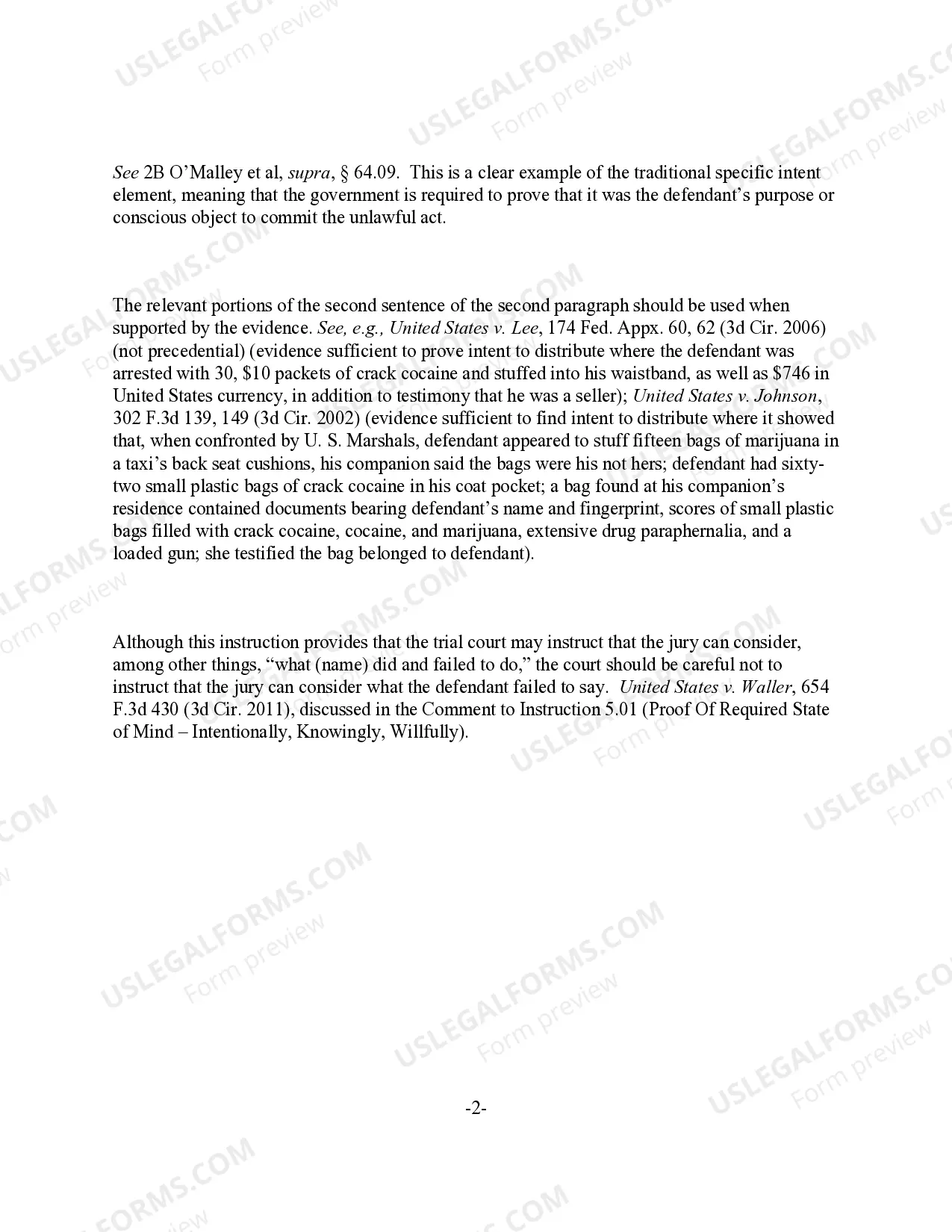
- Factors that may indicate intent, such as quantity, packaging, and surrounding circumstances.
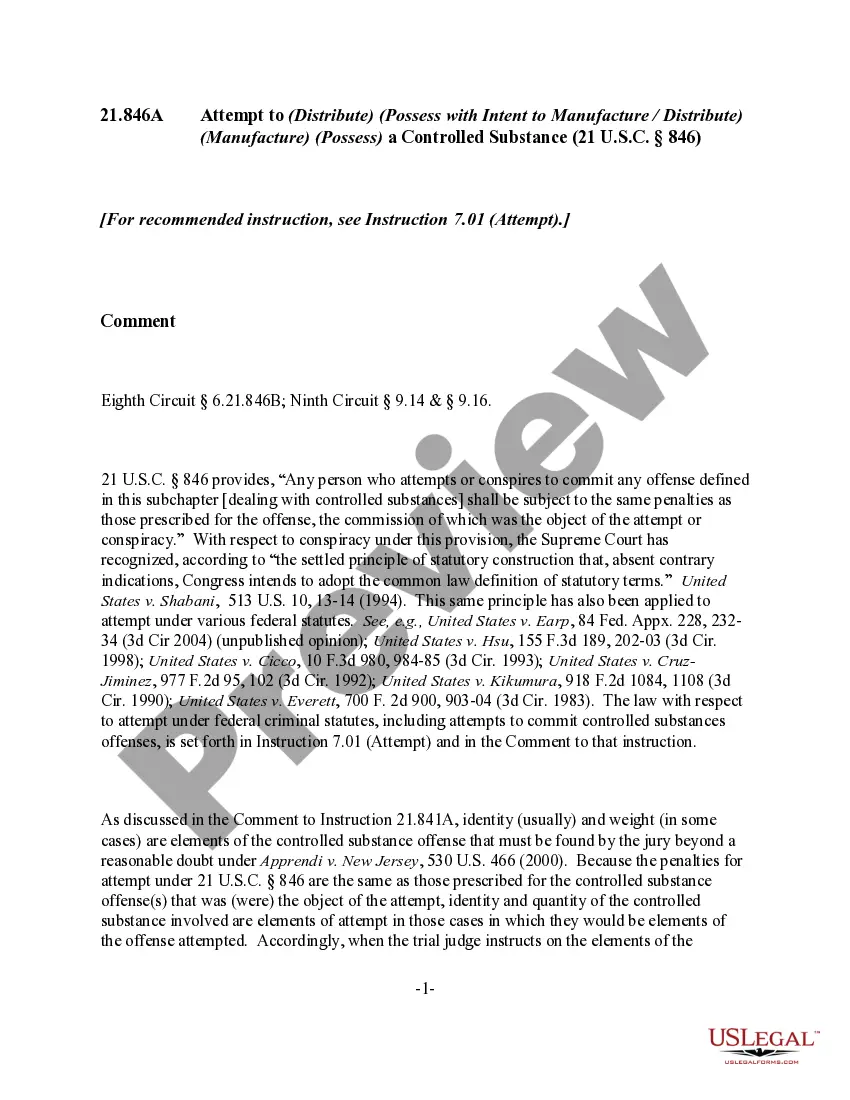
- Relevant case law references and precedents that clarify the intent element.
When this form is needed
This form is necessary when facing charges related to the possession of controlled substances with the intent to manufacture or distribute. It is relevant in situations such as arrests involving controlled substances, where proving the defendant's intent plays a crucial role in the outcome of the case. Use this form to prepare for legal proceedings or to understand the charges better.
Intended users of this form
- Individuals facing criminal charges related to controlled substances.
- Defendants or their legal representatives seeking clarity on the legal definitions of intent.
- Attorneys handling cases involving drug offenses who need to prepare arguments based on intent.
Instructions for completing this form
- Identify the defendant's name as listed in the indictment.
- Specify the charges related to intent to manufacture or distribute controlled substances.
- Provide evidence details that may illustrate intent, such as quantity and packaging.
- Refer to relevant case law that may support arguments concerning intent.
- Ensure completeness and accuracy to facilitate proper legal proceedings.
Does this document require notarization?
In most cases, this form does not require notarization. However, some jurisdictions or signing circumstances might. US Legal Forms offers online notarization powered by Notarize, accessible 24/7 for a quick, remote process.
Get your form ready online
Our built-in tools help you complete, sign, share, and store your documents in one place.
Make edits, fill in missing information, and update formatting in US Legal Forms—just like you would in MS Word.
Download a copy, print it, send it by email, or mail it via USPS—whatever works best for your next step.
Sign and collect signatures with our SignNow integration. Send to multiple recipients, set reminders, and more. Go Premium to unlock E-Sign.
If this form requires notarization, complete it online through a secure video call—no need to meet a notary in person or wait for an appointment.
We protect your documents and personal data by following strict security and privacy standards.

Make edits, fill in missing information, and update formatting in US Legal Forms—just like you would in MS Word.

Download a copy, print it, send it by email, or mail it via USPS—whatever works best for your next step.

Sign and collect signatures with our SignNow integration. Send to multiple recipients, set reminders, and more. Go Premium to unlock E-Sign.

If this form requires notarization, complete it online through a secure video call—no need to meet a notary in person or wait for an appointment.

We protect your documents and personal data by following strict security and privacy standards.
Common mistakes
- Failing to clearly define intent based on evidence.
- Using irrelevant case law that does not apply to the specific charges.
- Neglecting to provide supporting documents or evidence that demonstrate intent.
Why use this form online
- Convenience of accessing legal forms from any location at any time.
- Editability to customize the form for individual cases before downloading.
- Reliability of having forms drafted by licensed attorneys ensuring legal compliance.
Legal use & context
- This form assists in outlining the intent element under drug manufacturing and distribution laws.
- It serves as a crucial document for defense in drug-related criminal cases.
- Understanding intent as a specific legal concept can be critical in determining the outcome of prosecution.
Summary of main points
- The form is essential for establishing intent in drug-related offenses.
- Users should be aware of the evidence required to support claims of intent.
- Understanding the criteria for intent can significantly impact legal strategies.
Looking for another form?
Form popularity
FAQ
The Controlled Substances Act (CSA) places all substances which were in some manner regulated under existing federal law into one of five schedules. This placement is based upon the substance's medical use, potential for abuse, and safety or dependence liability.
§801. Congressional findings and declarations: controlled substances. The Congress makes the following findings and declarations: (1) Many of the drugs included within this subchapter have a useful and legitimate medical purpose and are necessary to maintain the health and general welfare of the American people.
A drug or other substance that is tightly controlled by the government because it may be abused or cause addiction. The control applies to the way the substance is made, used, handled, stored, and distributed. Controlled substances include opioids, stimulants, depressants, hallucinogens, and anabolic steroids.
(6) The term "controlled substance" means a drug or other substance, or immediate precursor, included in schedule I, II, III, IV, or V of part B of this subchapter.
Penalties for Possession with Intent to Distribute or Sell In Utah, possession of a controlled substance with intent to distribute or sell is generally charged as a second degree felony, carrying a possible prison term of one to 15 years and up to $10,000 in fines.
A controlled substance is a regulated drug that has been placed on a schedule of controlled substances by the State of California. Some of these are always illegal, such as cocaine, heroin, or meth. Others are prescription drugs, such as painkillers like morphine and oxycodone.
The term ?manufacture? means the production, preparation, propagation, compounding, or processing of a drug or other substance, either directly or indirectly or by extraction from substances of natural origin, or independently by means of chemical synthesis or by a combination of extraction and chemical synthesis, and
It is unlawful for any person knowingly or intentionally to possess a controlled substance unless the substance was obtained directly from, or pursuant to, a valid prescription or order of a practitioner while acting in the course of his professional practice, or except as otherwise authorized by the Drug Control Act (