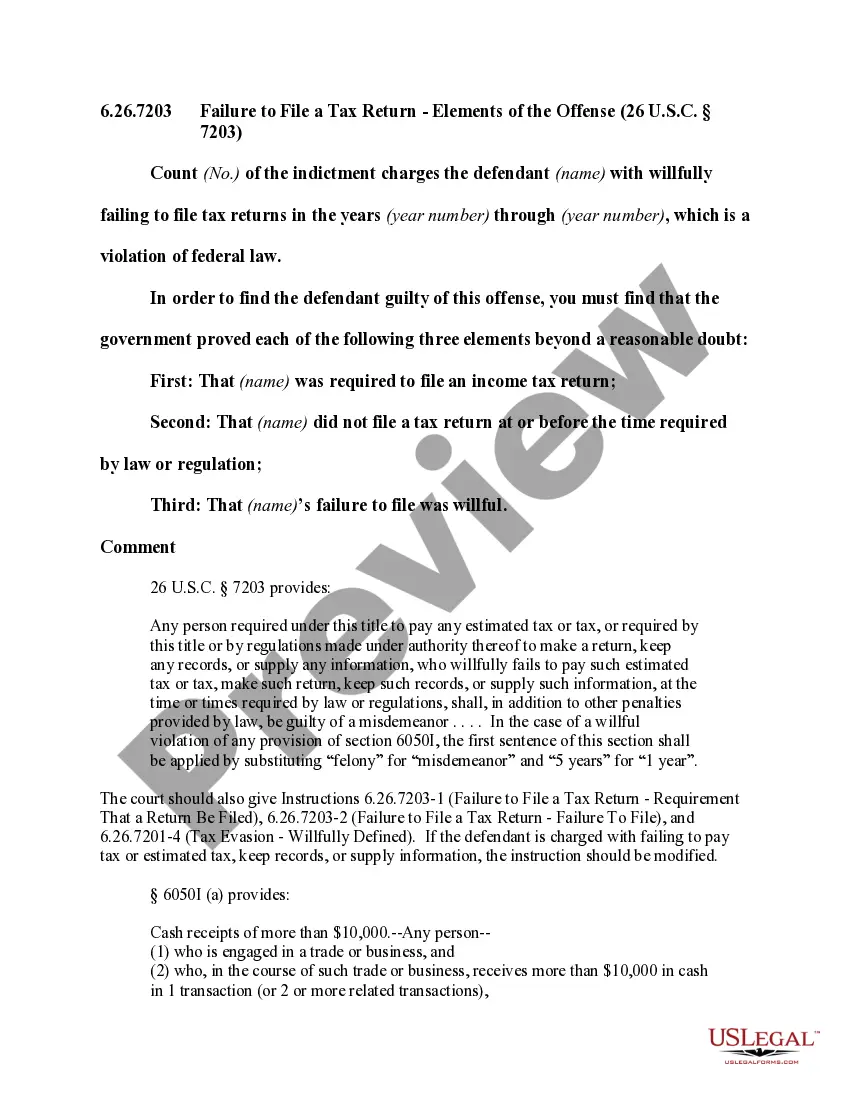
Failure to File a Tax Return - Elements of the Offense (26 U.S.C. Sec. 7203)
What is this form?
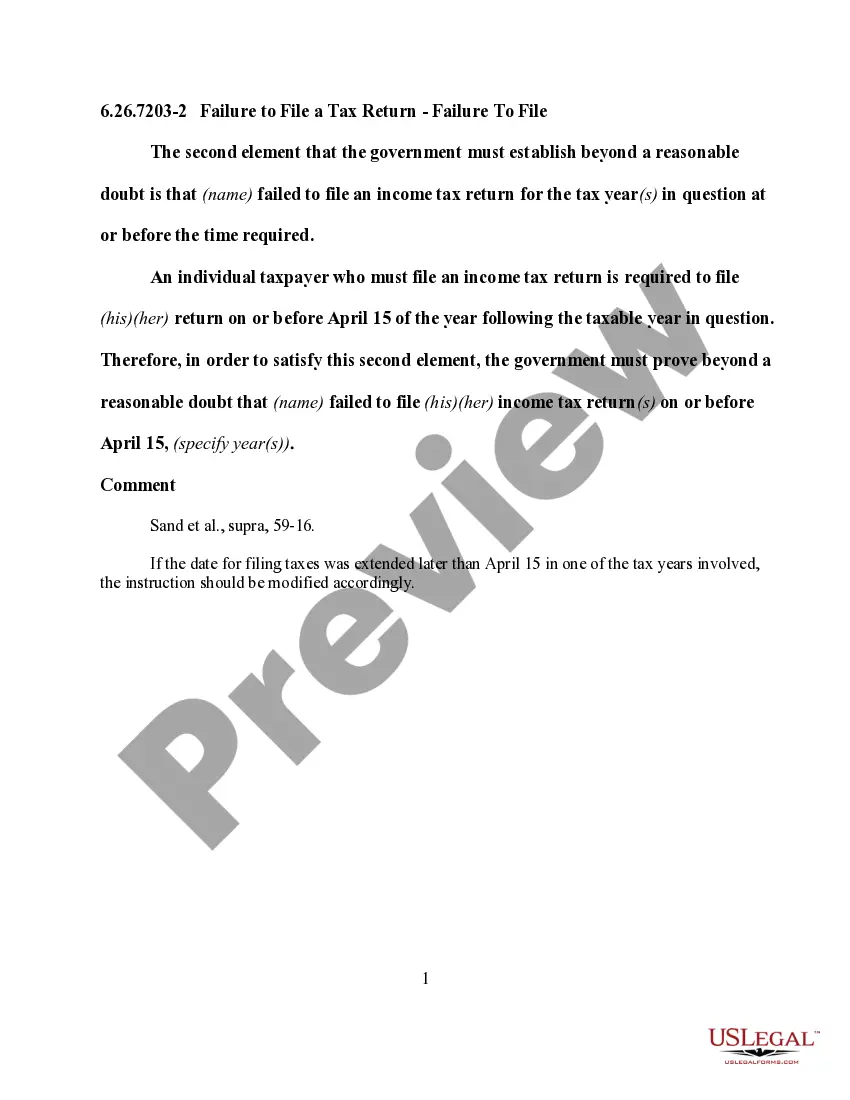
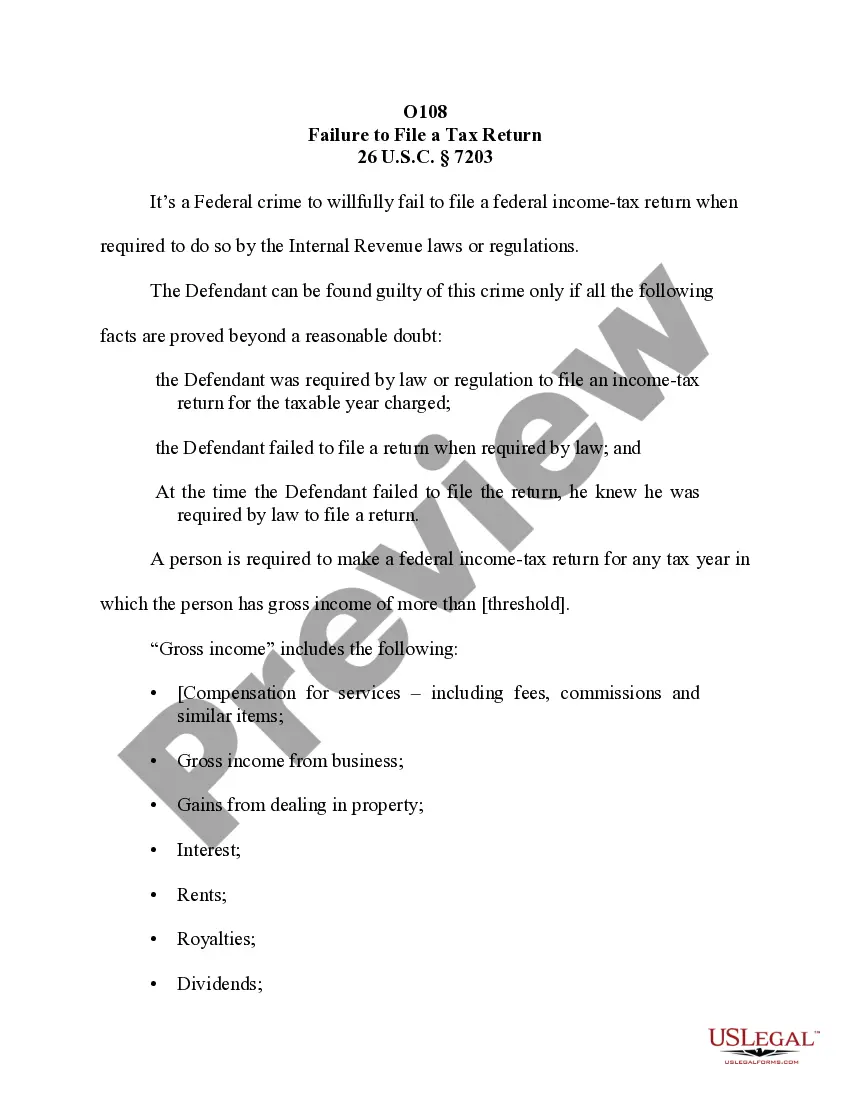
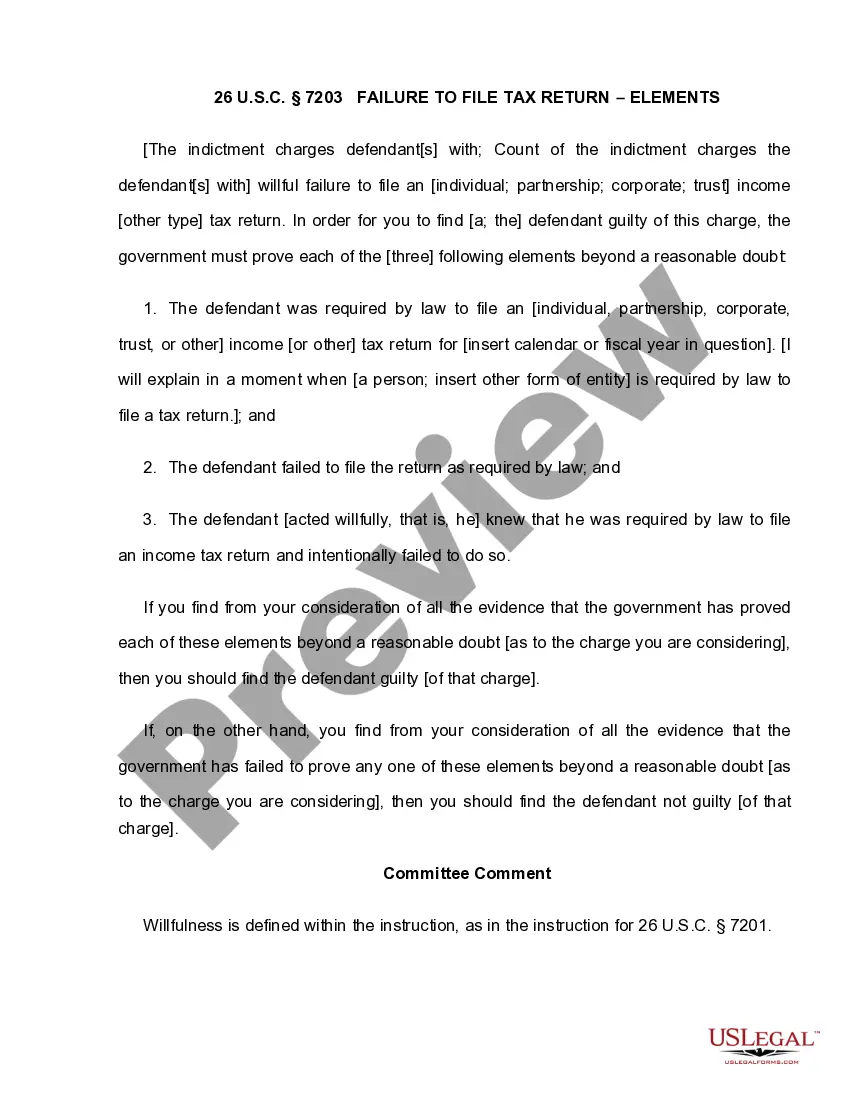
The Failure to File a Tax Return - Elements of the Offense form addresses the legal implications for individuals who willfully neglect to file their income tax returns. This form outlines the necessary elements to prove the offense, distinguishing it from other tax-related offenses like tax evasion.
Key components of this form
- Details the three essential elements that constitute the offense of failing to file a tax return.
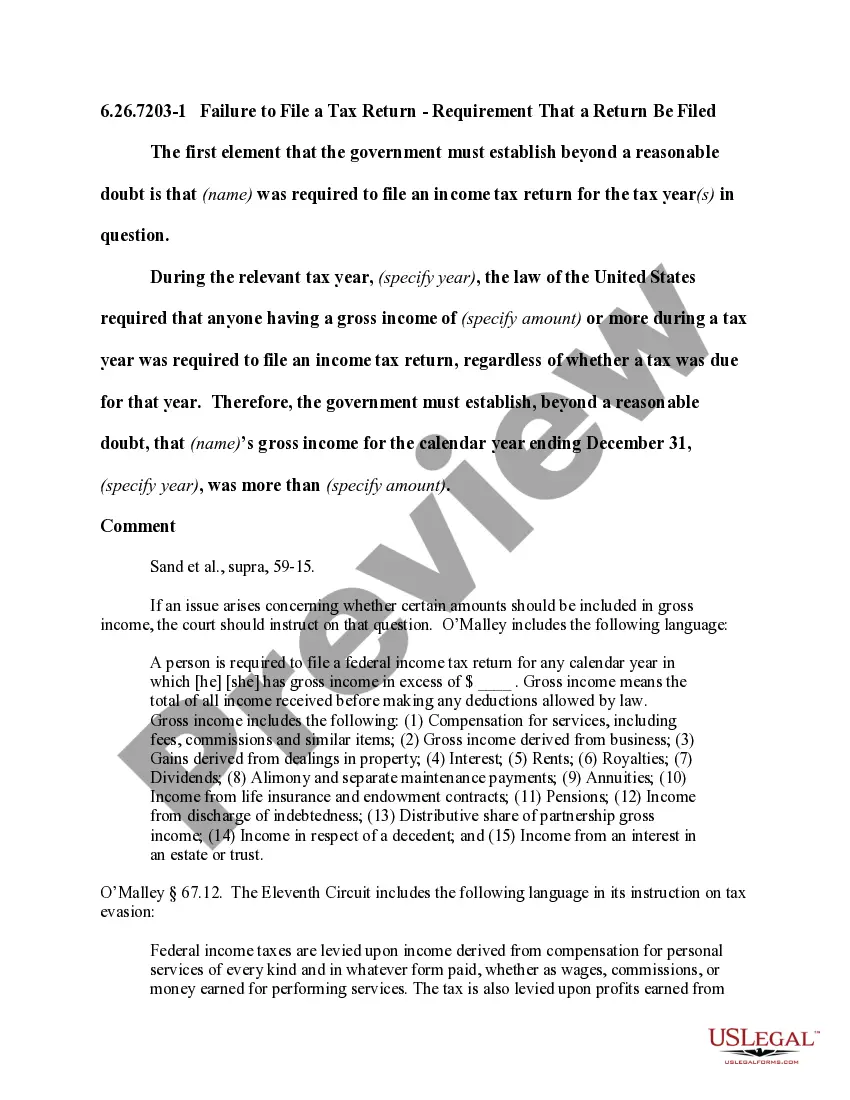
- Specifies the legal requirement to file an income tax return.
- Clarifies the definition of willfulness in the context of failing to file.
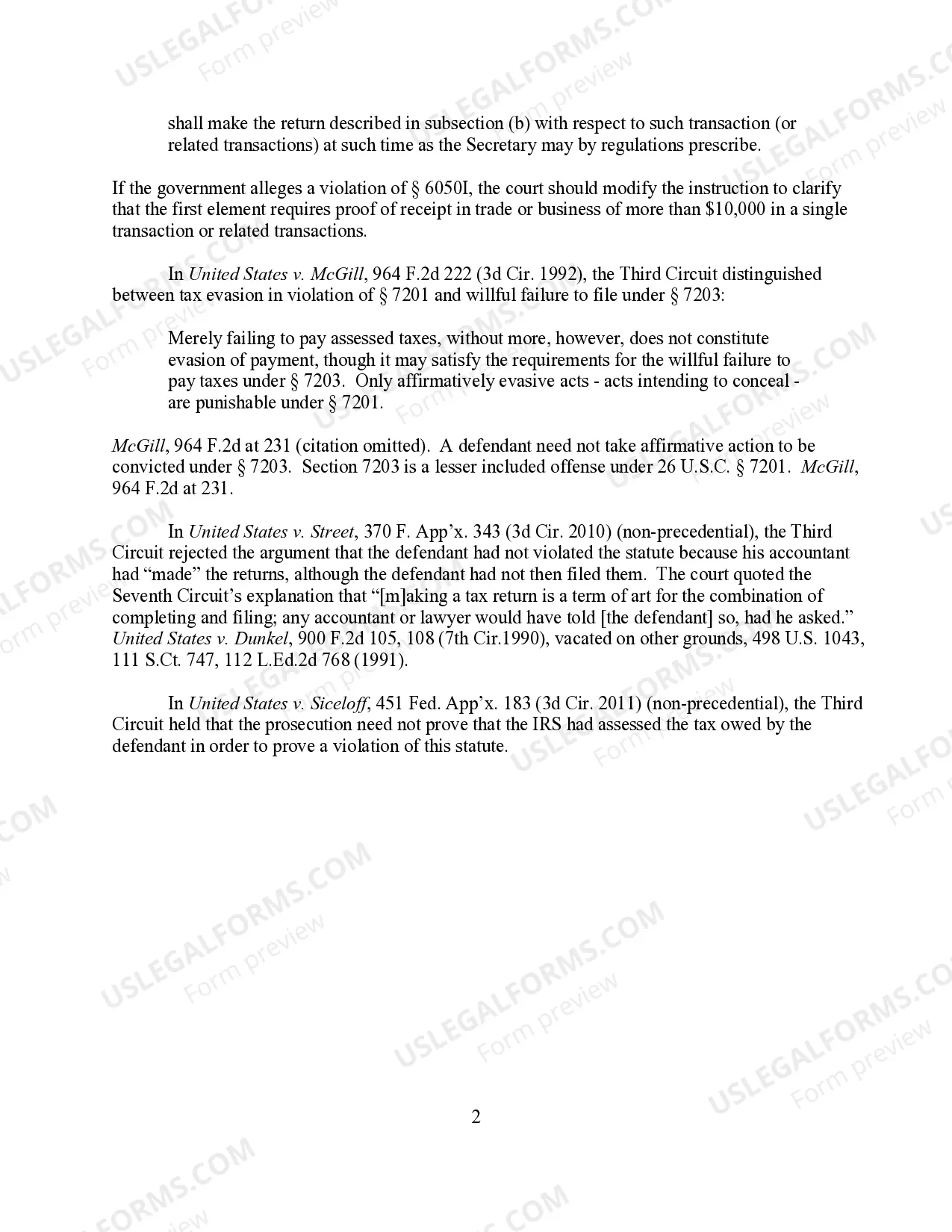
- Includes references to applicable legal citations and relevant case law.
- Provides elements related to violations under section 6050I concerning cash transactions over $10,000.

When this form is needed
This form is necessary when an individual is charged with the willful failure to file tax returns with the Internal Revenue Service (IRS). It is specifically used in legal contexts where the government seeks to prove that the failure to file was intentional and not merely a mistake or oversight.
Who should use this form
- Defendants charged with willfully failing to file income tax returns.
- Individuals seeking to understand the legal requirements associated with tax return filing and potential offenses under federal law.
- Legal professionals representing clients in tax-related criminal cases.
Completing this form step by step
- Identify the defendant's name and the specific tax years in question.
- Confirm that the individual was required to file income tax returns for those years.
- Document the failure to file the required tax returns by the due date established by law.
- Establish and provide evidence that the failure to file was willful, not accidental.
Does this document require notarization?
In most cases, this form does not require notarization. However, some jurisdictions or signing circumstances might. US Legal Forms offers online notarization powered by Notarize, accessible 24/7 for a quick, remote process.
Get your form ready online
Our built-in tools help you complete, sign, share, and store your documents in one place.
Make edits, fill in missing information, and update formatting in US Legal Forms—just like you would in MS Word.
Download a copy, print it, send it by email, or mail it via USPS—whatever works best for your next step.
Sign and collect signatures with our SignNow integration. Send to multiple recipients, set reminders, and more. Go Premium to unlock E-Sign.
If this form requires notarization, complete it online through a secure video call—no need to meet a notary in person or wait for an appointment.
We protect your documents and personal data by following strict security and privacy standards.

Make edits, fill in missing information, and update formatting in US Legal Forms—just like you would in MS Word.

Download a copy, print it, send it by email, or mail it via USPS—whatever works best for your next step.

Sign and collect signatures with our SignNow integration. Send to multiple recipients, set reminders, and more. Go Premium to unlock E-Sign.

If this form requires notarization, complete it online through a secure video call—no need to meet a notary in person or wait for an appointment.

We protect your documents and personal data by following strict security and privacy standards.
Typical mistakes to avoid
- Assuming that failing to pay taxes equals failing to file taxes.
- Not documenting efforts made to file returns to demonstrate intent.
- Confusing tax evasion with willful failure to file, which has different legal implications.
Benefits of using this form online
- Convenient access to legal forms prepared by licensed attorneys.
- Immediate download and customizable fillable options for ease of use.
- Secure storage of completed forms for future reference and compliance.
Legal use & context
- This form is legally recognized under federal law when addressing tax return filing violations.
- Provides guidelines for legal representation and defense in tax-related charges.
- Is subject to specific interpretations and applications as outlined in federal statutes and case law.
Looking for another form?
Form popularity
FAQ
You only need to file Schedule 3 if you're claiming any of the tax credits or made any of the tax payments mentioned above. Let an expert do your taxes for you, start to finish with TurboTax Live Full Service. Or you can get your taxes done right, with experts by your side with TurboTax Live Assisted.
Section 7201 creates two offenses: (a) the willful attempt to evade or defeat the assessment of a tax, and (b) the willful attempt to evade or defeat the payment of a tax. Sansone v. United States, 380 U.S. 343, 354 (1965).
It may be beneficial for shareholders to complete and retain Form 7203 even for years it is not required to be filed, as this will ensure their bases are consistently maintained year after year.
Most Common Charge under 7203 is Failure to File a Return The charge most often brought under Section 7203 is the failure to make (file) a return. A number of cases are also brought under Section 7203 for failure to pay a tax. Note that the attempt to evade or defeat the payment of a tax is a felony under Section 7201.
Exceptions to Filing Form 7203 Shareholders only obtain basis from acting as a guarantee or in a similar capacity to the extent the shareholder makes a payment pursuant to the guarantee.? So typically, shareholder loan basis is only obtained by the shareholder making direct loans to the entity.
Form 7203 is used to calculate any limits on the deductions you can take for your share of an S corporation's deductions, credits, and other items. For example, your deductible loss generally can't be greater than the cost of your investment (stock and loans) in the S-Corp.
7203 the willful failure to file a return, supply information, or pay tax at the time or times required by law, are felonies and carry a penalty of imprisonment for up to 3 years, a $250,000 fine for individuals or a $500,000 fine for corporations, or both, and reimbursement to the federal government to cover the costs
Failing to include Form 7203 on a tax return in future years may result in the IRS disallowing any losses reported on the Schedule K-1 (Form 1120-S) or subject the taxpayer to a request for the form.