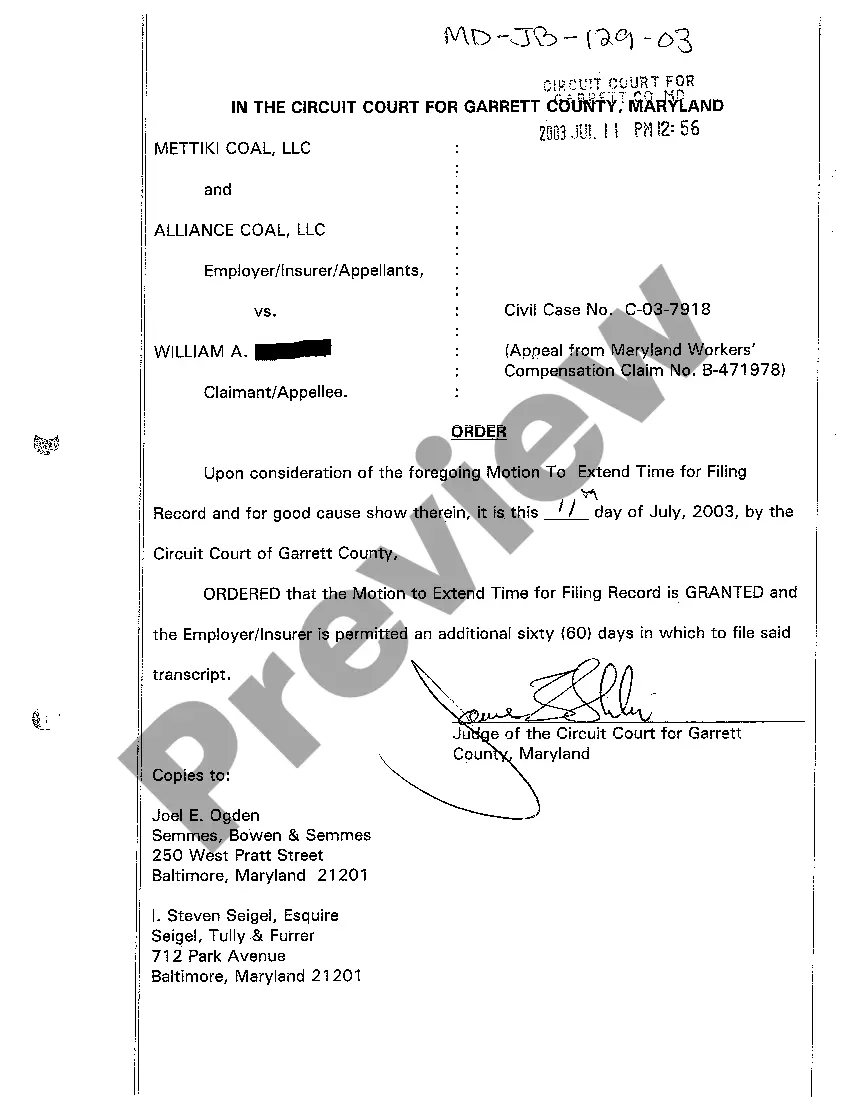
Accomplice Liability; Aiding and Abetting
Overview of this form
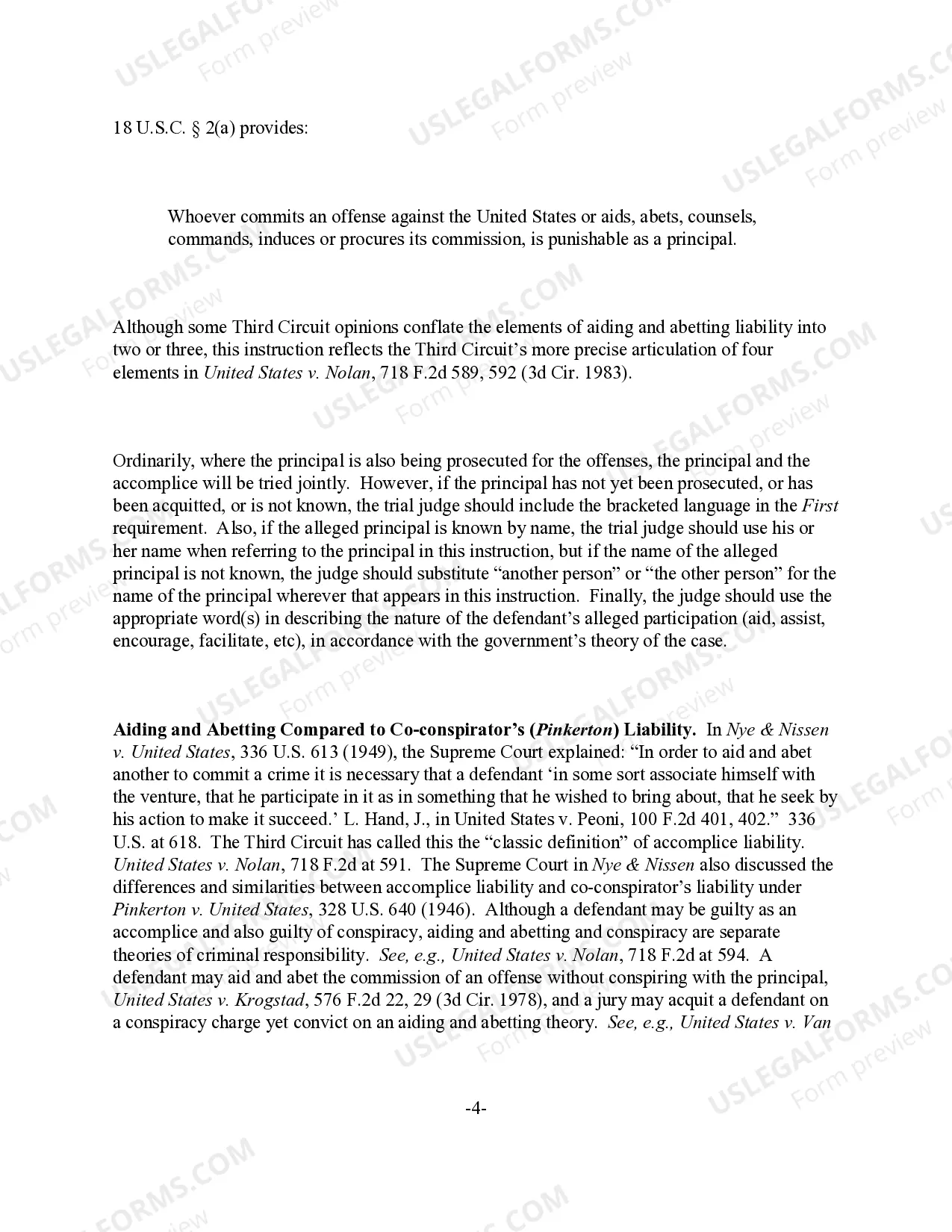
The Accomplice Liability; Aiding and Abetting form is a legal document that outlines the conditions under which a person can be held liable for aiding or abetting another in the commission of a crime. This form is distinct from other legal forms as it specifically addresses the concept of accomplice liability under federal law, defined in 18 U.S.C. § 2(a). It clarifies the intent and actions required for someone to be considered an accomplice in a criminal offense.
Form components explained
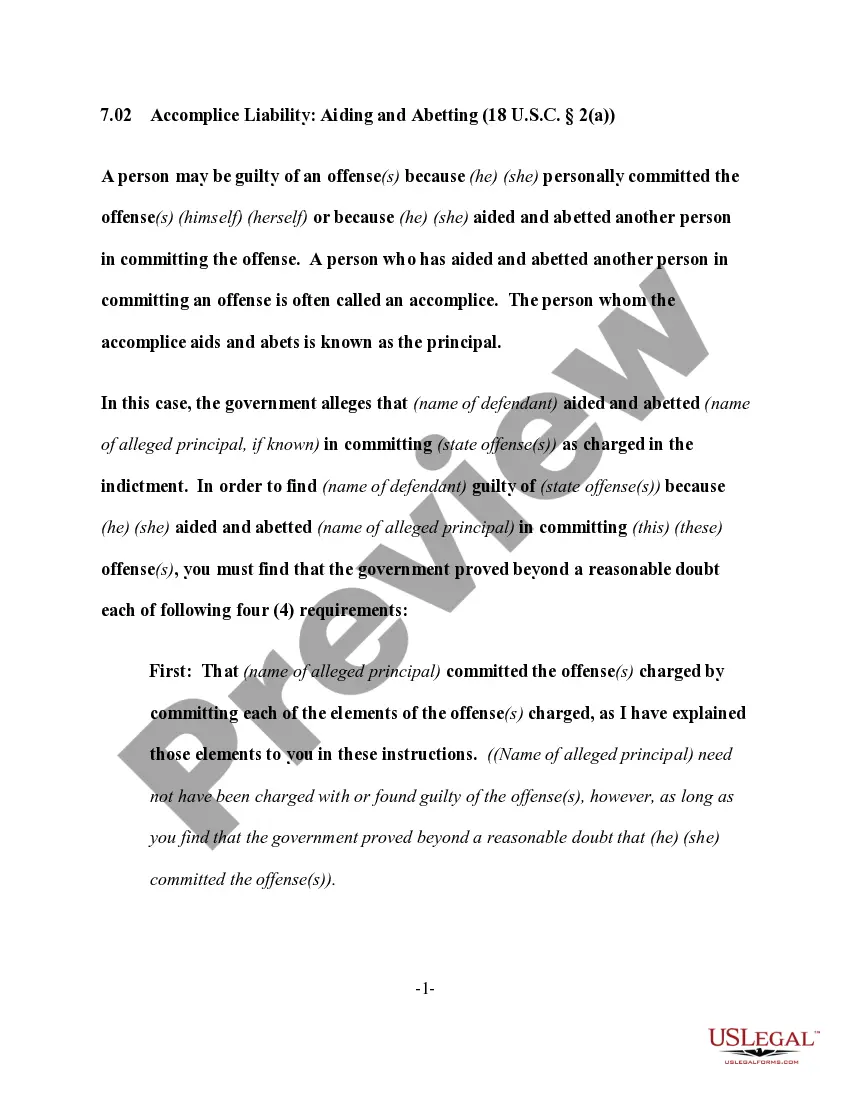
- Definition of accomplice liability: Clarifies what it means to aid and abet a crime.
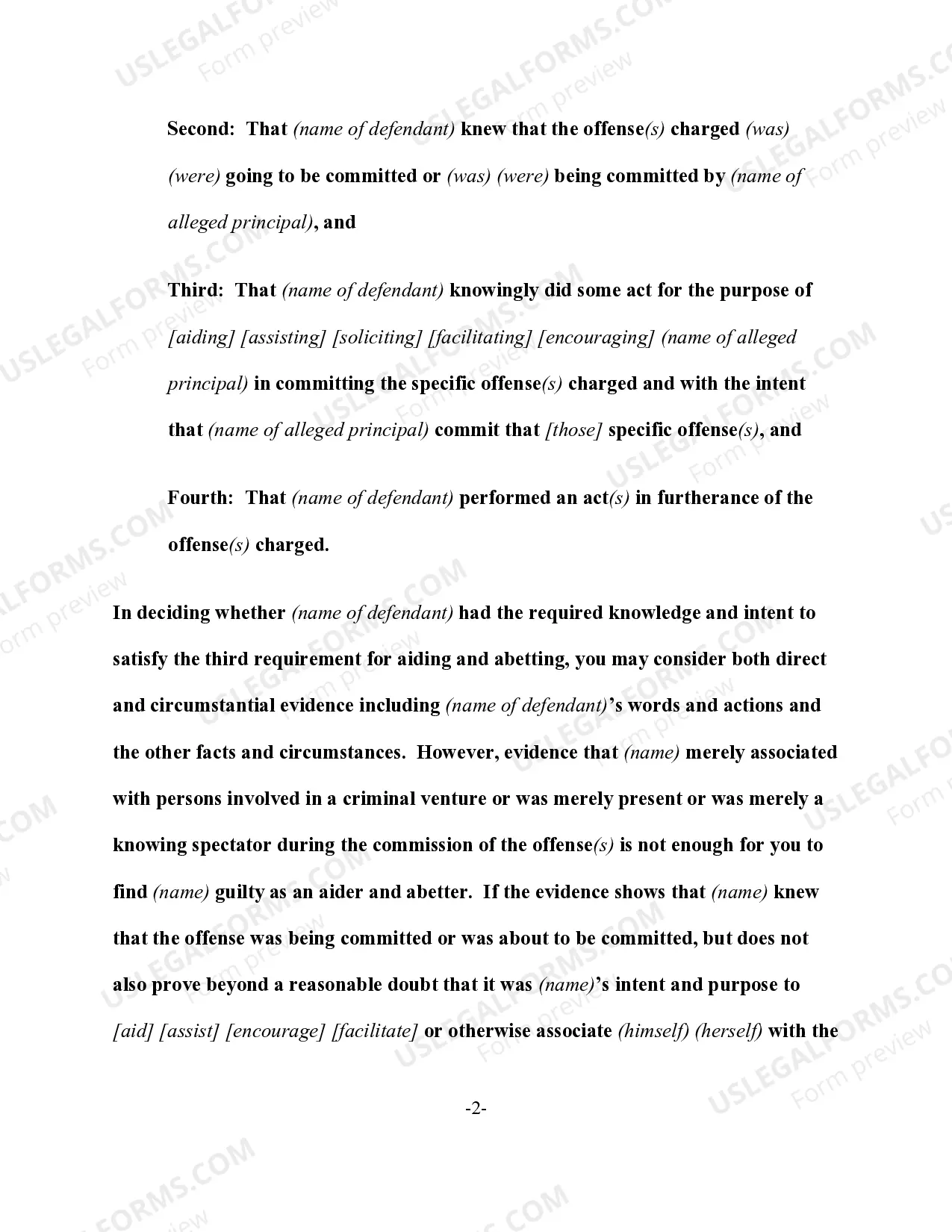
- Four essential requirements: Lists the criteria that must be met for a conviction on aiding and abetting.
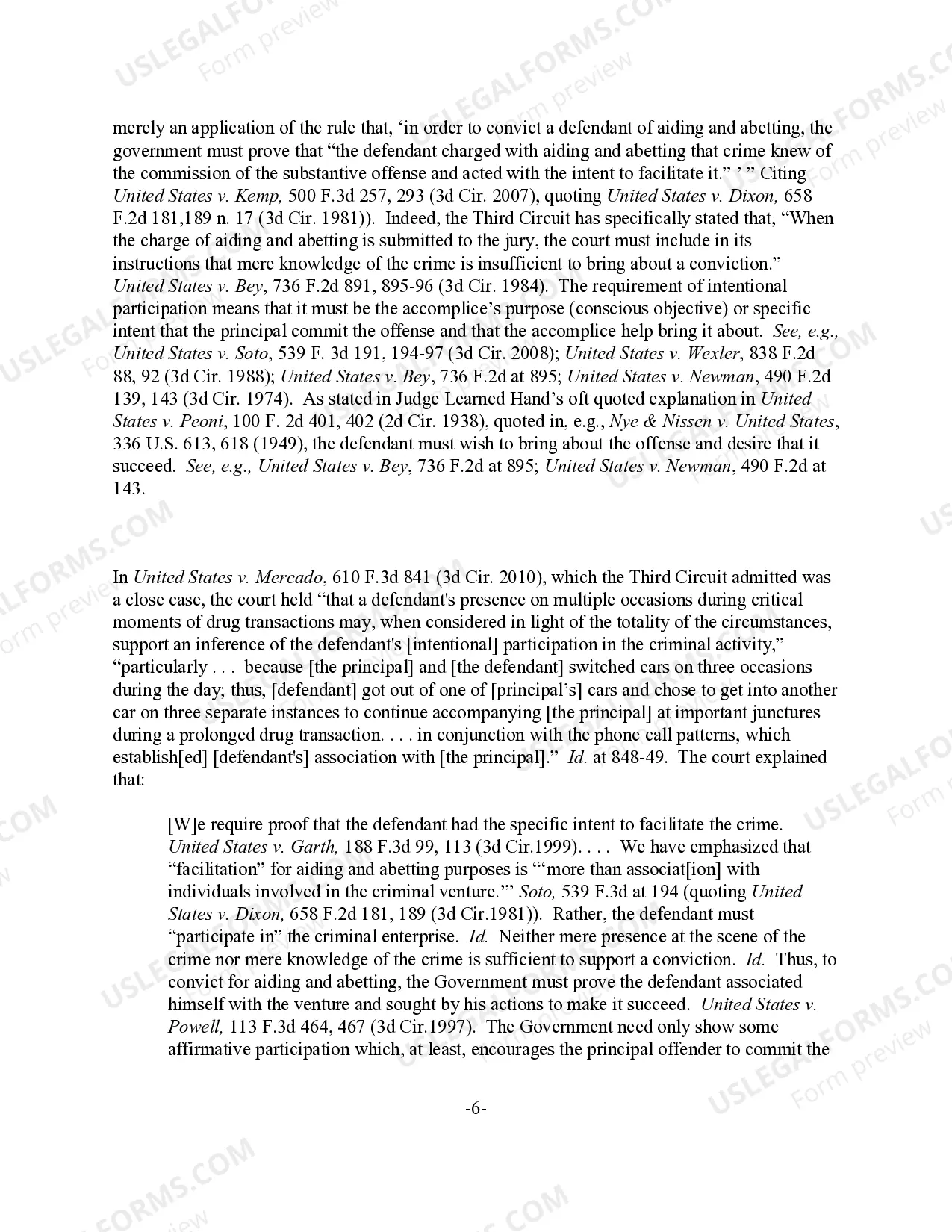
- Evidence considerations: Discusses types of evidence (direct and circumstantial) that support claims of complicity.
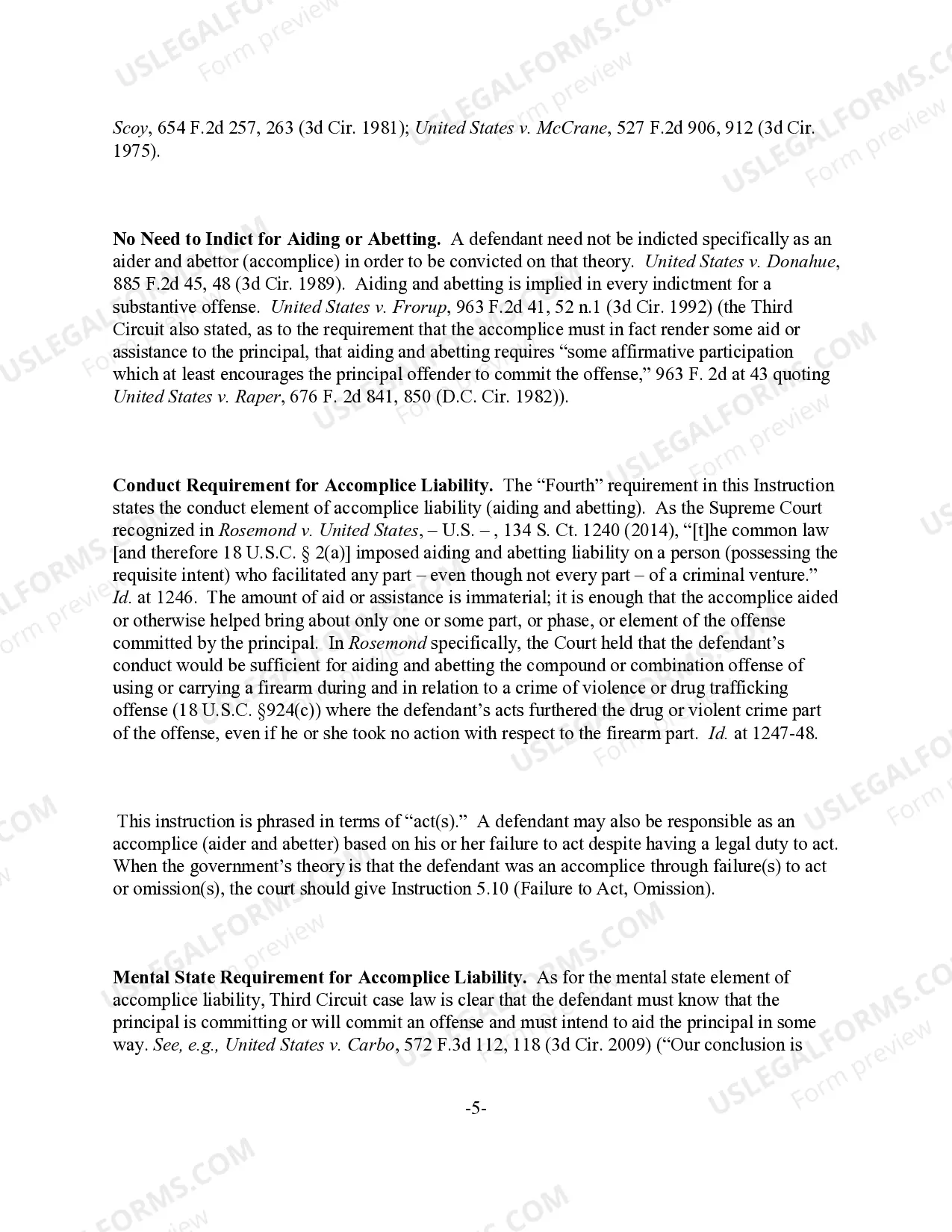
- Mental state requirements: Details the intent required for liability, emphasizing knowledge and purpose.
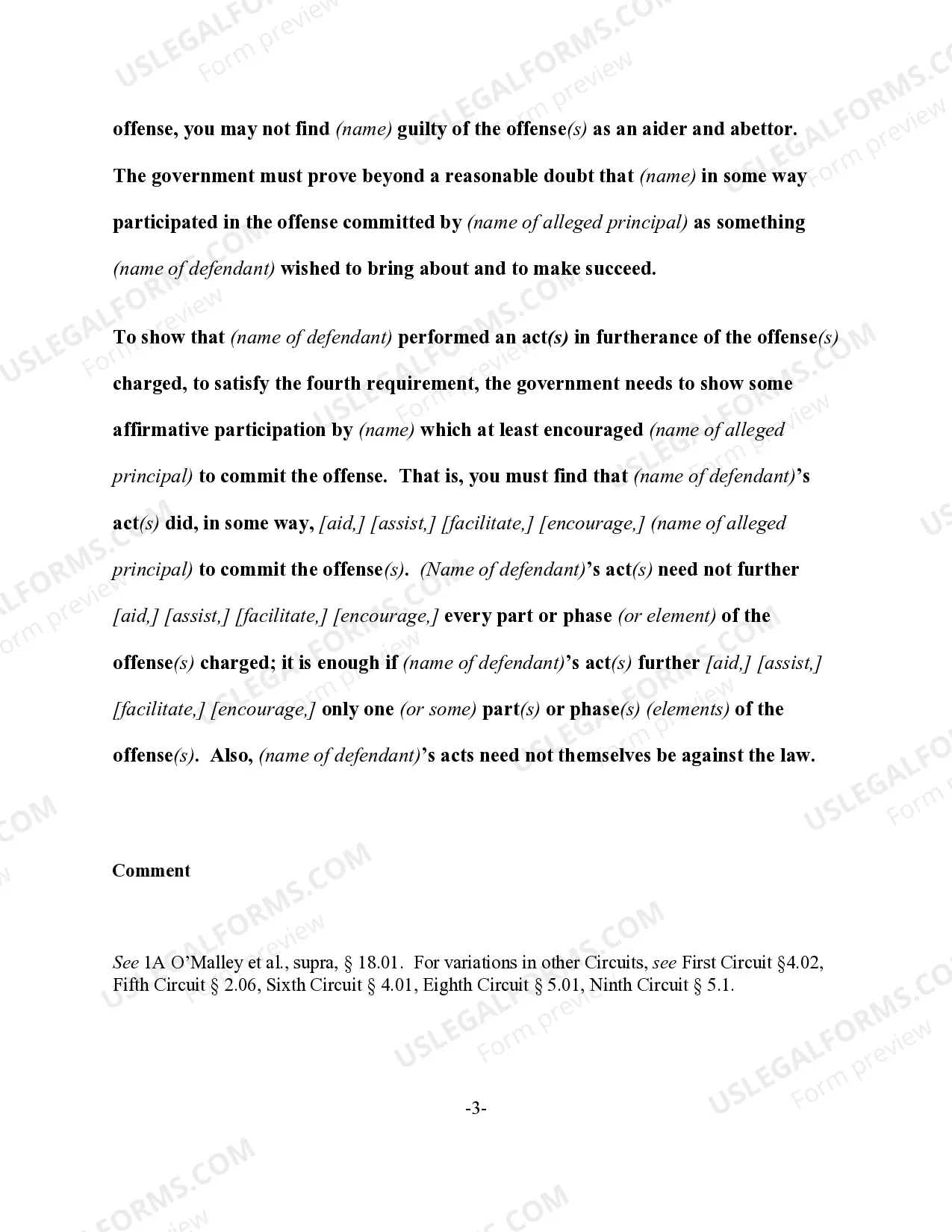
- Conduct requirements: Describes the actions necessary to be deemed an aider or abettor in a crime.
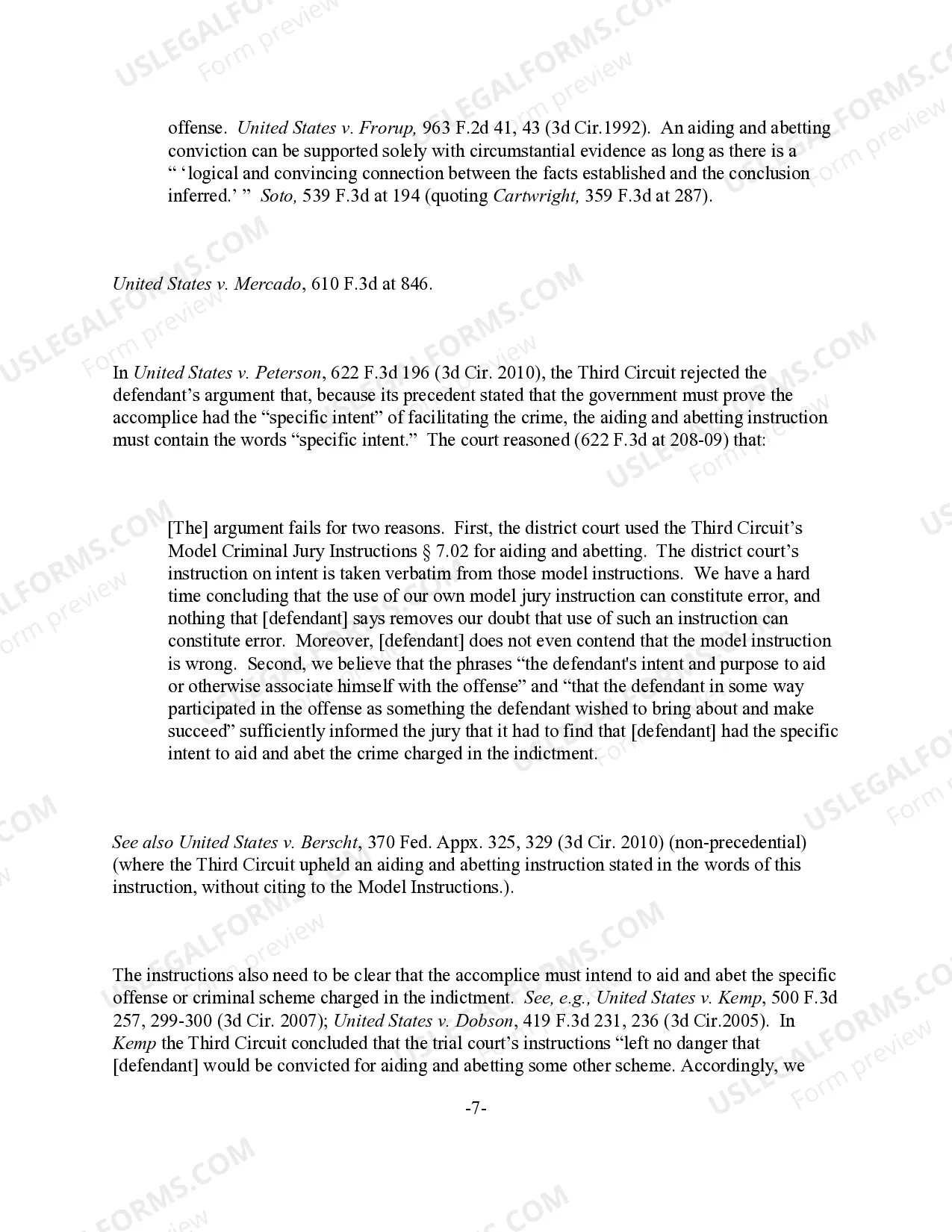
- Variations across circuits: Provides insight into how different jurisdictions may interpret aiding and abetting rules.

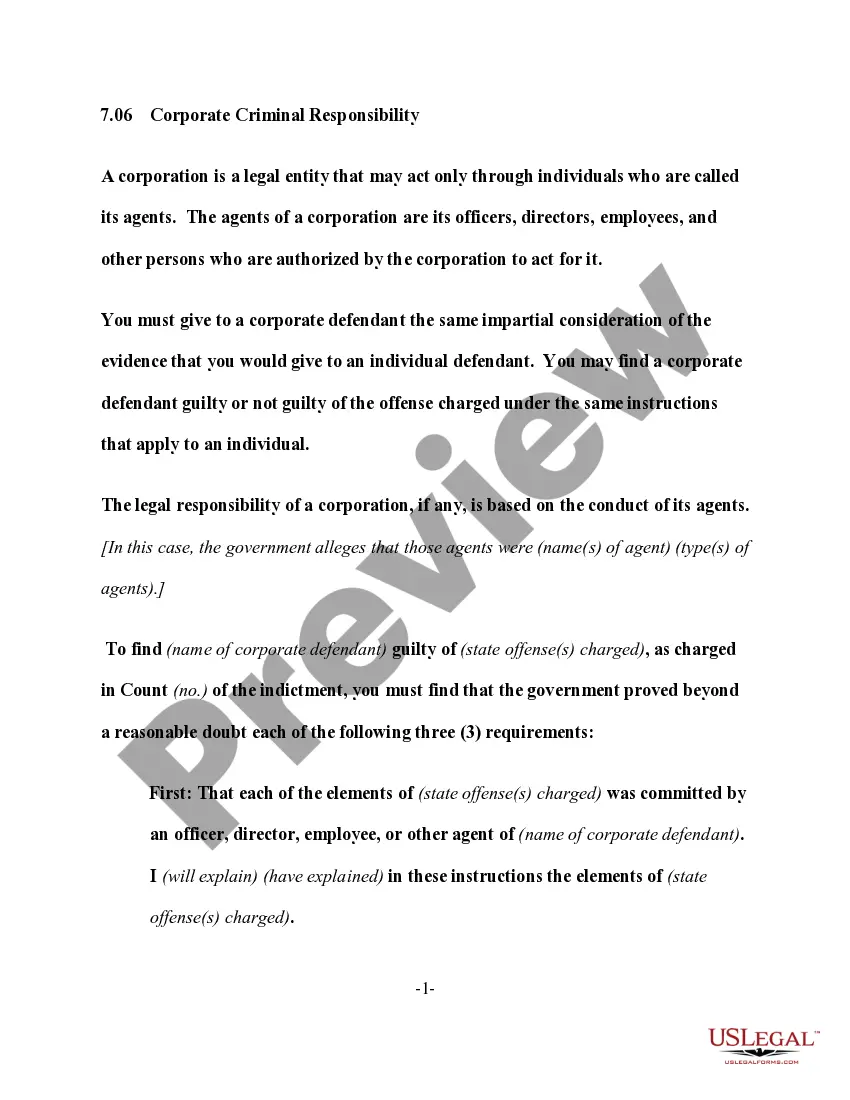
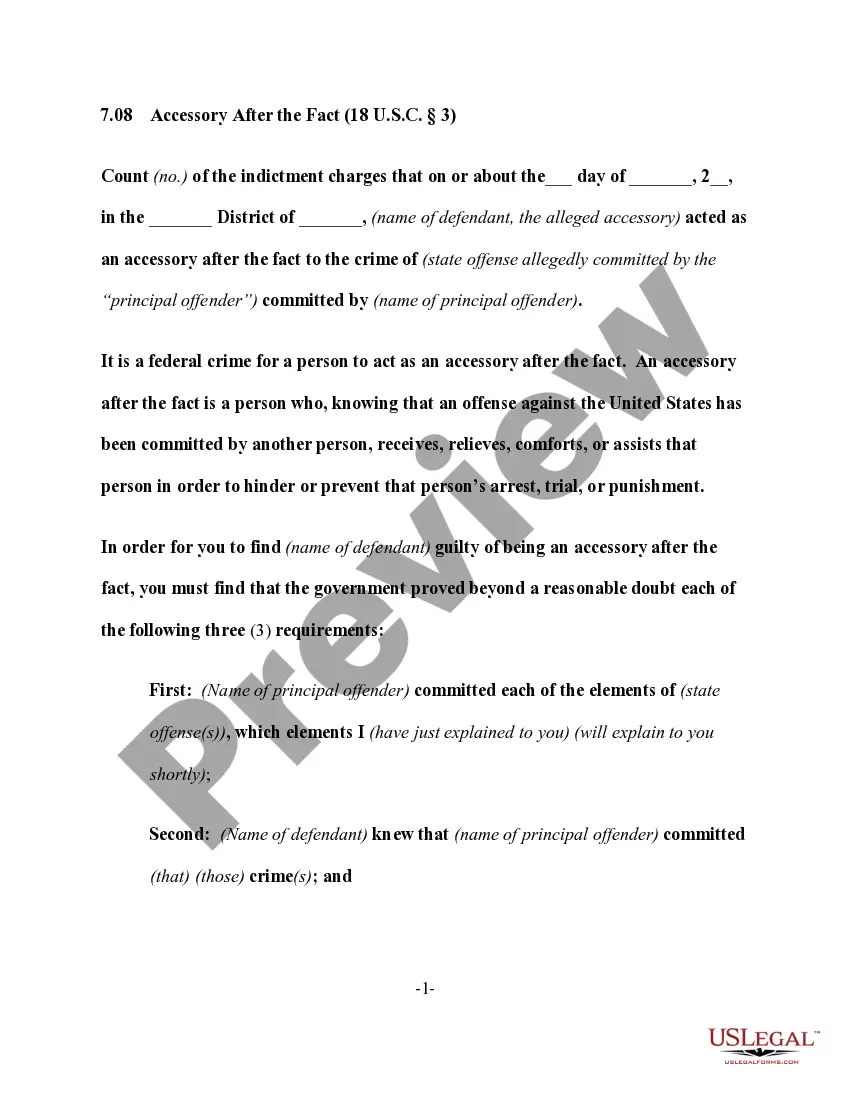
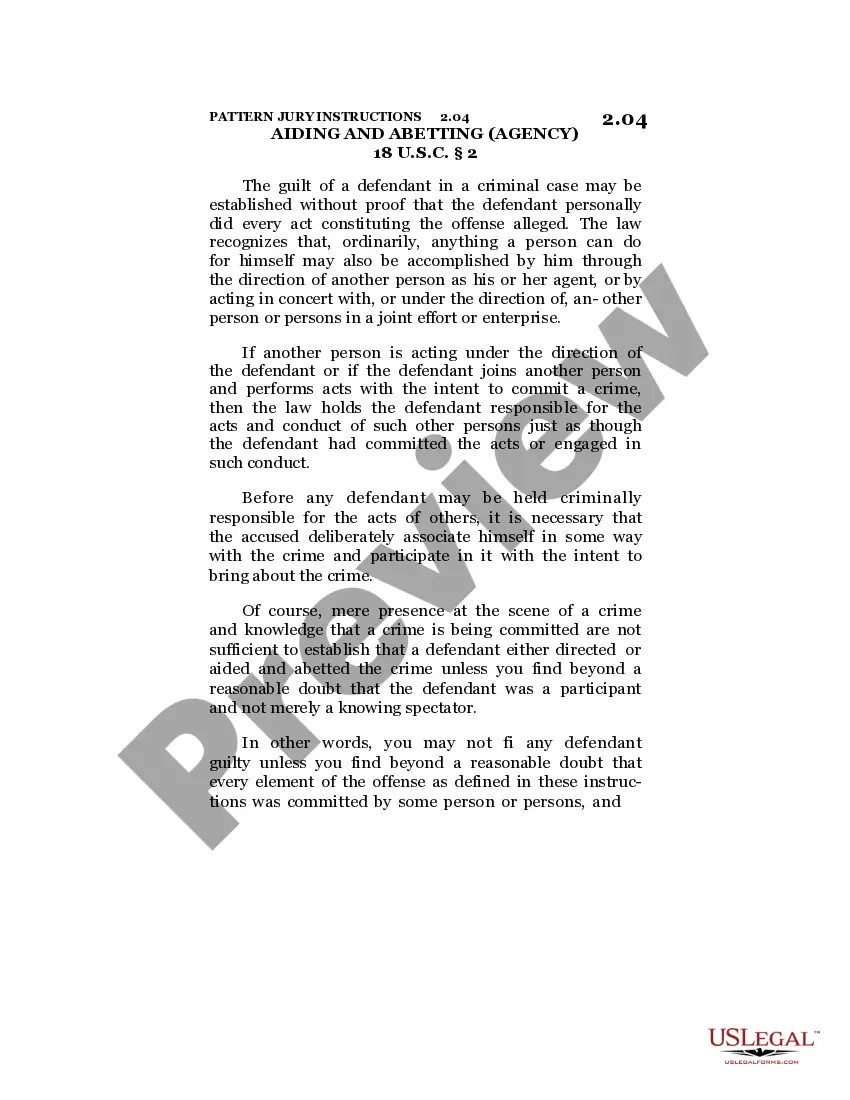
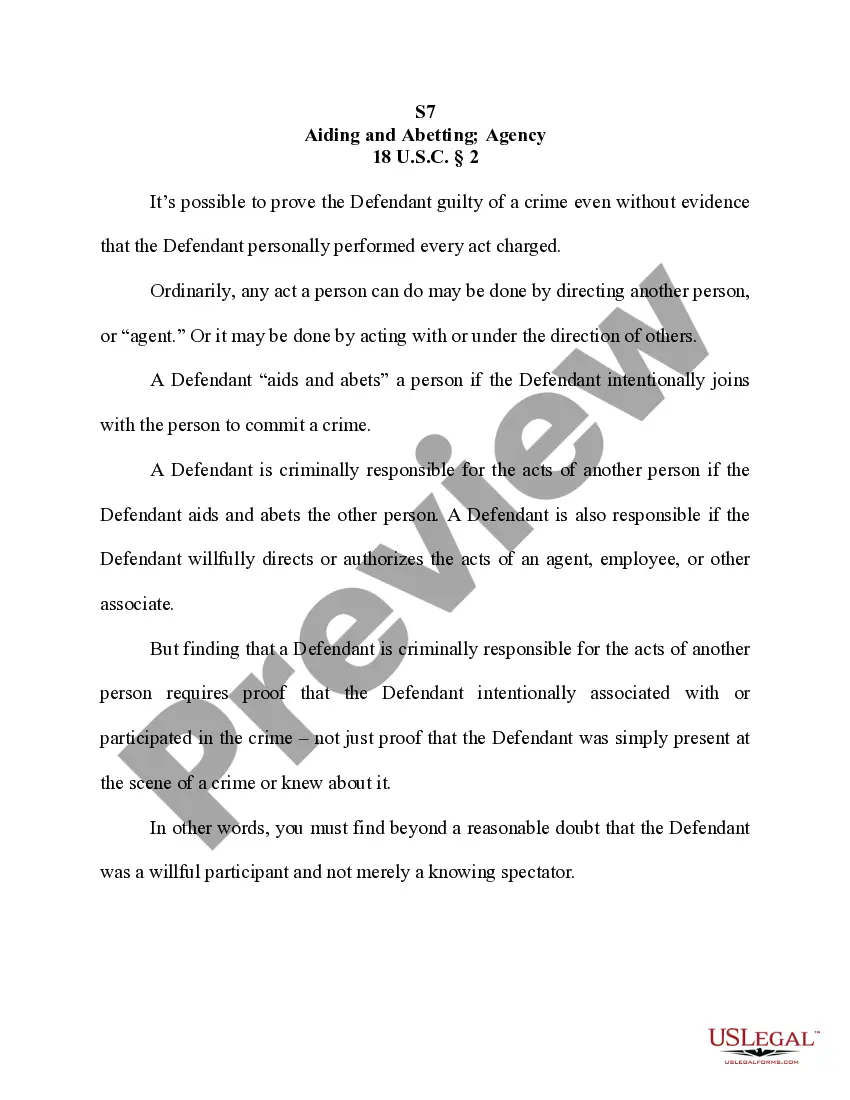
Situations where this form applies
This form should be used in legal contexts where an individual is accused of aiding and abetting another person in committing a crime. It is applicable in cases where the prosecution needs to establish that the defendant intentionally assisted the principal in committing the offense, especially in criminal trials involving drug trafficking, violence, or other federal offenses.
Who should use this form
- Defense attorneys representing clients accused of aiding and abetting crimes.
- Prosecutors needing to outline charges of complicity in criminal cases.
- Judges requiring clear instructions for juries regarding accomplice liability.
- Legal scholars analyzing accomplice liability principles under federal law.
Instructions for completing this form
- Identify the parties involved: Clearly state the names of the defendant and the principal.
- Specify the crime: Detail the specific offense being charged in the indictment.
- Confirm the four requirements: Ensure all conditions of accomplice liability are addressed as required by law.
- Gather supporting evidence: Include any direct or circumstantial evidence relevant to the claims made.
- Prepare for trial: Review the completed form to ensure all necessary legal jargon and requirements are included for presentation in court.
Does this document require notarization?
This form does not typically require notarization unless specified by local law. It is advisable to confirm the requirements in your jurisdiction to ensure compliance with legal standards.
Get your form ready online
Our built-in tools help you complete, sign, share, and store your documents in one place.
Make edits, fill in missing information, and update formatting in US Legal Forms—just like you would in MS Word.
Download a copy, print it, send it by email, or mail it via USPS—whatever works best for your next step.
Sign and collect signatures with our SignNow integration. Send to multiple recipients, set reminders, and more. Go Premium to unlock E-Sign.
If this form requires notarization, complete it online through a secure video call—no need to meet a notary in person or wait for an appointment.
We protect your documents and personal data by following strict security and privacy standards.

Make edits, fill in missing information, and update formatting in US Legal Forms—just like you would in MS Word.

Download a copy, print it, send it by email, or mail it via USPS—whatever works best for your next step.

Sign and collect signatures with our SignNow integration. Send to multiple recipients, set reminders, and more. Go Premium to unlock E-Sign.

If this form requires notarization, complete it online through a secure video call—no need to meet a notary in person or wait for an appointment.

We protect your documents and personal data by following strict security and privacy standards.
Typical mistakes to avoid
- Failing to clearly define the role of the defendant and the principal in the document.
- Not addressing all four requirements for aiding and abetting liability.
- Relying solely on evidence of presence during the commission of the crime without evidence of intent.
- Overlooking jurisdiction-specific nuances that may affect the interpretation of the law.
Why use this form online
- Convenience of access anytime, allowing for quick download and completion.
- Editability ensures specific details can be tailored to individual cases.
- Reliability, as forms are drafted by licensed attorneys familiar with legal standards.
Legal use & context
- Accomplice liability is recognized as a valid legal theory in the U.S. criminal system.
- This form can be used to help outline the prosecution's or defense's argument regarding an individual's culpability.
- Proper use of this form could lead to significant differences in legal outcomes based on its specifics.
What to keep in mind
- The form outlines the specific legal requirements for establishing accomplice liability in federal law.
- Understanding the roles of the defendant and the principal is crucial for the form's application.
- Proper completion of the form requires thoughtful consideration of intent, actions, and supporting evidence.
Looking for another form?
Form popularity
FAQ
Aiding and Abetting is a crime also known as ?accomplice liability? and is delineated in Penal Code Section 31. It occurs when a person (the ?the aider and abettor?) helps and aids another person (the ?principal') to commit a crime.
The words aiding, abetting and accessory are closely used but have differences. While aiding means providing support or assistance to someone, abetting means encouraging someone else to commit a crime. Accessory is someone who in fact assists "commission of a crime committed primarily by someone else".
An accomplice is a cooperator or participator, commonly in criminal acts. So you're an accomplice to the gas station robbery if you distracted the store manager while your partner in crime raided the registers for cash.
An accomplice is defined as a person who knowingly, voluntarily, or intentionally gives assistance to another in (or in some cases fails to prevent another from) the commission of a crime. An accomplice is criminally liable to the same extent as the principal.
Aiding and abetting is like zigging and zagging. Each has a slightly different meaning but fits together to create a complete crime. Aiding means helping someone to commit a crime while abetting means encouraging or counseling someone to commit a crime.
So the person driving the getaway car, the guy holding the door open, and the person that provides the safe house after the crime is committed can all be seen as accomplices.
Aiding and Abetting is a crime also known as ?accomplice liability? and is delineated in Penal Code Section 31. It occurs when a person (the ?the aider and abettor?) helps and aids another person (the ?principal') to commit a crime.
For example, Andy draws a floor plan of a bank, knowing of Dan's intention to rob it. After Dan commits the robbery, Alice agrees to let him store the stolen money at her house. Both Andy and Alice can be charged with aiding and abetting, or acting as accessories to the robbery.