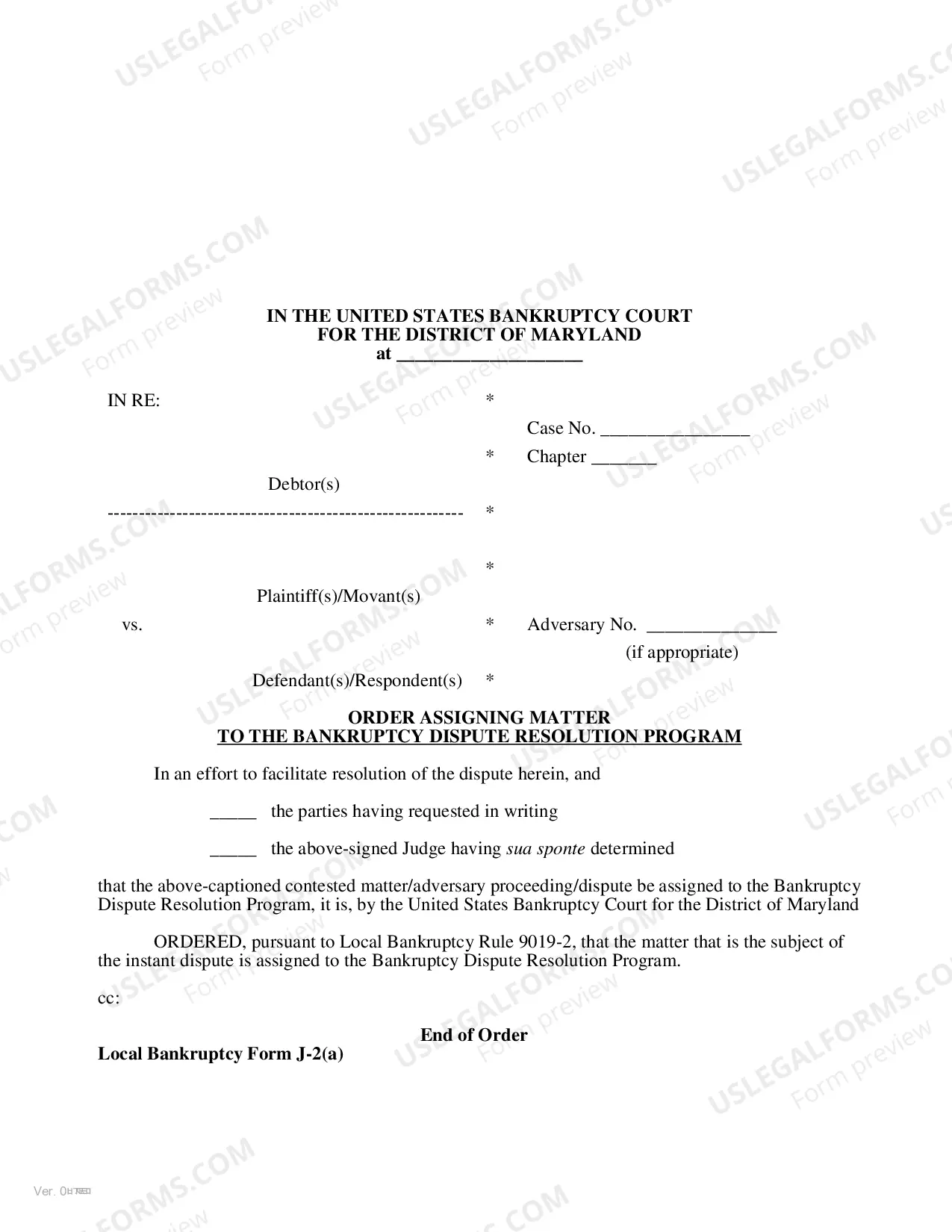
Letter Informing Debt Collector of False or Misleading Misrepresentations in Collection Activities
What this document covers
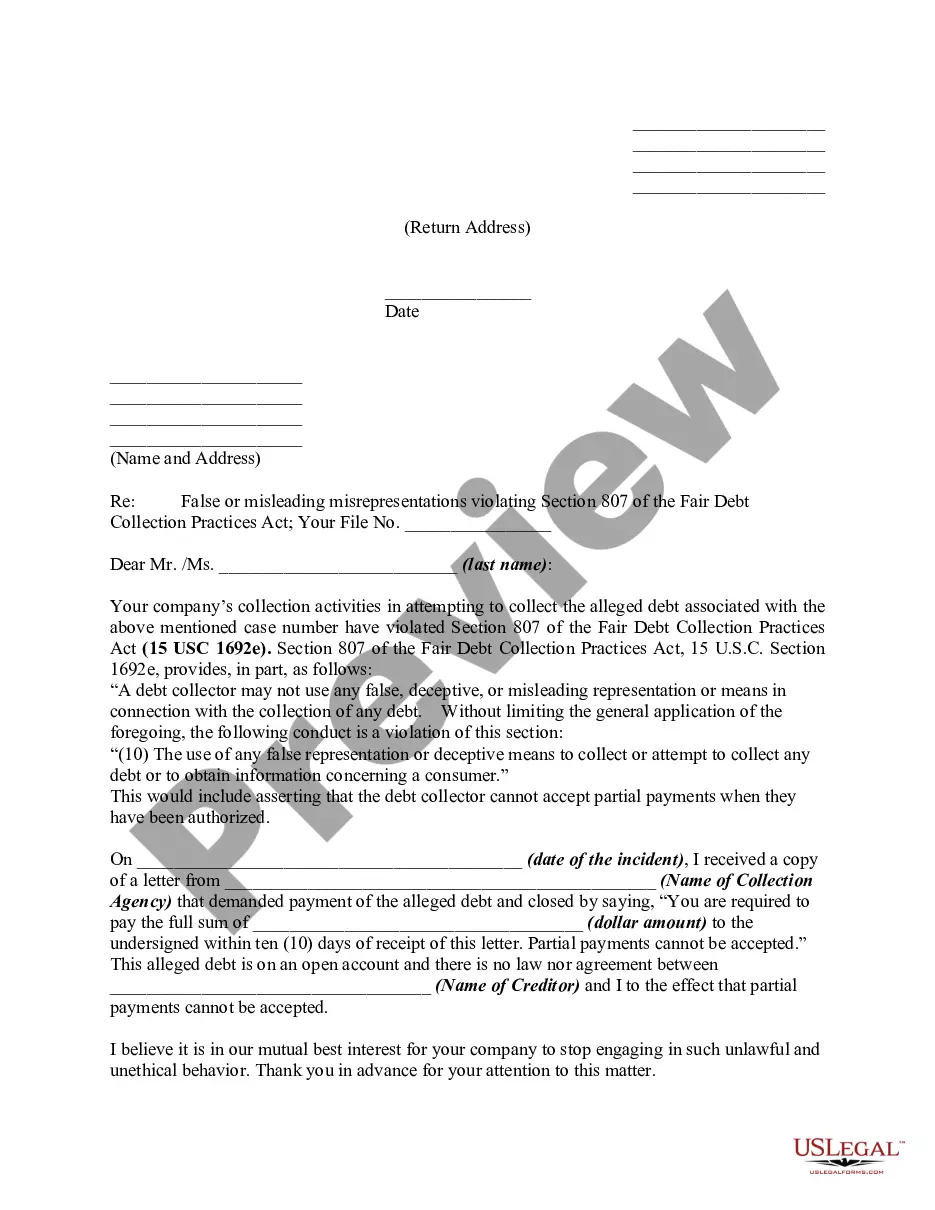
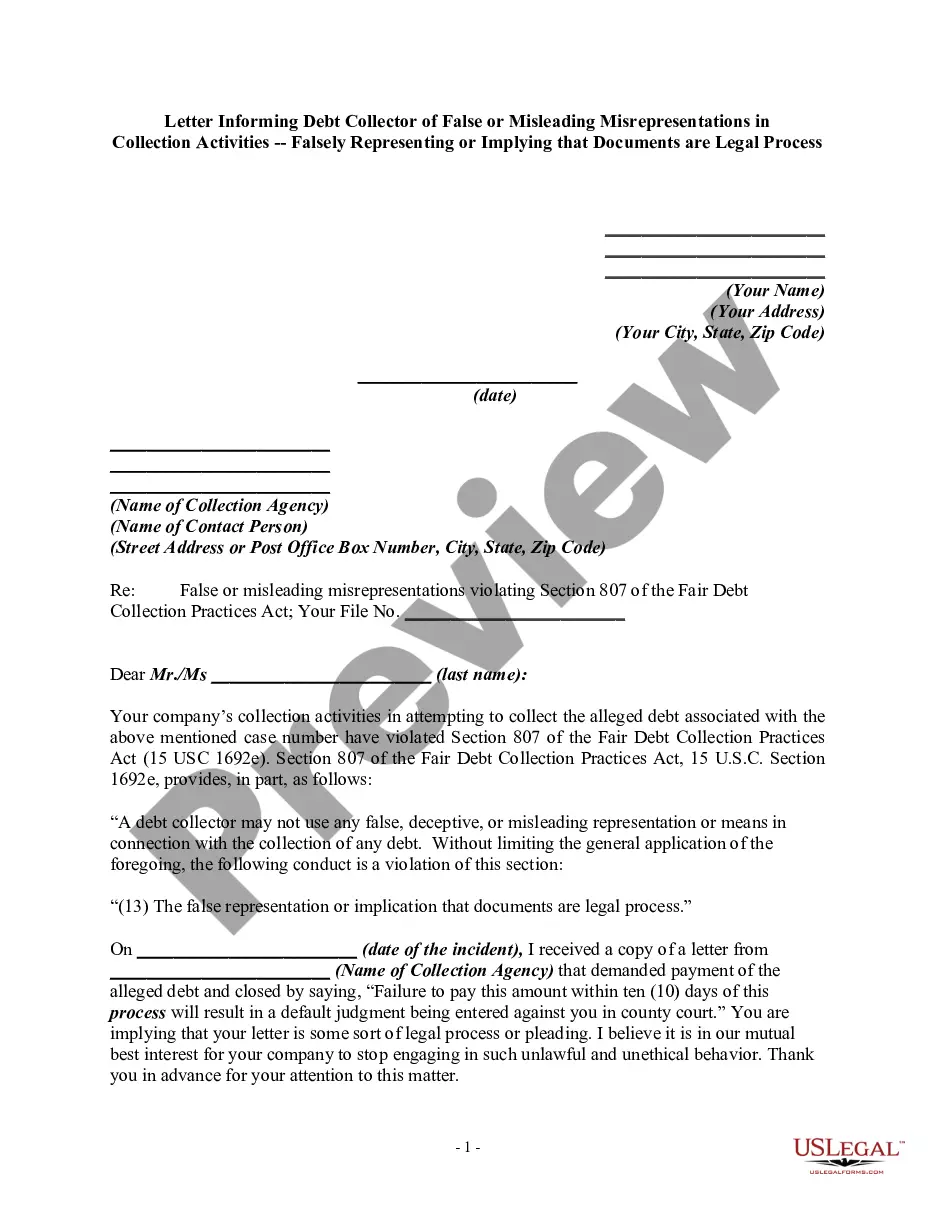
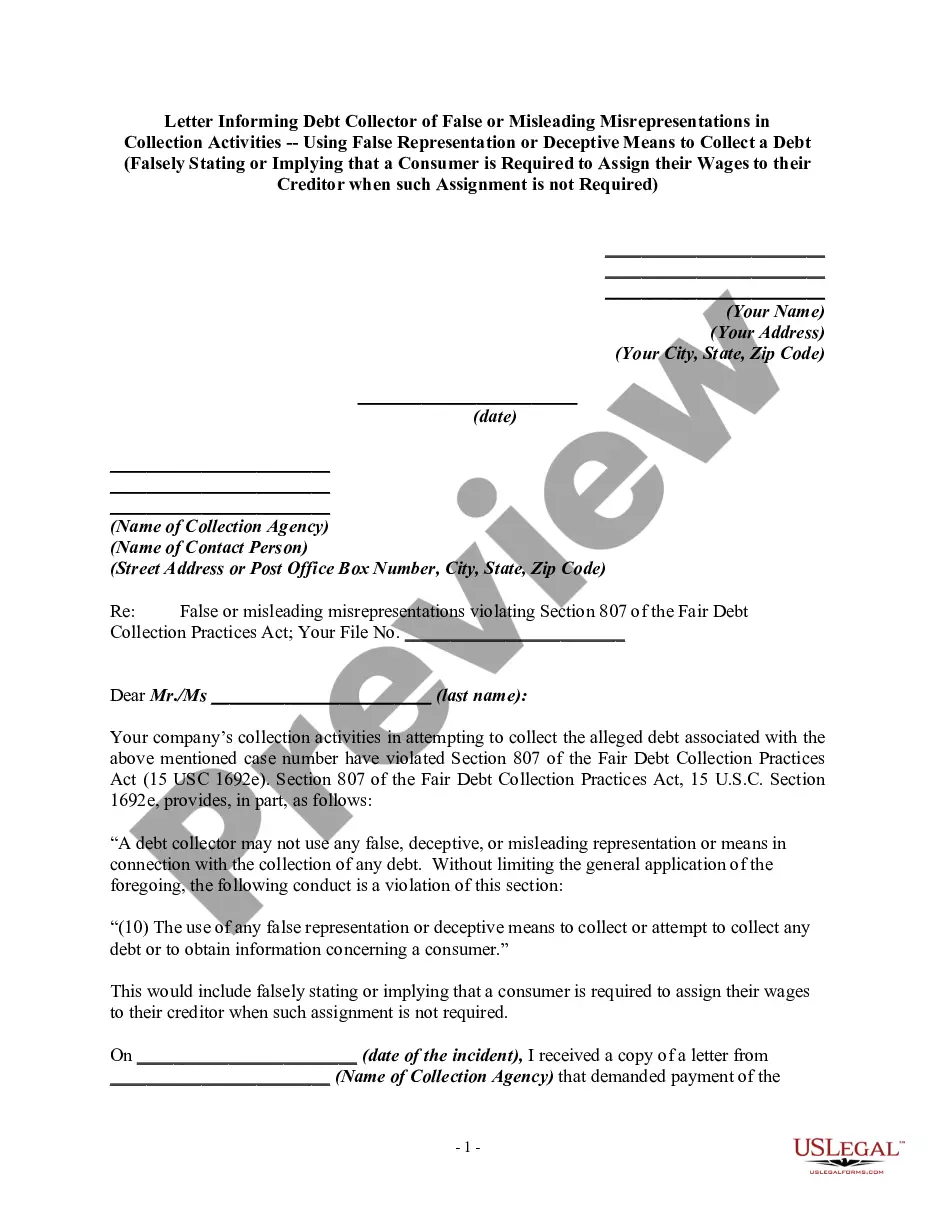
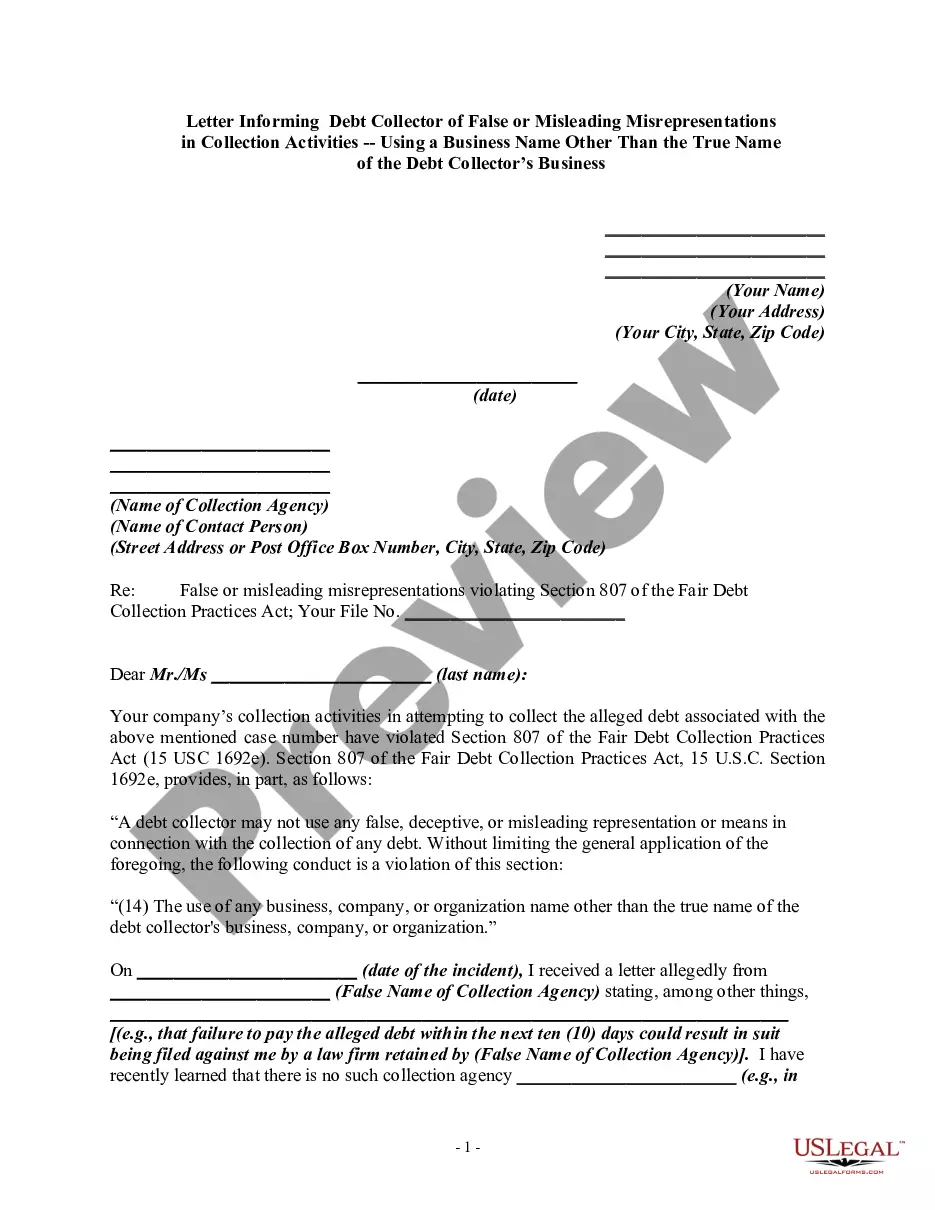
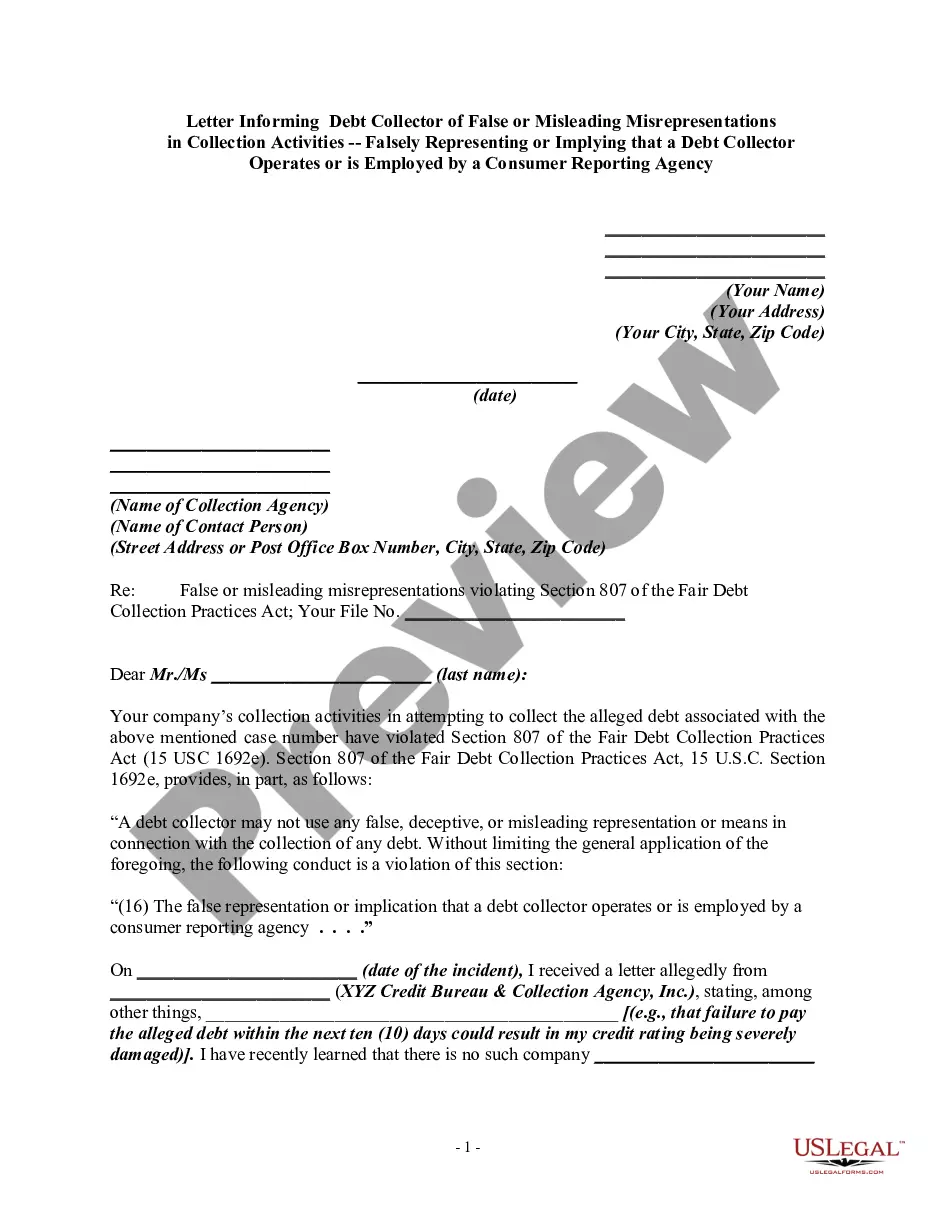
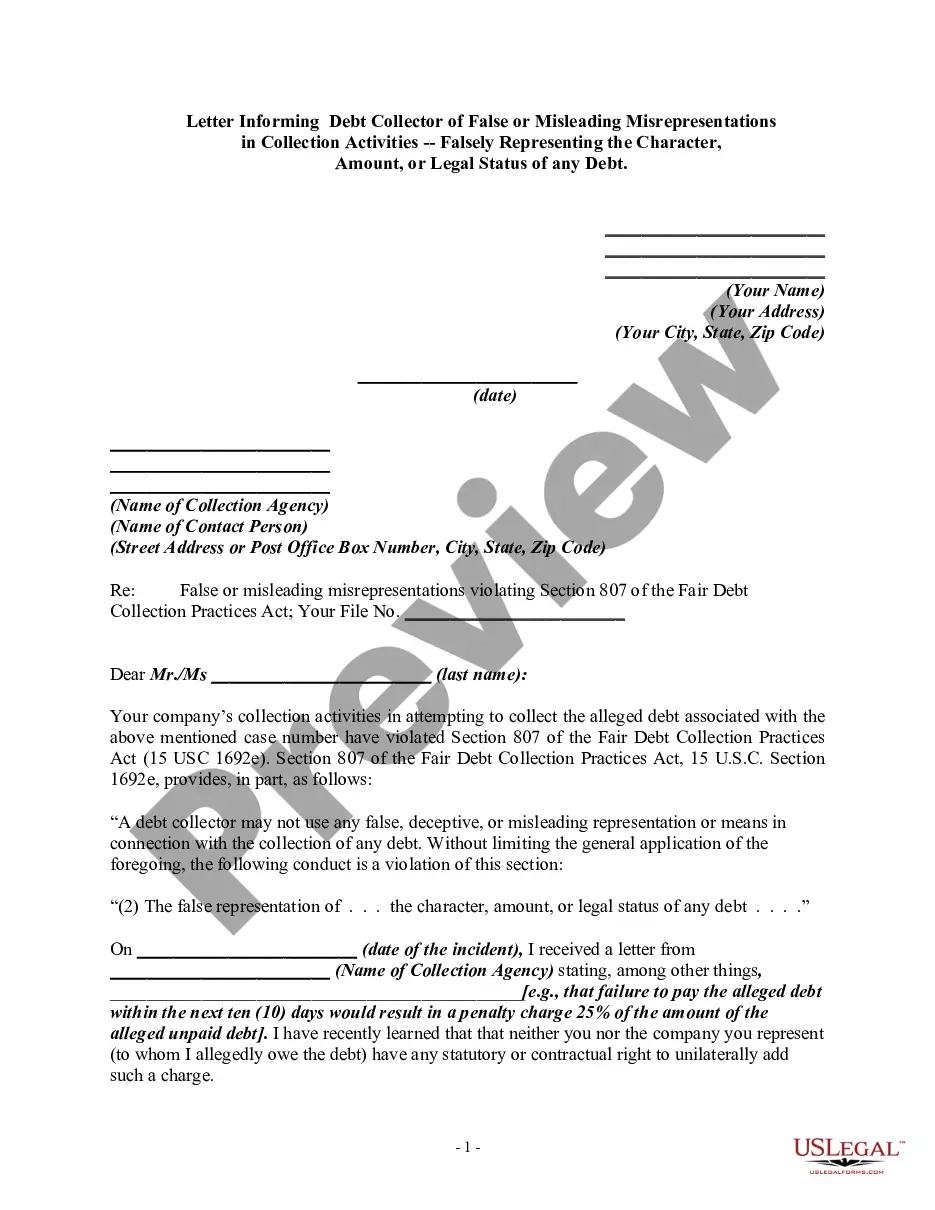
The Letter Informing Debt Collector of False or Misleading Misrepresentations in Collection Activities is a legal document intended to notify a debt collector of any deceptive practices occurring in the process of collecting a debt. This form serves to protect consumers under Section 807 of the Fair Debt Collection Practices Act, which prohibits misleading representations by debt collectors. Unlike general complaint letters, this form specifically addresses false statements made during debt collection activities, introducing a formal record of the issue.
Main sections of this form
- Return address and date for official correspondence.
- Name and address of the debt collector being addressed.
- Case number related to the debt.
- Statement of violation referencing the Fair Debt Collection Practices Act.
- Details of the misleading representation made by the debt collector.
- Your printed name and signature for authentication.
Common use cases
This form should be used when you believe a debt collector has made false or misleading representations regarding your alleged debt. For example, if you received a communication stating that partial payments cannot be accepted, but you know otherwise, this form can formally address that misconduct. It is particularly useful when you want to ensure your rights are protected and to prompt the collector to cease such practices.
Who should use this form
- Consumers who have received deceptive communications from debt collectors.
- Individuals who believe their rights under the Fair Debt Collection Practices Act have been violated.
- Anyone seeking to formally document and address misleading representations in debt collection.
Steps to complete this form
- Enter your return address and the date at the top of the letter.
- Fill in the name and address of the debt collector.
- Reference your case number related to the debt in the letter.
- Clearly state the violation, including details of the misleading representation.
- Sign the letter and include your printed name below your signature.
Does this form need to be notarized?
Notarization is not commonly needed for this form. However, certain documents or local rules may make it necessary. Our notarization service, powered by Notarize, allows you to finalize it securely online anytime, day or night.
Get your form ready online
Our built-in tools help you complete, sign, share, and store your documents in one place.
Make edits, fill in missing information, and update formatting in US Legal Forms—just like you would in MS Word.
Download a copy, print it, send it by email, or mail it via USPS—whatever works best for your next step.
Sign and collect signatures with our SignNow integration. Send to multiple recipients, set reminders, and more. Go Premium to unlock E-Sign.
If this form requires notarization, complete it online through a secure video call—no need to meet a notary in person or wait for an appointment.
We protect your documents and personal data by following strict security and privacy standards.

Make edits, fill in missing information, and update formatting in US Legal Forms—just like you would in MS Word.

Download a copy, print it, send it by email, or mail it via USPS—whatever works best for your next step.

Sign and collect signatures with our SignNow integration. Send to multiple recipients, set reminders, and more. Go Premium to unlock E-Sign.

If this form requires notarization, complete it online through a secure video call—no need to meet a notary in person or wait for an appointment.

We protect your documents and personal data by following strict security and privacy standards.
Typical mistakes to avoid
- Failing to specify the exact misrepresentation made by the debt collector.
- Not including your case number or personal information.
- Overlooking the requirement for a signature on the letter.
Why complete this form online
- Convenience of downloading and filling the form from anywhere.
- Editability allows for easier customization to your specific situation.
- Reliability, as the form is drafted by licensed attorneys who understand legal requirements.
Looking for another form?
Form popularity
FAQ
A debt collector in collecting a debt, may not harass, oppress, or abuse any person. Specifically, a debt collector may not: Use or threaten to use violence or other criminal means to harm the physical person, reputation, or property of any person.
Misrepresentations about the debt, including the amount owed. Falsely claiming that the person contacting you is an attorney. Threats to have you arrested.
If you believe a debt collector has given you false, deceptive, or misleading information, you have several options: Submit a complaint with the CFPB online or by calling (855) 411-CFPB (2372). Contact the FTC , or your state's attorney general .
If you are struggling with debt and debt collectors, Farmer & Morris Law, PLLC can help. As soon as you use the 11-word phrase ?please cease and desist all calls and contact with me immediately? to stop the harassment, call us for a free consultation about what you can do to resolve your debt problems for good.
The FDCPA prohibits debt collection companies from using abusive, unfair, or deceptive practices to collect debts from you. The FDCPA covers the collection of debts that are primarily for personal, family, or household purposes.
What parameters should you include in a collection dispute letter? Your details ? name, address, official email address, etc. Request for more information about the creditor. Amount of debt owed. A request note to not report the matter to the credit reporting agency until the matter is resolved.
Debt collectors cannot make false or misleading statements. For example, they cannot lie about the debt they are collecting or the fact that they are trying to collect debt, and they cannot use words or symbols that falsely make their letters to you seem like they're from an attorney, court, or government agency.