Confidentiality Agreement for Invention
Overview of this form
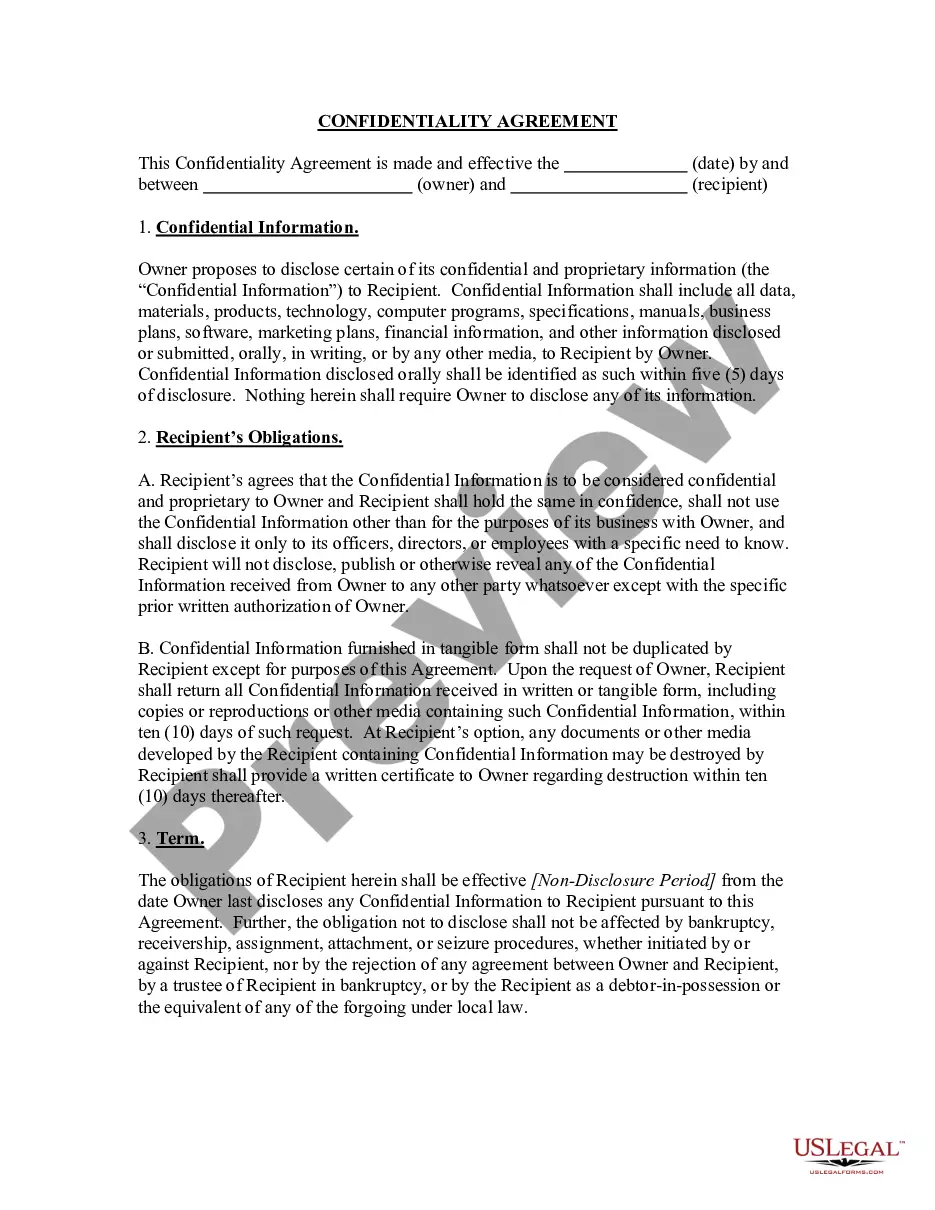
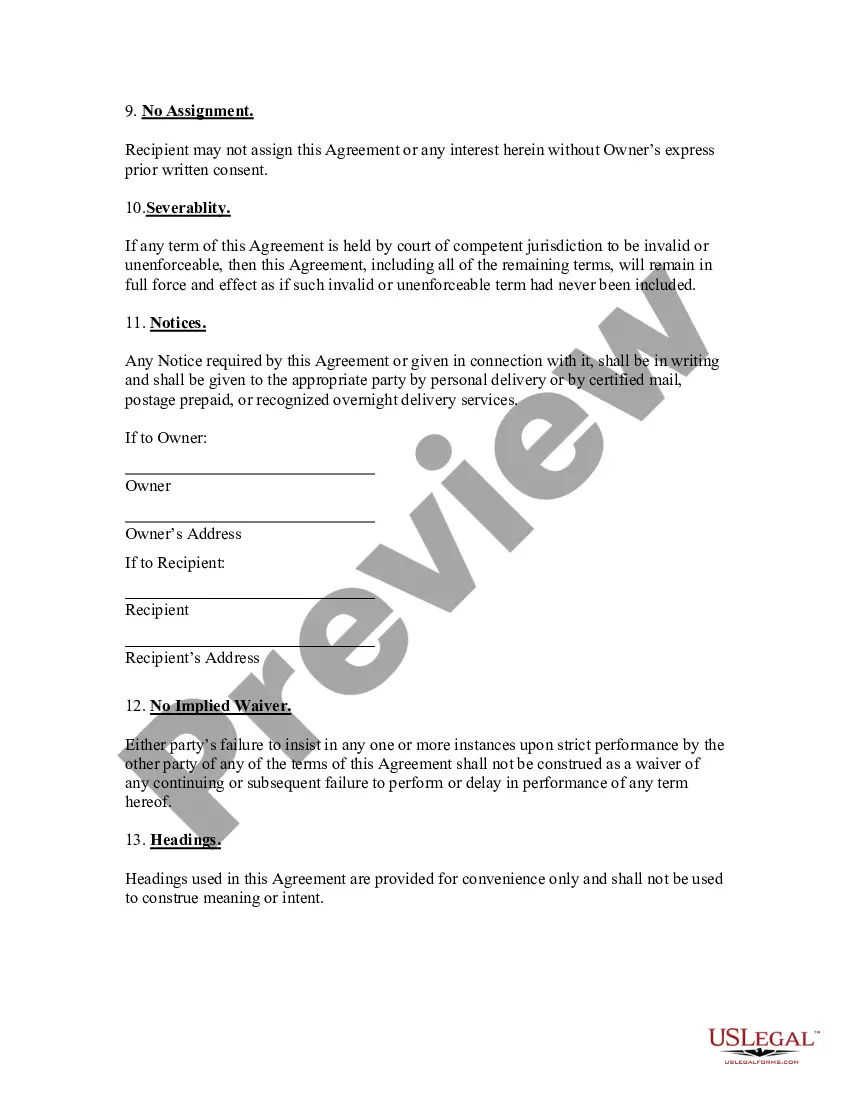
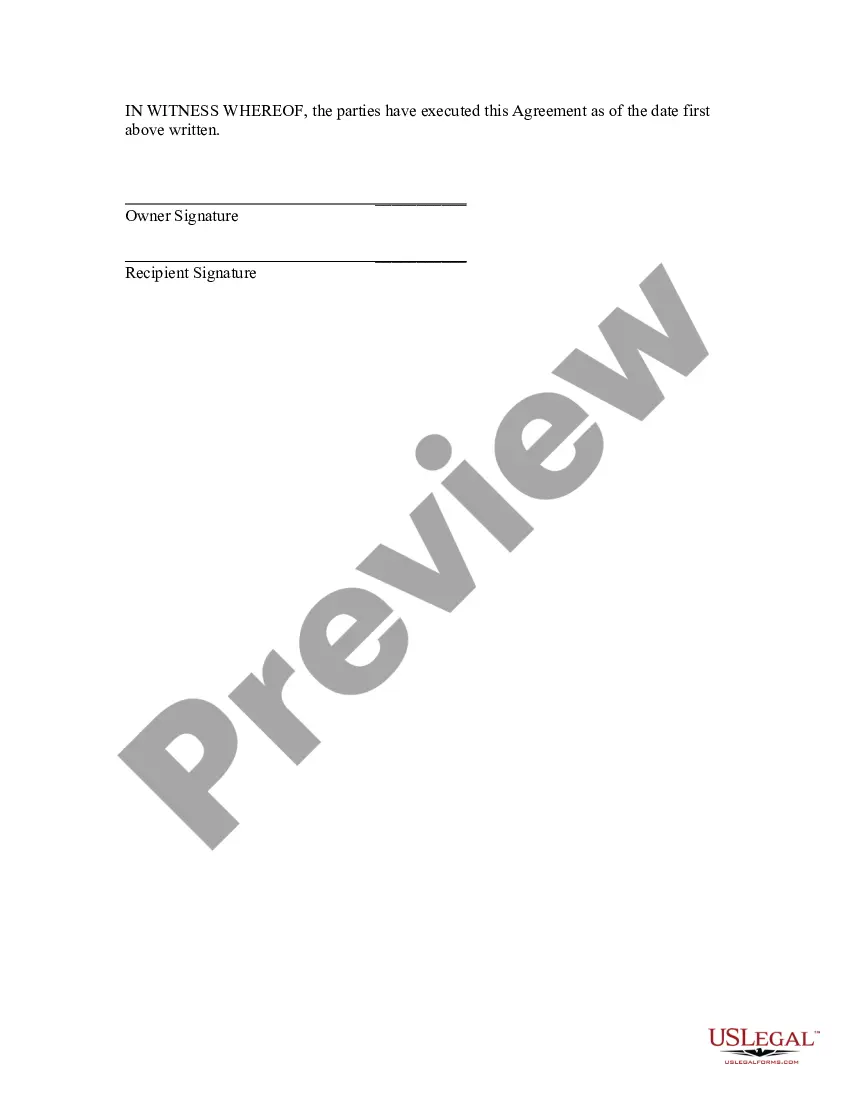
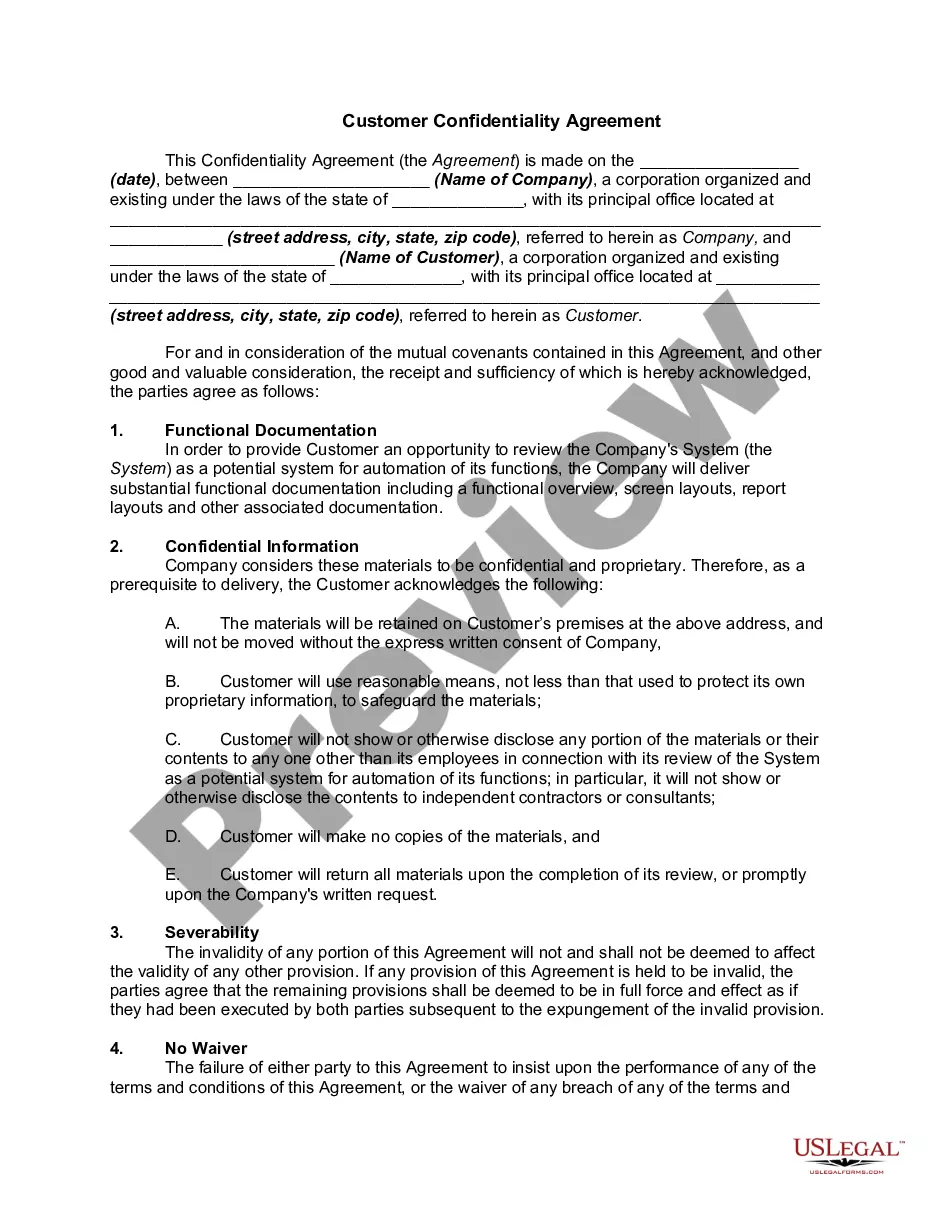
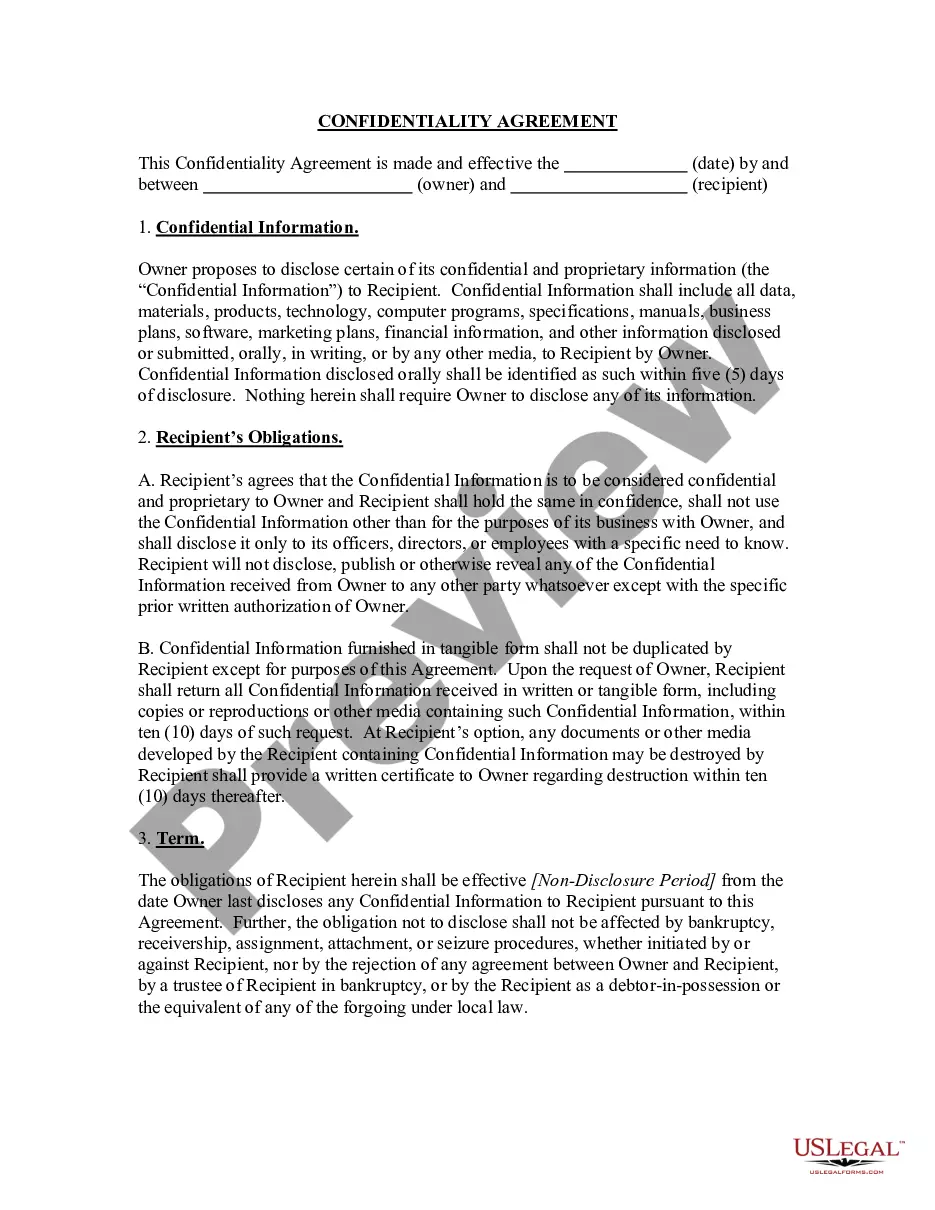
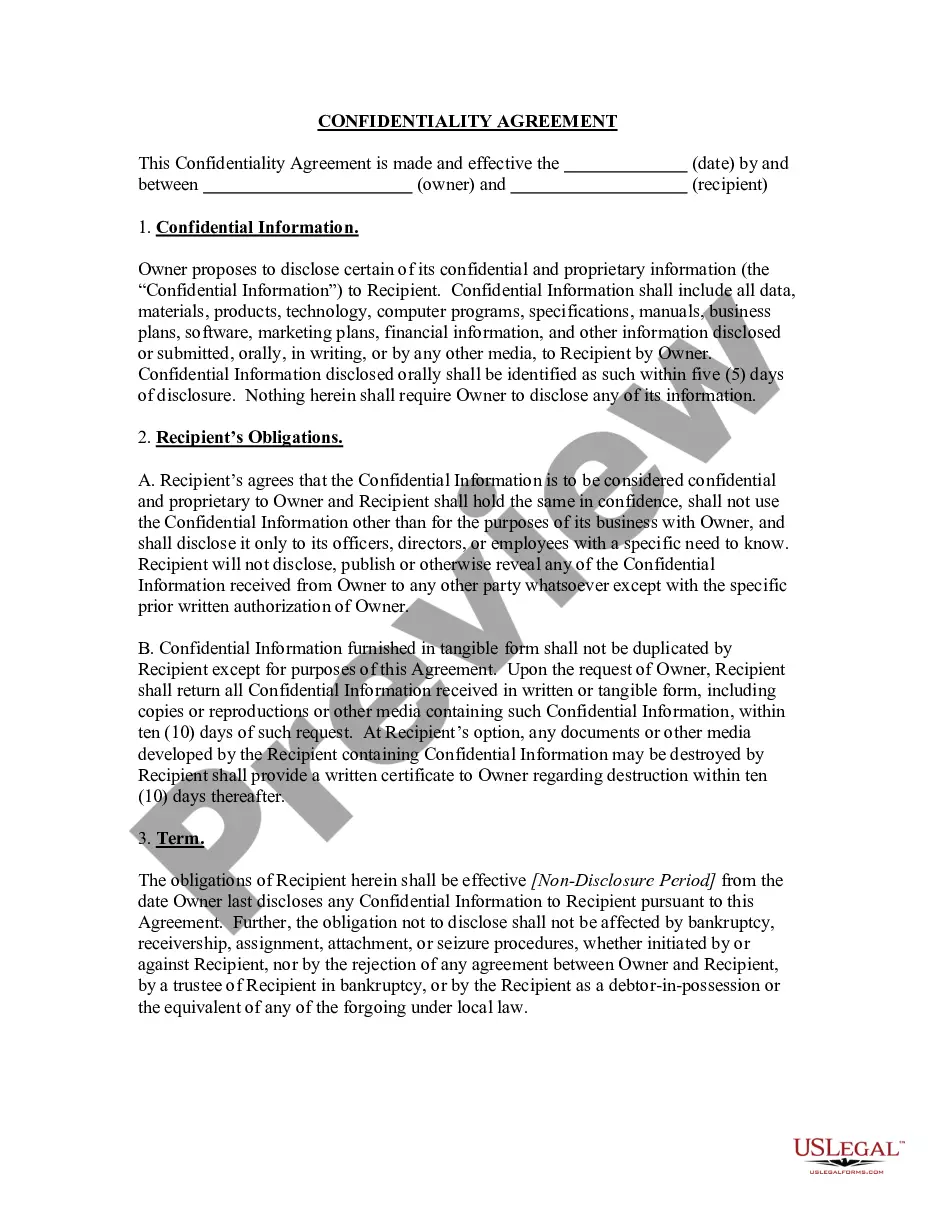
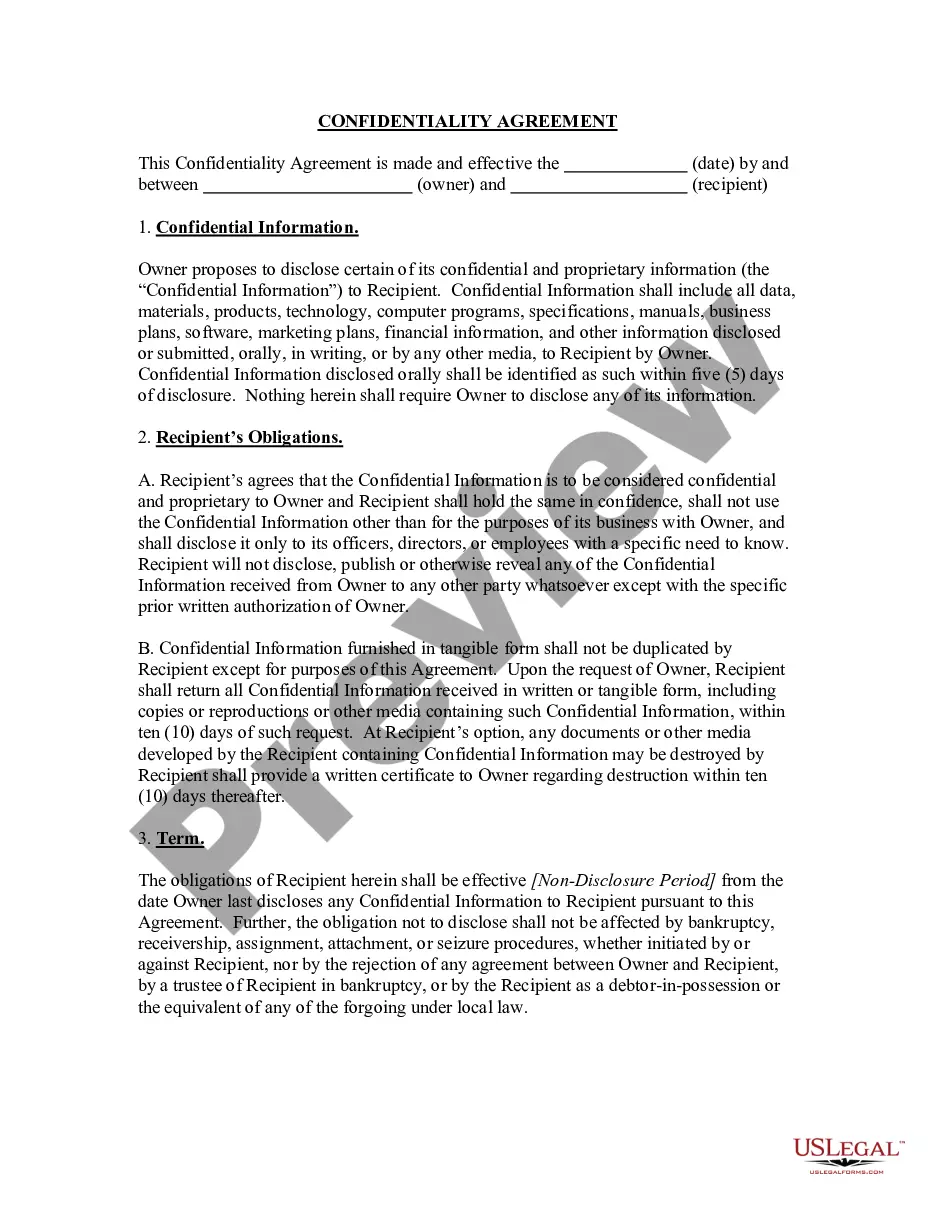
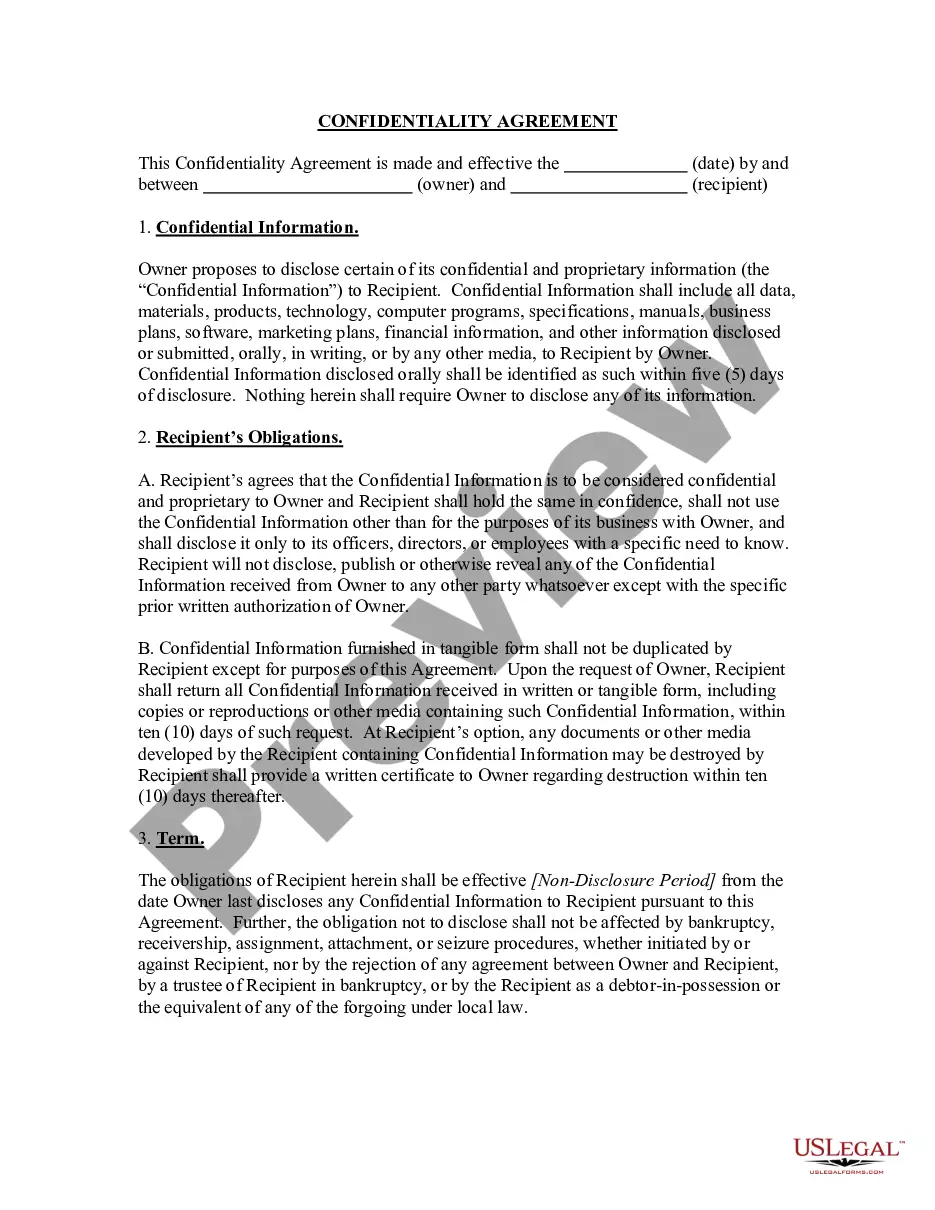
The Confidentiality Agreement for Invention is a legal document designed to protect sensitive information shared between parties involved in a collaborative project or business venture. This agreement ensures that the recipient of confidential information agrees to what is considered confidential and proprietary by the owner. Unlike standard non-disclosure agreements, this form is specifically tailored for inventions and intellectual property, making it crucial for inventors and business owners looking to safeguard their ideas and innovations against unauthorized use or disclosure.
Key parts of this document
- Obligations of the Recipient: Describes the responsibilities of the recipient to keep information confidential and restricts its use.
- Term: Outlines the duration of the confidentiality obligations from the date of disclosure.
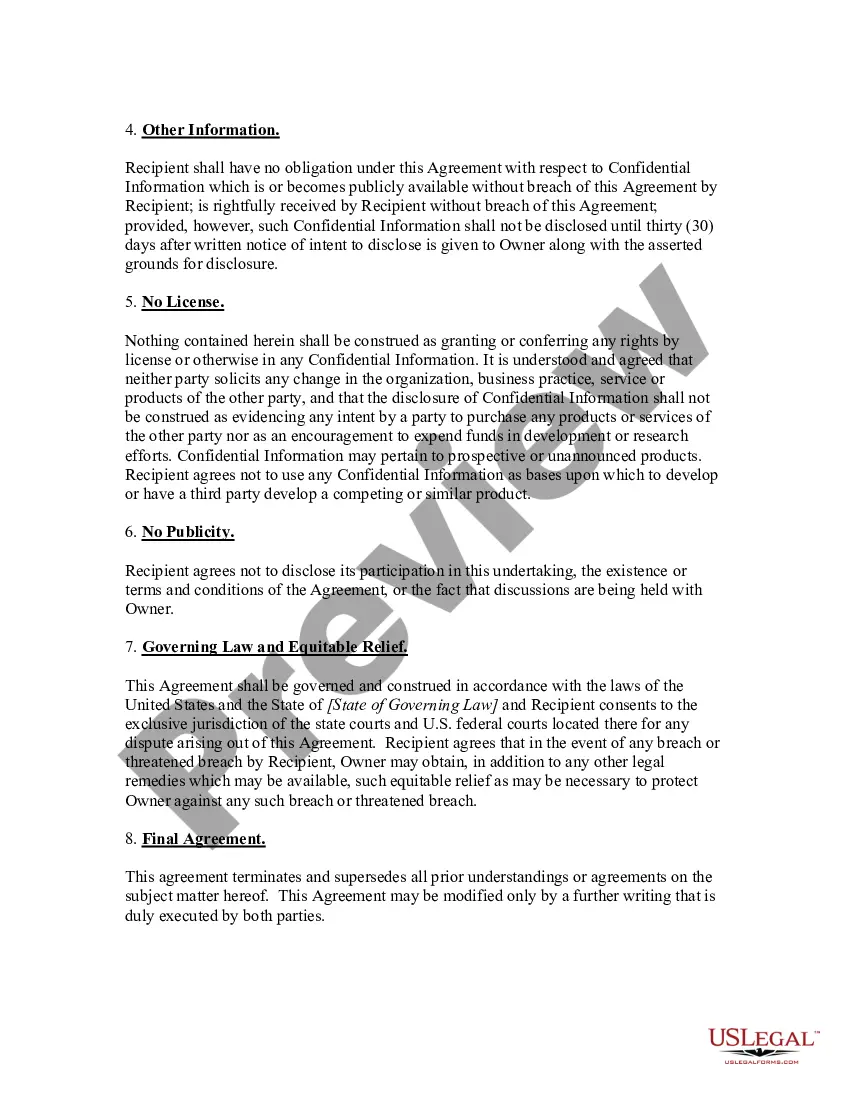
- Exclusions: Specifies situations where confidentiality obligations do not apply, such as public availability of the information.
- Ownership Rights: Clarifies that no license or rights to the confidential information are granted to the recipient.
- Governing Law: Indicates which state's laws will govern the agreement.
Situations where this form applies
This form is essential when an inventor or business owner needs to share proprietary information or plans with potential partners, investors, or employees. Use this confidentiality agreement to protect your ideas when discussing business opportunities, joint ventures, or collaborations that involve sensitive information, ensuring that everyone involved understands their obligation to maintain the confidentiality of the information disclosed.
Intended users of this form
This form is suitable for:
- Inventors looking to protect their inventions during discussions with investors or collaborators.
- Businesses engaging in partnerships or joint ventures that involve sharing confidential ideas or trade secrets.
- Employees who are required to handle sensitive information as part of their job duties.
- Consultants or contractors who have access to proprietary information in the course of their work.
Instructions for completing this form
- Identify the parties involved: Clearly state the names of the owner and the recipient in the agreement.
- Define the confidential information: Specify what constitutes confidential information to avoid ambiguity.
- Set the term: Indicate the duration of the confidentiality obligations and how long the information must be kept secret.
- Include governing law: Specify which stateâs laws will apply in case of disputes.
- Obtain signatures: Ensure that both parties sign the agreement to make it legally binding.
Does this document require notarization?
This form does not typically require notarization unless specified by local law. It is advisable to review local regulations or seek legal advice to ensure compliance.
Get your form ready online
Our built-in tools help you complete, sign, share, and store your documents in one place.
Make edits, fill in missing information, and update formatting in US Legal Forms—just like you would in MS Word.
Download a copy, print it, send it by email, or mail it via USPS—whatever works best for your next step.
Sign and collect signatures with our SignNow integration. Send to multiple recipients, set reminders, and more. Go Premium to unlock E-Sign.
If this form requires notarization, complete it online through a secure video call—no need to meet a notary in person or wait for an appointment.
We protect your documents and personal data by following strict security and privacy standards.

Make edits, fill in missing information, and update formatting in US Legal Forms—just like you would in MS Word.

Download a copy, print it, send it by email, or mail it via USPS—whatever works best for your next step.

Sign and collect signatures with our SignNow integration. Send to multiple recipients, set reminders, and more. Go Premium to unlock E-Sign.

If this form requires notarization, complete it online through a secure video call—no need to meet a notary in person or wait for an appointment.

We protect your documents and personal data by following strict security and privacy standards.
Mistakes to watch out for
- Failing to clearly define what information is considered confidential.
- Omitting the term of the agreement, leading to uncertainty about how long the confidentiality obligations last.
- Not signing the agreement, which can render it unenforceable.
- Assuming verbal agreements are sufficient; written documentation is essential.
Benefits of using this form online
- Convenience of immediate access to professionally drafted legal documents.
- Ability to customize the form to fit specific needs easily.
- Time-saving by avoiding the need to consult with a lawyer for standard agreements.
- Reliable templates that adhere to current legal standards.
Looking for another form?
Form popularity
FAQ
If you determine that the invention is probably not patentable, the most effective way to protect yourself is to have prospective licensees sign a nondisclosure agreement before you reveal your invention. This document is sometimes called an "NDA" or a "confidentiality agreement," but the terms are similar.
Confidentiality agreements usually allow the recipient to disclose confidential information if required to do so by court order or other legal process.
The first person or enterprise to file a patent for an invention will have the right to the patent. This may in fact mean that, if you do not patent your inventions or inventions made the employees of your company, somebody else who may have developed the same or an equivalent invention later may do so.
Set the date of the agreement. Describe the two parties, sometimes called the Disclosing Party and the Receiving Party.7feff Include names and identification, so there can be no misunderstanding about who signed the agreement.
A confidentiality agreement (also called a nondisclosure agreement or NDA) is a legally binding contract in which a person or business promises to treat specific information as a trade secret and promises not to disclose the secret to others without proper authorization.
A definition of confidential information. Who is involved. Why the recipient knows the information. Exclusions or limits on confidential information. Receiving party's obligations. Time frame or term. Discloser to the recipient.
It is a contract through which the parties agree not to disclose information covered by the agreement. An NDA creates a confidential relationship between the parties, typically to protect any type of confidential and proprietary information or trade secrets. As such, an NDA protects non-public business information.
Keep a Written Record of Your Invention. Record every step of the invention process in a notebook. Make Sure Your Invention Qualifies for Patent Protection. Assess the Commercial Potential of Your Invention. Conduct a Thorough Patent Search. Prepare and File an Application With the USPTO.
Depending on the complexity of what you need protected and the number of parties involved, the cost of having an NDA drafted can vary significantly. When you hire a lawyer in the Priori network, drafting an NDA typically costs anywhere from $175-$1,500.