Confidentiality Agreement for Volunteers
What this document covers
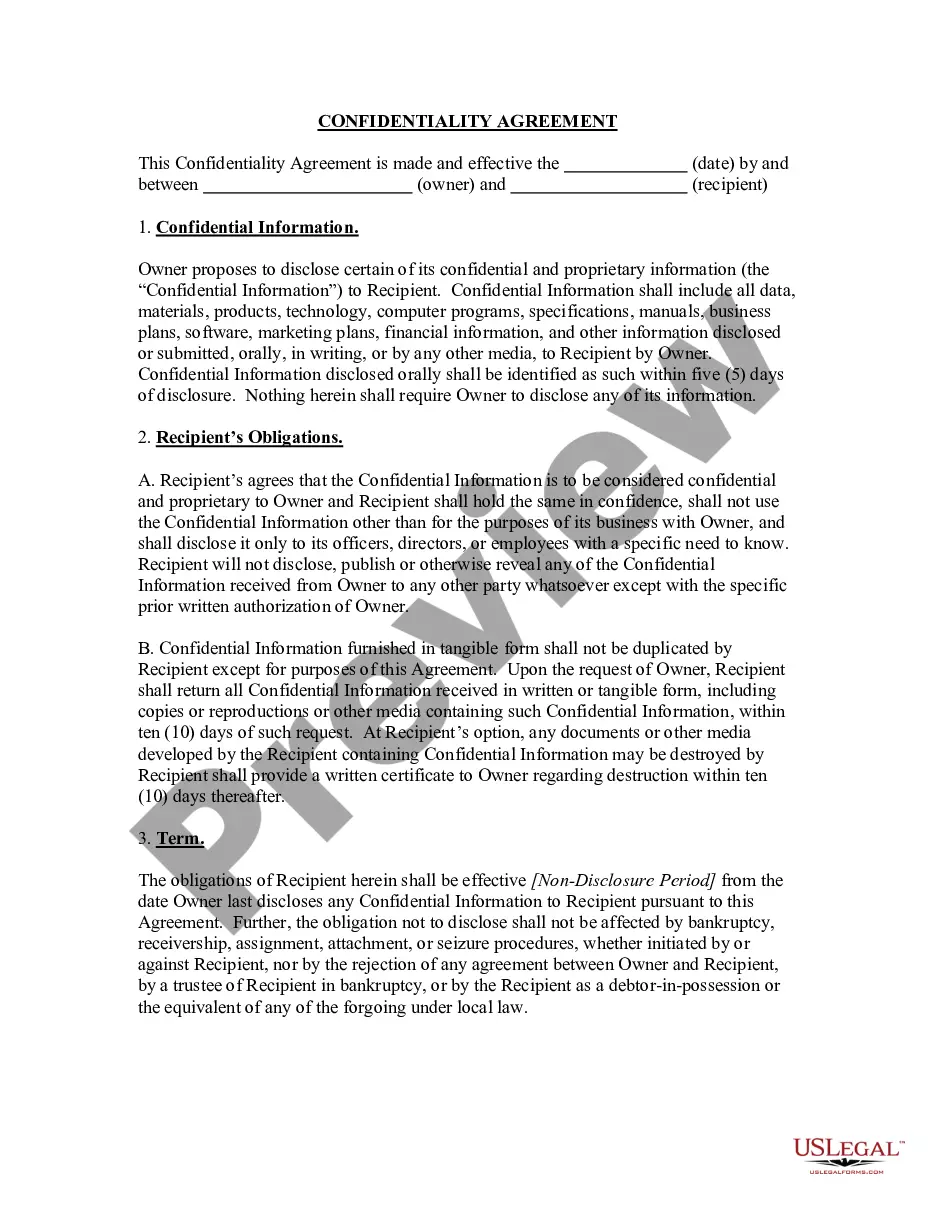
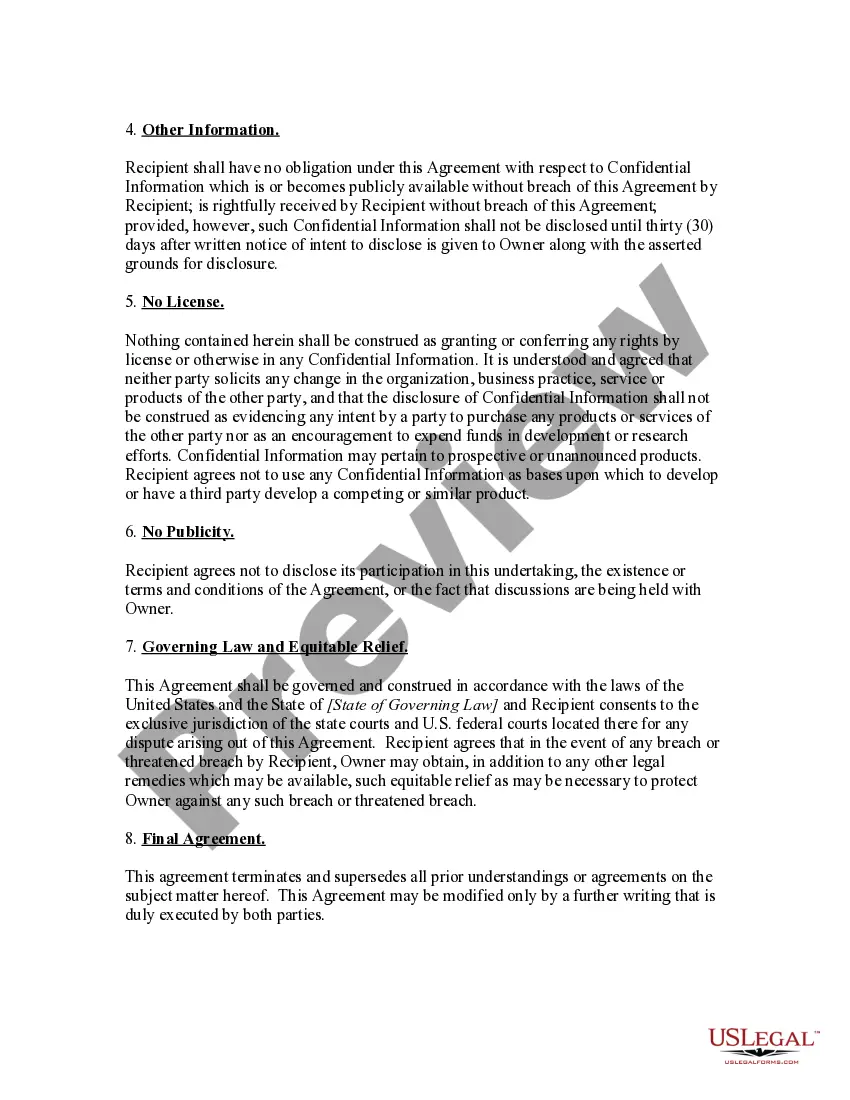
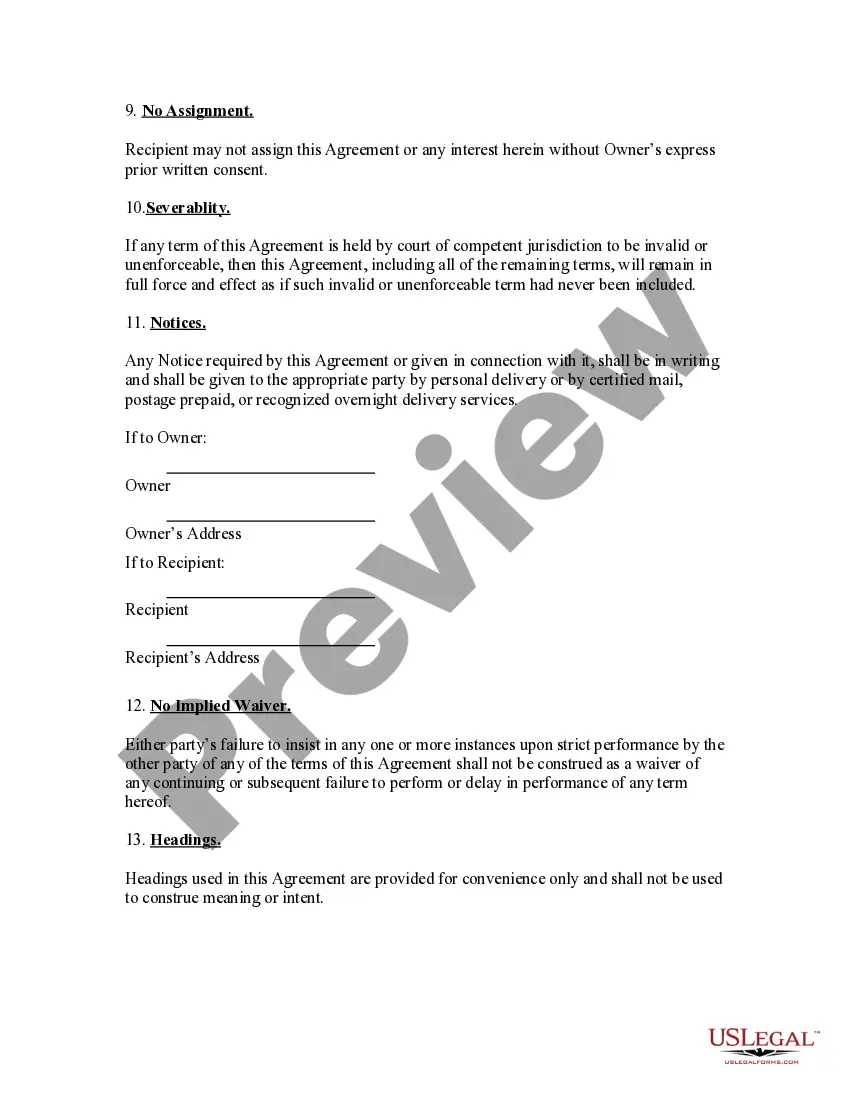
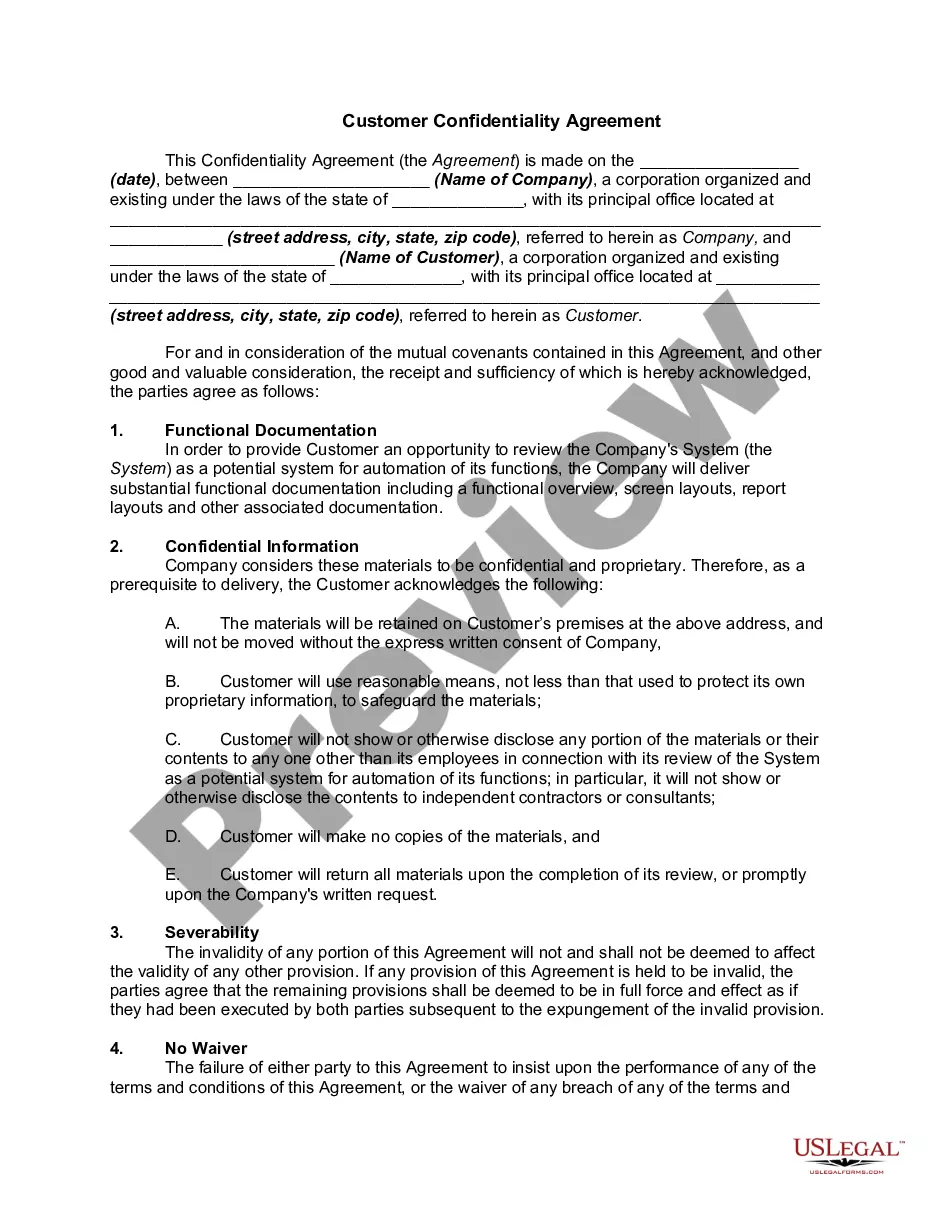
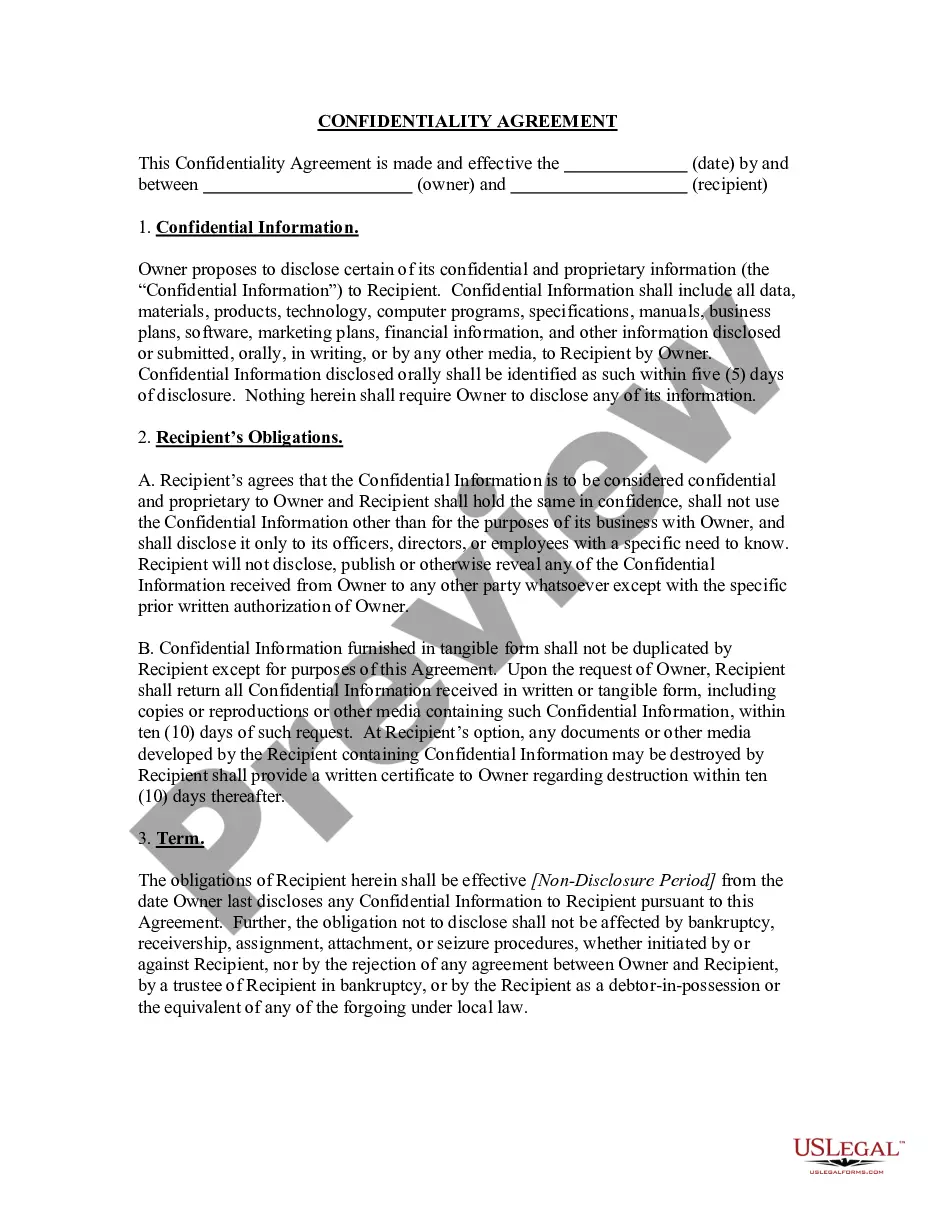
The Confidentiality Agreement for Volunteers is a legal document designed to protect sensitive information shared between organizations and their volunteers. This agreement establishes clear expectations regarding the handling of confidential information, ensuring that volunteers do not disclose proprietary details without permission. This form is essential for organizations that want to safeguard their intellectual property and operational secrets while collaborating with volunteers.
What’s included in this form
- Recipient's obligations regarding confidentiality and proprietary information.
- Terms for the return or destruction of confidential information upon request.
- Duration of the confidentiality obligations.
- Exclusions from confidentiality obligations, such as publicly available information.
- No rights assigned to either party concerning confidential information.
- Conditions for publicity and legal jurisdiction for resolving disputes.

When to use this document
This form should be used when a volunteer will have access to sensitive or proprietary information that the organization wishes to protect. Common scenarios include non-profit organizations engaging volunteers for project work, educational institutions collaborating with student interns, and businesses utilizing volunteers for events or workshops where confidential data may be discussed.
Who this form is for
This form is appropriate for:
- Non-profit organizations hiring volunteers.
- Companies utilizing volunteers for events or research.
- Educational institutions with student volunteers.
- Anyone who needs to share sensitive information with a volunteer.
Completing this form step by step
- Identify the parties involved: the Owner and the Recipient.
- Clearly define what constitutes "Confidential Information".
- Specify the obligations of the Recipient regarding the use and protection of the information.
- Set the duration of confidentiality obligations as needed.
- Include signatures of both parties to validate the agreement.
Does this form need to be notarized?
Notarization is generally not required for this form. However, certain states or situations might demand it. You can complete notarization online through US Legal Forms, powered by Notarize, using a verified video call available anytime.
Get your form ready online
Our built-in tools help you complete, sign, share, and store your documents in one place.
Make edits, fill in missing information, and update formatting in US Legal Forms—just like you would in MS Word.
Download a copy, print it, send it by email, or mail it via USPS—whatever works best for your next step.
Sign and collect signatures with our SignNow integration. Send to multiple recipients, set reminders, and more. Go Premium to unlock E-Sign.
If this form requires notarization, complete it online through a secure video call—no need to meet a notary in person or wait for an appointment.
We protect your documents and personal data by following strict security and privacy standards.

Make edits, fill in missing information, and update formatting in US Legal Forms—just like you would in MS Word.

Download a copy, print it, send it by email, or mail it via USPS—whatever works best for your next step.

Sign and collect signatures with our SignNow integration. Send to multiple recipients, set reminders, and more. Go Premium to unlock E-Sign.

If this form requires notarization, complete it online through a secure video call—no need to meet a notary in person or wait for an appointment.

We protect your documents and personal data by following strict security and privacy standards.
Common mistakes to avoid
- Failing to clearly define what is considered confidential information.
- Not specifying the duration of confidentiality obligations.
- Omitting signatures, which invalidates the agreement.
- Assuming verbal agreements are sufficient without written documentation.
Why use this form online
- Convenient access and quick download whenever needed.
- Editable templates allow for customization to fit specific needs.
- Professional drafting ensures the document meets legal standards.
- Easy storage and retrieval for future reference or audits.
Legal use & context
- This agreement provides legal protection for both parties involved.
- It helps to prevent unauthorized sharing of confidential information.
- In case of a breach, the Owner has the right to seek legal remedies.
Looking for another form?
Form popularity
FAQ
A volunteer agreement makes it clear what the volunteer can expect from the organisation and what, in turn, the organisation expects from the volunteer. It usually sits alongside a role description and volunteer policy. Whilst it sets out expectations an agreement is not a legally binding contract.
The volunteer agreement is not compulsory, but sets out what you can expect from the organisation you're volunteering for. It does not form a contract between you and the organisation. The National Council for Voluntary Organisations (NCVO) has information on volunteers' legal status.
Volunteer agreements can be used to set out both an organisation's commitment to its volunteers and what it hopes for from its volunteers. They act as a reference point for volunteers and a reminder to the organisation that it should meet the standards of good practice that it has set.
To work in a healthy and safe environment. To be interviewed and engaged in accordance with equal opportunity and anti-discrimination legislation. To be adequately covered by insurance. To receive information about the organisation, policies and procedures.
Information should only be disclosed to others when authorised by senior management. Confidential information should not be used for personal profit or benefit. Confidential information must not be replicated and stored on insecure devices.
Confidentiality agreements usually allow the recipient to disclose confidential information if required to do so by court order or other legal process.
The agreement does not necessarily have to be signed and may be in the form of a letter from the organisation to the individual volunteer but a signature in itself, in the absence of other indications of a legally binding arrangement, is unlikely to create a legally binding agreement.
Use a standard format for contracts. Decide what type of confidentiality statement you should use. Identify the involved parties in the agreement. Define the information to keep confidential. List the information excluded from the agreement.
Therapist/patient confidentiality Sharing confidential information about a client with a family member or friend.Leaving your computer containing confidential information open to others. Continuing to work with a client when there's a conflict of interests (for example, they know one of your family members or friends)